Animal rights groups have criticized the governments of Canada, Japan and Norway for continuing to allow commercial hunting of seals and/or whales as essential activities while their populations are subjected to lockdown measures amid the COVID-19 pandemic.
Humane Society International (HSI) and Norwegian organization NOAH said it is “outrageous” that such practices should be permitted at this time, particularly given that they are often supported by public funds.
“There is dwindling demand for the products of commercial whaling and sealing operations, and these inhumane industries are only viable because of tax-payers’ money, so it’s extremely difficult to see how these can in any way be considered ‘essential’ activities during lockdown,” Claire Bass, executive director of Humane Society International/U.K., said in a statement.
“It’s disturbing to think that while all over the world people are making extraordinary sacrifices to stop the spread of COVID-19, whalers and sealers are carrying on with their bloody business as usual, risking infection spread amongst crews and their families. We urge the Norwegian, Canadian and Japanese governments to call an immediate stop to these cruel and unnecessary hunts,” she said.
Ads by scrollerads.com
In Canada for example, the country’s annual commercial seal hunt will go ahead, a process that HSI describes as the “largest slaughter of marine mammals on the planet.”
During the yearly hunt, which occurs in two main areas, off the country’s east coast, hundreds of thousands of seals are killed using clubs and guns. Harp seals—already at risk from climate change—are the main target, and the vast majority of the animals killed are pups below the age of three months.
Seal hunting will also be allowed to continue in Norway after the government announced a quota to kill more than 18,000 of the animals last month. In response to the COVID-19, no animal welfare inspectors will be allowed on board—as is customary—to reduce the risk of infection. However, the animal rights groups have raised concerns over why such precautions have not been applied to protect the crew members who will take place on the hunts.
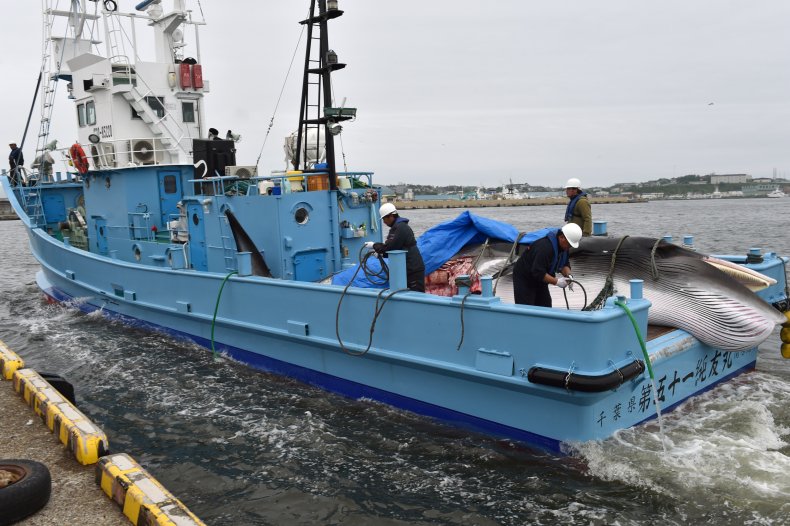
A captured Minke whale is carried by a whaling ship at a port in Kushiro, Hokkaido Prefecture on July 1, 2019.KAZUHIRO NOGI/AFP VIA GETTY IMAGES
Furthermore, both Norway and Japan will allow commercial whaling operations to continue during the pandemic. Japan—which drew widespread criticism for leaving the International Whaling Commission in 2018—has awarded itself a quota of nearly 200 whales. Meanwhile, hunters in Norway will be aiming to kill more than 1,200 over the next few months.
“These ongoing and cruel persecutions of marine mammals are increasingly out of step with modern scientific thinking, which shows that healthy marine mammal populations contribute to healthy marine ecosystems and the overall health of our planet. We need to look again very carefully at our relationships with these animals and appreciate their roles and not see them simply as commodities to be harvested,” Mark Simmonds, HSI’s senior marine scientist, said in the statement.
Centers for Disease Control and Prevention Advice on Using Face Coverings to Slow Spread of COVID-19
CDC recommends wearing a cloth face covering in public where social distancing measures are difficult to maintain.
A simple cloth face covering can help slow the spread of the virus by those infected and by those who do not exhibit symptoms.
Cloth face coverings should be washed regularly. A washing machine will suffice.
Practice safe removal of face coverings by not touching eyes, nose, and mouth, and wash hands immediately after removing the covering.
World Health Organization advice for avoiding spread of coronavirus disease (COVID-19)
Hygiene advice
Clean hands frequently with soap and water, or alcohol-based hand rub.
Wash hands after coughing or sneezing; when caring for the sick; before, during and after food preparation; before eating; after using the toilet; when hands are visibly dirty; and after handling animals or waste.
Maintain at least 1 meter (3 feet) distance from anyone who is coughing or sneezing.
Avoid touching your hands, nose and mouth. Do not spit in public.
Cover your mouth and nose with a tissue or bent elbow when coughing or sneezing. Discard the tissue immediately and clean your hands.
Medical advice
Avoid close contact with others if you have any symptoms.
Stay at home if you feel unwell, even with mild symptoms such as headache and runny nose, to avoid potential spread of the disease to medical facilities and other people.
If you develop serious symptoms (fever, cough, difficulty breathing) seek medical care early and contact local health authorities in advance.
Note any recent contact with others and travel details to provide to authorities who can trace and prevent spread of the disease.
Stay up to date on COVID-19 developments issued by health authorities and follow their guidance.
Mask and glove usage
Healthy individuals only need to wear a mask if taking care of a sick person.
Wear a mask if you are coughing or sneezing.
Masks are effective when used in combination with frequent hand cleaning.
Do not touch the mask while wearing it. Clean hands if you touch the mask.
Learn how to properly put on, remove and dispose of masks. Clean hands after disposing of the mask.
Do not reuse single-use masks.
Regularly washing bare hands is more effective against catching COVID-19 than wearing rubber gloves.
The COVID-19 virus can still be picked up on rubber gloves and transmitted by touching your face.
In this April 6, 2020, photo, workers prepare to replant aquatic tubers known as lotus roots in the Huangpi district of Wuhan in central China’s Hubei province. .(AP Photo/Ng Han Guan)
HUANGPI, China (AP) — Stuck in the same bind as many other Chinese farmers whose crops are rotting in their fields, Jiang Yuewu is preparing to throw out a 500-ton harvest of lotus root because anti-coronavirus controls are preventing traders from getting to his farm near Wuhan, where the global pandemic started.
Chinese leaders are eager to revive the economy, but the bleak situation in Huangpi in Wuhan’s outskirts highlights the damage to farmers struggling to stay afloat after the country shut down for two months.
In this April 6, 2020, photo, a worker tries to remove rotting aquatic tubers known as lotus roots in the Huangpi…
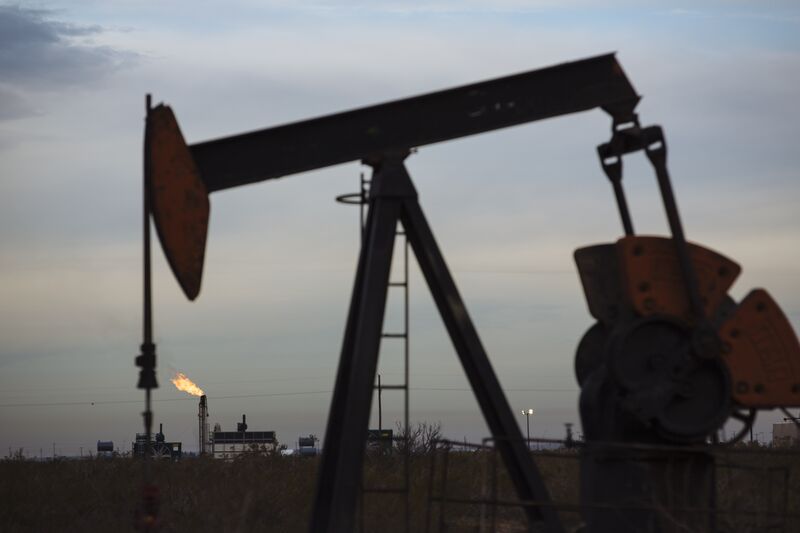
A gas flare burns past a pump jack in the Permian Basin area of Loving County, Texas, U.S., on Monday, Dec. 17, 2018.
Photographer: Angus Mordant/Bloomberg
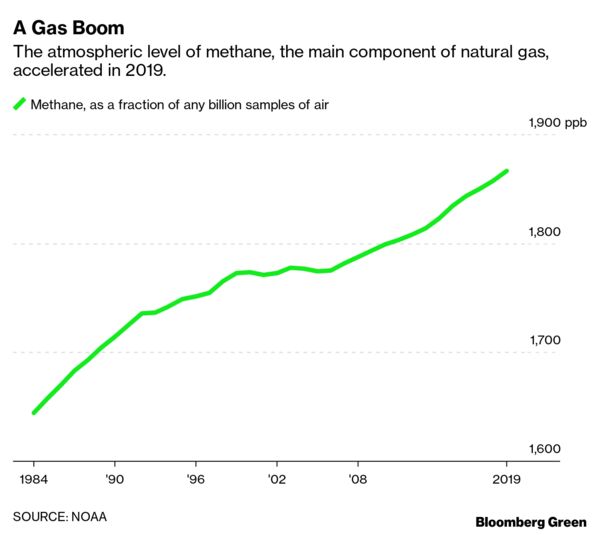
Airborne methane levels rose markedly last year, according to a preliminary estimate published today by the U.S. National Oceanic and Atmospheric Administration. The results show a dramatic leap in concentration of the second most-powerful greenhouse gas, which is emitted from both industrial and natural sources.
“Last year’s jump in methane is one of the biggest we’ve seen over the past twenty years,” said Rob Jackson, professor of Earth system science at Stanford University and chair of the Global Carbon Project. “It’s too early to say why, but increases from both agriculture and natural gas use are likely. Natural gas consumption surged more than two…
Nadia, the Bronx Zoo tiger recently diagnosed with coronavirus, did NOT deprive a potentially infected person from getting a COVID-19 test
Examples of coronavirus tests available to humans. (Credit: Washington State Department of Health)
WASHINGTON STATE DEPARTMENT OF HEALTH
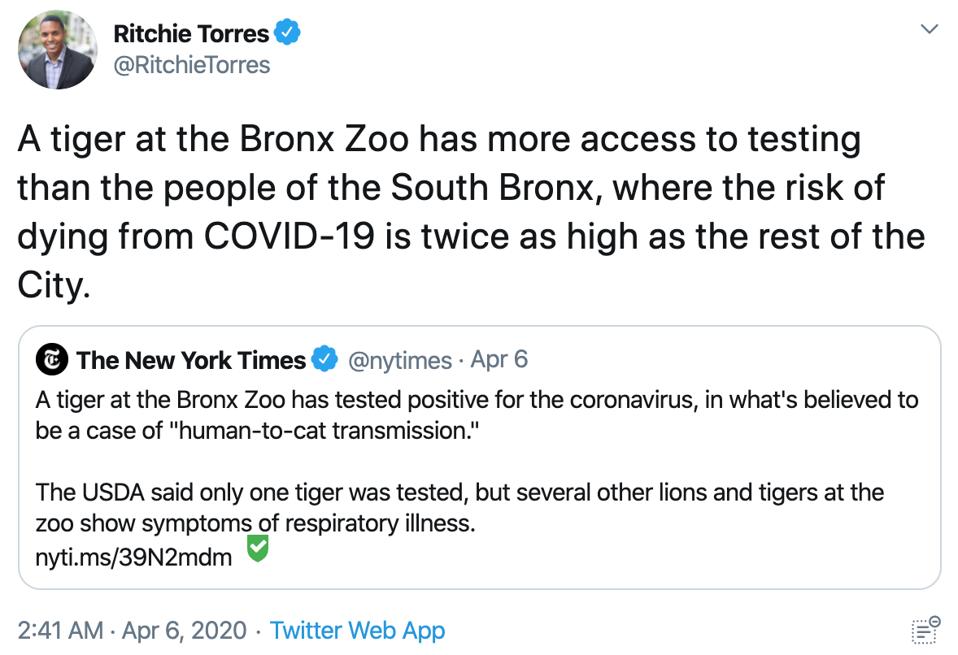
There’s been some public blowback against officials for giving Nadia, an ailing Malayan tiger who lives at the Bronx Zoo, a test for coronavirus. Considering that tests for COVID-19 are so severely limited for humans, why should a sick tiger get a test before a sick person does?
Ritchie Torres via Twitter.
RITCHIE TORRES VIA TWITTER.
Although councilman Ritchie Torres voiced a common frustration, this sentiment reflects the confusion surrounding COVID-19 testing because there are two main differences between COVID-19 tests for humans and those used for animals. The first difference lies in the test itself, and second…
Restrictions Aim to Protect Rare Tricolored Blackbirds, Beaver, Gray Wolves
SAN FRANCISCO, CA — In response to a lawsuit filed by wildlife advocacy groups, a federal animal-killing program must restrict its use of bird-killing poisons in Northern California and stop setting strangulation snares and other traps in places like the Sacramento National Wildlife Refuge Complex.
The agreement, approved today by a San Francisco federal court, also directs the U.S. Department of Agriculture’s Wildlife Services to analyze the environmental impacts of its killing of coyotes, bobcats, mountain lions and other wildlife in California’s “Sacramento District.” This 10-county region covers Colusa, El Dorado, Lake, Marin, Napa, Placer, Sacramento, Solano, Sonoma and Yolo counties.
“This victory will save hundreds of animals that would have needlessly suffered and died in traps set by Wildlife Services over the next several years,” said Collette Adkins, a Center for Biological Diversity attorney representing the conservation groups involved in the lawsuit. “It’s another important win in our fight to shut down this agency’s destructive and indiscriminate war on bobcats, coyotes and other wildlife.”
Under the court order approved today, Wildlife Services must provide, by the end of 2023, an “environmental impact statement” that analyzes the effects and risks of its wildlife-killing program in the Sacramento District. It must also offer opportunities for public input.
Pending completion of that study, the court order imposes several measures to protect wildlife in the 10-county area. For example, it restricts use of the avicide DRC-1339 to prevent accidental poisoning of state-threatened tricolored blackbirds. It also bans any use of body-gripping traps, such as strangulation snares, in several areas.
The court order further ends most beaver-killing in waterways where endangered wildlife depends on beaver-created habitats. The order also spells out several measures to protect California’s endangered gray wolves from being accidentally killed in traps set for other carnivores.
“We are pleased that Wildlife Services has agreed to consider the environmental impacts of its wildlife-killing program,” said Cristina Stella, an attorney at the Animal Legal Defense Fund. “Wild animals in California deserve our protection, and this victory assures that they will be free from some of the cruelest killing practices until Wildlife Services complies with federal law.”
“This agreement will ensure greater transparency and accountability from a federal agency that has run roughshod over America’s wildlife for far too long,” said Camilla Fox, Project Coyote executive director. “Many cost effective, non-lethal solutions exist to address human-wildlife conflicts that are more humane, ecologically sound and ethically defensible. We are hopeful that this settlement will propel a shift in this direction statewide.”
Today’s victory is the result of a lawsuit filed in August 2019 by the Center for Biological Diversity, Animal Legal Defense Fund and Project Coyote.
Background
The U.S. Department of Agriculture’s Wildlife Services is a multimillion-dollar federal program that uses painful leghold traps, strangulation snares, poisons and aerial gunning to kill coyotes, cougars, birds and other wild animals. Most of the killing is in response to requests from the agriculture industry.
In 2018 Wildlife Services reported killing nearly 1.5 million native animals nationwide. That year, in California, the program reported killing 26,441 native animals, including 3,826 coyotes, 859 beavers, 170 foxes, 83 mountain lions and 105 black bears. The 5,675 birds killed in 2018 in California included blackbirds, ducks, egrets, hawks, owls and doves.
Today’s victory follows several other recent wins by wildlife advocates in their campaigns against Wildlife Services, including in California (2019 and 2017), Oregon (2018), Colorado (2017), Arizona (2017), Idaho (2019 and 2018) and Wyoming (2019).
Johnson chairs cabinet by remote video link. But newspapers later report that Downing Street sources say Johnson has been “coughing and spluttering his way through conference calls”.
Wednesday 1 April
Johnson posts a video, urging people to stay at home and saying that those with symptoms like his should stay at home. He says that “although I am sequestered … I am able to be in constant touch with my officials” and says he is “absolutely confident” we will beat it together.
Thursday 2 April
When asked if the prime minister had a temperature, a Downing Street spokesman says only that he continues to have “mild symptoms”. Johnson appears on the steps of No 11 Downing Street – where his apartment is – to join the second “Clap for our Carers” event. Some observers suggest that Johnson looks unwell in pictures. Aides say he will be coming…
SEATTLE – As President Donald Trump and members of his Coronavirus Task Force praise Washington’s social distancing efforts to stop the spread of COVID-19, Gov. Jay Inslee remains somewhat skeptical when it comes to the work being done.
Inslee had previously said that the increasing positive case rate is something that concerns him and that the full weight of the virus has yet to be seen.
“These positive percentages are going up which is a cause for concern,” he said.
Over the course of the last four days, the overall positive case rate for the state has gone from 8 percent to 8.6 percent. Two weeks ago, it stood at just 7 percent.
ADVERTISING
KOMO News has reached out to the state Department of Health and its Joint Information…
Why COVID-19 previews a larger crash. What we must do to save ourselves.
William E. ReesToday | TheTyee.caWilliam E. Rees is professor emeritus of human ecology and ecological economics at the University of British Columbia.
In two centuries, human population has spiked seven-fold and consumption by 100 times. ‘The Earth will have its revenge,’ warns noted UBC systems ecologist William Rees, co-inventor of the ecological footprint concept. Photo by Joseph Stevenson via Flickr/Creative Commons.
As the pandemic builds, most people, led by government officials and policy wonks, perceive the threat solely in terms of human health and its impact on the national economy. Consistent with the prevailing vision, mainstream media call almost exclusively on physicians and epidemiologists, financiers and economists to assess the consequences of the viral outbreak.
Fair enough — rampant disease and looming recession are genuine immediate concerns; society has to cope with them.
That said, we must see and respond to the more important reality.
However horrific the COVID-19 pandemic may seem, it is merely one symptom of gross human ecological dysfunction. The prospect of economic implosion is directly connected. The overarching reality is that the human enterprise is in a state of overshoot.
We are using nature’s goods and life-support services faster than ecosystems can regenerate. There are simply too many people consuming too much stuff. Even at current global average levels of consumption (about a third of the Canadian average) the human population far exceeds the long-term carrying capacity of Earth. We’d need almost five Earth-like planets to support just the present world population indefinitely at Canadian average material standards. Gaian theory tells us that life continuously creates the conditions necessary for life. Yet humanity has gone rogue, rapidly destroying those conditions.
When will the media call on systems ecologists to explain what’s really going on? If they did, we might learn the following:
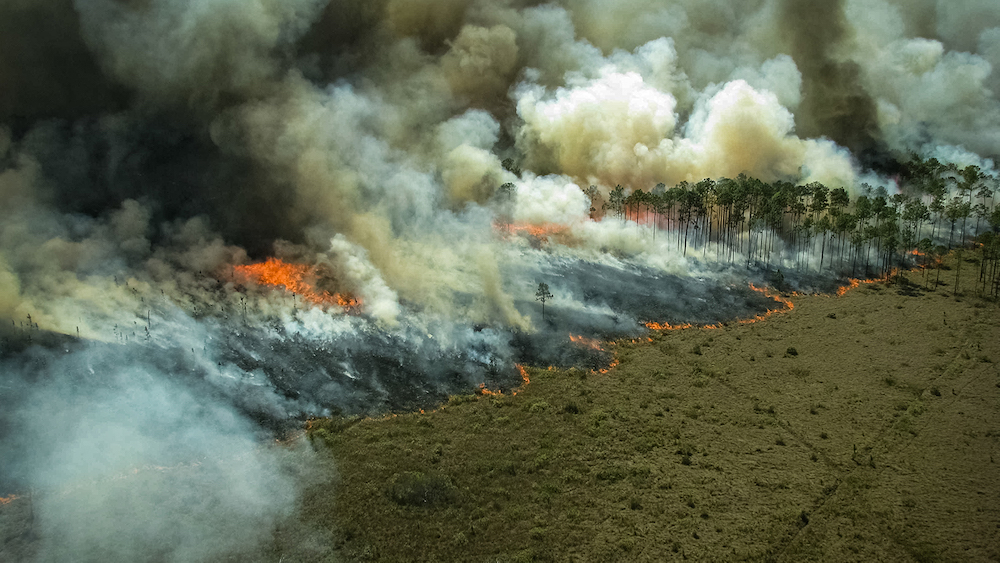
That the current pandemic is an inevitable consequence of human populations everywhere expanding into the habitats of other species with which we have had little previous contact (H. sapiens is the most invasive of “invasive species”).
That the pandemic results from sometimes desperately impoverished people eating bushmeat, the flesh of wild species carrying potentially dangerous pathogens.
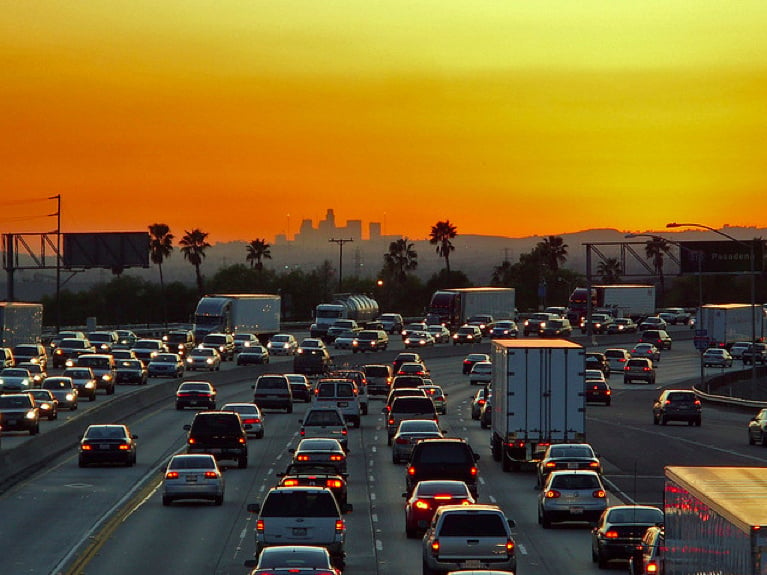
That contagious disease is readily propagated because of densification and urbanization — think Wuhan or New York — but particularly (as we may soon see) because of the severe overcrowding of vulnerable people in the burgeoning slums and barrios of the developing world.
That the coronavirus thrives because three billion people still lack basic hand-washing facilities and more than four billion lack adequate sanitation services.
A population ecologist might even dare explain that, even when it comes to human numbers, whatever goes up must come down.
None of this is visible through our current economic lens that assumes a perpetually growing, globalized market economy.
Prevailing myth notwithstanding, nothing in nature can grow forever.
When, under especially favourable conditions any species’ population balloons, it is always deflated by one or several forms of negative feedback — disease, inadequate habitat, self-pollution, food shortages, resource scarcity, conflict over what’s left (war), etc. All of these various countervailing forces are triggered by excess population itself.
Human-set fires in the Amazon: The current pandemic is an inevitable consequence of human populations everywhere expanding into the habitats of other species with which we have had little previous contact. Photo: Pixabay Creative Commons.
True, in simple ecosystems certain consuming species may exhibit regular cycles of uncontrolled expansion. We sometimes refer to these outbreaks as “plagues” — think swarms of locusts or rodents.
However, the plague phase of the cycle invariably ends in collapse as negative feedback once again gains the upper hand.
Bottom line? There are no exceptions to the first law of plague dynamics: the unconstrained expansion of any species’ population invariably destroys the conditions that enabled the expansion, thus triggering collapse.
Now here’s the thing. H. sapiens has recently experienced a genuine population explosion. It took all of human evolutionary history, at least 200,000 years, for our population to reach its first billion early in the 19th Century. Then, in just 200 years, (less than one thousandth as much time) we blossomed to more than seven billion at the beginning of this century.
This unprecedented outbreak is attributable to H. sapiens’ technological ingenuity, e.g., modern medicine and especially the use of fossil fuels. (The latter enabled the continuous increases in food production and provided access to all the other resources needed to expand the human enterprise.)
The problem is that Earth is a finite planet, on which the seven-fold increase in human numbers, vastly augmented by a 100-fold increase in consumption, is systematically destroying prospects for continued civilized existence. Over-harvesting is depleting non-renewable resources; land degradation, pollution, and global warming are destroying entire ecosystems; biophysical life support functions are beginning to fail.
With increasing real scarcity, growing extraction costs, and burgeoning human demand, the prices for non-renewable metal and mineral resources have been rising for 20 years (from historic lows at the turn of the century). Meanwhile, petroleum may have peaked in 2018 signalling the pending implosion of the oil industry (abetted by falling demand and prices resulting from the COVID-19 recession).
These are all signs of resurgent negative feedback. The explosion of human consumption is beginning to resemble the plague phase of what may turn out to be a one-off human population cycle. If we don’t manage a controlled contraction, chaotic collapse is inevitable.
Which brings us back to society’s restricted focus on COVID-19 and the economy.
Listen to the news, to politicians and pundits in this time of crisis. You will hear virtually no reference to climate change (remember climate change?), wildfires, biodiversity loss, ocean pollution, sea level rise, tropical deforestation, land/soil degradation, or human expansion into wildlands.
Nor is there a hint of understanding that these trends are connected to each other and to the pandemic.
Discussion in the mainstream focusses doggedly on defeating COVID-19, facilitating recovery, restoring growth and otherwise getting back to normal. After all, as Gregory Bateson has written, “That is the paradigm: Treat the symptom to make the world safe for the pathology.”
Let that sink in: “Normal” is the pathology.
But returning to “normal” guarantees a repeat performance. There will be other pandemics, potentially worse than COVID-19. (Unless, of course, some other form of negative feedback gets to us first — as noted, there is no shortage of potential candidates.)
Consider the present pandemic as yellow flagging for what nature may yet have in store. Earth will have its revenge. Unless, to avoid full-on negative feedback, we stand back and re-focus. This means consciously overriding humans’ natural myopia, thinking generations ahead and abandoning our perpetual growth narrative.
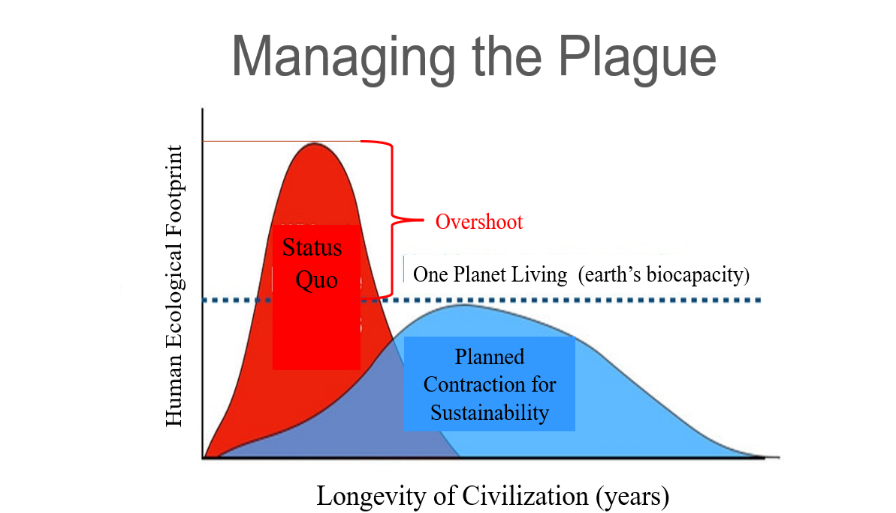
To save itself, society must adopt an eco-centric lens. This would enable us to see the human enterprise as a fully dependent subsystem of the ecosphere. We need to script a new cultural narrative consistent with this vision. We must reduce the human ecological footprint to eliminate overshoot — below is a curve that really needs flattening.
A different curve to flatten: Let’s start with a 50-per-cent reduction in energy and material throughput, as implicit in the 2015 Paris climate accord. Provided by William Rees.
Our cultural reset cannot end there. As medical supplies and equipment run out and supply chains stretch or break, people everywhere are becoming conscious of hazards associated with today’s increasingly unsustainable entanglement of nations.
We will have much to celebrate if community self-reliance, resilience and stability are once again valued more than interdependence, efficiency and growth. Specialization, globalization and just-in-time trade in vital commodities have gone too far. COVID-19 has shown that future security may well reside more in local economic diversity. For one thing, countries under stress may begin hoarding vital commodities for domestic use. (As if on cue, on April 3, Donald Trump, president of Canada’s biggest trading partner, requested 3M to suspend exports of badly-needed respirator face masks to Canada and Latin America.) Surely we need permanent policies for the re-localization of vital economic activities through a strategic approach to import displacement.
We might also build on the better side of human nature as ironically invigorated by our collective war on COVID-19. In many places, society’s fear of disease has been leavened by a revived sense of community, solidarity, compassion, and mutual aid. Recognition that disease strikes the impoverished hardest and that the pandemic threatens to widen the income gap has renewed calls for a return to more progressive taxation and implementation of a national minimum wage.
The emergency also draws attention to the importance of the informal care economy — child rearing and elder care are often voluntary and historically subsidize our paid economy. And what about renewed public investment worldwide in girls’ education, women’s health and family planning? Certainly individual actions are not enough. We are in a collective crisis that demands collective solutions.
To those still committed to the pre-COVID-19 perpetual-growth-through-technology paradigm, economic contraction equates to unmitigated catastrophe. We can give them no hope but to accept a new reality.
Like it or not, we are at the end of growth. The pandemic will certainly induce a recession and possibly a global depression, likely reducing Gross World Product by a quarter.
There are good reasons to think that there can be no “recovery” to pre-COVID “normal” even if we were foolish enough to try. Ours has been a debt-leveraged economy. Thousands of marginal firms will be bankrupted; some will be bought up by others with deeper pockets (further concentrating wealth) but most will disappear; millions of people will be left unemployed, possibly impoverished without ongoing public support.
The oil patch is particularly hard hit. Canada’s tar sands producers who need $40 dollars a barrel to survive are being offered one tenth that, less than the price of a mug of beer. Meanwhile, oil production may have peaked and older fields upon which the world still depends are declining at a rate of six per cent per year.
This heralds a future crisis: GWP and energy consumption have historically increased in lock-step; industrial economies depend utterly on abundant cheap energy. After the current short-term demand-drop surplus dries up, it will be years (if ever) before there is adequate new supply to replicate pre-pandemic levels of global economic activity — and there are no adequate”green’”substitutes. Much of the economy will have to be rebuilt to size in ways that reflect this emergent reality.
And herein lies the great opportunity to salvage global civilization.
Clearing skies and cleaner waters should inspire hopeful ingenuity. Indeed, if we wish to thrive on a finite planet, we have little choice but to see the COVID-19 pandemic as preview and our response as dress rehearsal for the bigger play. Again, the challenge is to engineer a safe, smooth, controlled contraction of the human enterprise. Surely it is within our collective imagination to socially construct a system of globally networked but self-reliant national economies that better serve the needs of a smaller human family.
The ultimate goal of economic planning everywhere must now turn to ensuring that humanity can thrive indefinitely and more equitably within the biophysical means of nature.
A laboratory technician working on samples to be tested for the new coronavirus at the “Fire Eye” laboratory in the city of Wuhan in China’s central Hubei province. Getty
The UK government reportedly believes the coronavirus outbreak may have started in a Chinese laboratory.
Most experts believe the outbreak began when animals passed the virus to humans in China, specifically in or near a market in the city of Wuhan where live animals were sold.
Some scientists, however, believe an accidental leak is a plausible alternative theory — and the Mail on Sunday said UK officials were not ruling it out.
A UK parliamentary committee last week accused the Chinese government of spreading disinformation about the origins of the virus.
“Perhaps it is no coincidence that there is that laboratory in Wuhan,” one UK government official told the Mail on Sunday.
U.K. Prime Minister Boris Johnson was moved to intensive care as his coronavirus symptoms worsened, according to a statement from the government.
Johnson was conscious when he was transferred to the ICU around 7 p.m. GMT. Johnson’s medical team made the decision to move him to that unit as a precaution in case he needed ventilation.
Foreign Secretary Dominic Raab will temporarily take over the prime minister’s duties while Johnson is hospitalized, the government said.
WATCH NOW
VIDEO01:43
UK PM Boris Johnson now in intensive care after coronavirus symptoms worsen
U.K. Prime Minister Boris Johnson was moved to intensive care as his coronavirus symptoms worsened over the course of hours Monday, according to a statement from the government.
Foreign Secretary Dominic Raab will temporarily take over the prime minister’s duties while Johnson is hospitalized, the government said.







![[Tyee]](https://thetyee.ca/ui/img/ico_fishie.png)

 Exposing the Big Game