On Wednesday, Georgia Gov. Brian Kemp finally issued a stay-at-home order for his state after resisting it for weeks. Kemp’s stated reason was one part amusing, three parts terrifying: he claimed that he had just learned that some people with COVID-19 can be asymptomatic, a fact that has been clear since January. Meanwhile, Texas Republican Gov. Greg Abbott has still not provided any statewide guidance, leaving such decisions to cities and counties. The same thing applies in Alabama, where Republican Gov. Kay Ivey sniffed that her state is “not California” and declared that she’s not ready to take an…
In an interview on Fox & Friends, Dr. Anthony Fauci ― the director of the National Institute of Allergy & Infectious Diseases & one of the top experts on the White House Coronavirus Task Force ― urged China to permanently close the “wet markets” that sell live & exotic animals and have been linked to outbreaks of severe viruses:
“I think they should shut down those things right away. It boggles my mind how, when we have so many diseases that emanate out of that unusual human-animal interface, that we don’t just shut it down. I don’t know what else has to happen to get us to appreciate that. I think there are certain countries in which this is very commonplace. I would like to see the rest of the world really lean with a lot of pressure on those countries that have that, because what we are going through right now is a direct result of that.”
What are “wet markets”?
“Wet markets” are marketplaces, sometimes open air, that sell fresh meat, fish, and other perishable goods. Some wet markets sell living animals, including wildlife & domesticated animals like dogs & cats, for food.
Their name comes from melting ice used to preserve food, as well as water used to clean blood & excrement on the floor from the animals, which may be stored & butchered on-site. Many wet markets are unsanitary and cramped, which creates conditions for the transmission of diseases from animals to humans through bacteria & viruses.
Wet markets are relatively common in some parts of the world, including China, Southeast Asia, and Africa ― although there may be substantial differences by region. For example, a 2014 study in China found only 5% of people in Beijing consumed wild animals in the prior year, whereas 83% of people in Guangzhou had.
China’s wet markets originated in the late 1970s after the failure of the Chinese Communist Party’s Cultural Revolution, which produced a famine that killed tens of millions of Chinese people. Because the CCP couldn’t invest in livestock production, it encouraged farmers to collect wild animals like bats, civets (cat-like animals), pangolins (endangered armadillo-like animals), rats, snakes, and others to breed for consumption & sale at local markets.
How are wet markets linked to viral outbreaks?
The 2002-2003 outbreak of severe acute respiratory syndrome (SARS) originated in a colony of horseshoe bats in a cave in China’s Yunnan Province, which passed the virus onto civets that in turn served as a vector to pass the virus to humans after they were sold as food at a wet market in China’s Guangdong Province. China’s government temporarily closed the wet markets during the SARS epidemic, which killed 774 people around the world, but lifted the ban six months after its conclusion.
Infectious disease experts haven’t yet definitively pinpointed how the coronavirus (COVID-19) outbreak began in Wuhan, China. A cluster of cases in people who went to a wet market known as the Huanan Seafood Wholesale Market have raised suspicion that that coronavirus was passed from animals to humans there. Studies have suggested that COVID-19 originated in bats, and that pangolins may have been the intermediate host that served as a vector in the virus’ transmission to humans.
Graham said in an interview on Fox & Friends the letter will warn China that, “If you don’t shut those wet markets down, our trading relationship is going to change.” He added:
“The source of this virus is the Chinese wet markets. But when you look — have doctors who come on and ask them, how many diseases have come from China through these wet markets where you intermingle all kinds of exotic animals, it’s just really a gross display of how you prepare food, that needs to stop.”
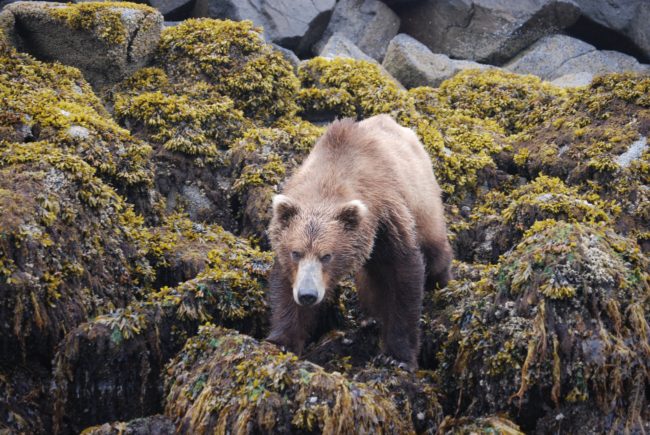
A brown bear in the Katmai area of the Alaska Peninsula, Nov. 18, 2010. (Creative Commons photo by Mandy Lindeberg/NOAA)
After announcing there would be no spring bear hunting in the state, the Alaska Department of Fish and Game has partially changed its mind. All non-resident brown and black bear hunts will remain closed through May 31. Spring bear hunting for Alaska residents remains open during that time.
“You know this was all about people moving around the state, specifically about hunters coming up from the lower 48, but also about people going from different communities in Alaska,” said Ryan Scott, assistant director of ADFG’s division of wildlife conservation.
“Right now we don’t have any concerns about bear populations. It remains to be seen how many people will take advantage of it, but it’s really good that resident hunters can get out there and take advantage of the bear opportunities.”
A Thursday letter from Fish and Game commissioner Doug Vincent-Lang reminds resident hunters to abide by health mandates, including social distancing and intrastate travel. That in-state travel between communities is prohibited except for supporting critical infrastructure or for critical personal needs.
Originally the Department closed non-resident and resident bear hunts until the end of May, via emergency order, in an effort to slow the spread of COVID-19 in Alaska. Even though Commissioner Vincent-Lang rescinded a portion of this closure, he emphasizes that general hunting has not been identified as a critical personal need, as defined by Governor Mike Dunleavy’s health mandates.
Scott said the department plans to work with the state’s Board of Game to accommodate hunters who’ve lost the opportunity.
“We recognize that there are lots of non-resident hunters planning to come to Alaska right now both for black bear hunts and brown bear hunts,” Scott said.
“We’re going to be looking for opportunities to move those permits around if we can to give those hunters the chance to come and do it again. We don’t know what it’s going to look like yet and it’s going to take some time to sort all that out. It’s important to recognize that we’ve issued drawing permits for next year already. So it’s going to take some finessing to distribute hunters across the landscape.”
Companies that accommodate out-of-state hunters can charge anywhere from a couple thousand dollars for a week-long self-guided black bear hunt to tens of thousands of dollars for a fully guided hunt from a wilderness lodge or tour boat. Brown bear hunts for non-residents are only allowed with a licensed guide or close relative who is a resident.
Eli Lucas owns Alaska Coastal Hunting, a guiding business based in Petersburg. He said the spring bear season is about half of his income for the year, but he understands the closure had to happen.
“We’ve offered refunds or switching dates but we really don’t know where to put people,” Lucas said. “We actually need more season if we’re going to put somebody to a full calendar because we don’t have room for the next years. And so, the other guides are in the same position. It’s a pretty complicated issue really.”
Outfitters, lodges, boat rentals and float plane companies will also lose business with the closure.
Fish and Game said they will announce further details in the coming days on how these spring bear hunts should be conducted by residents while complying with the Governor’s COVID-19 mandates.
Meanwhile, no closures are anticipated for other spring hunting seasons. And sport fishing remains open in Alaska with no current plans for closure.
Washington State has a temporary closure for its sport fishing along with the Columbia River in Oregon.
Officials with the Oregon Department of Fish and Wildlife said this past week its not ruling out the modification of hunting and fishing seasons around Oregon if people fail to comply with Gov. Kate Brown’s “Stay Home, Save Lives” order.
The ODFW said in a press release distributed late this past week that staffers planned to monitor recreational use of fishing, hunting and wildlife viewing locations while performing their regular duties. Although the organization said it can’t enforce the governor’s order for social distancing — keeping 6 feet from people outside the household — it also said staffers can make r
ecommendations based on what they see in public.
“We’ll continue to monitor fisheries and do everything in our power to be sure it isn’t contributing to the transmission of the virus,” ODFW Director Curt Melcher said in a press release. “If we do see…
The U.S. Fish and Wildlife Service has announced proposals to increase public access through new or expanded hunting and sport fishing opportunities at five national wildlife refuges in Nebraska.
Hunting and fishing programs are administered to ensure sustainable wildlife populations on refuge lands where these activities are compatible with the refuge’s management goals and other recreational activities.
In Nebraska, the service proposes the following:
» Crescent Lake National Wildlife Refuge in Garden County: Open crow, dove, rail, snipe and pronghorn hunting on acres already open to hunting, expand existing migratory bird and upland game to new acres, and expand season dates for existing sport fishing.
» Fort Niobrara National Wildlife Refuge in Cherry County: Open migratory bird, upland game and pronghorn hunting on acres already open to other hunting, and expand existing big game hunting by removing permit requirements.
» John W. and Louise Seier National Wildlife Refuge…
As a lifelong NRA Life member and Colorado resident, I am one of many hunters giving thanks to the NRA Institute for Legislative Action (NRA-ILA), this time for standing with hunters as the latest member of the Colorado Stop the Wolf Coalition (CSWC). Earlier this week, the NRA became the latest organization fighting to stop the forced introduction of non-native gray wolves into Colorado through a ballot initiative being pushed by animal-rights extremists that is set for a vote in November. As America’s largest hunter-backed organization, the NRA’s involvement sends a message to hunters, regardless of whether they live in Colorado, that engaging in this issue is critical to the future of hunting and wildlife conservation.
“Fighting for the rights of hunters and every law-abiding citizen is what we are about,” said Erica Tergeson, director of hunting policy for NRA-ILA. “That’s…
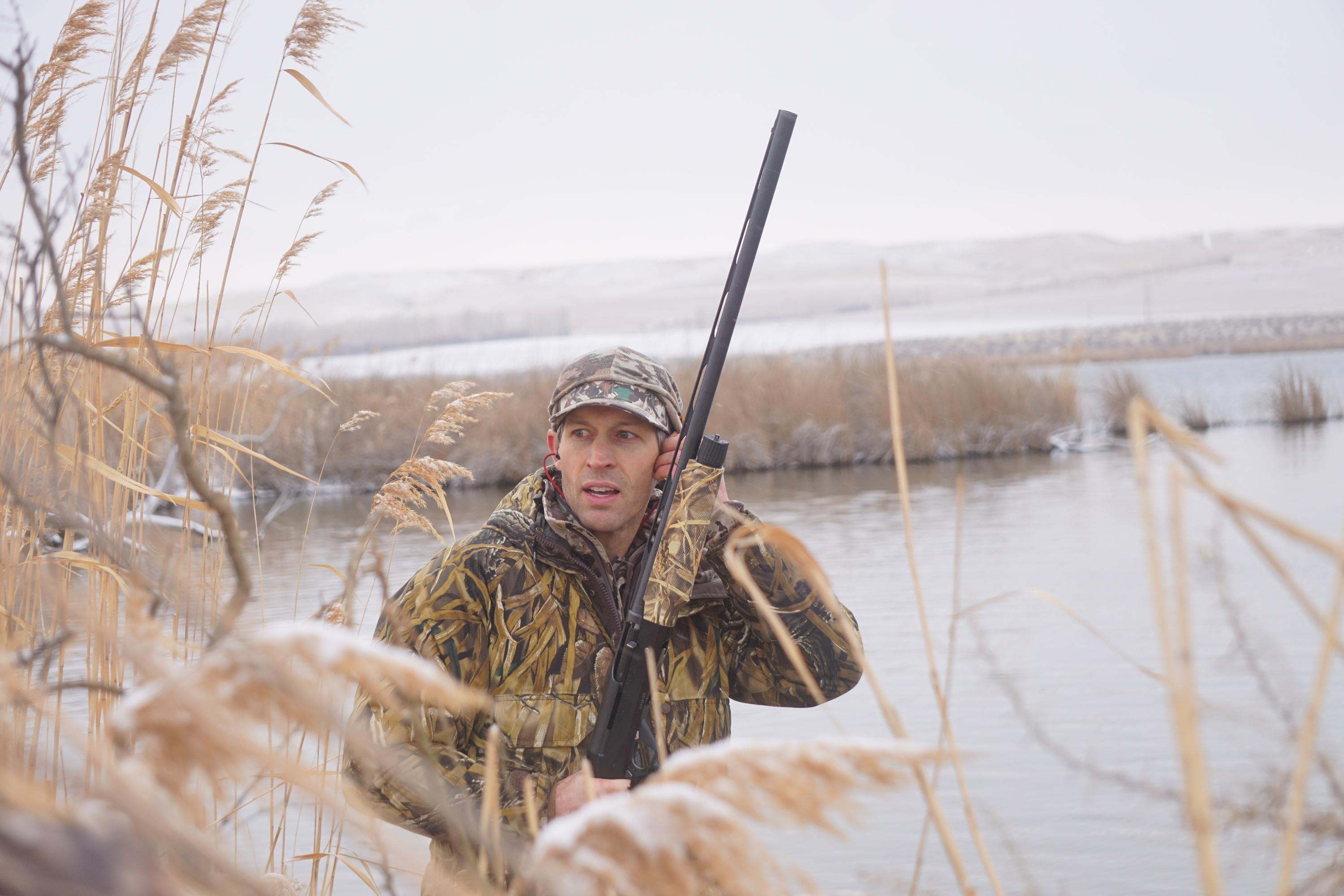
Brad Brooks adjusts his earplugs during a duck hunting trip near Bruneau on Jan. 15, 2019. Brooks grew up hunting, but in recent years he’s become a fan of creating unique, challenging dishes from his game harvests. (Nicole Blanchard / COURTESY)
To help educate our community during this critical time, The Spokesman-Review has removed paymeter restrictions on our COVID-19 stories that directly affect the public. The rest of the COVID-19 stories will be available at a very low rate. If you want to support local journalism in this and other endeavors, you can subscribe or donate here.
The Idaho Department of Fish and Game Commission suspended the sale of some nonresident fishing and hunting licenses, tags and permits Saturday.
The action is effective immediately and will last until the rule is appealed…
Grupo Modelo, the company that makes the beer, posted the announcement on Twitter, stating that it’s halting production and marketing of its beer because the Mexican government has shuttered non-essential businesses. The Anheuser-Busch Inbev-owned company also makes Modelo and Pacifico beers.
This week, the Mexican government announced the suspension of non-essential activities in the public and private sectors until April 30 in an effort to curb the spread of the virus. The country has more than 1,500 cases and 50 deaths, according to Johns Hopkins.
Grupo Modelo is ready to enact a plan to “guarantee the supply of beer” if the Mexican government decides to include breweries as essential, according to a statement.
Constellation Brands (STZ) handles the distribution and import of Grupo Modelo’s beers in the United States. CEO Bill Newlands said in an earnings call the brand has “ample supply to meet consumer demand” and doesn’t expect shortages in the near term.
close dialog
Corona’s coincidental name with the virus hasn’t dented sales. Constellation said sales of its beer brands grew 8.9% for the first three months of this year, with Modelo and Corona being its top sellers. Sales accelerated in the first three weeks of March, the company said, with its beers growing 24% compared to a year ago.
Corona Hard Seltzer, which launched in early March, is also off to a “strong start,” according to a company earnings release.
Beer and other alcohol are rising in sales this month as Americans are being forced to hunker down in light of the coronavirus. Sales numbers from Nielsen (NLSN) show beer sales rose 34% year-over-year for the week ending on March 21.
Healthy 30-year-old teacher dies suddenly from coronavirus03:25
(CNN)When 30-year-old Ben Luderer started to feel sick, he wasn’t that surprised. Just a few days earlier, his wife, Brandy, had tested positive for coronavirus, but there wasn’t much to it.
All she had was a really low-grade temperature, one that the doctors didn’t even really consider to be a fever, she said. She had some congestion, but she was on the mend. He wasn’t all that worried, either, when he started feeling unwell. After all, they were both young and healthy.
The two worked in the Cliffside Park School District in New Jersey, both as special education teachers — she at School #4, he at School…
Homemade face masks and face coverings, from hand-sewn cloth to bandanas and rubber bands, are now urged for public use. But they may not be effective at preventing coronavirus.
For the most up-to-date news and information about the coronavirus pandemic, visit the WHO website.
Can you still acquire coronavirus if you wear a homemade mask in public? What’s the government’s exact recommendation? Why are N95 masks considered so much better? As cases in the US surge and new data on the transmission of the COVID-19 disease comes to light, the Centers for Disease Control and Prevention issued new guidelines this week on wearing face coverings in public, including cloth face coverings crafted at home.
We’ll tell you exactly what that means, as well as the differences between them and N95 respirator…






 Exposing the Big Game
