A day after announcing the spring bear hunting season would be canceled in Alaska, the state has decided to reconsider their position.
In a press conference on Wednesday, Gov. Mike Dunleavy said the cancellation applied to black and brown bear hunts for both residents and non-residents.
It was in response to a reporter question about how some Kodiak residents were concerned over the possible spread of the novel coronavirus.
On Thursday, Dunleavy walked back that statement and clarified that residents would still be allowed to participate in the hunting season, but non-residents would not.
He said Alaskans would still need to follow existing health mandates on social distancing and travel within the state.
An advisory from Alaska Department of Fish and Game Commissioner Doug Vincent-Lang reiterated that point:
“To protect public health, resident hunters participating in spring bear…
KOTA KINABALU: Two people were killed while a man was injured after they were accidentally shot during two separate hunting trips.
In the first case, a man was shot dead in a forest near Kg Rampayan Ulu Kota Belud.
He and his friend had gone hunting at about 2pm on March 31, said Sabah Police Commissioner Datuk Zaini Jass.
Along the way, they spotted hoof prints which they believed were those of a deer.
“So they parted ways with the victim heading down a hill and the friend remaining on higher ground, ” he said.
Not long after that, the friend on higher ground fired a shot towards what he thought was an animal. There was a scream and it turned out to be his hunting partner.
“The victim, in his late 30s, was still conscious at that time. The suspect…
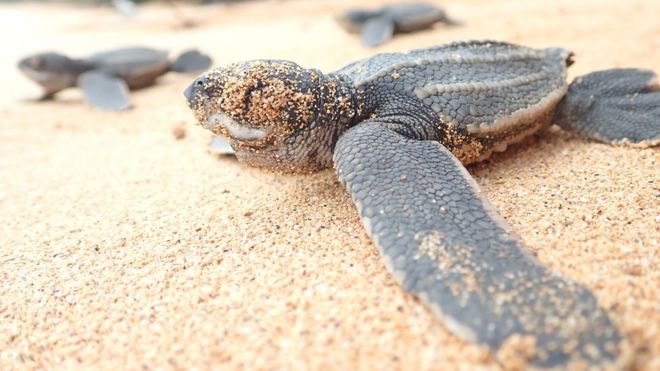
Image copyrightFUNDAOPRNCIPE_FFIImage captionNumbers are declining due to accidental fishing and egg collecting
The largest turtle in the ocean, the leatherback gets its name from its tough, rubbery skin.
Migrating long distances a year, the turtle can cross the Pacific Ocean.
But with threats like getting tangled in fishing gear, the future for one distinct population looks “dire,” say conservation groups.
At the current rate of decline, the critically endangered Eastern Pacific leatherback turtle will vanish within 60 years.
We have just 10 years left to put measures in place to save it, says a group of conservation scientists and organisations including Fauna & Flora International (FFI).
“We have it within our power to protect these animals and enable them to thrive, but all those who have a hand in shaping their future need to work…
Image copyrightZEZICO GUAJAJARAImage captionZezico Guajajara is the fifth Amazon forest protector to be killed in six months
A member of a protected tribe in the Amazon has been killed by gunmen, authorities in the Brazilian state of Maranhao say.
The body of Zezico Guajajara, of the Guajajara tribe, was found near his village on Tuesday. He had been shot.
The former teacher was a supporter of Guardians of the Forest, a group formed to combat logging gangs in the area.
The killing – the fifth in six months – increases concerns about violence against Amazon forest protectors.
Brazil’s populist President Jair Bolsonaro has drawn intense domestic and international criticism for failing to protect the Guardians’ territory in the eastern Amazon region.
He has often stated support for farmers and loggers working in the area, while criticising environmental campaigners and slashing the budget of Brazil’s environmental agency.
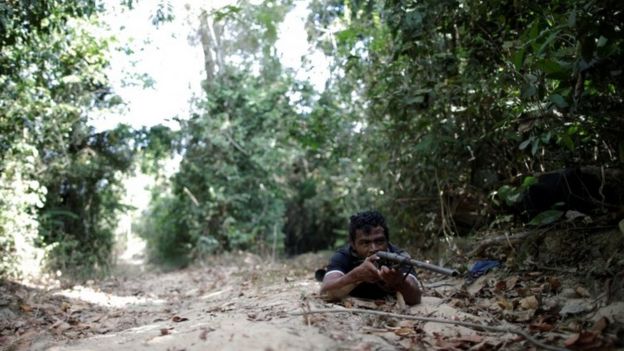
Image copyrightREUTERSImage captionPaulo Paulino Guajajara – another activist seen here during a search for illegal loggers – was killed last November
The Guajajaras are one of Brazil’s largest indigenous groups with some 20,000 people. In 2012, they started the Guardians of the Forest to protect the Arariboia Indigenous Territory.
It is not clear who killed Zezico Guajajara on Tuesday. Authorities say they are investigating.
In a statement issued on Wednesday, indigenous leader Olimpio Guajajara described him as “another fellow warrior – a man who defended life”.
“We are mourning his death. We’re protecting the forest for all humanity, but powerful forces are out to kill us.”
Media caption“The people that are part of the brigade are together for this, to protect mother nature above all”
The Brazilian Indigenous Peoples’ Association (APIB) urged a thorough investigation.
The latest murder “is evidence of the worsening violence and vulnerability of the indigenous people, especially the leaders that fight to defend their territories against invaders,” the group said in a statement.
Sarah Shenker, who works for Survival International, a non-governmental organisation advocating for indigenous communities, accused loggers of targeting activists “one by one”.
The group renewed its criticism of President Bolsonaro.
“The Guardians have been mercilessly targeted by powerful logging mafias illegally exploiting the valuable hardwoods in the Arariboia indigenous territory, home to both the Guajajara indigenous people and uncontacted members of the Awa tribe,” it said in a statement.
In a March 26 letter to federal Fisheries Minister Bernadette Jordan, the Canadian Aquaculture Industry Alliance asked her for “regulatory flexibility” during the COVID-19 crisis so they could break the rules while the public is distracted. In their letter they ask for free rein regarding:
sea lice monitoring
environmental monitoring
deposition of organic waste and pesticides
reporting of mass die-offs
This deregulation would allow fish farm companies to go unchecked for the foreseeable future, increasing risk to threatened wild salmon and marine ecosystems.
New Yorkers on Manhattan’s Park Avenue cover their faces last week.
Noam Galai/Getty Images
Since the beginning of the global coronavirus pandemic, Americans have been told by the Centers for Disease Control and Prevention not to wear masks unless they are sick, caring for a sick person who is unable to wear one or working in health care.
Numerous reasons have been given: That they don’t offer significant protection from germs. That the most effective models need special fitting in order to work. That regular people don’t typically wear them correctly. That they’ll give people a false sense of security and cause them to be lax about hand-washing and social distancing.
And most of all: that there aren’t enough masks and respirators for the health-care workers who desperately need them so leave the masks to them.
The Department of Environment and Natural Resources (DENR) is looking into the population boom of an “aggressive” disease-carrying native monkey species in Banton, Romblon, following the reported jump of the ape population in the island municipality.
DENR Assistant Secretary Ricardo Calderon said a team was sent by him to conduct preliminary investigation in the area and verified the report.
“We have already sent a team on the island and we verified the report that there was indeed an increase in the number of monkey population on the island,” Calderon reported.
The Philippines’s long-tailed macaque (Macaca fascicularis philippensis) is a subspecies of the crab-eating macaque. Aside from being a potential carrier of a deadly virus such as Ebola, they are also known to be very aggressive as they tend to be protective of their troop.
Although there are still no recorded, or reported unprovoked attacks on the human population, so far, these monkeys that became highly dependent on food handouts by tourists sometimes go out to raid houses for morsels.
In Romblon, Calderon said, there are reports that they are not only raiding houses but are destroying farms—targeting small banana and cassava farms, including those planted by subsistence farmers.
With the increasing number of monkeys on the island, Calderon said the DENR is now mulling over to start issuing special permits that will allow the capture of these monkey for research and development and purposes.
“Monkeys are usually exported for purpose of scientific research to produce a cure to diseases, or vaccines, because monkeys are closely associated with humans,” he said.
In the Philippines, he said, there are at least seven monkey farms with special permits to breed native species of monkeys.
“These monkey farms suddenly stopped operation because of the reported spread of the Ebola virus disease several years back, but their permits are still active,” he said, adding that he believes that with the increasing demand for a live specimen for the conduct of scientific research, these farms would soon revive their captive breeding program.
The DENR’s Biodiversity Management Bureau (BMB) allows farming of monkeys, recognizing their important role in scientific research to fight deadly viruses that could cause global pandemic, such as the novel coronavirus that causes Covid-19.
These farms are strictly regulated.
“They export the progeny, or the offspring of captive monkeys, to laboratories conducting scientific research in search of vaccines,” Calderon said.
He said that while the DENR-BMB also issues special permits for wild animals as pets, monkeys are discouraged because of the threat of the Ebola virus. Monkeys may be imported and exported under the Convention on International Trade in Endangered Species of Wild Fauna and Flora or CITES.
A signatory to CITES, the Philippines strictly adhere to its policy to prohibit the export of species on the endangered list. Native monkeys in the Philippines are considered a “least concern species,” which means they do not qualify as threatened, or near threatened.
“So far, there’s one permit application that I came across with for harvesting monkeys,” Calderon said. Before issuing a special permit, the DENR-BMB looks into the conservation status and conduct a background investigation of the applicants, he added.
Usually, these applicants work for monkey farms whose business is to breed monkeys and sell the offspring, usually to foreign buyers, Calderon said.
Andrew Glikson does not work for, consult, own shares in or receive funding from any company or organization that would benefit from this article, and has disclosed no relevant affiliations beyond their academic appointment.
in the history of our planet, increasing amounts of carbon dioxide in the atmosphere have caused extreme global warming, prompting the majority of species on Earth to die out.
In the past, these events were triggered by a huge volcanic eruption or asteroid impact. Now, Earth is heading for another mass extinction – and human activity is to blame.
I am an Earth and Paleo-climate scientist and have researched the relationships between asteroid impacts, volcanism, climate changes and mass extinctions of species.
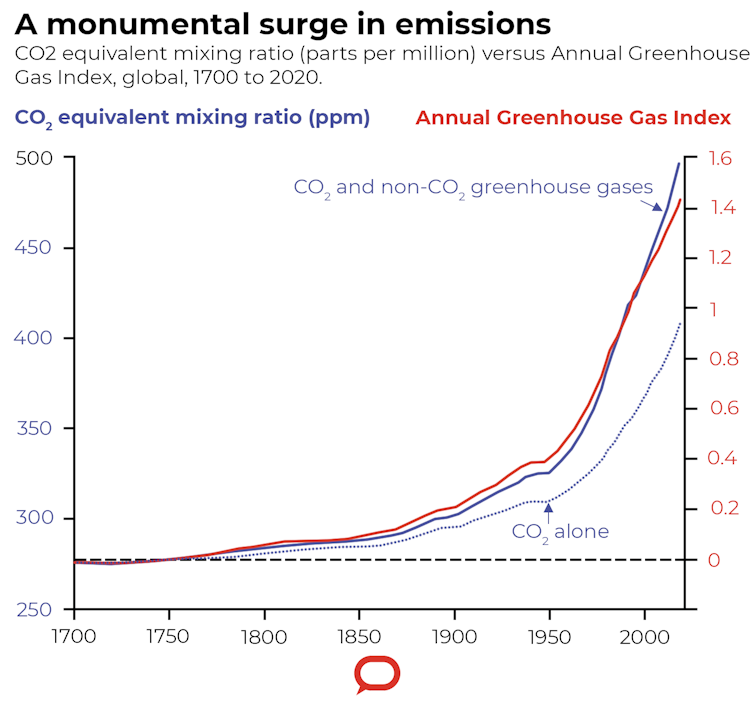
My research suggests the current growth rate of carbon dioxide emissions is faster than those which triggered two previous mass extinctions, including the event that wiped out the dinosaurs.
The world’s gaze may be focused on COVID-19 right now. But the risks to nature from human-made global warming – and the imperative to act – remain clear.
The current rate of CO2 emissions is a major event in the recorded history of Earth.EPA
Past mass extinctions
Many species can adapt to slow, or even moderate, environmental changes. But Earth’s history shows that extreme shifts in the climate can cause many species to become extinct.
For example, about 66 million years ago an asteroid hit Earth. The subsequent smashed rocks and widespread fires released massive amounts of carbon dioxide over about 10,000 years. Global temperatures soared, sea levels rose and oceans became acidic. About 80% of species, including the dinosaurs, were wiped out.
And about 55 million years ago, global temperatures spiked again, over 100,000 years or so. The cause of this event, known as the Paleocene-Eocene Thermal Maximum, is not entirely clear. One theory, known as the “methane burp” hypothesis, posits that a massive volcanic eruption triggered the sudden release of methane from ocean sediments, making oceans more acidic and killing off many species.
So is life on Earth now headed for the same fate?
Comparing greenhouse gas levels
Before industrial times began at the end of the 18th century, carbon dioxide in the atmosphere sat at around 300 parts per million. This means that for every one million molecules of gas in the atmosphere, 300 were carbon dioxide.
Using carbon records stored in fossils and organic matter, I have determined that current carbon emissions constitute an extreme event in the recorded history of Earth.
My research has demonstrated that annual carbon dioxide emissions are now faster than after both the asteroid impact that eradicated the dinosaurs (about 0.18 parts per million CO2 per year), and the thermal maximum 55 million years ago (about 0.11 parts per million CO2 per year).
An asteroid wiped out the dinosaurs 66 million years ago.Shutterstock
The next mass extinction has begun
Current atmospheric concentrations of carbon dioxide are not yet at the levels seen 55 million and 65 million years ago. But the massive influx of carbon dioxide means the climate is changing faster than many plant and animal species can adapt.
A major United Nations report released last year warned around one million animal and plant species were threatened with extinction. Climate change was listed as one of five key drivers.
The report said the distributions of 47% of land-based flightless mammals, and almost 25% of threatened birds, may already have been negatively affected by climate change.
Many researchers fear the climate system is approaching a tipping point – a threshold beyond which rapid and irreversible changes will occur. This will create a cascade of devastating effects.
A shift in climate zones is also causing the tropics to expand and migrate toward the poles, at a rate of about 56 to 111 kilometres per decade. The tracks of tropical and extra-tropical cyclones are likewise shifting toward the poles. Australia is highly vulnerable to this shift.
Uncharted future climate territory
Research released in 2016 showed just what a massive impact humans are having on the planet. It said while the Earth might naturally have entered the next ice age in about 20,000 years’ time, the heating produced by carbon dioxide would result in a period of super-tropical conditions, delaying the next ice age to about 50,000 years from now.
During this period, chaotic high-energy stormy conditions would prevail over much of the Earth. My research suggests humans are likely to survive best in sub-polar regions and sheltered mountain valleys, where cooler conditions would allow flora and fauna to persist.
Earth’s next mass extinction is avoidable – if carbon dioxide emissions are dramatically curbed and we develop and deploy technologies to remove carbon dioxide from the atmosphere. But on the current trajectory, human activity threatens to make large parts of the Earth uninhabitable – a planetary tragedy of our own making.
is key to daily lives returning to normal. Since the Sars-CoV-2 virus – which causes the disease Covid-19 – has been known for only a short period of time, there is much to be studied regarding humans’ immune response to it.
The South China Morning Post spoke to researchers about what we know about immunity so far.
How is immunity to the virus developed?
Ashley St John, an immunologist from Duke and National University of Singapore’s medical school, said that most of our information on immunity…
Caution: Some readers may find the details and images in this story disturbing.
The novel coronavirus has ravaged the coastal Ecuadorian city of Guayaquil, which has struggled to cope with the number of corpses as hospitals, morgues and funeral parlors have been overwhelmed. Some social media videos show unattended bodies lying on the street with nowhere else to go.
The outbreak in Ecuador has sickened at least 3,100 people, according to Johns Hopkins’ latest data map. The epicenter in the country is in Guayaquil, where residents have criticized the government’s response.
Wrapped coffins are stacked up on the back of a pickup truck and wait on the sidewalk outside a hospital in Guayaquil, Ecuador.ENRIQUE ORTIZ/AFP VIA GETTY IMAGES
Because of the strict quarantine measures taken to restrict the spread of COVID-19, people have been limited in what they can do for…









 Exposing the Big Game