Exposing the Big Game

Forget Hunters' Feeble Rationalizations and Trust Your Gut Feelings: Making Sport of Killing Is Not Healthy Human Behavior

Exposing the Big Game

Don’t Believe the COVID-19 Models

Exposing the Big Game's avatarThe Extinction Chronicles

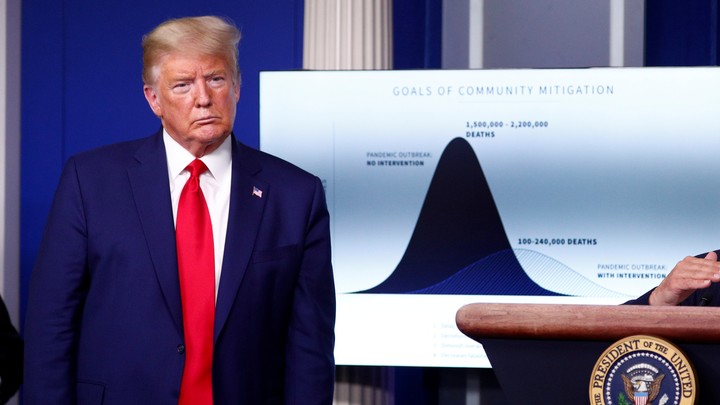
U.S. President Donald Trump stands in front of a chart labeled “Goals of Community Mitigation” showing projected deaths from the coronavirus in the United States.
TOM BRENNER / REUTERS

Editor’s Note: The Atlantic is making vital coverage of the coronavirus available to all readers. Find the collection here.

The Trump administration has just released the model for the trajectory of the COVID-19 pandemic in America. We can expect a lot of back-and-forth about whether its mortality estimates are too high or low. And its wide range of possible outcomes is certainly confusing: What’s the right number? The answer is both difficult and simple. Here’s the difficult part: There is no right answer. But here’s the simple part: Right answers are not what epidemiological models are for.

Epidemiologists routinely turn to models to predict the progression of an infectious disease. Fighting public suspicion of these models is as old as modern epidemiology, which traces its origins back to John Snow’s famous cholera maps in…

View original post 1,781 more words

Discovery of Life Deep beneath Sea May Inspire Search on Mars

Bacteria live in tiny clay-filled cracks in solid rock millions of years old

Associate professor Yohey Suzuki at the University of Tokyo led the effort to develop a new way to prepare rock samples to search for life deep beneath the seafloor. This is an example of one of the thin slices of rock he prepared using special epoxy to ensure the rock held its shape while it was cut.
CAITLIN DEVOR, UNIVERSITY OF TOKYO, CC BY 4.0

Newly discovered single-celled creatures living deep beneath the seafloor have given researchers clues about how they might find life on Mars. These bacteria were discovered living in tiny cracks inside volcanic rocks after researchers persisted over a decade of trial and error to find a new way to examine the rocks.

Researchers estimate that the rock cracks are home to a community of bacteria as dense as that of the human gut, about 10 billion bacterial cells per cubic centimeter (0.06 cubic inch). In contrast, the average density of bacteria living in mud sediment on the seafloor is estimated to be 100 cells per cubic centimeter.

“I am now almost over-expecting that I can find life on Mars. If not, it must be that life relies on some other process that Mars does not have, like plate tectonics,” said associate professor Yohey Suzuki from the University of Tokyo, referring to the movement of land masses around Earth most notable for causing earthquakes. Suzuki is first author of the research paper announcing the discovery, published in Communications Biology.

Magic of clay minerals

“I thought it was a dream, seeing such rich microbial life in rocks,” said Suzuki, recalling the first time he saw bacteria inside the undersea rock samples.

Undersea volcanoes spew out lava at approximately 1,200 degrees Celsius (2,200 degrees Fahrenheit), which eventually cracks as it cools down and becomes rock. The cracks are narrow, often less than 1 millimeter (0.04 inch) across. Over millions of years, those cracks fill up with clay minerals, the same clay used to make pottery. Somehow, bacteria find their way into those cracks and multiply.

“These cracks are a very friendly place for life. Clay minerals are like a magic material on Earth; if you can find clay minerals, you can almost always find microbes living in them,” explained Suzuki.

The microbes identified in the cracks are aerobic bacteria, meaning they use a process similar to how human cells make energy, relying on oxygen and organic nutrients.

“Honestly, it was a very unexpected discovery. I was very lucky, because I almost gave up,” said Suzuki.

Cruise for deep ocean samples

Yohey Suzuki from the University of Tokyo and collaborators from around Japan are the first to find life surviving in solid rocks deep beneath the seafloor.
CAITLIN DEVOR, UNIVERSITY OF TOKYO, CC BY 4.0

Suzuki and his colleagues discovered the bacteria in rock samples that he helped collect in late 2010 during the Integrated Ocean Drilling Program (IODP). IODP Expedition 329 took a team of researchers from the tropical island of Tahiti in the middle of the Pacific Ocean to Auckland, New Zealand. The research ship anchored above three locations along the route across the South Pacific Gyre and used a metal tube 5.7 kilometers long to reach the ocean floor. Then, a drill cut down 125 meters below the seafloor and pulled out core samples, each about 6.2 centimeters across. The first 75 meters beneath the seafloor were mud sediment and then researchers collected another 40 meters of solid rock.

Depending on the location, the rock samples were estimated to be 13.5 million, 33.5 million and 104 million years old. The collection sites were not near any hydrothermal vents or sub-seafloor water channels, so researchers are confident the bacteria arrived in the cracks independently rather than being forced in by a current. The rock core samples were also sterilized to prevent surface contamination using an artificial seawater wash and a quick burn, a process Suzuki compares to making aburi (flame-seared) sushi.


Related Article: What Will a Lab on Mars Be Like?


At that time, the standard way to find bacteria in rock samples was to chip away the outer layer of the rock, then grind the center of the rock into a powder and count cells out of that crushed rock.

“I was making loud noises with my hammer and chisel, breaking open rocks while everyone else was working quietly with their mud,” he recalled.

How to slice a rock

Insert Image Here (remove this text once you’ve added an image)
Aerobic bacteria live densely packed into tunnels of clay minerals found in this sample of solid rock, collected from 122 meters beneath the seafloor. Image B is 1,000 times greater magnification than Image A. The left side photo in each image was taken using normal light and the right side photo was taken using fluorescent light. The solid basalt rock is gray, the clay minerals are orange, and the bacterial cells are green spheres.
SUZUKI ET AL. 2020, DOI: 10.1038/S42003-020-0860-1, CC BY 4.0

Over the years, continuing to hope that bacteria might be present but unable to find any, Suzuki decided he needed a new way to look specifically at the cracks running through the rocks. He found inspiration in the way pathologists prepare ultrathin slices of body tissue samples to diagnose disease. Suzuki decided to coat the rocks in a special epoxy to support their natural shape so that they wouldn’t crumble when he sliced off thin layers.

These thin sheets of solid rock were then washed with dye that stains DNA and placed under a microscope.

The bacteria appeared as glowing green spheres tightly packed into tunnels that glow orange, surrounded by black rock. That orange glow comes from clay mineral deposits, the “magic material” giving bacteria an attractive place to live.

Whole genome DNA analysis identified the different species of bacteria that lived in the cracks. Samples from different locations had similar, but not identical, species of bacteria. Rocks at different locations are different ages, which may affect what minerals have had time to accumulate and therefore what bacteria are most common in the cracks.

Suzuki and his colleagues speculate that the clay mineral-filled cracks concentrate the nutrients that the bacteria use as fuel. This might explain why the density of bacteria in the rock cracks is eight orders of magnitude greater than the density of bacteria living freely in mud sediment where seawater dilutes the nutrients.

From the ocean floor to Mars

The clay minerals filling cracks in deep ocean rocks are likely similar to the minerals that may be in rocks now on the surface of Mars.

“Minerals are like a fingerprint for what conditions were present when the clay formed. Neutral to slightly alkaline levels, low temperature, moderate salinity, iron-rich environment, basalt rock—all of these conditions are shared between the deep ocean and the surface of Mars,” said Suzuki.

Suzuki’s research team is beginning a collaboration with NASA’s Johnson Space Center to design a plan to examine rocks collected from the Martian surface by rovers. Ideas include keeping the samples locked in a titanium tube and using a CT (computed tomography) scanner, a type of 3D X-ray, to look for life inside clay mineral-filled cracks.

“This discovery of life where no one expected it in solid rock below the seafloor may be changing the game for the search for life in space,” said Suzuki.

– This press release was originally published on the University of Tokyo website

Coronavirus outbreak sparks face mask debate: Should you wear them?

Get all the latest news on coronavirus and more delivered daily to your inbox. Sign up here.

Should the general public wear masks during the coronavirus epidemic in the U.S.?

The debate over wearing face masks to protect against the novel coronavirus is wide-ranging, with health officials signaling a possible shift in the recommendations for the general public.

Currently, major health organizations — including the Centers for Disease Control and Prevention (CDC) and the World Health Organization (WHO) — have continued to urge those who are healthy to leave surgical masks and the more protective N95 respirators to medical professionals, who across the country are reusing single-use medical masks due to widespread shortages.

DO SURGICAL MASKS PROTECT AGAINST CORONAVIRUS? 

As the pandemic rages on, however, some have challenged such recommendations. On Twitter, social media users on Monday slammed a tweet from the U.S. Surgeon General that linked to an article about the WHO standing by its recommendations for healthy people to not wear face masks.

But officials at the CDC are now mulling a change to current guidelines, recommending all Americans cover their faces with nonmedical homemade masks, scarves or even bandanas when in public, The Washington Post reported.

“If the CDC does put out such guidance, I would respect it. I can tell you having drafted many CDC guidelines over the years that these are done very carefully and on the best available evidence,” former CDC Chief Medical Officer Dr. Robert Amler told Fox News on Tuesday. “Those guidelines, when they do go out, are not casual or frivolous.”

“It’s protective for people around you — that’s going to be the case whether or not there is a shortage,” he added of masks.

Though such guidelines have yet to be confirmed — Dr. Anthony Fauci, the director of the National Institute of Allergy and Infectious Disease, told CNN on Tuesday that “the idea of getting broad community-wide use of masks is under active discussion” at the CDC — experts seem to have mixed opinions, some encouraging the change while others expressing worry it could give people a false sense of security and ultimately lead to less adherence to crucial social-distancing guidelines.

CORONAVIRUS: WHAT YOU NEED TO KNOW

“Homemade masks theoretically could offer some protection if the materials and fit were optimized, but this is uncertain,” Jeffrey Duchin, a health official in Seattle and King County, Wash., home to the first major COVID-19 outbreak in the U.S., told the Post. “It’s also possible that mask-wearing might increase the risk for infection if other recommendations (like hand washing and distancing) are less likely to be followed or if the mask is contaminated and touched.”

Others argue there is little proof that masks do much to prevent acquiring a disease, but could be useful to stop the spread from asymptomatic carriers, as the virus can be transmitted via respiratory droplets when an infected person coughs or sneezes. Even walking through a crowded area could heighten the risk of coming into contact with infectious droplets, experts say.

When arguing for the use of masks, some infectious disease experts have also pointed to Asian countries as an example of how ubiquitous use can affect “crowd psychology.” In other words, if everyone wears a mask, there is less stigma attached to them and people may be less inclined to think the wearer is sick, experts explained to The New York Times.  (It’s worth noting that In East Asia — namely in countries such as China, Taiwan and Japan, among others — surgical masks are not only worn by sick people hoping to prevent the spread of illness but also for air-quality reasons, as well as after natural disasters, according to a 2014 report on the history of surgical mask usage in Asia.)

CLICK HERE FOR FULL CORONAVIRUS COVERAGE

That said, there is also a risk of contamination from the face-covering itself, experts warned.

“If your hands are contaminated, and then you touch the mask, you can contaminate the outside of it. You can then contaminate yourself by touching the outside of it” and then touching your eyes, nose or face, Amler said.

Additionally, Amler and other medical experts have expressed concern specifically about the general public using N95 respirators, an important piece of personal protective equipment (PPE) that filters out some 95 percent of particles, including bacteria and viruses. These respirators require training to use properly — training that most people in nonmedical fields don’t have. Though the CDC may change its guidelines to recommend the public cover their faces while in public, the use of N95s would not be included in such advice.

Other health professionals who spoke to Fox News warned against the use of surgical masks, citing current shortages, but were open to the use of bandanas or scarves.

“Save the surgical masks for healthcare professionals. Even if you can purchase them online, don’t. Health care workers and first responders need them more than average individuals,” Summer Johnson McGee, the dean of University of New Haven’s School of Health Sciences, told Fox News.

CORONAVIRUS COULD BE AIRBORNE, STUDY SUGGESTS

“If you have to go out for essential shopping, which is the only reason anyone should be outside their homes at this point, maintaining a distance of at least 6 feet from others plus the use of a bandana or scarf to cover your nose and mouth should offer sufficient protection,” she added.

Coronavirus ‘rapid escalation and global spread’ has WHO chief ‘deeply concerned,’ he says


The aggressive spread of the novel coronavirus has officials with the World Health Organization (WHO) on edge.

During a virtual press conference at the WHO’s Geneva headquarters on Wednesday, WHO Director-General Tedros Adhanom Ghebreyesus said he is “deeply concerned” about the “rapid escalation and global spread” of the virus.

CLICK FOR COMPLETE CORONAVIRUS COVERAGE 

“Over the past five weeks, we have witnessed a near exponential growth in the number of new cases, reaching almost every country, territory, and area,” Tedros said, adding that officials expect to see 1 million confirmed cases and 50,000 deaths in the “next few days.”

Though scientists have learned an “enormous amount” about the virus in the past few months — after knowing “almost nothing” about it following the initial outbreak in Wuhan, China, he noted — the number of unknowns related to the virus, including its “behavior,” makes controlling the outbreak that much harder, he said.

“Every day, our staff talk to thousands of experts around the world to collect and distill that evidence and experience,” he added. “We constantly review and update our guidance as we learn more, and we are working to adapt it for specific contexts.”

Also speaking at the news conference, according to CNBC, was Dr. Maria Van Kerkhove, the WHO’s technical lead on the outbreak.

“COVID-19 is a real threat,” she said. “It is a real threat to everyone on the planet.”

CORONAVIRUS OUTBREAK SPARKS FACE MASK DEBATE: SHOULD YOU WEAR THEM?

As of Thursday morning, the novel coronavirus has infected more than 951,901 people across 180 countries and territories, resulting in over 48,284 deaths.

In the U.S., all 50 states plus the District of Columbia have reported confirmed cases of COVID-19, tallying over 216,722 illnesses and at least 5,137 deaths.

Myth: Coronavirus doesn’t really affect me because I’m young and healthy.

Exposing the Big Game's avatarThe Extinction Chronicles

Fact: People of all ages can get and spread COVID-19. Older people and people with pre-existing medical conditions (such as asthma, diabetes, or heart disease) appear to be more at risk for getting very sick from the virus. For your own health and the health of your community, you need to stay home away from people who don’t live in your house, wash your hands, and try not to touch your face.

Myth: You need a pass to travel to your essential job in Washington.

Fact: Essential workers are permitted to travel to and from work without a special permit.

Myth: I should probably stock up on some more groceries.

Fact: There has been no disruption to the supply chain that delivers goods. If we all purchase what we need without hoarding, there will be enough for everyone. Reduce waste and help your neighbors by buying just what you need…

View original post 520 more words

Philippines president gives authorities okay to shoot those violating coronavirus lockdown orders

Exposing the Big Game's avatarThe Extinction Chronicles

In this image taken from video provided by the Malacanang RTVM, Philippine President Rodrigo Duterte, center, gestures as he delivers his speech at the Malacanang presidential palace in Manila, Philippines, on Thursday March 12, 2020.
In this image taken from video provided by the Malacanang RTVM, Philippine President Rodrigo Duterte, center, gestures as he delivers his speech at the Malacanang presidential palace in Manila, Philippines, on Thursday March 12, 2020.(AP)

Philippines President Rodrigo Duterte is allowing for the use of deadly force against those found violating lockdown standards implemented in an effort curtail the spread of the coronavirus.

In a televised address on Wednesday, Duterte emphasized the importance of respecting the quarantine guidelines as authorities work to slow the virus, which has infected nearly 1 million people worldwide, according to Reuters. The volatile leader added he’s granted the military and local authorities permission to shoot those resisting the new measures and abusing medical officials.

Advertisement
Pause
Unmute
Loaded: 0%

Progress: 0%

Remaining Time-1:02

Fullscreen

“It is getting worse…

View original post 170 more words

What happens in the 4th wave of the pandemic

Exposing the Big Game's avatarThe Extinction Chronicles

The Covid-19 pandemic is already in its third disruptive wave in the United States. First came a few cases on the West Coast, culminating in the tragic nursing-home outbreak in Washington state. Next, the ongoing health care calamity in New York City, where the shortage of diagnostic tests, protective equipment and ventilators has helped make the crisis almost unthinkably worse.

Then last week, other large American cities, including Detroit, New Orleans, Chicago and Atlanta, saw the giant wave crash over them. The endless stream of new, very sick patients. The lack of tests, masks, gowns and ventilators.
The hope that the outbreak might be just an urban phenomenon seemed plausible for a brief moment. Indeed, last Monday plans for an Easter “re-opening for business” were floated, until reality dashed the plan on March 29.
Louisiana officials fearful hospitals will be overwhelmed
Louisiana officials fearful hospitals will…

View original post 718 more words

Washington Fish and Wildlife commission considers ban on hunting competitions

Exposing the Big Game's avatarCommittee to Abolish Sport Hunting Blog

Sun., Feb. 16, 2020

The view from a hunting blind on Nov. 19, 2018. Quartzite Mountain, near Chewelah, Wash., is visible. (Eli Francovich / The Spokesman-Review)

Washington state wildlife managers are considering eliminating hunting competitions, particularly of coyotes, citing ethical and social concerns.

“Sometimes we have to do something for social reasons and this is one of them, in my mind,” said Barbara Baker, the Thurston County commissioner who requested the commission consider the changes. “This is the kind of thing that gives hunters a bad name.”

Hunting competitions and contests are organized events in which participants compete for prizes and awards by killing animals. Coyote derbies, in which competitors try and kill as many of the animals as they can, are the most common.

The competitions were long seen as necessary to keep coyote populations in control and protect…

View original post 837 more words

RedRover Relief
Emergency Boarding Grants

We provide financial assistance for pet boarding while pet owners are hospitalized due to the COVID-19 virus.

The RedRover Relief Emergency Boarding grant program helps animals who need temporary boarding while their owners are hospitalized due to the COVID-19 virus. This grant will cover the cost of up to two (2) weeks of boarding while a pet owner is hospitalized.

Once an application has been submitted, you can expect to receive a response by email or phone within one business day. Please be sure to check your email for confirmation that your application was submitted, as well as for a response to your application.

NOTE: RedRover recognizes the fluidity of the novel coronavirus pandemic and will continue to follow expert recommendations concerning COVID-19 as it relates to pets.

If you are looking for boarding assistance because of domestic violence, please visit our Safe Escape grant page for more information and assistance.

2 Steps to Apply

STEP01

Read the eligibility guidelines below to make sure the situation meets our grant guidelines.

Review Guidelines

STEP02

If the situation qualifies for a grant, complete the RedRover Relief Emergency Boarding grant application below.

Step 1

Eligibility Guidelines

This is a national program and we will not know what boarding resources are available in your area. Please reach out to local boarding facilities (kennels, veterinarians, animal shelters/humane societies, etc.) to find somewhere reasonably priced before submitting this application.

RedRover will cover the cost of vaccinations that are needed for the animal to enter boarding. Any requests for veterinary care beyond vaccinations will be taken on a case-by-case basis as this grant is intended to cover the cost of boarding.

RedRover will make payment to the kennel and/or veterinarian once care is complete and RedRover has received a final invoice. Kennels and veterinarians must be willing to provide a Form W-9 (for tax purposes) if grants exceed $600 in a calendar year.

Before submitting an application, notify the boarding kennel and/or veterinary clinic that the pet owner is seeking financial assistance and give them permission to release information to RedRover.

RedRover cannot help if any of the following apply:

The program is unable to respond to funding requests by email, phone, fax or mail, all applications must be submitted through this website.

Emergency Boarding Grants

Humans are terrible at being apart. Here’s why and what to do about it

Exposing the Big Game's avatarThe Extinction Chronicles

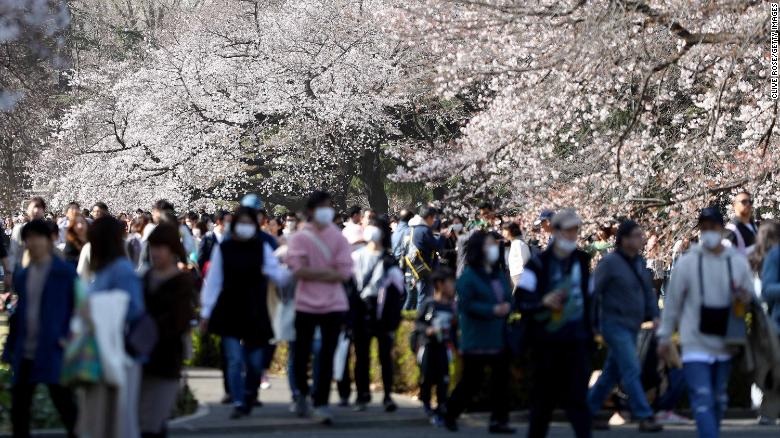
In Tokyo, crowds have been congregating in parks each day to see the cherry blossoms at peak bloom. Some 6,000 miles away in Washington DC, people were doing the exact same thing.

Like so many people in so many countries, they are willfully ignoring government advice to stay at home and to keep well away from others, as the coronavirus spreads rapidly, killing thousands and already changing daily life as we know it.
People visit a park in Tokyo to view the cherry blossoms on March 21.
But is it really just the cherry blossoms, or the beaches in Australia and California, or parks in central London that have inspired throngs of people to leave their homes during a pandemic? It’s plausible. There’s little else to do as cities around the world have all but shut…

View original post 1,584 more words