(CNN)Chinese health authorities will include asymptomatic cases of the novel coronavirus in their official count starting Wednesday, according to an announcement on Tuesday.
View original post 158 more words
(CNN)Chinese health authorities will include asymptomatic cases of the novel coronavirus in their official count starting Wednesday, according to an announcement on Tuesday.
View original post 158 more words
Tokyo (CNN)Japanese Prime Minister Shinzo Abe is facing a public backlash after he said the government would distribute two reusable cloth face masks per household amid growing concern over medical shortages as the country faces a worsening coronavirus outbreak.
View original post 1,617 more words
(CNN)Shenzhen, in southeastern China, has become the first city in the country to ban the consumption of cats and dogs, the government announced Thursday.
(CNN)Dr. Anthony Fauci, the country’s top medical expert on the coronavirus pandemic and a member of President Donald Trump’s coronavirus task force, is facing threats to his personal safety and now requires personal security from law enforcement at all times, including at his home, a source confirms to CNN.
CAMBRIDGE, Mass. — An MIT researcher has warned that coronavirus droplets could travel up to 27 feet, which could have major implications for social distancing.
Lydia Bourouiba, Ph.D., an associate professor at MIT and expert in fluid dynamics, explained that a sneeze, for example, results in a turbulent gas cloud that could contain coronavirus droplets. The research was published in the Journal of the American Medical Association.
“Recent work has demonstrated that exhalations, sneezes and coughs not only consist of mucosalivary droplets following short-range semiballistic emission trajectories but, importantly, are primarily made of a multiphase turbulent gas (a puff) cloud that entrains ambient air and traps and carries within it clusters of droplets with a continuum of droplet sizes,” she wrote.
During the ongoing coronavirus pandemic, people have been advised by the Centers for Disease Control and Prevention to maintain social distancing of at least six feet to limit the risk of exposure. However, Bourouiba’s research indicates that the droplets could travel further much further than that.
Fox News reached out to the CDC with a request for comment on this story.
“Owing to the forward momentum of the cloud, pathogen-bearing droplets are propelled much farther than if they were emitted in isolation without a turbulent puff cloud trapping and carrying them forward,” she wrote. “Given various combinations of an individual patient’s physiology and environmental conditions, such as humidity and temperature, the gas cloud and its payload of pathogen-bearing droplets of all sizes can travel 23 to 27 feet (7-8 m).”
Bourouiba explained that the range of the droplets, both large and small, is extended through their interaction with and trapping within the turbulent gas cloud.
“Droplets that settle along the trajectory can contaminate surfaces, while the rest remain trapped and clustered in the moving cloud,” she wrote. “Eventually, the cloud and its droplet payload lose momentum and coherence, and the remaining droplets within the cloud evaporate, producing residues or droplet nuclei that may stay suspended in the air for hours, following airflow patterns imposed by ventilation or climate-control systems.”
In a separate project, experts used a supercomputer to quickly model the risks posed by viruses on a plane.
Researchers harnessed the Frontera supercomputer at the Texas Advanced Computing Center at the University of Texas at Austin.
The research study, which was led by Ashok Srinivasan, a professor in the Department of Computer Science at the University of West Florida, was published in the journal PLOS ONE.
Life under coronavirus means staying at home as much as possible — but you’ll likely need to make a trip to the grocery store or pharmacy at some point. Download or print this tip sheet to make sure you don’t bring the virus back home with you.
View original post 369 more words
(CNN)The number of US coronavirus cases surged by more than 14,000 in just a few hours Wednesday as the death toll topped 4,400.

View original post 1,162 more words
https://theirturn.net/2020/03/30/inside-nycs-wet-markets-a-ticking-time-bomb/
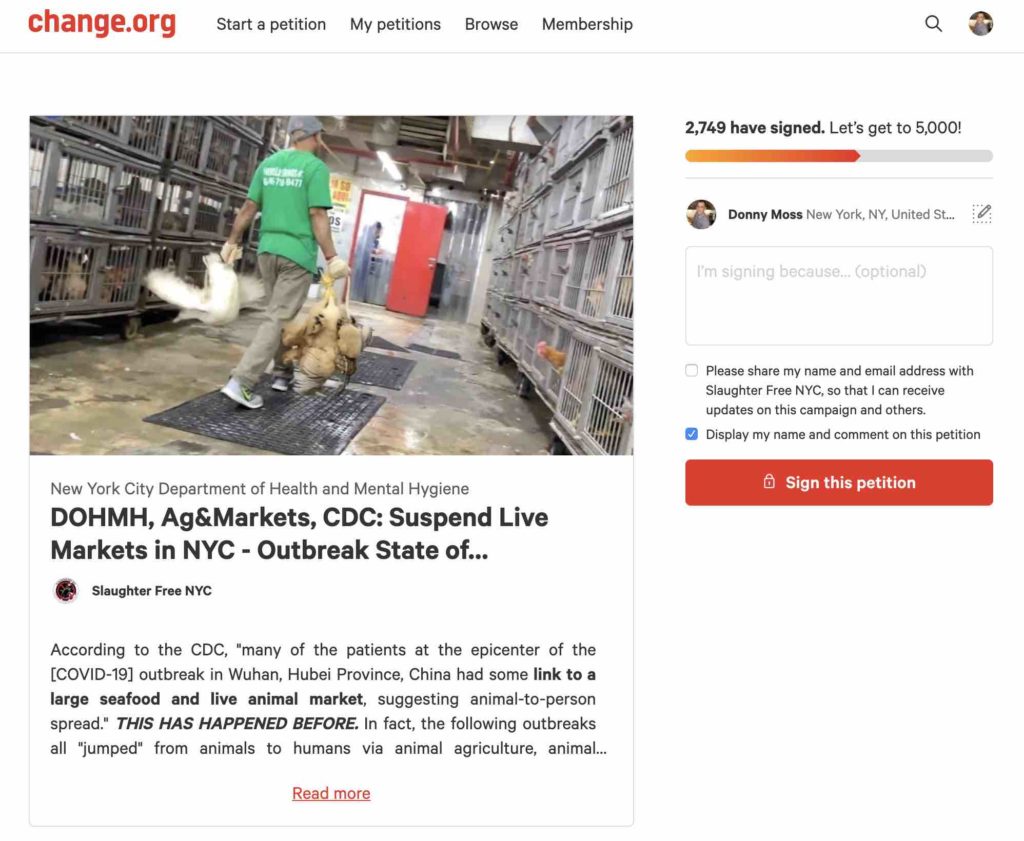
New York City has over 80 wet markets – businesses that sell live animals to the public and slaughter them onsite. New York’s live animal markets are located in all five boroughs.
Since 2016, public health and animal rights advocates have been sounding alarm bells about the City’s wet markets, pleading with health officials and lawmakers to shut them down in order to prevent the transmission and spread of infectious disease. COVID-19 is believed to have been transmitted from animal to human in a wet market in Wuhan, China.
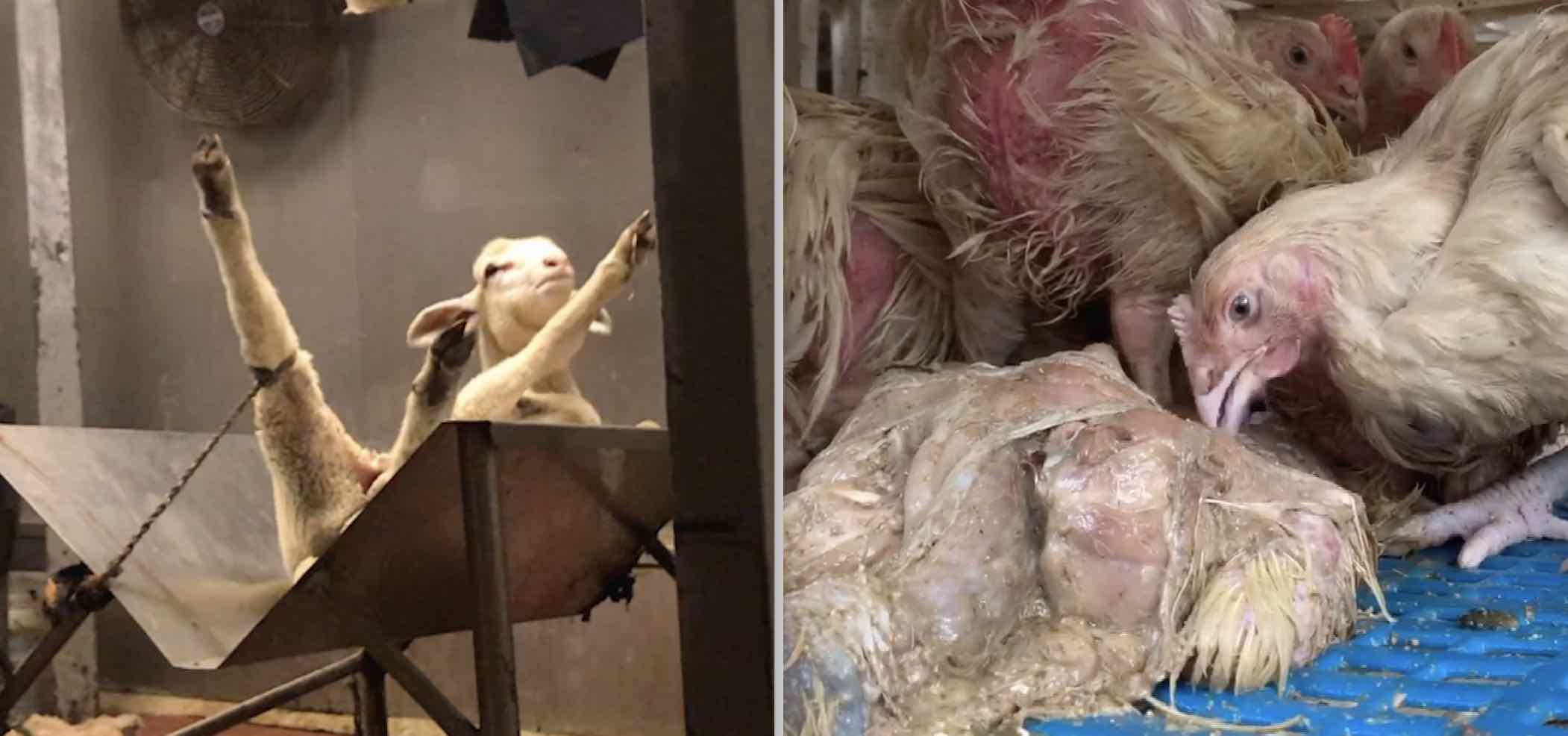
Sheep and chickens are among the approximately 10 different species of live animals sold at NYC’s wet markets
NYC’s wet markets sell approximately ten animal species, including goats, sheep, chickens, guinea hens, rabbits, pigeons, Muscovy ducks, and quail. The animals are confined in small cages or pens where they can sicken each other and the people who work and shop there. Animal feces, body parts, feathers and blood are tracked in and out by customers and pedestrians who then carry the refuse on to the subways and into their homes, offices and communities.
Wet markets, or live animal markets, are storefront slaughterhouses that sell live animals to public and slaughter them on site
“New York City’s wet markets are a ticking time bomb,” said Jill Carnegie, a co-organizer with Slaughter Free NYC, an organization advocating to shut down wet markets and other slaughterhouses in NYC. “If avian flu or another infectious disease is transmitted to just one human, it could spread very rapidly in New York City and beyond, as we have seen with COVID-19.”
The COVID-19 pandemic has increased the advocates’ sense of urgency. Slaughter Free NYC is now asking Mayor Bill de Blasio, Health Commissioner Dr. Oxiris Barbot and Deputy Commissioner of Disease Control Dr. Demetre Daskalakis to prohibit the slaughter of live animals in the five boroughs of New York. In February, the organization launched a petition with its demand.
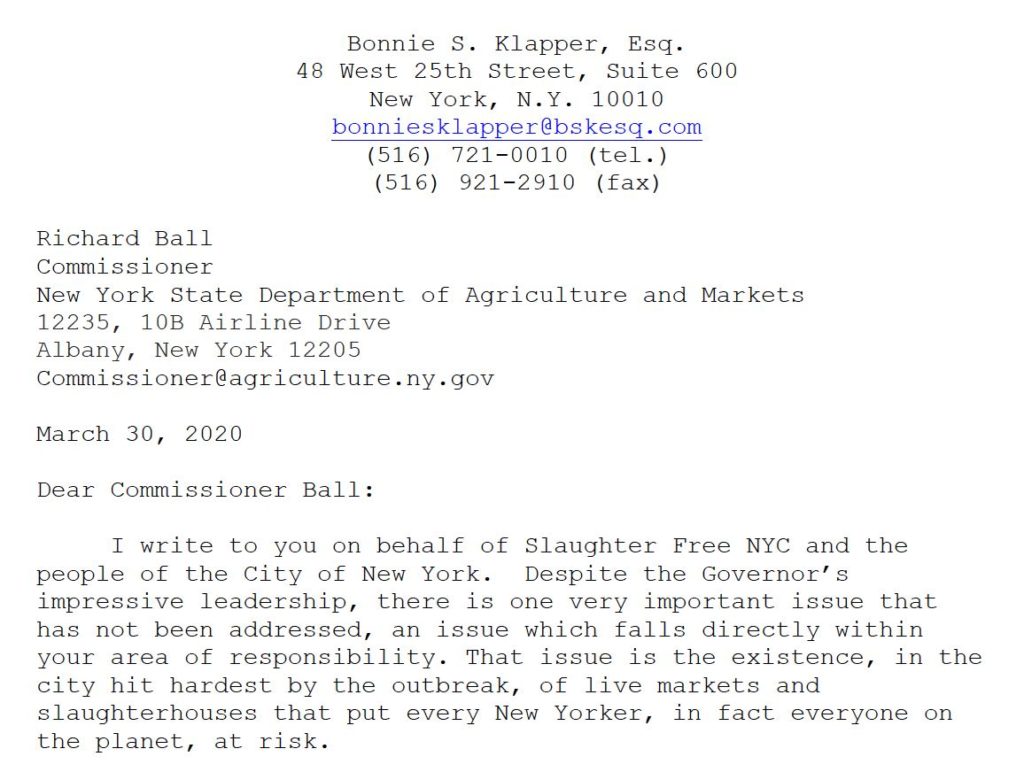
In a letter to NY Governor Andrew Cuomo and the NY State Department of Agriculture & Markets, Bonnie S. Klapper, a New York City-based attorney working on several cases involving animal agriculture, wrote that City and State health authorities are turning a blind eye to the well-documented health code violations
“The NYC Department of Health claims that it has no regulatory authority over these markets and defers to NY State Department of Agriculture & Markets, but state health officials have told me that these wet markets are never inspected unless they receive numerous complaints,” Klapper told TheirTurn. “That said, no amount of oversight can prevent disease transmission in storefront slaughterhouses where sick animals are coming into contact with humans.”
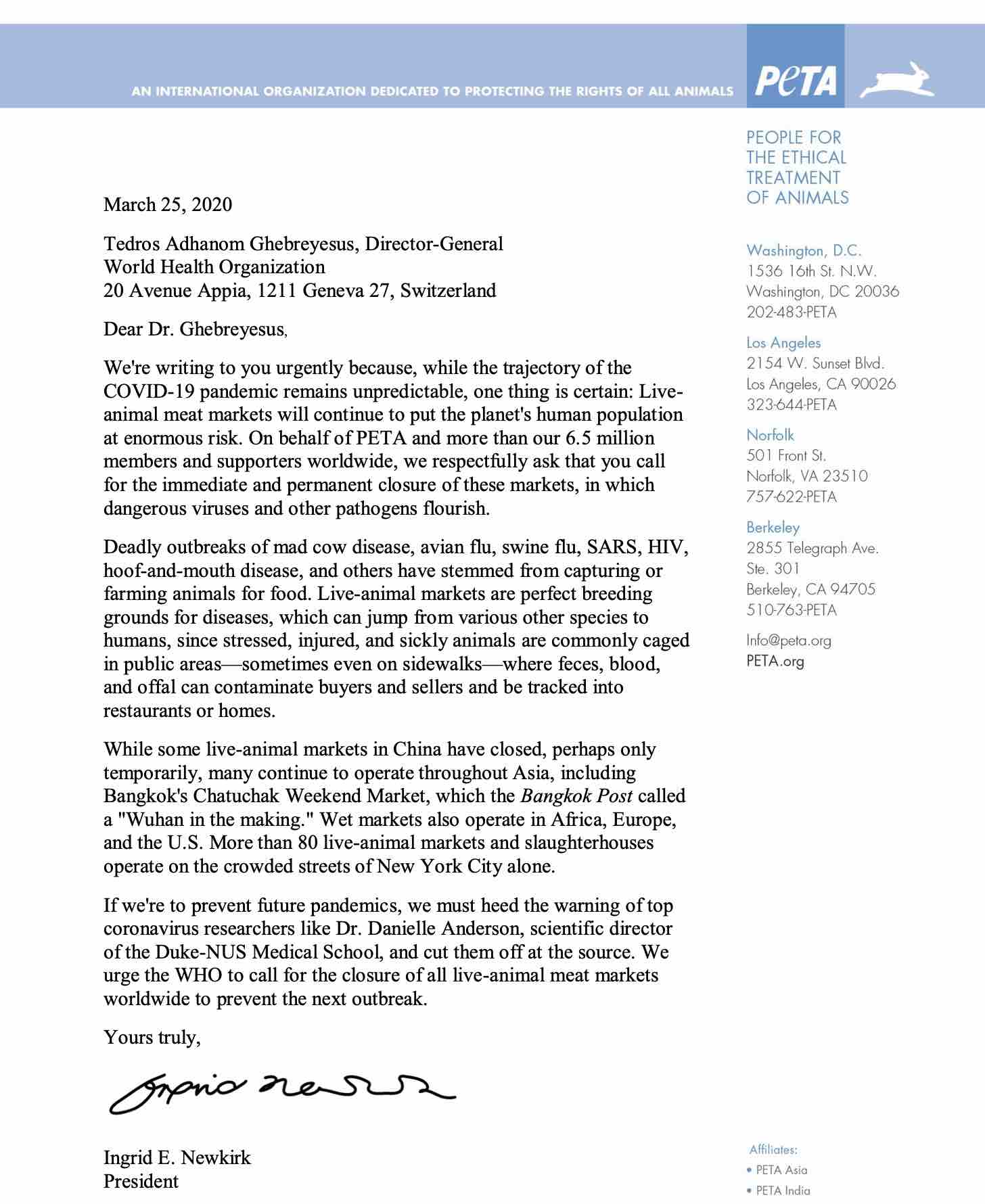
On March 25th, People for the Ethical Treatment of Animals (PETA) sent a letter to the Tedros Adhanom Ghebreyesus, the Director-General of the World Health Organization (WHO) encouraging him to call for the permanent closure of [wet] markets: “Deadly outbreaks of mad cow disease, avian flu, swine flu, SARS, HIV, hoof-and-mouth disease and others have stemmed from capturing or farming animals for food. Live animal markets are perfect breeding grounds for diseases, which can jump from various others species to humans . . . If we’re to prevent future pandemics, we must heed the warning of top coronavirus researchers like Dr. Danielle Anderson, scientific director of the Duke-NUS Medical School, and cut them off at the source.”
In partnership with The Save Movement, an organization that stages vigils at slaughterhouses around the word, Slaughter Free NYC conducts vigils and educational outreach at New York City’s wet markets.

Let it be noted, at long last, that on the final day of March in the year 2020, the 45th president of the United States finally told the truth. Not all of the truth, or even most of the truth, but enough truth nonetheless to stop the presses in dramatic fashion.
“I want every American to be prepared for the hard days that lie ahead,” a somber Donald Trump said at what has been, until yesterday, another useless White House COVID-19 briefing. “We’re going to go through a very tough two weeks, and…
View original post 783 more words
Committee to Abolish Sport Hunting Blog
Hunting and fishing seasons continue with social distancing and travel guidelines

The following is a news release from the Idaho Dept. of Fish and Game.
IDAHO FALLS – Idaho Fish and Game has not closed any fishing or hunting seasons in response to COVID-19, and the department is providing guidelines in accordance with the Governor’s orders for social distancing at least six feet apart, including while fishing and at access sites and boat ramps.
“Fishing lends itself to social distancing,” Fish and Game State Fisheries Manager Jim Fredericks said. “In fact, for most types of fishing, general etiquette says if you’re fishing within six feet of the next person, you’re way too close.”
Lakes, reservoirs and streams are vast places where anglers can easily put space between themselves. During the statewide Covid-19 order, it’s extremely important that people…
View original post 190 more words