Carbon emissions are set to fall by historic amounts this year, but environmental advocates aren’t celebrating.
Instead, they are zeroing in on a new battle: putting green conditions on the trillions in stimulus funds governments around the world are pumping into their economies to help them recover from the coronavirus pandemic.
They will have to overcome a series of obstacles to achieve that goal, more than 30 officials, activists and analysts said in interviews with POLITICO.
A new Ipsos-Mori poll across 14 countries in the G-20 shows a majority in every country surveyed agrees economic recovery should…
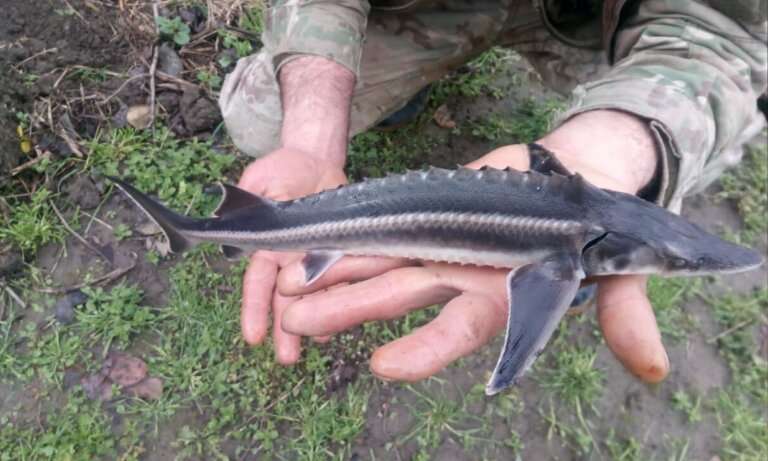
River phoenix – A precious juvenile ship sturgeon, risen from the depths. Credit: Irakli Tsulaia
Within the space of less than a month, two specimens of a vanishingly rare fish have been plucked from the waters of the Rioni River in Georgia.
Before these two juveniles were caught, conservationists had expressed fears that the critically endangered ship sturgeon might have already sunk without trace. This extraordinary, other-worldly fish—whose evolution dates back hundreds of millions of years—had not been seen alive in the wild for many years.
A lack of solid scientific research on the species means that very little is known about the ecology and distribution of the ship sturgeon, but no one disputes that it is in deep trouble. In that context, the capture of two juvenile fish in quick succession, each estimated to be less than three years old, is extremely exciting news, raising the prospect that this elusive and gravely imperiled species might still be reproducing in the Rioni.
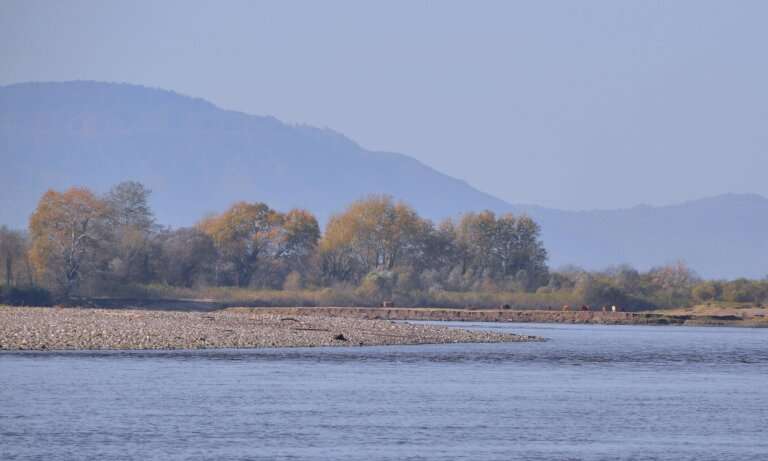
Sturgeons were once widespread throughout Europe, but have been virtually wiped out by a lethal combination of overharvesting, poaching and the loss of traditional spawning grounds to habitat destruction. The Rioni is one of the last three remaining refuges of these dwindling denizens of the Danube and the continent’s other great river systems. Remarkably, it still harbors breeding populations of several sturgeon species.
Georgia on our minds
The first evidence of recent reproductive success came in 2018, when a tiny juvenile fish—tentatively identified as a stellate sturgeon—was caught by two female students working full-time for Fauna & Flora International (FFI) on a pilot project launched earlier that year in an effort to safeguard Rioni’s remaining riches.
Sturgeon spawning grounds in Georgia’s Rioni River. Credit: Fleur Scheele/FFI
Since conducting what were the very first baseline studies for sturgeons in Georgia, FFI and our in-country partners have set about combating the threats to their survival, in particular poaching and illegal trade. We have established monitoring teams comprising ‘citizen inspectors’ drawn from communities along the river, whose role is to inform governmental agencies about incidences of poaching. FFI works closely with these communities—from schoolchildren to fish traders—to raise awareness of the plight of the sturgeons in the Rioni—and their global importance.
The FFI research team continues to work on the river from early spring to autumn, gathering vital data on sturgeon recruitment and genetic diversity in Georgia’s territorial waters. In collaboration with Ilia State University, we collect samples from any captured sturgeons for genetic analysis, in order to aid identification and shed light on which species still survive in the Rioni.
Hook, line and sturgeon
Ironically, both ship sturgeons were accidentally captured by surprised anglers, the first in mid-March, and the second just three weeks later. All sturgeon species in Georgia are officially protected, and commercial fishing on the Rioni is severely restricted, but sport fishing with rod and line is permitted, provided that anglers release any sturgeons they catch.
The fact that both anglers contacted one of FFI’s citizen inspectors immediately after catching the juvenile sturgeons—thereby enabling photographs and samples to be taken before the fish were returned to the river—is a success story in itself, vindicating FFI’s efforts to engage with nearby communities and engender local support for the project.
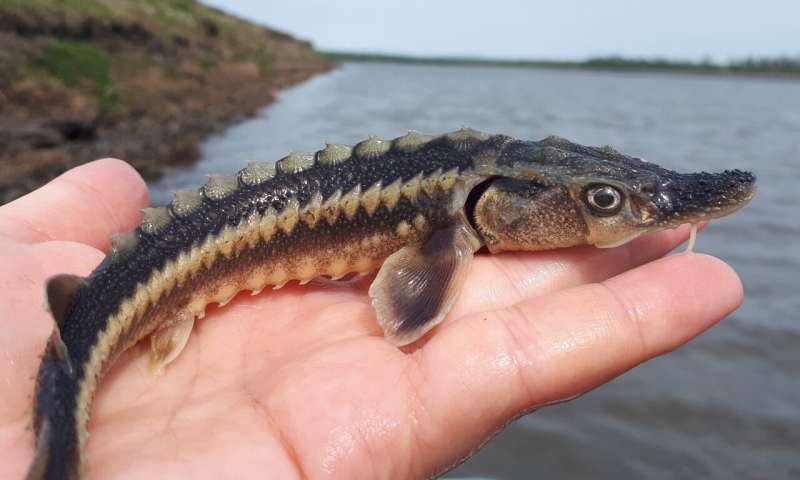
A week after the second ship sturgeon was caught, the river yielded a third juvenile, this time captured by the FFI team and provisionally labeled as a Colchic sturgeon—although hybrids are known to occur and can be difficult to differentiate from the real deal without detailed analysis.
While the ichthyologists may be agonizing over the idiosyncrasies of sturgeon subcategories, one thing is certain: the latest revelations provide further irrefutable evidence that the Rioni is an absolutely crucial sanctuary—and possibly the last hope—for these armor-plated icons of the fish world.
Another juvenile – believed to be a Colchic sturgeon – completed the trio of young fish caught within the space of a few weeks. Credit: Tamar Edisherashvili/FFI
Dammed to extinction?
Further studies will be required before we can confirm categorically that the ship sturgeon is still spawning in Georgia’s mightiest river, but it seems that there could be light at the end of the tunnel. Unfortunately, that glimmer of hope is in imminent danger of being snuffed out.
A significant new threat to the survival of Georgia’s sturgeons has recently surfaced. The proposed development of several hydropower plants upstream from our project site could have a potentially disastrous impact on the Rioni—and put paid to the recovery prospects of its flagship fish species.
We risk having to bear witness to the tragedy of a rediscovered species being pulled back from the brink of extinction by conservationists only to be knowingly pushed over the precipice in the name of economic progress. Let’s hope that day never arrives.
It doesn’t take long for mild coronavirus symptoms to turn serious. These virtual reality images show how the virus can invade the lungs and kill. BY THE NEW YORK TIMES
This article has Unlimited Access. For more coverage, sign up for our daily coronavirus newsletter. To support our commitment to public service journalism: Donate Now.
The Centers for Disease Control and Prevention has tripled the number of coronavirus symptoms it lists on its website.
The federal organization previously listed fever, cough and shortness of breath as symptoms of COVID-19. The CDC has added six additional symptoms as people “have had a wide range of symptoms reported,” it says on its website.
New symptoms for the disease now include “chills, repeated shaking with chills, muscle pain, headache, sore throat and new loss of taste or…
Large virus-laden droplets from infected people’s coughs and sneezes fall to the ground within 1-2 metres. Photograph: Nick Gregory/Alamy
Coronavirus has been detected on particles of air pollution by scientists investigating whether this could enable it to be carried over longer distances and increase the number of people infected.
The work is preliminary and it is not yet known if the virus remains viable on pollution particles and in sufficient quantity to cause disease.
The Italian scientists used standard techniques to collect outdoor air pollution samples at one urban and one industrial site in Bergamo province and identified a gene highly specific to Covid-19 in multiple samples. The detection was confirmed by blind testing at an independent laboratory.
So far in April, the U.S. Department of Agriculture has issued waivers to 15 chicken slaughterhouses, allowing them to speed up the rate of killing from 140 birds per minute to 175 birds per minute—about three birds per second. Photo by Blickwinkel/Alamy Stock Photo
The federal government has handed out a record number of waivers this month for chicken slaughterhouses to dial up the already dangerous speeds at which they kill birds. The development not only raises animal welfare concerns, but it comes at a time when slaughterhouses have emerged as major clusters for the spread of the coronavirus because of their cramped, unsanitary working conditions—conditions that line speed increases will only worsen.
So far in April, the U.S. Department of Agriculture has issued waivers to 15 chicken slaughterhouses, allowing them to speed up the rate of killing from 140 birds per minute to 175 birds per minute—about three birds per second. This is a significant increase in the waivers issued each month since the new program went into effect in 2018, and it adversely affects millions more animals. In the period between January and March this year, the agency only issued a single waiver.
The USDA’s decision came just weeks after a coalition of groups, including the Humane Society of the United States, sued the agency in February for allowing the increase in line speeds. We are concerned because slaughtering animals at this rate increases suffering for birds in their final moments, creates even more dangerous conditions for workers and compromises the health and safety of consumers.
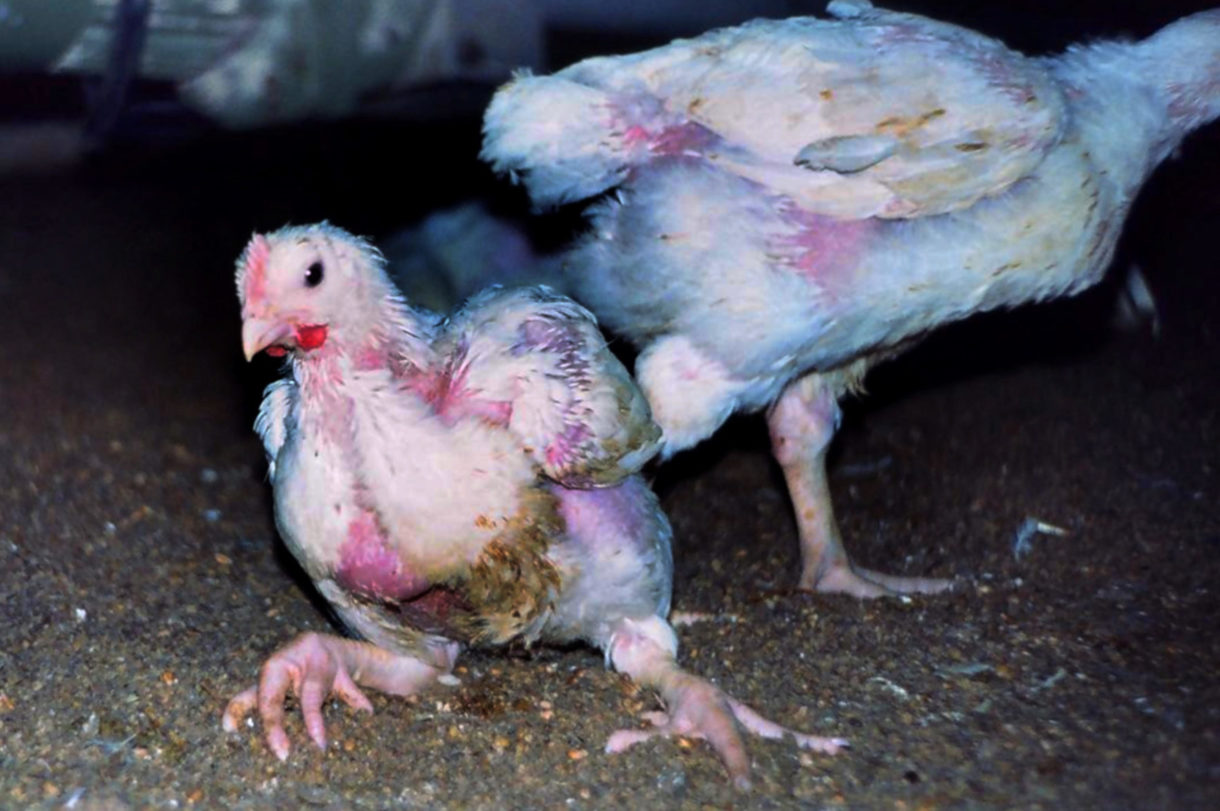
At such high speeds, workers struggling to keep up with the rapidly moving slaughter lines grab the chickens and slam them into shackles, injuring the animals’ fragile legs. Some birds miss the throat-cutting blade and enter the scalder—a tank of extremely hot water—alive and fully conscious, resulting in a terrible death.
In recent weeks, slaughterhouses have also been in the news for their role in exacerbating the coronavirus pandemic. A South Dakota pig slaughterhouse has been linked to nearly 900 cases of the disease, making it the single largest cluster in the entire country. At least 2,700 cases have been tied to 60 meatpacking plants in 23 states, and at least 17 workers in these plants have died. Some slaughterhouses, such as the one in South Dakota and Tyson’s largest U.S. pig slaughterhouse, have finally shuttered their doors, but many remain open even after workers have tested positive for the virus.
These slaughterhouses are also dangerous for the communities where they are located. A USA Today analysis found that counties with some of America’s largest beef, pork and poultry processing plants have coronavirus infection rates higher than those in 75% of other U.S. counties.
With all this evidence, it is mindboggling that the USDA is giving out more waivers, choosing to help fatten the bottom lines of corporate interests over animal welfare, food safety and the safety of the agency’s own inspectors and slaughterhouse employees.
Last week, our legal team warned the USDA that we would amend our lawsuit and take steps to seek a quick ruling following the increased waivers, and the agency now appears to have relented slightly. Yesterday, a spokesperson for the USDA told a Bloomberg reporter that it has “stopped accepting additional requests” from chicken slaughterhouses to operate at higher speeds.
But this is not good enough—we are asking that the agency revoke all of the waivers it has already issued. Our federal government should never prioritize industry profits over animal welfare, worker safety and public health, and especially not in the midst of a global pandemic.
Greta Thunberg, Joaquin Phoenix and fellow eco-luminaries used Earth Day Wednesday to rejoice in the global economic shutdown that has led to a reduction in carbon emissions.
The pandemic has been a dream come true for climate alarmists . . . if you ignore all the misery.
They wanted us to switch off our economies to prevent a supposed climate apocalypse in 10 years and — hey, presto! — their wish was granted by a virus.
Thunberg, the 17-year-old Swedish climate evangelist, did caution…
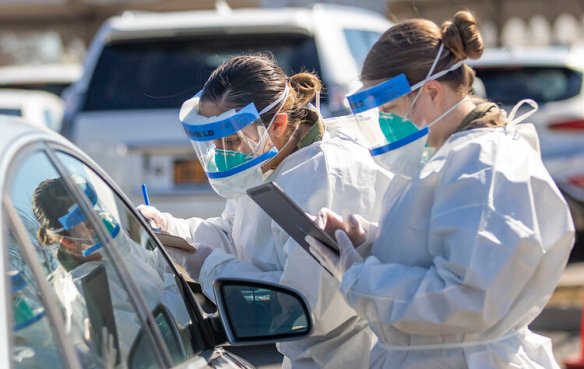
U.S. Army Spc. Reagan Long and Pfc. Naomi Velez register people at a COVID-19 Mobile Testing Center in Glen Island Park, New Rochelle, New York. Image credit: New York National Guard
Ed Winters, or Earthling Ed, as he’s known on Instagram, recently posted a video that received more than a million views and thousands of comments. The message of the six-minute video can be boiled down to this: “Many of the world’s deadliest outbreaks, including COVID-19, SARS, and bird flu, are directly linked to the exploitation of animals by humans.”
Winters, a British animal rights activist, filmmaker, and lecturer, is not alone in making this claim. The Counter, a food system-focused online publication, recently interviewed experts about the many potential connections between meat production and the pandemic. A March article in The Guardian, investigated the relationship between diseases like COVID-19 and global pig and poultry production. Last week, the European Union’s health chief told Reuters that there is “strong evidence that the way meat is produced, not only in China, contributed to COVID-19.”
The origins of COVID-19 are, at present, still unclear. We know COVID-19 is a zoonotic virus, meaning it can jump from animals to humans, and that it first circulated among bats. While many of the initial reported patients were linked to a seafood and live animal market in China, we don’t yet know how or when exactly the disease made the leap from animals to humans. However, there is a growing consensus that the industrialized way in which we raise the animals we eat is a risk factor for pandemics like COVID-19.
PERFECT BREEDING GROUND FOR DISEASE
Researchers have long worked to understand how animals pass diseases to humans. An estimated three out of four new or emerging infectious diseases originate in animals, and three out of five infectious diseases are spread by animals, according to the Centers for Disease Control and Prevention (CDC). Among the most common ways we catch diseases from animals is through “direct or indirect human exposure to animals, their products (meat, milk, eggs), and/or their environments,” states the World Health Organization (WHO).
“Both farmed and caged wild animals create the perfect breeding ground for zoonotic diseases.”
— LIZ SPECHT, ASSOCIATE DIRECTOR OF SCIENCE & TECHNOLOGY AT THE GOOD FOOD INSITITUTE
The demand for meat and dairy brings humans in more frequent contact with animals in a variety of ways, outlined in a 2004 report from the WHO. Most obvious are practices like live animal markets, wildlife consumption, and factory farming. There’s also evidence that deforestation, driven in large part by the demand for more grazing land, brings humans in more frequent contact with the wild animals who lose their habitats. (A Stanford study published this month in Springer found this to be true in western Uganda.) In addition, the world’s growing appetite for meat has increased global trade of livestock and more exotic wildlife, allowing zoonotic diseases to travel faster and farther.
“Both farmed and caged wild animals create the perfect breeding ground for zoonotic diseases,” says Liz Specht, Associate Director of Science & Technology at The Good Food Institute. “Extraordinarily high population densities, prolonged heightened stress levels, poor sanitation, and unnatural diets create a veritable speed-dating event for viruses to rendezvous with a weakened human host and transcend the species barrier.”
So while the coronavirus’s jump to humans was linked to a seafood and live animal market in Wuhan, China, it could just as easily have originated in Argentina, England, North Carolina, or any other place where employees of factory farms work alongside animals in cramped, stressful, and often unsanitary conditions.
“It’s easy for those of us in the Western world to shake our heads at the live wildlife markets in China,” writes Paul Shapiro, CEO and cofounder of The Better Meat Co. “But what’s more difficult is to be honest with ourselves about what kinds of pandemics we may be brewing through our own risky animal-use practices.”
FACTORY FARMING IS “A PERFECT STORM ENVIRONMENT”
Physician and best-selling author Michael Greger wrote about the threat of factory farming years ago when he published Bird Flu: A Virus of Our Own Hatching in 2006. He calls factory farming “a perfect storm environment” for pandemics. “If you actually want to create global pandemics,” he warns, “then build factory farms.”
History has validated Greger. The 1918 flu, which killed around 50 million people, is thought to have originated on a poultry farm in Kansas. The 1997 H5N1 bird flu likely started on Chinese chicken farms. More recently, a 2015 bird flu outbreak on North American chicken farms killed more than 32 million birds in 16 states, causing egg and poultry prices to skyrocket, though thankfully it never made the leap to humans. Earlier this year, both India and China reported additional bird flu outbreaks on poultry farms that have not yet crossed over to humans.
“If you actually want to create global pandemics, then build factory farms.”
— MICHAEL GREGER, PHYSICIAN AND AUTHOR
“There is clearly a link between the emergence of highly pathogenic avian influenza viruses and intensified poultry production systems,” says Belgian spatial epidemiologist Marius Gilbert. Gilbert’s group published a study in 2018 that looked at so-called conversion events, whereby bird flu strains suddenly became highly pathogenic, as well as “reassortment events,” when at least two different viruses combine by exchanging genetic material. These novel viruses can cause pandemics by appearing suddenly in populations that have no immunity.
Between 1959 and 2018, his group identified 39 conversion events and 127 reassortments. All but two conversion events took place on commercial poultry farms in industrialized economies in the US and Europe. The majority of the 127 reassortments took place in Asian countries where poultry production was transitioning from backyard to factory farms.
The risks are similarly high on high-density pig farms. The 2009 H1N1 swine flu is thought to have originated on North American pig farms before jumping to humans. The current African swine fever (ASF) outbreak has already slashed China’s pig population by a third, killing some 100 million. At present, ASF only occurs in animals, but a mutation in the virus could change this and even increase the severity of the disease.
“Swapping host species often allows pathogens to take a more sinister turn, causing severe illness or death in their new host despite only triggering mild symptoms in their animal reservoir,” says Liz Specht.
THE NEXT PANDEMIC
Before launching his campaign video, Ed Winters posted an oversimplified and since-removed graphic that stated: “COVID-19 was started by eating animals.” This post caught the attention of Matthew Brown, a writer at USA Today, who fact-checked Ed Winters’ post, rating the claim that COVID-19 was “caused by eating animals” as “partly false.”
Eating meat is not technically the problem, Brown argues. Zoonotic diseases are made possible by contact between humans and animals. In other words, the risks inherent in high-density animal production system make Winters’ assertion also partly true.
Meanwhile, Americans’ consumption of meat and poultry hit a record high of 222 pounds per person in 2018, a reminder of how difficult it will be to change our eating habits, even if doing so could help protect us from another pandemic.
Tia Schwab is a former Stone Pier Press News Fellow from Austin, TX.
ostdoctoral researcher in Microbiology and Bioinformatics, University College Cork
Disclosure statement
Hugh Harris works as a postdoctoral researcher at APC Microbiome Ireland, University College Cork where he is funded by Science Foundation Ireland under the Microbes to Molecules research theme.
Every day, in countries all over the world, people are dying because of a new virus. This time they are dying from a new strain of coronavirus called SARS-CoV-2 that causes the acute respiratory disease known as COVID-19. And this is just the latest. Viruses are responsible for the deaths of millions of people throughout history, from smallpox to flu.
In this time of worry and self-isolation, it is easy to think that viruses are our enemies. And of course, it’s true that some of them are. Sars, Mers, Ebola, HIV, swine flu, bird flu and Zika are among those that have caused deadly…
Some experts have hypothesized that the novel coronavirus made the jump from animals to humans in China’s wet markets, just like SARS before it. Unsurprisingly, many people are furious that the markets, which were closed in the immediate wake of the outbreak in China,are already reopening. It’s easy to point the finger at these “foreign” places and blame them for generating pandemics.But doing that ignores one crucial fact: The way people eat all around the world — including in the US — is a major risk factor for pandemics, too.
That’s because we eat a ton of meat, and the vast majority of it comes from factory farms. In these huge industrialized facilities that supply more than 90 percent of meat globally — and around 99 percent of America’s meat —animals are tightly packed together and live under harsh and unsanitary conditions.
“When we overcrowd animals by the thousands, in cramped football-field-size sheds, to lie beak to beak or snout to snout, and there’s stress crippling their immune systems, and there’s ammonia from the decomposing waste burning their lungs, and there’s a lack of fresh air and sunlight — put all these factors together and you have a perfect-storm environment for the emergence and spread of disease,“ said Michael Greger, the author of Bird Flu: A Virus of Our Own Hatching.
To make matters worse, selection for specific genes in farmed animals (for desirable traits like large chicken breasts) has made these animals almost genetically identical. That means that a virus can easily spread from animal to animal without encountering any genetic variants that might stop it in its tracks. As it rips through a flock or herd, the virus can grow even more virulent.
Greger puts it bluntly: “If you actually want to create global pandemics, then build factory farms.”
We know from past experience that farmed animals can lead to serious zoonotic diseases (those transmitted from animals to humans). Just think back to 2009, when the H1N1 swine flu circulated in pig farms in North America, then jumped to humans. That novel influenza quickly became a global pandemic, killing hundreds of thousands of people.
To be clear, scientists believe the novel coronavirus originated in wild bats, not factory farms. But it has awakened us all to the crushing effect a pandemic can have on our lives. Now that we’ve come face to face with this reality, the question is: Do we have the political and cultural will to do something major — changing the way we eat — to sharply decrease the likelihood of the next pandemic?
What we talk about when we talk about pandemics
When we talk about the risk of pandemics, we’re actually talking about two different types of outbreaks. The first is a viral pandemic; examples include the 1918 influenza pandemic and Covid-19. The second is a bacterial pandemic; the prime example is the bubonic plague, the “Black Death” that wracked Europe in the Middle Ages.
Factory farming presents a risk in both these categories.
Sonia Shah, author of the 2017 book Pandemic, worries about viruses and bacteria alike. “When I was writing my book, I asked my sources what keeps them awake at night. They usually had two answers: virulent avian influenza and highly drug-resistant forms of bacterial pathogens,” she told me. “Both those things are driven by the crowding in factory farms. These are ticking time bombs.”
Let’s focus on avian influenza first. Bird flu is caused by viruses and it’s a massive risk coming out of factory farms (as is swine flu). That’s both because the birds in these farms are squeezed together by the thousands in close proximity and because they’re bred to be almost identical genetically. That’s a recipe for a highly virulent virus to emerge, spread, and kill rapidly.
“Factory farms are the best way to select for the most dangerous pathogens possible,” said Rob Wallace, an evolutionary biologist at the Agroecology and Rural Economics Research Corps in St. Paul, Minnesota. To explain why, he offered a crash course in zoonotic transmission, from the point of view of the pathogen.
“If you’re a pathogen in a host,” Wallace said, “you don’t want to kill your host too fast before you can get into the next host — otherwise you’re cutting off your own line of transmission. So there’s a cap on how much of a badass you can be. The faster you replicate, the more likely you end up killing your host before the next host can come along.”
If you’re deep in the wildernessor on a small farm, you (the pathogen) are not going to regularly come across hosts, so you’ve got to keep your virulence, or harm inflicted on the host, pretty low so that you don’t run out of hosts. “But if you get into a barn with 15,000 turkeys or 250,000 layer chickens, you can just burn right through,” Wallace said. “There’s no cap on your being a badass.”
This is part of why factory farms are a bigger risk for zoonotic outbreaks than the natural world or small farms.
The biologist added that because we’re increasingly trading poultry and livestock across international borders, we’re ramping up the danger even more. Strains that were previously isolated from each other on opposite sides of the world can now recombine.
“Take influenza,” Wallace said. “It has a segmented genome, so it trades its genomic parts like card players on a Saturday night. Usually, most hands are not too terrible, but some hands come out much more dangerous. An increase in the rate of recombination means an explosion in terms of the diversity of pathogens that are evolving.”
The world has already seen a really frightening example of this. Between 1997 and 2006, highly pathogenic strains of H5N1 bird flu were linked to poultry farms in China.
“Our entire understanding of how bad a pandemic could potentially be changed in 1997 with the emergence of the H5N1 avian influenza virus. All of a sudden, there was a flu virus that was killing over half the people it infected,” Greger said.
When people became infected with H5N1, it had a 60 percent mortality rate. For comparison, expertsestimate that Covid-19’s mortality rate is probably somewhere in the neighborhood of 1 percent to 3 percent, though these estimates continue to evolve and vary widely by country and by age. (If you’re wondering why H5N1 didn’t become as big a deal as Covid-19, it’s because it mostly infected poultry rather than people; it wasn’t as good at infecting humans as the coronavirus unfortunately is.)
“These new bird flu viruses have been tied to the industrialization — the ‘Tysonization’ — of our poultry production,” Greger said, citing evidence that exporting the factory farming model to Asia led to an unprecedented explosion of viruses infecting birds and people starting in the 1990s.
It’s not only birds we need to worry about. Remember that pigs are also highly effective carriers of viruses. A decade before the swine flu struck in 2009, the Nipah virus emerged in Malaysian pig farms. It caused encephalitis (inflammation of the brain) in hundreds of people, killing about 40 percent of the patients who were hospitalized with serious neurological disease.
Factory farming and the urgent problem of antibiotic resistance
The other pandemic risk associated with factory farms has to do with “highly drug-resistant forms of bacterial pathogens,” as Shah put it — that is, antibiotic resistance.
When a new antibiotic is introduced, it can have great, even life-saving results — for a while. But as we start to use and overuse antibiotics in the treatment of humans, crops, and animals, the bacteria evolve, with those that have a mutation to survive the antibiotic becoming more dominant. Gradually, the antibiotic becomes less effective, and we’re left with a disease that we can no longer treat.
A farmer tends to his hogs in Polo, Illinois, on January 25. Brendan Smialowski/AFP via Getty Images
The CDCwarned in a major report last year that the post-antibiotic era is already here: We’re living in a time when our antibiotics are becoming useless and drug-resistant bugs, like C. difficile and N. gonorrhoeae, can all too easily decimate our health. Every 15 minutes, one person in the US dies because of an infection that antibiotics can no longer treat effectively.
Yet we continue to dole out too many antibiotics, driving the resistance. Animal farmers use antibiotics copiously on livestock and poultry, sometimes to compensate for poor industrial farming conditions.
“We have abundant evidence documenting the fact that when you put animals in crowded, unsanitary conditions and use low-dose antibiotics for disease prevention, you set up a perfect incubator for spontaneous mutations in the DNA of the bacteria,” said Robert Lawrence, a professor emeritus of environmental health at John Hopkins University.
“With more spontaneous mutations,” he explained, “the odds increase that one of those mutations will provide resistance to the antibiotic that’s present in the environment.” Those resistant bacteria could become strains that spread all over the world. “That’s the biggest human health risk of factory farms.”
In fact, factory farming presents us with a double bacterial risk. Say a bacterial outbreak emerges among chickens. The poultry can pass that bacteria on to us humans, causing serious infection. We’d normally then want to use antibiotics to treat that infection, but precisely because we’ve already overused antibiotics on our farmed animals, the bacteria may be resistant to the antibiotic. If the infection happens to be one that transmits well between people, we can end up with an untreatable bacterial pandemic.
When asked how he’d compare the pandemic risks posed by factory farms with those posed by China’s wet markets carrying live animals, Lawrence said, “With factory farming, the opportunity to start a viral pandemic may be less, but the opportunity for acquiring an antibiotic-resistant bacterial infection is greater.”
Factory farms also put their workers’ health at risk — including from coronavirus
Another distressing reality of factory farming is the way it tends to treat not only animals but also human workers as widgets in a large machine.
The mistreatment of laborers was a problem long before Covid-19, but the current pandemic has thrown the problem into especially sharp relief. We’re seeing a jump in the number of coronavirus cases among workers at meat plants in the US. Hundreds of people have tested positive at Cargill and Smithfield plants, in states from Pennsylvania to South Dakota. A few have died.
NPR reported that in one case, a city mayor had to actually force Smithfield to close a plant: “The count of positive coronavirus tests among employees at the Sioux Falls plant reached 350. It represented almost 10 percent of all workers at the plant, and 40 percent of all Covid-19 cases in South Dakota.”
The Smithfield pork processing plant in Sioux Falls, South Dakota, accounts for 40 percent of all coronavirus cases in the state. Stephen Groves/AP
Laborers in meat plants are typically stationed very close together along processing lines, which makes social distancing all but impossible. Some workers have staged walkouts over the working conditions.
“The companies need them to be present, but Covid-19 is killing them. And it’s obvious why: They have to stand shoulder-to-shoulder with their coworkers while the rest of us are six feet apart,” said Leah Garcés, the president of Mercy for Animals.
Knowing that the country’s meat is being produced on the backs of laborers who are mistreated, we’ve got to ask: Is it really worth it? For Garcés, the answer is clear. “It’s a ridiculous sacrifice to make for a chicken,” she said.
How can we build a better food system post-coronavirus?
In the US, where meat has become entwined with national identity and the average citizen consumes more than 200 pounds of meat a year, most people are probably not going to give up meat entirely. So it’s worth asking: Is there a way to do livestock farming that diminishes the threat of zoonotic disease? And perhaps, in the process, also diminishes other problems with industrialized farming, like the impact on climate change and cruelty to animals?
The answer is yes. We can absolutely have a meat production system that is better for human health, the climate, and animal welfare — if we’re willing to abandon factory farming.
“The de-intensification of the livestock industry would go a long way toward reducing pandemic risk,” Greger said. “I mean decreasing long-distance live animal transport, moving toward a carcass-only trade, and having smaller and less-crowded farms. Basically, the animals could use a little social distancing, too.”
Greger said we should abolish confinement practices like gestation crates, where pigs are kept in spaces so small they can’t even turn around. “Even measures as simple as providing straw beddings for pigs can cut down on swine flu transmission rates,” he noted, “because they don’t have the immunosuppressant stress of living on bare concrete their whole lives.”
We also need to reintroduce more biodiversity into our farms. Raising animals that are slightly different from each other genetically (rather than selecting for specific genes) will build in immunological firebreaks to help prevent the spread of infectious diseases, Wallace said, adding, “On a very practical level, I would farm completely the opposite of how they’re doing it now.”
By “they,” he means factory farms. There are plenty of farmers who already prefer other methods, like regenerative agriculture, but who may lack the support they need to execute them because agribusiness has a lock-hold on many rural communities.
“There’s a lot of farmers who completely understand how the system works and object to it but just can’t get off the treadmill,” Wallace said. He suspects the pandemic is giving the issue new salience.
It may also shift mindsets around existing plans to stop factory farming, like the legislation proposed by Sen. Cory Booker (D-NJ) to impose a moratorium on the US’s biggest factory farms and phase them out altogether by 2040. In March, as the Covid-19 pandemic gained traction, the conservative magazine National Review carried a piece arguing that “if you reflect on this issue with an open mind, you’ll agree that ending factory farms is a good idea — even if Cory Booker thinks that it is.”
Moving away from industrialized farming can reduce the likelihood of a zoonotic outbreak, but to really remove the threat, Greger said we should be accelerating the movement toward plant-based meat, milk, and egg products.
Americans were already getting excited about plant-based products before the coronavirus came along, and there’s reason to think the pandemic will drive even more interest, both because the traditional meat supply chain is now under some strain and because of a growing awareness that factory farming is a pandemic risk.
Impossible Foods announced on April 16 that it’s expanding sales of its meatless burgers to 750 more grocery stores in the US. “We’ve always planned on a dramatic surge in retail for 2020 — but with more and more Americans eating at home, we’ve received requests from retailers and consumers alike,” said the company’s president Dennis Woodside in an emailed statement. “Our existing retail partners have achieved record sales of Impossible Burger in recent weeks.”
From Garcés’s perspective, increased public awareness of the link between factory farms and pandemics is a silver lining to the horrible Covid-19 pandemic. “In my whole career, I’m not sure we’ve had a better chance than this to have the eyes of the nation and the world on the way we’re using animals in our food system and the risk that puts to us as a species,” she said.
“We’ve been ringing the alarm bells for a long time. My deep hope is that now people will make the connection — factory farming is a catastrophic risk to our species — and that thispermanently changes our behavior in the long term.”
Luxury parka maker Canada Goose Holdings Inc. plans to start using reclaimed fur for its coats and stop purchasing new fur in a couple years even though some animal rights groups don’t see the reversal as a victory for wildlife.
“We remain committed to the functionality and sustainability of real fur, however we are challenging ourselves to do it better, reusing what already exists,” the company said in its first sustainability report released Wednesday.
For five decades, it has used wild coyote fur from Western Canada and the U.S., that it says its suppliers ensure never comes from fur farms, among other measures.
However, Canada Goose will start making parkas with reclaimed fur in 2022 and stop purchasing new fur that same year in an effort to satisfy consumer demand, the company said.
It notes people living in the North have worked with reclaimed fur for decades and the initiative was inspired by their resourcefulness.
The company also plans to launch a consumer buy-back program for fur in the coming months.
“We believe we must operate sustainably. It’s the right decision for our business, our customers and most importantly, our future,” the report reads, which notes consumers today want more information about fur sustainability and animal welfare, and demand more transparency.
Canada Goose did not immediately respond to a request for comment.
Canadian animal rights group Animal Justice called the change “a stunning reversal” prompted by shifting public opinion about fur for fashion, as well as years of advocacy against Canada Goose’s use of fur. It noted California recently banned the sale of new fur.
However, the Canada Goose announcement is still only a “partial victory,” the group said.
“It would be better for the company to abandon fur and down altogether,” noting the switch to reclaimed fur doesn’t help ducks and geese whose feathers are used for down.
The company addresses its use of down in the report, saying it chooses “natural down in jackets because it is the best natural source for warmth per weight ratio.”
Last year, Canada Goose committed to the responsible down standard (RDS) and commits to being certified fully by 2021.
“The RDS aims to ensure that down and feathers come from animals that have not been subjected to unnecessary harm.”
RDS prohibits down or feather removal from live birds and force feeding, according to its website. Its standards also include other measures, including auditing each stage in the supply chain by a professional, third-party certification body.
People for the Ethical Treatment of Animals called the change to reclaimed fur an attempt to “humane wash” and that “real fur is always cruelly obtained.”
PETA and Animal Justice have fought Canada Goose over its use of animal products.
On Tuesday, an Ontario court dismissed PETA’s application for a judicial review. PETA argued its right to free expression was violated when its anti-Canada Goose ads were taken down in Toronto. Animal Justice intervened in the case and supported PETA’s position.
This report by The Canadian Press was first published April 22, 2020.
RELATED IMAGES
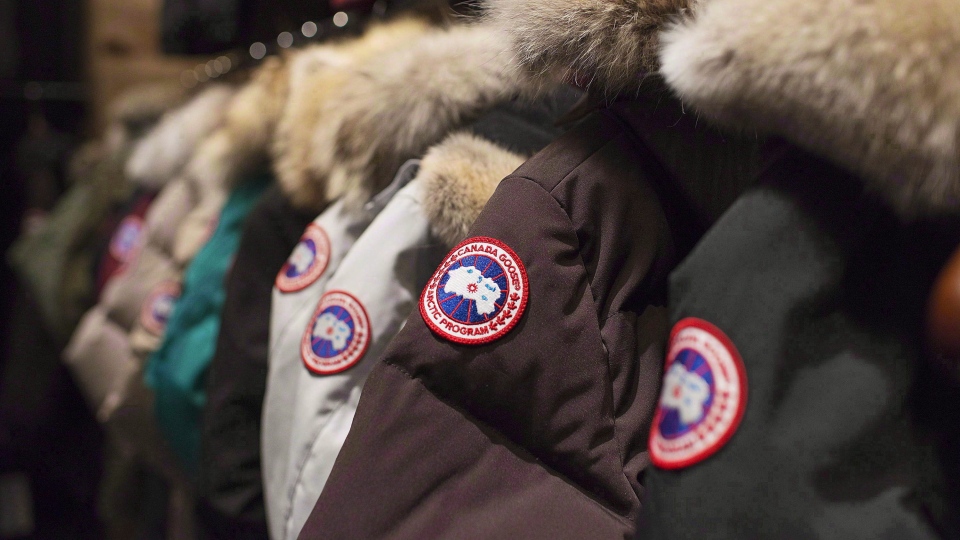
Jackets are on display at the Canada Goose Inc. showroom in Toronto on Thursday, November 28, 2013. (THE CANADIAN PRESS/Aaron Vincent Elkaim)





/cdn.vox-cdn.com/uploads/chorus_image/image/66688506/GettyImages_526583478.0.jpg)
:no_upscale()/cdn.vox-cdn.com/uploads/chorus_asset/file/19915693/GettyImages_1197632588.jpg)
:no_upscale()/cdn.vox-cdn.com/uploads/chorus_asset/file/19915716/AP_20100001813772__1_.jpg)
 Exposing the Big Game