The imperilled Hart Ranges caribou herd will lose a chunk of critical habitat to the Coastal GasLink pipeline, and the company’s contribution to a recent predator cull is raising ethical questions
Coastal GasLink paid $171,000 to kill wolves in the range of an endangered caribou herd that will lose critical habitat to the company’s pipeline for a gas export project, The Narwhal has learned.
The money for a winter wolf cull in Hart Ranges caribou habitat, northeast of Prince George, was part of $1.5 million the B.C. government required Coastal GasLink to pay for “caribou and predator monitoring” — a condition for receiving a provincial environmental assessment certificate for its 670-kilometre pipeline.
Construction of the pipeline, which will supply fracked gas from northeast B.C. for the LNG Canada project, will remove or disturb 2,750 hectares of habitat for the Hart Ranges…
Thailand, already battling the spread of coronavirus, is now contending with another deadly viral outbreak—in horses. With hundreds of horse deaths reported there in the last 3 weeks, horse owners are rushing to seal their animals indoors with netting, away from biting midges that spread the virus for African horse sickness (AHS). Some scientists suspect that zebras, imported from Africa, led to the outbreak.
The disease’s sudden appearance, far from its endemic home in sub-Saharan Africa, has surprised Thai veterinary authorities, who are ramping up testing for the disease and ordering the vaccination of thousands of horses, donkeys, and mules. It is the first major outbreak of the disease outside Africa in 30 years, and AHS experts are worried that it could spread to neighboring countries in Southeast Asia. “A sustained, persistent outbreak of [AHS] that spreads to other countries would be devastating, not only to the racing industry and companion animals, but also to some of the poorest workers in the region relying on working horses, donkeys, and mules,” says Simon Carpenter, an entomologist at the Pirbright Laboratory in the United Kingdom.
Without controls, the virus could even travel via wind-borne midges across seas to herds on island nations, gradually working its way to Australia, which has more than 1 million racing, sport, and feral horses. The nation is “engaging with other countries to develop a regional response to this outbreak,” says Australia’s Chief Veterinary Officer Mark Schipp.
The AHS virus infects horses, donkeys, and zebras, and is typically transmitted by Culicoides midges that live in warm, tropical climates. The virus causes severe heart and lung disease that kills at least 70% of infected horses, but spares zebras and most donkeys, which act as reservoirs for the virus, says Evan Sergeant, an epidemiologist at AusVet Animal Health Services in Canberra, Australia. Treatment options are mostly limited to palliative care, although euthanasia is sometimes recommended because of the brutality of the disease, which causes high fevers, swollen eyes, difficulty breathing, frothy nostrils, internal bleeding, and sudden death.
Aside from brief outbreaks in areas off the African coast, AHS has been contained in Africa since 1990, when veterinary authorities resolved a 3-year-long outbreak in Spain and Portugal caused by the importation of wild African zebras, Carpenter says. The virus hasn’t been reported in Asia since a major epidemic that ended in 1961. That epidemic spread from the Middle East to parts of India and led to hundreds of thousands of equine deaths.
The only commercially available AHS vaccine is based on a live, weakened version of the virus that sometimes produces mild symptoms and can even spread to other horses. Still, it has successfully eradicated previous outbreaks, according to Carpenter. “It’s not an ideal vaccine,” he says. “But it’s nowhere near as bad as the disease itself.”
The outbreak in Thailand may have begun in late February, with the unexplained death of a racehorse in the Pak Chong district near Bangkok. By late March, after rains that might have helped midge populations flourish, more than 40 additional Pak Chong horses were suddenly reported dead, says Nuttavadee Pamaroon, a veterinary officer in Thailand’s Department of Livestock Development (DLD). Thai veterinary authorities ordered AHS testing and immediately froze all horse movement. “It’s not only us who have been locked down because of COVID,” Pamaroon says. “The horses are right now locked down as well.”
However, some infected horses had already moved out of the outbreak zone. On 10 April, its last official update, DLD reported 192 horse deaths across 37 racing, sports, and leisure riding farms. But according to a source working closely with DLD who spoke on condition of anonymity, a total of 302 deaths had been declared to officials by 14 April and numbers are still rising.
Veterinary authorities are ordering testing and the vaccination of disease-free horses in a zone 50 kilometers around the initial outbreak site, Pamaroon says. Because the vaccine can create outbreaks of its own, each vaccinated horse must be held under “strict individual nettings,” says Siraya Chunekamari, a Bangkok-based equine veterinarian who is working with DLD to manage the outbreak.
The first batch of approximately 4000 doses of vaccine was scheduled to arrive last Monday in Bangkok, authorities stated last week. However, local sources say they are still waiting for the vaccine, with delivery expected for Thursday or Friday.
The government is now offering subsidies for AHS testing and vaccines, alleviating financial burdens for owners already hit hard by the economic effects of the coronavirus pandemic, says Nopadol Saropala, a physician who also runs a business offering guided horse rides in Pak Chong. Saropala, who has lost 17 horses to AHS so far, says he joined DLD’s task force last week, representing industry owners. “Many of us already had mosquito netting, but midges are only a millimeter long so we had to put up netting so tightly woven that even light barely gets through,” he says.
Owners want the government to address how the outbreak started, Saropala says. Zebra importers may have benefited from biosecurity loopholes that allowed them to bring the animals into Thailand relatively liberally—a stark contrast to the strict quarantines and inspections required for horse imports. “We know zebras were imported from Africa recently,” he says. “I’m asking the DLD for official data, but they keep dragging their feet.”
Legislation passed 2 weeks ago conspicuously places zebras under DLD jurisdiction for the control of disease outbreaks, but the government remains tight-lipped with regard to zebra import records and test results. “We are testing zebra populations, and for the moment, the investigation is ongoing,” Pamaroon says.
Imported zebras are a plausible source for the outbreak. Midges don’t transmit the virus through cadavers, meat, or hides, Sergeant says, and they haven’t been documented carrying the virus by air farther than 150 kilometers over land or 700 kilometers over water.
Thailand has now lost its AHS disease-free status with the World Organisation for Animal Health, which means it must halt its imports and exports of equine species, wild and domestic. It will take at least 2 years to apply for disease-free status again.
Demonstrators gather in front of the Colorado State Capitol building to protest stay-at-home orders during a “ReOpen Colorado” rally in Denver, Colorado, on April 19, 2020.JASON CONNOLY / AFP VIA GETTY IMAGES
President Trump’s daily coronavirus briefing rallies aren’t even attempting to be relevant to the ongoing pandemic anymore. To the extent it even comes up, it’s entirely Trump bragging about anything that’s gone right and blaming others for everything that’s gone wrong. If you want to know the latest information about the emergency, you’ll need to look elsewhere. These are Trump campaign rallies done for the strict purpose of energizing his base.
If you’re reading this, you have probably read and heard vast amounts of reporting revealing the overwhelming failure of the Trump administration in this crisis. Just this weekend we learned that CDC officials were actually embedded with the…
Vice President Mike Pence and Dr. Anthony Fauci, director of the National Institute of Allergy and Infectious Diseases, attend a briefing on the coronavirus pandemic, in the press briefing room of the White House on March 24, 2020, in Washington, D.C.DREW ANGERER / GETTY IMAGES
Anumber of protests across the country took place over the weekend, in which participants argued against stay-in-place orders meant to slow the spread of the coronavirus, and in favor of “reopening the economy” as pushed by President Donald Trump.
Such calls for a quick “reopening” contradict what health experts have said is feasible at this time, particularly because there aren’t enough testing kits across the nation to determine which states are able to move in that direction.
Asked on Monday morning about the issue of ending stay-in-place orders, Anthony Fauci, Director of the National Institute of…
It’s time to stop denying how precarious the situation is.
Remember the Paris Agreement? In 2015, politicians pledged to hold the global temperature rise to well below 2°C above pre-industrial levels and pledged they would try and limit the temperature rise to 1.5°C above pre-industrial levels. Well, an analysis by Sam Carana shows that it was already more than 1.5°C above pre-industrial when the Paris Agreement was reached.
In Sam Carana’s analysis, the year 1750 is used as the baseline for pre-industrial. The analysis shows that we meanwhile have also crossed the 2°C threshold (in February 2020) and that the temperature rise looks set to rapidly drive humans and eventually most if not all species on Earth into extinction.
Yet, our politicians refuse to act!
Accelerating temperature rise
Indeed, there are indications that the recent rise is part of a trend that points at even…
A parade float encourages residents to stay strong in High River, Alta., March 27, 2020, amid the worldwide COVID-19 pandemic. Health officials said that as of Friday, 358 cases in High River and elsewhere in the region were linked to the nearby Cargill facility.
JEFF MCINTOSH/THE CANADIAN PRESS
High River has become a hot spot for COVID-19 in Alberta, with hundreds of infections, including staff at a long-term care home, tied to one of Canada’s largest slaughterhouses.
Health officials said that as of Friday, 358 cases in High River and elsewhere in the region were linked to the Cargill facility. Many of the workers at the Cargill Ltd. plant are new immigrants or temporary foreign workers, whose jobs and shared living spaces make them especially vulnerable to infection. At least one worker is on a ventilator, the union for the plant says, and others are struggling with serious illnesses.
Cargill is a major employer in High River, a bedroom community of roughly 13,000 people located a half-hour drive south of the Calgary city limits. About 2,000 people work there and the facility supplies about 40 per cent of the beef processed in Western Canada.
Foothills County now has more cases than Edmonton, a city with more than 10 times the population. The province’s Chief Medical Officer of Health has said that infections quickly spread among large households, and a local settlement agency said that temporary foreign workers often live together in large groups.
The Seasons High River retirement home, which includes nursing care, said five staff members tested positive but no residents have been infected. Four of the infected staff live with Cargill workers.
Thomas Hesse, president of United Food and Commercial Workers Local 401, said many of the plant’s employees are either temporary foreign workers or new Canadians, for whom English is a second language, though he didn’t know how many would fit into those categories. He said some workers who have contracted COVID-19 are in serious condition, including one who is in an induced coma and on a ventilator in a Calgary hospital.
Mr. Hesse said North American meat-packing facilities “are designed around efficiency and social proximity, not social distancing.”
“The lines are arranged in highly efficient ways and workers stand shoulder to shoulder, wielding knives. It’s loud, it’s slippery, it’s wet and there’s blood everywhere, especially on the slaughter side [of the operation],” he said, adding, “The plant hallways and lunch rooms and bathrooms are a certain size and they’re not rebuilding the plants to confront COVID.”
The union and Alberta’s Opposition New Democrats have called for the plant to be temporarily shut down to get a handle on the outbreak, but so far that hasn’t happened.
A Cargill worker, who has been recovering at home since he and his spouse became sick and tested positive for COVID-19, said he is afraid to return without assurances from the company that the plant is safe. The Globe and Mail agreed not to identify the worker, who is worried that speaking publicly would jeopardize his job.
Employees at the plant work in close quarters as they slaughter 4,500 head of cattle a day.
“How can they change the process? For us, we are doing sometimes 330 [heads of cattle] an hour – you can imagine that,” he said.
“There are some work stations that [are] too close.”
Jon Nash, president of Cargill Protein, a division of Cargill Inc., said in a statement that the company has scaled back operations and put in several measures to curb the outbreak, including staggering shifts, increasing distance between workers, checking employees’ temperature, providing face masks, prohibiting visitors and increasing cleaning. The company said some workers have taken unpaid leave.
Minneapolis-based Cargill Inc. – which also makes and trades grain, processes other types of meat and operates other agriculture-related businesses – is one of the largest privately held companies in the world and employs 160,000 people in 70 countries, according to its website. It has 8,000 workers in Canada, where it has operations in six provinces.
The High River facility is one of several suppliers of ground beef for McDonald’s Canada.
“At this time, Cargill has assured us that they are confident in the resilience of their supply chain and will continue to meet our current demand for beef,” McDonald’s Canada said in an e-mailed statement Sunday.
Fariborz Birjandian, chief executive officer of the Calgary Catholic Immigration Society, which operates Foothills Immigrant Community Services in High River, said his agency is working with Cargill staff who have become infected or are required to self-isolate. He said it’s common for temporary foreign workers to live with half a dozen or more people in a single unit.
“Temporary foreign workers come here to make money and send it back home, so they are trying to minimize their costs by sharing rooms,” he said.
“That makes them very vulnerable. … If one of them is infected, then the rest will be infected.”
Mr. Birjandian said he hopes the Cargill outbreak serves as a wake-up call to other such facilities in an industry that relies heavily on temporary foreign workers or new immigrants, including resettled refugees.
Ontario-based Seasons Retirement Communities, which operates long-term care homes across the country, including in High River, said of the five staff members who have tested positive for COVID-19, four live with someone who works at the plant. CEO Mike Lavallée said in a statement that no residents have tested positive.
Mr. Lavallée’s statement said the High River facility has implemented a series of measures including daily health screenings for all residents, staff and visitors.
Alberta recorded 2,803 cases of COVID-19 as of Sunday and 55 deaths. One of those deaths was in High River: a man in his 70s at a long-term care home attached to the local hospital.
Even though air pollution levels have been dropping in the wake of the coronavirus outbreak, the climate crisis isn’t going to go away. In fact, parts of the US and Mexico could be in line for a “megadrought” in the very near future, scientists warn.
Based on an analysis of precipitation levels since the turn of the century, and how they match up with soil moisture levels recorded by tree rings over the last 1,200 years, future modelling suggests the southwestern North American (SWNA) region could see a drought that’s worse than any in recorded history.
The conditions we’ve seen in the SWNA region since 2000 match up with times of severe drought in the past, the researchers say. It’s possible that a megadrought has already started, though 2019 precipitation levels did offer some respite.
1 day ago
By Eliza Erskine
Cows
Lead Image Source : Image Source: ANEK SANGKAMANEE/ Shutterstock.com
A new report from IDTechEx has found that the meat industry is unsustainable in its current output. According to the report, the meat industry is worth $2 trillion and 100 billion pounds of meat was produced in the United States in 2017.
But as the world’s population grows to it’s expected 10 billion, meat production will reach a level detrimental to the environment. Even as the industry grows, experts recognize the industry as an inefficient way to consume and produce calories. Only 33% of protein intake is from meat and dairy.
Advertisement
According to the report, meat is responsible for deforestation, soil degradation, water stress, coastal dead zones and increases in greenhouse gas emissions. Environmental degradation and agriculture is well recorded. But as this report says, 77% of the agriculture land is used for meat and dairy, and we only get 33% of global protein from these sources.
In short, we do not have the land area or environmental resources to use so much land for so little protein benefits. The report suggests a shift to plant-based and cultured meats. Many meat companies including Nestle and Tyson Foods have already introduced plant-based meat products to help fill market requests for products.
Reducing your meat intake and eating more plant-based foods is known to help with chronic inflammation, heart health, mental wellbeing, fitness goals, nutritional needs, allergies, gut health and more! Dairy consumption also has been linked many health problems, including acne, hormonal imbalance, cancer, prostate cancer and has many side effects.
Advertisement
For those of you interested in eating more plant-based, we highly recommend downloading the Food Monster App — with over 15,000 delicious recipes it is the largest plant-based recipe resource to help reduce your environmental footprint, save animals and get healthy! And, while you are at it, we encourage you to also learn about the environmental and health benefits of a plant-based diet.
The largely white protesters who oppose social distancing measures to protect the public from COVID-19 are like Rosa Parks, who waged a historic battle for racial equality, right-wing economic commentator and White House adviser Stephen Moore repeatedly insisted Friday.
“I call these people modern-day Rosa Parks. They are protesting against injustice and a loss of liberties,” Moore told The Washington Post, in one of at least three instances of this astonishing comparison.
He also told CBS News: “It’s interesting to me that the right has become more the Rosa Parks of the world than the left is.”He said in a YouTube video quoted by The New York Times: “We need to be the Rosa Parks here, and protest against these government injustices.”
Protesters carry rifles near the steps of the Michigan State Capitol in Lansing on April 15. Flag-waving…
David Attenborough has warned that “human beings have overrun the world” and are sending it into decline, in a new documentary detailing his vision for how the world can stop climate breakdown.
“This film is my witness statement and my vision for the future – the story of how we came to make this our greatest mistake and how if we act now, we can yet put it right,” the 93-year-old broadcaster says in a trailer for A Life on Our Planet.
Speaking to the BBC’s Andrew Marr, the pioneering nature documentarian urged the public to “stop waste of any kind”, saying the world is precious and should be “celebrated and cherished”.





/arc-anglerfish-tgam-prod-tgam.s3.amazonaws.com/public/TWBAB553KJMSPKOF2HTQZ3V77Q.jpg)

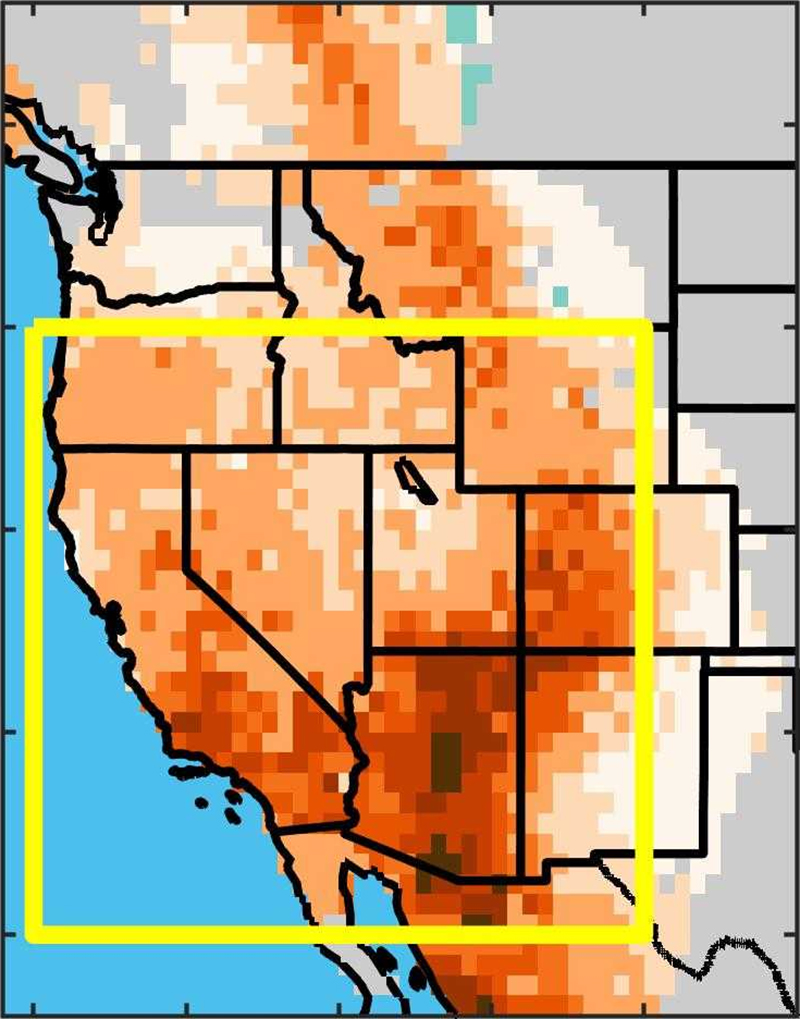 The area covered by the study. (Adapted…


 Exposing the Big Game