Exposing the Big Game

Forget Hunters' Feeble Rationalizations and Trust Your Gut Feelings: Making Sport of Killing Is Not Healthy Human Behavior

Exposing the Big Game

All five of Earth’s largest mass extinctions linked to global warming

Exposing the Big Game's avatarThe Extinction Chronicles

ENVIRONMENT 22 May 2020
New Scientist Default Image
Ancient marine life may have been wiped out by volcanic activity

Phil Degginger/Carnegie Museum / Alamy

The second-most severe mass extinction in Earth’s history may have been triggered by global warming. The discovery means that, for the first time, all of the largest known extinctions can be linked to a rapid rise in the planet’s temperature.

“It completes the jigsaw puzzle in many ways,” says Andrew Kerr at Cardiff University, UK. Geologists recognise five points in time when huge numbers of species were wiped out, although recent research suggests at least one of these might have been too …

Continue reading

Subscribe now for unlimited access

Read more: https://www.newscientist.com/article/2244353-all-five-of-earths-largest-mass-extinctions-linked-to-global-warming/#ixzz6NIo254Rk

View original post

Reward offered after raccoon trapped in Beach Grove is euthanized

Exposing the Big Game's avatarCommittee to Abolish Sport Hunting Blog

The Fur-Bearers has put up $1,000 for information leading to the identification and conviction of the person(s) responsible for trapping a raccoon in Beach Grove earlier this week.

“This is a deeply troubling incident and we were horrified to see the extent of injuries caused to this raccoon,” said Lesley Fox, executive director of The Fur-Bearers, in a press release.

The wildlife non-profit, which last year offered a reward in the case of a raccoon tortured by a trap in Ladner, say in this incident araccoon’s degloved paw was completely shattered and covered in maggots – potentially for days – due to a trap in Beach Grove.

According to Critter Care Wildlife Society, the otherwise healthy female…

View original post 203 more words

ODNR wildlife chief under investigation for hunting violation

Exposing the Big Game's avatarCommittee to Abolish Sport Hunting Blog

Kendra Wecker, chief of the Ohio Division of Wildlife, is being investigated for an alleged wildlife violation after an anonymous complaint received by the state's poaching hotline claimed that she harvested a wild turkey near bait.
1

COLUMBUS — Division of Wildlife Chief Kendra Wecker is under investigation after the Ohio Department of Natural Resources received an allegation that, while hunting on private property in Delaware County, Wecker recently harvested a wild turkey within 50 yards of a game feeder.

Sarah Wickham, communications chief for the ODNR, confirmed Thursday an allegation had been received accusing Ms. Wecker of the hunting violation and an investigation was underway, adding no charges have been filed. Ms. Wickman said there would be no additional comment from the ODNR since the investigation is ongoing.

Ohio law states that it is “unlawful to hunt or take wild turkeys with the aid or use of bait.”

The incident is alleged to have taken place on or about the April 20 opening day for the spring wild turkey hunting season in the state’s southern zone…

View original post 90 more words

Pakistan to free elephant Kaavan after campaign by US singer Cher

Exposing the Big Game's avatarCommittee to Abolish Sport Hunting Blog

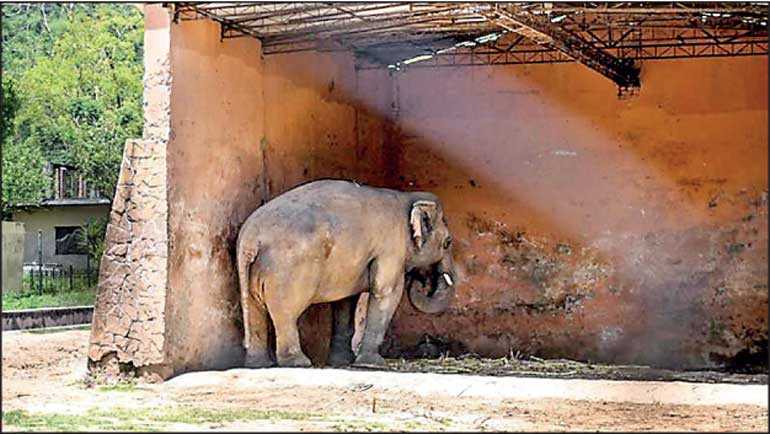
 The elephant named Kaavan stands in his shed at the Islamabad Zoo – AFP
  • US music icon expresses delight as court orders transfer of Asian elephant to a suitable sanctuary from Islamabad Zoo 

Music icon and animal rights activist Cher shared her delight after a Pakistani court ordered freedom for a lonely elephant, who had become the subject of a high-profile rights campaign backed by the United States singer.

“We have just heard from Pakistan High Court Kaavan is free,” the singer and animal rights campaigner said on Twitter on Thursday (21 May) in capital letters, adding a string of emojis and saying she felt “sick”.

“This is one of the greatest moments of my life,” she said.

Outrage over the treatment of Kaavan at the capital’s Islamabad Zoo went global several years ago with a petition garnering more than…

View original post 475 more words

COVID-19 and animal laws

 Daniel Dylan

Thursday, May 14, 2020 @ 3:10 PM | By Daniel Dylan

https://www.thelawyersdaily.ca/articles/19053/covid-19-and-animal-laws-daniel-dylan?category=opinion
Daniel Dylan

It is of urgent importance and necessity — as we are all now of course doing — to stem the ravaging tide of COVID-19 transmissions and the unimaginable death toll witnessed both locally and globally that COVID-19 has caused. Part of this effort involves taking measures such as quarantining, restricting travel, self-isolating, social distancing, practising impeccable hand and face hygiene and funding emerging scientific and medical research to develop therapeutic treatments and vaccines.

With the exception of vaccines, these are mostly short-term measures (if they can be called that, as we do not know how long this pandemic will last), but among the most profound long-term measures we can take to improve our own and non-human animal lives and welfare is to stop consuming non-human animals as food.

While there are ethical reasons for not eating non-human animals and practising veganism (which will be dealt with in article two), the overwhelming health and environmental benefits a vegan diet can reap to prevent further coronavirus transmissions in the future is one of the simplest long-term measures anyone can take. Moreover, doing so would likely pave the way for better than the already weak non-human animal laws in Canada.

As is commonly known, COVID-19 is a zoonotic disease, which means it is a coronavirus that originated in non-human animals and eventually migrated to human animals. Bats are a common carrier of coronaviruses, for example, and pangolins, the most trafficked species in the world, also tend to act as intermediaries for coronavirus transmissions.

Although over 500 different coronavirus strains were discovered in the last 10 years, it is unclear to scientists, ecologists and epidemiologists where exactly COVID-19 emerged, but there appears to be a general consensus that sometime in November 2019, COVID-19 saw significant transmission from non-human animals to human animals in a wildlife market in Wuhan, China.

On Feb. 11, for various reasons owing to geographic, species and demographic neutrality and simplicity, the World Health Organization (WHO) labelled that particular strain of coronavirus “COVID-19.” In fact, in 2015, the WHO published a list of emerging diseases (mostly derived from non-human animals) that were deemed likely to cause epidemics; however, COVID-19 was not among them. I am not faulting the WHO for not including COVID-19 on that list; only pointing out that emerging diseases and their origins are generally known and monitored among the global human animal health community.

Nevertheless, what COVID-19 and some of the other viruses that were included on that list have in common is that they often originate in public and private food markets in which live or recently slaughtered wild non-human animals are purveyed. In fact, United Nations Food and Agriculture Organization suggested that over 70 per cent of new human diseases in recent decades originated in non-human animals and has only been accelerated by human animals’ quest for more non-human animal sourced food.

The WHO, the U.S.’s Centers for Disease Control and Prevention and the Public Health Agency of Canada historically have, for numerous years, issued similar warnings about potential pandemics based on the dietetic consumption of non-human animals.

The Canadian Food Inspection Agency (CFIA), the federal body responsible for regulating the safety of non-human animals and their byproducts for human animal consumption in Canada, has also authorized certain countries to import meat into Canada. CFIA writes on its website that during the COVID-19 pandemic it is “taking action to preserve the integrity of Canada’s food safety system, while safeguarding its animal and plant resource base.” It is not clear what this means.

In totality, CFIA’s greatest efforts are typically devoted to ensuring that non-human animals are fit for human animal consumption and the agency does little else to protect the daily lives and welfare of non-human animals themselves. In all fairness, however, it is not explicitly within CFIA’s mandate to do so.

Above all else, however, it is the demand for “meat” that fuels supply — locally and globally. Simply put, if the demand were to decrease or even disappear, an absence of supply would naturally follow. Surely then the possibility of future pandemics would decrease.

Not consuming foreign non-human animals, however, exists in the larger context of domestic non-human animal food consumption. Canada is one of the largest producers and exporters of dead cow meat (“beef” is a euphemism) in the world, for example. According to the Canadian Cattlemen’s Association, the body that represents Canadian “beef” producers, Canada produces approximately 1.3 million tonnes of dead cow meat annually and in 2018 exported $2.75 billion worth or 398,580 tonnes of dead cow meat, representing 38 per cent of domestic slaughter. The remaining 901,420 tonnes were consumed by Canadians.

If foot-and-mouth disease, the Walkerton E. coli outbreaks and even the H1N1 and SARS viruses are indications, given these numbers, the possibility of pathogen and virus transmission exists in domestic contexts despite whatever regulatory precautions CFIA might take.

As more information about COVID-19, the devastating effects it is having, and other infectious diseases and the possibility of future epidemics or pandemics emerge, it will be interesting to see if Canadians will either become vegan or at least demand improved laws respecting the treatment and importation of non-human animals into Canada. Doing so would likely pave the way for better than the already weak non-human animal laws in Canada, which I will explore in part two.

This is part one of a two-part series.

Daniel Dylan is an assistant professor at the Bora Laskin Faculty of Law, Lakehead University, in Thunder Bay, Ont. He teaches animal law, contract law, evidence law, intellectual property law and Indigenous knowledge governance.

Interested in writing for us? To learn more about how you can add your voice to The Lawyer’s Daily, contact Analysis Editor Yvette Trancoso-Barrett at Yvette.Trancoso-barrett@lexisnexis.ca or call 905-415-5811.

He opposed public lands and wildlife protections. Trump gave him a top environment job

Exposing the Big Game's avatarCommittee to Abolish Sport Hunting Blog

Jimmy Tobias

,

<span>Photograph: Matthew Brown/AP</span>
Photograph: Matthew Brown/AP

In July 2017, William Perry Pendley, a crusading conservative attorney, delivered a speech to a group of rightwing activists in North Carolina in which he was completely candid about his ideological commitments.

He accused “the media” of selling “their soul to the greens”. And after criticizing the Endangered Species Act, he made light of killing endangered species.

“This is why out west we say ‘shoot, shovel and shut up’ when it comes to the discovery of endangered species on your property,” he said, according to an audio recording of the event obtained by the Guardian. “And I have to say, as a lawyer, that’s not legal advice,” he added, as some in his audience quietly snickered at the reference to the illegal extermination, and the burial, of endangered animals.

It has been almost three years since he gave those remarks, and…

View original post 223 more words

1,000 Hens Rescued From Slaughter at Struggling Iowa Egg Farm


from Senient Media
Reading Time: 2 minutes

Over the weekend, Animal Place, California’s oldest and largest sanctuary for farmed animals, rescued 1,000 hens from an egg farm in Iowa that scaled-down due to the COVID-19 pandemic.

The egg farm planned to “depopulate” over 100,000 hens with carbon dioxide gas—a common method used by farmers struggling to maintain their oversized herds and flocks. As infected workers, slaughterhouse closures, and disrupted supply chains wreak havoc on America’s food system, millions of animals are being culled.

Typically, animals trapped within the food system do not get a second chance at life, but this Iowa farm decided to allow individuals onto the property to rescue hens, and local animal advocates alerted Animal Place. Two Animal Place staffers then drove nearly 30 hours to Iowa to coordinate the rescue with eight local volunteers and chartered two planes to fly the hens back to their sanctuary in California.

“The entire process, from the 27-hour drive, arriving at the farm at 3 a.m., loading and unloading full crates from the planes and vehicles, and going straight to caring for them once we arrived at the sanctuary was the most exhausting experience I’ve ever had,” said Animal Place animal care director Hannah Beins.

Living conditions inside the egg facility were dismal. Rescuers found a battery cage system with cages stacked four to five high with 10 hens in each cage. They also found cages with surviving hens forced to stand and walk on top of deceased hens. Dead hens littered the aisles of the barn.

How COVID-19 is Changing Us

  • Dogs are being reclassified as pets, not livestock according to China’s new draft policy. The policy is part of a response to the coronavirus outbreak that the Humane Society called a potential “game-changer” in animal welfare. Wuhan, China also banned virtually all hunting of wild animals within its limits and imposed strict new controls on the breeding of all wild animals, declaring Wuhan “a wildlife sanctuary.”
  • The pandemic has illuminated glaring issues within the American food system that can no longer be ignored. A case is being made for deindustrialization and decentralization within food supply chains, breaking up the meat oligopoly, ensuring that food workers have sick pay and access to health care, and pursuing policies that would sacrifice some degree of efficiency in favor of much greater resilience.
  • COVID-19 is also influencing consumers’ relationship with meat. As the virus continues to pass through meat production plants in North America, consumers are questioning their food sources now more than ever. Interest in cultured meats and meat alternatives has risen during the pandemic and is expected to continue growing post-COVID.
Layer hens are often housed in extremely cramped conditions with no access to sunlight. They are bred specifically for laying speed—increasing the number of eggs produced by each hen. Since hens are not biologically designed to lay that many eggs, they suffer painful health problems like calcium depletion and osteoporosis as a result.

“I would do it again in a heartbeat, because until their rescue these hens never got to touch grass or feel the sunshine, and now they can live out the rest of their lives as chickens should,” said Beins.

Read the full story

Brutality of the meat industry is on display during COVID-19 pandemic

Exposing the Big Game's avatarExposing the Big Game

The meat industry prefers to work behind the closed doors of factory farms and slaughterhouses, but the pandemic is giving Canadians a rare glimpse into the dirty business of animal slaughter, and the unique and intense forms of suffering the industry unleashes on animals, workers, and sometimes even farmers.

By now it’s old news that Canada’s largest COVID-19 outbreaks have all been at slaughterhouses (the industry prefers the term “processing plants”). In Alberta, over three times as many slaughter workers have fallen ill than have health-care workers. Nationwide, these killing factories are closing or running at reduced capacity, throwing a wrench in the meat supply chain.

The meat industry raises animals on a strict, just-in-time basis, and slaughter disruptions are most keenly felt in the pig and chicken meat industries because those animals have shorter lifespans and higher…

View original post 398 more words

Brutality of the meat industry is on display during COVID-19 pandemic


The meat industry prefers to work behind the closed doors of factory farms and slaughterhouses, but the pandemic is giving Canadians a rare glimpse into the dirty business of animal slaughter, and the unique and intense forms of suffering the industry unleashes on animals, workers, and sometimes even farmers.

By now it’s old news that Canada’s largest COVID-19 outbreaks have all been at slaughterhouses (the industry prefers the term “processing plants”). In Alberta, over three times as many slaughter workers have fallen ill than have health-care workers. Nationwide, these killing factories are closing or running at reduced capacity, throwing a wrench in the meat supply chain.

The meat industry raises animals on a strict, just-in-time basis, and slaughter disruptions are most keenly felt in the pig and chicken meat industries because those animals have shorter lifespans and higher turnover. Slaughter-ready animals are immediately trucked to the abattoir to maximize farmer profits, and clear space for new, younger animals. Genetically manipulated to grow grotesquely fast, chickens reach slaughter size in only six to eight weeks. Pigs reach market weight of about 270 pounds in a mere six months.

Many farmers are now making a business decision to “depopulate”— a euphemistic term for killing off slaughter-ready animals whom they can’t slaughter for profit. At least 200,000 chickens have been killed on farms in Quebec, and reports suggest up to 90,000 pigs have met the same fate. There is no publicly available data, so actual numbers could be significantly higher.

In Minnesota, farmers are killing 3,000 pigs a day and running their bodies through a woodchipper. No public inspectors oversee on-farm killings, and industry-accepted methods include braining piglets by bashing in their heads in, shooting pigs, and gassing entire barns of chickens.

Some may wring their hands about food waste, but more importantly, these animals are individuals. As MP Nathaniel Erskine-Smith pointed out at a recent Industry Committee meeting, “this is what happens when we treat sentient animals as commodities.”

Farmers are now claiming that shooting pigs and gassing chickens is affecting their mental health. Apparently even farmers — involved in the daily confinement and exploitation of animals, often in appalling conditions — don’t like to contemplate the fate that awaits animals once trucked away.

But what of the mental well-being of workers in slaughterhouses to whom we normally outsource the business of killing? What is it like to kill, disassemble bodies, and constantly try to disassociate from the horror of it?

Slaughterhouse workers are disproportionately marginalized people from immigrant communities, temporary foreign workers, and other folks with few options. We shunt this dangerous, damaging work onto the vulnerable, and the mental toll it takes is evident in the higher rates of violence in slaughterhouse communities. Now, these workers are also dealing with the added risk of COVID-19 infection.

The secretive brutality of the meat industry is on display for all to see, and it’s more apparent than ever before that a post-pandemic food system must include a shift toward growing plants, and a move away from the slaughter-based food system that hurts animals, workers, and our food supply.