Inflamed brains, toe rashes, strokes: Why COVID-19’s weirdest symptoms are only emerging now

Exposing the Big Game's avatarThe Extinction Chronicles

These symptoms sound scary, but they should be expected. Here’s what scientists know about the “new” effects of the coronavirus.

A coronavirus patient is transferred from a hospital that was full to capacity to another hospital by members of the medical staff of Klinicare in Brussels, Wednesday, April 1, 2020. The new… Read More
PHOTOGRAPH BY FRANCISCO SECO, AP PHOTO

An infection can inflict serious damage inside your body in many different ways, and COVID-19 seems to use just about all of them. The coronavirus primarily attacks the lungs, which can cause pneumonia or even respiratory failure, and in one of every five patients, it also leads to multiple organ failure.

Yet, as the pandemic continues to ravage the world, case reports have emerged of more unusual damage ranging from hundreds of tiny blood clots to strokes in young people

View original post 2,462 more words

Scientists Discover 400-Year-Old Greenland Shark Likely Born Around 1620

Greenland sharks are now the longest-living vertebrates known on Earth, according to scientists.

Greenland Shark That Could Be Up to 500 Years Old Discovered by Scientists

Image credit: Dive Magazine

Researchers used radiocarbon dating of eye proteins to determine the ages of 28 Greenland sharks, and estimated that one female was about 400 years old. The former vertebrate record-holder was a bowhead whale estimated to be 211 years old.

As lead author Julius Nielsen, a marine biologist from the University of Copenhagen, put it: “We had our expectations that we were dealing with an unusual animal, but I think everyone doing this research was very surprised to learn the sharks were as old as they were.”

Greenland sharks swim through the cold waters of the Arctic and the North Atlantic at such a sluggish pace that has earned them the nickname “sleeper sharks.” Image credit: Julius Nielsen

Greenland sharks are huge and can grow up to 5m in length. Yet, they grow at just 1cm a year. They can be found, swimming slowly, throughout the cold, deep waters of the North Atlantic.

The team believes the animals only reach sexual maturity when they are 4m-long. And with this new, very lengthy age-range, it suggests this does not occur until the animals are about 150 years old.

A newly tagged Greenland shark returns to the deep and cold waters of the Uummannaq Fjord in western Greenland. Image credit: Julius Nielsen

The research was made possible, in part, by the atmospheric thermonuclear weapons tests conducted during the 1960s, which released massive amounts of radiocarbon that were then absorbed by organisms in ocean ecosystems. Sharks that showed evidence of elevated radiocarbon in the nucleus of their eye tissue were therefore born after the so-called “bomb pulse,” and were younger than 50 years old, while sharks with lower radiocarbon levels were born prior to that, and were at least 50 years old or older, the study authors wrote.

The scientists then calculated an age range for the older sharks based on their size, and on prior data about Greenland sharks’ size at birth and growth rates in fish.

A Greenland shark near the ocean surface after its release from research vessel Sanna in northern Greenland. Image credit: Julius Nielsen

According to the results of the analysis – which has a probability rate of about 95 percent – the sharks were at least 272 years old, and could be as much as 512 years old (!) with 390 years as the most likely average life span, according to Nielsen.

But why do Greenland sharks live so long? Their longevity is actually attributed to their very slow metabolism and the cold waters that they inhabit. They swim through the cold waters of the Arctic and the North Atlantic at such a sluggish pace that has earned them the nickname “sleeper sharks.” Seal parts have been found in their bellies, but the sharks move so slowly that experts have suggested that the seals must have been asleep or already dead when the sharks ate them.

Sources: 12

Why we might not get a coronavirus vaccine

Exposing the Big Game's avatarThe Extinction Chronicles

Politicians have become more cautious about immunisation prospects. They are right to be

Vaccines are simple in principle but complex in practice.

Vaccines are simple in principle but complex in practice. Photograph: Sean Elias/PA

Ian Sample Science editor
Published onFri 22 May 2020 06.23 EDT
2,364

It would be hard to overstate the importance of developing a vaccine to Sars-CoV-2 – it’s seen as the fast track to a return to normal life. That’s why the health secretary, Matt Hancock, said the UK was “throwing everything at it”.

But while trials have been launched and manufacturing deals already signed – Oxford University is now recruiting 10,000 volunteers for the next phase of its research – ministers and their advisers have become noticeably more cautious in recent days.

This is why.

Why might a vaccine fail?

Earlier this week, England’s deputy chief medical officer Jonathan Van-Tam said the…

View original post 1,840 more words

It Hit 80 Degrees in the Arctic This Week

Exposing the Big Game's avatarThe Extinction Chronicles

This story will provide important context for the headline, and I encourage you to read it—but really, the headline tells you what you need to know: It was 80 degrees Fahrenheit above the Arctic Circle this week.

A little farther south, in Siberia—you know, the region of world we reference when we want to connote something cold—it was 86 degrees Fahrenheit. Arctic sea ice in the neighboring Kara Sea took the deepest May nose dive ever recorded. Oh, and random swaths of the region are on fire. Things are extremely wrong.

Let’s start with the heat above Arctic Circle. Mika Rantanen, a researcher at the Finnish Meteorological Institute, flagged a map showing blistering heat across western Siberia. The region has been the epicenter of an explosive heat wave that has rippled across…

View original post 595 more words

$100,000 Of Vegan Food Gifted To Health Workers And The World’s Most Vulnerable

https://www.veganfirst.com/article/100000-of-vegan-food-gifted-to-health-workers-and-the-worlds-most-vulnerable-


    • VeganFirstDaily


21st May 2020

Mýa Quote:

“When will we say ‘enough is enough’ and decide that eating animals is just not worth it?”
Alicia Silverstone quote:

“Killing animals is unethical and obsolete, and it’s killing us too. We need to take pandemics off the menu.”

An international campaign group best known for challenging the Pope and the President of the United States to go vegan for a month in return for $1 million to charity is donating $100,000 in vegan food and supplies across the nine countries where it operates, plus Ethiopia.


Million Dollar Vegan was established to raise awareness of how the rearing and consumption of animals affects the environment, both farmed and wild animals, and human health – including the global risks of zoonotic diseases and antibiotic resistance. It is backed by many leading doctors and scientists.


Launched in the first week of May, and rolling out across ten countries throughout May and beyond, Million Dollar Vegan is working with Ammucare.org and Getmoksha.com in India to provide vegan ration for a month to 200 slum-dwelling families and street children in Krishna Nagar, Mohammadwadi in Pune. This will be an ongoing program for the month of May. They will also be partnering with other local organizations and restaurants to deliver food to those in need across Mexico, Brazil, Argentine, Ethiopia, the US, UK, Italy, France and Spain.

picture credit: Ammucare.org


Through its relief efforts, Million Dollar Vegan aims to actively support and care for those most in need during the COVID-19 pandemic, whilst at the same time raising awareness of how pandemics emerge and spread in order to try and prevent another, perhaps more devastating, outbreak in the future. In this, they are backed and guided by experts including Dr. Michael Greger (public health expert and author of Bird Flu: A Virus of Our Own Hatching), Dr. Neal Barnard (President of the Physicians Committee for Responsible Medicine), Dr. Peter Li (Associate Professor of East Asian Politics), Dr. Aysha Akhtar (neurologist and author of Animals and Public Health), Dr. T Colin Campbell (Professor Emeritus of Nutritional Biochemistry, Cornell University), Dr. Ariel Kraselnik (cardiologist), and Professor Aaron Gross (University of San Diego, co-author of Eating Animals).


The campaign is also backed by many well-known names including Hollywood actress and activist Alicia Silverstone, American singer-songwriter Mýa, Brazilian TV-star Luisa Mell, Argentinian rapper Cacha, and Indian popstar Anushka Manchanda — as well as renowned public health experts, educators and scientists.


According to the Center for Disease Control and Prevention, three-quarters of emerging infectious diseases come from animals. [1]


Says Dr. Kraselnik: “Flu pandemics will continue, if we insist on stacking animals up for our consumption.”


Says Dr Neal Barnard: “Getting animals off our collective plate would go a long way toward preventing future pandemics, and would improve our health and our environment at the same time.”


While scientists make the connection between pandemics and our treatment of animals, nutritionists and doctors are also sharing research that indicates eating plant-based foods may help strengthen and support our immune systems. One study found that within two weeks of a fruit- and veggie-deficient diet, immune function plummeted. [2]


Says Dr. Campbell, of the Centre for Nutritional Studies: “A Whole-Food Plant-Based (WFPB) diet can prevent, perhaps even reverse, the chronic degenerative diseases which make older individuals more susceptible to COVID-19 while simultaneously increasing immunity by inactivating the COVID-19 itself.”


Million Dollar Vegan says there has never been a more important time for people to re-evaluate their relationship with animals, to make the switch to a plant-based diet, and to join their global campaign to #TakePandemicsOffTheMenu. 


Says Naomi Hallum, Director of Million Dollar Vegan: “The coronavirus pandemic – like many others before it – is creating tragedies for families all over the world. None of us want this to happen ever again but to prevent future outbreaks, there are some difficult lessons we must learn. If we continue to stress wild animals by decimating their habitats and capture and cage them in markets – and if we continue to mass produce domesticated animals inside squalid factory farms and transport them long distances – there will be no avoiding a future pandemic.

picture credit: TravelandLeisure.com

“COVID-19 is a stark reminder that all life on Earth is connected and that if we wish to preserve our own lives, we must also strive to preserve the lives of others.”
Additional information on historic zoonoses

Our long history of exploiting animals for their meat, milk, eggs and skins means there is also a long history of serious illness and widespread deaths in people: Tuberculosis is thought to have been acquired from the domestication of goats; whooping cough from domesticated pigs; typhoid from domesticating chickens; leprosy from water buffalo; and the cold virus from cows or horses. [3]

The 1918 flu pandemic killed 50-100 million people and originated in birds. [4] More recently, the SARS virus – thought to have originated from another live animal market [5] – spread to over 8,000 people worldwide and cost the global economy an estimated $40 billion. [6] Then came H1N1 “swine flu” – believed to have originated in pigs – which infected around 60.8 million people. [7] This was followed by MERS, another deadly coronavirus, which emerged straight out of an industrializing camel sector in the Middle East. [8] And then in 2013, the H7N9 “bird flu” emerged from poultry, sickening more than 1,500 people and killing roughly 40 percent of them. [9]

Scientists agree that about 75 percent of emerging infectious diseases are of animal origin. [10]


READ: Australian Scientists Create Biodegradable Plastic From Cotton Waste

Letters | Coronavirus crisis shows why Hong Kong must stop illegal wildlife trade and conserve global biodiversity

Exposing the Big Game's avatarThe Extinction Chronicles

  • Hong Kong remains a major transit point for the illegal wildlife trade and the number of consignments that go undetected is troubling. Strong action can help Asia’s World City shed its reputation as a haven for illicit wildlife trafficking
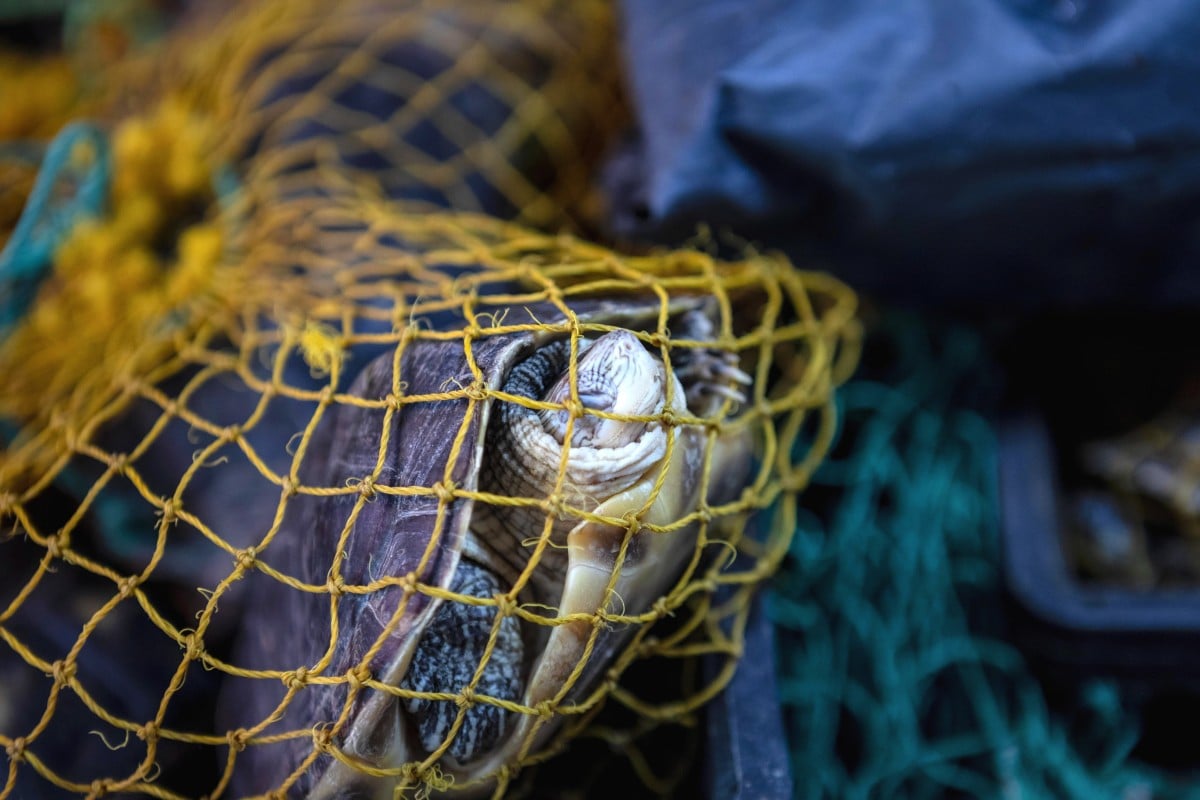
Live turtles on display at a farmer’s market in Guangzhou, in Guangdong province of southern China, on May 4. Photo: EPA-EFE

Following the 2003 Sars (severe acute respiratory syndrome) outbreak, a team of virologists led by Dr Vincent Cheng from the University of Hong Kong warned of a “time bomb” waiting to explode from China’s wildlife markets. As predicted, the Covid-19 pandemic emerged with devastating repercussions that are affecting every corner of the world.

Despite China declaring a ban on most
wildlife sales

and the closure of wildlife markets, a suspected disease source, there are reports of markets back in operation.

Before the Covid-19 pandemic, illegal wildlife trade was…

View original post 352 more words

Trump Says He Will Not “Close the Country” If Second Wave of Virus Hits

Exposing the Big Game's avatarThe Extinction Chronicles

As several states across the nation remove their shelter-in-place orders and begin to reopen businesses, there remains a looming possibility of a second wave of coronavirus cases.

Yet if that happens, President Donald Trump said this week he will not call for another round of similar measures to stem the spread of the disease.

Speaking to reporters while touring a Ford Motor factory in Michigan on Thursday, the president recognized the likelihood of a second wave of COVID-19 but rejected the idea of another round of stay-at-home rules to contain the spread of the virus if it happens.

View original post 398 more words

Necropsy reveals brutal shovel beating of Mexican gray wolf

Exposing the Big Game's avatarCommittee to Abolish Sport Hunting Blog

As wild Mexican gray wolves are rounded up at the Sevilleta National Wildlife Refuge in New Mexico, both sides of the Mexican Wolf Recovery Project sound off on the concerns of ranchers and environmentalists. To Tingle and Alex Devoid/azcentral.com

Rancher who admitted attacking the wolf faces loss of grazing permit

LINKEDINCOMMENTMORE

A report obtained by an Arizona-based environmental group reveals the severity of injuries suffered by a Mexican graywolf that was trapped and beaten with a shovel by a New Mexico rancher in 2015.

That wolf later died and the U.S. Fish and Wildlife Service moved to revoke the rancher’s grazing permit.

According to the agency’s report, which described the necropsy conducted on the animal, the wolf’s lower jaw was fractured…

View original post 943 more words