The farm planned to “depopulate” more than 100,000 chickens, so rescuers chartered two planes to fly a group of hens from the Iowa farm to a sanctuary in Grass Valley, California.
Intensive agriculture may be efficient, but it comes at great cost to humans, animals, and the environment. With a growing global population, it’s time to reflect on the current food system.
Brazil plays a major role in the global food supply. But with rampant corruption and disregard for human rights, animal, and environmental issues, Bolsonaro’s Brazil has become a global threat.
Join Our Newsletter
Sentient Today sifts through what’s out there to find the facts, figures, and hidden treasures about animals, science, and the environment. If you’re an idea seeker, generally curious, or like to learn novel things then this is the newsletter for you.
In a new op-ed from Animal Equality UK, Michelle Baxter Wickham calls for more individual and corporate accountability to ensure farmed animals are better protected when we return to “normal.”
Wet markets can be places of profound animal suffering, out of which arise life-threatening diseases like the novel coronavirus. And they exist all over the world.
With COVID-19 closures impacting meat and dairy supply chains, the industry faces a choice: stay open and risk the lives of its employees, or shut down and force farmers to cull millions of animals.
Reading Time:3minutes
Andrew Skowron
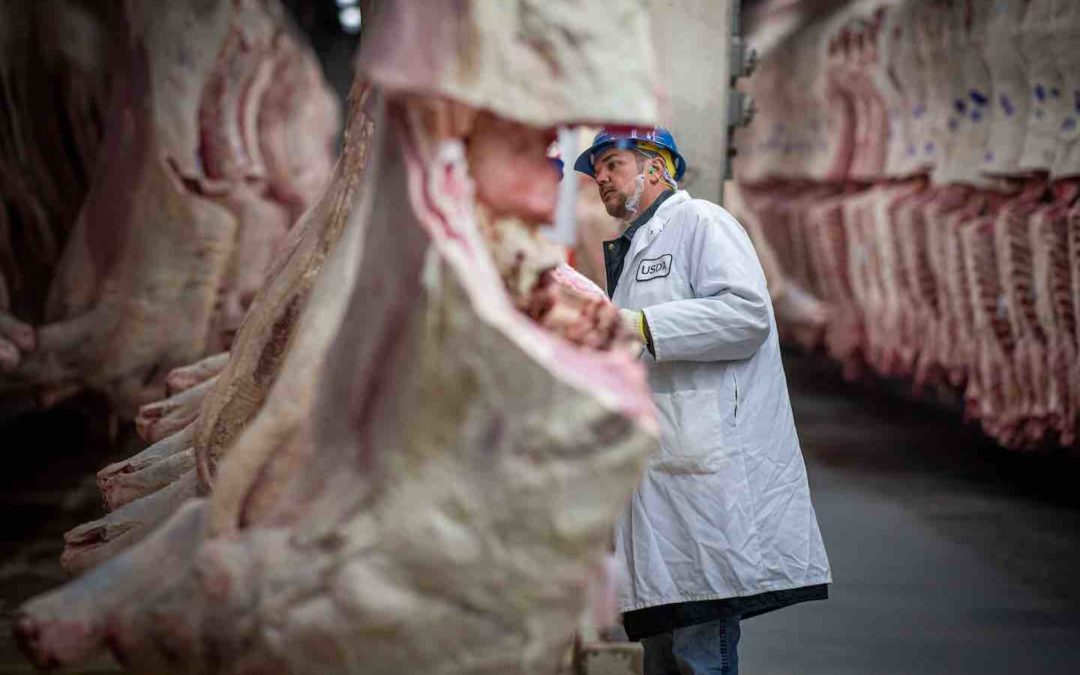
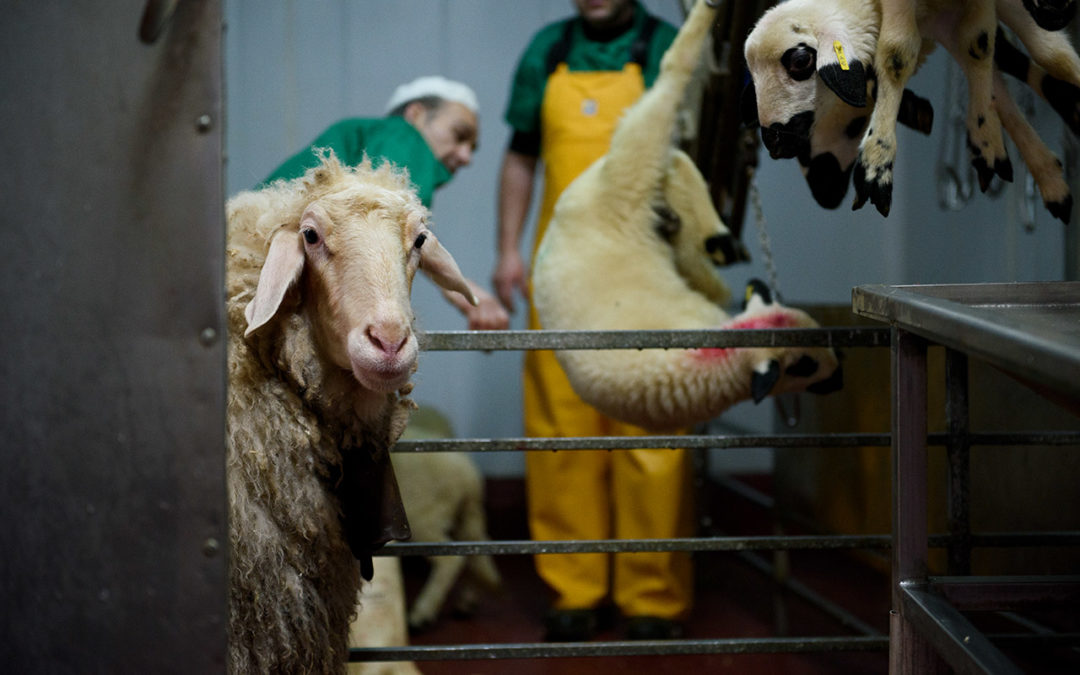
Since the start of April, many of the world’s biggest meat processing companies—JBS USA, Tyson Foods, Smithfield Foods, and Cargill—shut down over 20 slaughterhouses and packing facilities across the U.S. and Canada, in response to the growing numbers of staff infected with COVID-19. While producers pushed to keep slaughter lines running, these facilities became hotbeds for the virus. In Canada, one Alberta Cargill plant is now responsible for the biggest outbreak in the country, with one in four cases of the virus in the province linked to the facility.
Subsequently, meat plant closures are interrupting supply chains, leaving many farmers with too many animals that they are now killing, or will soon kill, en masse. One report by the Des Moines Register on the closures quotes U.S. Sen. Chuck Grassley, who estimates that the country’s pork industry has about 100,000 pigs who should be sent to slaughter each day but now have nowhere to go. “Apply that over 10 days, and with a million pigs, you’ve got a big problem.”
The Guardian reports that at least two million animals have already reportedly been killed on farms in the U.S., “and that number is expected to rise.”
Similarly, due to closures of restaurants, hotels, and schools, dairy and egg producers are also seeing interruptions in their supply chains. As a result, dairy producers are dumping milk, and chicken producers are trashing eggs across the U.S. and Canada. One recent New York Times article called the amount of waste “staggering.” The article cites Dairy Farmers of America, estimating as much as 3.7 million gallons of milk being dumped by farmers each day. And, “a single chicken processor is smashing 750,000 unhatched eggs every week.”
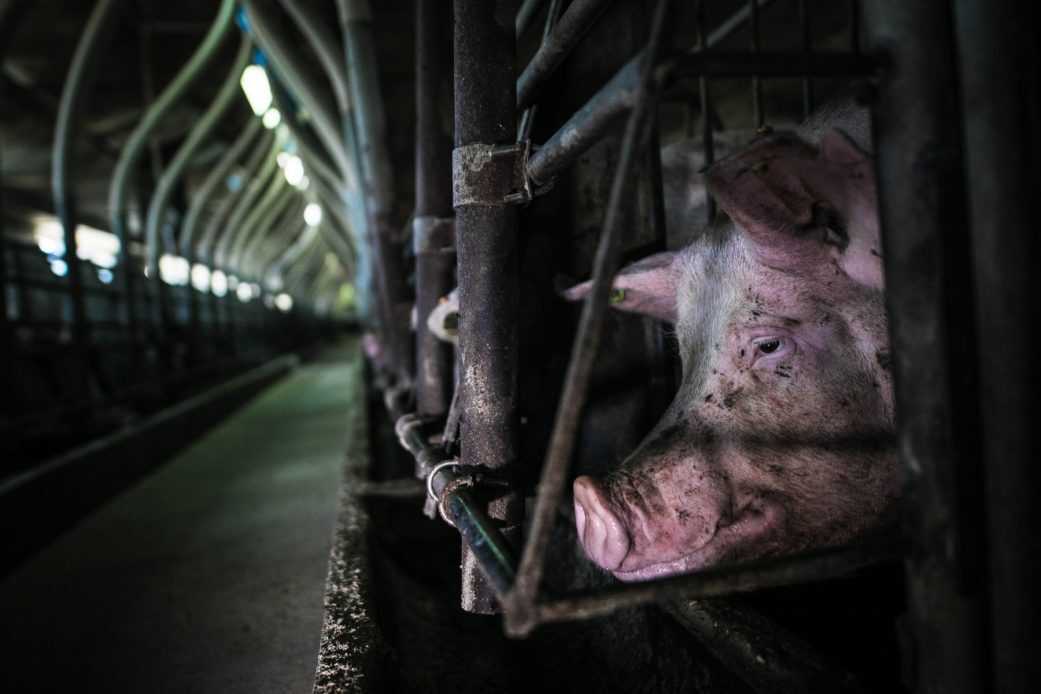
Other media reports throughout April described producers gassing pigs and chickens and aborting piglets. A recent report by Reuters details how Iowa farmer Al Van Beek had nowhere to ship his pigs in order to make room for the 7,500 piglets he was expecting from his breeder sows. “He ordered his employees to give injections to the pregnant sows, one by one, that would cause them to abort their baby pigs.”
On April 28th, The National Pork Board published a document entitled COVID-19:Animal Welfare Tools for Pork Producers, listing permitted methods of mass euthanasia. These include gunshot, manual blunt force trauma, electrocution, carbon dioxide, and “in times of constrained circumstances,” like right now: ventilation shutdown plus.
According to the American Veterinary Medical Association, “ventilation shutdown involves closing up the house [barn/ shed], shutting inlets, and turning off the fans. Body heat from the herd raises the temperature in the house until animals die from hyperthermia. Numerous variables may make the time to death of 100% of animals in the barn subject to a range of times.” The plus included by the National Pork Board means adding carbon dioxide and/or simply turning up the heat.
This week, President Donald Trump signed an executive order, forcing U.S. slaughterhouses to remain open, deeming meat production “critical” despite concerns for worker safety. There are, however, questions about the capabilities of the order, and it is yet to be seen how it may be enacted.
No such order has been made in Canada, and so culling of farmed animals has begun, along with the dumping of milk and dairy. One farmer on Prince Edward Island reportedly killed 270 pigs last week, disposing of their bodies in a landfill. According to a tweet by Alberta Pork: “Some reports suggest more than 90,000 #pigs are likely to be disposed of by #farmers.”
Dr. Sylvain Charlebois, professor of food distribution and policy at Dalhousie University, puts estimates of dumped dairy at “anywhere between 50 to 160 million litres, across Canada.”
For the animals, this is a no-win situation, as they would have been exploited and killed one way or another. The waste of animal products, money, and other resources, as well as the unnecessary strain on the environment, only add insult to injury. What this unique situation especially illuminates though, is the glaring fragility and unsustainability of our current food system, as well as the lack of forethought, care, and compassion for those animals bound to be food.
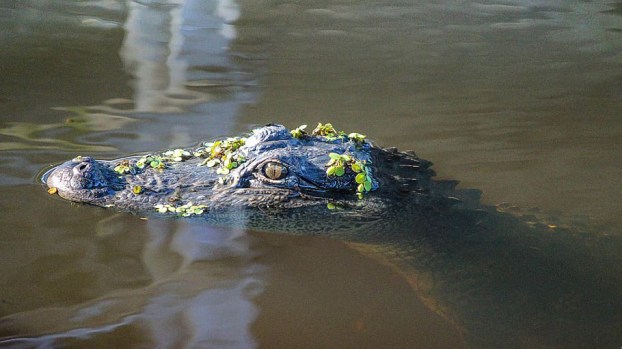
Applications for the 2020 Public Waters Alligator Season will be available from 10 a.m. June 1 through 10 a.m. June 8.
There are no changes to the application and drawing process from 2019. A total of 960 permits are available within seven hunting zones for the 10-day season. The 2020 season will open at noon Aug. 28 and continue through noon Sept. 7.
Permits are limited by a random drawing and an application is required. Applicants may only apply in one alligator hunting zone of their choice. Applications are accepted online at www.mdwfp.com or at any point of sale location where Mississippi hunting and fishing licenses are sold. There is a $2.34…
The Idaho Fish and Game Commission turned down a petition Thursday aiming to alert trail users to active wolf-hunting zones and require trappers to place signs at trailheads and campgrounds within 25 feet of traps and snares.
Authored by Suzanne Stone of the Wood River Wolf Project, Garrick Dutcher of Living With Wolves in Ketchum and two other Idaho-based conservationists, the petition’s goal was to help trail users and accompanying children or dogs avoid unintentional injury.
“Most Idahoans are unaware that trappers are legally allowed to place traps so close to public trails and campgrounds,” it read. “They are also unaware of the procedures for safely removing a dog from a leghold or body-gripping trap or snare.”
The Fish and Game Commission denied the petition last week after deeming its sign requests unnecessary and burdensome, according to a press release. The commission’s six members…
Wolf Mother’s Undisclosed Death in April Follows March Killing of Mate, Pup
SILVER CITY, N.M.— A pack of endangered Mexican gray wolves has been eliminated in the Gila National Forest through a combination of private trapping and federal shooting on behalf of the livestock industry.
Conservationists learned today that the Prieto pack’s nine-year-old alpha female died in federal custody on April 25 and that a yearling has fled dozens of miles from his natal range. These events follow the federal shooting in March of the alpha male and a pup, and the trapping, maiming and/or deaths of seven other pack members during 2018 and 2019.
“This latest incident is the cruel final blow to the Prieto pack, which struggled for two years to survive the Fish and Wildlife Service and avowed wolf-haters in the livestock industry,” said Michael Robinson at the Center for Biological Diversity. “We’ll do everything…
Coastal Wildlife Club volunteer Gene McCoy loads a derelict crab trap into the truck of his car. The Florida Fish and Wildlife Conservation Commission authorized the CWC to remove abandoned crab traps from Manasota Key during the sea turtle nesting season.
PROVIDED BY COASTAL WILDLIFE CLUB
ENGLEWOOD — The Coastal Wildlife Club will assist the state with gathering derelict crab traps.
The Florida Fish and Game Conservation Commission has authorized CWC turtle patrol volunteers to gather and remove crab traps that wash up onto Manasota Key during the sea turtle nesting season, which started May 1 and extends to Oct. 31.
“Traps and lines may obstruct the progress of nesting turtles and even entangle them,” the CWC stated in a press release Monday. Anyone who discovers a derelict trap on Manasota Key is asked to email the CWC at info@coastalwildlifeclub.org.
Since April 30, the CWC recovered and removed three blue crab traps and seven stone crab traps, two in the Sarasota County portion of Manasota Key and eight on the Charlotte side of the barrier island.
Details of the derelict crab trap programs and clean-ups can be found online at myfwc.com.
The FWC estimates 800,000 blue crab traps are permitted annually. The state estimates 30% to 50% of blue crab traps are lost to their owners.
The traps are valuable to the commercial crabbers.
“We don’t want to lose traps,” said Kelly Beall who with her husband, Jimmy, own and operate Peace River Seafood restaurant, seafood and fresh vegetable market on Duncan Road in Punta Gorda. Jimmy also is a commercial crabber with hundreds of traps set in Charlotte Harbor and the Peace River.
Often, Beall suggested, boaters will run over a commercial trap’s lines, separating the traps from their buoys.
A decade ago, Charlotte County Sea Grant agent Capt. Betty Staugler assisted the state in drafting its volunteer derelict trap clean-up procedures. Like Beall, Staugler suggested traps are valuable to commercial crabbers, especially since they use steel rebar to weigh their traps down.
Generally, Staugler said, commercial crabbers have a “good handle” of where their traps are located since they check them regularly, several times a week, whereas recreational crabbers may only check their traps once a week, twice a week or even longer.
The state has a rotating, two-year regional schedule for 10-day crab trap closures throughout the state. During that time, the FWC requires all commercial and recreational traps to be removed from the water. Abandoned and derelict traps are then pulled out.
“Traps may remain in the water during a closed season for many reasons,” the FWC states on its website. “They can move during storms, making them difficult to locate; they may be snagged by passing vessels and dragged to another area; or they may be illegally abandoned by their owners.”
But as much as wanting to clear abandoned and derelict traps from waterways, the FWC protects crabbers and their traps and their livelihoods.
Unauthorized tampering with crab traps, their lines and buoys, or trap contents can result in a third-degree felony charge, fines up to $5,000 and a permanent revocation of fishing licenses.
As well as fossil fuels—not instead of. Credit: science photo / shutterstock
The global COVID-19 quarantine has meant less air pollution in cities and clearer skies. Animals are strolling through public spaces, and sound pollution has diminished, allowing us to hear the birds sing.
But these relatively small and temporary changes should not be mistaken for the COVID-19 pandemic actually helping to fix climate change. Quite the contrary: the pandemic that made the world stop offers a glimpse of the deep changes in lifestyles and economic structures that we need to implement if we are to effectively mitigate the worst of climate change.
The short-term effects are not in doubt. A new study in Nature Climate Change led by scientists from the University of East Anglia and Stanford has found that daily global CO₂ emissions in early April 2020 were down 17% compared to the mean level of emissions in 2019.
This finding backs up an earlier report from the International Energy Agency (IEA) which found that CO₂ emissions from fossil fuel combustion—globally, the main source of greenhouse gas emissions—in the first three months of 2020 were 5% lower compared to the same period last year.
But the short-term and long-term effects of pollution are different things, and a few months without driving or flying will do little in the long run. Climate change is caused by rising concentrations of greenhouse gases in the atmosphere. Quarantine measures have affected emissions of these gases in the short term, and many places have seen a drop in air pollution. But these measures were not enough to curb the overall concentration in the atmosphere, which is still increasing. Why? Because molecules of these gases stay in the atmosphere for a long time: methane for around 12 years, for instance, and carbon dioxide for up to 200 years.
Emissions declined, but it won’t last
The new Nature climate change study predicts that if some restrictions are kept throughout the whole of 2020 annual emissions reductions would reach 7.5%.
This would, in theory, be great news for the environment, especially if we could maintain it for years to come. After all, in order to meet the Paris Agreement target of limiting global warming to 1.5℃, we need to reduce global CO₂ emissions by 7.6% per year between 2020 and 2030.
But this level of emissions reduction will not last unless economic activity remains depressed. And as lockdowns end and people return to work, emissions will inevitably rise once again—this happens as activity resumes after every economic downturn, including the financial crisis of 2008.
Keeping economic activity depressed to April 2020 levels is not a feasible long-term strategy. But we could use this opportunity productively to steer our societies towards a new paradigm that truly addresses the core issue of the climate conundrum.
We need to restructure our economies
Fossil fuels are the basis of our economies. Our energy systems are built around them and surprisingly little has changed since the first oil shocks in 1973. Back then, coal, oil and gas accounted for 87% of the world’s total primary energy supply, while in 2017 these fossil fuels still accounted for 81%. Over that same period, the total amount of energy supplied more than doubled.
Yes, there is lots of new renewable energy, but this has been deployed alongside fossil fuels, rather than replacing them. All over the globe, there are still plans to build new coal-fired power plants and oil & gas infrastructure. Even countries like Norway, where fossil fuels count for only about 30% of the total energy supply and almost all electricity comes from hydropower, still often rely heavily on fossil fuel profits to fund welfare systems and pension schemes.
If we are to truly progress towards a low carbon economy, we must address the roots of the problem. For instance, how can we encourage further divestment from fossil fuels if the sector is still among the most secure and profitable investments? Or how can we build clean energy systems if we keep subsidizing fossil fuels? Despite promises to phase out these tax breaks and other incentives, the richer G20 countries still provided US$127 billion in subsidies to coal, oil and gas in 2017 (remarkably, that figure excludes Saudi Arabia).
And how can we resume activity without “going back to normal”? We need long-term recovery strategies that value nature as the overarching framework within which we all exist, not a mere economic resource. To date, several post-pandemic recovery plans include generous help to the fossil fuel sector with no strings attached.
The pandemic is no climate change panacea. We now know that we can act collectively and adopt measures that significantly curb emissions—in the short term at least. But long-term change does not come about directly as a result of a crisis, but from consistent action changing what caused the crisis in the first place. The COVID-19 pandemic is only a wake-up call: we still have a lot of work to do.
JEFFERSON CITY, Mo. – The Missouri Department of Conservation (MDC) is seeking initial public input on a proposed limited and highly regulated hunting season for black bears, which would be open only to Missouri residents. If approved by the Missouri Conservation Commission, a season could occur as soon as the fall of 2021. MDC is asking for initial public comments through June 5.
According to MDC, over the last 50 years bear numbers in the Missouri Ozarks have increased significantly and today Missouri is home to between 540 – 840 black bears. Bear numbers are currently increasing each year and bear range in the state is expanding.
“With Missouri’s growing black bear population, MDC is proposing the development of a limited and highly regulated bear hunting season,” said MDC Furbearer Biologist Laura Conlee. “The hunting season would provide…
U.S. officials and scientists say they are hopeful a vaccine to prevent Covid-19 will be ready in the first half of 2021.
A lot has changed in the last 50 years that gives scientists reasonable hope a vaccine could be available by early next year.
However, scientists still don’t fully understand key aspects of the virus, including how immune systems respond once a person is exposed.
A health worker handles a blood sample on the first day of a free Covid-19 antibody testing event in Florida.
Paul Hennessey | Barcroft Media | Getty Images
U.S. officials and scientists are hopeful a vaccine to prevent Covid-19 will be ready in the first half of 2021 — 12 to 18 months since Chinese scientists first identified the coronavirus and mapped its genetic sequence.
It’s a record-breaking time frame for a process that normally takes about a decade…
Residents of the upscale Salamanca neighborhood in Madrid wear face masks during a protest against the Spanish government’s management of the coronavirus crisis. Brais G. Rouco/SOPA Images/LightRocket/Getty Images
Preliminary results from a well-designed survey of antibody presence among Spaniards suggest that even as the Spanish outbreak exploded and then was brought under control, only 5 percent of the country’s population has been infected with the coronavirus so far. This means that the vast majority of the Spanish population remains susceptible to infection if the lifting of restrictions there leads to a new spike in cases.




/cdn.vox-cdn.com/uploads/chorus_image/image/66806268/1213054120.jpg.0.jpg)
 Exposing the Big Game