Exposing the Big Game

Forget Hunters' Feeble Rationalizations and Trust Your Gut Feelings: Making Sport of Killing Is Not Healthy Human Behavior

Exposing the Big Game

Coronavirus live updates: CDC chief issues stark warning on possible second wave and more lockdowns as global cases top 5 million

Exposing the Big Game's avatarThe Extinction Chronicles

As the world reached 5 million confirmed coronavirus cases Thursday, the director of the U.S. Centers for Disease Control and Prevention said he can’t guarantee whether a second round of lockdowns is coming as a possible second wave of the virus looms.

The Labor Department also said another 2.4 million people filed initial unemployment benefit claims last week, and President Donald Trump’s former personal lawyer Michael Cohen was released from a New York federal prison because of the coronavirus pandemic.

The United States accounts for over a fifth of the 5 million global coronavirus cases with more than 1.5 million confirmed, according to the Johns Hopkins University data dashboard. More than 329,000 people have died globally; the U.S. death toll is at 93,500.

Our live blog is being updated throughout the day. Refresh for the latest news, and get updates in your inbox with The Daily…

View original post 1,717 more words

New coronavirus cases across the world jump by the most ever in a single day, WHO says

Exposing the Big Game's avatarThe Extinction Chronicles

KEY POINTS
  • The number of newly reported coronavirus cases worldwide hit a daily record this week with more than 100,000 new cases over the last 24 hours, according to the World Health Organization.
  • Almost two-thirds of the Covid-19 cases were reported in just four countries, WHO Director-General Tedros Adhanom Ghebreyesus said.
VIDEO01:55
WHO: Worldwide number of newly reported coronavirus cases hits daily record

The number of newly reported coronavirus cases worldwide hit a daily record this week with more than 100,000 new cases over the last 24 hours, according to the World Health Organization.

Almost two-thirds of the cases were reported in just four countries, WHO Director-General Tedros Adhanom Ghebreyesus said during a press conference Wednesday at the agency’s Geneva headquarters. “We still have a long way to go in this pandemic.”

The majority of new confirmed cases are coming from…

View original post 409 more words

What’s Love Got to Do with It?

Imprisoned chicken with eyes closed
Photo credit: Vancouver Chicken Save.

By Karen Davis, PhD,
President, United Poultry Concerns

“Share the fact that you are an animal lover.”
– Advice to farmers depopulating their animals.

There’s love and there’s “love.” There’s humane and “humane.” There’s euthanasia and “euthanasia.” There’s euphemism.

According to Merriam-Webster, “Euphemism derives from the Greek word euphēmos, which means ‘auspicious’ or ‘sounding good.’ The first part of ‘euphēmos’ is the Greek prefix eu-, meaning ‘well.’ The second part is ‘phēmē,’ a Greek word for ‘speech’ that is itself a derivative of the verb phanai, meaning ‘to speak.’ Among the numerous linguistic cousins of ‘euphemism’ on the ‘eu-’ side of the family are ‘eulogy,’ ‘euphoria,’ and ‘euthanasia’; on the ‘phanai’ side, its kin include ‘prophet’ and ‘aphasia’ (‘loss of the power to understand words’).”

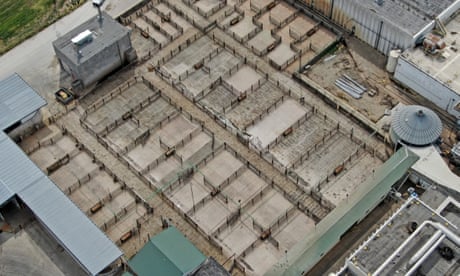
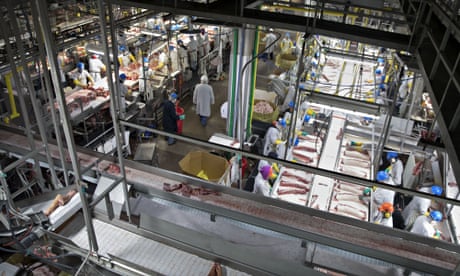
Speaking of farmed animals, euphemism is the cover-up equivalent of the mass burials of these animals in the ground or the stomach – their “euthanasia.” Call it collusion, conspiracy, complacency or corruption, a pact between agribusiness and the major news media guarantees that the animals will not truly be seen, heard or empathized with. A stock photo or video clip of a piglet “nursery,” a “meatpacking” plant or a “poultry processing” plant does not enlighten a public content to let industry and the media interpret the meaning of these images. See, for example, Meat Plant Closures Mean Pigs Are Gassed or Shot Instead and Millions of Pigs Will Be Euthanized As Pandemic Cripples Meatpacking Plants.

Though current society seems to have forgotten that the word “euthanasia” means, literally, a good death, or to die well – exemplifying a “loss of the power to understand words” – there’s a kind of implicit social agreement that this term can magically relieve us of culpability for inflicting horrible death and atrocity on innocent nonhuman creatures.

Yet there is awareness of the real meaning of euthanasia, as is evident in the fact that we do not call mass-killing, live burial, suffocation, throat-cutting, gassing, paralytic electric shock and the like “euthanasia” in the case of ourselves. Speciesism is not a mere abstract concept. It’s the wellspring of our attitude toward nonhuman animals. It determines the fate we subject them to and our language of justification.

I’ll wager that once the coronavirus news cycle has passed, the sympathetic attention being paid by the media to the plight of “meatpackers” will dissipate. For the animals, nothing will change, since the major media have shown them no mercy, compassion or acknowledgement to begin with. The occasional op-ed or letter to the editor expressing sorrow for our animal victims is overwhelmed by the standardized coverage. An example of the rare exception is Our Cruel Treatment of Animals Led to the Coronavirus.

An article in the Progressive FarmerHard Decisions: How Consumers View Mass Depopulation, in which I’m cited, draws attention away from the euphemistic use of the word “euthanasia” as a synonym for the mass-extermination of “livestock,” focusing instead on how to manage the negative publicity of “mass depopulation.” An industry representative is quoted: “producers should expect to see visuals hitting the news and social media that will be shocking.”

Actually, this prediction is what has not happened. Farmers needn’t worry that the major news media will blow their cover. Or that “visuals,” if shown, would shock a public worried about having enough “meat” on the table – a worry amped up by the media. As for social media, these outlets seem mainly to attract those who already care strongly one way or the other.

So what’s a farmer to do? Advises the industry representative: “It’s okay to share that this is an incredible crisis for you and your family just like it is for families all around the world. Share the fact that you are an animal lover and have dedicated your life to spending more time with animals than humans. Remind people you are just one person in a community of farmers all dealing with this heartbreaking reality.”

But what, for the farmer, is the “crisis,” the “heartbreaking reality”? It can’t be what the animals are being put through, since for them a terrible death and its attendant pain and terror await regardless. More to the point, the “crisis” is the loss of income, the “waste” and disposal of animals whose purpose, from the farming perspective, is to become a marketable product.

Imprisoned chicken
Photo credit: Vancouver Chicken Save.

Back in the days when I attended farm animal “welfare” conferences, I used to wonder, listening to the speakers and watching their slides, “Do they honestly, personally believe that the filthy, cobwebby, manure-filled buildings, cages and related contrivances of cruelty to chickens constitute welfare?” To what extent, I wondered, did self-deception figure in the professional deception that relies on euphemisms, including that the captive birds are “happy,” “content,” and “singing,” and that farmers “care” about their animals above the bottom line.

Currently, some animal advocates seek to turn agribusiness adversaries into allies in an effort to change the chicken industry from maniacally cruel to marginally kinder. The ultimate goal of this undertaking is to reverse the business of transforming plants into “chicken” by transforming “chicken,” so to speak, into plants. Real chickens in this remake no longer figure in the plant-based version of themselves or in the cellular meat version either.

This reminds me a little, inversely, of how in ancient Greek and Roman mythology, people seek to transform the goddesses of vengeance and retribution, known as the Erinyes or Furies, by giving them the euphemistic name Eumenides, meaning “the Kindly Ones.” A thing to remember about the Furies, though, is that they personify guilt and the pursuit of justice in the wake of murder and other crimes, so transforming them into “the Kindly Ones” amounts to a euphemistic subterfuge to avoid moral reckoning.

The carefully constructed obliteration of our animal victims from the coronavirus coverage shows how casually we turn our Furies into “Kindly Ones” where other species are concerned. In this instance, “the Kindly Ones” function as a disabled conscience. With our words of commission and omission we muzzle our guilt – the condition of guilt we refuse to feel. The animals are being euthanized – put to sleep – so we can rest easy and return to normal.

https://upc-online.org/slaughter/200519_whats_love_got_to_do_with_it.html

Millions of US farm animals to be culled by suffocation, drowning and shooting/’A terrible way to go for £9 an hour’: fear at meat plant after three coronavirus deaths

Closure of meat plants due to coronavirus means ‘depopulation’ of hens and pigs with methods experts say are inhumane, despite unprecedented demand at food banks

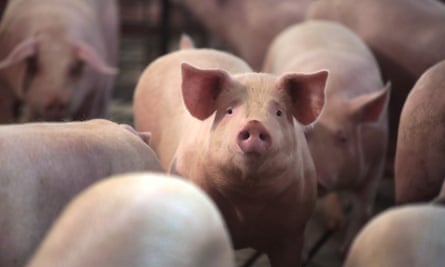
A pig in Illinois, US

The pig industry is facing a major glut of market-ready hogs. Photograph: Scott Olson/Getty

More than 10 million hens are estimated to have been culled due to Covid-19 related slaughterhouse shutdowns. The majority will have been smothered by a water-based foam, similar to fire-fighting foam, a method that animal welfare groups are calling “inhumane”.

The pork industry has warned that more than 10 million pigs could be culled by September for the same reason. The techniques used to cull pigs include gassing, shooting, anaesthetic overdose, or “blunt force trauma”.

In “constrained circumstances”, according to the American Veterinary Medical Association (AVMA), techniques [pdf] might also include a combination of shutting down pig barn ventilator systems with the addition of CO2 so the animals suffocate.

The ‘depopulation’ comes despite food banks across the US reporting unprecedented demand and widespread hunger during the pandemic, with six-mile-long queues for aid forming at some newly set up distribution centres.

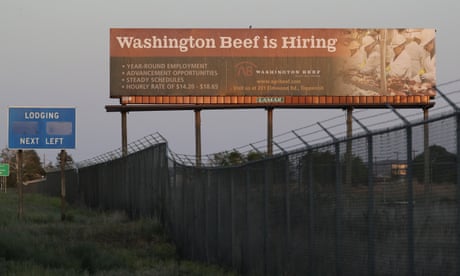
The American meat supply chain has been hit hard by the closure of slaughterhouses, due to Covid-19 infection rates among workers. 30 to 40 plants have closed, which means that in the highly consolidated US system beef and pork slaughtering capacity has been cut by 25% and 40% respectively, according to the United Food and Commercial Workers (UFCW).

The closures have meant that animals cannot be killed for food and many must instead be culled, or “depopulated” at home.

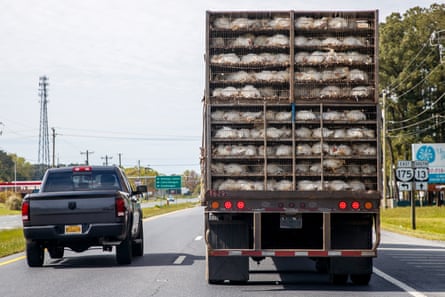
A truck loaded with chickens drives on the highway to deliver fowl to a meatpacking plant

10 million hens have already been culled due to slaughterhouse shutdowns. Photograph: Shawn Thew/EPA

More pigs to be ‘depopulated’

As it is comparatively easier to keep cattle on farms, cow culls do not appear to be an issue as yet, and the chicken cull may have peaked, said Adam Speck, an agribusiness analyst with IHS Markit.

“[Cattle] could stay on ranches another six months if necessary. The peak of the chicken cull has passed for now. North of about 10 million chickens were depopulated, either at the chick or egg stage,” Speck said.

At the hen stage, Leah Garcés, president of US welfare organisation Mercy for Animals, said it is hard to be sure of the numbers. But, “what we know with certainty is that 2 million meat chickens [and] 61,000 laying hens”, have been killed on farms.

Compared with poultry, said Garcés, stopping or slowing the production cycle of pigs is harder, mainly because pig growing periods are about six months compared to six weeks for hens. “Pregnancies had already been set in motion when the slaughterhouse closures occurred,” she said, and pigs were already in the system.

The National Pork Producers Council (NPPC) has estimated that: “up to 10,069,000 market hogs will need to be euthanised between the weeks ending on 25 April and 19 September 2020, resulting in a severe emotional and financial toll on hog farmers”.

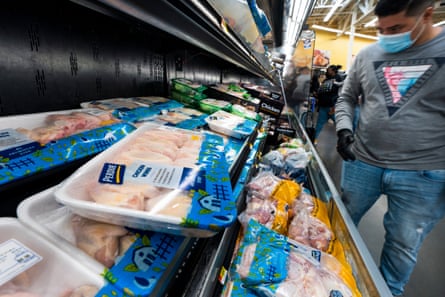
chicken on supermarket shelf

The peak of the chicken cull has passed, experts said, but pigs may now need to be ‘depopulated’ in large numbers. Photograph: Jim Lo Scalzo/EPA

For pig culls, AVMA “preferred methods” include injectable anaesthetic overdose, gassing, shooting with guns or bolts, electrocution and manual blunt force trauma. AVMA methods “permitted in constrained circumstances” include ventilator shutdown (VSD), potentially combined with carbon dioxide gassing, and sodium nitrite which would be ingested by pigs.

Speaking more graphically, Garcés said manual blunt force trauma can mean slamming piglets against the ground while VSD would “essentially cook the pigs alive”.

Asked to estimate numbers of pigs that have already been culled, Speck said producers are very reluctant to depopulate. “About two million might have been culled so far due to the Covid-19 pandemic, over the last six or so weeks.”

Speck added that with slaughterhouses likely to return to 85% capacity by the end of May, the NPPC’s depopulation estimate of 10 million pigs could be significantly reduced.

Speck said breeders are thinning herds and slowing growth to reduce pig supply. “They are sending breeding sows to slaughter, aborting pregnant sows on a small scale and [keeping market-bound pigs] on maintenance style rations with less protein. Coming into the summer months the pigs will also gain weight more slowly as the weather heats up.”

Methods are ‘inhumane’

Asked about growth slowdown, Garcés said it posed other welfare risks. “One method to slow down growth is to turn the heat up inside of the warehouses beyond the pigs ‘comfort zone’ because pigs eat less when they are too hot,” she said.

The combination of feed restrictions and higher barn temperatures, she said, mean pigs are “hungry and hot, increasing their overall discomfort, which is already high in a factory farm setting”.

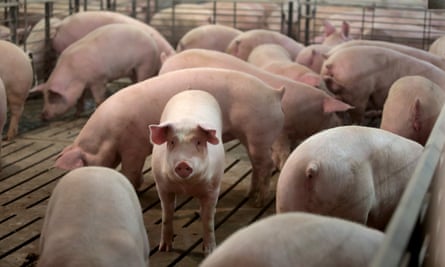
Hogs at a farm in Illinois, US

Many farmers now face having to cull market-ready pigs. Photograph: Scott Olson/Getty Images

In what appears to be an attempt by the industry to reduce any negative depopulation impact, a blog managed by the National Pork Board called Real Pig Farming offers social media sharing tips for farmers. The blog suggests farmers: “Think twice before engaging with posts that show what may be happening on farms right now.”

It said: “Most people do not understand the complexity of raising pigs and getting pork from the farm to their table. That means, “[a] good rule of thumb is to speak to a level a third grader [eight to 10 years old] would understand to ensure that things are not taken out of context.”

NPPC spokesperson Jim Monroe said that as of the week ending on 15 May, less than 25% of overall slaughter capacity was idled and the situation was improving. Monroe, added that the “tragic need to euthanise animals is to prevent animal suffering.”

For poultry, culling options are no easier. Filling sheds with carbon dioxide gas is one method, said Kim Sturla, director of welfare organisation Animal Place. Another cull method, she said, is to smother hens with water-based foam, similar to firefighting foam. Water-based foaming is categorised as the “preferred” method by the AVMA.

Previously asked about water-based foaming and other cull methods such VSD, an AVMA spokesperson said depopulation decisions were difficult and “and contingent upon several factors, such as the species and number of animals involved, available means of animal restraint, safety of personnel, and other considerations such as availability of equipment, agents and personnel”.

European campaigners said firefighting foam causes prolonged suffering. Although risks of similar livestock culls appear low in Europe so far, welfare group, Compassion in World Farming advised using foam that contains nitrogen gas because death is faster.

A 2019 European Food Safety Authority journal report said it did not find water-based or firefighting foam acceptable because “death due to drowning in fluids or suffocation by occlusion of the airways” is not seen as “a humane method for killing animals, including poultry”.

—————————————————————————————

https://www.theguardian.com/environment/2020/may/20/its-a-terrible-way-to-go-for-9-an-hour-fear-at-meat-plant-after-three-deaths-coronavirus

Family of worker at a South Yorkshire food processor with multiple Covid-19 cases and three deaths have criticised treatment of staff

The Cranswick Convenience Foods processing plant at Wombwell, South Yorkshire.

The Cranswick processing plant at Wombwell, South Yorkshire. Photograph: Christopher Thomond/The Guardian

Published onWed 20 May 2020 11.34 EDT

The South Yorkshire meat processing plant where three workers have died from coronavirus has been criticised for failing to adequately protect workers.

Three workers at a Cranswick food processing facility in Wombwell, Barnsley, which supplies UK supermarkets, are confirmed to have died after testing positive for coronavirus.

The UK-based company, which has annual revenue approaching £1.5bn, said there had been nine confirmed cases at the Wombwell plant, with one worker currently in hospital. The most recent confirmed case was on 11 May.

Speaking on condition of anonymity, the family of a worker at the plant said staff had initially been told that social distancing in some parts of the factory was not possible, that they couldn’t wear face masks “because they would be taking them away from the NHS”, and that any staff off sick only got statutory sick pay.

“If you don’t feel well and know if you don’t go to work you’re only going to get the statutory sick pay [£95.85 a week] and are not going to be able to pay the bills, what are you going to do? I am scared he could bring it home to us and our kids. They [plant workers] have not been happy, but they’re all scared to say anything because of losing their jobs. It’s a shit way to go for £9 an hour [worker is paid £9.40 an hour].”

Meat plants across the world are grappling with serious coronavirus outbreaks. The US has been hardest hit, with confirmed cases at more than 200 meat and food processing plants and the death of at least 66 workers. There have also been clusters of cases at meat plants in FranceGermany and Ireland, where more than 500 workers have tested positive.

Giving evidence to MPs yesterday, Ian Wright, the CEO of the Food and Drink Federation, said although the UK food sector had not experienced major infection rates, it had seen “a couple of relative hotspots”. Labour MP Geraint Davies said data from the Office for National Statistics up to and including 20 April has found that plant workers in England and Wales were almost six times more likely die from Covid-19 than the average worker.

The family of the staff member said the Wombwell site had not been closed for a deep clean after the workers’ deaths as has been the case in Ireland, and that social distancing was only properly implemented in the canteen area in the past week. “It’s really hard and physical work, the plant has been busier than ever and there’s not a lot of scope for social distancing when they’re on the factory floor.”

The GMB union, which has some members at the Wombwell plant, said it was “ready to work with the company and our members at the site to review operations, and identify any issues that could impact on the safety of our members”.

Meat being processed at a Cranswick plant in Milton Keynes.

Meat being processed at a Cranswick plant in Milton Keynes. Photograph: Darren Staples/Reuters

A spokesperson for Cranswick said it had rigorous cleaning procedures ongoing throughout the day and that the plant was sanitised at night. Social distancing had been in place in the plant since the middle of March and, in production areas where a 2m gap between people was not possible, the company had put in shielding screens or provided visors. Staff are entitled to contracted or statutory sick pay depending on their individual circumstances.

The spokesperson went on to say that while the company may initially have said it couldn’t get face masks due to NHS demands, they now had visors available for anyone who wanted to use them. Some canteen seats had been taped off with additional space provided and the company had now started sourcing single-seat tables. Equipment to temperature-check staff was also being installed this week.

“Why are they now implementing things this far into it after the deaths have happened and we’ve had the risk?” said the worker’s family.

Nick Allen, the CEO of the British Meat Processors Association, said the initial guidance provided by the government was “fairly minimal”, but that it had started issuing its own industry guidelines to members at the end of March. “This [social distancing] was something that had not been done before and has been a steep learning curve. There has been a considerable effort to get it right.”

Labour MP Geraint Davies, who sits on the Environment, Food and Rural Affairs committee, said safe social distancing and PPE for all meat plant workers needed to be made legally enforceable. “If you work in a plant and fear for your personal safety, but realise there is a queue of people outside who will take your job now they’re unemployed, you’re left with an impossible choice. The government needs to ensure workers’ safety.”

Cranswick said in a statement: “The health and safety of all of our colleagues is our number one priority and we are doing everything we can to protect our workforce. Sadly, three of our colleagues have passed away with Covid-19. Our thoughts and condolences are with their families and we are providing full support to them and to all of our colleagues directly affected by Covid-19.

“From the outset of the pandemic, we have followed all governmental and regulatory guidance, in many cases going beyond the guidelines provided. We have evolved our practices and implemented additional measures to protect our colleagues including social distancing as far as practical, regular deep cleaning at our sites, visors and recommended PPE for all employees in line with the Public Health England and World Health Organization guidelines.

“All colleagues have been told not to attend work if they, or anyone they live with, have any symptoms. Cranswick employees are designated key workers and are at the forefront of maintaining vital supplies of fresh food into the supermarkets. We continue to do everything we can to protect them while they carry out this critical role.”

Breaking news: U.S. will allow cruel trophy hunting practices to kill hibernating bears and wolf pups on Alaska’s federal lands

Exposing the Big Game's avatarCommittee to Abolish Sport Hunting Blog

from HSUS.org
By Kitty Block and Sara Amundson
Calendar Icon May 20, 2020

The Trump administration has just delivered a one-two punch to Alaska’s wildlife: it has announced that it will release a final National Park Service rule allowing some of the cruelest practices for killing black bears, wolves and other wildlife on national preserve lands in Alaska; and it has announced it will propose overturning Obama-era protections for brown bears and other animals on two million acres of public lands in the state’s Kenai National Wildlife Refuge.

While the text of…

View original post 669 more words

Four Oregonians charged with poaching 27 big game animals could face $162,000 in fines

Exposing the Big Game's avatarCommittee to Abolish Sport Hunting Blog

a car parked in a parking lot: Police included this evidence with charges against four Oregonians of poaching and other wildlife crimes.© OSP Police included this evidence with charges against four Oregonians of poaching and other wildlife crimes.Four people have been charged in connection with poaching 27 big game animals over the past two years, according to Oregon State Police Fish and Wildlife division.

Police said the poaching took place in the Mid-Willamette Valley and Coast Range and included illegal take of buck deer, bull elk, black bear, bobcat and cougar, according to a news release.

Police issued criminal citations against William Hollings, 34, of Philomath; Nicholas Lisenby, 39, of Lebanon; and Eric Hamilton, 33, of Alsea.

Amanda Hughes, 37, of Lebanon, was also charged.

The charges are likely to require the four to pay around $162,700 in restitution. Hollings, Lisenby and Hamilton will likely lose hunting privileges and pay additional fees, according to a news release.

“This sends a message to others who might poach, that we can and do find perpetrators,” ODFW Stop Poaching campaign coordinator Yvonne Shaw…

View original post 270 more words

Welcome to the End of the ‘Human Climate Niche’

Exposing the Big Game's avatarThe Extinction Chronicles

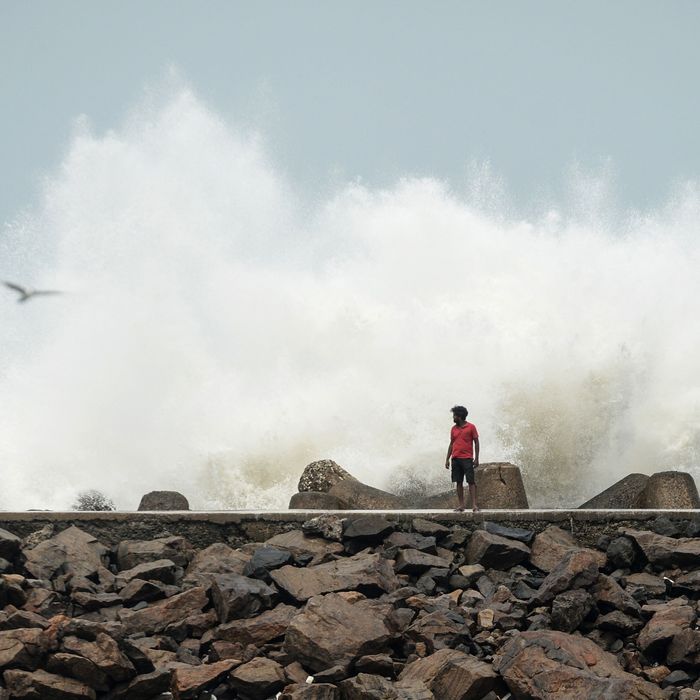
A man walks past as waves hit a breakwater at Kasimedu fishing harbor in Chennai on May 19, 2020, as Cyclone Amphan barrels toward India’s eastern coast. Photo: Arun Sankar/AFP via Getty Images

We’re committed to keeping our readers informed. 
We’ve removed our paywall from essential coronavirus news stories. Become a subscriber to support our journalists. Subscribe now.

On Wednesday, a “super cyclone,” now the equivalent of a Category 5 hurricane, is expected to make landfall on the border of India and Bangladesh. The storm will weaken as it approaches land, but in India, it is already forcing evacuations in the thousands just as the country has begun easing its coronavirus lockdown, the world’s largest. In Bangladesh, Earther reports, “the super cyclone is expected to cause heavy precipitation and flooding in the Cox’s Bazar refugee camps, which house more than a million refugees from…

View original post 1,359 more words

Cedar COVID-19 Cluster: PETA Proposes Switch to Vegan Meat

Posted on  by PETA Australia

After almost 100 people connected to a West Melbourne abattoir operated by Cedar Meats tested positive for COVID-19, PETA has written to the company and suggested that it choose a new direction: stop killing animals and switch to producing vegan meats instead.

COVID-19 is a zoonotic disease caused by a virus that originated in a meat market. But long before this novel coronavirus emerged, potentially lethal viruses were already crossing the species barrier to humans from other animals.H1N1 (swine flu), which originated in pigs and killed as many as 575,400 people in the year after it began spreading in humans, was traced back to a US factory farm. H5N1 (bird flu), which can be contracted by humans who come into close contact with infected live or dead birds, has a mortality rate of up to 60% and is considered a concern by the World Health Organization because of its potential to mutate and become highly infectious via human-to-human contact.

Of course, the Cedar Meats COVID-19 cluster has not been caused by the slaughtering of infected animals. Nonetheless, abattoir workers are proving to be particularly vulnerable during the pandemic. More than 4,900 workers at meat-processing plants in the US have also contracted the virus, nearly 4% of the industry’s workforce.

Then of course, there’s the fact that breeding, confining, and slaughtering animals heightens the risk of the emergence of deadly pathogens – no matter the country. In a paper published in 2018, Belgian spatial epidemiologist Marius Gilbert found that more “conversion events” for bird flu – in which a not-very-pathogenic strain of the virus becomes more dangerous – had occurred in Australia than in China.

As the global death toll from the coronavirus pandemic climbs to over 300,000, we’re being given a stark warning: we can no longer breed and slaughter sentient beings – who suffer immensely – for foods we don’t need without grave consequences for human health.

Brands such as v2food, Tofurky, Beyond Meat, and The Meatless Farm Company are growing as more and more people choose to eat vegan. Even meat producers such as Tyson, Smithfield, Perdue, and Hormel have invested in the global vegan food market, which is projected to be worth around AU$49 billion by 2020. In Australia, the demand for plant-based meat products is forecast to generate 6,000 full-time jobs and add nearly AU$3 billion to the economy in the next 10 years.

There has never been a better time for businesses like Cedar Meats to make the vegan switch, and we’ll be on hand to help them if they decide to.

We can help you go vegan too! Click the button below for a free vegan starter kit.

vegan starter kitGO VEGAN NOW!

(Un)Certainty of Food Safety in the Times of COVID-19

Exposing the Big Game's avatarThe Extinction Chronicles

(Un)Certainty of Food Safety in the Times of COVID-19
Daria-Yakovleva / Pixabay

With food emerging out as a heavily traded commodity internationally, the majority of the nations around the world have become melting pots of civilization, leading to the increasing interconnectedness of the global food system and complexity of the supply chains. With the long-winded food supply chains there exists information asymmetry between the consumers and the food they consume. This puts consumers at a significant disadvantage with respect to assessing the quality and safety of imported food.

Concomitantly with the expansion of world food trade, the world population has become more vulnerable to the outbreak of diseases caused by tainted food and the risk of exposure…

View original post 1,165 more words