Exposing the Big Game

Forget Hunters' Feeble Rationalizations and Trust Your Gut Feelings: Making Sport of Killing Is Not Healthy Human Behavior

Exposing the Big Game

 Chinese provinces announce plans to buy out wildlife breeders, end trade in wild animals for food

Exposing the Big Game's avatarCommittee to Abolish Sport Hunting Blog

from HSUS.org   May 19, 2020

Four Chinese provinces will offer farmers a government buy-out or other financial help to stop breeding wild animals like civets and cobras for food. This move is part of a continuing crackdown by China and its individual provinces and cities on the nation’s rampant wildlife trade for food in the wake of the coronavirus pandemic, and it could be a promising blueprint for the rest of the nation for ending this inhumane trade.

China’s wildlife markets, where wild animals are sold and slaughtered on site, have been implicated in disease spread in the past and most recently in the ​ongoing coronavirus…

View original post 856 more words

Roadside zoos lure in visitors amidst the pandemic, at great risk to animals and people

Exposing the Big Game's avatarThe Extinction Chronicles

From HSUS.org
Calendar Icon May 18, 2020

Last week, the Oklahoma roadside zoo where Joe Exotic bred tiger cubs, ripped them from their mothers as soon as they were born, hit them so they would pose with visitors for photos, and disposed of many of them when they were no longer of any use to him, reopened to the public. The Greater Wynnewood Exotic Animal Park (GW Exotics) saw a boost in visitors despite the pandemic, according to media reports, as a result of its new-found fame since the airing of the Netflix series “Tiger King.”

GW Exotics is not the only roadside zoo that’s reopened. Others across the United States, including Doc Antle’s Myrtle Beach Safari, also featured in the Netflix series, are luring…

View original post 599 more words

COVID-19 Revealing Inherent Cruelty of Agribusiness

Jo-Anne McArthur / WeAnimals

COVID-19 Revealing Inherent Cruelty of Agribusiness
Reading Time: 3 minutes

Sentient Media newsletter:

“I know many industries are experiencing hardship right now. This is just the story of ours,” Ryan Elbe shares as he watches milk gush from a pipe at his Wisconsin dairy farm. Elbe is one of many farmers across the U.S. and Canada who started dumping thousands of gallons of milk in early April as a consequence of COVID-19 closures.

According to the USDA, processed milk products make up the majority of dairy consumption in the United States, with cheese accounting for over half of milk fat consumption in 2018. But as consumers trade restaurant dining for eating at home, the demand for dairy products has dropped drastically.

Food banks across the U.S. are reporting supply shortages due to the spike in unemployment. Some argue that the excess milk could be donated to food pantries, but processing milk for human consumption would significantly cut into the dairy industry’s profits. Instead, it is more cost-effective for farmers to dump the raw product.

As dairy farms continue to operate despite decreased demand, many farm owners are bracing themselves for the repercussions of dwindling milk prices. As the food supply suffers, so do millions of animals stuck within the meat and dairy industries.

COVID-19 closures have already resulted in the culling of millions of animals within the meat and dairy industries in the U.S. and Canada. Inside the dairy industry, cows are kept in confined, unsanitary spaces where they are hooked up to machines and milked multiple times per day. In modern dairy, calves are removed from their mothers so cows will produce more milk for human consumption. Only now, the their suffering is in vain as their milk is being flushed down the drain.

The Reality of Agribusiness 

Victims of the dairy industry are not the only ones suffering as a result of COVID-19:

The current crisis within the milk and meat industries starkly contrasts with the image agribusiness has attempted to create for itself. On the outside, the dairy industry paints a bucolic picture of rolling hills and happy cows, but recent investigations have unveiled immense cruelty shuttered behind closed doors. The meat industry paints a similar picture, only with the addition of rugged, intrepid ranchers. Countless investigations have shown that the promises on the outside of the package are often far from reality—that 99 percent of farmed animals in America reside within factory farms.

The meat and dairy industries are largely controlled by major corporations prioritizing profit over the health and safety of workers and animals. Workers within the meat and dairy industries have little control over their working conditions. Hundreds have fallen ill after showing up to work in fear of losing their jobs during this uncertain time. As COVID-19 continues to surge through processing plants, some workers are striking in hopes of inciting change within our current food system’s procedures.

COVID-19 has the potential to spark significant changes in the agricultural industry, giving citizens an opportunity to influence its direction. Animal rights advocates and concerned voters can lobby elected officials to limit the use of government funds to support industries that engage in animal cruelty and mistreat their employees.

Read the full story

Covering COVID-19
With the worst global pandemic we’ve seen in over a century, it’s more important than ever to make sure the truth is reported in its entirety, not just what’s convenient.
Help us share the facts during these uncertain times and make sure the world knows our species cannot survive if we continue our exploitation of the planet and nonhuman animals.

Carbon emissions dropped 17 percent globally amid coronavirus

Exposing the Big Game's avatarThe Extinction Chronicles

“Globally, we haven’t seen a drop this big ever, and at the yearly level, you would have to go back to World War II to see such a big drop in emissions.”
air quality getting worse again

The 110 freeway toward downtown Los Angeles on April 28, 2020.Robert Gauthier / Los Angeles Times via Getty Images file

By Denise Chow

The coronavirus pandemic has forced countries around the world to enact strict lockdowns, seal borders and scale back economic activities. Now, an analysis published Tuesday finds that these measures contributed to an estimated 17 percent decline in daily global carbon dioxide emissions compared to daily global averages from 2019.

It’s a worldwide drop that scientists say could be the largest in recorded history.

At the height of coronavirus confinements in early April, daily carbon dioxide emissions around the world decreased by roughly 18.7 million tons compared to average daily emissions last year, falling to levels…

View original post 1,097 more words

Florida man who downplayed coronavirus as ‘fake crisis’ gets infected, warns others after ending up in ICU with wife

Exposing the Big Game's avatarThe Extinction Chronicles

https://ktla.com/news/nationworld/florida-man-who-downplayed-coronavirus-as-fake-crisis-gets-infected-warns-others-after-ending-up-in-icu-with-wife/

A Florida man who initially said he believed the coronavirus was a “fake crisis” that was “blown out of proportion” is now hospitalized with the virus, along with his wife, and he has a warning for others.

“Many people still think that the Coronavirus is a fake crisis which at one time I did too and not that I thought it wasn’t a real virus going around but at one time I felt that it was blown out of proportion and it wasn’t that serious,” Brian Hitchens wrote in a lengthy Facebook post last Tuesday.

Hitchens said he continued to downplay the pandemic until he began feeling sick and couldn’t work anymore, KTLA sister station KRON reported Monday.

Just days after he became sick, Hitchens said his wife also started feeling sick, went to a hospital and was told to self-quarantine.

View original post 273 more words
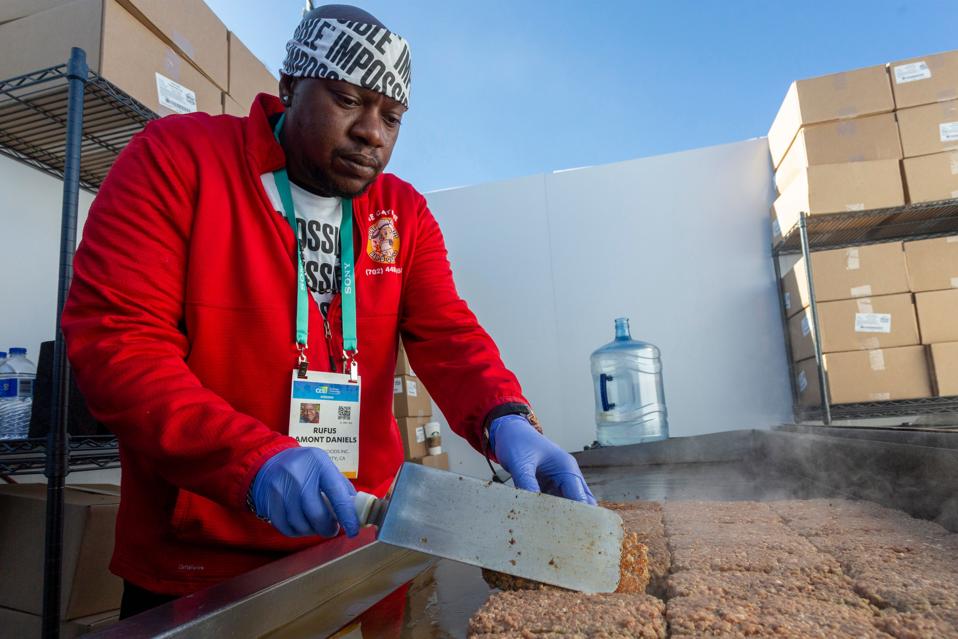
Making Veggie Burgers Doesn’t Help The Climate, Impossible CEO Say


s

Impossible Foods has no interest in making a veggie burger that tastes like meat, its founder and CEO said Friday.

Veggie burgers don’t serve the company’s goal, said Patrick Brown—to solve “the catastrophic impact of the use of animals as a food technology”—because veggie burgers cater to vegetarians, not carnivores.

“All the plant-based foods that have been produced in the past—if you look at what was in the heads of the people who produced them—their target consumer was someone who is looking for an alternative, i.e. people who want to have a more vegetarian diet or something like that,” Brown said in a Zoom webinar. “If that’s your consumer, you’re not going to have any effect on the climate issues because that’s a very small population.”

When Marketing Professor Sanjog Misra asked Brown about making a veggie burger that tastes like meat, Brown interrupted him:

“That was not at all what we were trying to do,” Brown said. “It was to make the most delicious meat on earth directly from plants. What we think of ourselves as doing is making meat—a better way of making meat.”

Today In: Green Tech
  • Impossible Founder: We Can Repurpose The Meat Supply Chain, Minus The Slaughter Room

  • Why Sweden’s Approach To Coronavirus May Not Be What You Think

  • Swedish Wellbeing Startup Remente Gets Involved With Volvo’s 43,000 Workers

The Stanford University emeritus biochemistry professor took an 18-month sabbatical in 2009 to solve the most important problem he could think of, which he determined was the impact of animal agriculture on greenhouse gas emissions, water pollution, water consumption and land use.

“If you could vaporize that industry today, which I would do in a heartbeat,” he said, “and let the biomass on that land recover, it would outpace fossil-fuel emissions. It would literally begin to reduce the atmospheric CO2 concentrations, and you can do the math on that. We desperately need that.”

But Brown doesn’t expect carnivores to eat plant-based meat to mitigate climate change.

“It had been framed as we’ve got to get people to change their diets, or we have to compel that business to stop doing it and so forth, and that’s just like crazy. That is never going to work,” he said at the webinar hosted by the University of Chicago’s Rustandy Center for Social Sector Innovation.

“People are very wedded to the foods that they prefer. The pleasure that they get from eating the foods that they love is a huge part of the pleasure of life. It’s unreasonable to think you can ask them to give that up. And that defined the problem very crisply for me, which is that it’s a technology problem.”

Animal agricultural is a $1.5 trillion prehistoric technology, Brown said, that’s vastly inefficient and hasn’t significantly improved in millennia. So it’s a “sitting duck” for disruption.

He assembled a team of 80 research scientists to solve the technology problem, to make a plant-based meat that’s more affordable, more nutritious and more delicious than animal meat.

Plants already offer the advantage of nutrition and affordability, he added, so the challenge—what he called “the most important scientific question”—has been deliciousness.

“We’re not going to solve this problem by mushing a bunch of peas and carrots together and forming it into a patty,” he said. “We have to deliver for a committed meat eater, who is not looking for an alternative, they’re just looking for the most delicious, healthy, affordable meat they can buy given their taste.”

Brown doubts anyone can convince consumers to compromise what they want. The producer has to give them what they want. So the Impossible goal has been “to make the most delicious meat on earth directly from plants.”

Do Humans Have a Moral Duty to Stop Procreating?

With the amount of destruction we’re causing, is it time we curbed our own population?

Whenever any animal population gets out of control, whether it be an overrun of deer or geese, humans usually step in and make plans to curb it through hunting or damaging nests. It seems cruel, but without natural predators to bring the population down, overpopulation could have devastating effects on the local environment. Yet, humans have shown themselves to be far more destructive than any other animal on this planet, so why don’t we offer ourselves the same consideration? I’m talking about anti-natalism here, the philosophical position that opposes procreation.

“If that level of destruction were caused by another species we would rapidly recommend that new members of that species not be brought into existence,” writes philosopher David Benatar.

There’s a fair argument to be made for anti-natalism that tears at most people’s desire to reproduce and a moral responsibility that few of us consider. This planet is overpopulated and we’re consuming more resources than the Earth can reproduce. You may not know this, but last week featured Earth Overshoot Day — the day when the Global Footprint Network announced that we’ve consumed a year’s worth of resources. The GFN estimates that the first Overshoot Day may have been back in the 1970s “due to the growth in the global population alongside the expansion of consumption around the world,” wrote Emma Howard from The Guardian.

“If that level of destruction were caused by another species, we would rapidly recommend that new members of that species not be brought into existence,” writes philosopher David Benatar, author of the anti-natalist book, Better Never to Have Been: The Harm of Coming into Existence.

“Nothing is lost by never coming into existence. By contrast, ceasing to exist does have costs.”

Many humans are capable of reflecting on whether or not they should reproduce, but few do, according to Benatar. He explains in an article for The Critique:“This may be because humans are not as different from non-human animals as they would like to think. Like other animals, we are the products of evolution, with all the biological drives that such products can be expected to have.”

However, one of the main reasons for Benatar’s article is to explain what anti-natalism is not: “It is important to note that anti-natalism, while favouring human extinction, is a view about a particular means to extinction – namely non-procreation. Anti-natalists are not committed to either suicide or ‘speciecide,’ as some of their critics insensitively suggest. Nothing is lost by never coming into existence. By contrast, ceasing to exist does have costs.”

His piece is jarring and his book on the philosophical argument against procreation is even more so, but it challenges the presumption of “be fruitful and multiply” that most of us are brought up on. I have often stopped to think about whether or not I want to have children, but, for me, his argument challenges the deeper morality that has been absent from this decision.

Worried about beef shortages and price spikes? Here’s what happens if you eat less meat

(CNN)Coronavirus came for Americans’ hamburgers in early May.

On May 5, the fast-food chain Wendy’s announced that some menu items were unavailable; an analyst estimated that nearly one in five Wendy’s franchises was out of beef.
That followed news that some meat processing plants across the US had temporarily closed due to coronavirus.
That’s because meatpacking and food-processing workers are getting sick and some are dying from Covid-19.
Some 20 meatpacking and food-processing workers have died from Covid-19, according to the United Food and Commercial Workers International Union.
As a result of the pandemic, 22 meatpacking plants have closed in the last two months. With plants closed, and livestock accumulating, some farmers are desperate enough to put their animals on Craigslist.
Closures have reduced pork slaughter capacity by 25% and beef slaughter capacity by 10%, according to UFCW. Some supermarkets, including Costco and Kroger, are limiting the amount of meat consumers can buy.
Prices are going up, too. But despite the grim news, the potential for reduced meat consumption as the result of shortages could have a silver lining for Americans’ health.

The health benefits of eating less red meat

Americans eat a lot of meat. The average adult ate between three and four servings a week from 2015 to 2016, according to the National Health and Nutrition Examination Survey.
That’s not too far off the maximum of three servings a week recommended by the World Cancer Research Fund International/American Institute for Cancer Research in a 2018 report. But at least a third of American adults eat at least one serving of red meat each day, far exceeding the limit.
Reducing intake of beef and pork is good for you, said Lilian Cheung, director of health promotion and communication at the Harvard T.H. Chan School of Public Health’s department of nutrition.
“An optimally healthy diet should be low in red meat,” said Cheung, who has a doctorate in nutrition. “There’s plenty of data that [meat] increases the risk of colorectal cancer, other types of cancers, heart disease, diabetes and the higher risk of dying from these things.”
Some of these health conditions are especially serious during the pandemic.
“With Covid-19, the underlying conditions of heart disease and diabetes increase the risk,” Cheung said. “You become much more vulnerable and increase the risk of dying and complications.”
In a 2011 study Cheung cited, researchers found that for each additional daily serving of red meats that participants ate, risk of type 2 diabetes rose 12%.
The numbers are clear: Eating less meat is good for you.
But if you’re considering reducing your meat consumption, Cheung noted that it’s important to be careful about what you eat instead. Ensuring you get enough protein and vitamins and minerals is key. Here’s what you need to know and more.

Can you get enough protein without eating meat?

While many consumers wonder if they’d get adequate protein without eating meat, Cheung said that for most Americans, it shouldn’t be a concern.
(A lack of protein is a serious threat in some developing countries or during times of famine, Cheung noted, as severe protein malnutrition can cause a nutritional disorder called kwashiorkor. It is very rare in the United States.)
The National Academy of Medicine recommends eating a little over 7 grams of protein for every 20 pounds of body weight. If you weigh 140 pounds, that translates to roughly 50 grams of protein a day.
Cheung said it’s easy to hit that target even without red meat.
Instead of red meats or processed meats, Cheung recommended eating fish, legumes, nuts and seeds, all of which are healthy and high in protein. Poultry, including turkey and chicken, is another good option.
“Poultry is fine,” Cheung said. “There is no negative effect seen with poultry.”
It’s important that Americans not replace fresh beef and pork with processed versions, Cheung said, as those foods can bring additional health risks.
Processed meats such as bacon, sausage and lunch meats are high in sodium; eating too much salt is correlated to heart disease, kidney disease, osteoporosis and cancer.
In addition, the World Health Organization considers processed meats to be carcinogenic, citing evidence showing that consuming processed meats causes colorectal cancer. There are also associations between processed meats and both pancreatic cancer and prostate cancer.

Getting enough vitamins and minerals

While most Americans are getting plenty of protein, Cheung said there are other key vitamins and minerals found in red meat that consumers should replace when cutting back, especially vitamin B12 and iron.
“Iron can be a problem because other foods don’t contain as much iron as red meat,” she said, adding that the mineral is easily replaced with supplements. “Taking a multiple vitamin that contains iron is easy and not very expensive.” Bumping up your intake of iron-rich foods such as dark, leafy greens, oysters, lentils and soybeans is another good option.
For strict vegetarians or vegans, Cheung said it’s worth ensuring you get enough vitamin B12, too.
The vitamin, which supports brain and nerve-cell functioning, is found in beef, poultry, fish, eggs and dairy products, so simply cutting back on beef won’t be a problem. Fortified products such as nutritional yeast, breakfast cereal and enriched plant-based milks also contain B12.
If you’re not getting enough in your diet, Cheung recommended seeking out a vitamin B12 supplement.

Adjust your kitchen routines

Whether you’re cutting out beef for health reasons, or simply to lower your grocery bills during the pandemic, making the shift will mean creating some new habits in the kitchen.
When considering a diet change, it’s worth keeping it straightforward, said Brian Kateman, the editor of the “The Reducetarian Cookbook.” Kateman’s cookbook proposes easy ways to swap animal protein for plant-based foods.
“If you’re a person who likes making burritos, make a burrito,” he said. Instead of beef or pork, he suggested adding in extra vegetables or avocado. “It’s much smarter to simply eat the foods you’re used to eating and make a one-to-one swap.”
Get CNN Health’s weekly newsletter

Sign up here to get The Results Are In with Dr. Sanjay Gupta every Tuesday from the CNN Health team.

When you’re hungry for a snack, Kateman recommended reaching for a handful of nuts. “Nuts have a lot of protein in them,” he said. But for maximum nutrition at a low cost, Kateman said it’s hard to beat legumes, which include lentils, beans and peanuts.
Both tofu and tempeh are made from soybeans, which is also a legume. If you’re not familiar with cooking these, Kateman suggested experimenting with edamame, green soybeans that are available in the freezer sections of many grocery stores and can be eaten boiled.
Some recipes from Kateman’s cookbook are available online; he recommended starting with a homemade veggie pot pie, or the high-fiber broccoli pesto noodle bowl.
Whatever you decide, Kateman, like Harvard’s Cheung, emphasized that reducing your meat consumption doesn’t require a huge lifestyle shift.
“We make food choices every day, usually three times a day,” he said. “A lot of people think meat consumption is all or nothing, but that’s just not true.”

The Arctic Is Unraveling as a Massive Heat Wave Grips the Region

It wouldn’t be spring in the climate change era without a massive heat wave in the Arctic.

Freakishly warm air has billowed up from Siberia over the Arctic Ocean and parts of Greenland, and the heat will only intensify in the coming days. The warmth is helping to spread widespread wildfires and to kickstart ice melt season early, both ominous signs of what summer could hold.

The Arctic has been on one recently. Russia had its hottest winter ever recorded, driven largely by Siberian heat. That heat hasn’t let up as the calendar turns to spring. In fact, it’s intensified and spread across the Arctic. Last month was the hottest April on record for the globe, driven by high Arctic temperatures that averaged an astounding 17 degrees Fahrenheit (9.4 degrees Celsius) above normal, according to NASA data.

Now, a May heat wave has pushed things into overdrive. Martin Stendel, a climate scientist at the Danish Meteorological Institute, told the Washington Post that the mid-May warmth is “quite extraordinary…there is no similar event so early in the season.”

Top ArticlesUber Has Now Laid Off a Quarter ofIts Workforce

Siberia has been one of the blistering hot spots on the globe all year, and heat is pushing out of the region and traversing the Arctic. Plumes of abnormally warm air have snaked over the North Pole. Norway’s weather service is forecasting temperatures there will approach freezing in the coming days. That might not sound hot, but remember, this is the North Pole. The warmth could pose a threat to sea ice, which saw its fourth-lowest extent on record for April.

Heat has also gripped portions of Greenland, where the ice sheet’s annual melt got started two weeks early. According the Polar Portal run by three Danish research institutions, including the Danish Meteorological Institute, the western and southern margins of the ice sheet saw abnormal melt over the weekend, and more warmth could spur more melt this week as well. The season is still early, and the spike in melt is relatively small compared to previous sudden upticks in melting (See: last summers’s record-setting meltdown).

Still, early melt is never a good thing, and doubly so given this year’s lower-than-normal snowfall. That means more crusty, dirty snow on the surface could absorb more warmth in summer, something that helped spur record mass loss last year. And when there’s less mass added to the ice sheet, it can set up more mass loss year over year. The ice sheet is already losing six times more mass than it was in the 1980s, so this setup is not good!

Siberian wildfires within the Arctic Circle
Image: Pierre Markuse (Flickr)

Adding to the not-goodness are the massive wildfires raging in Siberia. The region has quietly been ablaze since last month, and flames have continued to spread across millions of acres. While most have burned below the Arctic Circle—or 66.5 degrees North—the warmth has allowed at least some flames to spread north of it. Satellite monitoring expert Pierre Markuse tweeted an image on Monday showing fires creeping across the tundra in the Republic of Sakha that makes up most of eastern Siberia. There are also signs that some “zombie” fires from last fire season have reignited after smoldering underground in peat-rich soil. Congrats if you had that on your climate crisis bingo card.

The Arctic is the fastest-warming region on the planet, and these types of heat waves have become a seasonal occurrence. But that shouldn’t make them any less shocking or alarming, particularly since the changes happening there could actually cause the rest of the glove to warm up even more quickly. Melting sea ice exposes darker ocean waters that can absorb more heat, while fires cough up more carbon dioxide into the atmosphere, trapping yet more heat. The zombie fires are even more worrisome, since peat is extremely rich in carbon. The stubborn heat looks to be locked in until at least next week, so we’ll get to see all these horrible feedbacks on display through at least then.