Thanks to a unanimous approval from the Colorado Parks & Wildlife Commission, hunters in the Public Access Program will have more than 200,000 new acres to hunt on in 2020.
At its virtual meeting on May 7, the CPW Commission unanimously approved the enrollment of 210,000 acres into the Public Access Program for the fall 2020 hunting season, bringing the program to a total of 777,000 acres.
The Public Access Program provides limited, seasonal hunting and fishing opportunities on Colorado trust land across the state.
“Colorado is known for our incredible natural beauty, and I’m committed to expanding the public’s access to and enjoyment of our treasured state and federal land,” Gov. Jared Polis said. “CPW’s Public Access Program for sportsmen and women is growing just in time for the upcoming 2020 hunting season. We will continue looking at more opportunities to increase access and help relieve overcrowded…
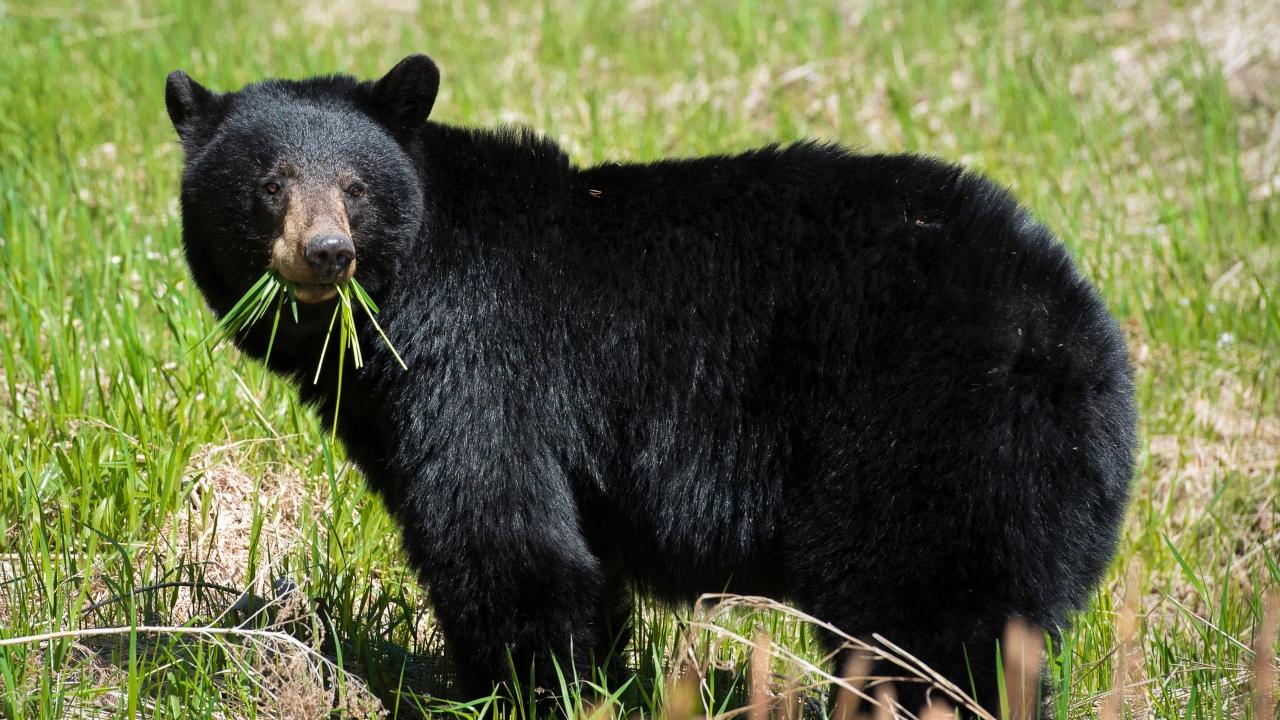
Late last year, an American tourist was killed by a black bear in Ontario, the first known fatal bear attack in the province since 2005. (iStock.com/1827photo)
We have all seen the uplifting videos on social media. With humanity under lockdown across much of the globe, nature is coming back. There are deer in city parks. Bunnies in backyards. There’s even one great video of a couple of hikers in Newfoundland having a surprising but pleasant encounter with a pair of moose. Perhaps — for city dwellers, at least — one of the effects of this pandemic going forward will be an enhanced appreciation for nature. Having lived in more frequent contact with wildlife, and having known quieter cities…
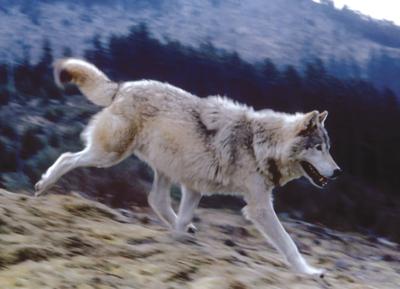
The petition calls for clear signage in wolf-hunting areas.Express file photo
A joint petition urging the Idaho Fish and Game Commission to require trappers to place signs at trailheads and campgrounds within 25 feet of traps and snares will be evaluated by the commission tomorrow, May 14.
“Signs should be visible from at least 25 feet to help alert trail users to take action to avoid the injury or loss of a family dog or injury to a child,” the petition reads. “We request that the department also place visible signage in active wolf-hunting areas from April 1 through August 30 to warn campers and hikers of the increased risks of active hunting to themselves, their families and their dogs during the recently extended wolf-hunting season.”
The petition was authored by Wood River Wolf Project Coordinator Suzanne Stone, Idaho Humane Society Director…
CASPER, Wyo. — The Wyoming Game and Fish Department said on Wednesday, May 13 that they will begin grizzly bear trapping operations to monitor Greater Yellowstone Ecosystem populations in northwest Wyoming.
The capture operations will begin the spring and go through early fall.
“Department biologists will conduct grizzly bear trapping operations in both front and backcountry areas,” Game and Fish says. “All areas where trapping is being conducted will have major access points marked with warning signs.”
“All trap sites will be posted with area closure signs in the direct vicinity of trap sites. It is critical that all members of the public heed these signs. When captured, animals are collared, released on site, and monitored in accordance with strict guidelines developed jointly by the Wyoming Game and Fish Department and the…
As COVID-19 Spreads, Full-Page Ads Appeal to Consumers: ‘Eat as if Everyone’s Life Depends on It, Because It Does’
For Immediate Release:
May 14, 2020
Contact:
Megan Wiltsie 202-483-7382
Norfolk, Va. – Swine flu, bird flu, SARS, and now COVID-19 have all been linked to confining animals for consumption—but that point is often missed in conversations about preventing future pandemics. To put animals on the table, in the right way, PETA has hit TheWashington Post, the Los Angeles Times, The New York Times, The Boston Globe, and other major dailies with full-page ads that urge people to think about the filth and cruelty inside factory farms and slaughterhouses—and consider being part of the solution by going vegan. Copies of the ads are available here.
“No one needs meat,” the ads underscore. “Eat as if everyone’s life depends on it, because it does.”
“From swine flu to SARS to COVID-19, it’s as clear as the gloved hand in front of your masked face that eating animals is killing us,” says PETA President Ingrid Newkirk. “PETA’s ads directly tell the public that it’s about more than social distancing and hand sanitizer—it’s about what, or who, we’re putting on our plates.”
The Hill, the Washington Examiner, The San Diego Union-Tribune, and The Seattle Times also ran PETA’s ads, and others are pending approval. The New York Times and the Chicago Tribune rejected a version that ran in the Los Angeles Times. Other papers that rejected PETA’s ads include the Toronto Star, the National Review, and the New York Post.
PETA—whose motto reads, in part, that “animals are not ours to eat”—opposes speciesism, which is a human-supremacist worldview. For more information, please visit PETA.org.
PETA Says World Health Organization Must Demand Gov’t Shutdowns of Filthy Operations in the U.S. and Abroad—For Everyone’s Sake
For Immediate Release:
May 14, 2020
Contact:
David Perle 202-483-7382
Washington – As the novel coronavirus continues to sicken and kill people worldwide, PETA is releasing new video footage, recorded in the past few weeks, showing filthy live-animal markets full of dogs, bats, monkeys, civets, and snakes still operating in China, Indonesia, Vietnam, Cambodia, the Philippines, and Thailand.
The video shows live civets (who’ve been linked to SARS) and bats (who’ve been linked to COVID-19) being sold in Indonesia as well as monkeys, birds, and cats being held in cages, all of which were covered with layers of rotten food and feces, on top of and directly next to each other. One rabbit convulsed and died right in front of the investigator. In Thailand, ducks and chickens…
Reducing methane emissions is critical for addressing climate warming, but which are the easiest and most cost-effective ways to do this?
Sources of methane emissions include (clockwise from top left) leaks from fossil fuel industries (Credit: sirdle, CC BY-SA 2.0), ruminant farm animals (CC0 Public Domain), landfills (Credit: A. K. Karthikeyan, CC BY-SA 3.0), and biomass burning. (Credit: Neil Palmer/CIAT, CC BY-SA 2.0)
Methane emissions have increased dramatically over the past decade and a half, significantly contributing to climate warming. A recent article in Reviews of Geophysics examines how to measure methane emissions accurately from different sources, and explores various mitigation and emission reduction strategies. Here, one of the authors explains the causes of increased emissions, the imperative to address this problem, and what we might be able to do about it.
What are the main sources and sinks of atmospheric methane?
The main sink for methane is destruction by hydroxyl (OH) in the sunlit air, especially in the tropics in the moist air a few kilometers above the surface. Other smaller sinks are chlorine in the air, and destruction by bacteria in the soil.Why has there been a sharp rise in atmospheric methane over the past few decades?
Methane emissions rose quickly in the 1980s as the natural gas industry was rapidly expanding, especially in the former Soviet Union. Then the growth rate slowed and the methane budget (the balance between emissions and their destruction) seemed to have reached equilibrium in the early years of this century. However, in 2007, unexpectedly, the amount of methane in the air started growing again, with very strong growth since 2014, much of it in tropical regions [Nisbet et al., 2019].Simultaneously, there was a marked change in the isotopic composition of atmospheric methane. For two centuries, the proportion of Carbon-13 in the methane in the air had been growing, reflecting the input from fossil fuels and fires, which is relatively rich in C-13, but from 2007, the proportion of C-12 methane has risen [Nisbet et al., 2016].
There is no clear agreement why this rise in methane began again in 2007, nor why it accelerated from 2014, nor why the carbon isotopes are shifting. One hypothesis is that biological sources of methane have increased; for example, population growth has increased farming in the tropics, and climate warming has made tropical wetlands both warmer and wetter. Another possible hypothesis is that the main sink has declined; if true, this would be profoundly worrying as OH is the ‘policeman of the air’ cleaning up so many polluting chemical species. A third hypothesis is more complex, speculating that fires (which give off methane rich in C-13) have declined while other sources have risen. Of course, these hypotheses are non-exclusive and all these processes could be happening at the same time.
Why is a focus on reducing methane emissions critical for addressing climate warming?
Methane is an extremely important greenhouse gas. In its own right, it is the second-most important human-caused climate warmer after carbon dioxide (CO2), but it also has a lot of spin-off effects in the atmosphere that also cause warming.In the 5th Assessment Report from the Intergovernmental Panel on Climate Change (IPCC) in 2013, warming from methane was assessed at about 0.5 watts per square meter (Wm-2) (the measure of solar irradiance) compared to the year 1750. That’s large, and when all its spin off impacts are added, the warming impact of methane was around 1 Wm-2 (IPCC 2013 report Fig. 8.17), which is significant when compared to about 1.7 Wm-2 warming from CO2. Sadly, both numbers of course have now much increased.
Methane’s atmospheric lifetime (the amount in the air divided by the annual destruction) is less than a decade. So, if methane emissions are quickly reduced, we will see a resulting reduction in climate warming from methane within the next few years. Over the longer-term CO2 is the key warming gas but reducing that will take much longer, so cutting methane is an obvious first step while we try to redesign the world’s economy to cut CO2. It’s rather like a dentist giving a quick acting pain reliever while making plans for a root canal procedure.What might be the some of the easiest or most cost-effective ways to cut methane emissions from different sources?
Simple box model to show the potential impact of mitigation. The purple line approximates emission levels that would be compliant with the Paris Agreement. The blue line represents no change in emissions after 2020. The other lines show a 10% (orange line), 20% (green line) and 30% (red line) cut in emissions spread linearly over the period 2020–2055 followed by stable emissions. Credit: Paul Griffiths, in Nisbet et al. [2020], Figure 22 left panel
We need to identify the major human-caused sources that we can realistically change quickly.Some relating to the fossil fuel industry are easily identified and already subject to regulatory control in most producing nations, so it should not be difficult to monitor and achieve better behavior. For example, gas industry leaks represent lost profit, while deliberate methane venting in the oil industry is simply lazy design. Meanwhile, the coal industry is rapidly becoming uncompetitive with renewable electricity.
Tropical fires are a particular problem and cause terrible pollution. Many fires are either unnecessary (such as crop waste fires and stubble burning) or very damaging (such as human-lit savanna grassfires and forest fires) so there is a very strong argument for using both financial incentives and legislation to halt fires across the tropics, although in some places there are strong vested interests.
Landfills are another significant source. Although these are highly regulated in Europe and parts of the Americas, in megacities in the tropics there are many immense landfills, often unregulated and often on fire. Just putting a half-meter of soil on top would greatly cut emissions.
And what are some of the most challenging types methane sources to address?
Changing food habits is perhaps the biggest challenge. Much methane is breathed out from ruminant animals such as cows, water buffalo, sheep, and goats. Across much of tropical Africa and India, cows tend to live in the open and their manure is rapidly oxidized so it is not an especially large methane source. But in Europe, China and the United States, cattle are often housed in barns with large anaerobic methane-producing manure facilities, that do make methane. These manure lagoon emissions should be tackled.
We could, of course, all give up food from ruminants and methane emissions would drop, but it would be countered by an increasing demand for crops. More intensive arable farming, especially in the tropics, would be needed, and likely achieved by plowing up forest and savannas, which would increase CO2 emissions, and also require increasing the use of nitrogen fertilizers.
Reducing meat and dairy consumption to only ‘organic’ grass-reared animals seems like a sensible first step for people in wealthier nations. But this needs to be seen in the context of broader issues in less developed nations. Population growth needs to be slowed if agricultural emissions are to be reduced: better schools, especially for girls, improved healthcare, and better pensions would reduce population growth and thus the burden on human food production. A focus on societal issues would ultimately address climate problems too.
Can we be optimistic that efforts to reduce methane emissions will help to meet the targets of the UNFCCC Paris Agreement?
If I’d been asked this question three months ago, I would have said “no”. Methane is rising much faster than anticipated in the scenarios that underlay the Paris Agreement. As I write we are several months in to the global COVID-19 epidemic and it is almost as if nature itself has so tragically hit the pause button. I am one of many scientists trying to measure the impact of the lockdown on CO2 and methane emissions. As we try to rebuild and find our way through the post-epidemic recovery, there will be great changes, and perhaps in many countries a pause for thought, and a chance to choose a new way forward.
—Euan Nisbet (E.Nisbet@rhul.ac.uk), Department of Earth Sciences, Royal Holloway, University of London, UK
Citation: Nisbet, E. (2020), Methane’s rising: What can we do to bring it down? , Eos, 101, https://doi.org/10.1029/2020EO143615. Published on 04 May 2020.
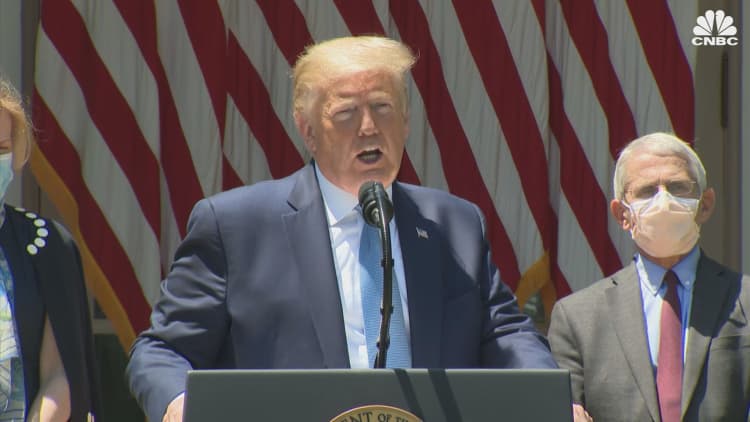
President Trump said the U.S. will overcome the coronavirus crisis with or without an effective vaccine, saying that the disease will “go away at some point” either way.
“If we don’t, we’re going to be like so many other cases where you had a problem come in, it’ll go away at some point, it’ll go away,” Trump said.
Trump’s remarks downplaying the need for a vaccine came at an event unveiling his administration’s beefed-up efforts to fast-track the development and distribution of a vaccine for Covid-19.
WATCH NOW
VIDEO01:31
President Trump downplays the need for the coronavirus vaccine
President Donald Trump said the U.S. will overcome the coronavirus crisis with or without an effective vaccine, saying that the disease will “go away at some point” either way.
“We think we’re going to have a vaccine in the pretty near…
I am a writer, journalist, professor, systems modeler, computational and digital health expert, avocado-eater, and entrepreneur, not always in that order.
US President Donald Trump speaks following a tour of medical supply distributor Owens and Minor Inc. … [+]
AFP VIA GETTY IMAGES
In a speech on Thursday at Owens and Minor, a medical supply distributor located in Allentown, PA, President Donald Trump wondered whether testing for Covid-19 coronavirus is “overrated.” He then proceeded to say, “And don’t forget, we have more cases than anybody in the world. But why? Because we do more testing.”
Next, he clarified: “When you test, you have a case. When you test, you find something is wrong with people. If we didn’t do any testing, we would have very few cases.”
Whoa, is that how it works? That would change everything. The sound that you are hearing…







 Exposing the Big Game