The wheels we humans have set in motion concerning carbon dioxide emissions and climate change are going to take some stopping, and the latest data from Hawaii’s Mauna Loa Observatory are another clear indicator of this. Scientists there have logged record concentrations of CO2 in the atmosphere, in line with a steady trend that defies even the widespread and stringent slowdown in global activity as a result of the coronavirus pandemic.
Scientists have been monitoring the concentrations of carbon dioxide in the atmosphere from Hawaii since 1958, and have plotted a steadily accelerating upward curve in that time. Measured as parts per million (ppm), concentrations of below 350 ppm are what experts consider safe to preserve a…
Using the term “euthanasia,” which literally means “a good death,” to describe the mass killing of overpopulated farmed animals is a misnomer. They suffer horrific deaths.
Reading Time:3minutes
Andrew Skowron
Now that the COVID-19 outbreak has shut down, at least temporarily, an estimated 20 major slaughterhouses and processing plants in North America, millions of farm animals are left in limbo with nowhere to go.
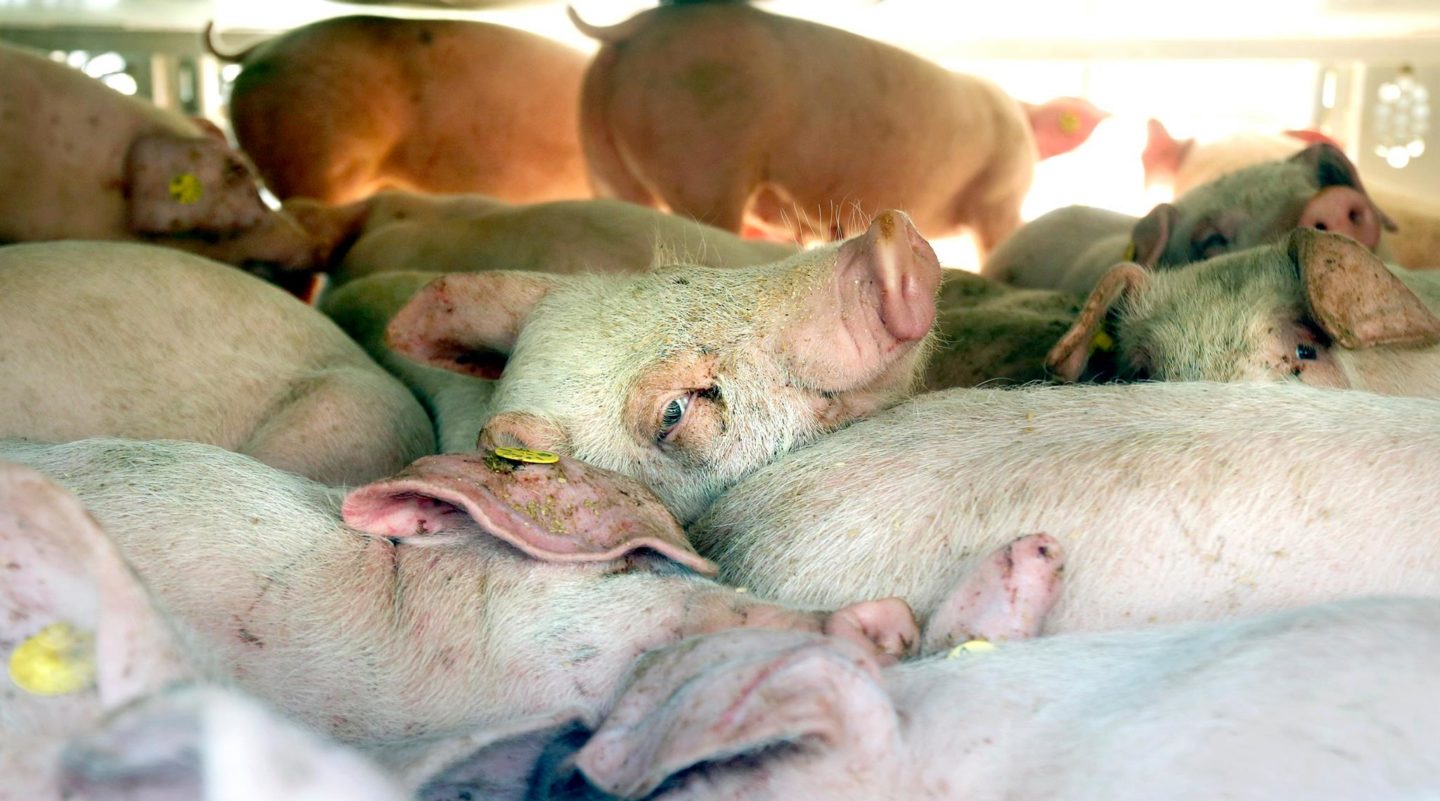
In Iowa, the nation’s biggest pork-producing state, farmers are reportedly giving pregnant sows abortions by injection and composting dead baby pigs to be used for fertilizer. Amid supply chain bottlenecks, local political leaders warn that producers might be forced to “euthanize” around 70,000 pigs a day.
In Minnesota, JBS, the world’s largest slaughter operation, reopened its Worthington plant last month for the sole purpose of killing and dumping excess pigs. The meat processing plant partially reopened for business last week. Roughly one-quarter of the facility’s 2,000 workers have tested positive for the coronavirus.
And in Delaware and Maryland, Allen Harim Foods depopulated 2 million chickens last month, citing a 50 percent decline in its workforce.
Using the terms “slaughter” or “euthanasia” to describe the rapid destruction of farm animals is a misnomer. Slaughter is killing for human consumption; to ensure meat quality, the animal typically dies from blood loss. Under the federal humane slaughter law, animals (except birds) are first stunned, which means they are rendered insensible to pain.
Euthanasia literally means “a good death.” It involves ending an animal’s life in a way that minimizes or eliminates pain and distress, according to the American Veterinary Medical Association (AVMA).
The AVMA defines the term “depopulation” as “the rapid destruction of a population of animals in response to urgent circumstances with as much consideration given to the welfare of the animals as practicable.”
Among the depopulation methods deemed acceptable is using a layer of water-based foam to drown and suffocate birds. During ventilation shutdown, operators flip a switch to turn off the airflow in a barn and ratchet up the heat to as high as 120 degrees, leaving trapped birds and pigs to die from a combination of heat stress and suffocation. The process can take hours and likely results in severe suffering. In fact, other than burning animals to death or burying them alive, it is difficult to imagine a more horrific end.
The last time such gruesome depopulation methods were widely used was in 2015 in response to highly pathogenic bird flu—the worst animal disease outbreak in U.S. history—which killed nearly 50 million chickens and turkeys. In that case, birds were sick and suffering, and the justification given for the extreme step of depopulation was that it would slow the spread of the disease in the shortest time possible.
During the current pandemic, however, animals are not suffering from disease and they are not at risk of transmitting disease to other animals or to humans. Instead, they are being killed, and their bodies disposed of because meat companies failed to properly protect their workers from exposure to COVID-19.
The meat industry is using depopulation as a quick fix for its lack of emergency preparedness. The conventional animal agriculture industry operates a highly consolidated system that has a hard time adjusting in response to a crisis. It routinely runs slaughter lines at dizzying speeds, provides the lowest level of care to animals crammed in stressful, unsanitary environments, and extends minimal health and safety protections to its workers (to date, thousands have become ill or been exposed to the coronavirus and some have died). This intensive, high-production system leaves no room for error, yet giant corporations give little consideration to how animals will fare in emergency situations—from disease outbreaks to natural disasters to devastating barn fires.
That hasn’t stopped industrial agriculture from begging for federal assistance—warning of meat shortages and skyrocketing prices. Farmers are also asking the federal government to bankroll depopulation efforts, along with compensating them for their losses.
Already, the USDA has pledged that government officials and veterinarians will step in, if necessary, to “advise and assist on depopulation and disposal methods.” Because there are no federal or state regulations governing farm animal euthanasia or depopulation, more than 20 members of Congress sent a letter last week to Agriculture Secretary Sonny Perdue urging his department to curb extreme measures, including ventilation shutdown and water-based foam methods.
We simply cannot trust powerful industry players and federal regulators to safeguard animal welfare. According to a recent report by the Animal Welfare Institute, JBS’ Worthington plant, a Smithfield Foods plant in Sioux Falls, South Dakota, and a Tyson Foods plant in Waterloo, Iowa, were the top three worst large livestock slaughter plants in the country for animal welfare violations from 2016 to 2018. These three facilities account for 12 percent of all U.S. hog production. Violations included multiple incidents of failing to stun animals before shackling and hanging them to be dismembered, likely causing the animals excruciating pain.
Depopulation during the current pandemic is being pursued solely as a consequence of the meat industry’s failure to protect its workers, not because the animals present any real risk to human or animal health. These blatantly inhumane killing methods are completely unjustifiable.
Because these animals cannot be brought to market, millions of animal lives will be wasted. At the very least, we should spare them a cruel death.
I never saw screaming witches burned at the stake, Christians tossed to starving lions, maidens pushed over the edge of active volcanoes or men going to the electric chair.
But until I do, watching the devastation to lives, health and economies wrought by the coronavirus pandemic is my idea of cruel and inhumane punishment.
Punishment that has been self-inflicted.
We have met the enemy and it is us.
COVID-19 has turned our world upside down and it could be years, if ever, until it returns to right side up.
Even on sunny days, life now seems drenched in sheets of lightning-bleached rain.
It is difficult to believe that this pandemic is the end result of millions and millions of years of evolution.
When it hit us like a wrecking ball to the gut, we hit the pause…
First Nations and rural residents worry about safety as licence sales spike during COVID-19.
Kai Nagata21 Apr 2020 | TheTyee.caKai Nagata is a hunter and angler. In his day job he works for Dogwood, a B.C. citizen group.
‘All it takes is one hunter purchasing supplies at the local hunting store or getting gas and food to spread this virus here.’ Photo by Jonathan Hayward, the Canadian Press.
First it was empty store shelves and profiteers selling hand sanitizer online. Now it’s guns and ammo on backorder as many British Columbians hope to fill the freezer with wild fish and game.
As a hunter and angler, I can’t fault people for wanting to spend time outside — and reduce trips to the grocery store. But I’m starting to wonder how the B.C. government will protect health, public safety and wildlife populations during the COVID-19 pandemic.
ROUND LAKE, Minn. — A parcel of land in Nobles County has been transformed into a major composting operation for euthanized hogs coming from the crippled JBS pork processing plant in nearby Worthington, as well as hogs from area farmers.
Mike Crusan, communications director with the Minnesota Board of Animal Health, said delivery of hog carcasses to the southwest Minnesota site began over the weekend. The parcel of land can accommodate the delivery of up to 2,000 head per day, though it hasn’t reached peak capacity at this point.
JBS announced last week it could euthanize 3,000 head of market-weight hogs per day because they couldn’t be processed before they grew too large for slaughter and packaging. The JBS plant in Worthington shut down temporarily because of an outbreak of COVID-19…
A view of the chicken and meat section at a grocery store, April 28, 2020 Washington, DC. (Photo by Drew Angerer/Getty Images)
OMAHA, Neb. (AP) — U.S. meat exports are surging even as the industry is struggling to meet domestic demand because of coronavirus outbreaks at processing plants that have sickened hundreds of workers and caused companies to scramble to improve conditions.
Although the situation could cause concern that American workers are risking their health to meet foreign demand, experts say it shouldn’t because much of the meat sold to other countries is cuts that Americans generally don’t eat. And at least one of the four major processors says it has reduced exports during the pandemic.
If companies manage to keep their workers healthy and plants operating, there should be plenty of supply to satisfy domestic and foreign markets, according to industry officials.
FILE – Wilson Castro wears a mask and gloves as he restocks the shelves in the meat department at the Presidente Supermarket on April 13, 2020 in Miami, Florida. (Photo by Joe Raedle/Getty Images)
“I really feel like the industry is well positioned to serve all of its customers both here and abroad,” said Joe Schuele, a spokesman for the industry trade group U.S. Meat Export Federation.
Meat exports, particularly pork exports to China, grew significantly throughout the first three months of the year. This was partly due to several new trade agreements that were completed before the coronavirus outbreak led to the temporary closure of dozens of U.S. meatpacking plants in April and May and to increased absenteeism at many plants that reduced their output.
The Meat Export Federation said pork exports jumped 40% and beef exports grew 9% during the first three months of the year. Chicken exports, meanwhile, grew by 8% in the first quarter. Complete figures weren’t yet available for April, but Agriculture Department figures for the last week of April show that pork exports jumped by 40% as shipments to China and Japan surged and exports to Mexico and Canada remained strong. Beef exports declined by 22% in that last week of April.
China’s demand for imported pork has risen over the past year because its own pig herds were decimated by an outbreak of African swine fever, and China pledged to buy $40 billion in U.S. agricultural products per year under a trade pact signed in January. China also became the fourth-largest market for American poultry in the first quarter after it lifted a five-year ban on those products. A trade agreement with Japan and a new North American free trade agreement also helped boost exports.
FILE – Butcher Sebastian Soria cuts beef for customers at butcher’s shop La Tiernita of Villa Puyrredon area on March 25, 2020 in Buenos Aires, Argentina. (Photo by Amilcar Orfali/Getty Images)
Part of the reason why exports have continued to be so strong this spring is that much of the meat headed overseas was bought up to six months ahead of time — before the virus outbreak took hold in the U.S.
“A lot of these sales were made before COVID-19 hit. China had already made these purchases and then COVID-19 hit. They had actually pre-purchased a lot of this before the plant problems hit,” said Chad Hart, an agricultural economist at Iowa State University.
It’s also worth noting that meat exports to China and other Asian markets include cuts such as pig feet, snouts and internal organs that have little value in the United States. The most popular cuts in the U.S., including bacon and pork chops, largely stay in the domestic market. More than half of the chicken exports to China were chicken feet. And the Meat Export Federation says demand from the export market helps boost meat production in the U.S. because more animals are slaughtered to help meet all the demand.
Iowa Agriculture Secretary Mike Naig said he doesn’t think it makes sense to restrict exports because so much of the meat sold internationally isn’t popular in the U.S.
“I think it’s important to prioritize,” said Naig, whose state leads the nation in pork production. “I think companies should meet the domestic market first and then be free to sell the things that the American consumer doesn’t purchase and the types of things that we don’t normally consume. That’s economically important.”
Workers line up to enter the Tyson Foods pork processing plant in Logansport, Ind., Thursday, May 7, 2020. In Cass County, home to the Tyson plant, confirmed coronavirus cases have surpassed 1,500. That’s given the county — home to about 38,000 residents — one of the nation’s highest per-capita infection rates. (AP Photo/Michael Conroy)
Meat production in the United States is dominated by a few huge companies — JBS, Smithfield, Tyson Foods and Cargill. Cameron Bruett, a spokesman for JBS, said that Brazilian-owned company has reduced exports to help ensure it can satisfy U.S. demand for its products. Tyson Foods and Cargill didn’t respond to questions about their exports.
The Greeley JBS meat packing plant sits idle on April 16, 2020 in Greeley, Colorado. The meat packing facility has voluntarily closed until April 24 in order to test employees for the coronavirus (COVID-19) virus. (Photo by Matthew Stockman/Getty Images)
Smithfield Foods, which is owned by a Chinese company, said in a statement that it isn’t controlled by any government and that the free market determines what products it exports. JBS declined to respond to questions about its foreign ownership. Purdue University agricultural economist Jayson Lusk said it’s not clear what role the foreign owners play in deciding how much meat is exported.
The industry has been dealing with a number of production challenges caused by the coronavirus, and several large plants had to close temporarily because of outbreaks of COVID-19, the disease it causes. At least 30 U.S. meatpacking workers have died of COVID-19 and another 10,000 have been infected or exposed to the virus, according to the United Food and Commercial Workers union, which represents roughly 80% of the country’s beef and pork workers and 33% of its poultry workers.
Kansas State agricultural economist Glynn Tonsor said he thinks the industry will get past the shortage concerns within the next several weeks.
“I think it’s important that we note that the U.S. hog industry is large enough to sufficiently supply our domestic market and export. We’ve done that for some time. We’ve been growing volumes in both places for some time,” Tonsor said.
Tyson and Smithfield have both been able to reopen huge pork processing plants that were temporarily closed in Iowa and South Dakota, which should help the industry keep up with demand even if some plants aren’t running at full capacity, said David Herring, of the National Pork Producers Council.
“I really don’t think we’ll see a big problem with meat shortages,” said Herring, who raises hogs near Lillington, North Carolina. “As long as the plants are able to come back up and operate maybe not at 100% but at 80% or 90%, I think we should be good.”
[Issues of animal abuse should be color, custom and culture-blind. A thirty-year vegan like Adams need not apolgize for pointing out a source of animal cruelty, even if that source is not part of his country or culture…]
Famed Canadian singer Bryan Adams isn’t particularly known for his grand opinions or brash statements on current happenings. Even for a vegan and animal activist, he’s never really been the loud and proud type.
It seems though, that much like many of us on week whatever-it-is of this pandemic, he’s kind of lost it, and decided to take to social media to air his grievances.
Jeff Currie, head of commodities research at Goldman Sachs, believes the two big commodity stories looking ahead to 2021 and beyond will concern oil and livestock.
Confinement measures have been implemented in 187 countries or territories over recent weeks and months, in an effort to try to slow the spread of the coronavirus.
It has wreaked havoc in the food industry, with farmers now facing a pronounced market imbalance.
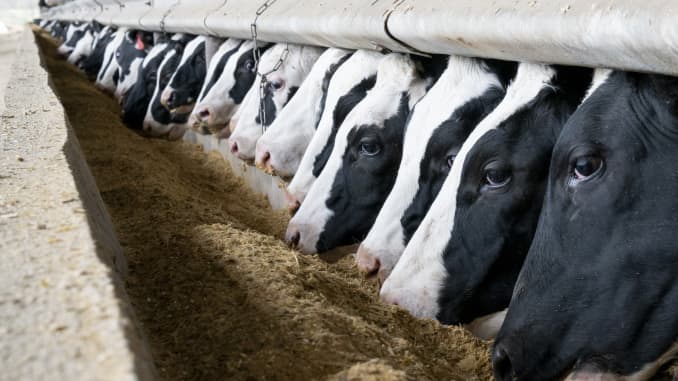
Dairy cows stand in a pen at a cattle farm in West Canaan, Ohio on Thursday, April 30, 2020.
Dane Rhys | Bloomberg | Getty Images
The head of commodities research at Goldman Sachs believes the two big commodity stories looking ahead to 2021 and beyond will concern oil and livestock.
The forecast comes at a time when the coronavirus pandemic has prompted many countries across the globe to effectively shut down.
It has created an unprecedented demand shock in energy markets, with U.S. oil prices tumbling into negative territory for the first time ever last month.
Both major oil benchmarks have registered modest gains in recent weeks. However, Brent crude futures and U.S. West Texas Intermediate futures are still down more than 50% on the start of 2020.
“Investors don’t want to hear anything about oil. They have been beaten up, they are done with this space (and) it is going to take a lot to get them to come back,” Jeff Currie, head of commodities research at Goldman Sachs, said during a video call with reporters last week.
The coronavirus outbreak has also wreaked havoc in the food industry, with farmers now facing a pronounced market imbalance.
As a result, Currie said that he believes the only other commodity market “looking as precarious as oil” was livestock.
“They both share something in common: You do damage to the supply, it takes a while to bring it back online again,” he said.
“We had a problem with livestock going into this … We now have a very serious problem,” Currie added.
Food insecurity
Confinement measures have been implemented in 187 countries or territories over recent weeks and months, in an effort to try to slow the spread of the coronavirus.
The restrictions, which vary but broadly include school closures, bans on public gatherings and social distancing, have forced many restaurants to close their doors.
This collapse in demand from the hospitality industry has reportedly forced some U.S. farmers to let fresh fruit and vegetables perish, while dairy farmers have had to pour excess milk away.
Packages of various meats are seen in a supermarket refrigerator in New York City. As the coronavirus spreads to meat processing plants, the United States faces a major meat shortages.
John Lamparski | SOPA Images }| Getty Images
Meanwhile, an uptick of Covid-19 cases in meat processing plants has led to some closures and a slowdown in production. As a result, there are growing concerns about whether the industry can meet demand for pork, beef and chicken.
At the same time, food banks have reported massive shortages. Feeding America, the largest network of food banks in the U.S., has warned that the number of “food insecure children” in the world’s largest economy could hit 18 million as a result of the Covid-19 pandemic.
This is higher than the record 17.2 million recorded by the U.S. Department of Agriculture (USDA) at the height of the recession in 2009.
What do oil and meat have in common?
Analysts at Bank of America Securities said in a research note published late last month that livestock farmers in the U.S. meat industry were likely “to suffer tremendous financial burdens” as a result of the coronavirus crisis.
Pork processors were expected to bear the brunt of plant closures, the analysts said, while beef processing was thought to be in a better position.
The analysts at Bank of America Securities stopped short of warning about the prospect of empty meat cases at the grocery store anytime soon.
But, they did stress those concerns “could become greater” if plants were unable to re-open.
A farmer checks on young female pigs at a hog farm in Smithville, Ohio, U.S., on Thursday, April 30, 2020.
Dane Rhys | Bloomberg | Getty Images
President Donald Trump said via Twitter on Saturday that the U.S. government would start to purchase $3 billion in agricultural products from American farmers over the coming days.
He referenced the USDA program, “Farmers to Families Food Box,” that aligns with the department’s $19 billion relief plan announced last month.
Goldman’s Currie said herds had been “tremendously reduced” on both cattle and hogs in recent weeks.
“And what do oil and meats have in common? They are big inputs into inflation in the emerging markets,” he continued. “These are going to be the two big commodity stories I think are going to be important as we look out into 2021 and beyond.”
Dr. Anthony Fauci, whose recommendations on dealing with the coronavirus outbreak have generally been taken as law by U.S. politicians and the American public, is starting to draw doubters.
Fauci, testifying at a Senate hearing Tuesday, warned of “needless suffering and death” if states attempt to reopen too quickly. That drew criticism from GOP Sen. Rand Paul of Kentucky and, later, from Fox News commentator Tucker Carlson.
The news isn’t all bad. Some data dashboards appear to show the daily U.S. death toll is flattening. And Los Angeles, despite extending its stay-at-home order, opened its beaches Wednesday.
There are now more than 82,000 deaths and 1.3 million confirmed coronavirus cases in the U.S., according to the Johns Hopkins University data dashboard. Worldwide, the virus has killed roughly 292,000 people. More than 4.2 million people have been infected.
Our live blog is being updated throughout the day. Refresh for the latest news, and get…
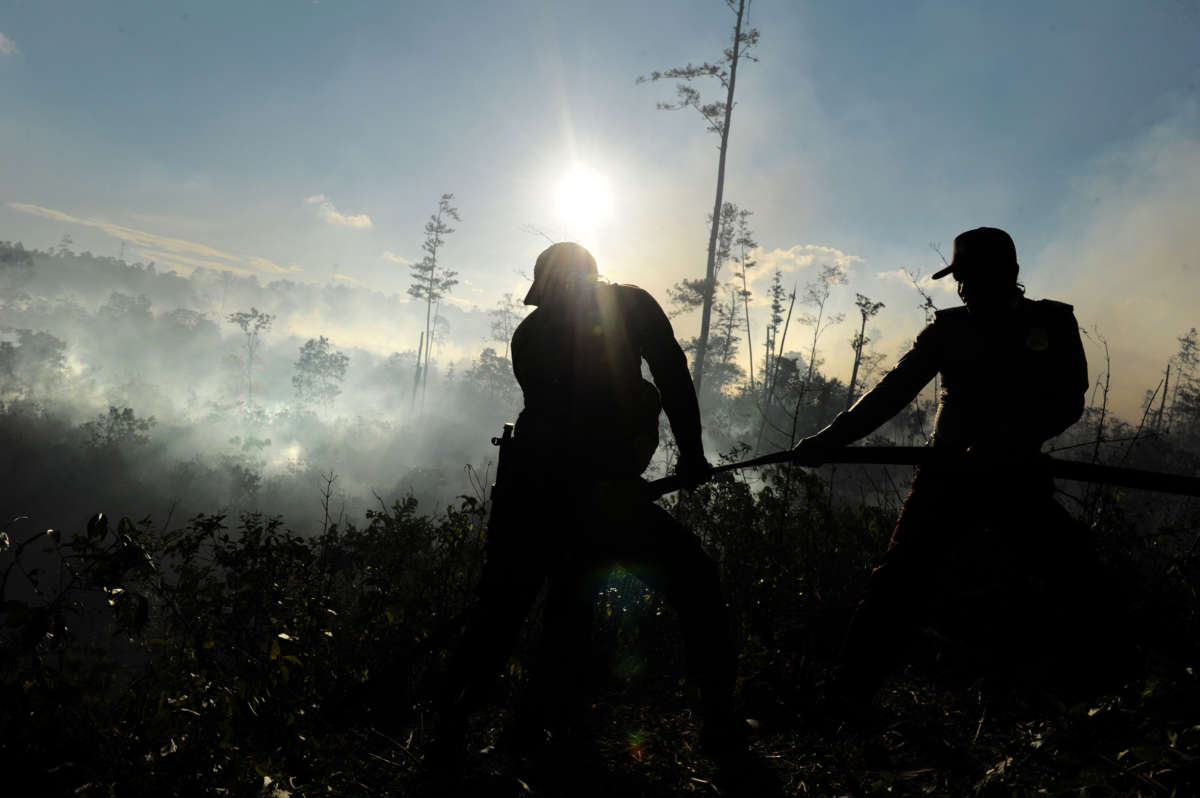
Rangers extinguish a fire in Seulawah, Indonesia, after the fire scorched hectares of pine trees on October 10, 2016. Pine forests are deliberately burned annually to clear land for palm oil and pulpwood plantations.CHAIDEER MAHYUDDIN / AFP VIA GETTY IMAGES
Over a year before COVID-19 was first detected, biologists at the University of Warsaw published “Bats, Coronaviruses, and Deforestation,” a paper that links the rapid destruction of the natural habitats of bats to the spread of coronaviruses such as SARS-CoV and MERS-CoV.
Published in April 2018, the article describes how the homes of bats in the rainforests of Southeast Asia have been reduced by 50 percent over the last 70 years, putting the disease-carrying animals in closer contact with humans than ever before. It then details that 31 percent of the viruses that bats are capable of carrying are…






 Exposing the Big Game