A combination of heat and humidity so extreme that it’s unendurable isn’t just a problem for the future — those conditions are already here, a new study finds. Off-the-chart readings that were previously thought to be nearly nonexistent on the planet today have popped up around the globe, and unyielding temperatures are becoming more common.
Extreme conditions reaching roughly 115 degrees Fahrenheit on the heat-index scale — a measurement of both heat and humidity that’s often referred to as what the temperature “feels like” — doubled between 1979 and 2017, the study found. Humidity and heat are a particularly deadly combination, since humidity messes with the body’s ability to cool itself off by sweating. The findings imply that harsh conditions that scientists foresaw as an…
Humans’ ability to efficiently shed heat has enabled us to range over every continent, but a wet-bulb temperature (TW) of 35°C marks our upper physiological limit, and much lower values have serious health and productivity impacts. Climate models project the first 35°C TW occurrences by the mid-21st century. However, a comprehensive evaluation of weather station data shows that some coastal subtropical locations have already reported a TW of 35°C and that extreme humid heat overall has more than doubled in frequency since 1979. Recent exceedances of 35°C in global maximum sea surface temperature provide further support for the validity of…
Legendary illusionist Roy Uwe Ludwig Horn died in Las Vegas on Friday from complications related to COVID-19, CBS News confirmed in a statement from his press team. Horn, who was 75, was best known for his part in the magic duo Siegfried and Roy, which became known around the world for incorporating endangered animals into their on-stage illusions.
Horn had tested positive for coronavirus in April, according to CBS affiliate WIAT. He was hospitalized at Mountain View Hospital prior to his death.
“The world has lost one of the greats of magic, but I have lost my best friend,” Horn’s partner in magic, Siegfried Fischbacher, said in a statement.
“From the moment we met, I knew Roy and I, together, would change the world. There could be no Siegfried without Roy, and no Roy without Siegfried,” he said. “Roy was a fighter his whole life including during these final days.”
Horn was born in Germany in 1944. While working on a cruise ship, he met Siegfried, and after a conversation started from the question, “can you make a question disappear,” their 50-year career as a magic duo began, according to the statement from his press team.
During their 14-year stint at The Mirage in Las Vegas, the magicians quickly became known for their incorporation of large and beautiful wildlife in their performances, the statement added. People ventured to Las Vegas to watch their $30 million production, which involved making tigers, white lions, leopards, jaguars, and even an elephant, disappear.
Horn’s last — and most notable — performance was October 3, 2003, when he had a stroke and one of the their white tigers dragged him off stage. From that day forward, Horn referred to his tiger, named Mantecore, as his “lifesaver,” and five years after the incident, Siegfried and Roy opened a wildlife sanctuary in Las Vegas called the Secret Garden and Dolphin Habitat. The sanctuary provided a home for the the team’s white tigers and other exotic animals, such as a Komodo dragon.
“Roy’s whole life was about defying the odds,” Siegfried said. “He grew up with very little and became famous throughout the world for his showmanship, flair and his life-long commitment to animal conservation. He had a strength and will unlike anyone I have ever known.”
Fellow magician and illusionist Criss Angel tweeted his respects, writing, “Thank you for your kindness, inspiration and friendship. You paved the road and will forever be missed.”
Criss Angel
✔@CrissAngel
Mr. Roy Horn, Thank You for your kindness, inspiration and friendship. You paved the road and will forever be missed. May we meet again one day… Love, Criss
MGM Resorts, which owns The Mirage, tweeted, “The world lost a legendary figure with the passing of Roy Horn. His story, and the story of Siegfried & Roy, are larger than life.”
MGM Resorts
✔@MGMResortsIntl
The world lost a legendary figure with the passing of Roy Horn. His story, and the story of Siegfried & Roy, are larger than life. Our hearts go out to Roy’s family and friends, and most notably to Siegfried who shared a lifetime of magic and friendship with this special man.
According to the press statement, a public memorial will be planned for Horn. Siegfried has also asked that donations in Horn’s name be made to the Cleveland Clinic Lou Ruvo Center for Brain Health or the Nevada COVID-19 Response, Relief and Recovery Task Force.
Police Investigating Accidental Shooting of 2 Hunters in Lockport
BY SPECTRUM NEWS STAFF AND MADISON ELLIOTT LOCKPORT PUBLISHED 9:05 AM ET MAY. 08, 2020UPDATED 3:36 PM ET MAY. 08, 2020
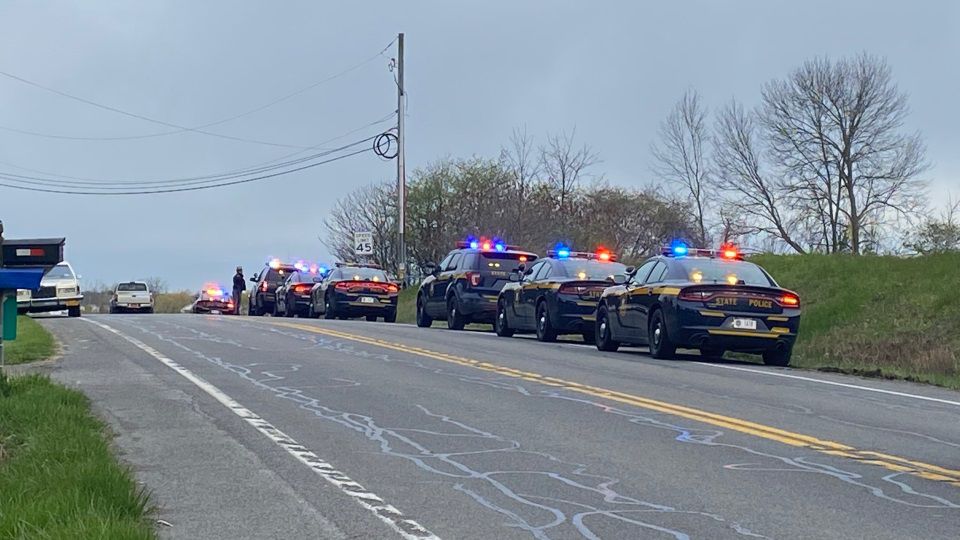
State troopers are investigating an accidental shooting that left two hunters wounded in Lockport on Friday.
According to state police, they responded to a field on Raymond Road around 6:20 a.m. for a report of a hunting accident.
When they arrived they found two hunters who had been hit by turkey shot pellets. One man was wounded in the side of the face, the other in the back and the back of the head.
The man who was hit in the face was taken to Erie County Medical Center for treatment. The other man remained at the scene and was speaking with state police. Both men’s injuries are considered non-life-threatening.
PIERRE, S.D. (KELO) — North American river otters won’t be on South Dakota’s list of threatened species any longer, the state Game, Fish and Parks Commission decided Thursday.
Commissioners agreed 8-0 with the recommendation (page 59) from the state Game, Fish and Parks Department. They also voted 8-0 to allow trapping of river otters.
Earlier the commission held a public hearing that drew people opposed to the change. One man called it “insane.”
Several people said the populations — estimated in the 40s in recent years — were too sparse to allow de-listing.
The commission agreed to let trappers to take 15 river otters (page 46), with one apiece per licensed resident trapper per season.
State wildlife program administrator Chad Switzer said “a lot of staff time” went into the proposal. He said any trapper who caught more than one…
The Report Titled on “Covid-19 Impact onFishing, Hunting And Trapping Market” which provide detailed study of impact of the novel Coronavirus (COVID-19) pandemic on the historical and present/future market data. Economic Growth, GDP (Gross Domestic Product), and Inflation are some of the elements included in this report to offer crystal clear picture of the Fishing, Hunting And Trapping industry at global level. This Fishing, Hunting And Trapping market report has also included a section for market dynamics that covers Drivers, Trends, Opportunities and Restraints Impacting the Growth of the industry throughout the projected period.
In this section of the Fishing, Hunting And Trapping market report, has provided a detailed analysis of the top players (Legacy Anglers, Keep America Fishing Organization, NASGW, NRA) operating in the Fishing, Hunting And Trapping industry along with Capacity, Production, Price, Revenue, Cost, Gross, Gross…
A Tyson Foods pork processing plant, temporarily closed due to an outbreak of the coronavirus, in Waterloo, Iowa, April 29, 2020. (Brenna Norman/Reuters)
It’s not always clear whether industry representatives regret the waste of life or just a waste of food.NRPLUS MEMBER ARTICLEUnfolding this month, in the background of the pandemic, is a “depopulation” of livestock farms — another surreal new term of the crisis to add to our list. It’s as detached and colorless a word as the industry could find for gassing, suffocating, or otherwise doing in the millions of animals whose appointments at the abattoir have been canceled by coronavirus outbreaks and who therefore, in the refrain of news coverage, have “nowhere to go.”
The system has its own unbending schedules and logic. No sheltering in place for factory-farmed pigs, cows, chickens, and other creatures when yet more troubles appear. When they can’t die on a kill line, because a slaughterhouse has closed, that just means they have to die somewhere else to get out of the way — even if, as in this case, they’re all bound for landfills, blast furnaces, or burial pits.
Culling is a grim necessity, we’re told, and industry representatives have been straining to convey a sense of loss, though it’s not always clear whether they regret the waste of life or just a waste of food. In an emergency conference call on the logistics of the cull, recorded online by pork producers, one speaker captured the feeling: “It’s a topic that makes us all sick to our stomachs.”
Among techniques discussed in that call, and left for farmers to apply according to cost and “depopulation efficiency,” were gunshot and electrocution (“preferred” methods), “manual blunt force trauma” (beating animals to death with blows to the head, also “preferred”), ventilation shutdown and poisoning by carbon monoxide or sodium nitrate (these approaches “permitted in constrained circumstances”). When the pork producers’ lead veterinarian turned to the details of setting up a “gas chamber,” you could understand how disoriented a rational person would feel.
By presidential directive, the meat industry is now to be considered an “essential” enterprise. This intervention will safeguard such assets as our “national pork reserve,” while reopening the slaughter plants and leaving the companies in their accustomed position of taking no responsibility for the consequences. Culling continues anyway, because with the merest pause the meat system convulses with “backlog,” requiring travails for which producers expect our sympathy.
So sorrowful is the task that Iowa’s governor and U.S. senators have requested federal support not only in “depopulation” itself but also in helping to cope with the emotional aftermath: “Providing mental health assistance to farmers, veterinarians and others involved in the difficult decisions and processes around euthanizing and disposing of animals is imperative.” The National Pork Producers Council, in various statements pleading for public understanding along with the federal cash payouts, likewise speaks of “tragic choices,” “gut-wrenching decisions,” and “devastating last resorts” — all pointing to euthanasia as “the most humane option.”
A grievous situation, from any angle. And it would be nice to think that, even in some fleeting moment of revelation, these people who run our factory farms and slaughterhouses had awakened to the reality that living creatures are never just commodities, that they warrant our moral concern, and their suffering, our compassion. More likely, in these expressions of disquiet, we have a massive case of compartmentalizing, in which the mind selectively acknowledges one kind of problem while failing to grasp others of equal moral gravity.
What is so “gut-wrenching” about culling, compared with practices that these same people accept as a matter of course, in unconstrained circumstances and in disregard of every consideration except their own convenience and profit? With the turn of a switch, and in a matter of minutes, half a million chickens may be gassed or suffocated in a single facility, only because industrial agriculture packs these afflicted fowl of the air into vast warehouses, the laying hens crammed into row after row of small and filthy cages. A depressing possibility, given that such miseries are the design of the same farmers doing the culling, is that all they really lament is the loss of time and money. And even that feeling passes quickly, as culling is turned to advantage, with higher prices following the short-term constriction in supply.
If “mass depopulation” makes for a sickening sight, even to factory farmers, then you would think that “mass confinement” of animals would long ago have had a similar effect. Under “intensive confinement,” another term of the trade, these culled animals have known a world of only concrete and metal, with all the privations, mutilations, and other cruelties that are the industry’s first resort, and with even the veterinarians hired only to refine the punishments. Indeed, every modern hog farm is a training ground in culling, as the weak and near-dead are routinely dragged to “cull pens,” while the others are kept alive, amid pathogenic disease and squalor, only by a reckless use of antibiotics. The externalized cost to public health being left, as always with factory farming, for others to deal with.
Such is the culling expertise of America’s pork producers that when China’s current swine-fever contagion began to spread, factory farmers in that country knew who to call. Our industry’s best minds in the field were dispatched to the scene, where even now millions of pigs are being gassed or buried alive.
Where was the industry’s concern for “humane options” when this regulatory change was advocated? Where was that alertness to “tragic choices” when it might have done some good? And does it give anyone a moment’s pause that pigs, slaughtered at a national rate of half a million a day, are highly intelligent and social creatures, at least as smart and sensitive as any dog facing the similar horrors of a Wuhan wet market?
The chairman of Tyson Foods last week, in an unctuous and self-pitying letter typical of the industry’s public pronouncements, expressed confidence that his company’s “core values” would see it through the crisis. Yet for years, that company and others have sought laws to prohibit anyone from taking pictures inside their facilities, lest we learn more about how things work in what industry executives prefer to call “protein production.” What are the core values of people in a massive enterprise that depends so heavily on concealment and euphemism?
How jarring to hear them now supplicating for “mental-health assistance” to soothe their emotional wounds, as if they felt some attachment to animals they have done nothing but abuse, employing methods they are afraid to let us see. And how absurd to find Tyson’s top man solemnly declaring that “the food supply chain is breaking” (meat, he informs us, is “as essential as healthcare”), as though we’re just one or two slaughterhouse shutdowns away from famine. Happily, the crop growers of America — the farmers who truly sustain our country, and who don’t need gas chambers when things go wrong — have got us covered.
Sometimes the failures in a system reveal the essence of the whole. Abnormal circumstances can clarify problems that pass for normal. Doubtless, in their “depopulation” measures, the livestock farmers themselves feel they have “nowhere to go,” forced by their own manias of consolidation and hyper-efficiency to make one harsh choice after another, all the conscientious alternatives long ago ruled out. Yet if somehow it troubles them, in their culling labors, to treat millions of living creatures as nothing — bulldozed away, like so much piled-up trash — then now’s a good moment, for all of us, to notice that the system is just as merciless when it is working to perfection.
Every one of those creatures, like billions of others, was marked for a bitter, frightened, pain-filled life anyway — and to what good end? It is all in service to a business whose ruthlessness to animals, utter indifference to workers, destructiveness to the environment, and manifold harm to human health combine to qualify it as perhaps the least essential industry in America, and among the most amoral.
By all means, give them their mental-health assistance. Add some ethics counseling, too. And just make certain that the treatment includes serious, intensive introspection.
The California Department of Fish and Wildlife (CDFW) has detected the
state’s first cases of a potentially crippling hoof disease in two
Roosevelt elk from a resident herd in Del Norte County.
Treponeme-associated hoof disease (TAHD) – commonly referred to as “elk
hoof disease” – can cause deformed, overgrown and otherwise damaged hooves.
The lesions and resulting deformities are painful and lead to limping,
lameness and even death as observed in other states. When the disease is
severe, elk may become too weak to graze, fight off other infections or
escape predators.
TAHD was first identified in elk from Washington state in the 1990s, but
much remains unknown about the disease. Currently, there is no known cure
or vaccination.
TAHD has been documented in elk in Washington, Oregon and Idaho. Recent
detections in Oregon’s Douglas County
<https://www.dfw.state.or.us/news/2020/04_April/040820.asp> were previously
the closest to California. TAHD gets its name from a bacterium, *Treponema* sp.,
that is associated with this disease, but other pathogens also may play a
role. Scientists at Washington State University who are experienced with
TAHD confirmed the disease in the two Roosevelt elk from Del Norte County.
It is unknown what impact TAHD may have on elk populations in California or
other states. California is home to three subspecies of elk – Rocky
Mountain elk, Roosevelt elk and tule elk – that together inhabit
approximately 25 percent of the state. In other states, both Rocky Mountain
and Roosevelt elk have contracted TAHD. To date, there are no known cases
of TAHD among tule elk.
While the disease appears to be highly infectious among elk, there is no
evidence that it affects humans. Still, hunters who harvest an elk
exhibiting signs of deformed or damaged hooves should exercise caution and
practice safe hygiene when processing, cooking and consuming the meat.
Hunters also are encouraged to submit hoof samples to CDFW from suspect elk.
CDFW will be working with natural resource agencies in other western states
and academic partners to increase surveillance for TAHD in California, plan
management actions and facilitate research.
Additional information on elk hoof disease is available at the following
links:
– Washington State University’s webpage on TAHD:
vmp.vetmed.wsu.edu/research/elk-hoof-disease
– Washington Department of Fish and Wildlife’s webpage on TAHD:
wdfw.wa.gov/species-habitats/diseases/elk-hoof
– Oregon Department of Fish and Wildlife’s fact sheet on TAHD: http://www.dfw.state.or.us/wildlife/health_program/docs/elkhoofdiseasefactsheetfinal.pdf
Media Contacts:
Dr. Brandon Munk <Brandon.Munk@wildlife.ca.gov>, CDFW Wildlife
Investigations Lab, (916) 358-1194
Peter Tira <Peter.Tira@wildlife.ca.gov>, CDFW Communications, (916) 215-3858
The Trump administration is trying to whip the country into an anti-Chinese frenzy because the novel coronavirus might have been accidentally transmitted from a laboratory rather than a wet market. But surely the larger question we should be asking is why we have been seeing viruses jump from animals to humans with such frequency in recent years. SARS, MERS, Ebola, bird flu and swine flu all started as viruses in animals and then jumped to humans, unleashing deadly outbreaks. Why?
Peter Daszak is a disease ecologist and renowned “virus hunter.” He ventures into bat caves in full protective gear to get the animals’ saliva or blood to determine the origins of a virus. During a conversation with me, he was clear: “We are doing things every day that make pandemics more likely. We need to understand, this is not just nature. It is what we are doing to nature.”
Remember, most viruses come from animals. The Centers for Disease Control and Prevention estimates that three-quarters of new human diseases originate in animals.
This coronavirus might simply have come from one of the wildlife markets in Wuhan, China, where live animals are slaughtered and sold, a practice that should be banned around the world. But as human civilization expands — building roads, clearing farmland, constructing factories, excavating mines — we are also destroying the natural habitat of wild animals, bringing them closer and closer to us. Some scientists believe this is making the transmission of diseases from animals to humans far more likely.
The virus that causes covid-19 appears to have originated in bats, which are particularly good incubators for viruses. Scientists are still studying what happened, but in other cases, we have seen how human encroachment can lead bats to look for food around farmland, where they infect livestock — and through them, humans.
There are other paths for pathogens. The most likely one comes directly from our insatiable appetite for meat. As people around the world get richer, they tend to eat more meat. Some 80 billion land animals are slaughtered for meat each year around the world. Most livestock is factory-farmed — an estimated 99 percent in the United States, and 74 percent around the world, according to one animal rights group. That entails crowding thousands of animals inches from each other in gruesome conditions that are almost designed to incubate viruses and encourage them to spread, getting more virulent with each hop. Vox’s Sigal Samuel quotes the biologist Rob Wallace: “Factory farms are the best way to select for the most dangerous pathogens possible.”
Factory farms are also ground zero for new, antibiotic-resistant bacteria, which is another path toward widespread human infections. Factory-farmed animals are bombarded with antibiotics, which means the bacteria that survive and flourish are highly potent. Some 2.8 million Americans are sickened by antibiotic-resistant bacteria annually — of whom 35,000 die, according to the CDC.
And then there is climate change, which intensifies everything — transforming ecosystems, forcing more animals out of their habitats and bringing tropical conditions to places that were previously temperate. Scientific American reports, “The warmer, wetter and more variable conditions brought by climate change are . . . making it easier to transmit diseases such as malaria, dengue fever, chikungunya, yellow fever, Zika virus, West Nile virus and Lyme disease in many parts of the world.” As we change ecosystems and natural habitats, long-dormant diseases can emerge to which we have no immunity.
In May 2015, two-thirds of the world’s population of saigas, a small antelope, died suddenly within a few weeks. A bacterium called Pasteurella multocida, which had long lived in the animal without doing harm, suddenly turned virulent. Why? The Atlantic’s Ed Yong explains that the Central Asian region in which the saiga lives was becoming more tropical, and 2015 was a particularly warm, humid year. “When the temperature gets really hot, and the air gets really wet, saiga die. Climate is the trigger, Pasteurella is the bullet.”
The real scandal is not what China did to us, but what we together are doing to the planet — and what only we together can stop.
The virus that causes COVID-19 spreads mainly from person to person. This can happen through droplets that fly into the nose or mouth, airborne or surface transmission, and fecal-oral. But that’s apparently not all of it.
Credit Wikipedia Commons
Researchers from the University of Hong Kong discovered that the eyes are an important route through which the coronavirus can enter into the human body. The strain was up to 100 times more infectious than severe acute respiratory syndrome and bird flu in two facial orifices tested.
The laboratory tests led by Dr. Michael Chan Chi-wai revealed that virus abundance levels of SARS-Cov-2 – the strain of coronavirus that causes the Covid-19 disease – was far greater than for SARS in the upper respiratory airways and…


/cdn.vox-cdn.com/uploads/chorus_image/image/66771700/452279266.jpg.0.jpg)





 Exposing the Big Game