Exposing the Big Game

Forget Hunters' Feeble Rationalizations and Trust Your Gut Feelings: Making Sport of Killing Is Not Healthy Human Behavior

Exposing the Big Game

New York Legislation Would Ban Live Animal Markets To Control Spread of Disease

Exposing the Big Game's avatarExposing the Big Game

  1. May 5, 2020

NEW YORK—In an effort to control the spread of infectious diseases, live animal markets might soon be banned in New York. A new bill, introduced by Assembly Member Linda B. Rosenthal (D-Manhattan), would immediately prohibit the operation of live animal markets in New York, effectively suspending current live markets’ operations and preventing further licenses for such markets from being issued.

“In a matter of weeks, COVID-19 has ravaged New York and changed life for millions of New Yorkers,” says Assembly Member Rosenthal. “As policymakers, we have a responsibility to respond to this crisis by doing everything in our power to prevent the next pandemic. Closing New York’s live animal markets, which operate in residential neighborhoods and do not adhere to even the most basic sanitary standards, until we determine whether they can be made safe, is a vital first step.”

Doctors with the…

View original post 342 more words

New York Legislation Would Ban Live Animal Markets To Control Spread of Disease

  1. May 5, 2020

NEW YORK—In an effort to control the spread of infectious diseases, live animal markets might soon be banned in New York. A new bill, introduced by Assembly Member Linda B. Rosenthal (D-Manhattan), would immediately prohibit the operation of live animal markets in New York, effectively suspending current live markets’ operations and preventing further licenses for such markets from being issued.

“In a matter of weeks, COVID-19 has ravaged New York and changed life for millions of New Yorkers,” says Assembly Member Rosenthal. “As policymakers, we have a responsibility to respond to this crisis by doing everything in our power to prevent the next pandemic. Closing New York’s live animal markets, which operate in residential neighborhoods and do not adhere to even the most basic sanitary standards, until we determine whether they can be made safe, is a vital first step.”

Doctors with the Physicians Committee for Responsible Medicine—a nonprofit of more than 12,000 doctors—applaud the legislation for promoting public health and aiming to prevent the spread of future viruses.

COVID-19 appears to have originated in bats and passed to humans via live animal markets. Previously, other coronavirus outbreaks have also spread through animals sold in live markets. The severe acute respiratory syndrome (SARS) epidemic of 2002–2003 originated in horseshoe bats, passing through civets sold for meat to humans.

The legislation could also help stop the spread of new strains of influenza A, an avian virus. Beginning with the 1918 H1N1 flu pandemic (if not before), all influenza A outbreaks have come originally from bird viruses that have found their way into domesticated animal populations and, from there, into farmworkers, their contacts, and the broader community. The H1N1 virus killed millions of people.

“Avoiding future pandemics like the COVID-19 global crisis requires a total ban on live markets, including the 80 in New York City alone,” says Neal Barnard, MD, FACC, president of the Physicians Committee. “Poultry flocks are breeding grounds for influenza A viruses, and live animal markets are the source of coronavirus.”

New York City has the greatest number of live bird markets, compared with other U.S. cities, according to the New York State Consumer Protection Board. Inspection reports from the New York State Department of Agriculture and Markets show ongoing health, safety, and welfare problems in New York’s live animal markets.

The bill would also create a seven-person task force who would conduct examinations of the shutdown markets for potential public health risks. The members would have expertise in infectious diseases, with a focus on the potential spread of disease between animals and humans. They would report their findings within a year of its first meeting and include a recommendation for further action.


Founded in 1985, the Physicians Committee for Responsible Medicine is a nonprofit organization that promotes preventive medicine, conducts clinical research, and encourages higher standards for ethics and effectiveness in education and research.

To prevent the next pandemic, it’s the legal wildlife trade we should worry about

Exposing the Big Game's avatarCommittee to Abolish Sport Hunting Blog

Millions of live animals enter the U.S. each year without disease screening—leaving us vulnerable to another outbreak, a former wildlife inspector says.

TWENTY THOUSAND LIVE bullfrogs from China that will be cooked and eaten as frog legs. Forty green monkeys from St. Kitts and Nevis for biomedical research. Three hundred giant clams from Vietnam and 30 stingrays from the Brazilian Amazon for home aquariums.

That motley assortment is a miniscule glimpse of what the legal international wildlife trade might look like on a given day in any of the 41 ports of entry staffed by U.S. Fish and Wildlife Service inspectors. I routinely saw consignments like these—alongside crates filled with shampoo bottles, cucumbers, and freshly cut roses—at the Port of Newark, New Jersey, when I was a wildlife inspector, from 2004 to 2010.

At airports, seaports, and land border crossings in 2019, 

View original post 1,796 more words

Trump administration rejects CDC guidance on reopening US amid coronavirus

Exposing the Big Game's avatarThe Extinction Chronicles

View original post 1,541 more words

“Hard Decisions: How Consumers View Mass Depopulation,” Progressive Farmer,

 May 4, 2020

“Many opposed to animal agriculture are vigorously attacking the idea of euthanasia of livestock, hoping awareness created now of how production animals are depopulated will move forward their agendas in the years to come. Karen Davis, president of Virginia’s United Poultry Concerns (UPC) told this reporter she is vehemently opposed to even the use of the word ‘euthanasia’ in response to the current situation.”

Read the article here:
How Consumers View Mass Depopulation.

This article reflects aspects of a phone interview with UPC president, Karen Davis, conducted by Progressive Farmer reporter Victoria G. Myers, on April 29, 2020. The interview was prompted by UPC’s News Release:

“Depopulation” of Poultry Does Not Mean “Humanely Killed.”

The article shifts focus to how farmers and ranchers view mass depopulation, and how farmers should manage public perception with stories about their suffering, including sharing that “you are an animal lover.”

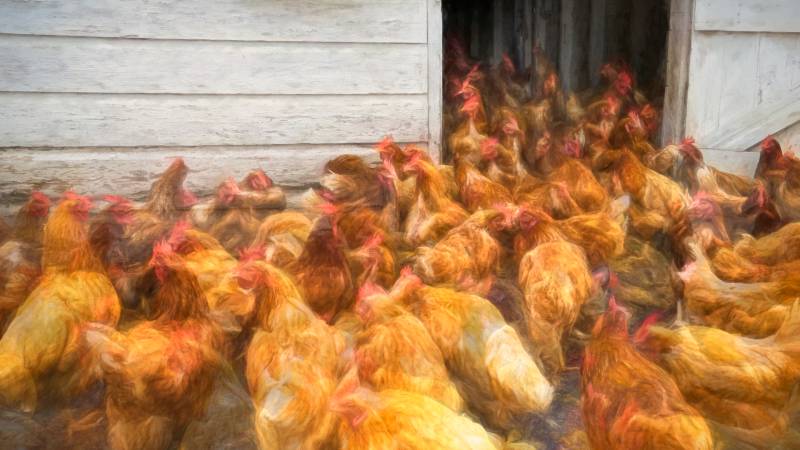
Chickens in trash dead and alive.
Unwanted chickens are “euthanized” routinely by the poultry & egg industries.
Photo by Mercy For Animals

HSI closes 16th dog meat farm in Korea; rescues 70 dogs bound for slaughter

 May 06, 2020

This week, Humane Society International staff is on the ground in South Korea, closing down the 16th dog meat farm in our campaign there and rescuing 70 dogs destined for a grim future on the butcher’s block.

Among the dogs we found on site are poodles, beagles, huskies, golden retrievers, Pomeranians, Chihuahuas, tosas, jindos and Boston terriers. When our staff responders came across them, the animals were languishing in rows of dilapidated cages, surrounded by animal waste, junk and garbage. But the minute they saw their rescuers, they erupted into a barking chorus, reports Nara Kim, HSI’s consultant in South Korea.

“Some of the dogs were desperately jumping for me to notice them and offer some affection, while others hid at the back of their cages in fear,” Nara said. Among the dogs was one we named Pogo, a Boston terrier tied to a chain who was so desperate for attention that he leapt forward constantly although the chain he was tied to whipped him back each time. When a staff member approached him, he was overcome with joy—he particularly loved the tug toy we fashioned for him using a leash.

Pogo’s condition was heartbreaking: his eyes didn’t focus well and they bulged noticeably, perhaps from all of the stress and his desperate attempts to escape the very short chain. It is especially gratifying for our staff to get him off the farm and send him on to his new life.

The owner of this dog meat farm told us he has been breeding the dogs for nearly 40 years, but believes there is now no future in it. He jumped at the chance offered by HSI to leave dog farming behind and begin a new life growing cabbages and other vegetables instead.

With fewer South Koreans eating dog meat than ever before, and with more people seeing dogs as companions rather than food, the demand for dog meat has been dropping in Korea. In recent years, there has also been a series of new regulations and court rulings cracking down on the industry.

The farmer told our staff that although he entered the business believing he’d make good money, “it hasn’t really worked out that way. I earn nothing from this dog farm, and pressure from the government is increasing and it’s not a good business at all.”

This time, with the rescue happening in the midst of the coronavirus pandemic, we have faced some delays, but our staff on the ground in Korea is working hard to make sure the dogs don’t have to suffer for another day. The dogs will be moved to a boarding facility, where they will receive full veterinary check-ups and be given everything they need to be comfortable for the first time in their lives. The dogs will be cared for in South Korea until the pandemic calms globally and they can be flown to our temporary shelter in Canada and shelter partners in the United States to seek adoptive homes.

South Korea, where an estimated two million dogs are bred and raised on thousands of dog meat farms each year, has been a big focus of HSI’s ongoing work to end the dog meat trade around the globe, and we have made significant progress in the nation. During the five years of our campaign in South Korea, we have rescued more than 2,000 dogs from such farms and transported them overseas for rehoming.

In November 2018, HSI assisted Seongnam City Council in shutting down the country’s largest dog slaughterhouse there. Two of the nation’s largest dog meat markets have also closed in recent years and in October 2019, the mayor of Seoul declared his city “dog slaughter free.”

In other nations where the trade exists, we have also seen remarkable progress in recent years. The Chinese government recently declared dogs are considered companions and not livestock and at least two cities in China have included bans on dog and cat meat in wider bans on the wildlife trade in the wake of the coronavirus pandemic.

Dog meat consumption has also been banned or severely restricted in Hong Kong, Taiwan, Thailand, Singapore and the Philippines. In 2018 both Indonesia and Vietnam’s capital city Hanoi pledged an end to dog and cat meat consumption.

Given the scale of the global dog meat trade and the number of animals caught up in it, it will take some time before we succeed in wiping it off the face of the earth. We are working on it, and we will never give up, but for today, we celebrate the fact that for 70 dogs the future looks bright and filled with hope.

The post HSI closes 16th dog meat farm in Korea; rescues 70 dogs bound for slaughter appeared first on A Humane World.

Related Stories

From Loss Of Smell To ‘COVID Toes’: What Experts Are Learning About Symptoms

Exposing the Big Game's avatarThe Extinction Chronicles

Fever, cough and shortness of breath were early on identified as symptoms of COVID-19, but additional symptoms are emerging.

megamix/Getty Images

When the coronavirus pandemic first emerged, public health officials told the world to watch out for its telltale symptoms: fever, dry cough and shortness of breath. But as the virus has spread across the globe, researchers have developed a more nuanced picture of how symptoms of infection can manifest themselves, especially in milder cases.

We’re getting a “better understanding of how these symptoms express in the general population and not necessarily in hospitalized patients,” which is whom most of the earlier studies from China looked at. “So it’s a bit of a bigger picture,” says Charitini Stavropoulou, an associate professor in health services research at City, University of London in the U.K., who led an analysis of known symptoms in milder cases as…

View original post 1,746 more words

Trump’s Anthem Has Always Been “Live and Let Die.” Now We See the Consequences.

Exposing the Big Game's avatarThe Extinction Chronicles

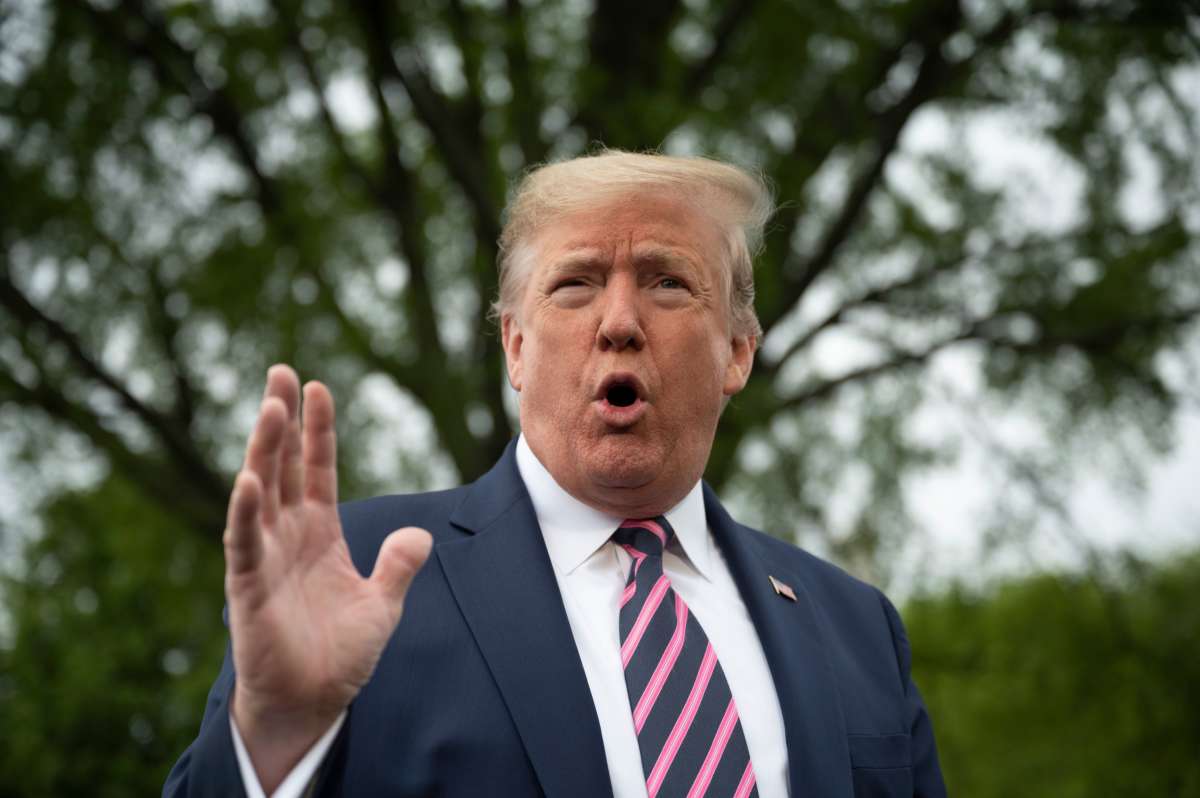
Aseamless vision of this country’s ever-flowering dystopia unspooled itself in Arizona yesterday. Donald Trump, in furtherance of his quest to reopen the U.S. economy in the middle of the beginning of a lethal pandemic, visited a Honeywell International face mask factory in Phoenix… and refused to wear a mask, despite the big sign at the door telling visitors to WEAR A MASK.

All the workers wore them. The press and Secret Service agents wore them. Trump, senior White House staff and the Honeywell executives present did not. As Trump toured the facility maskless, the factory sound system began blaring “Live and Let Die,” the Guns N’ Roses cover of the old Paul McCartney chestnut.

This was not a worker…

View original post 1,376 more words

Rashes, headaches, tingling: the less common coronavirus symptoms that patients have

Exposing the Big Game's avatarThe Extinction Chronicles

Studies have examined some of the more unusual signs of Covid-19

A microscope image shows Covid-19 virus particles emerging from the surface of cells cultured in the lab.
 A microscope image shows Covid-19 virus particles emerging from the surface of cells cultured in the lab. Photograph: NIAID-RML/Reuters

The World Health Organization lists the most common symptoms of Covid-19 as fever, tiredness and a dry cough. Others include a runny nose, sore throat, nasal congestion, pain, diarrhoea and the loss of sense of taste and/or smell. But there are also other more unusual symptoms that patients have presented.

‘Covid toe’

Patients in several countries have reported rashes on their toes, resembling chilblains, in many cases unaccompanied by any of the usual symptoms of the virus. The condition has been dubbed “Covid toe”. The rashes can take the form of red or purple lesions and, despite the name, can be found on the side or sole…

View original post 475 more words

CHINA GETS NEW LINE OF PLANT-BASED MEATS AFTER MEATLESS NUGGETS’ HUGE SUCCESS

China Gets New Line of Plant-Based Meats After Meatless Nuggets’ Huge Success

U.S.-based food corporation Cargill is introducing a line of plant-based products to China after KFC’s highly successful plant-based nugget trial in several cities throughout the country.

In late April, three of Yum China Holdings’ KFC locations in Shenzhen, Guangzhou, and Shanghai carried plant-based nuggets mimicking the texture and taste of meat. They’re made from soy, wheat, peas, and locally-sourced water chestnuts. This trial came after a soft launch of Beyond Fried Chicken — KFC’s vegan fried chicken line in the United States — earlier this year.

The faux nuggets quickly sold out, showing that many people approve of plant-based food.

Following this success, Cargill decided to make more plant-based foods available in China. Beginning at the end of June, the company will offer products to retailers via its PlantEver line and will also cater to the food service sector.

Plant-based protein producers claim that many consumers are rethinking their food choices due to the coronavirus pandemic. As a result, the demand for plant-based products is surging even more than before.

“The launch is just the beginning,” managing director of Cargill Protein China Jackson Chan told Reuters, “and we look forward to continuing to innovate.”

Other companies are seeing success in China with their plant-based products, as well. Starbucks recently introduced a vegan lunch menu featuring Beyond Meat’s products at its Chinese locations.