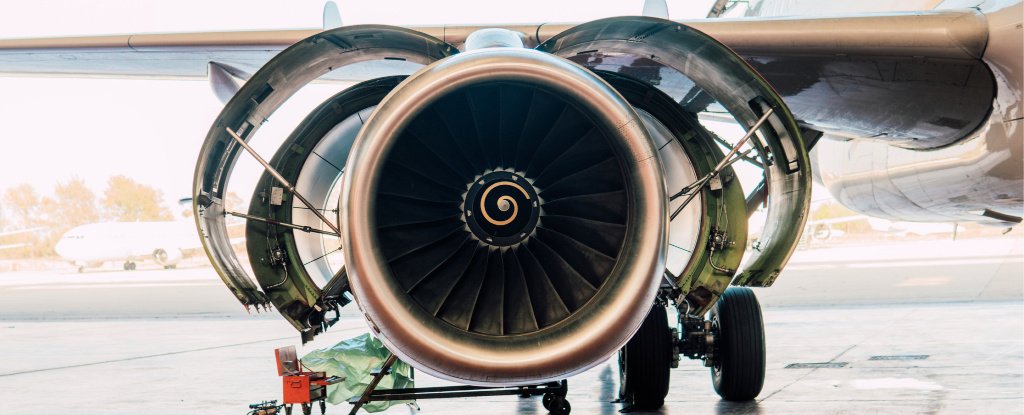
A prototype jet engine can propel itself without using any fossil fuels, potentially paving the way for carbon-neutral air travel.
The device compresses air and ionizes it with microwaves, generating plasma that thrusts it forward, according to research published Tuesday in the journal AIP Advances. That means planes may someday fly using just electricity and the air around them as fuel.
There’s a long way to go between a proof-of-concept prototype and installing an engine in a real plane. But the prototype was able to launch a one-kilogram (2.2-pound) steel ball 24 millimeters (almost one inch) into the air. That’s the same thrust, proportional to scale, as a conventional jet engine.
More than 700 employees at a Tyson Foods meat factory in Perry, Iowa, have tested positive for coronavirus as the nation braces for a possible meat shortage due to the pandemic.
Tyson Foods said in a statement that the pandemic has forced the company to slow production and close plants in Dakota City, Nebraska, and Pasco, Washington, and the Perry plant as well.
“We have and expect to continue to face slowdowns and temporary idling of production facilities from team member shortages or choices we make to ensure operational safety,” the statement said.
John Tyson, board chairman of Tyson Foods, warned that the food-supply chain is breaking in a full-page advertisement published last month in The New York Times, The Washington Post and the Arkansas Democrat-Gazette.
Tyson Foods is not the only meat company facing worker infections. A Smithfield Foods plant in Sioux Falls, South Dakota, closed in April after two workers died and 783 others tested positive for the virus.
The pandemic’s impact on meat plant workers has caused serious concerns about the supply chain in the U.S. and fears that the country could experience a meat shortage.
“We have had some difficulty where they are having a liability where it’s really unfair to them,” Trump said at a small-business event at the White House last week. “I fully understand that it’s not their fault.”
Joe Biden, the apparent Democratic presidential nominee, said Monday that he feared for those meatpacking workers. He said that such plants, along with nursing homes, have become “the most dangerous places there are right now.”
“They designate them as essential workers and then treat them as disposable,” Biden said of the meatpackers.
Raleigh, North Carolina (CNN Business)Tyson Foods says its largest US pork plant will reopen Thursdayafter a major coronavirus outbreak forced the company to shut down the facility two weeks ago.
The Black Hawk County health department linked the Waterloo Tyson plant to 182 of the county’s Covid-19 cases on April 21. A week prior, Waterloo Mayor Quentin Hart called for the Tyson facility to be temporarily closed.
Tuesday night, Tyson released a statement announcing the plant’s scheduled reopening. Since closing the plant on April 22, the company said it has re-sanitized the entire facility and installed “enhanced safety precautions and protective social distancing measures” that meet or exceed standards set by the Center for Disease Control and Prevention and the World Health Organization.
Going forward, Tyson said wellness health screenings will be performed on all plant employees when they arrive for work each day. Those screenings will include temperature checks and examinationsfor other Covid-19 symptoms such as coughing or shortness of breath, the company said.
All employees are now required to wear “facial coverings,” which the company said it is providing. Employees working in areas where workstation barriers could not be installed will be required to use face shields. Social distance monitors will be stationed throughout the plant to ensure that employees comply with safety guidelines.
Tyson (TSN) said all the plant’s returning staff members have been tested for Covid-19 and plant employees who have not been tested will not be allowed to return to work. The company said employees who have tested positive for the coronavirus will remain on sick leave until health officials say its safe for them to return to work.
Tyson also said it has doubled its bonus pay for frontline workers and plant employees who can’t come to work because ofillness or childcare issues related to Covid-19. They will continue to qualify for bonus pay as well.
“Our top priority is the health and safety of our team members, their loved ones and our communities,” Tyson Waterloo plant manager Tom Hart said in a written statement.
Mayor Hart and the Black Hawk County health department did not immediately respond to requests for comment on the plant’s reopening. Tyson said the mayor recently toured its revamped Waterloo plant along with Black Hawk county sheriff Tony Thompson, local United Food and Commercial Workers union president Bob Waters and other community business leaders.
“I am pleased that Tyson is working on protecting its employees and partnering with the community leaders for the good of all,” Mayor Hart said in a written statement provided by Tyson.
UFCW union president Bob Waters also gave the plant’s new safety measures his stamp of approval.
“Tyson has gone above and beyond to keep their employees safe and I support the reopening of the facility,” Waters said.
HARRISBURG — The number of hunting-related shooting fatalities in Pennsylvania went up in the past year, according to the state game commission.
There were 26 hunting-related shooting injuries in Pennsylvania in 2019, four of which were fatal. The number of fatalities is up from the previous year when only one of the 27 hunting-related shootings were fatal.
A little over half of the injuries in 2019 were inflicted by others, according to figures from the commission. The primary cause was a person being in the line of fire and the second most common cause was the unintended discharge of a firearm.
State officials said 2019 was the first year since the commission began tracking in 1915 when there…
Prince Harry has reportedly sold his prized handmade rifles worth more than $60,000 after he quit hunting out of respect for his actress wife Meghan Markle.
Harry, 35, has unloaded the two weapons — from a British gunmaker Purdey — by selling them to another hunter in a private deal, according to The Sun.
The former royal, who learned to hunt as a child, has not joined his colleagues at recent game shooting events and is believed to have quit hunting altogether due to Markle’s opposition to the practice.
Harry sold the guns five months ago, a friend of the anonymous buyer told the paper.
“He bought them because he wanted them, not because they belonged to Harry,” the friend said. “But he was quite…
Covid-19 is a zoonotic virus, meaning it spread to humans from animals. Scientists aren’t sure which animal spread it to us, though they think snakes or bats might have via pangolins. But it’s not just exotic, wild animals that spread diseases. New research shows the next global public health crisis could come to us through industrial animal agriculture.
The study, published in Proceedings of the National Academy of Sciences on Monday, shows that contemporary farming methods—including the overuse of antibiotics, high numbers of animals crammed into small spaces, and a lack of genetic diversity—make it more likely that pathogens will spread to people from farm animals and create an epidemic for humans.
“Our work shows that environmental change and increased contact with farm animals has caused bacterial infections to cross over to humans, too,” Sam Sheppard, a professor at the Milner Center for Evolution at the University of Bath and author of the study, said in a statement.
In particular, the scientists analyzed the evolution of the bacteria Campylobacter jejuni, which is commonly found in farm animals’ crap and according to the World Health Organization is the leading bacterial cause of human gastroenteritis, aka the stomach flu. The researchers studied the genetic evolution of the bacteria and found that strains specific to cattle emerged in the 20th century—around the same time that humans started farming cattle in huge numbers.
“Campylobacter are excreted by cattle into the environment every day,” the authors wrote. “The sheer magnitude of shedding is clearly important in terms of direct environmental contamination and potential spillover into the human food chain.”
The scientists argue that the changes in cattle diet, anatomy, and physiology which resulted from industrial agriculture enabled the bacteria to mutate and become able to infect humans. That includes common practices today like feeding cows vitamin supplements to keep them healthy and make them bulkier.
Chickens, pigs, and wild animals can all spread the Campylobacter jejuni, but the biggest issue is cattle. Researchers found the bacteria in their feces a fifth of the time (gross, I know, sorry).
“There are an estimated 1.5 billion cattle on Earth, each producing around 30 kilograms (66 pounds) of manure each day,” said Sheppard. “If roughly 20 percent of these are carrying Campylobacter, that amounts to a huge potential public health risk.”
If the bug does get transmitted to people, it’s hard to treat. Since so many antibiotics are used in animal agriculture, the bacteria is resistant to those medicines. The researchers hope the world will examine its relationship with agriculture and make changes to prevent the spread of the bug.
“I think this is a wake-up call to be more responsible about farming methods, so we can reduce the risk of outbreaks of problematic pathogens in the future,” Sheppard said.
The changes this research demands are clear: We should stop rearing so many damn animals for meat. Since animal agriculture is responsible for 14.5 percent of all greenhouse gas pollution globally, we should probably be doing that anyway.
CNBC’s Jim Cramer said Wednesday that investors cannot ignore the rising popularity of plant-based meat products.
“This movement is happening. You’ve got to get on the bus or … get left behind,” Cramer said on “Squawk on the Street.”
Cramer acknowledged there are not huge sales just yet for a company like Beyond Meat, which after-the-bell Tuesday reported quarterly revenue of $97.1 million, a 141% increase from a year ago.
“It starts like this. It doesn’t begin with a billion dollars. This is not blockbuster drug, but watch this trend,” Cramer said. “I think it’s very exciting for investors.”
Shares of Beyond Meat were up about 17% on Wednesday morning to around $118 each.
Beyond Meat, at a $7.2 billion market value, has been at times one of Wall Street’s hottest stocks but also one of the most volatile since its May 2019 initial public offering. Priced at $25 per share, the stock saw a meteoric rise to nearly $240 by last July. But come December, it had lost about 70% of its value. In the early part of this year, the stock rebounded before falling off a cliff, bottoming at about $48 in mid-March. Since then, the stock has more than doubled.
On Tuesday evening, in addition to strong revenue, Beyond Meat posted quarterly net income of $1.8 million, up from a net loss of more than $6 million last year. It did warn of a hit to its restaurant business due to the coronavirus pandemic.
However, the “Mad Money” host said he believes the plant-based meat industry may ultimately be beneficiaries of the Covid-19 crisis.
Meatpacking plants across the U.S. have seen significant virus outbreaks, forcing some to slow down production or temporarily close as workers became sick. The developments ignited concerns about the country’s food supply, although President Donald Trump signed an executive order last week requiring the plants to remain open during the coronavirus pandemic.
“I think there are people who are getting appalled by what’s happened at the meat packers. … I think these stories make you become not necessarily vegetarian but to think twice about beef,” Cramer said. “If you think twice about beef and then you try to Beyond, you kind of realize it’s very, very similar.”
While plant-based meat options have typically been more expensive than traditional meat, Cramer said the rising costs of beef, in particular, due to the coronavirus represents an opportunity for alternative producers.
One of Beyond Meat’s chief rivals in the plant-based meat category, Impossible Foods, is not publicly traded. But it is widely available as well. Grocery store chain Kroger also has launched private-label beef options.
Sharmel L. Teague, 45, of Flint, was arraigned Tuesday, May 5, 2020 in 67th Distirct Court on first-degree murder and felony firearm charges. (Jake May/The Flint Journal via AP)
FLINT, Mich. (AP) — A Michigan woman was formally charged Tuesday in the fatal shooting of a store security guard who refused to allow her daughter inside because she wasn’t wearing a face mask to protect against transmission of the coronavirus.
Sharmel Teague, 45, was arraigned via video Tuesday in district court, according to the Genesee County prosecutor’s office.
In this Sunday, May 3, 2020, photo, Maalik Mitchell, 20 of Flint, copes with the death of his father Calvin Munerlyn, kneeling next to a display of candles that spell out Munerlyn’s nickname “Duper” during a vigil in Flint, Mich. (Jake May/The Flint Journal-MLive.com via AP)
Dr. Scott Gottlieb on Wednesday urged caution about a new study that suggests the coronavirus has mutated, with the new, dominant strain being even more contagious.
“It doesn’t prove that this new strain is in fact more infectious,” Gottlieb said on CNBC’s “Squawk Box.”
“Just because it mutates doesn’t mean it’s changing in ways that’s going to make it more virulent or more infectious,” he added.
WATCH NOW
VIDEO07:34
Gottlieb: Study on Covid-19 mutation doesn’t prove new strain is more infectious
This map shows the amount of ice gained or lost by Antarctica between 2003 and 2019. Dark reds and purples show large average rates of ice loss near the coasts, while blues show smaller rates of ice gain in the interior.
Two new satellite images remind us that Earth’s ice sheets are losing so much mass it’s becoming obvious from space.
In the vivid new maps published as part of an April 30 study in the journalScience, researchers illustrated 16 years of ice loss inGreenland andAntarctica as seen by a laser-emitting NASA satellite. The images paint a picture of rapid melt around the coasts of both regions (shown in red and purple in the maps)…












 Exposing the Big Game