Go vegan to stop infectious diseases or risk more pandemics


Iowa Gov. Kim Reynolds discusses food supply concerns as some meat plants remain closed due to coronavirus.
Get all the latest news on coronavirus and more delivered daily to your inbox. Sign up here.
Some Americans are taking on hunting for the first time amid meat shortages during the coronavirus pandemic, according to a report on Sunday.
New Mexico resident David Elliot first considered hunting elk back in January to help feed friends and family when the U.S. reported its initial coronavirus case — despite not owning a rifle or ever hunting large animals before. He received a permit to shoot a female elk and plans to attend a hunt in November.
“I want to make sure it’s a clean, humane shot, as much as possible, and get a bunch of…
View original post 311 more words


New York (CNN Business)Tyson warned Monday that it expects more meat plant closures this year.

Michael J. Piontek, 70, was charged April 24 as a party to the crime of illegally shining a deer. The charge carries a maximum sentence of a fine of between $1,000 and $2,000 and/or up to six months in jail.
If convicted, Piontek’s hunting license would be revoked for three years.
On Nov. 26, a Department of Natural Resources warden was asked to watch Piontek’s cabin due to an ongoing investigation regarding the alleged hunting of deer during closed season with the aid of artificial light, something prohibited by hunting law, according to an Ashland County criminal complaint.
While the warden was stationed outside Piontek’s cabin, he saw what he believed was an…
View original post 459 more words
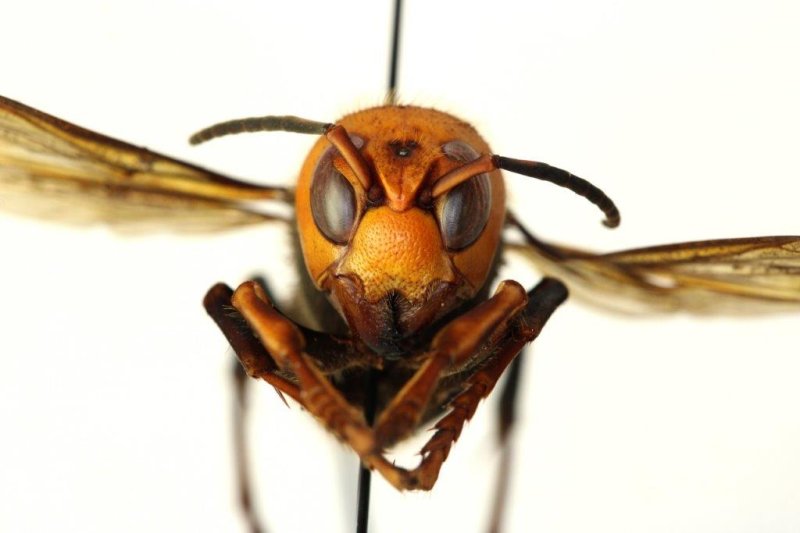
If you thought 2020 couldn’t get any worse, Asian giant hornets have appeared in the United States for the first time.
Asian giant hornets, which some researchers refer to as “murder hornets” according to the New York Times, had never been seen in the U.S. until December, when the Washington State Department of Agriculture (WSDA) verified four sightings of the hornets near Blaine and Bellingham, Wash. Canada also reported sightings of the insects in British Columbia the fall of 2019, per the WSDA.
Asian giant hornets are the largest species of hornet in the world. They attack and destroy honeybee hives, entering a “slaughter phase” where they literally decapitate bees and take the hive as their own, using the thoraxes from the dead bees to feed their young, according to the WSDA. Just a few hornets can decimate a honey bee hive in a number of hours.
If the hornets continue spreading through the state, officials worry they could have a devastating affect on Washington state’s — and the U.S.’s — bee population. The many crops that rely on bees for pollination would then be seriously affected. Officials don’t know how the insects got into the U.S., but they’re bracing for the hornets to start emerging soon, as they become active in April, according to a press release from Washington State University (WSU). The hornets are at their most destructive in late summer and early fall, per the release.
“At this time, Washington State Department of Agricultural has implemented an aggressive outreach and trapping campaign,” Rian Wojahn, the eradication coordinator for the WSDA, told TIME in an email. “Local beekeepers and other agencies are also helping get information out and using our trapping protocols to deploy traps.”
Wojahn said that while it’s unknown how much damage the hornets could do to the U.S. honeybee industry, a similarly invasive hornet in Europe ended up reducing beehives by 30 percent and honey yield by up to two-thirds. The WSDA will implement “an aggressive eradication campaign this summer,” he continued.
Asian giant hornets are usually 1.5 to two inches long, have black and yellow stripes on their abdomen, and have a large orange or yellow head, according to the WSDA. They don’t usually attack people or pets, but might if they are threatened, the WSDA continued. Their stingers are longer than a honey bee’s, more toxic and they can sting multiple times. Multiple stings can also kill a human even if they’re not allergic, according to the WSU release. The New York Times reports reports that in Japan, the hornets have been known to kill up to 50 people a year.
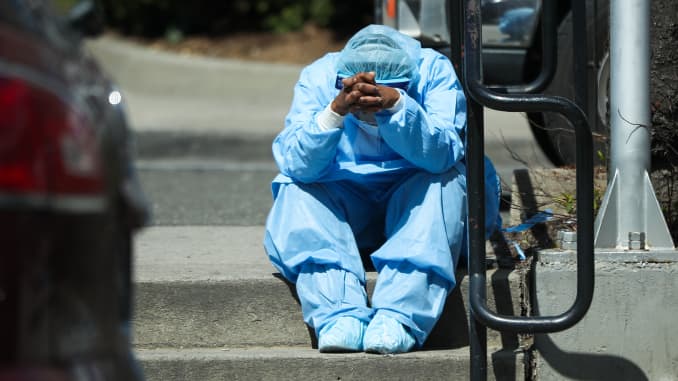
The United States just had its deadliest day on record due to the coronavirus as states across the country begin to ease restrictions meant to curb the spread of the virus, according to data published by the World Health Organization.
The U.S. saw 2,909 people die of Covid-19 in…
View original post 801 more words

Headlines at the beginning of the COVID-19 pandemic pointed to “wet markets” in China as the source of the outbreak. But while attention turned abroad, an equally sinister disease incubator was here at home: factory farms.
Factory farms create conditions similar to wet markets
The conditions in China’s wholesale wet markets are very similar to those in US factory farms, which, as the name implies, are essentially animal factories. These facilities cram thousands of animals into tightly packed spaces, causing the animals elevated stress, which lowers their immune levels. In the warehouse-like structures animals receive little, if any, of the heathy benefits of sun light and fresh air.
We raise animals for food on a modern day assembly line, in conditions that make them prime targets for the incubation and spread of disease. And when one animal in a factory farm gets sick, the pathogen can rapidly spread — killing hundreds or thousands of animals and potentially jumping to humans. That process is called “zoonotic,” and it’s widely cited as the mechanism behind COVID-19.
Factory farms also have launched viral pandemics
This isn’t a “what if” scenario. It’s happened before — several pandemics have been incubated in factory farms.
In the late 1990s, the H1N1 flu virus originated in factory farms in North Carolina. A mutated form of this North Carolina virus later popped up in a factory farm in Mexico where it spread around the world, leading to the 2009 H1N1 flu pandemic. During its first year of circulation, the 2009 H1N1 flu killed between 151,700 – 575,400 people worldwide.
In 2006, an outbreak of bird flu turned into a full-scale pandemic after originating in factory farms in China. In early April, as the coronavirus was raging, a South Carolina poultry factory farm operation was forced to cull tens of thousands of birds after discovering an outbreak of bird flu. While thankfully contained to themeat packing single farm, this outbreak could have had equally dire consequences.
Those are just two of many examples. The fact that the previous outbreaks did not force us into home isolation was only a stroke of dumb luck.
The factory farm industry is acutely aware that it is playing with fire. Antibiotics, meant for the treatment of bacterial infections, are routinely used on factory farms to prevent the spread of disease. In fact, 70 percent of the total volume of medically important antibiotics in the US are sold for animal agriculture.
The overuse of antibiotics has led to antibiotic resistance. Infections that were once curable develop a resistance to the drugs used to treat them. The rise of drug-resistant superbugs, such as MRSA, puts our collective public health at risk. Resistant infections could have dire consequences for future pandemics, especially those that have bacterial complications like pneumonia.
Our public health and ability to treat diseases should not be sold for corporate gain.
COVID-19 shows the need for family farms, but factory farms have pushed them out of business
The current coronavirus pandemic is demonstrating how fragile our highly consolidated food system is and how ill-equipped it is to handle emergency situations. Every day more and more meat-packing plants become ground zero for new outbreaks of coronavirus, and thousands of people are putting their lives on the line, literally, to keep these facilities functioning.
Even as long lines are forming at food banks, produce is being plowed under and meat is piling up in cold storage. Corporate agriculture has created this broken system, which constantly puts us at risk of another pandemic. But corporate agriculture has shown that it is wholly unable to meet our needs during a pandemic.
Runoff from this Maryland livestock yard may enter a nearby stream and degrade nearby water quality.
Where are our public institutions in this time of crisis? Our food system is being held hostage by a few corporations that control everything — from piglets to politicians. With this power, the factory farm industry has mercilessly lobbied against measures that would keep us and our food safe.
Demanding faster line speeds at meatpacking plants and unnecessarily increasing risks for slaughterhouse workers, opposing restrictions on antibiotic use, and even refusing to provide workers with necessary protective equipment — these are just a few examples of how Big Ag puts profits before the lives of consumers.
The Farm System Reform Act would greatly reduce the risk of zoonotic pandemics
This crisis has illustrated just how broken our food system truly is. People are angry that wet markets are already reopening, but we cannot ignore that the way we raise animals in the U.S. places us at risk for future pandemics. As the COVID-19 outbreak forces us to significantly alter our daily lives and to lose our financial security, will we finally muster the political will to overhaul our food system to decrease the likelihood of the next pandemic? Our lives depend on it.
Ask your legislators to support the Farm System Reform Act today.

It “would be the largest decrease in emissions ever recorded,” the International Energy Agency said Thursday. Spurred by an unprecedented energy shock, carbon emissions would take “a far bigger drop than at any point during the Great Depression or at the end of World War II, when much of Europe lay in ruins,” noted the New York Times.
This is all likely true. We’re headed for some major emission declines. But, critically, the true number global warming cares about — the amount of carbon dioxide saturating the atmosphere — will barely be impacted by an unprecedented drop in carbon emissions this year, a drop the International Energy Agency estimates at nearly eight percent (compared with historic 2019 levels).
That’s because atmospheric CO2 levels are like a massive bank account that’s been accruing more…
View original post 992 more words

As the coronavirus pandemic disrupts supply chains across the country, farmers are being forced to destroy their crops, dump milk and…
View original post 1,402 more words


 Exposing the Big Game