While working in Beijing last year, I regularly bought packs of N95 masks at my local 7-Eleven. Across the city, masks were a common accessory: In packed subway cars and crowded bike lanes, commuters wore them for protection from the smog year-round.
When the coronavirus surfaced in China late in 2019, not only were masks on hand, they were also a familiar tool for fighting a virus: Many people had used them during the SARS outbreak in 2003. Based on this experience as well as government advice, masks quickly became even more widely used, not only in China, but in other East Asian countries.
In contrast, the US, which had little experience with mask-wearing, took a wait-and-see approach. For more than five weeks after community spread was first documented in the US, the Centers for Disease Control and Prevention…
The Coalition to Support Iowa’s Farmers (CSIF) sent an urgent message to pork producers today, warning of animal welfare activists taking videos of hogs being euthanized on farms.
Direct Action Everywhere (DXE) has members on the ground in Iowa, says CSIF, and all farms and processing plants should be on high alert that they may be targeted in an attempt to capture video footage and cause a disruption to normal business activity.
Livestock farmers must be vigilant in monitoring the security of farms at all times, for the safety of people and livestock.
“Most people think they will never be the target, but no one can assume they are safe,” says CSIF executive director Brian Waddingham. “There are many preventive measures you can take to protect your farm and your livestock.” For a complete list of ways to keep your farm out of the crosshairs, click here.
If you find a suspicious vehicle near your farm or discover criminals on your property, do not try to apprehend them, says Waddingham. Contact local law enforcement.
This is an extreme animal rights group that is taking advantage of a heart-wrenching, crisis situation some livestock farmers are faced with to advance their own agenda – which is to eliminate animal agriculture, he says.
For additional suggestions on preventive measures you can take to reduce your risk, as well as suggestions of what to do if you are the victim of a criminal act, visit our website.
OKANOGAN — A lawsuit filed Friday in Douglas County against Gov. Jay Inslee’s stay-at-home order was continued to 10:30 a.m. Friday, May 29, in Okanogan County Superior Court this morning.
The case was moved to Okanogan County because Douglas County commissioners are among the plaintiffs in the suit.
Assistant Attorney General Zachary Jones contended Inslee’s stay-at-home order was issued in Thurston County and therefore should be heard in a Thurston County courtroom.
Jones claimed Inslee’s “action arose” in Thurston County.
Joel Ard, attorney for the plaintiffs, said the case should be heard locally because the actions of Inslee have had a direct impact on residents in Douglas County.
“Some part of the action arose in Douglas County, because some part of the harm is felt in…
Assistant Research Professor of Wildlife Ecology and Conservation, Pennsylvania State University
Disclosure statement
Julian Avery does not work for, consult, own shares in or receive funding from any company or organization that would benefit from this article, and has disclosed no relevant affiliations beyond their academic appointment.
Republish our articles for free, online or in print, under a Creative Commons license.
Millions of Americans enjoy feeding and watching backyard birds. Many people make a point of putting food out in winter, when birds needs extra energy, and spring, when many species build nests and raise young.
As a wildlife ecologist and a birder, I know it’s important to understand how humans influence bird populations, whether feeding poses risks to wild birds, and how to engage with birds in sustainable ways.
There is still much to learn about the risks and benefits of feeding birds, particularly through large integrated national citizen science networks like Project FeederWatch. But we now have enough information to promote healthy interactions that can inspire future generations to care about conservation.
Birds have been taking advantage of human civilization for thousands of years, congregating where grains and waste are abundant. This means that people have been influencing the abundance and distribution of species for a very long time.
Studies show that providing food has myriad effects on birds’ decisions, behaviors and reproduction. One significant finding is that winter bird feeding increases individual survival rates, can encourage birds to lay eggs earlier in the year, and can also improve nestling survival.
All of these factors alter species’ future reproductive performance and can increase total bird abundance in later years. It’s not always clear how increased abundance of feeder birds impacts other species through competition, but rarer and smaller species can be excluded.
This interactive diagram, based on citizen science data, shows how North America’s top 13 feeder species fare when they compete at feeders. Credit: Cornell Lab of Ornithology
Supplemental food has also led to reduced reproductive success in a few species. This may happen because it improves survival odds for less healthy birds that otherwise would be unlikely to survive and reproduce, or because it leads birds to eat fewer types of natural foods, making their diets less nourishing.
Changing bird behavior
Research also shows that birds are extremely promiscuous. One review examined 342 species and found that in approximately 75%, birds had one or more side partners in addition to their nest mate.
It’s not always clear why birds cheat, but several studies have found that supplemental feeding can reduce the amount of infidelity in certain species, including house sparrows. This hints that feeding birds might alter their behavior and have an effect on genetic variation in urban populations.
For birds that provide pollinating services, like hummingbirds and lorikeets, there is some evidence that providing them with sugar water – which mimics the nectar they collect from plants – can reduce their visits to native plants. This means they will transfer less pollen. Since much bird feeding happens in densely populated urban areas, it’s unclear how much impact this might have.
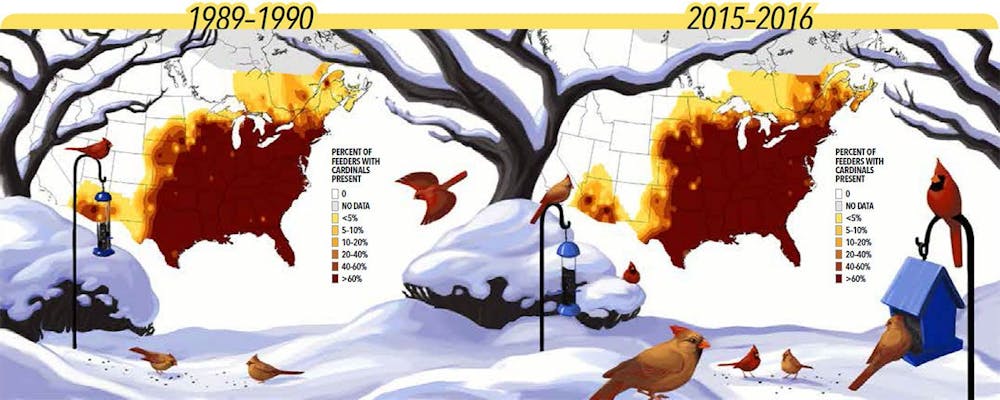
Data from Project FeederWatch show Northern Cardinal populations expanding into the upper Midwest, northern New England, the Southwest and southeastern Canada.Virginia Greene/Cornell Lab of Ornithology, CC BY-ND
In one incredible instance, garden feeders seem to have played a role in establishing a new wintering population of migratory blackcaps in the United Kingdom. This group is now genetically distinct from the rest of the population, which migrates further south to Mediterranean wintering grounds.
Don’t feed the predators
Scientists still know little about how bird feeding affects transmission of pathogens and parasites among birds. It is not uncommon for birds at feeders to carry more pathogens than populations away from feeders. Some well-documented outbreaks in the U.S. and U.K. have shown that feeding birds can increase problems associated with disease – evidence that was collected through feeder watch citizen science projects.
Because we still have a poor understanding of pathogen transmission and prevalence in urban areas, it is extremely important to follow hygiene guidelines for feeding and be alert for new recommendations.
Feeding can also attract predators. Domestic cats kill an estimated 1.3 to 4 billion birds in the U.S. every year. Feeders should not be placed in settings where cats are present, and pet cats should be kept indoors.
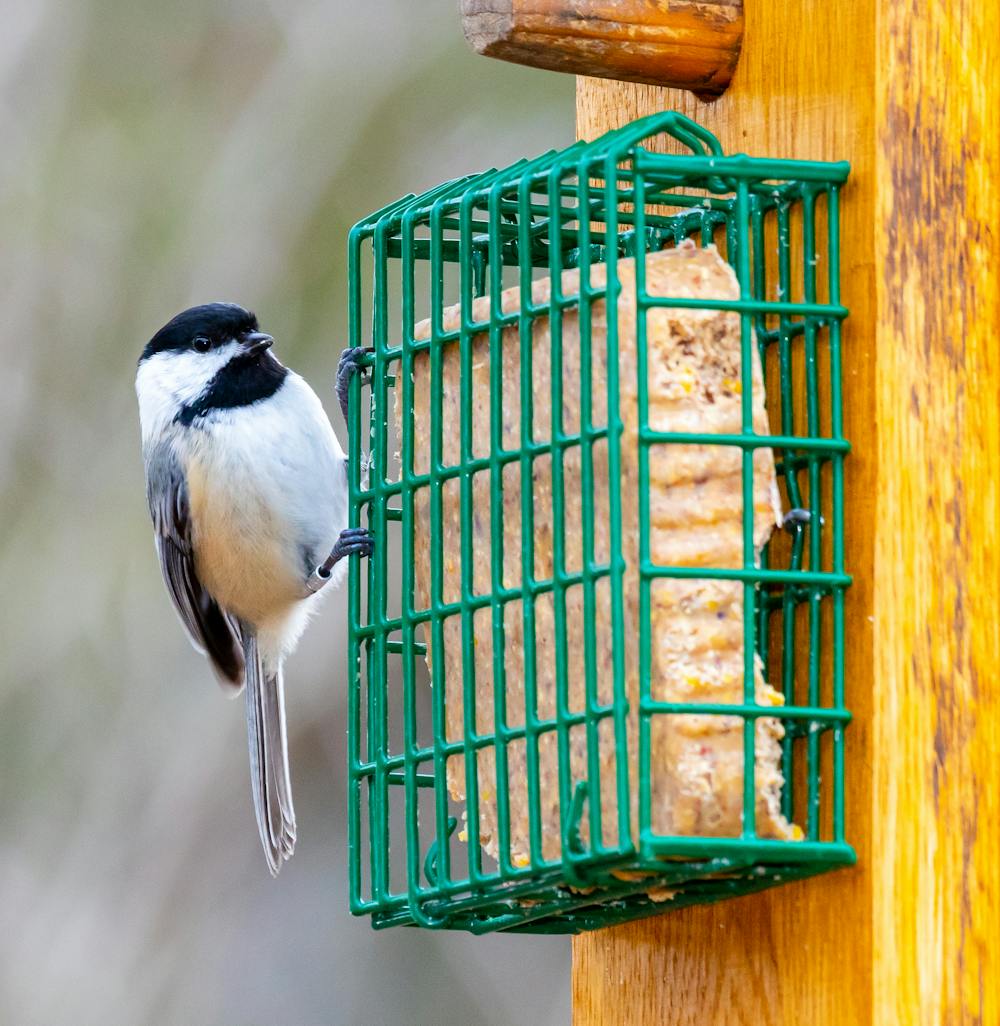
The band on this black-capped chickadee’s right leg assigns the bird a unique number. Scientists band birds to study their ranges, migration, life spans and other questions. The feeder holds suet, a high-energy food made from animal fat.Julian Avery, CC BY-ND
Feeders can also support both native and introduced birds that outcompete local species. One study found that feeders attracted high numbers of crows, which prey on other birds’ chicks, with the result that less than 1% of nearby American robin nests fledged young. In New Zealand, bird feeding largely benefits seed-eating introduced species at the expense of native birds.
Clean feeders and diverse diets
The good news is that studies do not show birds becoming dependent on supplemental food. Once started, though, it is important to maintain a steady food supply during harsh weather.
Birds also need access to native plants, which provide them with habitat, food and insect prey that can both supplement diets and support species that don’t eat seeds at feeders. Diverse food resources can counteract some of the negative findings I’ve mentioned related to competition between species and impacts on bird diets.
Good maintenance, placement and cleaning can help minimize the likelihood of promoting pathogens at feeders. Initiatives like Project FeederWatch have recommendations about feeder design and practices to avoid. For example, platform feeders, where birds wade through the food, are associated with higher mortality, possibly through mixing of waste and food.
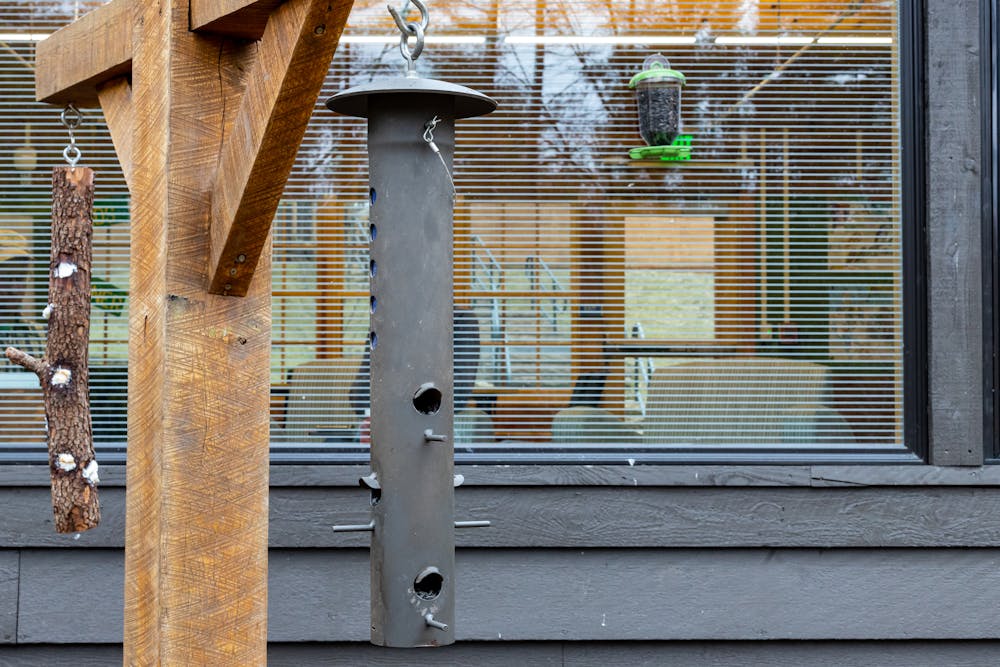
Treatments on this window at Shaver’s Creek Environmental Center prevent birds from thinking they can fly straight through the building and colliding with the glass.Julian Avery, CC BY-ND
It’s also important to manage the area around feeders. Be sure to place feeders in ways that minimize the likelihood that birds will fly into windows. For instance, avoid providing a sight line through a house, which birds may perceive as a corridor, and break up window reflections with decals.
There are lots of great reasons to bring birds into your life. Evidence is growing that interacting with nature is good for our mental health and builds public support for conserving plants and wildlife. In my view, these benefits outweigh many of the potential negatives of bird feeding. And if you get involved in a citizen science project, you can help scientists track the health and behavior of your wild guests.
This new and deadly pathogen is confusing enough for medical and scientific experts to understand. For the public, it’s even more so. At The Conversation, my colleagues and I are dedicated to finding academic experts who can best sort through the confusion and explain developing coronavirus science. Your donation of $5, $50 or $500 will help us distribute factual, responsible analysis, free of charge, to readers everywhere.
One of the coldest regions on Earth has been experiencing a record-breaking heat wave in recent weeks amid growing fears about devastating wildfires and melting permafrost.
Khatanga, a town in Siberia’s Arctic Circle, registered highs of over 80 degrees Fahrenheit this week, according to Accuweather, far above the 59 degrees F historical average, as the whole of western Siberia basked in unseasonable warmth.
While locals flocked to popular spots to sunbathe, experts sounded alarms about the possible implications for the region’s wildfire season this summer, with some blazes already breaking out in recent months.
People on a sandy shore of the Novosibirsk Reservoir on the Ob River in Novosibirsk on May 20.Kirill…
Intensified by climate change, the current 20-year arid period is one of the worst on record, with wide-ranging effects
The Enterprise Bridge passes over a section of Lake Oroville that is nearly dry in 2014 in Oroville, California. The region is in the grip of a 20-year megadrought, research suggests. Photograph: Justin Sullivan/Getty Images
When Ken Pimlott began fighting US wildfires at the age of 17, they seemed to him to be a brutal but manageable natural phenomenon.
Dust bowl conditions of 1930s US now more than twice as likely to reoccur
Read more
“We had periodic [fire] sieges in the 80s, but there were breaks in between,” said Pimlott,the former head of the California department of forestry and fire protection. But no longer. “That doesn’t really happen…
A zookeeper in Australia is in critical condition after being mauled by two lions while cleaning their enclosure on Friday, authorities said.
The 35-year-old woman was bitten in the head and neck in what one paramedic called an “extremely vicious” attack at Shoalhaven Zoo, about 100 miles (162 kilometers) south of Sydney in New South Wales state, 9 News Australia reported.
Paramedics were called to the facility at about 10:30 a.m. local time, police said in a statement. They arrived to find the woman unconscious in the lion enclosure and needed to enter it to retrieve her safely, according to 9 News Australia.
She was then airlifted to a Sydney hospital in “a critical but stable condition,” police said.
Faye Stockmen, a duty operations manager at NSW Ambulance, told 9 News Australia it was “one of the most frightening experiences” of…
Jorge Alcantara-Gonzalez, 34, was connected to the abandoned vehicle owned by Ian Eckles, who disappeared while on a hunting trip.
Manhunt near Cle Elum continues for suspect connected to missing hunter case
Volume 0%
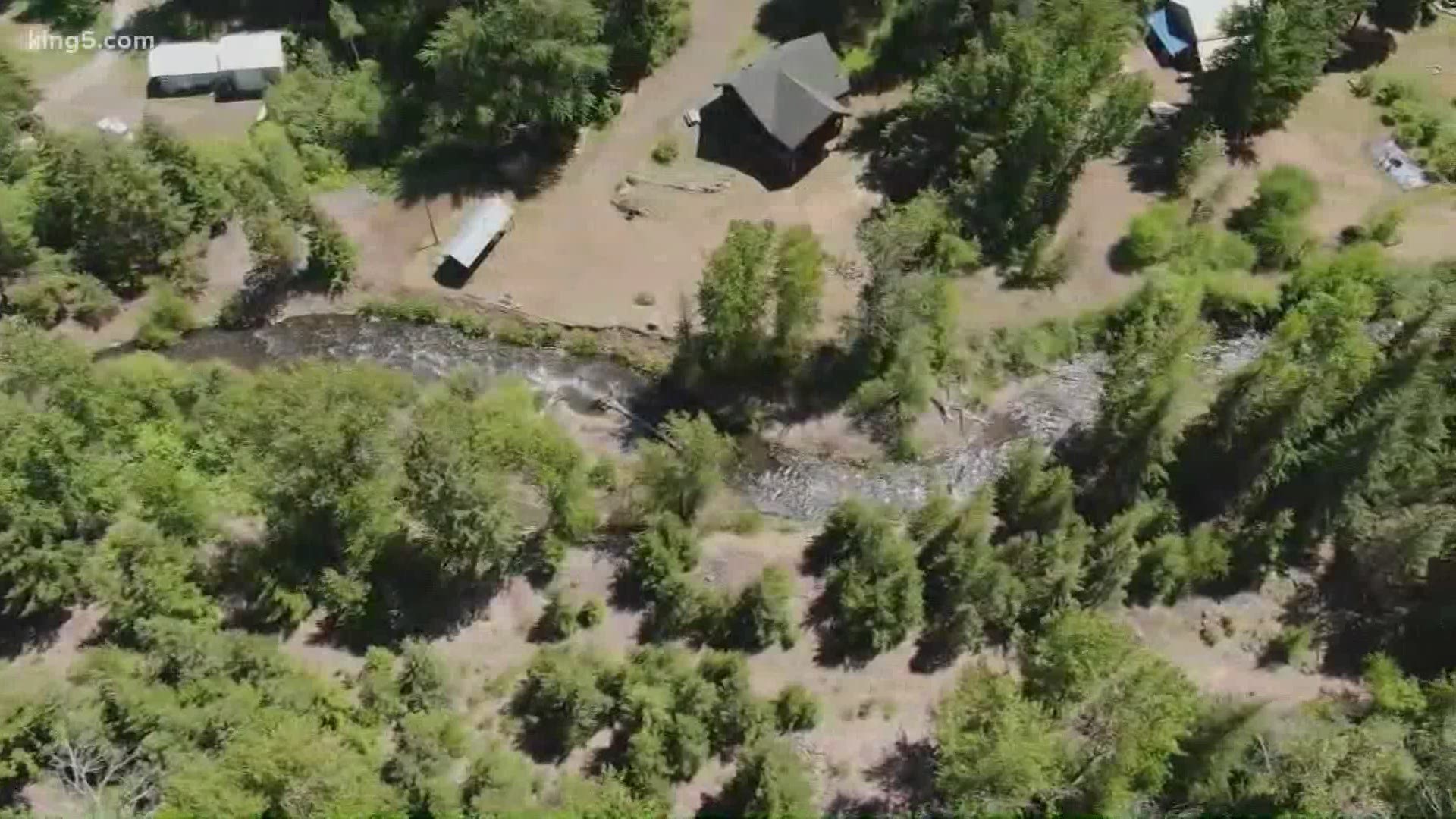
CLE ELUM, Wash. — The hunt intensifies for a fugitive in the woods north of Cle Elum.
The Kittitas County Sheriff office wants you on the lookout Jorge Alcantara-Gonzalez, 34 they believe he may know what happened to Ian Eckles a hunter, from Kent, reported missing more than a week ago.
Alcantara-Gonzalez is a wanted fugitive that law enforcement officers are considering armed and dangerous.
Concern that Ontario, Quebec reopened too soon as COVID-19 cases continue
Eckles was reported missing on May 18. The following Saturday, a volunteer searcher reported seeing someone else driving the missing man’s car.
United States Attorney Joe Kelly announced that Jordan Cook, age 32, of Boerne, Texas, was sentenced today in federal court in Omaha, Nebraska, for violating the Lacey Act. The Lacey Act prohibits the trafficking in interstate commerce “tainted” (i.e., taken in violation of a law or regulation) wildlife, fish, or indigenous plants. Cook admitted to six misdemeanor counts of the illegal taking of wildlife in interstate commerce and was sentenced by United States Magistrate Judge Michael D. Nelson to five years of probation. Cook was ordered to pay a $50,000 fine and $39,150 in restitution.
A joint investigation conducted by the United States Fish and Wildlife Service, Office of Law Enforcement and the Nebraska Game and Parks Commission, Law Enforcement Division determined that between May 2014 and May 2017, Cook was employed by Hidden Hills Outfitters (HHO), a commercial…
New guidelines will allow more cougars to be hunted in several areas of the state. Courtesy photo
Hunters in some areas of Washington state will be able to hunt more cougars after Washington Fish and Wildlife commissioners voted last month to increase limits in 19 areas.
The new guidelines will allow more cougars to be hunted in several areas of the state. The goal of the changes was to increase hunter opportunity. Washington state Department of Fish and Wildlife game division manager Anis Aoude said there has been more interactions with people in some areas of the state.
“We had public comment from folks saying that there should be more hunting opportunities in those areas because they’re seeing lots of cougars,” Aoude said.







 New guidelines will allow more cougars to be hunted in several areas of the state. Courtesy photo
 Exposing the Big Game