A rat scavenges on the subway platform at Herald Square in New York City in 2017. Photo: Gary Hershorn/Getty Images
The CDC issued a warning on rats after it received reports of “an increase in rodent activity” in several areas, as the animals search further for food while Americans stay home more during the coronavirus pandemic.
What they’re saying: “Community-wide closures have led to a decrease in food available to rodents, especially in dense commercial areas,” the CDC said a statement posted to its website.
“Environmental health and rodent control programs may see an increase in service requests related to rodents and reports of unusual or aggressive rodent behavior.”
— CDC statementThe big picture: New Orleans stepped up rat control after an uptick on city streets. In Chicago, “hundreds of thousands” of the nocturnal animals are searching much further for…
A second hairstylist at a Missouri salon has tested positive for the coronavirus, bringing the total number of people exposed to the virus up to 147.
On Friday, authorities in the city of Springfield said 91 people were at risk of contracting Covid-19 after a stylist worked for more than a week with symptoms.
Of the 91, 84 for were clients of the Great Clips salon, and seven were employees.
An additional 56 clients have now been “potentially directly exposed” according to city officials after it was revealed that a second stylist has worked for five days with symptoms.
Top ArticlesTrump lashes out with insults and conspiracy theories onTwitter as US death toll approaches 100,000 ‑ follow live
The second employee is currently the only person to test positive from the…
Ann Coulter went on an early Sunday morning Twitter tear, calling President Donald Trump “the most disloyal actual retard that has ever set foot in the Oval Office.”
The far-right media pundit and former Trump defender was triggered by the president’s Friday tweet in which he called for Alabama voters to “not trust Jeff Sessions” and instead put their support behind Sessions’ Republican Senate seat challenger, football coach Tommy Tuberville.
“3 years ago, after Jeff Sessions recused himself, the Fraudulent Mueller Scam began. Alabama, do not trust Jeff Sessions. He let our Country down. That’s why I endorsed Coach Tommy Tuberville (@TTuberville), the true supporter of our #MAGA agenda!,” Trump tweeted.
And that set off Coulter, who called Trump a “moron,” “retard” and “lout,” who was incapable of “pretending to be” a “decent, compassionate human being.”
Related Video: Protesters Arrested Over Ann Coulter’s Visit to Berkeley
0:24
2:57
Watch the Senate panel’s vote to subpoena documents related to Hunter Biden, in 3 minutes
and the attendance of COO
Sally Painter for deposition
3 years ago, a complete moron of a president told NBC’s Lester Holt, “I was going to fire Comey. … [W]hen I decided to just do it I said to myself, I said, ‘You know, this Russia thing with Trump and Russia is a made-up story.'” BAM! SPECIAL PROSECUTOR! https://t.co/fIzHtmbOfR
The most disloyal actual retard that has ever set foot in the Oval Office is trying to lose AND take the Senate with him. Another Roy Moore fiasco so he can blame someone else for his own mess. https://t.co/fIzHtmbOfR
Trump didn’t build the wall and never had any intention of doing so. The ONE PERSON in the Trump administration who did anything about immigration was Jeff Session. And this lout attacks him. https://t.co/fIzHtmbOfR
The media is salivating over the former football coach, Tommy Tuberville (choice of the most disloyal human God ever created, DJT). https://t.co/fIzHtmbOfR
GREAT WORK IN THE LAST ALABAMA SENATE RACE, MR. PRESIDENT! Keep it up and we’ll have zero Republican senators. The next Republican president will be elected in the year 4820. https://t.co/fIzHtmbOfR
Sessions HAD to recuse himself, you complete blithering idiot. YOU did not have to go on Lester Holt’s show and announce you fired Comey over the Russian investigation. That’s what got you a Special Prosecutor. https://t.co/fIzHtmbOfR
I can’t wait to see what the media have in store for the former football coach, Tuberville. This is going to be another Roy Moore catastrophe – also engineered by Trump. #SaveTheSenatehttps://t.co/fIzHtmbOfR
Coulter capped off her rant by affirming the issues that Trump stood behind as a candidate but that she feels he has abandoned since entering the White House. The commentator, who published a book in 2016 titled “In Trump We Trust,” added that she regrets once believing in “this shallow and broken man.”
I will never apologize for supporting the issues that candidate Trump advocated, but I am deeply sorry for thinking that this shallow and broken man would show even some remote fealty to the promises that got him elected. https://t.co/fIzHtmbOfR
TRUMP GOT ALABAMA A DEMOCRATIC U.S. SENATOR BY HIS IDIOTIC MEDDLING IN THE PRIMARY LAST TIME. If you know nothing else, Alabamians, you should do the opposite of what Trump recommends in a primary. https://t.co/fIzHtmbOfR
During the 2016 presidential primary and into Trump’s early years in the White House, Coulter championed the real estate mogul and his political agenda. She has since distanced herself from him over immigration policies, an issue which prompted her to support Sessions, who served as Trump’s first attorney general.
In February 2019, Trump declared a national emergency at the Southern border, while pushing himself away from Coulter. She responded by saying that “the only national emergency is that our president is an idiot.”
Although the identity of COVID-19’s patient zero is still unknown, the virus is widely suspected to have originated in a Wuhan wet market. And one thing is crystal clear: These informal slaughterhouses, along with their more formal counterparts in the factory farming industry, are the perfect place to spread disease.
Crowding animals into confined, unsanitary conditions to be slaughtered—mixing blood, guts and feces—creates a petri dish for pathogens. These informal and formal “flu factories” can quickly spread a bat- or bird-borne disease among intermediary animals that humans consume.
Coronaviruses are transmitted between animals and humans. Many are relatively harmless – causing no more than a common cold. Others result in diseases that are new and unfamiliar, like the COVID-19 pandemic, and before that, outbreaks of diseases like Severe Acute Respiratory Syndrome or SARS (2002); Avian Influenza or bird flu (2004); H1N1 or Swine Flu (2009); Middle East Respiratory Syndrome or MERS (2012); Ebola (2014– 2015); Zika virus (2015–2016); and West Nile virus (2019).
Almost a century’s worth of global trends confirm that coronaviruses are occurring more frequently. A 2016 UN Environment Programme (UNEP) report flagged coronaviruses–or “zoonoses”–as an issue of global concern. On average, three new infectious diseases emerge in humans every year; and about three quarters of these are zoonotic.
What is causing the spike in these diseases? Here’s what decades of scientific research has to say:
Coronaviruses are leaping to humans more frequently because we are providing them with more opportunities to do so. In the last 50 years alone, the human population has doubled and the global economy has almost quadrupled. Rapid migration from rural to urban areas and creation of new urban centres has affected demographics, lifestyles and consumer behaviour.
Environmental changes
Our evolving lifestyles have dramatically altered the land around us. We have cleared forests and other natural areas to create spaces for urban areas and settlements, agriculture and industries. In doing so, we have reduced overall space for wildlife and degraded natural buffers between humans and animals.
Climate change is also a driver of zoonoses. Greenhouse gas emissions–primarily the result of burning fossil fuels–cause changes in temperature and humidity, which directly affects the survival of microbes. Scheduled for release next month, a new rapid assessment by UNEP and ILRI on zoonotics suggests that epidemics will become more frequent as the climate continues to change.
Photo by Unsplash/ Ales Krivec
Behavioural changes
Demand for dairy and meat products has led to the expansion of uniform cropland and intense livestock farming in rural areas and near cities. Livestock often serve as a bridge between wildlife and human infections, meaning pathogens may be passed from wild animals to livestock to humans.
Of particular concern are informal markets, where live, wild animals are kept and sold, often in unsanitary and unhygienic conditions. Viruses and other pathogens may be easily spread among animals that are kept close together; or to the humans who handle, transport, sell, purchase or consume them, when sanitary and protective practices are not followed.
Pathogen changes
Pathogens are always changing to survive in different animals, humans and environments. With the increase of intensive farming and overuse of antimicrobial drugs in both animals and people, pathogens are becoming more resistant to the very medications that might have been effective in treating zoonotic disease.
What COVID-19 is teaching us
COVID-19 is a reminder that human health and the planet’s health are closely linked. There are about 8 million species of life on the Earth, of which humans are just one. These include an estimated 1.7 million unidentified viruses, recognized as the type that may infect people, existing in mammals and water birds. Any one of these could be transferred to humans, if we don’t take preventative measures now.
The most fundamental way to protect ourselves from coronaviruses is to prevent destruction of nature, which drives the spread of diseases
Where ecosystems are healthy and biodiverse, they are resilient, adaptable and help to regulate diseases. Pathogens that are passed around among reservoirs in animals are more likely to reach dead–and effectively die off–where there is greater diversity.
Genetic diversity builds disease resistance among animal populations and decreases the chances of outbreaks of high-impact animal diseases, according to a 2017 IPBES report. Conversely, intensive livestock farming can produce genetic similarities within herds and flocks, reducing resilience and making them more susceptible to pathogens. This, by extension, exposes humans to a higher risk.
What UNEP is doing
As the world deals with the ongoing COVID-19 emergency and starts to recover from the impact of this global pandemic, UNEP is helping nations to build back better and increase resilience to future crises. UNEP supports countries in delivering stronger science-based policies that back a healthier planet and guide greener investments.
The Arctic is one of the fastest-warming places on the planet —and scientists still aren’t completely sure why.
Melting snow and ice may be speeding up the warming. Changes in atmospheric circulation could be playing a role. Many factors could be influencing the region’s temperatures, which are rising at least twice as fast as the rest of the world.
Now, scientists think they may have discovered an additional piece of the puzzle. Plants, it turns out, may have an unexpected influence on global warming.
ADVERTISEMENT
As carbon dioxide levels rise in the atmosphere, plants become more efficient at carrying out photosynthesis and other basic life functions. And they’re often able to save more water in the process.
Hong Kong police fire tear gas on pro-democracy protesters02:58
Hong Kong (CNN)Thousands of protesters took to the streets of Hong Kong Sunday to oppose the Chinese government’s move to impose a controversial national security law, which threatens the city’s autonomy and civil liberties.
Police fired tear gas at the crowds less than an hour after the start of the march, which did not receive official authorization and went against coronavirus social distancing restrictions, which ban groups of more than eight people meeting. An online stream showed protesters throwing objects at police.
Protesters had begun gathering around midday in Causeway Bay, a busy shopping district, despite a heavy police…
Covid-19 has put the travel to a halt. While experts agree the tourism industry remains in flux, there are early signs of adaptation and resilience that are fueling consumer confidence.
While most Americans aren’t yet ready to book their next dream vacation, they are starting to browse. This past week, top booking sites have grown web traffic. Roughly 87% of American travelers are hoping to take a vacation by the end of 2021, according to a new customer poll by InsureMyTrip.
While there are safety challenges ahead, there remains a strong desire to visit other parts of the world – eventually. Here’s some predictions on when travelers will actually be able to do it.
I am a writer, journalist, professor, systems modeler, computational and digital health expert, avocado-eater, and entrepreneur, not always in that order.
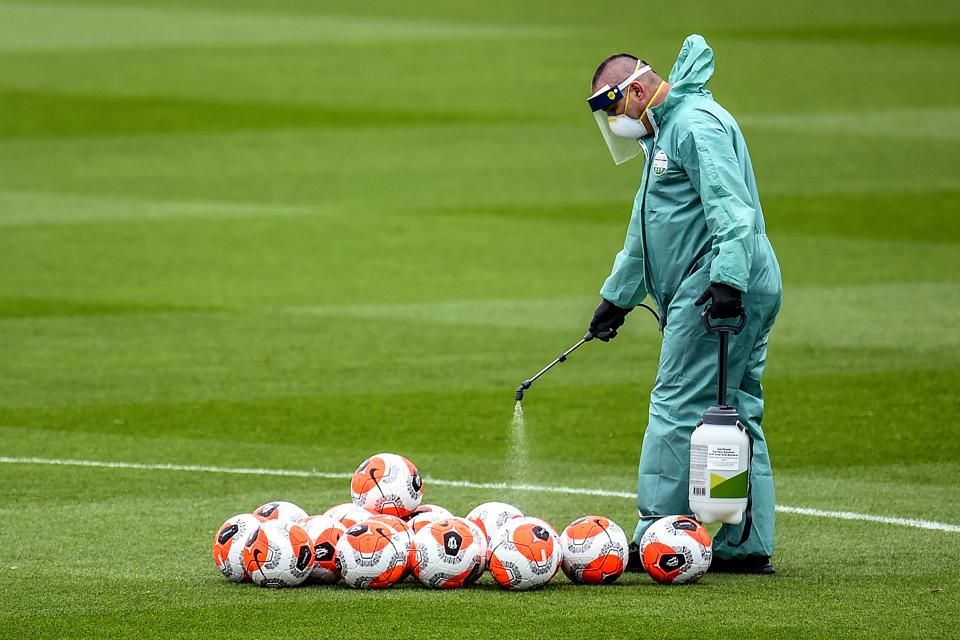
Studies have shown that the Covid-19 coronavirus can stay on various surfaces for a while. Here a … [+]
LIVERPOOL FC VIA GETTY IMAGES
Did the Centers for Disease Control and Prevention (CDC) actually “change their minds” this week about the potential risk of Covid-19 coronavirus being spread by contaminated surfaces? Not really. Not even on the surface.
Umm, completely de-fund the CDC? Isn’t that like saying “let’s get rid of this water supply thing” when there is not enough water in the middle of a fire?
12 Unsettling Lessons Learned Trying To Make Healthcare Better
Collision Of Crises: How Covid-19 Will Propel Drug Overdose From Bad To Worse
Take a closer look at what the CDC has been saying specifically. Compare a previous version of a CDC web page (cited by the Fox News article accompanying the tweet above) with the current version. The exact wording may have evolved a bit. Nonetheless, in both versions, the CDC stated, “It may be possible that a person can get COVID-19 by touching a surface or object that has the virus on it and then touching their own mouth, nose, or possibly their eyes.”
Yes, both versions did include the following: “this is not thought to be the main way the virus spreads.” However, this statement does not say that contaminated surfaces cannot spread the virus. This statement does not imply that you should not worry about contaminated surfaces. In fact, the latest version added the following kicker, “but we are still learning more ab
Just because something is not the “main way” doesn’t mean that it doesn’t happen or that you shouldn’t be concerned about it. It’s just an issue of what may be more frequent. For example, using a toilet in a stall may not be the “main way” that you take dumps, unless, of course, you have built such a stall in your house or apartment for some reason. However, this does not mean that you shouldn’t be prepared to use a toilet in a stall. Not knowing what to do in a stall could lead to a messy situation.
Similarly, the CDC statements can simply mean that a majority of the Covid-19 coronavirus transmissions that have occurred so far have likely been via direct person-to-person contact. In most cases, direct person-to-person contact means that an infectious person coughs, sneezes, pants, sings, chants, curses, or otherwise breathes out virus-laden respiratory droplets, which then are inhaled by someone else. It is more a reflection of how contagious an infected person may be when you get too close to him or her. As I have written previously for Forbes, simply talking could expel fluid droplets that could hang in the air for over eight minutes. You may expel even more droplets whenever you use the “th” sound like when you say “shake that thang.” Imagine what could happen if these fluid droplets were carrying the severe acute respiratory syndrome coronavirus 2 (SARS-CoV-2) .
Again, all of this does not mean that transmission cannot occur via contaminated surfaces. In fact, two scientific studies have shown that the virus can stay on surfaces for quite a while. In both studies, researchers applied the virus to various surfaces and then measured how the virus may degrade over time and how long the virus remained detectable. In the first study published in a research letter published in the New England Journal of Medicine, a team from the National Institute of Allergy and Infectious Diseases (NIAID), the CDC, Princeton University, and the University of California, Los Angeles conducted the study. Vincent J. Munster, Ph.D. from NIAID was the corresponding author for the publication so in theory you could call this the Munster study. In the experiments, the measured half-life of the SARS-CoV-2 was approximately 1.1 to 1.2 hours on copper, 5.6 hours on stainless steel, and 6.8 hours on plastic. The half-life is the time that it takes for half of initial amount of virus to no longer be detectable.
According to a study, the Covid-19 coronavirus may remain detectable on stainless steel for up to 4 … [+]
GETTY
Then there was the study published as a research letter in The Lancet Microbe and conducted by a team from the School of Public Health at The University of Hong Kong (Alex W.H. Chin, Julie T.S. Chu, Mahen R.A. Perera, Kenrie P.Y. Hui, Hui-Ling Yen, Michael C.W. Chan, Malik Peiris, and Leo L.M. Poon). Their experiments found the virus to be detectable on:
Paper for up to 30 minutes.
Tissue paper for up to 30 minutes.
Wood for up to a day.
Cloth for up to a day.
Glass for up to two days.
Bank notes for up to two days
Stainless steel for up to four days
Plastic for up to four days
The inner layer of a mask for up to four days
The outer layer of a mask for up to seven days
This would be good news if your living quarters and all of your possessions happen to be made out of tissue paper. It could be bad news if you wear stainless steel underwear. In general, viruses tend to survive longer on surfaces that are hard and impermeable than those with lots of pores.
Note how long the virus may remain on and inside a face mask. This is why you should treat a face mask like a reversed pair of underwear. Be very careful when handling it. Avoid touching your face with the outside of the mask.
Certainly, these studies have their limitations. Just because a virus is detectable does not necessarily mean that there’s enough virus around to cause an infection. Viruses can be like holes in your underwear: a few may be OK, but once you get past a certain level, it becomes a problem.
Also these studies showed what happened under specific sets of laboratory conditions. As they say in commercials for hair dyes, your actual results may vary. Plus, different environmental conditions such as the surrounding temperature, air motion, and sunlight exposure could affect the survival of the virus. Thus, the numbers provided are only approximations and not exact time limits. In other words, don’t set a timer to determine when exactly you can start smearing money on your face and making moaning sounds. (By the way, smearing money on your face is rarely a good idea.)
Nevertheless, the results from these experiments do show that the virus can remain on surfaces for not an insignificant amount of time, which is a roundabout way of saying that the virus can stay on surfaces long enough to be a source of transmission. In fact, these experiments suggested that the SARS-CoV2 can remain on surfaces significantly longer than can other respiratory viruses like the influenza virus.
It is a well-established fact that various respiratory viruses can be transmitted via contact with surfaces. If you somehow don’t trust the CDC, just look at websites from other countries like the Canadian government. The Canadian Center for Occupational Health and Safety website states that “influenza viruses can also be transmitted by indirect contact by touching a contaminated object or surface and then touching your own mouth, eyes or nose before washing your hands.” It also indicates that flu viruses on such surfaces can remain “infective for two hours and maybe up to eight hours.”
Transmission via surfaces is known as fomite transmission. The “fo” part of this word is pronounced “fo” as in “fo’ sure” or “fi fi fo fum.” The “mite” sounds like “might” as in “you might not want to wear a cape in public.” A fomite is any surface or inanimate object that can passively carry an infectious microbe such as door knobs, remote controls, towels, dishes, or your significant other while you end up having to wash the dishes.
So, scientific guidance about surfaces has not really changed. You should still be concerned about surfaces that may be contaminated with the virus. You should still try to disinfect potential fomites. Nothing in the CDC statements about surfaces suggests that businesses were closed for “no reason whatsoever.” When a business is fully open, it can be challenging not only to keep surfaces virus-free but also limit direct person-to-person contact. After all, just look at how “well” people are social distancing with the recent re-opening of locations:






 Exposing the Big Game