Junagadh, Jul 19 (PTI) The Gujarat forest department has arrested eight persons in Junagadh district for allegedly hunting wild animals, and recovered an injured monitor lizard and a dead jackal from their possession, an official said on Sunday.The accused were held by the Junagadh forest officials from Vadala village in Manavadar taluka on Wednesday, the official said.
“The eight accused were caught during patrolling by a forest team on July 15. A local court remanded them in the forest department custody for two days and subsequently in a jail,” Range Forest Officer of Manavadar, C G Dafada, said.
According to the official, monitor lizards and jackals are listed in Schedule 1 and 2 of the Wildlife Protection Act respectively.
The accused have been booked under various subsections of section 2 of the Act, he said.
“Seven of the accused are locals of Manavadar, while one is from Chorwad village…
Several indicators give DWR biologists valuable information about Utah’s cougar population and how the population is doing. (Photo: DWR)
(KUTV) – The public’s feedback is wanted by the Utah Division of Wildlife Resources (DWR) that is recommending changes to the 2020-21 cougar and bobcat hunting season.
Cougars are managed according to guidelines established in a management plan, which includes regulated hunting. According to a news release, DWR biologists make determinations and gather input from hunters, individuals who don’t hunt and livestock producers, who sometimes have sheep killed by cougars. The plan is then finalized and approved by the Utah Wildlife Board.
The current management plan was established in 2015 and expires in 2025. However, adjustments can be made as needed, depending on changes in cougar population numbers, a news release stated.
DWR Game Mammals Coordinator Darren DeBloois said…
Bear hunters in the state can start setting bait for bears in less than two weeks. (WGME)<p>{/p}
AUGUSTA (AP) — Maine’s fall hunting seasons are getting closer, as bear hunters in the state can start setting bait for bears in less than two weeks.
The bear hunt lasts from late August to late November, but most of it takes place in the first few weeks, when it’s legal to lure bears with bait. Hunters are allowed to start laying bait on Aug. 1.
The fall deer, moose and turkey seasons all follow the start of the bear hunt. Those animals make up the state’s “big four” game animals.
Bear baiting is controversial in Maine, and opponents of the practice are in the midst of a drive to try to phase it out by the end of the decade.
Klaus Stohr has urged governments for many years to prepare for the grim possibility of a pandemic. In 2003, he played a key role in a World Health Organization investigation that swiftly identified a coronavirus as the cause of SARS.
How will Coronavirus end in india. Expert sjhares what to expect. (Representative image by Reuters)
Klaus Stohr has urged governments for many years to prepare for the grim possibility of a pandemic. In 2003, he played a key role in a World Health Organization investigation that swiftly identified a coronavirus as the cause of SARS. Stohr also sounded the alarm on the pandemic potential of avian flu, bringing countries and companies to the table to increase production of vaccines in case it began spreading widely in people. In Covid-19, which has killed almost 600,000 people, the world faces the crisis…
CHINESE factory farming is creating the perfect environment for “the mutation and amplification of new viruses” and unless conditions improve “this pandemic will not be the last one”, a leading scientist has warned.
By BRIAN MCGLEENONPUBLISHED: 14:07, Sun, Jul 19, 2020 | UPDATED: 14:26, Sun, Jul 19, 2020
China: Chebeiyong waters cleaned after swarm of dead fish found
Global Head of Research and Animal Welfare for Animals in Farming Kate Blaszak described the growth of intensive farming units not just in China but across the world and pointed to them as having the potential to both increase antibiotic resistance and create a deadlier pathogen than COVID-19. Speaking to Express.co.uk Ms Blaszak said: “China is incubating two new strains of bird flu. It is also dealing with an outbreak of swine flu, which is a mixture of human, pig, and avian influenza viruses.
“These different viruses mixed together to form a very potent pathogen.
“The current swine flu virus that has broken out in China has the potential to bind very successfully in the human throat and respiratory system.”
The veterinary scientist said in the last ten to 15 years China has seen a vast and rapid shift away from traditional farming practices and is now emulating the US model of high-intensity farming were animals are kept in dark, confined environments.
Ms Blaszak described the new factory farming system in China as lacking regulations and operating with very poor animal welfare principles.
Chinese pig farms are propagating viruses (Image: GETTY)
The hundreds of millions of animals contained within the new factory systems are under so much stress that is lowering their immune systems making them need constant feeds of antibiotics to stay healthy and alive.
Ms Blaszak said: “These kinds of low welfare environments lower animals immunities and allows viruses to propagate.
“They create the perfect scenario for the mixing of viruses and the mutation and amplification of viruses.”
She added waste from farms, the movement of large amounts of animals and the processing of animals are also a risk to humans.
The scientist warned of the high risk of animal to human infections from having live animals at wet markets.
The cause for concern in China is the fact that it is moving towards a US model of intensified meat production, where the majority of animals are factory farmed.
China is the biggest pig producer in the world and the second-biggest chicken producer in the world.
Ms Blaszak describes how the high numbers of high density, genetically uniform animals are the perfect conditions for another virus to propagate that could potentially jump to humans.
The animals that are genetically uniform and crammed side by side need yearly inoculations to protect them against the ravages of quickly mutating viruses.
It takes a long time and considerable expense to develop vaccines for the new viruses being formed, and when a vaccine comes out it is not long before it must be changed because of the rapid mutation of these influenza viruses.
Furthermore, because 75 percent of antibiotics are used in the rearing of farm animals there is the added risk of creating extremely resistant bacteria.
Much of these antibiotics are used to promote growth rather than cure illness.
A Chicken processing plant in China (Image: GETTY)
Ms Blaszak said: “Without huge amounts of anti-biotics a lot of animals would be unwell and die and these intensified farming systems would not work.
“So, antibiotics just prop up the system for the next pandemic.”
However, Ms Blaszak said: “To be fair China is banning the use of antibiotics in animal food and water at the end of 2020.”
Since 2018 African swine flu, which originated in factory farms in Mexico, has wiped out the vast majority of smallholder pig farmers in China.
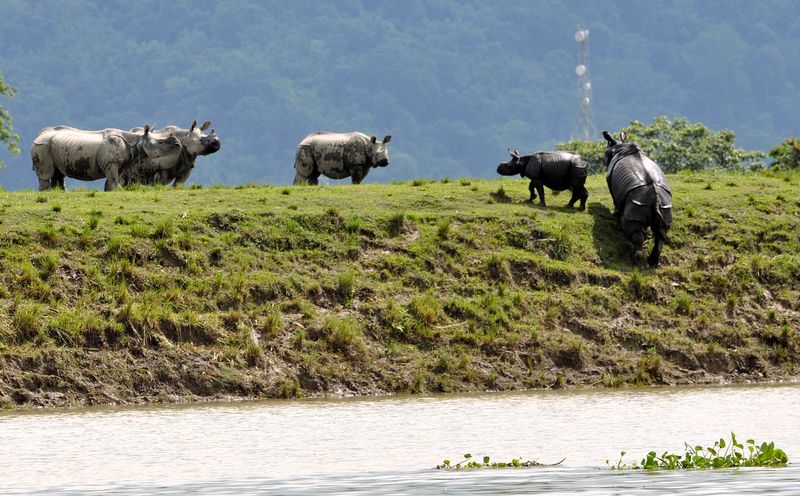
One-Horned Rhinos take shelter at the higher places at the flood-hit Kaziranga National Park in Nagaonon. A total of 96 animals have died in the Kaziranga National Park in Golaghat district of Assam due to floods, the state government informed.Image Credit: ANI
2 of 20
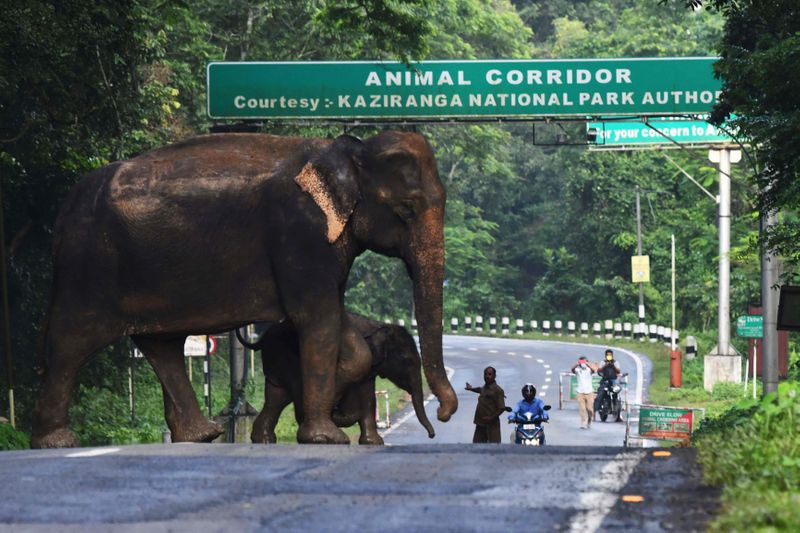
A a wild elephant and a calf cross a National Highway at the flood affected Kaziranga National Park. “So far, 96 animals have died in the park including eight rhinos, seven wild boars, two swamp deers, 74 hog deer and two porcupines,” park officials said.Image Credit: AFP
3 of 20
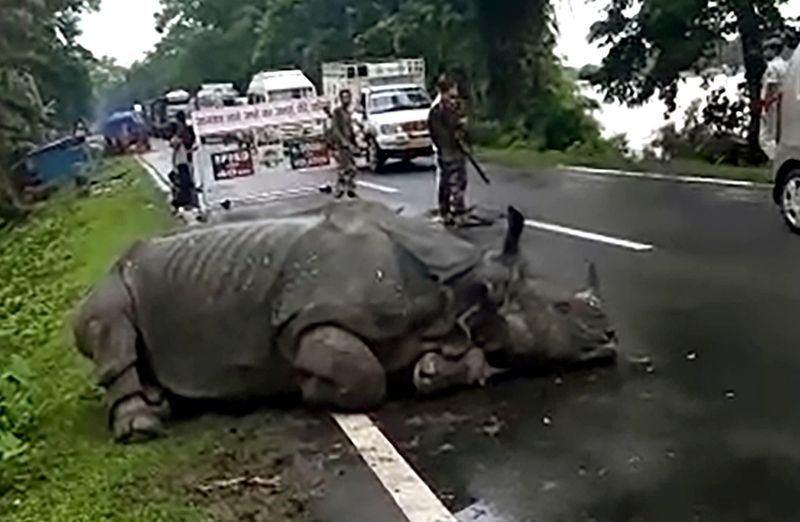
A Rhino sits along the roadside as he strayed out of the Kaziranga National Park. A report from the government of Assam stated that a total of…
Regan’s viewpoint, known as intersectionality, is the theory that all forms of oppression, discrimination, domination etc., intersect and influence each other.byFiona Roossien
Regan Russell, the Toronto Pig Save activist who was killed by a truck carrying pigs to slaughter. (Photo: Agnes Cseke)
On June 19, a protester was killed. Perhaps her death was obscured by the din of headlines that Friday—it was Juneteenth, a day marking the end of slavery.
Protests against systemic racism catalyzed by the death of George Floyd juxtaposed with a Trump rally scheduled on the anniversary and in the location of the worst incident of racial violence in the U.S. Tensions were high.
Her name was Regan Russell and while participating in a scheduled vigil outside of Fearmans slaughterhouse in Burlington, she was run down by a transport truck carrying pigs on their way to slaughter.
In the news covering this event, and in conversations I’ve had with friends and family, it seems the significance of a protester being run down by the very thing she was protesting has been missed. It seems many wonder what she was doing there.
A local news story gives the following account from someone who witnessed the event from a distance: “Then I saw a woman … I assumed the truck driver thought he was clear to go and didn’t see that last protester.”
Ironically, being seen is an important goal of the vigils held by animal rights groups at slaughterhouses—one way to create more visibility in an industry that would prefer to keep its practices hidden. And Regan was unignorable.
But she was also there that day to protest Bill 156—a new ag-gag law that had been passed two days earlier. Criticized as unconstitutional, Bill 156 is handcrafted to stifle damning evidence of the cruelty that is endemic to animal agriculture, with provisions that are distinctly anti-whistle-blower and anti-free-speech.
Like its counterpart, Bill 27 in Alberta, Bill 156 represents the influence of a powerful farming lobby desperately trying to limit exposure of something that can harm their bottom line — visibility into how the animal agriculture industry works. These sections don’t serve to protect the animals or reinforce biosecurity; they serve the sole purpose of controlling information.
The day before she died, Regan wrote on social media: “Bill 156 has passed. Now anytime an animal is suffering on a farm in Ontario, no one, not even an employee, has the right to expose it. This decision is evil. Animal ag is evil. Cancel animal agriculture.”
I’m so sorry that you didn’t get a chance to meet Regan Russell yourself. You would have loved her. I only hope that, in clearing up some of the questions about vigils, I can do her justice.
Regan didn’t look like what I suppose you’d expect a vegan to look like. At 65, Regan still possessed the qualities that decades earlier had made her a model — that is to say, her outer beauty was undeniable. But on the inside — well, that was truly special. She was funny and fast-witted, kind and patient.
She vibrated on a high frequency, if you are familiar with the concept. She was cynical, in a wise way, yet optimistic enough to try to make a difference. For 40 years, she had tried to make a difference. A week prior to her death, she had marched at a Black Lives Matter rally.
You see, Regan’s viewpoint, known as intersectionality, is the theory that all forms of oppression, discrimination, domination etc., intersect and influence each other. One of the signs she frequently brought to vigils read: “If you were in this truck, we’d be here for you too.” And you know what? She would have.
Personally speaking, up until two years ago, I wouldn’t have considered being an activist myself, despite being vegan for several years. It was my then 10-year old son — frustrated because he had been forbidden to talk about animal agriculture at school, who begged me and his dad, also vegan, to take him to a vigil. It became our church. Every Sunday morning we went to bear witness at Fearmans — sometimes with just a handful of people, sometimes in a group of 20 or more. Regan was almost always there too.
This leads me to an important point about Regan’s experience — as an activist, and specifically attending vigils at Fearmans, which she had done for years. This translates to hundreds of vigils, stopping thousands of transport trucks, bearing witness to the final moments of hundreds of thousands of pigs.
Regan understood the risks — after all, rogue aggressive drivers had been encountered in the past. In fact, this issue was the impetus for a petition created by Toronto Pig Save on change.org urging Michael Latifi, the CEO of Fearmans/Sofina Foods Inc., to create a safety agreement allowing activists to safely protest. Although the request has been ignored to date, other efforts had been made by both Toronto Pig Save and another activist group, New Wave Activism, to liaise with police, work with security and establish rapport with drivers.
Safety protocol is reviewed regularly with the group. Every vigil is timed. Roles are assigned to protestors to improve safety. Regan had one of those roles that day — standing at the entrance, just on the other side of the pedestrian sidewalk, with her now iconic bright neon sign that read ALL ANIMALS NEED PROTECTION UNDER THE LAW.
Although, thanks to the newly passed Bill 156, the ability to legally protect animals would soon be more difficult. It is a bill that exemplifies prioritization of commerce over our rights as Canadians and specifically seeks to punish animal activists. This reality was certainly top-of-mind for Regan and the other activists there that day — as much as it was likely on the radar of those who profit from animal agriculture.
As you can imagine, losing Regan has been a devastating loss to the activism community, to Toronto Pig Save and New Wave Activism and to the many individuals who Regan touched with her beauty, wisdom and compassion. Personally, there hasn’t been a day since that I haven’t cried a tear or two hundred — for the loss of a friend, and the loss of innocence, as I see for the first time just how unforgiving the machine we stand against can be.
And in the wake of Regan’s death, we are emboldened to articulate our demands in her name:
Justice for Regan Russell; the creation of a universal safety protocol for all future vigils; the repeal of Bill 156; greater visibility into farms where animals are kept and slaughterhouses via 24/7 video; monitoring that can be accessed by the public; the conversion of Fearmans Pork into an exclusively plant-based facility focused on the manufacture of plant protein; and the defunding of animal agriculture.
On the captivity, Regan said: “They say we’re breaking the law by storming? How do you think women got the right (to vote)? How do you think slavery was abolished? People stood up and broke the laws! Because they’re stupid laws.”
Let’s stand up to this stupid law.
Fiona Roossien wrote this article on behalf of Toronto Pig Save.
The islands see around 800 long-finned pilot whales killed every year as they often swim in close proximity to the shoresBy Akshay Pai Published on : 02:57 PST, Jul 19, 2020(Getty Images)
Animal rights activists have called for a ban of the Faroe Islands’ annual whale hunt, which they termed as an “insane blood sport” and which sees the waters turn a dark red as hundreds of the mammals are slaughtered.
The Grindadràp, which means slaughter in Faroese, has been practiced in the islands for more than a 1,000 years, as per some estimates, and involves the killing of schools of long-finned pilot whales that often swim in proximity to the islands’ shores.
The hunt involves the whales being surrounded by boats, who then drive them into a bay or to the bottom of a fjord, where they are killed by people lying in wait with knives. After the slaughter, the waters turn red, with pictures of the same shared around the world in recent times as calls to ban the “cruel” and “unnecessary” practice have increased in recent years.
It initially appeared as if the Grindadràp would not go ahead this year because of the coronavirus pandemic, but AFP reported that the hunt began this week with the killing of around 300 of the mammals.
Concern had been raised about fisherman proximity after the territory, located in the North Atlantic between Norway and Iceland and comprising of 18 islands, had logged 188 cases of Covid-19 despite having a population of just 55,000. However, on July 7, Fisheries Minister Jacob Vestergaard gave his approval for the hunt on the condition that people avoid large gatherings.
The Grindadrap is more than a 1,000 years old (Hulton Archive/Getty Images)
NGO Sea Shepherd, a non-profit marine conversation organization based in Washington state, said 250 long-finned pilot whales and some Atlantic white-sided dolphins were killed on Wednesday, July 15, off Hvalba, a village on the southernmost island of Suduroy.
“252 long-finned pilot whales and 35 Atlantic white-sided dolphins were killed in Hvalba last night after the huge pod was found off Sandvik,” they said in a statement. “This is the first organized Grindadràp hunt of 2020 with the meat from the hunt distributed first to the approximately 70 hunt participants from the boats and those killing on the beach – and then the remainder to villages on Suðuroy with all recipients then free to sell their share of the meat if they so wish.”
Sea Shepherd successfully managed to disrupt the hunt in 2014 but has since been banned from Faroese waters after legislation was passed to authorize Danish military vessels to stop them with force.
ORCA, another non-profit environmental conservation organization dedicated to protecting marine life, similarly condemned the practice and called it an “insane blood sport.”
“To the beautiful family of pilot whales that were brutally murdered in the Danish #FaroeIslands, we are so deeply sorry… We will keep fighting to end this insane blood sport. RIP beautiful family…” they tweeted. “Please Boycott the Faroe Islands! #GrindStop #Denmark #StopKillingWhales”
The Faroese have repeatedly defended the hunt by stating that it is sustainable since they catch just 800 whales out of the 100,000 that call the islands their home. But concerns have been raised about how these whales are killed.
Alastair Ward, a Cambridge University student who photographed the event in 2018, told the BBC that the hunt was not carried out humanely. “The squealing from the whales was horrible. They were putting hooks on ropes in their blowholes to pull them in and then hacking at them with knives,” he said. “They didn’t die in a very humane way.”If you have a news scoop or an interesting story for us, please reach out at (323) 421-7514
On Tuesday, Burger King announced that it was treating some of its cows to a new menu with a Thai twist, adding lemongrass to their feed.
It sounds like a whopper, but it’s true. The fast-food giant is in the middle of a long-term scientific experiment — how much can it reduce the amount of methane cows burp into the atmosphere by adding lemongrass to their feed?
Burger King’s restaurants will be offering the fruits of its initial labor, new “reduced methane emissions beef,” to customers in Austin, Los Angeles, Miami, New York City, and Portland, for a limited time this month. The news exploded onto the internet on Tuesday with a splashy music video starring the Walmart yodeling kid and directed by Michel Gondry.



 (Getty Images)
 Exposing the Big Game