Editor’s Note: The Atlantic is making vital coverage of the coronavirus available to all readers. Find the collection here.
Seven years ago, the White House was bracing itself for not one pandemic, but two. In the spring of 2013, several people in China fell sick with a new and lethal strain of H7N9 bird flu, while an outbreak of MERS—a disease caused by a coronavirus—had spread from Saudi Arabia to several other countries. “We were dealing with the potential for both of those things to become a pandemic,” says Beth Cameron, who was on the National Security Council at the time.
Neither did, thankfully, but we shouldn’t mistake historical luck for future security. Viruses aren’t sporting. They will not refrain from kicking you just…
Rescuers said they found 46 purebred beagles, some as young as eight weeks and as old as about 11, at a North Carolina man’s home who said he had become overwhelmed trying to take care of the dogs (Piedmont Animal Rescue)
MOORESVILLE, N.C. (AP) — Two rescue groups worked together to retrieve 46 beagles from a home where a man said he had become overwhelmed trying to take care of the dogs.
<p>Jamie Lusch / Mail Tribune{/p}<p>A black bear walks the shore line of the Wild and Scenic section of the Rogue River.{/p}
Black bears within the Wild and Scenic Section of the Rogue River historically have been off limits to hunters, prized more as apex fauna to view while floating the Wild Rogue than as sausage, burger meat and perhaps even a floor rug.
But biologists say times have changed, and so have the population and bravado of bears in the Rogue corridor, as they brazenly raid rafting camps and increasingly see people as a food source instead of something to fear.
Following a record year of bear complaints here, the Oregon Department of Fish and Wildlife is looking to allow hunters into the Wild Rogue to hunt black bears off riverside gravel bars during limited times as a way to cull…
by GENE JOHNSON Associated PressWednesday, July 15th 2020AA
FILE – In this May 26, 2020, file photo, a grizzly bear roams an exhibit at the Woodland Park Zoo, closed for nearly three months because of the coronavirus outbreak in Seattle. Grizzly bears once roamed the rugged landscape of the North Cascades in Washington state but few have been sighted in recent decades. The federal government is scrapping plans to reintroduce grizzly bears to the North Cascades ecosystem. (AP Photo/Elaine Thompson, File)
SEATTLE (AP) — A conservation group is threatening to sue the Trump administration over its sudden reversal of plans to restore grizzly bears in the North Cascade mountain range of Washington state.
The Center for Biological Diversity sent a letter Wednesday giving notice that it intends file a federal lawsuit in 60 days unless the Interior Department resumes its efforts to reintroduce the apex predator.
The group said the Endangered Species Act mandates the bears’ recovery.
The administration scrapped the plans this month, saying local residents made clear they opposed having more grizzlies in the region.
The footage shows the goshawk becoming caught in the trap
The camera footage shows a goshawk – a protected species – caught in a trap on Howdale Moor, near Goathland in the North York Moors, in the early hours of May 2.
Soon after the bird is trapped, a man with their face obscured is seen deliberately killing the raptor and removing its body in a bag.
The crime took place within the National Park boundary. The North York Moors are one of the UK’s black spots for raptor persecution. The area is home to a large number…
A 30-year-old Broken Bow man and a big-game hunting and guiding business both pleaded guilty in U.S. federal court on Monday for conspiracy to violate the Lacey Act and the Migratory Bird Treaty Act.
Jacob N. Hueftle and Hidden Hills Outfitters, LLC, of Broken Bow, are both scheduled to be sentenced on Oct. 5.
Hueftle could be sentenced to up to five-years in prison and a $250,000 fine. The business could receive up to five years of probation and a $500,000 fine.
According to a release from U.S. District Attorney Joseph P. Kelly’s office, an investigation determined that between September 2012 and April 2018, Hueftle, Hidden Hills Outfitters and other conspirators provided guiding and outfitting services to clients for the unlawful taking of no less than 97 big game animals or wild turkeys in violation of Nebraska state laws. The take included 30 white-tailed deer, 34 mule deer, six…
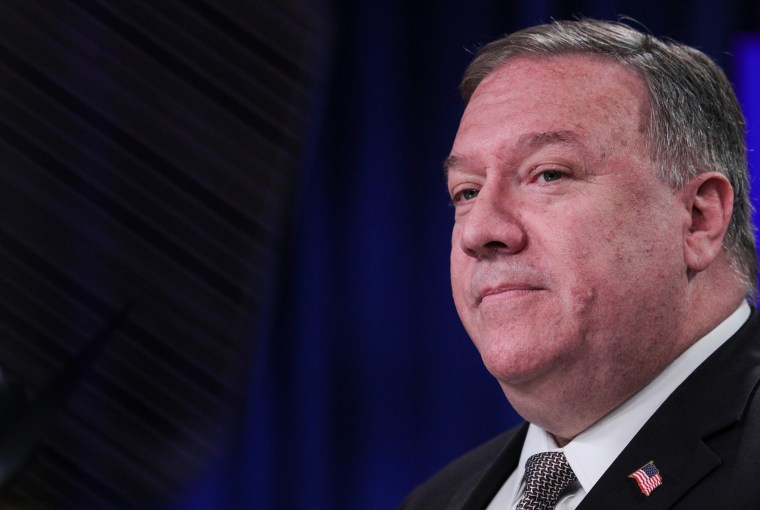
Secretary of State Mike Pompeo speaks during a news conference at the State Department last Wednesday. Tom Brenner / AFP – Getty Images
By Adela Suliman, Eric Baculinao and Ed Flanagan
The United States and the world “will not allow Beijing to treat the South China Sea as its maritime empire,” Secretary of State Mike Pompeo said Monday, prompting China to hit back, reflecting a ratcheting up of tensions between the two powers amid deteriorating relations.
“We are making clear: Beijing’s claims to offshore resources across most of the South China Sea are completely unlawful, as is its campaign of bullying to control them,” Pompeo said in a statement, referring to the contentious and potentially energy-rich stretch of water.
Global emissions of methane, a potent greenhouse gas, have soared over the past decade, according to two new studies that tracked growing sources of the odorless, colorless gas.
Environmentalists say that agriculture and transportation activities have boosted the amount of Methane in Earth’s atmosphere.Dago Galdieri / Bloomberg via Getty ImagesJuly 14, 2020, 4:17 PM PDTBy Denise Chow
Earth’s climate crisis is starting to look even worse than scientists had feared — in part because of just how much meat we eat and how we get around.
Global emissions of methane, a potent greenhouse gas, have soared over the past decade, according to two new studies that tracked growing sources of the odorless, colorless gas. The increased methane, combined with carbon dioxide and other greenhouse gases, could warm Earth’s atmosphere by 3 to 4 degrees Celsius before the end of this century — significantly above the levels that scientists have warned could be catastrophic for millions of people around the world.
“This completely overshoots our budget to stay below 1.5 to 2 degrees of warming,” said Benjamin Poulter, a research scientist at NASA’s Goddard Space Flight Center in Greenbelt, Maryland. Poulter is an author on both studies published Tuesday, one in the journal Earth System Science Data and the other in the journal Environmental Research Letters.
Poulter and his colleagues found that since 2000, the biggest increases in methane emissions came from agricultural activities — particularly from livestock, such as cattle and sheep — and the fossil fuel industry, which includes coal mining as well as oil and gas production.
Human activities account for about 60 percent of global methane emissions, according to the researchers. Agriculture makes up roughly two-thirds of that, with fossil fuel production and use contributing most of the rest.
JULY 14, 202002:01
In the new studies, researchers analyzed methane emissions from 2000 through 2017 — the latest year for which complete global methane figures are available — and found that a record 600 million tons of methane were released into the atmosphere in 2017. Annual emissions of methane have also increased by 9 percent since the early 2000s, a pace that could contribute to more than 2 degrees Celsius of global warming by 2100.
A report released by the Intergovernmental Panel on Climate Change in October 2018 highlighted that the planet has already warmed by 1 degree Celsius since the 19th century; it used 1.5 degrees of warming above pre-industrial levels as a threshold beyond which the effects of climate change, including extreme heat and sea-level rise, become life-threatening for tens of millions of people around the world.
Another author on both studies, Rob Jackson, a professor of Earth system science at Stanford University, said the amount of methane released into the atmosphere since 2000 is roughly equivalent to adding 350 million more cars on the road.
In 2017, methane emissions from agriculture rose by nearly 11 percent from the 2000-06 average, while methane from fossil fuels jumped by nearly 15 percent compared to the early 2000s.
Methane is released into the atmosphere when coal, oil and natural gas are mined and transported, but microbes also emit it in low-oxygen environments.
“Any place where there is little to no oxygen — wetlands, rice paddies, landfills, the gut of a cow — are all sources of methane,” Jackson said.
Overall, methane makes up a much smaller percentage of global greenhouse gas emissions than carbon dioxide does, but it’s of particular concern to scientists because methane’s molecular structure makes it more readily able to absorb thermal radiation.
“Methane doesn’t last as long in the atmosphere as carbon dioxide, but it’s much more efficient at trapping heat than carbon dioxide,” Poulter said, which makes the gas a key factor in global warming.
To curb methane emissions, countries need to reduce their reliance on fossil fuels, in addition to reducing the number of harmful leaks from pipelines and wells, Jackson said.
Scientists are also studying how to minimize methane emissions in agricultural practices, such as altering water levels in rice paddies and experimenting with changes in the diets of cattle and sheep to reduce the amount of methane belched from their digestive systems. Burger King recently announced that it is adding lemongrass to the diet of its cows to reduce methane emissions with a lower-carb feeding regimen.
But slowing greenhouse gas emissions will also require bigger changes in human behavior, Jackson said.
“Diet matters,” Jackson said. “Here in the U.S., we have one of the highest rates of red meat consumption in the world. We don’t have to stop eating red meat necessarily, but eating less meat or eating more fish and chicken instead of beef will reduce emissions, too.”
And while the coronavirus pandemic is expected to result in significant decreases in carbon dioxide emissions in 2020 — primarily from economic slowdowns and lockdowns that sharply reduced air travel and other transportation — similar declines are not anticipated with methane.
“Our farmers are still producing food, oil and gas production hasn’t fallen much yet, and methane plays only a tiny part in the transportation sector,” Jackson said. “So while we may see a small decrease this year because of the coronavirus, methane emissions over the last decade are marching upward. And at this rate, we won’t see peak methane emissions any time soon.”
Marineland is putting the brakes on plans to reopen this weekend.
After announcing last week it would open for its 59th season July 17, the park issued a statement late Monday that it “decided to push back” its opening date to July 24.
“The decision comes after the park’s efforts to make sure some, if not all, of the most popular attractions can open with the park,” the statement reads.
Marineland says the delay is meant to offer guests a “better experience in the coming days,” and is in accordance with “recent updates” from the Ontario government.
On Monday, Premier Doug Ford announced much of the province will move to Phase 3 of its reopening Friday, but Niagara will remain in Phase 2.
According to the Reopening Ontario <https://www.ontario.ca/page/reopening-ontario> website, waterparks and amusement parks are to be closed in Phase 2, and they will remain closed during Phase 3.
In its statement, Marineland says it is “working closely with health and government officials to ensure that all health and safety protocols are in place before the park opens to make sure the public can have a safe and enjoyable experience.”
In its reopening press release, the park said its Polar Splash water park would be open, with staff monitoring the number of guests allowed in.
It also said staff would be provided with face masks.
When asked about opening in light of the provincial guidelines, a parks spokesperson said Marineland is allowed to operate under Stage 2 as a “zoo/aquarium.”
In Monday’s statement, Marineland owner Marie Holer – wife of late owner John Holer – said “we are lucky we are an outdoor facility with lots of room for people to social distance while still enjoying the attractions.”
Marineland is putting the brakes on plans to reopen this weekend. After announcing last week it would open for its 59th season July 17, the park issued a statement late Monday that it “decided to push back” its opening date to July 24. “The decision comes after the park’s efforts to make …



 Exposing the Big Game