The official weather observing station in Death Valley, California — called Furnace Creek for obvious reasons — reached a scorching 128 degrees Fahrenheit on Sunday. That is the hottest temperature anywhere on the planet since 2017 and only one degree behind what experts say is likely the hottest temperature ever recorded on Earth.
This is just one small part of a brutal heat wave baking the deep Southwest and lower Plains states right now before expanding eastward and northward later this week. Dozens of records were set over the weekend and dozens more are on the way this week.
Excessive Heat Warnings and Heat Advisories cover 50 million Americans in an area stretching 1,700 miles from the deserts of Southern California to the beaches of Panama City, Florida. Temperatures today may top out over 120 in the deserts of California and Arizona, and…
Chen Yu used to walk a short distance to a nearby market to get fresh poultry. Now, to stew a pot of chicken soup or cook a whole duck for family gatherings, she has to take two buses downtown to buy the meat.
“Live poultry cannot be sold in my neighborhood market now,” said Chen, a housewife in her 50s who lives in China’s Jingdezhen city. In the bigger market about 40 minutes away, there’s a special containment room for live birds. “You can see them, point at one of them, then the owner will have it slaughtered. Picking the duck yourself is not what matters. The key is you see them live.”
China will gradually close all live poultry markets to cut public health risks and step up supervision of farmers’ markets amid the Covid-19 outbreaks, Chen Xu, an official with the State Administration for Market Regulation, said this month. Live animal sales are still taking place in markets with containment rooms in some cities, but they will also eventually stop operating.
The pandemic has put China’s farmers’ markets under global scrutiny as the virus is thought to have originated from a wet market in Wuhan where exotic animals were suspected of being sold. In some provinces, fresh seafood and equipment like chopping boards are being tested. Scientists are still probing the origins of the virus.
China consumed more than 19 million tons of poultry in 2018, becoming the largest consumer by volume after the U.S., according to the USDA. The number surged to almost 23 million tons in 2019 following the African swine fever outbreak in the Asian nation, the U.S. agency said, citing China’s farm ministry data.
Bird Flu
China has been temporarily closing live poultry markets because of bird flu outbreaks for years. In 2017, officials in some affected areas ordered the markets to shut, and culled more than 1 million infected or susceptible fowl. Consumers were advised to buy chilled or frozen chicken instead of freshly prepared products from markets, and to thoroughly cook the meat.
In 2006, China’s State Council announced it will gradually ban the trading and killing of live poultry in big cities, encouraging killing to be undertaken at professional slaughterhouses instead. In Chen’s city, however, changes slowly started taking place in the second half of 2019 and now her neighborhood market has stopped selling them.
A fresh Covid-19 attack in Beijing after it largely controlled the outbreak has again triggered concerns about biosecurity. The capital shuttered its largest fruit and vegetable supply center last month and locked down nearby housing districts as dozens of people associated with the wholesale market tested positive for the coronavirus.
Despite risks related to live animal slaughter, many meat consumers don’t seem to worry about live birds. Generally, customers don’t feel assured when they buy poultry from shelves of a shop, said Wang Xiaoying, a poultry dealer in Jingdezhen city of the Jiangxi province. “They say it’s not fresh.”
Quest for Fresh
Fresh poultry means so much to some Chinese people that Wang uses her WeChat not only as an online messaging tool, but also as a platform to promote fresh poultry delivery. Posting pictures of fresh, clean and feather-plucked birds from time to time, she emphasizes in the caption that the poultry she offers are “freshly killed upon ordering.”
Wang does not worry about the avian flu, saying that she has been in the business for more than two decades. Whenever the city government orders a ban on live poultry trading amid occasional bird flu outbreaks, her family business comes to a halt. The longest halt, Wang said, was as long as six months.
For Wang, however, the full ban initiative is bad news. As of now, she’s still able to operate as the new policy will be implemented in phases. If the birds are to be processed only at centralized slaughterhouses, she fears her business could halve. She also sells processed poultry meat, but their sales have been much lower than that of live birds.
The new Chinese policy may disappoint many customers, like housewife Chen. “We might find it hard at first, but we’ll get used to it,” she said.
(Updates to add USDA data in fifth paragraph)
For more articles like this, please visit us at bloomberg.com
Subscribe now to stay ahead with the most trusted business news source.
Chen Yu used to walk a short distance to a nearby market to get fresh poultry. Now, to stew a pot of chicken soup or cook a whole duck for family gatherings, she has to take two buses downtown to buy the meat.
“Live poultry cannot be sold in my neighborhood market now,” said Chen, a housewife in her 50s who lives in China’s Jingdezhen city. In the bigger market about 40 minutes away, there’s a special containment room for live birds. “You can see them, point at one of them, then the owner will have it slaughtered. Picking the duck yourself is not what matters. The key is you see them live.”
China will gradually close all live poultry markets to cut public health risks and step up supervision of farmers’ markets amid the Covid-19 outbreaks, Chen Xu, an official with the State Administration for Market Regulation, said this month. Live animal sales are still taking place in markets with containment rooms in some cities, but they will also eventually stop operating.
The pandemic has put China’s farmers’ markets under global scrutiny as the virus is thought to have originated from a wet market in Wuhan where exotic animals were suspected of being sold. In some provinces, fresh seafood and equipment like chopping boards are being tested. Scientists are still probing the origins of the virus.
China consumed more than 19 million tons of poultry in 2018, becoming the largest consumer by volume after the U.S., according to the USDA. The number surged to almost 23 million tons in 2019 following the African swine fever outbreak in the Asian nation, the U.S. agency said, citing China’s farm ministry data.
Bird Flu
China has been temporarily closing live poultry markets because of bird flu outbreaks for years. In 2017, officials in some affected areas ordered the markets to shut, and culled more than 1 million infected or susceptible fowl. Consumers were advised to buy chilled or frozen chicken instead of freshly prepared products from markets, and to thoroughly cook the meat.
In 2006, China’s State Council announced it will gradually ban the trading and killing of live poultry in big cities, encouraging killing to be undertaken at professional slaughterhouses instead. In Chen’s city, however, changes slowly started taking place in the second half of 2019 and now her neighborhood market has stopped selling them.
A fresh Covid-19 attack in Beijing after it largely controlled the outbreak has again triggered concerns about biosecurity. The capital shuttered its largest fruit and vegetable supply center last month and locked down nearby housing districts as dozens of people associated with the wholesale market tested positive for the coronavirus.
Despite risks related to live animal slaughter, many meat consumers don’t seem to worry about live birds. Generally, customers don’t feel assured when they buy poultry from shelves of a shop, said Wang Xiaoying, a poultry dealer in Jingdezhen city of the Jiangxi province. “They say it’s not fresh.”
Quest for Fresh
Fresh poultry means so much to some Chinese people that Wang uses her WeChat not only as an online messaging tool, but also as a platform to promote fresh poultry delivery. Posting pictures of fresh, clean and feather-plucked birds from time to time, she emphasizes in the caption that the poultry she offers are “freshly killed upon ordering.”
Wang does not worry about the avian flu, saying that she has been in the business for more than two decades. Whenever the city government orders a ban on live poultry trading amid occasional bird flu outbreaks, her family business comes to a halt. The longest halt, Wang said, was as long as six months.
For Wang, however, the full ban initiative is bad news. As of now, she’s still able to operate as the new policy will be implemented in phases. If the birds are to be processed only at centralized slaughterhouses, she fears her business could halve. She also sells processed poultry meat, but their sales have been much lower than that of live birds.
The new Chinese policy may disappoint many customers, like housewife Chen. “We might find it hard at first, but we’ll get used to it,” she said.
(Updates to add USDA data in fifth paragraph)
For more articles like this, please visit us at bloomberg.com
Subscribe now to stay ahead with the most trusted business news source.
First Nations in the northwestern most corner of B.C. want to see the grizzly bear hunt restored within their territory.
Chad Day is the president of the Tahltan Central Government which serves as the administrative governing body of the remote Tahltan Nation.
He said it is important for people to understand that not all areas of the province have conservation concerns about grizzlies, which can kill up to 40 ungulate calves each month, according to studies in Alaska and other parts of the United States.
“They are the apex predators in our country,” Day said. “They are extremely dangerous to not just other wildlife but to people and the conservation efforts of…
Some 8.7 million years ago, much of what is now Idaho was torched by clouds of hot volcanic ash, destroying all vegetation and animals in sight. The supervolcano, Yellowstone, was erupting. This was Yellowstone’s largest eruption on record.
Super-eruptions can decimate entire regions, and their cocktail of ash and gases can alter the climate. But, even though they eject huge amounts of material, there are very few documented super-eruptions in the geologic record. So we don’t fully understand why they are so big or how often they occur. Now, details of the Yellowstone supervolcanic eruption are documented in a new study published in the journal Geology.
Yellowstone’s ancient eruptions scattered volcanic debris across the northwestern US. There are so many deposits — covering an area…
A class-action lawsuit has been filed against Cargill Ltd. that claims the meat-packing company failed to take reasonable precautions to protect its workers in Alberta during the COVID-19 pandemic.
Cargill’s beef plant near High River, south of Calgary, employs about 2,200 people. It shut down for two weeks in April because of an outbreak that affected 350 staff.
It reopened after bringing in safety measures that included temperature testing, physical distancing, cleaning and sanitizing.
Eventually nearly half of the workers contracted the virus and two employees died.
The lawsuit, which needs to be approved by a judge, was filed by Guardian Law Group and seeks damages…
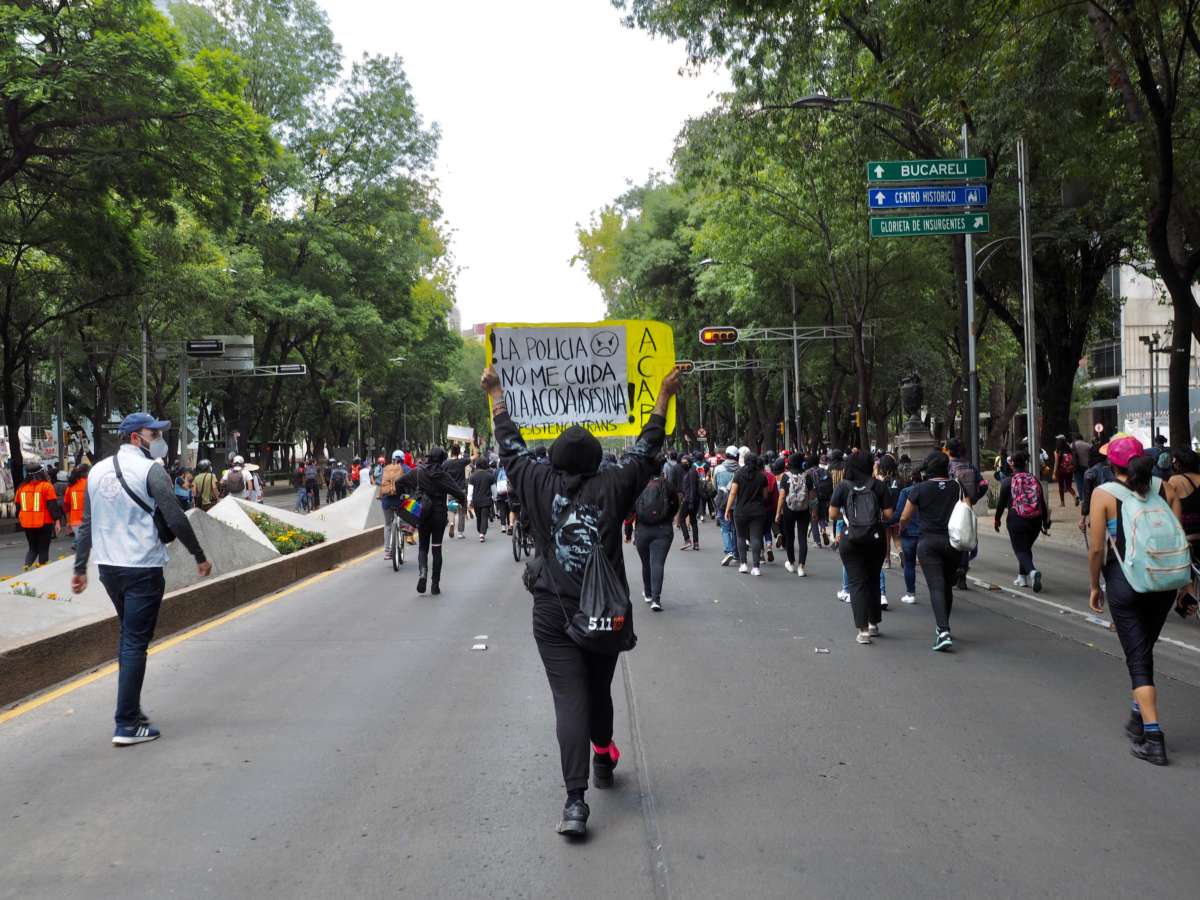
A demonstrator taking part in a march in solidarity with those resisting police brutality walks down Mexico City’s Paseo de la Reforma, June 8, 2020.JOSÉ LUIS GRANADOS CEJA
In Mexico the police will kill you for not wearing a mask and the state will disappear you for demanding justice. This is the conclusion drawn by Alejandro Puerto, a young grassroots political activist in the state of Jalisco, who spoke with Truthout about the violence and repression doled out by the state government of Gov. Enrique Alfaro.
Inspired by the uprising against police brutality happening in the United States and tired of the regular abuses committed by state security forces at home, thousands took to the streets in Mexico in June to denounce the killing of Giovanni López by local police. They were met with brutal repression.
By Kitty Block and Sara Amundson July 10, 2020Entanglement in fishing gear and vessel strikes are largely to blame for the decline in right whale populations, as is climate change. Photo by the National Oceanic and Atmospheric AdministrationIn late June, the body of a dead North Atlantic right whale calf was found floating off the coast of New Jersey—a victim of two boat strikes, according to a preliminary analysis by the National Oceanic and Atmospheric Administration. While this would have been a sad story no matter what animal was involved, it is particularly concerning that this was a young right whale with many reproductive years ahead of him. There are just 400 of these mammals surviving in our oceans, and the death of even one could have deadly ramifications for the entire species.Yesterday, the International Union for Conservation of Nature escalated the urgency around saving right whales by uplisting their status on its red list from “endangered” to “critically endangered”—meaning that these animals are now just a step away from extinction.The numbers are indeed alarming. Since 2017, only 22 North Atlantic right whale calves have been born. At the same time, 31 North Atlantic right whales have died and an additional 10 have been presumed dead due to the serious nature of injuries they’d sustained, bringing the total to 41 dead right whales in the past three years.This plight of North Atlantic right whales is entirely attributable to human actions. These native American marine mammals make their home along the eastern shores of the United States and Canada, and the reason their numbers went down in the first place is because they were easy targets for whale hunters for centuries. These mammoth animals are slow-moving and live close to the coast, which made them the “right” whales to hunt.While whaling is now banned in U.S. and Canadian waters, it has been replaced by new threats. As the IUCN said in its release announcing the uplisting, entanglement in fishing gear and vessel strikes are largely to blame for the decline in right whale populations, as is climate change, which pushes the whales’ main prey species further north during summer where they are more exposed to accidental encounters with ships and are also at high risk of entanglement in fishing gear.The Humane Society family of organizations has been sounding the clarion call to these countries for many years now on saving right whales. We’ve taken the fight to court, and in April we won a lawsuit in federal court, brought along with our coalition partners, that challenged the U.S. government’s failure to protect right whales from deadly entanglements in fishing gear. In 2013, as the result of a legal petition we filed, the United States mandated that large ships slow down while passing through key right whale habitats. This resulted in reducing deaths from lethal ship strikes, which until recently was the leading cause of death for the species. We also successfully petitioned to expand their designated critical habitat protections in key feeding areas and in the southeastern United States where female right whales birth their young.The Humane Society of the United States and Humane Society International have exhorted Canada to close more risk-prone fisheries during months of high use in order to protect right whales from dying after getting entangled in fishing gear. Last year, Canada announced comprehensive protections, altering fishing season dates and designating specific shipping areas with a seasonal slow speed requirement. This year, the country announced further restrictions regulating fishing and shipping in a larger area after a whale has been spotted nearby. But given that most right whales are killed in Canadian waters, the country needs to do more to prevent unnecessary deaths.We also need the United States to take more concrete steps if we are to save this important species. We need NOAA to urgently issue overdue regulations that would restrict and regulate where and how fishing gear could be set along the U.S. coast. This will help ensure less risk-prone rope is in the water during right whales’ migration up and down the coast. And we desperately need to ensure that funding for conservation efforts makes it into Congress’s Fiscal Year 2021 spending package.As Congress works in coming weeks on its annual appropriations process, the Humane Society Legislative Fund is pushing for additional funding for vital research for monitoring right whale populations. We also continue to urge Congress to provide funds to the John H. Prescott Marine Mammal Rescue assistance grant programs, which funds the country’s marine mammal stranding response network. This network responds in emergencies to injured marine mammals, including entangled or injured right whales, and could make a crucial difference in helping this species survive.We continue to press for the passage of the SAVE Right Whales Act (S. 2453/H.R. 1568), introduced by Senator Cory Booker, D-N.J., former Senator Johnny Isakson, R-Ga, and Reps. Seth Moulton, D-Mass. and John Rutherford, R-Fla. The bill authorizes $5 million per year for research on North Atlantic right whale conservation over the next 10 years.Your support to help save these North American marine mammals is crucial. Please contact your Senators today and urge them to support this important bill. The IUCN uplisting of right whales is a grim reminder that there is no time to lose.Sara Amundson is president of the Humane Society Legislative Fund.The post Right whales are now ‘critically endangered’—just a step away from extinction appeared first on A Humane World.Related StoriesSpending bills move up in Congress, with provisions for gray wolves, non-animal testing methods and ending wildlife marketsSpending bills move up in Congress, with provisions for gray wolves, non-animal testing methods and ending wildlife markets – Enclosure
The coronavirus has killed over 365,000 folks worldwide in simply 5 months — however that’s nothing in comparison with what could be coming if people don’t clear up their act with regards to chickens.
In his new e-book, “How one can Survive a Pandemic,” Dr. Michael Gregor, a scientist and doctor who as soon as testified for Oprah Winfrey in her “meat defamation” trial, warns that an apocalyptic virus emanating from overcrowded and unsanitary rooster farms has the potential to wipe out half of humanity.
Greger, a vegan, writes that “Within the ‘hurricane scale’ of epidemics, COVID-19, with a demise fee of round half of one p.c, charges a measly Class Two, probably a Three. … The Massive One, the hurricane to finish all typhoons, will probably be 100 occasions worse when it comes, a Class…
Petitions filed with Maine Department of Inland Fisheries and Wildlife would threaten bear and coyote trapping and hunting.
BY V. PAUL REYNOLDS, OUTDOOR COLUMNIST
There is probably no other anti-hunting activist in Maine who is more determined, persistent and passionate than John Glowa from China. Founder of the Maine Wolf Coalition, Glowa has been promoting the recovery of Gray Wolves in Maine since the early 1990s.
Glowa has also opposed the hunting of coyotes in Maine at every turn. As deeply as most sportsmen disagree with his ant-hunting, anti-trapping dogma, you have to hand it to the guy. He knows how to play the political game, and he knows how to exploit the old sop that there is “more than one way to skin a cat.”
According to Gerry Lavigne, wildlife biologist for the Sportsman’s Alliance of Maine (SAM), Glowa has successfully filed three legal…


 There are approximately 15,000 grizzly bears in B.C. (Pixabay photo)


 Cargill beef plant is shown in High River Alta., on Thursday, April 23, 2020. THE CANADIAN PRESS/Jeff McIntosh

 Exposing the Big Game