Authors of a new study warned Thursday that increasing carbon dioxide in the atmosphere is nearing a level not seen in 15 million years. Dawn Ellner / Flickr / CC by 2.0
By Jessica Corbett
As a United Nations agency released new climate projections showing that the world is on track in the next five years to hit or surpass a key limit of the Paris agreement, authors of a new study warned Thursday that increasing carbon dioxide in the atmosphere is nearing a level not seen in 15 million years.
For the study, published in the journal Scientific Reports, researchers at the University of Southampton in the United Kingdom examined CO2 levels during the Late Pliocene about three million years ago “to search for modern and near future-like climate states,” co-author Thomas Chalk explained in a series of tweets.
Jordan DavidsonJul. 10, 2020 11:14AM ESTANIMALSLeft: Lemurs in Madagascar on March 30, 2017. Mathias Appel / Flickr. Right: A North Atlantic right whale mother and calf. National Marine Fisheries Service
A new analysis by scientists at the Swiss-based International Union for Conservation of Nature (IUCN) found that lemurs and the North Atlantic right whale are on the brink of extinction.
For lemurs, the analysis found that almost one-third of the species in Madagascar are critically endangered while 98 percent are threatened or worse, according to the IUCN’s updated Red List of Threatened Species. The demise of lemurs is largely attributed to deforestation and hunting on the giant island off eastern Africa, conservationists said Thursday, as the AP reported.
The IUCN also says there were fewer than 250 mature North Atlantic right whales believed to be alive in 2018, marking a 15-percent drop since 2011. That number includes about only 100 breeding females.
“At the heart of this crisis is a dire need for alternative, sustainable livelihoods to replace the current reliance on deforestation and unsustainable use of wildlife,” Grethel Aguilar, IUCN’s acting director general, said in a statement, as The Washington Post reported. “These findings really bring home the urgent need for an ambitious post-2020 biodiversity framework that drives effective conservation action.”
At the end of June, one dead whale was spotted off the coast of New Jersey. That six-month-old calf had been struck several times on the head, suggesting one or possibly two vessel collisions, according to The New York Times. Increasingly, collisions with ships, entanglements in fishing nets, and underwater noise pollution are killing the animals, which rely on echolocation for basic activities such as feeding, communicating and finding mates, as The Washington Post reported.
The North Atlantic right whale also faces an increased threat from the climate crisis. The IUCN says that warming ocean temperatures have likely pushed the species’ main prey species further north during summer, into the Gulf of St. Lawrence, where the whales are more exposed to accidental encounters with ships and also at high risk of entanglement in crab-pot ropes.
The whale’s preferred home, in the Gulf of Maine’s deep waters, has warmed nearly 9 degrees Fahrenheit since 2004, faster than 99 percent of the world’s oceans for much of this century, according to The New York Times.
“Unless we act decisively to turn the tide, the next time the right whale’s Red List status changes it will be to ‘extinct,'” Jane Davenport, a senior attorney for Defenders of Wildlife, said in a statement, as The Washington Post reported.
The deaths of 30 Atlantic right whales were confirmed as human-caused between 2012 and 2016, according to the IUCN report, and all but four were caused by entanglement in fishing gear.
Peter Corkeron, a senior scientist at the New England Aquarium, has chronicled the gruesome deaths of right whales as the director of the National Oceanic and Atmospheric Association’s research program for large whales for the last decade. He told the New York Times he feared the listing would have little impact.
“A lot of the dynamic was bad anyway, and under Trump it just got worse,” Corkeron said. “People are terrified to do anything about right whales at the moment.”
The update to the “Red List of Threatened Species” shows that 32,441 species are threatened out of a total of 120,372 on the list.
The novel coronavirus isn’t the first virus to jump from animals to people and wreak havoc.
HIV. Ebola. Swine flu. Bird flu. SARS. MERS.
The list goes on, and it’s going to grow longer.
In an essay published Thursday in the journal Science, an international team led by San Diego Zoo Global researchers calls for scientists and wildlife experts to routinely test animals for viruses in open-air markets that sell fresh meat, fish and produce (wet markets), wildlife farms and other potential disease hot spots.
The genetic sequences of these viruses would be added to a common database for scientists to monitor and learn from. The idea is to go from simply reacting to outbreaks to anticipating them, and to shift from centralized monitoring efforts to local surveillance on a global scale.
Maine’s bear population was between 21,000 and 23,000 in 2000, but since 2005 it has increased to more than 35,000. Press Herald file photo
Six years after an initiative to ban bear-baiting by hunters was defeated at the polls for a second time, proponents of that effort are taking a new approach, through the state’s rule-making process.
In a virtual public hearing Wednesday, state biologists heard comments on a petition that seeks to establish a bear-baiting season and a limited baiting permit program that would be phased out gradually and eliminated after 2029.
In 2004, a referendum that sought to end three common bear hunting practices in Maine – use of bait, dogs and traps – was defeated 53 percent to 47…
It was one of the most exciting, turbulent and transformative eras in history, but the Middle Ages were also fraught with danger. Historian Dr Katharine Olson reveals 10 of the biggest risks people faced…
The plague was one of the biggest killers of the Middle Ages – it had a devastating effect on the population of Europe in the 14th and 15th centuries. Also known as the Black Death, the plague (caused by the bacterium called Yersinia pestis) was carried by fleas most often found on rats. It had arrived in Europe by 1348, and thousands died in places ranging from Italy, France and Germany to Scandinavia, England, Wales, Spain and Russia.
The deadly bubonic plague caused oozing swellings (buboes) all over the body. With the septicaemic plague, victims suffered from skin that was darkly discoloured (turning black) as a result of toxins in the bloodstream (one reason why the plague has subsequently been called the ‘Black Death’). The extremely contagious pneumonic plague could be contracted by merely sneezing or spitting, and caused victims’ lungs to fill up.
The Black Death killed between a third and half of the population of Europe. Contemporaries did not know, of course, what caused the plague or how to avoid catching it. They sought explanations for the crisis in God’s anger, human sin, and outsider/marginal groups, especially Jews. If you were infected with the bubonic plague, you had a 70–80 per cent chance of dying within the next week. In England, out of every hundred people, perhaps 35–40 could expect to die from the plague.
As a result of the plague, life expectancy in late 14th-century Florence was just under 20 years – half of what it had been in 1300. From the mid-14th-century onwards, thousands of people from all across Europe – from London and Paris to Ghent, Mainz and Siena – died. A large number of those were children, who were the most vulnerable to the disease.
People in the medieval period faced a host of potential dangers when travelling.
A safe, clean place to sleep upon demand was difficult to find. Travellers often had to sleep out in the open – when travelling during the winter, they ran the risk of freezing to death. And while travelling in groups provided some safety, one still might be robbed or killed by strangers – or even one’s fellow travellers.
Nor were food and drink provided unless the traveller had found an inn, monastery, or other lodging. Food poisoning was a risk even then, and if you ran out of food, you had to forage, steal, or go hungry.
Medieval travellers could also be caught up in local or regional disputes or warfare, and be injured or thrown into prison. Lack of knowledge of foreign tongues could also lead to problems of interpretation.
Illness and disease could also be dangerous, and even fatal. If one became unwell on the road, there was no guarantee that decent – or indeed any – medical treatment could be received.
Listen: Elma Brenner of the Wellcome Library examines the state of healthcare in the Middle Ages and reveals some unusual remedies that were offered for people with injuries or diseases:https://embed.acast.com/historyextra/medievalmedicine
Travellers might also fall victim to accident. For example, there was a risk of drowning when crossing rivers – even the Holy Roman emperor, Frederick I, drowned in 1190 when crossing the Saleph river during the Third Crusade. Accidents might also happen upon arrival: in Rome during the 1450 jubilee, disaster struck when some 200 people in the huge crowd crossing the great bridge of Sant’ Angelo tumbled over the edge and drowned.
While it was faster to travel by sea than land, stepping onto a boat presented substantial risks: a storm could spell disaster, or navigation could go awry, and the medieval wooden ships used were not always equal to the challenges of the sea. However, by the later Middle Ages, sea travel was becoming faster and safer than ever before.
An average traveller in the medieval period could expect to cover 15–25 miles a day on foot or 20–30 on a horse, while sailing ships might make 75–125 miles a day. 3
Famine
Famine was a very real danger for medieval men and women. Faced with dwindling food supplies due to bad weather and poor harvests, people starved or barely survived on meagre rations like bark, berries and inferior corn and wheat damaged by mildew.
Those eating so little suffered malnutrition, and were therefore very vulnerable to disease. If they didn’t starve to death, they often died as a result of the epidemics that followed famine. Illnesses like tuberculosis, sweating sickness, smallpox, dysentery, typhoid, influenza, mumps and gastrointestinal infections could and did kill.
The Great Famine of the early 14th century was particularly bad: climate change led to much colder than average temperatures in Europe from c1300 – the ‘Little Ice Age’. In the seven years between 1315 and 1322, western Europe witnessed incredibly heavy rainfall, for up to 150 days at a time.
Farmers struggled to plant, grow and harvest crops. What meagre crops did grow were often mildewed, and/or terribly expensive. The main food staple, bread, was in peril as a result. This also came at the same time as brutally cold winter weather.
At least 10 per cent – perhaps close to 15 per cent – of people in England died during this period. 4
Childbirth
Today, with the benefits of ultrasound scans, epidurals and fetal monitoring, the risk for mother and baby during pregnancy and childbirth is at an all-time low. However, during the medieval period, giving birth was incredibly perilous.
Breech presentations of the baby during labour often proved fatal for both mother and child. Labour could go on for several days, and some women eventually died of exhaustion. While Caesarean sections were known, they were unusual other than when the mother of the baby was already dead or dying, and they were not necessarily successful.
Midwives, rather than trained doctors, usually attended pregnant women. They helped the mother-to-be during labour and, if needed, were able to perform emergency baptisms on babies in danger of dying. Most had received no formal training, but relied on practical experience gleaned from years of delivering babies.
New mothers might survive the labour, but could die from various postnatal infections and complications. Equipment was very basic, and manual intervention was common. Status was no barrier to these problems – even Jane Seymour, the third wife of Henry VIII, died soon after giving birth to the future Edward VI in 1537. 5
Infancy and childhood
Infancy was particularly dangerous during the Middle Ages – mortality was terribly high. Based on surviving written records alone, scholars have estimated that 20–30 per cent of children under seven died, but the actual figure is almost certainly higher.
Infants and children under seven were particularly vulnerable to the effects of malnutrition, diseases, and various infections. They might die due to smallpox, whooping cough, accidents, measles, tuberculosis, influenza, bowel or stomach infections, and much more. The majority of those struck down by the plague were also children. Nor, with chronic malnutrition, did the breast milk of medieval mothers carry the same immunity and other benefits of breast milk today.
Being born into a family of wealth or status did not guarantee a long life either. We know that in ducal families in England between 1330 and 1479, for example, one third of children died before the age of five. 6
Bad weather
The vast majority of the medieval population was rural rather than urban, and the weather was of the utmost importance for those who worked or otherwise depended on the land. But as well as jeopardising livelihoods, bad weather could kill.
Consistently poor weather could lead to problems sowing and growing crops, and ultimately the failure of the harvest. If summers were wet and cold, the grain crop could be destroyed. This was a major problem, as cereal grains were the main food source for most of the population.
With less of this on hand, various problems would occur, including grain shortages, people eating inferior grain, and inflation, which resulted in hunger, starvation, disease, and higher death rates.
This was especially the case from the 14th through to the 16th centuries, when the ice pack grew. By 1550, there had been an expansion of glaciers worldwide. This meant people faced the devastating effects of weather that was both colder and wetter.
Medieval men and women were therefore eager to ensure that weather conditions stayed favourable. In Europe, there were rituals for ploughing, sowing seeds, and the harvesting of crops, as well as special prayers, charms, services, and processions to ensure good weather and the fertility of the fields. Certain saints were thought to protect against the frost (St Servais), have power over the wind (St Clement) or the rain and droughts (St Elias/Elijah) and generally the power of the saints and the Virgin Mary were believed to protect against storms and lightning.
People also believed the weather was not merely a natural occurrence. Bad weather could be caused by the behaviour of wicked people, like murder, sin, incest, or family quarrels. It could also be linked to witches and sorcerers, who were thought to control the weather and destroy crops. They could, according to one infamous treatise on witches – the Malleus Maleficarum, published in 1486 – fly in the air and conjure storms (including hailstorms and tempests), raise winds and cause lightning that could kill people and animals.7
Violence
Whether as witnesses, victims or perpetrators, people from the highest ranks of society to the lowest experienced violence as an omnipresent danger in daily life.
Medieval violence took many forms. Street violence and brawls in taverns were not uncommon. Vassals might also revolt against their lords. Likewise, urban unrest also led to uprisings – for example, the lengthy rebellion of peasants in Flanders of 1323–28, or the Peasants’ Revolt of 1381 in England.
Medieval records demonstrate the presence of other types of violence also: rape, assault and murder were not uncommon, nor was accidental homicide. One example is the case of Maud Fras, who was hit on the head and killed by a large stone accidentally dropped on her head at Montgomery Castle in Wales in 1288.
Blood feuds between families that extended over generations were very much evident. So was what we know today as domestic violence. Local or regional disputes over land, money or other issues could also lead to bloodshed, as could the exercise of justice. Innocence or guilt in trials were at times decided by combat ordeals (duels to the death). In medieval Wales, political or dynastic rivals might be blinded, killed or castrated by Welsh noblemen to consolidate their positions.
Killing and other acts of violence in warfare were also omnipresent, from smaller regional wars to larger-scale crusades from the end of the 11th century, fought by many countries at once. Death tolls in battle could be high: the deadliest clash of the Wars of the Roses, the battle of Towton (1461), claimed between 9,000 and 30,000 lives, according to contemporary reports.
It could also be dangerous to disagree. People who held theological or religious opinions that were believed to go against the teachings of the Christian church were seen as heretics in medieval Christian Europe. These groups included Jews, Muslims and medieval Christians whose beliefs were considered to be unorthodox, like the Cathars.
Kings, missionaries, crusaders, merchants and others – especially from the late 11th century – sought to ensure the victory of Christendom in the Mediterranean world. The First Crusade (1096–99) aimed to capture Jerusalem – and finally did so in 1099. Yet the city was soon lost, and further crusades had to be launched in a bid to regain it.
Jews and Muslims also suffered persecution, expulsion and death in Christian Europe. In England, anti-Semitism resulted in massacres of Jews in York and London in the late 12th century, and Edward I banished all Jews from England in 1290 – they were only permitted to return in the mid-1600s.
From the eighth century, efforts were also made to retake Iberia from Muslim rule, but it was not until 1492 that the entire peninsula was recaptured. This was part of an attempt in Spain to establish a united, single Christian faith and suppress heresy, which involved setting up the Spanish Inquisition in 1478. As a result, the Jews were expelled from Spain in 1492, and Muslims were only allowed to stay if they converted to Christianity.
Holy wars were also waged on Christians who were widely considered to be heretics. The Albigensian Crusade was directed at the Cathars (based chiefly in southern France) from 1209–29 – and massacres and more inquisitions and executions followed in the later 13th and 14th centuries.9
Hunting
Hunting was an important pastime for medieval royalty and the aristocracy, and skill in the sport was greatly admired. The emperor Charlemagne was recorded as greatly enjoying hunting in the early ninth century, and in England William the Conqueror sought to establish royal forests where he could indulge in his love of the hunt. But hunting was not without risks.
Hunters could easily be injured or killed by accidents. They might fall from their horse, be pierced by an arrow, be mauled by the horns of stags or tusks of boars, or attacked by bears.
Status certainly did not guarantee safety. Many examples exist of kings and nobles who met tragic ends as a result of hunting. The Byzantine emperor Basil I died in 886 after apparently having his belt impaled on the horns of a stag and being dragged more than 15 miles before being freed.
In 1100, King William II (William Rufus) was famously killed by an arrow in a supposed hunting accident in the New Forest. Likewise, in 1143, King Fulk of Jerusalem died in a hunting accident at Acre, when his horse stumbled and his head was crushed by his saddle.
Sudden or premature death was common in the medieval period. Most people died young, but death rates could vary based on factors like status, wealth, location (higher death rates are seen in urban settlements), and possibly gender. Adults died from various causes, including plague, tuberculosis, malnutrition, famine, warfare, sweating sickness and infections.
Wealth did not guarantee a long life. Surprisingly, well-fed monks did not necessarily live as long as some peasants. Peasants in the English manor of Halesowen might hope to reach the age of 50, but by contrast poor tenants in same manor could hope to live only about 40 years. Those of even lower status (cottagers) could live a mere 30 years.
By the second half of the 14th century, peasants there were living five to seven years longer than in the previous 50 years. However, the average life expectancy for ducal families in England between 1330 and 1479 generally was only 24 years for men and 33 for women. In Florence, laypeople in the late 1420s could expect to live only 28.5 years (men) and 29.5 years (women).
Dying a ‘good’ death was very important to medieval people, and was the subject of many books. People often worried about ‘sudden death’ (whether in battle, from natural causes, by execution, or an accident) and what would happen to those who died without time to prepare and receive the last rites. Written charms, for example, were thought to provide protection against sudden death – whether against death in battle, poison, lightning, fire, water, fever or other dangers.
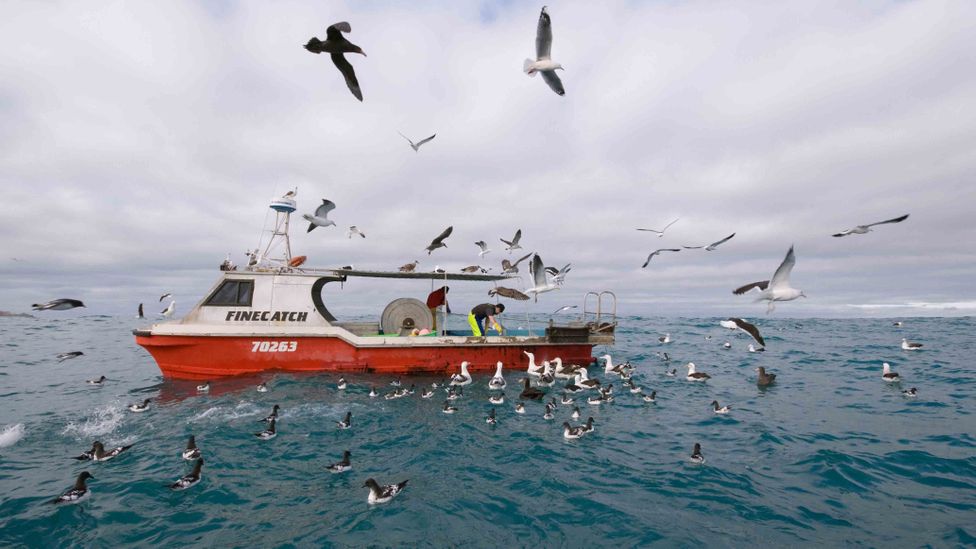
The discovery came about by accident when researchers at the Centre d’études biologiques de Chizé in France were investigating bycatch in fishing lines and nets – when fishers unintentionally snare animals they weren’t trying to catch, like albatrosses. Bycatch kills hundreds of thousands of birds and mammals each year.
But what about illegal fishing boats? Military vessels and aircraft patrol the Southern Ocean looking for criminal fishers, but there are no observers or monitoring to ensure these boats are using methods to protect albatrosses, and without these, we know that bycatch rates are very high. (Read more about the epic hunt for the fish pirates who exploit the sea)
Precautions can be taken to stop albatrosses being killed as bycatch by legitimate fishing boats, such as having human observers on the lookout (Credit: Alamy)
Boats that are legally fishing are generally registered and licensed, and so must adhere to laws regarding where and when they fish, and what and how much they can catch. Monitoring fishery activity around land masses is one thing, but beyond these limits, the open ocean is deemed international waters and doesn’t come under the jurisdiction of a single nation. Patrolling this enormous area by ship or air is rarely effective.
But what if there were 100 officers that could cover 10,000km each in a 30-day stretch? Meet the albatross ocean sentinels who patrol the seas for illegal fishers.
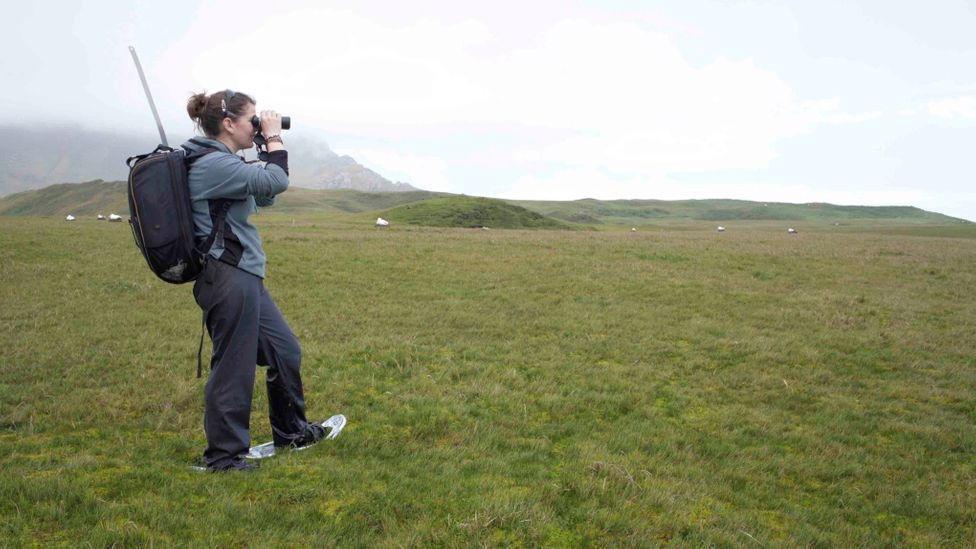
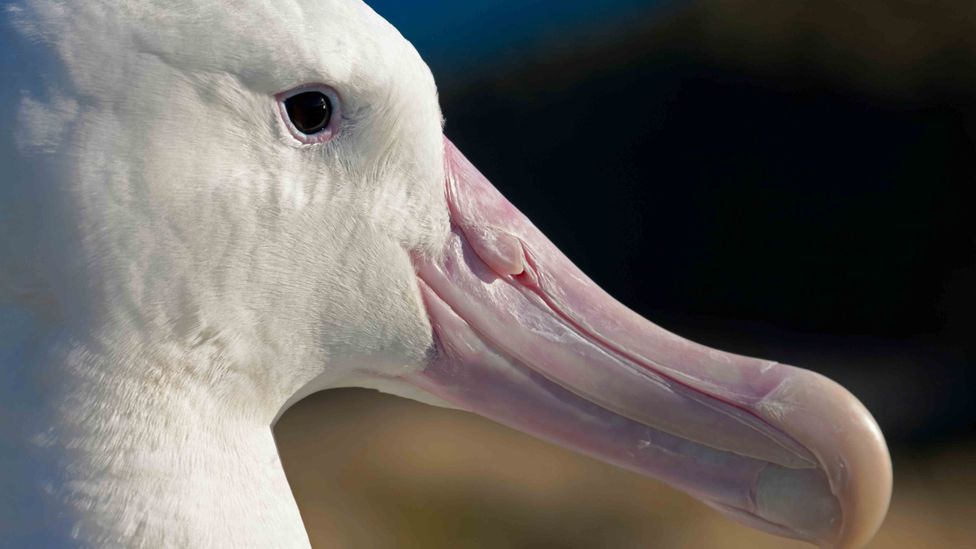
Wandering albatrosses breed on remote islands around Antarctica. These are usually only accessible by boat, and researchers must brave the “furious 50s” of the Southern Ocean – powerful winds found between the latitudes of 50 and 60 degrees – to get there, across some of the roughest seas in the world.
The albatross data unintentionally revealed the potential extent and scale of illegal fishing in the Southern Ocean
So many of these birds were dying as a result of getting caught in fishing lines that researchers started studying the overlap between albatrosses and fishing boats. Understanding where the birds came into contact with fisheries, and which birds followed boats the most, helped explain which parts of the population were most at risk of bycatch.
It’s possible to map the distribution of boats using data transmitted from onboard monitoring systems, but these records are often only available around land and rarely in real time. Given the amount of time the birds spend in the open ocean, this meant that researchers had little idea of how many birds overlapped with fishing boats and for how long.
To try another approach, my colleagues and I developed data loggers that could be attached to an albatross. The logger detects the radar of boats, collecting information on where boats are in real time. The loggers took years to perfect and I can still remember the excitement of getting the first one back that had successfully detected a boat’s radar.
Samantha Patrick fitted data trackers to albatrosses, with the unexpected result that they could pick up on likely fish pirates in international waters (Credit: Susan Waugh)
The data showed how the sex, age or personality of each bird affected how likely the bird was to come into contact with fishing boats. For example, males tend to forage to the south, closer to Antarctica where fishing boats are rarer, while females forage further north, bringing them closer to the tropics and into contact with hotspots of fishing activity. Understanding this variation was the primary aim of the research, to help ecologists understand how deaths in subsections of the population can have dramatic effects on the population as a whole. But the loggers also provided bonus data that could transform fishery management and conservation in the open oceans.
As ocean sentinels, albatrosses have a unique ability to collect the data needed for their own conservation
Originally this work began to differentiate between fishing boats and other vessels, to test whether birds were more likely to be attracted to fishing boats. But when we combined the data collected by the loggers with a global map, we could see the location of all boats with an active Automatic Identification System (AIS). This radar allows vessels to detect each other, preventing collisions. Our study found that over 20% of boats within French waters didn’t have their AIS on, rising to 35% in international waters. Since the AIS is intended to keep vessels safe, it’s likely that these vessels operating without it in international waters were doing so to avoid detection, and so could be fishing illegally.
On the high seas, more than a third of fishing vessels didn’t have their Automatic Identification System on, meaning they were likely fishing illegally (Credit: Alamy)
As a result, the albatross data had unintentionally revealed the potential extent and scale of illegal fishing in the Southern Ocean.
It’s difficult to imagine a human patrol boat being able to cover enough area to efficiently track illegal fisheries. But each wandering albatross could potentially cover the same area of ocean as a boat, and when its logger detects a fishing boat with its AIS turned off, it can relay that information to the authorities, who can alert nearby vessels to investigate.
Data collection on this scale would not only improve our ability to detect and manage illegal fisheries, but also to identify high risk areas for conservation. This would help conserve fish stocks, protect albatrosses and other seabirds, and manage the marine ecosystem as a whole.
As ocean sentinels, it turns out that albatrosses have a unique ability to collect the data needed for their own conservation.
Climate action taken by the world today wouldn’t be noticed for decades to come, according to researchers who say warming on Earth won’t start to slow down for at least 20 years.
And that’s probably an optimistic scenario.
A study published Tuesday in Nature Communications illustrates how the rewards for aggressive action would come much later. If global carbon dioxide emissions began falling tomorrow by at least 5% every year, the rate at which the Earth is warming wouldn’t begin to change —at least in a detectable way —until after the year 2040 or so.
Currently, worldwide emissions are still rising.
The situation is similar, in some ways, to a “very large ship, which is at high speed,” said Marianne Lund, a…
A small study of 31 women with COVID-19 in Italy found signs of the virus in samples of umbilical cord blood, the placenta and, in one case, breast milk.MARILYNN MARCHIONE
A small study strengthens evidence that a pregnant woman infected with the coronavirus might be able to spread it to her fetus.
Researchers from Italy said Thursday that they studied 31 women with COVID-19 who delivered babies in March and April. They found signs of the virus in several samples of umbilical cord blood, the placenta and, in one case, breast milk.
Women shouldn’t panic. This doesn’t mean there’s a viable virus in those places and “it’s too early to make guidelines” or to change care, said the study leader, Dr. Claudio Fenizia, an immunology specialist at the University of Milan.
But it does merit more study, especially of women who are infected earlier in their pregnancies than these women, said Fenizia, who discussed the results at a medical conference being held online because of the pandemic.
A pregnant woman wearing a face mask and gloves holds her belly as she waits in line for groceries at a food pantry in Waltham, Mass. A small study in Italy strengthens evidence that pregnant women infected with the coronavirus might be able to spread it to a fetus before birth.
Since the start of the pandemic, doctors have wondered whether in-the-womb infection could occur. HIV, Zika and some other viruses can infect a fetus this way. Several early reports from China suggested the coronavirus might, too, although doctors suspect those women may have spread the virus to their babies during or after birth.
The new study involved women at three hospitals during the height of the outbreak in northern Italy. The virus’s genetic material was found in one umbilical cord blood sample, two vaginal swabs and one breast milk sample. Researchers also found specific, anti-coronavirus antibodies in umbilical cord blood and in milk.
In one case, “there’s strong evidence suggesting that the newborn was born already positive because we found the virus in the umblilical cord blood and in the placenta,” Fenizia said.
In another case, a newborn had antibodies to the coronavirus that do not cross the placenta, so they did not come from the mother and were “due to direct exposure of the fetus to the virus,” Fenizia said.
In any case, the possibility of fetal infection seems relatively rare, he said. Only two of the newborns tested positive for the coronavirus at birth and neither became ill from it.
Dr. Ashley Roman, a pregnancy specialist at NYU Langone Health, said she and colleagues also detected viral particles on the fetal side of the placenta in several of the 11 cases they examined. The new report adds evidence that in-womb transmission is possible, but it seems rare and to not cause serious problems in the infants, she said.
“The most important thing that pregnant women need to know is it’s important to socially distance. It’s important to wear a mask, wash their hands,” Roman said. “Women don’t need to be cut off from society entirely, but they should be concerned about the impact of getting COVID on their own health during pregnancy.”
Dr. Anton Pozniak, a conference leader and virus expert at the Chelsea and Westminster Hospital in London, said the implications of the Italian research “have to be worked out.”
Children under age 3 rarely get seriously ill from coronavirus, and “I would suspect that even if there was transmission to babies, it was not harmful,” he said.
UNICEF, the United Nations’ children’s agency, recommends that new moms with COVID-19 wear a mask while breastfeeding, he added.
A Chinese woman holds her protective-mask-wearing dog in Beijing, China, on Feb. 7, 2020 in Beijing, China, amidst the outbreak of the new coronavirus.
As the novel coronavirus continues to infect people around the world, news articles and social media posts about the outbreak continue to spread online. Unfortunately, this relentless flood of information can make it difficult to separate fact from fiction — and during a viral outbreak, rumors and misinformation can be dangerous.
Here at Live Science, we’ve compiled a list of the most pervasive myths about the novel coronavirus SARS-CoV-2 and COVID-19, the disease it causes, and explained why these rumors are misleading, or just plain wrong.
Myth: Face masks can protect you from the virus
Standard surgical masks cannot protect you from SARS-CoV-2, as they are not…
Paleontologist Gerhard Gierlinski, from Warsaw, Poland, was just trying to get away from it all in the summer of 2002 and enjoy the warm seas and soft sands on the Greek island of Crete with his girlfriend. A researcher at the Polish Geological Institute, he was always ready to take samples of interesting things he spied on vacations, and he traveled with a hammer, a camera and a GPS for just such occasions.
What he discovered along the Mediterranean shores of the town of Trachilos would rock his world and send some researchers who were convinced that humans evolved solely in Africa, into angry denial, and resulted in many of them casting aspersions on his jaw-dropping find.
Gierlinski asked colleagues from Poland, Sweden, Greece, the US and the UK…


 MARILYNN MARCHIONE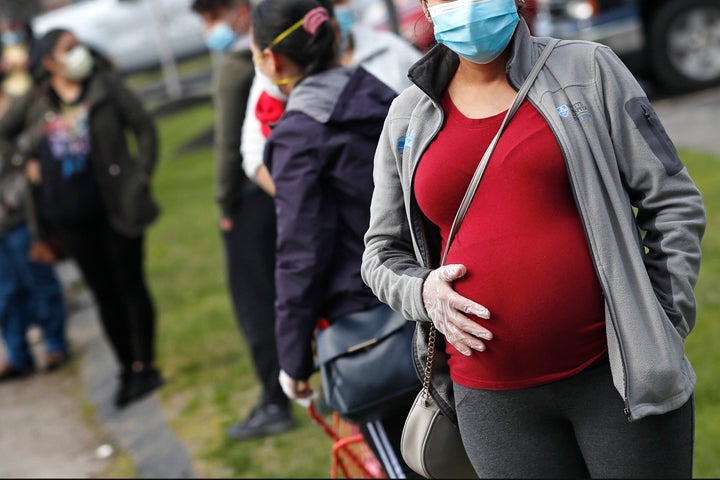


 Exposing the Big Game