The gap between soaring cases and falling deaths is being weaponized by the right to claim a hollow victory in the face of shameless failure. What’s really going on?
For the past few weeks, I have been obsessed with a mystery emerging in the national COVID-19 data.
Cases have soared to terrifying levels since June. Yesterday, the U.S. had 62,000 confirmed cases, an all-time high—and about five times more than the entire continent of Europe. Several U.S. states, including Arizona and Florida, currently have more confirmed cases per capita than any other country in the world.
But average daily deaths are down 75 percent from their April peak. Despite higher death counts on Tuesday and Wednesday, the weekly average has largely plateaued in the past two weeks.
Acknowledging the virus’s silver linings can feel ghoulish. But mounting evidence suggests that we’re in the midst of an unprecedented roadkill reprieve.BEN GOLDFARBJULY 6, 2020
THE ATLANTIC
Link Copied
Spring is a bloody season on American roads. Yearling black bears blunder over the asphalt in search of their own territories. In the West, herds of deer, elk, and pronghorn scamper across highways as they migrate from winter pastures to summer redoubts. A smaller-scale but no less epic journey transpires in the Northeast, where wood frogs, spotted salamanders, and eastern newts emerge from their winter hideaways and trek to ephemeral breeding pools on damp March nights, braving an unforgiving gantlet of cars along the way.
Among all creatures, it’s these amphibians—tiny, sluggish, determined—that are most vulnerable to roadkill. This year, though, their journey was considerably safer.
Greg LeClair, a graduate student at the University of Maine, leads The Big Night, a citizen science initiative in Maine through which volunteers tally up migrating frogs and salamanders and escort them across roads. This spring, he assumed that coronavirus concerns would shut down the project; instead, he rallied more participants than ever. “I think people were just home and had nothing else to do,” he told me. All of those volunteers found an amphibious bonanza. In previous years, LeClair said, the project’s participants counted just two live animals for every squashed one. This spring, they found about four survivors per victim. “The ratio of living animals to dead doubled,” LeClair marveled.https://f8b438117f75da65027ebf7524395299.safeframe.googlesyndication.com/safeframe/1-0-37/html/container.html
Maine’s amphibians are just one of the collateral beneficiaries of the novel coronavirus, which has ground civilization to a halt. Travel bans have confined many of us to our couches; post-apocalyptic photos of empty freeways have circulated on social media. With Homo sapiens sidelined, wildlife has tiptoed forth. Lions basked on a road in Kruger National Park, normally crowded with tourists. Wild boars rooted in Barcelona’s medians. Roadkill surveyors in places as far apart as Santa Barbara and South Africa told me they’ve seen fewer carcasses this year than ever before. In Costa Rica, where Daniela Araya Gamboa has conducted years of roadkill studies aimed at reducing the harm of cars, highways have become less perilous for ocelots, cryptic wildcats bejeweled with black spots. In the more than three months since the pandemic began, Araya recently told me, her project had logged only one slain ocelot. “We have an average of two ocelot roadkills each month during normal times,” she added.
The human cost of COVID-19 has, of course, been so incomprehensibly tragic that acknowledging the virus’s silver linings—the cleaner air, the forestalled carbon emissions—can feel ghoulish. But there’s no denying that the abrupt diminishment of human travel, a phenomenon scientists recently dubbed the “Anthropause,” has generated profound conservation benefits. Mounting evidence suggests that we’re in the midst of an unprecedented roadkill reprieve, a stay of execution for untold millions of wild creatures. “This is the biggest conservation action that we’ve taken, possibly ever, certainly since the national parks were formed,” Fraser Shilling, co-director of the Road Ecology Center at UC Davis, told me. “There’s not a single other action that has saved that many animals.”
Roadkill’s decline is so significant precisely because its impacts are ordinarily so catastrophic. One recent study calculated that cars crush about 200 million birds and 30 million mammals in Europe every year; in the United States, the toll has been estimated, albeit imprecisely, at more than 1 million each day. In Brazil, researchers wrote in 2014, roadkill has surpassed hunting to become “the leading cause of direct, human-caused mortality among terrestrial vertebrates.”
Given the scope of the carnage, even a temporary respite can save an astonishing amount of wildlife. That’s what Shilling and his colleagues documented in a recent report that analyzed collision statistics and carcass-cleanup figures from the handful of states that systematically collect roadkill data. In California, they found, roadkill fell by 21 percent in the four weeks after the state issued its stay-at-home order in March. In Idaho, the reduction was 38 percent; in Maine, it was 44 percent. A year of reduced travel, Shilling estimated, would save perhaps 27,000 large animals in those three states alone.
And although state records focus on the hefty mammals that endanger drivers—deer, elk, moose, bears, and the like—they’re mum on smaller critters, such as snakes, frogs, and birds, all of which have likely thrived during COVID-19. “We’re measuring the large animals, but I suspect it’s true for all animals, including insects,” Shilling said. (In Texas, millions of monarch butterflies succumb to grilles and windshields during their migrations to Mexico.) Add up all those less conspicuous casualties and extrapolate globally, and it’s hardly a stretch to say that hundreds of millions, perhaps billions, of wild animals will ultimately be spared because of the pandemic.
Nor is it just hyper-abundant animals, such as squirrels and raccoons, that are finding succor during the Anthropause. In California, the poster species for highways’ harms is the mountain lion, several populations of which may soon be protected under the state’s Endangered Species Act. Shilling found that mountain lion roadkill plummeted 58 percent after the shutdown. “When you’re talking about such small populations, you get even one cat taken out by roadkill, and that can spell doom,” Beth Pratt, the California director of the National Wildlife Federation, told me. The Anthropause isn’t merely protecting individual lives, it turns out—in some places, it may be safeguarding the persistence of entire species.
Although all available evidence suggests that net roadkill rates have dropped, it’s conceivable that, on some roads, deaths have actually ticked upward. For many species, cars—loud, terrifying, alien—deter animals from crossing altogether, leading one early road ecologist to describe traffic as a “moving fence.” In Oregon, researchers found that mule-deer collisions peaked at around 8,000 cars per day; beyond that threshold, the ungulates appeared to abandon their migration routes entirely rather than attempt to cross. As traffic has declined during COVID-19, then, animals may feel more comfortable venturing onto certain highways, at their peril—leading ultimately to localized roadkill hot spots. And even if it wasn’t more abundant this spring, roadkill might, in some states, simply be more visible, as agencies tasked with cleaning up carcasses divert resources to the coronavirus response.
How long will the benefits of the roadkill reprieve linger? In early March, Shilling and his colleagues found, Americans drove 103 billion total miles; by mid-April, shutdowns had reduced our collective travel to 29 billion miles, an astonishing 71 percent cut. As travel bans have eased, though, traffic has crept up again, to about half its pre-pandemic levels in California and Maine. Although cities like Milan, London, and New York have seized the opportunity to install new bike lanes and de-emphasize cars, many urban areas have registered more gridlock, as commuters spurn public transit for the socially distant cocoons of their personal vehicles.https://f8b438117f75da65027ebf7524395299.safeframe.googlesyndication.com/safeframe/1-0-37/html/container.html
“COVID is going to have a very short-term effect,” Sandra Jacobson, a retired U.S. Forest Service biologist specializing in transportation, told me. “At some point the world, but especially our country, is going to have to realize that we cannot simply continue to add more and more vehicles indefinitely.”
Shilling is less convinced of the Anthropause’s transience. After all, some of the trends that COVID-19 has spawned—the rise of remote work, for instance—may dampen our enthusiasm for getting behind the wheel. “Coming out of the pandemic, we will hopefully learn lessons,” he said. “One of them might be that we can get a lot of benefits out of not driving.”
Either way, the spring’s gains won’t be immediately undone. In Maine, LeClair told me, more amphibians safely reaching their mating ponds should mean more translucent, gelatinous clumps of successfully laid eggs—and, with luck, more migrants in 2021. “If we’re seeing more next year, we can get an idea that this pandemic might have actually boosted some populations,” he said. The benefits of the great roadkill reprieve, in other words, may outlast the pandemic itself.
We want to hear what you think about this article. Submit a letter to the editor or write to letters@theatlantic.com.BEN GOLDFARB is an environmental journalist based in Spokane, Washington. He is a 2019 Alicia Patterson Foundation fellow and the author of Eager: The Surprising, Secret Life of Beavers and Why They Matter.
Scientists at Stanford University have discovered a surprising shift in the Arctic Ocean. Exploding blooms of phytoplankton, the tiny algae at the base of a food web topped by whales and polar bears, have drastically altered the Arctic’s ability to transform atmospheric carbon into living matter. Over the past decade, the surge has replaced sea ice loss as the biggest driver of changes in uptake of carbon dioxide by phytoplankton.
The research appears July 10 in Science. Senior author Kevin Arrigo, a professor in Stanford’s School of Earth, Energy & Environmental Sciences (Stanford Earth), said the growing influence of phytoplankton biomass may represent a “significant regime shift” for the Arctic, a region that is warming faster than anywhere else on Earth.
The study centers on net primary production (NPP), a measure of how quickly plants and algae convert…
By NICHOLAS K. GERANIOS, Associated PressPublished: July 7, 2020, 12:10pmShare:
A grizzly bear Photo copyright Jim Robertson
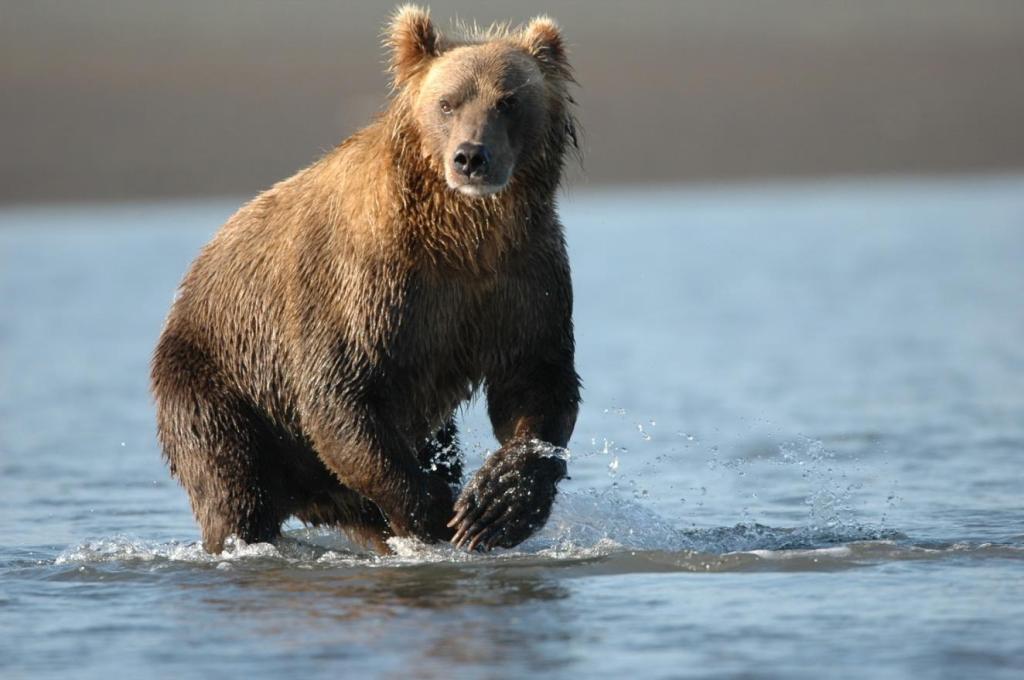
SPOKANE — The federal government on Tuesday decided to scrap plans to reintroduce grizzly bears to the North Cascades ecosystem in Washington state.
U.S. Secretary of the Interior David L. Bernhardt told a meeting of community members in Omak, Washington, that his agency will not conduct the environmental impact statement needed to move forward with the plan.
“The Trump Administration is committed to being a good neighbor, and the people who live and work in north central Washington have made their voices clear that they do not want grizzly bears,” Bernhardt said in a news release.
“Grizzly bears are not in danger of extinction, and Interior will continue to build on its conservation successes managing healthy grizzly bear populations across their existing range,” he said.
The decision was hailed by U.S. Rep. Dan Newhouse, R-Washington, who represents the region in Congress.
“Homeowners, farmers, ranchers, and small business owners in our rural communities were loud and clear: We do not want grizzly bears in North Central Washington,” Newhouse said. “I have long advocated that local voices must be heard by the federal government on this issue.”
The Department of the Interior began planning the environmental review process in 2015 under the Obama administration.
The recovery of grizzly bears in the lower 48 states is an amazing success story, the agency said. Most of the efforts have focused on six areas of Idaho, Montana, Wyoming and eastern Washington state.
The Greater Yellowstone Ecosystem has been the primary focus of grizzly recovery efforts to date, and grizzly populations have increased to about 700 bears there since the animals were listed as threatened under the Endangered Species Act in 1975.
The environmental group Conservation Northwest was disappointed by the decision, but did not think it was the final word on the bears.
“We are still confident they will be restored there,” spokesman Chase Gunnell said.
Gunnell said 80% of the people who provided public comments on the bears supported growing the population by bringing grizzlies to the back country in and around North Cascades National Park.
Gunnell said it was false that local residents overwhelmingly oppose reintroduction of the bears.
“This is not an issue that has just west side support,” Gunnell said, referring to more populous and liberal western Washington. “Public support is strong.”
Fewer than 10 grizzlies are thought to live across 9,800 square miles anchored by North Cascades National Park, Conservation Northwest said.
Given their isolation from other grizzly populations, the low number of bears, their very slow reproductive rate and other constraints, the North Cascades grizzly bear population is considered the most at-risk bear population in the United States, the environmental group said.
Grizzly bears were listed as a threatened species in 1975. They have slowly regained territory and increased in numbers in the ensuing decades, but they still occupy only a small portion of their historical range.
An estimated 50,000 bears once roamed the contiguous U.S. Government-sponsored programs led to most being poisoned, shot and trapped by the 1930s.
BLACKFOOT — A Blackfoot man lost his ability to hunt and trap for years after pleading guilty to over a decade of hunting violations.
Gage Allen, 33, pleaded guilty to five misdemeanor counts of various wildlife crimes dating back to 2007. On June 24, Magistrate Judge James Barrett suspended 300 days of jail time and placed Allen on four years of unsupervised probation, court records show.
Allen also lost his privilege to obtain a hunting license for nine years and a trapping license for 15 years. He will be required to complete 100 hours of community service.
As part of a plea agreement, Bingham County prosecutors dropped 25 additional charges related to poaching. He had also been initially charged with four felonies related to the illegal killing and selling of bobcats, but those were amended to misdemeanors.
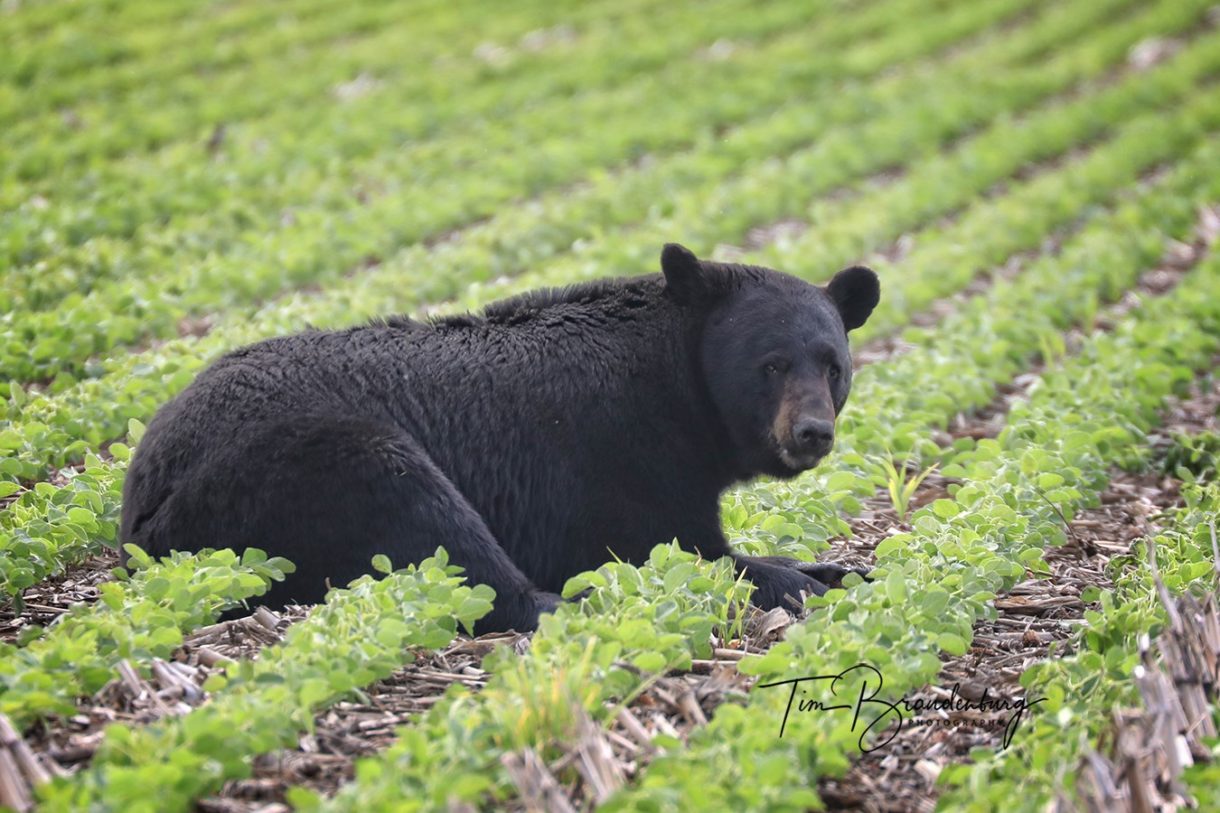
Bruno, pictured above, is reported to have walked to Missouri all the way from Wisconsin, journeying through Illinois and, briefly, Iowa, possibly in search of a mate. Photo by Tim Brandenburg/TIm Brandenburg Nature Photography
For a few days now, Bruno the bear has been something of a celebrity around the world. Hundreds of people have flocked to catch a glimpse of this wandering bear who is reported to have walked to Missouri all the way from Wisconsin, journeying through Illinois and, briefly, Iowa, possibly in search of a mate. His journey has been closely followed on social media, and a Facebook page, “Keeping Bruno Safe,” now has more than 150,000 fans.
The 16-inch arrow went all the way through the top of the dog’s head, but miraculously he survived.
Officers from Nassau County Animal Services picked the four-year-old dog up and rushed him to a veterinary hospital for emergency surgery.
Amazingly, they were able to remove the arrow, and the dog doesn’t appear to have any serious damage.
The officers dubbed the dog “Unicorn.”https://www.facebook.com/plugins/video.php?href=https%3A%2F%2Fwww.facebook.com%2FNassauCountyAnimalServices%2Fvideos%2F543842206310876%2F&show_text=0&width=267
With Unicorn safe and recovering, the big question was who shot the poor dog with an arrow.
But it didn’t take long for the officers to find the culprit: Carey Wilson, a 37-year-old Nassau County resident, was arrested for felony animal cruelty.
She admitted to the crime, but defended her actions by saying she was not trying to hurt or kill the dog but “scare it off” after finding him “peeing on her car tire.”
“The dog doesn’t want to leave, so I grabbed a crossbow, my intentions were not to kill the dog, but to try to get the message across, ‘Get out the yard,” Wilson told Action News Jax. But the network also notes that the police report calls her a liar.
The 9th Circuit Court of Appeals on Wednesday affirmed a federal court decision ruling prohibiting trophy hunts for grizzly bears in Wyoming and Idaho.
The appeals court agreed with the 2018 decision of a U.S. District Court in Montana that President Donald Trump’s administration illegally stripped Endangered Species Act protections from Yellowstone grizzly bears.
In ruling that Yellowstone grizzly bears must remain protected under the Endangered Species Act, the 9th Circuit Court of Appeals pointed to the lack of “concrete, enforceable mechanisms” to “ensure long-term genetic health of the Yellowstone grizzly.”
The ruling explains an “increase population size” is “required to ensure long-term viability” and describes the grizzly bear as “an iconic symbol of the Rocky Mountain west.”
In 2017, the U.S. Fish and Wildlife Service removed the Yellowstone-region…
Peaceful Canada geese – up to 4,000 – are being brutally rounded up for slaughter again this year, according to Canada Geese Protection Colorado, in an alert posted July 7 by Marc Bekoff.
This nightmare is headed up by Denver Parks and Recreation’s executive director, Scott Gilmore. He calls it a “rodeo” and blames the geese for damaging the environment.
Please read this clear summary of the situation by Canada Geese Protection Colorado, and then take action:
“For the second year in a row, Denver Parks and Recreation is attempting to rely on killing geese as a method of addressing the perceived nuisance of Canada geese resident in Denver parks. In 2019, without any substantive, transparent, or meaningful public engagement or notification, and in direct violation of its own policies, Denver Parks and Recreation hatched and executed a misguided, lazy plan to capture and slaughter Denver’s resident Canada geese because they do not regard them as sentient beings with a right to their own existence, are too lazy to clean our parks of goose feces, listened to an elite group calling for lethal population control, and were impatient, looking for a quick fix to a problem they created. Numerous humane alternatives to control the population and impact of Canada geese exist, such as habitat modification, hazing, egg oiling, public education, cleaning, and more.”
Cognitive ethologist and Colorado resident Dr. Marc Bekoff writes:
“This is not euthanasia, or mercy-killing, as they often claim to sanitize what they’re doing, but outright slaughter/murder. Geese are highly sentient and emotional beings who can mate for life. This slaughter is a bloodbath – an act of pure, shameful, unnecessary cruelty.”
*What Can I Do?*
Please call and/or write to Scott Gilmore, executive director of Denver Parks and Recreation. Politely urge the employment of peaceful, compassionate alternatives to the brutal killing of these innocent birds.
William Perry Pendley, Trump’s nominee to lead the Bureau of Land Management, has ties to anti-environment and anti-government forces
‘Although Pendley has been acting director of the Bureau of Land Management since last July, his official nomination will give him troubling new authority and political clout.’ Photograph: georgesanker.com/Alamy Stock PhotoPublished onMon 6 Jul 2020 04.30 EDT
890
On 26 June, Donald Trump announced that he plans to nominate William Perry Pendley to lead the Bureau of Land Management. That may not sound like big news, but it is. First of all, the office manages one-tenth of the United States’ land mass and, therefore, massive amounts of fossil fuels. Second, Pendley is linked to two little-known but very dangerous political movements: the so-called Wise Use movement and the anti-government extremists sometimes called constitutionalists or sovereign citizens.
The appointment should not come as a total surprise. Wise Use advocates, who are fiercely opposed to almost any environmental protection laws, have long had exceptional access to the Trump administration. In 2017, Lars Larson, a “journalist” from the alternative rightwing media sphere, crystallized the attitude of the Wise Use movement with a comment he made to then press secretary Sean Spicer:
The federal government is the biggest landlord in America. It owns two-thirds of a billion acres of America. I don’t think the Founders ever envisioned it that way. Does President Trump want to start returning the people’s land to the people? And in the meantime … can he tell the forest service to start logging our forests aggressively again to provide jobs for Americans, wealth for the treasury, and not spend $3.5bn a year fighting forest fires?
Larson was expressing a key demand of the Wise Use movement. The movement wants to privatize basically all public land, so that it can be used “wisely” by big business – especially the agricultural, fossil fuel and logging industries, which are also the movement’s biggest donors. The movement has been responsible for significant harassment and threats of political violence, particularly against environmentalists and employees of government agencies in the Pacific north-west. Between 2013 and 2018 alone, federal employees overseeing public lands were assaulted or threatened at least 360 times. In roughly the same period, the FBI initiated under 100 related domestic terrorism investigations, most concerning individuals motivated by anti-government ideologies.
The anti-environmentalists overlap with sections of the broader US far right, notably so-called constitutionalists and sovereign citizens, who hold a variety of different beliefs, all essentially denying the legitimacy of the federal government. This very loosely organized subculture has been responsible for some of the most notorious anti-government actions, including the 2014 Bundy Standoff in Nevada and the 2016 Oregon Standoff. The Oregon standoff, in which members of rightwing militia groups occupied the Malheur national wildlife refuge for 41 days to protest the sentencing of two ranchers for burning federal lands, became a cause celebre for many far-right activists.
Trump has long been sympathetic to these movements. In 2018 he pardoned Dwight Hammond Jr and his son, Steven Hammond, the two farmers whose case sparked the Oregon Standoff. But so far Trump’s support has been mainly symbolic and verbal. Like Jair Bolsonaro in Brazil, Trump has questioned federal ownership of public land on many occasions. In November 2018, as California was battling massive forest fires, he tweeted:
There is no reason for these massive, deadly and costly forest fires in California except that forest management is so poor. Billions of dollars are given each year, with so many lives lost, all because of gross mismanagement of the forests. Remedy now, or no more Fed payments!
Note the similarity to Larson’s demand a year earlier.
Although Pendley has been acting director of the Bureau of Land Management since last July, his official nomination will give him troubling new authority and political clout. In addition to undermining his own agency, he will also probably push to privatize more public land and provide even more access to exploitation by agricultural, fossil fuel and logging companies. Just last week, the Bureau of Land Management proposed opening millions of acres in rural Alaska for oil and gas leasing.
Just as troubling: Pendley’s new role will probably further embolden far-right anti-environment and anti-government forces, some of which already consider themselves above the law. In an op-ed last year in the Las Vegas Review-Journal, Pendley defended the role of Bureau of Land Management law enforcement officers, but did so in rhetoric carefully calculated to appease the anti-government far right, which believes local authorities are more legitimate than the federal government: “[Bureau of Land Management] rangers,” he wrote, “partner with local law enforcement, while recognizing that counties are a governmental-arm of sovereign states. Maintaining that deference is essential to making BLM a truly productive and valued partner to western communities.”
In articles for the conservative magazine National Review, Pendley has argued that the federal government should “sell its western lands” because “westerners are tired of having Uncle Sam for a landlord”, and expressed thinly-veiled support for anti-government extremists involved in armed stand-offs with federal agents.
The Pendley case is an important reminder that the ultimate far-right threat to American democracy does not come from the Klansmen or neo-Nazis shouting “Jews won’t replace us” in the streets of Charlottesville. It comes from broad but loosely organized anti-federal government subcultures, aided by men in suits fronting for multi-billion industries.
It is this coalition of disaffected, illiberal and self-interested forces that holds Trump and the Republican leadership together and which is slowly but steadily dismantling the federal government from within. It will not stop until every acre of public land is exploited by big business and federal oversight only exists on paper. It operates in broad daylight, aided by federal, state and local Republicans and ignored or underestimated by most Democrats.
Cas Mudde is the Stanley Wade Shelton UGAF professor of international affairs at the University of Georgia, the author of The Far Right Today (2019), and host of the new podcast Radikaal


/media/img/mt/2020/07/Atlantic_d_rates_v1/original.png)
/media/img/mt/2020/07/Atlantic_Roadkill_v2/original.png)


 THE ANIMAL CLUB July 8, 2020
 Exposing the Big Game