Exposing the Big Game

Forget Hunters' Feeble Rationalizations and Trust Your Gut Feelings: Making Sport of Killing Is Not Healthy Human Behavior

Exposing the Big Game

How grizzly bears have learned to live with humans

Bears shifted their behaviour to be more nocturnal and avoid people, study found

Sherry Noik · CBC News · Posted: Jul 06, 2020 3:00 PM ET | Last Updated: 9 hours ago

Grizzly bears in Canada have developed an adaptation behaviour that lets them continue living near humans yet reduce their interaction with us, according to decades of research into their behaviour.

In areas where bears and humans coexist, there are often policies in place to protect bear populations while safe-guarding people’s lives. But it turns out the bears are also helping their own cause.

A team of researchers from B.C. and Alberta pooled data on the movements, habitat use and mortality rates of 2,669 grizzly bears over 41 years to examine how they survived when living in or near human-dominated areas.

The researchers found that even as humans encroached further and further into the animals’ habitats, the bears didn’t necessarily shy away from people, but instead gradually shifted their behaviour to become more active at night, when they would be less likely to come into contact with them.

The data was compiled from an area of 378,191 square kilometres predominantly in B.C., which has an estimated 15,000 grizzlies — more than half of Canada’s grizzly bear population.

The research was published Monday in Proceedings of the National Academy of Sciences.

Better survival by becoming nocturnal

Typically, bears in the wilderness spend about half their time in daylight and half under cover of darkness, said study co-author Clayton T. Lamb, who is affiliated with the University of Alberta, the University of British Columbia and the University of Montana.

But by increasing their “nocturnality” by two to three per cent each year, bears living in “coexistence landscapes” — in proximity to people — also increased their survival rate by two to three per cent per year. This led the researchers to conclude that the shift to more nighttime activity was induced by humans. 

The older the bears got, the more nocturnal they became, starting from the age of three onward, to the point where the bears observed in the study reached at least 60 per cent nocturnality, and most of them 70 per cent or more.

Younger bears and those that didn’t adopt the behaviour didn’t do as well.

“If you could learn to live there, you could do OK,” Lamb said in an interview. “A lot of bears don’t switch fast enough and they end up dying.”

Three grizzly bears are captured on a motion sensor camera feasting on an animal left in an open roadkill pit in B.C. (Clayton T. Lamb )

Grizzlies are “integral” to maintaining a healthy ecosystem, the B.C. government says. But their survival is at risk, according to both the provincial Conservation Data Centre and the federal Committee on the Status of Endangered Wildlife in Canada (COSEWIC).

The biggest threat to bears? People.

B.C. banned grizzly bear hunting in 2017. In the decades prior to that, the province’s statistics found an average of 340 grizzly bears died from “human causes” each year — most killed by hunters, but about 30 were killed by animal control as a result of conflicts with humans.

Better for bears, better for humans

This shift to nocturnal behaviour is not only better for the bears, it’s better for humans, because it reduced the number of conflicts between the species, the study said.

Looking at the records of conflicts with 45 individual bears who were fitted with GPS collars, the researchers found there was about a 71 per cent lower chance of conflict with one of them at least once a year if the bears were more active at night than during the day.

“There’s more conflict where there’s more people, obviously,” Lamb said. “But bears that were more nocturnal were always in less conflict, regardless of how close they were to people. 

“Bears are helping to shape that landscape to benefit themselves.”

Nonetheless, bears are still on the losing side of the equation. 

Even though a majority of adult female bears in the area have become more nocturnal and are breeding successfully, they are dying in numbers too high to maintain their population.

For every bear that becomes a successful “coexister,” 29 die prematurely, the research found. They have to rely on “immigrant” bears from nearby wilderness areas to keep thriving.

This isn’t the first time animals have been observed shifting their schedules. A 2018 analysis of dozens of studies covering 62 species, including brown and black bears, found animals increased their nocturnality “in response to human disturbance.” 

But Lamb said the four decades of research on bears brings the whole picture into focus: the extent of the risk they face from living near people, the adaptation that helps them survive and the need for “demographic rescue” via bear immigration to sustain their numbers. 

“The next steps in all this research is really the applied aspect — what can we do with this information to make the landscape work better for people and carnivores,” Lamb saidhttps://www.cbc.ca/news/technology/bears-become-more-nocturnal-to-survive-1.5636570

Drunk driving hunter arrested in Pulaski County, deputies say

Exposing the Big Game's avatarCommittee to Abolish Sport Hunting Blog

James Allison
James Allison (New River Valley Regional Jail)

PULASKI COUNTY, Va. – Pulaski County deputies arrested a man they say was driving drunk, as well as hunting drunk, on Friday night.

At about 8 p.m., they responded to the 1500 block of Julia Simpkins Road after being alerted that 58-year-old James “Teddy” Allison was drunk and making threats, while firing a gun.

When deputies arrived, Allison was driving away and they stopped him in a nearby field.

They could see he was drunk and found a gun in his car, according to the Sheriff’s Office.

He’s charged with driving under the influence, reckless handing of a firearm and hunting while intoxicated.

He’s being held without bond at the New River Valley Regional Jail.

View original post

HSI undercover investigation shows foxes bludgeoned, skinned alive on Asian fur farms

July 7, 2020 0 Comments

HSI undercover investigation shows foxes bludgeoned, skinned alive on Asian fur farms

The animals are crammed into tiny wire cages where they can barely move. It’s the only space they’ll ever know, and it is a terrible one. Feces pile up under the cages, and their water bowls are either dry or a fetid pool of algae.Share186TweetRedditEmail186SHARES

The cruelty of fur is on terrifying display in these scenes from a fur farm, captured on video by investigators working with Humane Society International. Foxes are pulled out of their cages, one by one, usually by their tails as they try to cling to the wire walls in terror. Each is thrown to the ground and repeatedly bludgeoned in the head and face with a metal rod. The animals struggle and tremble, badly injured but not yet dead. The ground is stained with the blood that pours out of their heads.

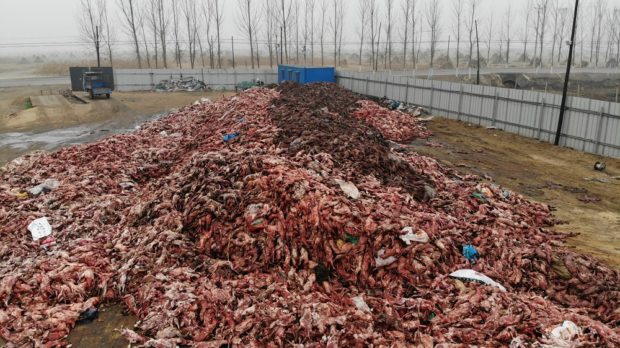
Moments later, if you can still bear to watch (warning: the linked video contains images that many will find disturbing), you’ll see men skinning the animals, some still alive, after which their bodies are dumped like trash. The camera moves to a pile of discarded carcasses, including one skinned animal who raises his head, slowly and painfully.

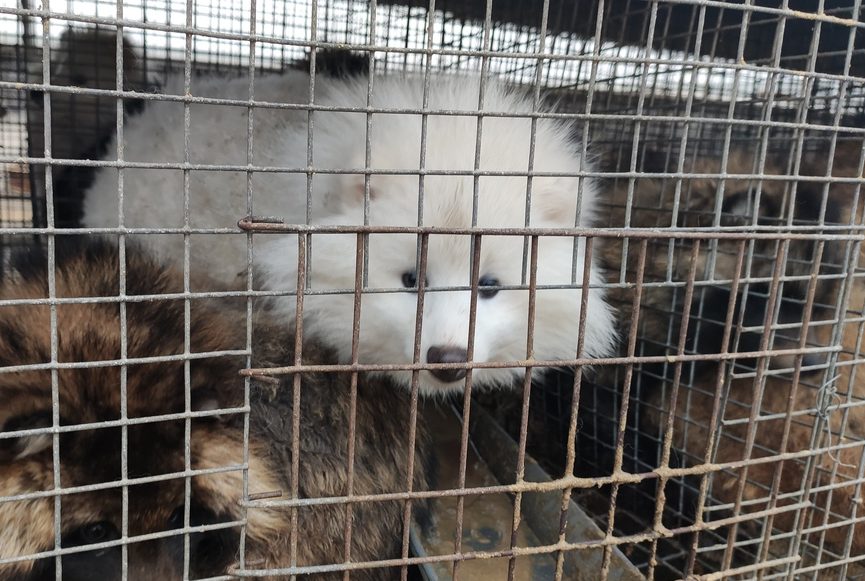
It’s hard to imagine a worse way to die. But the lives of the nearly 100 million animals killed each year for their fur, including foxes, raccoon dogs and mink, are hardly any better: they spend all of their days in captivity at fur factory farms like these. As you see in the undercover footage, the animals are crammed into tiny wire cages where they can barely move. It’s the only space they’ll ever know, and it is a terrible one. Feces pile up under the cages, and their water bowls are either dry or a fetid pool of algae. The animals are never seen by a veterinarian, and many exhibit symptoms of mental distress and decline.

Skinned animals are heaped in a pile at a fur farm. Animals are sometimes skinned while still alive.

Investigators filmed this footage at 11 randomly selected fur farms in one of the top fur-producing countries in Asia. We are choosing not to reveal the country in order to protect the identity of the investigators. Besides, it’s important not to lose sight of the true culprits here: fur factory farms like these would not exist if designers, retailers and consumers did not provide a market for these cruel products.

With growing awareness about the immense suffering of animals in the fur industry, major fashion houses and retailers the world over have shunned it. In the last few years alone, we have worked with major fashion brands and retailers, including Macy’s, Bloomingdale’s, Prada, Gucci, Armani, Michael Kors, Jimmy Choo, YOOX Net-A-Porter, Farfetch, Donna Karan, Burberry, Coach and others, to announce fur-free policies. California last year became the first U.S. state to ban fur, and we are working to pass similar bans in cities and states across the United States, including Minneapolis, Rhode Island and Hawaii.

Globally, HSI has kept up the momentum against fur. HSI/United Kingdom spearheads the campaign to make Britain the first country in the world to ban the sale of fur. The U.K. banned fur farming two decades ago but still imports tens of thousands of pounds of fur each year. More than a dozen European countries, including Austria, the Czech Republic and Norway, have also banned fur production.

The Netherlands, once the third largest fur farming country in the world, banned fur production in 2013 with an 11-year phaseout. But in recent months, the coronavirus crisis has added even more urgency to end the fur trade there and around the world. After two fur farm workers in the Netherlands were reported to have contracted the virus from infected mink, the country killed hundreds of thousands of mink, most of them pups, on 20 Dutch fur factory farms to stop any further spread of the virus. The Dutch government is now considering a permanent closure of all mink fur farms in the country. Denmark, which is Europe’s largest mink producer, has also discovered infected mink on three fur farms. Infectious disease experts had already warned fur farms could act as reservoirs for the disease, and with this cull, we have seen even more needless suffering play out for these animals.

The fur trade has nothing to offer except the worst sort of cruelty for a product no one needs. So many warm and stylish alternatives indistinguishable from animal fur are now widely available to consumers, and even a single animal bred and killed for their fur is one too many. This gruesome video is a reminder that we still have a long way to go, but we won’t stop until this cruel commodity is wiped out for good, and no animal is beaten to death and skinned alive on a fur farm anywhere in the world.

Warning: Video below contains images many may find disturbing.https://www.youtube-nocookie.com/embed/YtNXaYk12e4?wmode=transparent&iv_load_policy=1&modestbranding=0&rel=0&autohide=1&feature=youtu.be&autoplay=0

8 people, thousands of animals killed in floods in Mongolia

http://www.xinhuanet.com/english/2020-07/07/c_139194470.htm

Source: Xinhua| 2020-07-07 14:39:59|Editor: huaxia

ULAN BATOR, July 7 (Xinhua) — Eight people and thousands of livestock animals were killed and thousands of homes were flooded as a heavy rain caused flash floods in some provinces of Mongolia on Friday and Saturday, the country’s National Emergency Management Agency (NEMA) reported on Tuesday.

“A total of eight people, including two children lost their lives due to the heavy rain-triggered floods in Umnugovi province in the south and Sukhbaatar province in the east on July 3,” NEMA said in a statement.

More than 7,000 livestock animals were killed in three provinces, namely Tuv and Govisumber in the central and Arkhangai in the central-west due to the floods, the report said.

In addition, a total of 2,360 homes in some provinces such as Khentii, Tuv and Khuvsgul were flooded, it said.

Meteorologists forecast heavy rains to hit a large part of the country in the coming days, urging citizens, especially herders, to take extra precautions. Enditem

Unite human, animal and environmental health to prevent the next pandemic – UN Report

Exposing the Big Game's avatarThe Extinction Chronicles

Nairobi, July 6, 2020 – As the COVID-19 pandemic continues to take lives and disrupt economies across the world, a new report warns that further outbreaks will emerge unless governments take active measures to prevent other zoonotic diseases from crossing into the human population, and sets out ten recommendations to prevent future pandemics.

The report, Preventing the Next Pandemic: Zoonotic diseases and how to break the chain of transmission, is a joint effort by the United Nations Environment Programme (UNEP) and the International Livestock Research Institute (ILRI).

It identifies seven trends driving the increasing emergence of zoonotic diseases, including increased demand for animal protein; a rise in intense and unsustainable farming; the increased use and exploitation of wildlife; and the climate crisis. The report finds that Africa in particular, which has experienced and responded to a number of zoonotic epidemics…

View original post 673 more words

Answer to the “Sun” article

Exposing the Big Game's avatarCommittee to Abolish Sport Hunting Blog

This is my response to the article I posted earlier:..

Hunting, fishing licenses required (even if you don’t hunt or fish) for hundreds of Colorado wildlife areas

“We want folks to hunt and fish on these properties,” stated public information officer, Travis Duncan, in a recent Colorado Sun article entitled, “Hunting, fishing licenses required (even if you don’t hunt or fish) for hundreds of Colorado wildlife areas.” In other words, if you’re there simply to bird and/or wildlife watch or otherwise enjoy the sights and sounds of the living natural world and its inhabitants, you’re not welcome. Not without paying the same fee and being lumped in with those who came there to kill something (sportingly, of course).

Don’t get me wrong, visitors who might want spend a morning or afternoon at one of Colorado’s remaining natural areas and witness the natural splendor they have to offer are not opposed to…

View original post 130 more words

Hunting, fishing licenses required (even if you don’t hunt or fish) for hundreds of Colorado wildlife areas

Exposing the Big Game's avatarCommittee to Abolish Sport Hunting Blog

The Ruby-Horsethief section of the Colorado River below the Loma put-in, which is part of a State Wildlife Area. (Jason Blevins, The Colorado Sun)

Rule approved last month applies to State Wildlife Areas and State Trust Lands, which can contain popular stretches for boating and other recreation

OUTDOORSPRIMARY CATEGORY IN WHICH BLOG POST IS PUBLISHED

View original post 607 more words

Updates on coronavirus in Seattle and Washington state

Exposing the Big Game's avatarThe Extinction Chronicles

caption: The sign in front of a Seattle drug store attempting to mitigate contact with cases of Covid-19.
Enlarge Icon
The sign in front of a Seattle drug store attempting to mitigate contact with cases of Covid-19.
CREDIT: DYER OXLEY / KUOW

This post will be updated with information about the coronavirus pandemic in Washington state. Scroll down for older information.

As of Friday, July 3, the Washington State Department of Health reports:

1,354 Covid-19 related deaths; 35,247 confirmed cases (5.8% positive rate among those tested, and 3.8% death rate among positive cases). Note that tests have been limited, so there are likely more unreported cases.

The most heavily hit counties have been King (619 deaths), Snohomish (173 deaths), Yakima (160 deaths), and Pierce (105 deaths).

Versión en español aquí / Read KUOW’s coronavirus coverage in Spanish

MONDAY, JULY 6

Snoqualmie Tribe donates $1M to organizations hit hard by the pandemic

8:45 a.m. — The Snoqualmie Tribe has donated nearly $1 million “to organizations that…

View original post 606 more words

Think a ‘mild’ case of Covid-19 doesn’t sound so bad? Think again

Adrienne Matei

https://www.theguardian.com/commentisfree/2020/jul/06/coronavirus-covid-19-mild-symptoms-who

Otherwise healthy people who thought they had recovered from coronavirus are reporting persistent and strange symptoms – including strokes

‘It’s important to keep in mind how little we truly know about this vastly complicated disease.’ Photograph: Yara Nardi/ReutersPublished onMon 6 Jul 2020 01.17 EDT

7,252734

Conventional wisdom suggests that when a sickness is mild, it’s not too much to worry about. But if you’re taking comfort in World Health Organization reports that over 80% of global Covid-19 cases are mild or asymptomatic, think again. As virologists race to understand the biomechanics of Sars-CoV-2, one thing is becoming increasingly clear: even “mild” cases can be more complicated, dangerous and harder to shake than many first thought.

Throughout the pandemic, a notion has persevered that people who have “mild” cases of Covid-19 and do not require an ICU stay or the use of a ventilator are spared from serious health repercussions. Just last week, Mike Pence, the US vice-president, claimed it’s “a good thing” that nearly half of the new Covid-19 cases surging in 16 states are young Americans, who are at less risk of becoming severely ill than their older counterparts. This kind of rhetoric would lead you to believe that the ordeal of “mildly infected” patients ends within two weeks of becoming ill, at which point they recover and everything goes back to normal.Advertisement

While that may be the case for some people who get Covid-19, emerging medical research as well as anecdotal evidence from recovery support groups suggest that many survivors of “mild” Covid-19 are not so lucky. They experience lasting side-effects, and doctors are still trying to understand the ramifications.

Some of these side effects can be fatal. According to Dr Christopher Kellner, a professor of neurosurgery at Mount Sinai hospital in New York, “mild” cases of Covid-19 in which the patient was not hospitalized for the virus have been linked to blood clotting and severe strokes in people as young as 30. In May, Kellner told Healthline that Mount Sinai had implemented a plan to give anticoagulant drugs to people with Covid-19 to prevent the strokes they were seeing in “younger patients with no or mild symptoms”.

Doctors now know that Covid-19 not only affects the lungs and blood, but kidneys, liver and brain – the last potentially resulting in chronic fatigue and depression, among other symptoms. Although the virus is not yet old enough for long-term effects on those organs to be well understood, they may manifest regardless of whether a patient ever required hospitalization, hindering their recovery process.

Another troubling phenomenon now coming into focus is that of “long-haul” Covid-19 sufferers – people whose experience of the illness has lasted months. For a Dutch report published earlier this month (an excerpt is translated here) researchers surveyed 1,622 Covid-19 patients with an average age of 53, who reported a number of enduring symptoms, including intense fatigue (88%) persistent shortness of breath (75%) and chest pressure (45%). Ninety-one per cent of the patients weren’t hospitalized, suggesting they suffered these side-effects despite their cases of Covid-19 qualifying as “mild”. While 85% of the surveyed patients considered themselves generally healthy before having Covid-19, only 6% still did so one month or more after getting the virus.

After being diagnosed with Covid-19, 26-year-old Fiona Lowenstein experienced a long, difficult and nonlinear recovery first-hand. Lowenstein became sick on 17 March, and was briefly hospitalized for fever, cough and shortness of breath. Doctors advised she return to the hospital if those symptoms worsened – but something else happened instead. “I experienced this whole slew of new symptoms: sinus pain, sore throat, really severe gastrointestinal issues,” she told me. “I was having diarrhea every time I ate. I lost a lot of weight, which made me weak, a lot of fatigue, headaches, loss of sense of smell …”

By the time she felt mostly better, it was mid-May, although some of her symptoms still routinely re-emerge, she says.

“It’s almost like a blow to your ego to be in your 20s and healthy and active, and get hit with this thing and think you’re going to get better and you’re going to be OK. And then have it really not pan out that way,” says Lowenstein.

Unable to find information about what she was experiencing, and wondering if more people were going through a similarly prolonged recovery, Lowenstein created The Body Politic Slack-channel support group, a forum that now counts more than 5,600 members – most of whom were not hospitalized for their illness, yet have been feeling sick for months after their initial flu-like respiratory symptoms subsided. According to an internal survey within the group, members – the vast majority of whom are under 50 – have experienced symptoms including facial paralysis, seizures, hearing and vision loss, headaches, memory loss, diarrhea, serious weight loss and more.

“To me, and I think most people, the definition of ‘mild’, passed down from the WHO and other authorities, meant any case that didn’t require hospitalization at all, that anyone who wasn’t hospitalized was just going to have a small cold and could take care of it at home,” Hannah Davis, the author of a patient-led survey of Body Politic members, told me. “From my point of view, this has been a really harmful narrative and absolutely has misinformed the public. It both prohibits people from taking relevant information into account when deciding their personal risk levels, and it prevents the long-haulers from getting the help they need.”

At this stage, when medical professionals and the public alike are learning about Covid-19 as the pandemic unfolds, it’s important to keep in mind how little we truly know about this vastly complicated disease – and to listen to the experiences of survivors, especially those whose recoveries have been neither quick nor straightforward.

It may be reassuring to describe the majority of Covid-19 cases as “mild” – but perhaps that term isn’t as accurate as we hoped.