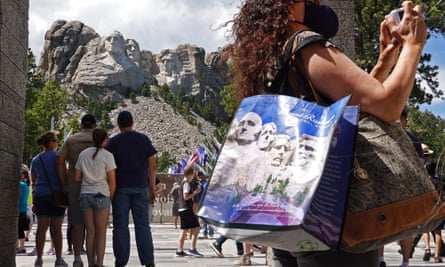
Donald Trump is due to attend a fireworks display at Mount Rushmore in South Dakota on Friday night. Photograph: Scott Olson/Getty ImagesAdam Gabbatt in New York@adamgabbattPublished onFri 3 Jul 2020 13.28 EDT
228
The Fourth of July is traditionally for barbecues, fireworks, boisterous partying and various hijinks to celebrate Independence Day. But this year, with coronavirus cases soaring to all-time highs, medical experts warn that the normal US holiday exuberance could instead create infection “superspreader” events.‘It’s very troubling’: alarm grows over Covid-19 spike among young AmericansRead more
Across the country, thousands of official public celebrations have been canceled in an effort to prevent mass gatherings. Two notable exceptions are the fireworks planned by the Trump administration in the center of Washington, and an event on Friday night at Mount Rushmore in South Dakota where the president will attend a fireworks display.
This event has managed simultaneously to upset Native American leaders who consider the location stolen tribal land; irritate those worried about wildfires in the parched landscape, where fireworks have been banned in recent drought years; and further divide views on health precautions, with the Republican governor of South Dakota saying social distancing will not be enforced and anyone who doesn’t like that idea can “stay home”.Advertisementhttps://355a7bd648d7d5585dd18118c232a4c6.safeframe.googlesyndication.com/safeframe/1-0-37/html/container.html
Most municipal celebrations will not happen. But large groups are still expected in backyards, homes and streets, as Americans strain to celebrate their liberation from British rule.
And with the country reporting record highs of new coronavirus cases, officials say the impact of Fourth of July events could be catastrophic.
“It’s set up a perfect storm,” Joshua Barocas, an infectious disease physician at Boston Medical Center, said during a briefing by the Infectious Diseases Society of America.
“The combination of travel, the combination of reopening – perhaps in some cases too early – and the combination of people not necessarily following some of these preventive guidelines.”
The US recorded 52,000 new cases on Wednesday, according to Johns Hopkins University figures, a new all-time daily high for the US in the outbreak. It was the fifth daily high in the last eight days.
On Thursday morning, infections were rising in up to 40 states, and 14 states reported record daily highs.
About 40% of the US is now changing course on reopening in an attempt to quell the unprecedented surge, and states are pleading with people not to engage in group revelry.
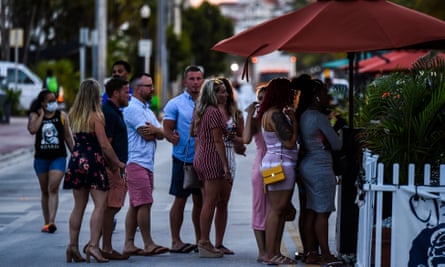
The mayor of Florida’s most populous county, which includes Miami, on Friday ordered indefinite overnight curfews from 10pm to 6am.
“This curfew is meant to stop people from venturing out and hanging out with friends in groups, which has shown to be spreading the virus rapidly,” Carlos Gimenez said in a statement, citing staffing shortages at hospitals.
In Austin, Texas, that warning took the form of an emergency alert to people’s phones, which urged them to celebrate Independence Day responsibly.
“Coronavirus is spreading rapidly in Austin-Travis county,” read the alert, which buzzed up on screens across the city.
“Stay home. Avoid non-household gatherings. Keep six feet apart from there. Wear a face covering. Wash your hands frequently.”
Texas is among the states worst affected by the recent surge. The state, which was one of the first to reopen bars, restaurants and hair salons in May, recorded its highest ever number of daily coronavirus cases this week, and several hospitals in Houston are at or near full capacity.
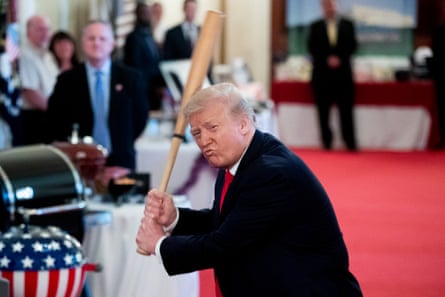
Trump at a ‘Spirit of America Showcase’, at the White House on Wednesday. Photograph: Michael Reynolds/EPA
In Alabama, a group of students held “Covid parties” this week, according to Tuscaloosa city councilor Sonya McKinstry, where students wagered over who would become infected.
“They put money in a pot, and they try to get Covid. Whoever gets Covid first gets the pot. It makes no sense,” McKinstry told ABC News. “They’re intentionally doing it.”
The parties fly in the face of advice from the Alabama department of public health, which has asked people to maintain a 6ft distance, and explained the concept of superspreader events in guidance sent out to local governmental officials.
“Asymptomatic spread of Covid-19 is a major risk factor. These ‘superspreaders’ do not know they are carrying the disease,” the health department said.
“It is estimated one in four infected people are ‘superspreaders’. For this reason, we strongly recommend wearing masks in public gatherings.”
California, which had been making progress on getting infections down, is now the new US’s worst hotspot. The Riverside county public health officer, Cameron Kaiser, warned that the effect of people gathering to toast Memorial Day, a public holiday in May, was stark.
The California, governor ordered the closure of all recently reopened bars on Wednesday, banned indoor movie theater-going and dining at restaurants. Arizona’s governor, Doug Ducey, abruptly ordered bars, gyms, movie theaters and water parks to close.
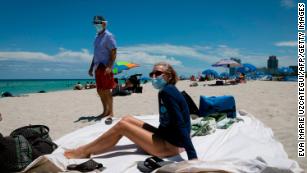
Many beaches, a traditional Fourth of July rallying point, have been ordered to close. A majority of beaches in southern Florida will shut down from Friday, as will beaches in Texas and Los Angeles county.
Amid the warnings over the celebrations, Trump has remained defiant. He has insisted that the “Salute to America”, a huge firework-laden display of national pride which was started by the president last year, will go ahead in Washington, despite the city’s mayor urging against it.
Trump will speak at the event, which thousands attended last year, and the department of the interior said the display will be “a patriotic tribute to our men and women in uniform”.
The United States reported a record number of new coronavirus cases as it headed into a holiday weekend. Health officials and experts attribute the rise in cases to reopenings across the country, uneven use of masks and increased travel. Three experts discuss what they have learned about coronavirus transmission during reopenings – and urge caution over the upcoming holiday weekend.
Where has reopening in the US been successful and where has it led to a surge in cases?
Saskia Popescu: Washington state reopened over the course of several months. In Arizona, where I live, we started allowing elective surgery…
While COVID-19 and protests for racial justice command the world’s collective attention, ecological destruction, species extinction and climate change continue unabated. While the world’s been focused on other crises, an alarming study was released warning that species extinction is now progressing so fast that the consequences of “biological annihilation” may soon be “unimaginable.”
Dr. Jane Goodall, the world-renowned conservationist, desperately wants the world to pay attention to what she sees as the greatest threat to humanity’s existence.
CBS News recently spoke to Goodall over a video conference call and asked her questions about the state of our planet. Her soft-spoken grace somehow helped cushion what was otherwise extremely sobering news: “I just know that if we carry on with business as usual, we’re going to destroy ourselves. It would be the end of us, as well as life on Earth as we know it,” warned Goodall.
Dr. Jane Goodall at a reception in honor of Disney Conservation Funds 20th anniversary on April 18, 2016 in Orlando, Florida.GUSTAVO CABALLERO / GETTY IMAGES
What follows is a lightly edited transcript of our conversation.
Jeff Berardelli:Destruction of nature is causing some really big concerns around the world. One that comes to the forefront right now is emergent diseases like COVID-19. Can you describe how destruction of the environment contributes to this?
Dr. Jane Goodall: Well, the thing is, we brought this on ourselves because the scientists that have been studying these so-called zoonotic diseases that jump from an animal to a human have been predicting something like this for so long. As we chop down at stake tropical rainforest, with its rich biodiversity, we are eating away the habitats of millions of animals, and many of them are being pushed into greater contact with humans. We’re driving deeper and deeper, making roads throughout the habitat, which again brings people and animals in contact with each other. People are hunting the animals and selling the meat, or trafficking the infants, and all of this is creating environments which are perfect for a virus or a bacteria to cross that species barrier and sometimes, like COVID-19, it becomes very contagious and we’re suffering from it.
But we know if we don’t stop destroying the environment and disrespecting animals — we’re hunting them, killing them, eating them; killing and eating chimpanzees in Central Africa led to HIV/AIDS — there will be another one. It’s inevitable.
Do you fear that the next [pandemic] will be a lot worse than this one?
Well, we’ve been lucky with this one because, although it’s incredibly infectious, the percentage of people who die is relatively low. Mostly they recover and hopefully then build up some immunity. But supposing the next one is just as contagious and has a percentage of deaths like Ebola, for example, this would have an even more devastating effect on humanity than this one.
I think people have a hard time connecting these, what may look like chance events, with our interactions and relationship with nature. Can you describe to people why the way that we treat the natural world is so important?
Well, first of all, it’s not just leading to zoonotic diseases, and there are many of them. The destruction of the environment is also contributing to the climate crisis, which tends to be put in second place because of our panic about the pandemic. We will get through the pandemic like we got through World War II, World War I, and the horrors following the World Trade towers being destroyed. But climate change is a very real existential threat to humankind and we don’t have that long to slow it down.
Intensive farming, where we’re destroying the land slowly with the chemical poisons, and the monocultures — which can be wiped out by a disease because there is no variation of crops being grown — is leading to habitat destruction. It’s leading to the creation of more CO2 through fossil fuels, methane gas and other greenhouse gas [released] by digestion from the billions of domestic animals.https://c08e3ca301573b8802c73c1c8cc0e9db.safeframe.googlesyndication.com/safeframe/1-0-37/html/container.html
It’s pretty grim. We need to realize we’re part of the environment, that we need the natural world. We depend on it. We can’t go on destroying. We’ve got to somehow understand that we’re not separated from it, we are all intertwined. Harm nature, harm ourselves.
If we continue on with business as usual, what do you fear the outcome will be?
Well,if we continue with business as usual, we’re going to come to the point of no return. At a certain point the ecosystems of the world will just give up and collapse and that’s the end of us eventually too.
What about our children? We’re still bringing children into the world — what a grim future is theirs to look forward to. It’s pretty shocking but my hope is, during this pandemic, with people trapped inside, factories closed down temporarily, and people not driving, it has cleared up the atmosphere amazingly. The people in the big cities can look up at the night sky and sea stars are bright, not looking through a layer of pollution. So when people emerge [from the pandemic] they’re not going to want to go back to the old polluted
Now, in some countries there’s not much they can do about it. But if enough of them, a groundswell becomes bigger and bigger and bigger [and] people say: “No I don’t want to go down this road. We want to find a different, green economy. We don’t want to always put economic development ahead of protecting the environment. We care about the future. We care about the health of the planet. We need nature,” maybe in the end the big guys will have to listen.
I often think our economic future, which is always put at the forefront, is actually dependent upon our ecological future. Without an ecological future, there is not going to be any economic growth. Would you agree?
Absolutely. I mean, it’s all been said again and again, but fossil fuels are not infinite, they will come to an end, leading to a lot more destruction of the environment for sure. Forests and natural resources are not infinite and yet we’re treating them as though they are, and in some places using them up more quickly than nature can replenish them.
We have to have a different kind of economy, we need a different way of thinking about what is success.Is it just about having more and more money, more and more stuff, being able to show off to your friends, and the wasteful society we live in? We waste clothes, we waste food, we waste laptops and cellphones. That pollutes the environment. So we’ve got to think differently, haven’t we?
So what do we do? Right now our worldview is based on GDP. You suggest that we think of it in a different way. So do you have a suggestion of how we rate our success other than GDP?
I’m not an economist.I just know that if we carry on with business as usual, we’re going to destroy ourselves. It would be the end of us, as well as life on Earth as we know it.
So one thing we can do, those of us in affluent societies can almost all do with a bit less. We have a very unsustainable lifestyle. You can’t really blame people, they grew up into it. But if you went through World War II like I did, when you took nothing for granted, one square of chocolate for a week is what we had and everything was rationed. So, you appreciate it. We never wasted even an ounce of food; not like today.
Then, we also have to alleviate poverty. Because if you’re really poor you destroy the environment, you cut down the last trees to make land to grow more food for your family, or fish the last fish. Or if you’re in an urban area you buy the cheapest junk food. You don’t have the luxury of asking: how is this made, did it harm the environment, did it lead to the suffering of animals like in the factory farms, is it cheap because of child slave labor? You just have to buy the cheapest in order to survive.
Then the third thing, which nobody wants to talk about, but nevertheless … there are approximately 7.8 billion of us on the planet today and already in some places we’re using up natural resources faster than nature can replenish them. In 2050 it’s estimated that there will be 9.7 billion of us. What will happen? We can’t just go on burying it under the carpet.
Population issues are politically sensitive so I talk about voluntary population optimization. So that’s OK, it’s voluntary, it is your choice. You optimize it for your financial situation. People are desperate to educate their children and they can’t educate eight anymore. So they love family planning, and women can space out their children so that they can have a child and look after it. https://c08e3ca301573b8802c73c1c8cc0e9db.safeframe.googlesyndication.com/safeframe/1-0-37/html/container.html
Let’s switch gears. I don’t eat animals. I have a dog. I love my dog. Let’s talk about the idea that animals have feelings and that pigs are as intelligent as dogs…
You know, animals are so much more intelligent than people used to think, and they have feelings and emotions and personalities, like your dog, any animal you share your life with. You know, birds now are making tools and octopus are incredibly intelligent. And when we think of all this trafficking of animals, selling them in meat markets or factory farms, when you think that each one one is an individual, can feel fear and pain, can suffer mentally as well as physically, isn’t it shocking? I’m glad you don’t eat them. I don’t either, of course.
Jane Goodall, the world’s foremost authority on chimpanzees, communicates with a chimp named Nana at the zoo in Magdeburg, Germany, on June 6, 2004.JENS SCHLUETER/DDP/AFP VIA GETTY IMAGES
The shock and horror because in China and South Korea they eat dogs — well, the thought of eating a dog makes me feel particularly sick, but not more sick than eating a pig. They eat dogs and we don’t like it, but we eat pigs, and they are as intelligent as dogs.
Isn’t the point, if you must eat an animal shouldn’t you treat it really well, like the Native Americans, respect the animal and give thanks that it’s sacrificed itself for you?
This is a bit more of a thought-provoking question: What has led us to this over-consumption in society? There is an idea that perhaps there is a Biblical basis, that we have dominion, that we’re in charge, and because we’re in charge we’re able to do what we want. Can you give me an idea of why we are where we are, as a world right now, and what led us here?
[Laughing]You think I’m going to be able to answer all these questions?
I know it’s a lot, but I know that you must have some thoughts on this.
Well, first of all, I do think that religion has played a role. I was told by a Hebrew scholar the original translation of that word that you just mentioned, “dominion,” is wrong. It’s actually something more like “stewardship.” That’s very different. If God gave us stewardship that’s different from saying we have dominion. So I think religion started this thinking that we’re so different from all the other animals and I was taught there was a difference in kind, not degree. Thank goodness the chimpanzees are so like us biologically, as well as behaviorally, that science had to start thinking differently.
So how did we get there? It’s sort of been like this all throughout human history. There were so many fewer of us back then that we could have these unsustainable lifestyles and it didn’t really matter; they were sustainable. Think of how people have always exploited the natural world just because we can. And so there’s been a lag between developing new technologies [which enable us to] destroy whole forests. Whereas the indigenous people might take a week to cut down the big tree, we can do it in an hour. And the moral evolution and the sense of a spiritual awareness and connection to the natural world on which we depend, that’s lagged behind as well.
So how do we repair that? How do we rediscover our connection to the rest of the natural world?
As I think you know, I began a program for young people back in 1991 called Roots and Shoots because young people had lost hope in the future. I’ve met them all over the world. They were mostly apathetic and didn’t seem to care. Or they were angry or deeply depressed and they told me they felt like that because we compromised their future and there was nothing they could do about it. And we have compromised their future. We’ve been stealing it for years and years. And yes, we still are still stealing it today. But when they said there was nothing they could do I thought, no, that’s not right. We got this window of time. If we all get together, take action, we can start healing some of the harm, we can start slowing down climate change and we can work on educating people.
Kids are really good at educating their parents and grandparents, some of whom may be in positions to make a huge difference, like CEOs of big companies or people in government. That program is now kindergarten to university and everything in between. It’s in 68 countries and growing. Every group has the message: Each one of us — and that means you as well as me — we make some impact every single day and we have the luxury of choosing the impact that we make.
(CNN)An 11-year-old boy from Miami-Dade County has died from Covid-19 complications, according to the Florida Department of Health, making him the youngest person in the state of Florida to die from the disease.
The boy had severe underlying health conditions, the health department told CNN. The latest health records show the 11-year-old’s case was not travel-related, but it’s unclear if he recently had close contact with anyone who had Covid-19.
The boy is the third minor in Florida to die of complications stemming from the novel coronavirus, according to health records. The others were a 16-year-old girl in Lee County and a 17-year-old boy in Pasco County.
The number of new daily coronavirus cases soared to record-breaking heights for the second consecutive day on Thursday with 375 cases, topping Wednesday’s 281.
Disclosure of the cases comes as outbreaks continue throughout central and eastern Oregon. Umatilla County, with a population of just under 78,000 residents, had the highest case count on Thursday with 88. The county in eastern Oregon averaged 40 cases per day in the last week for the second highest count in the state behind Multnomah County and just ahead of Washington County, which has 500,000 more residents.
The record case count underscores the need for Oregonians to continue practicing physical distancing and wear masks as infections spread in rural and urban areas alike, the Oregon Health Authority said on Twitter. The increase becomes…
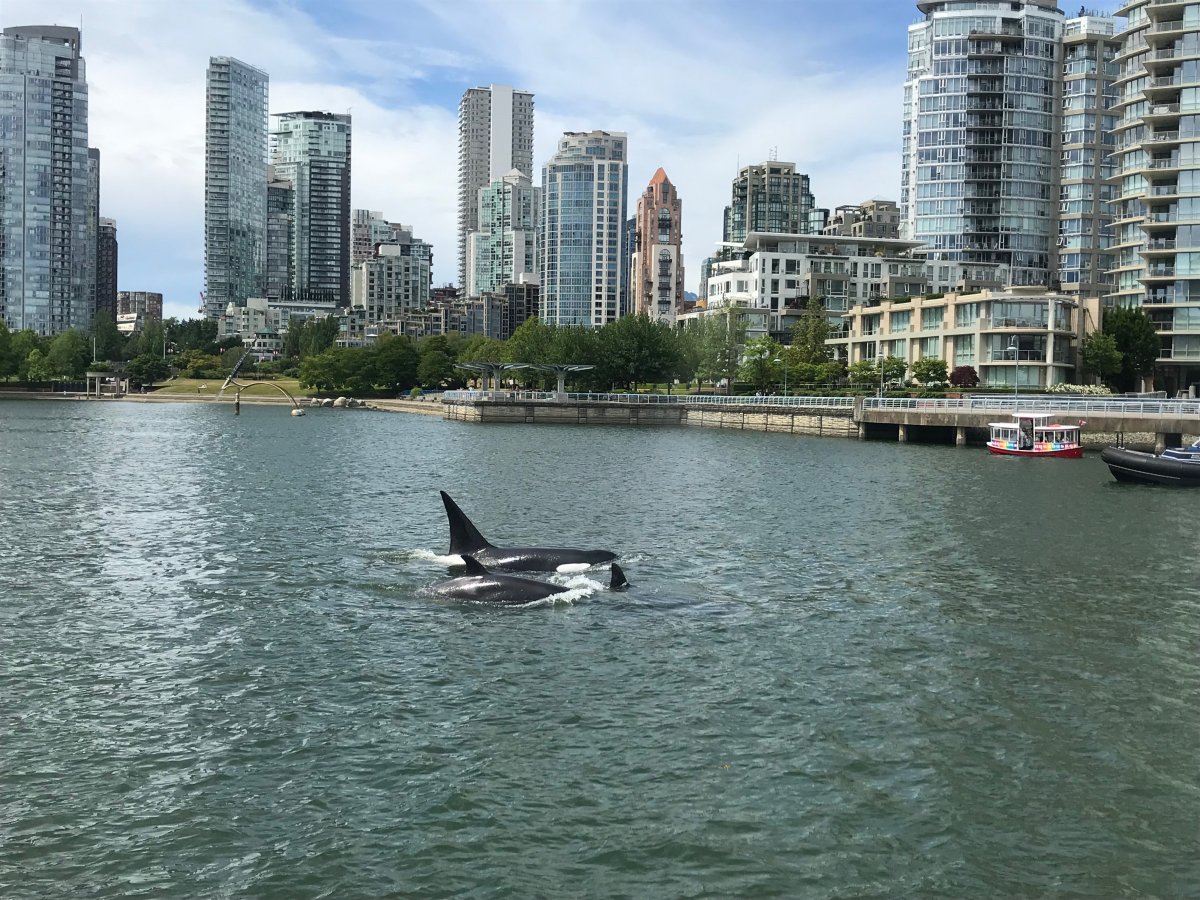
A significant drop in sea traffic brought on by the COVID-19 pandemic has created what scientists call a rare opportunity to study how quieter waters affect southern resident killer whales off the British Columbia coast.
Ocean Networks Canada, which has been monitoring noise from ships and sounds made by marine mammals such as orcas, said it believes the change will be a boon for the animals.
“The anticipation is that the quieter environment will help the killer whales in communicating, in socializing, in navigating and most importantly, in finding food,” said Richard Dewey, the organization’s associate director of science.
The preface to the regulatory change is extremely vague and does the opposite of “clarifying” any regulation: “This rulemaking would address wild horse and burro management challenges by adding regulatory tools that better reflect the Bureau of Land Management’s (BLM) current statutory authorities. For example, the existing regulations do not address certain management authorities that Congress has provided since 1986 to control wild horse and burro populations, such as the BLM’s authority to sell excess wild horses and burros. Updating the regulations would also facilitate management strategies and priorities that were not utilized when the regulations were originally promulgated, such as the application of fertility control vaccines, managing for nonreproducing herds, and feeding and caring for unsold and unadopted animals at off-range corrals and pastures. The proposed rule would also clarify ambiguities and management limitations in the existing language. In sum, updating the regulations would allow the BLM to clarify existing regulatory language and address current wild horse and burro management challenges with additional and more flexible regulatory tools that better reflect the BLM’s current statutory authorities.”
William Perry Pendley, BLM’s acting director now nominated for the position permanently, has called wild horses an “existential threat” to the health of federal rangelands. Wild horses are number one on his “hit list” that he carries from his former clients that sit on his recusal list.
“They failed to get the regulations changed via budget bill last year and this base is itching to just kill those ‘broomtails and range rats’ like some 1950s black and white movie. Open sales to slaughter, killing the ones in holding and butchering the rest on range, so they can’t have babies, is such a sick shopping list; that old resentment for the Act that gave the federal government jurisdiction to stop those exact actions is still alive.
We wont have any discussion on clarity for the actual mandate of management through planning, as outlined in the handbook (Herd Management Area Plans, HMAP). For 50 years BLM has ignored that step because it would allow advocates to fight for habitat and herd protection and it would make it harder to just give it all away to livestock and mining. Instead we are back to the sneaky moves, of ugly people, that want to destroy anything wild. “ ~ Laura Leigh, Wild Horse Education President.
The regulatory changes will reflect the regulatory changes sought by the BLM report that was rejected by Congress in 2019. In order to carry out the wish list put forward by a massive corporate agenda, through “Ten Years to AML” (later titled Path Forward), BLM needed regulatory changes. Things like killing thousands of wild horses n holding, open sales to slaughter, sterilized herds would not stand up in a courtroom but were part of the plan. Congress rejected the proposal in 2019 (for the 2020 budget).
When the Wild Free-Roaming Horses and Burros Act was passed slaughter (or sales to slaughter) was forbidden. A sneaky move by Conrad Burns (R-MT) in 2004 slipped in a rider to a spending bill creating sale authority (sales to slaughter) and it has been defunded each year (not repealed). We expect approval of sales to slaughter to be part of this agenda.
“Killing unadoptable wild horses and burros” is an item that this administration has tried to get into some form of regulatory acceptability since the first year they took a seat. We expect this to be on the agenda.
Sterilized herds (partial and full) is something that would not currently survive litigation. We know that Pendley, and his former clients, want the “spay machine” to go into gear. We expect this to be on that agenda.
In essence every item (open sales to slaughter, killing ones you don’t want and butchering the ones left on the range so they do not have babies) that federal authority took away from locals and states when the Act, passed causing massive resentment, is on that hit list as it was in the budget bill since this administration took the reins.
Federal authority over public resources takes many forms and covers many subjects; wild horses and burros are one item on a long list. The power to create regulations to protect water and air quality from industrial pollution, attempting to set stocking levels and turn out times through livestock permits, making hard rock mines clean up their mess, are a few other areas where federal authority is resented.
What wont be on that agenda? forcing BLM to create actual management plans (HMAP) that would give advocates an opportunity to address site-by-site issues of diminishing habitat die to industry, absurdly low stocking levels, water improvements, etc. Creating HMAPs would give advocates a chance, however small, to actually fight for preservation of our herds.
If you want to be on the list to receive our rapid action list simply scroll to the sidebar and “follow” this website or scroll to the bottom of the page and add your name to the mailing list.
~~~~~
Roundups have begun in the last leg of the 2020 schedule that will remove over 5000 wild horses and burros from now until Oct 7; our teams are out.
We are still fighting the release of funding to fuel that schedule, and pushing for actual management plans; you can too(HERE)
The reforms passed today will help mitigate significant declines in the populations of threatened and endangered animals like the Florida panther, bighorn sheep and Key deer. Photo by the U.S. Fish and Wildlife ServiceShare323TweetRedditEmail323SHARES
The U.S. House has just approved provisions that would make highways safer for wildlife to cross and create safer conditions to transport horses across the country, as part of the Moving Forward Act, a package of reforms designed to restore America’s aging infrastructure.
The measures approved today would create safe passageways for native wildlife species to migrate in order to find food, water and shelter, to adapt to changing environmental conditions, and to reach breeding or wintering areas. This is a crucial investment toward our nation’s ecological health because scientists estimate that two in 10 animal and plant species in the United States are at risk of extinction, largely as a result of habitat loss due to growing human populations and residential, commercial and energy activities in and around important wildlife migration corridors.
A national wildlife corridors systems such as the one proposed in the package would connect fragmented habitats with bridges or tunnels on federal lands—including national parks, national wildlife refuges, national forests and other conservation areas—and participating state, tribal and private lands, and would protect natural pathways to allow wildlife to move between isolated patches of habitat. The animals would no longer have to cross highways, where they are highly likely to get hit by vehicles, or pass through other human developments.
Such corridors would also create more resilient landscapes and are known to increase wildlife movement between habitat areas by approximately 50% compared to areas not connected by corridors. They also make our nation’s roads safer for people, by reducing the risk of vehicle-wildlife collision. The reforms passed today will help mitigate the 725,000 to 1.5 million large-animal-wildlife-vehicle collisions that occur in the United States each year—collisions that result in more than 200 human fatalities, over a billion dollars in property damage, and significant declines in the populations of threatened and endangered animals like the Florida panther, bighorn sheep and Key deer.
These measures in the package that passed today were incorporated from two other bills, including the Wildlife Corridors Conservation Act, H.R. 2795, introduced by Reps. Don Beyer, D-Va., and Vern Buchanan, R-Fla., and the INVEST in America Act, H.R. 2. We applaud Reps. Beyer and Buchanan for taking the initiative to make our roadways safer for both people and animals, and we are grateful to the House leadership for including the national wildlife corridors system in the Moving Forward Act.
The package also includes key provisions from the Horse Transportation Safety Act, H.R. 1400, introduced by Reps. Steve Cohen, D-Tenn., and Peter King, R-N.Y., that makes it unlawful to transport horses across state lines in double decker trailers built for transporting shorter farm animals, such as hogs and cattle. We are grateful to Congress for recognizing the great safety risk this practice poses, for both horses and humans. The horses are at risk of serious injury because there is not enough space overhead for them to stand upright, which can cause them to fall during transport. Cramming them into trailers not meant to carry animals this size can greatly increase chances of major accidents on the roads.
Two more key provisions for animals were adopted during the amendment process today. The Bird-Safe Buildings Act, offered through amendment by Rep. Mike Quigley, D-Ill., would advance bird-friendly practices in the construction of federal buildings to help prevent the deaths of a billion birds killed each year in the United States when they fly into buildings. Another bill, to establish the Western Riverside County National Wildlife Refuge providing habitat for 146 plant and animal species in California, was offered as an amendment by Reps. Ken Calvert, R-Calif., and Mark Takano, D-Calif.
Both provisions will not only enable the federal government to reduce negative impacts on animals, but they will also serve as models for other sectors.
The provisions for animals approved today underscore how deeply connected human and animal interests are, and how benefiting one can help the other. The package now moves to the Senate and we’ll be pushing to secure passage of these measures there, with your help. Please contact your Senators to encourage their support for the Moving Forward Act and for making our highways safer for wildlife and horses. It’s a worthy investment in the future of our nation.
Sara Amundson is president of the Humane Society Legislative Fund.
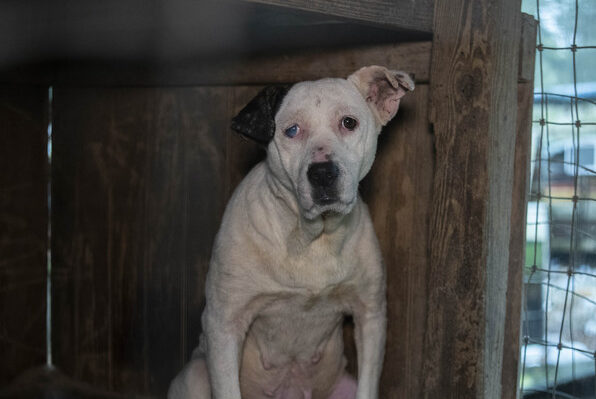
The Iowa law, signed on June 29, provides much-needed upgrades to the state’s animal cruelty law, including requiring outdoor shelter, grooming and veterinary care for dogs. Photo by Meredith Lee/The HSUSShare1KTweetRedditEmail1KSHARES
We have good news to share from Mississippi and Iowa, the only two states in the nation without a law on the books that would make acts of animal torture, like burning, drowning and intentional starvation, an automatic felony. Recently, Mississippi’s state legislature passed a bill that would do exactly this. And although we are still fighting for a similar outcome in Iowa, we are pleased to report that the state recently made its first significant update to its domestic animal cruelty law in 20 years.
The win in Mississippi is an especially proud moment for us here at the Humane Society of the United States, because we have led the battle for a felony animal cruelty law there for more than a decade. The final bill that passed the statehouse on July 1 mimics language from the federal PACT Act, which we also pushed for and which was signed into law last year. While the federal law allows prosecutors to bring federal felony charges when these acts occur within federal jurisdiction or when animals are moved across state lines, or the internet is used as part of a criminal enterprise, a state law is needed to prosecute those who commit violent acts against animals on Mississippi soil.
The bill that passed in the state increases the penalty for egregious animal abuse such as torture and intentional starvation from a misdemeanor to a felony, and prohibits ownership of dogs and cats for a period set by the court after conviction. It also addresses an oddity in the law that allows the defendant to be charged with just one misdemeanor no matter how many animals were abused.
We applaud Mississippi lawmakers for passing the bill, and we urge the governor to sign it into law. We are especially grateful to Mississippi state Sen. Angela Hill for her dedication to sponsor the bill year after year, and Sen. Brice Wiggins, Rep. Jill Ford, and Speaker Phillip Gunn for supporting and promoting its passage. A strong law against animal torture doesn’t just protect animals; it protects people of the state as well. We now know that violent behavior toward animals has been continuously linked with other forms of criminal violence, including child abuse and domestic violence, making it all the more important to catch and stop those who commit acts of animal abuse early.
The Iowa law, signed on June 29, provides much-needed upgrades to the state’s animal cruelty law, including requiring outdoor shelter, grooming and veterinary care for dogs. Puppy mill owners with a previous conviction for animal cruelty would face a felony penalty for abuse or neglect if the act causes serious injury or leads to the animal dying.
The law, which passed despite strong opposition from the American Kennel Club and puppy mill operators, including some who appear on the HSUS Horrible Hundred list, also strikes nonsensical language in a previous law that allowed charges to be filed only if a person committed abuse against an animal owned by another person and exempted owners from charges when they abused their own animals.
While these changes will certainly improve the quality of life for animals in Iowa, we are saddened that the Iowa General Assembly missed an opportunity to join the rest of the country in making the torture of companion animals an automatic felony. Language that would have done so was included in the original bill, but lawmakers beholden to Iowa’s agriculture industry pressured their colleagues to strip it from the bill. Most Iowans support such a law, and a Remington Research poll in December 2019 showed 69% of Iowans believe domestic animal torture should be a felony charge.
Iowa is now a glaring outlier in our nation where the justice system and all levels of government have, just in the past five years, made tremendous progress in recognizing the link between human and animal cruelty. In addition to the PACT Act becoming law last year, the FBI has added animal cruelty as a separate category in the National Incident Based Reporting System, classifying it as a crime against society, the same category as rape and murder. The National Sheriffs Association created its first Animal Cruelty Committee and houses the National Law Enforcement Center on Animal Abuse, ensuring that the country’s law enforcement community has the best knowledge and resources at its disposal to combat animal cruelty. The Joint Counterterrorism Assessment Team, made up of the FBI, Department of Homeland Security and National Counterterrorism Center, determined in July 2018 that premeditated animal cruelty is a possible warning sign for terrorism.
We congratulate Iowa on strengthening protections for animals, and we now urge lawmakers there to quickly pass a bill joining the rest of the nation in making animal cruelty an automatic felony. By ensuring that the worst acts of animal torture do not go unpunished, they would not just make their state more humane for its animals, but they would also be ensuring the long-term safety of their citizens.








 Laura Leigh1 day ago
 On July 1 the White House released the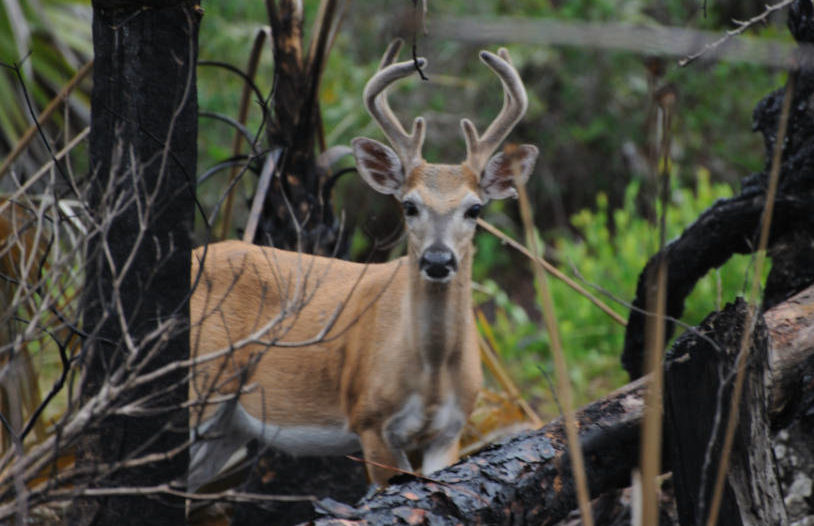
 Exposing the Big Game