How Humanity Unleashed a Flood of New Diseases

What do Covid-19, Ebola, Lyme and AIDS have in common? They jumped to humans from animals after we started destroying habitats and ruining ecosystems.

Credit…Illustration by Mario Hugo

By Ferris Jabr

  • Published June 17, 2020Updated June 25, 2020
    • 271

Leer en español

Listen to This Article

Audio Recording by AudmListen 35:28

To hear more audio stories from publishers like The New York Times, download Audm for iPhone or Android.

It might have started like this: One afternoon last year, somewhere in China’s mountainous Yunnan province, a hunter entered a limestone cave. As he stepped carefully along the slick and uneven surface, his headlamp illuminated ruffled curtains of stone and walls popcorned with kernels of calcite. He continued through a series of smaller chambers until he reached a narrow passageway that reeked of ammonia — exactly what he was hoping to find. He stretched a fine-meshed net across the passage, sat down in a relatively dry area and waited.

As dusk fell, thousands of horseshoe bats — small and agile with baroquely furrowed noses — began streaming from the cave to hunt for insects. There were so many flying so close together that some of them could not avoid the net. Once a majority of the bats were gone, the hunter untangled the dozen or so he caught, dropped them into a cloth sack and collected some fresh guano from the cave floor. The next morning he took most of the bats to vendors at a nearby wildlife market, where they were stored in cages alongside peacocks, bullfrogs, rat snakes, soft-shell turtles, mouse-deer, ferret badgers and foxes, all being sold for their meat, fur or their supposed medicinal properties. After selling the guano to farmers to be used as fertilizer, he took a few of the plumpest bats to restaurants he had been personally supplying for years.

Although he didn’t realize it, the hunter had caught much more than his quarry. Like all animals, the bats were planets unto themselves, teeming with invisible ecosystems of fungi, bacteria and viruses. Many of the viruses multiplying within the bats had circulated among their hosts for thousands of years, if not longer, using bat cells to replicate but rarely causing severe illness. Through chance mutations and the frequent exchange of genes, one virus had acquired the ability to infect the cells of certain other mammals in addition to bats, should the opportunity ever arise. When the hunter entered the limestone cave, he provided the virus with a new path to follow, one that led out of the damp crevices it had always known, out of the countryside, into the world at large.

ADVERTISEMENTContinue reading the main story

Perhaps the hunter was contaminated by guano in the cave, transferring the virus to his nose or mouth with an absent-minded gesture. Maybe a market vendor or cook was infected by a splatter of blood or feces when a bat was skinned and gutted, passing the virus to co-workers and customers in the subsequent days and weeks. As the many stressed and injured animals in the market bled, drooled and defecated on one another, the virus might have initially jumped from bats to another caged creature, such as a pangolin — a small scaly mammal that looks like an armadillo wearing an artichoke — hybridizing with that animal’s viruses before leaping again to humans. When the chefs, traditional healers and other buyers browsed the market, they may have inhaled infectious droplets or touched contaminated surfaces, starting new chains of infection throughout the region as they returned to their homes and workplaces.

At first, the virus might have proliferated at a rate sufficient to sustain itself, but not high enough to create noticeable clusters of infection. Eventually, through pathways of contagion linked to the trade and consumption of wildlife, the virus journeyed from villages in rural China to the city of Wuhan: a modern metropolis of more than 10 million people, each a potential host with no immunity, living in dense clusters. Soon it was moving rapidly from person to person in restaurants, offices, apartment complexes, hotels and hospitals. From there, it could have easily hopped on China’s high-speed rail network, reaching Beijing and Shanghai in under six hours. At some point in late 2019 or early 2020, the virus discovered a new way to travel: It boarded a 747.

  • Unlock more free articles.

Create an account or log in

There is much we don’t know about the origins of the ongoing pandemic and some details that we may never learn. Though genetic sequencing currently indicates that horseshoe bats are the ultimate source of SARS-CoV-2, it’s possible another animal will eventually prove to be the vector. Bats may have initially infected livestock or more exotic captive creatures raised on one of China’s many wildlife farms. Perhaps the bats (or another vector) were smuggled across the southern border from a neighboring country, like Myanmar or Vietnam. Or maybe the virus was intermittently infecting animals and people in rural areas for years before finally finding a route to a major city. Regardless of SARS-CoV-2’s precise trajectory, experts agree that Covid-19 is a zoonosis, a disease that jumped from animals to humans.

[Can a vaccine for Covid-19 be developed in record time?]

Between 60 and 75 percent of emerging infectious diseases in humans come from other animals. Many zoonoses — rabies, Lyme, anthrax, mad cow disease, SARS, Ebola, West Nile, Zika — loom large in public consciousness; others are less familiar: Q fever, orf, Rift Valley fever, Kyasanur Forest disease. More than a few, including influenza, AIDS and the bubonic plague, have caused some of the deadliest outbreaks in recorded history. Although zoonoses are ancient, thought to be referenced in Mesopotamian tablets and the Bible, their numbers have increased in the last few decades, along with the frequency of outbreaks.

Zoonotic pathogens do not typically seek us out nor do they stumble onto us by pure coincidence. When diseases move from animals to humans, and vice versa, it is usually because we have reconfigured our shared ecosystems in ways that make the transition much more likely. Deforestation, mining, intensive agriculture and urban sprawl destroy natural habitats, forcing wild creatures to venture into human communities. Excessive hunting, trade and consumption of wildlife significantly increase the probability of cross-species infection. Modern transportation can disperse dangerous microbes across the world in a matter of hours. “Human-caused ecological pressures and disruptions are bringing animal pathogens ever more into contact with human populations,” David Quammen wrote in his 2012 book “Spillover,” “while human technology and behavior are spreading those pathogens ever more widely and quickly.”

More: https://www.nytimes.com/2020/06/17/magazine/animal-disease-covid.html
A ‘Viral’ New Bird Song in Canada Is Causing Sparrows to Change Their Tune

George DvorskyYesterday 11:00AMFiled to:BIRDMODO

https://gizmodo.com/a-viral-new-bird-song-in-canada-is-causing-sparrows-t-1844245103/amp

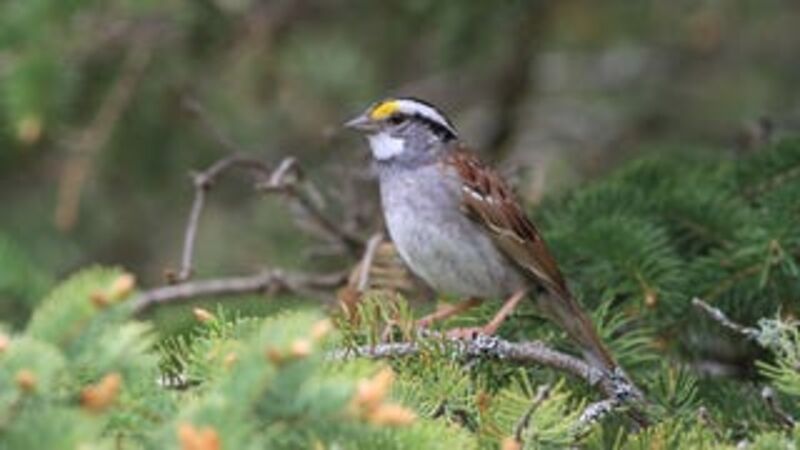
A white-throated sparrow.

A new bird song is spreading like wildfire among Canadian white-throated sparrows, at a scale not seen before by scientists.
Recent Videohttps://d-19313090682384583075.ampproject.net/2006112352003/frame.htmlA Wild Apple ARM Benchmark Appears

Birds rarely change their chirpy little tunes, and when they do, it’s typically limited to the local environment, where slight song variants basically become regional dialects. New research published today in Current Biology describes an extraordinary exception to this rule, in which a novel song sung by white-throated sparrows is spreading across Canada at an unprecedented rate. What’s more, the new song appears to be replacing the pre-existing melody, which dates as far back as the 1960s.

Birds sing to mark their territories and attract prospective mates. Traditionally, white-throated sparrows in western and central Canada sing a song distinguished by its three-note ending. The new song, which likely started off as a regional dialect at some point between 1960 and 2000, features a distinctive two-note ending, and it’s taking the sparrow community by storm. What makes the new ending so viral is a mystery to the study authors, led by Ken Otter from the University of Northern British Columbia.https://d-19313090682384583075.ampproject.net/2006112352003/frame.html

“These songs are learned—otherwise new variants would not arise or spread,” Otter told Gizmodo. “Where it started could have been a single bird, but it then gets learned by others, and they would form tutors for other birds. It wouldn’t spread from a single bird.”

The new song, which can now be heard from British Columbia through to central Ontario—a distance of over 1,900 miles (3,000 km)—spread between 2000 and 2019, according to the research. The old melody, with its highly musical triplet outro, is now at risk of going extinct.

The contributions of citizen scientists were integral to the research. Field recordings of white-throated sparrows were uploaded to an online database called eBird, allowing Otter and his colleagues to track the spread of the new doublet over time and space.

“Citizen scientists played a key role, as the songs they recorded and made available expanded the spatial scope of the study. We never would have been able to cover this kind of distance if it was just us collecting songs,” said Otter. “The song libraries have massively expanded in the last five years, with eBird allowing people to upload recordings, not just observations.”

Results showed that the song likely originated west of the Rocky Mountains, where it’s been a smash hit for years, and has been steadily and quickly spreading east. By 2014, every white-throated sparrow in Alberta was singing the new doublet, with sizable bird populations in Ontario also chirping the happy tune.

Sparrow wintering grounds seem to be a key factor in explaining how the new tune has spread so quickly over such a large geographical area. Juvenile males arrive at their overwintering areas and mingle with sparrows from different parts of the country. Here, the impressionable young birds pick up the new melody and bring it back to their mating grounds, where it’s picked up by other sparrows. To say the new melody is going viral is a fairly accurate assessment.

To test this theory—that western and eastern sparrows share wintering grounds—Otter’s team attached geolocators to wild sparrows. Their results showed this is very much the case. Otter said a similar trend is happening among white-throated sparrows in the United States, “but most of their breeding range is in Canada’s boreal forest,” he said.

Why the new bird song is so compelling remains an unanswered question. It doesn’t seem to be giving the male birds a territorial advantage over their cohorts, so it could be that females are drawn to songs that aren’t familiar to them. But, as Otter pointed out, variants can’t be too unfamiliar.

“It looks like these sparrows may prefer to adopt slightly novel song variants rather than the common song. However, it does seem to have to match some kind of template, as you occasionally encounter males singing variants that aren’t doublets or triplets, but these other variants don’t seem to catch on,” Otter told Gizmodo. “So there must be some constraints as to what they will accept.”

Indeed, it seems the sparrows are already getting tired of the new song. According to Otter, it’s recently getting replaced by a new variant in Prince George, British Columbia, where the doublet is suspected of originating. It has been in this area for over 20 years, “so birds may not consider it novel anymore,” which explains “why a new song type is emerging.”

The researchers are hoping to study these bird songs further to see if female sparrows are truly responding to novel tunes, in a process that appears to be demanding ongoing musical innovations among these remarkable birds.

Born Free USA campaign challenges trophy hunting industry

Leading animal welfare organization sets the record straight on the cruel reality of trophy hunting


NEWS PROVIDED BYBorn Free USA 

Jul 01, 2020, 07:00 ET

https://www.prnewswire.com/news-releases/born-free-usa-campaign-challenges-trophy-hunting-industry-301086545.html


WASHINGTON, July 1, 2020 /PRNewswire/ — Born Free USA, an internationally recognized leader in animal welfare and compassionate conservation, is launching a six week-long campaign in July and August to raise awareness of the global impact of trophy hunting and reveal the brutal facts behind common myths supporting the continuation of this cruel, outdated practice.

(PRNewsfoto/Born Free USA)

“The trophy hunting industry has unfortunately been able to persuade a segment of the public that it’s actually helping save endangered species like lions, tigers, elephants, and rhinoceroses by killing them for so-called sport,” said Angela Grimes, CEO of Born Free USA. “But hunting these threatened animals as recreation and then showing off their heads or other body parts doesn’t do anything to help vulnerable populations, and this is a chance to set the record straight.”

The facts about trophy hunting tell a different story than the one presented by hunting advocates:

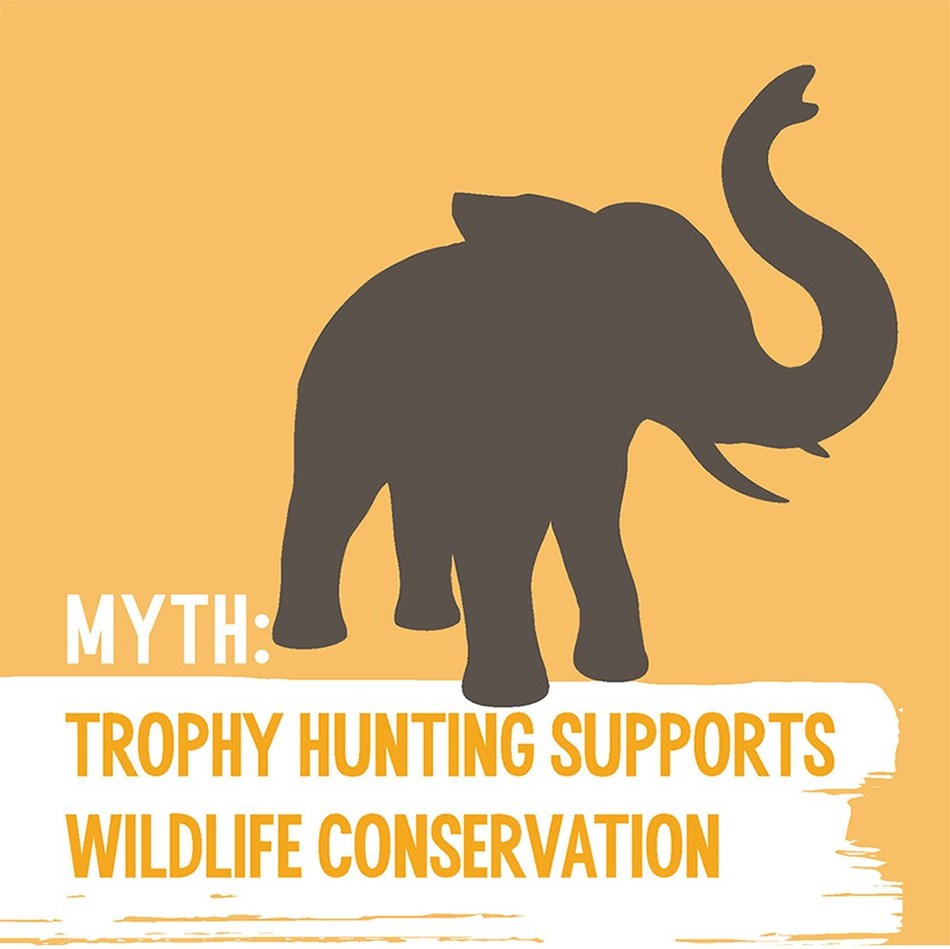
Myth: Trophy hunting helps maintain wildlife populations. 
Fact: Trophy hunting weakens wildlife populations by killing off the strongest and healthiest animals, which are considered better trophies. Hunters frequently target endangered species and contribute to the global wildlife trade that threatens biodiversity and wilderness habitats.

Myth: Trophy hunting provides economic support for local communities and conservation efforts.
Fact: The trophy hunting industry benefits a small group of outfitters, sponsors, and government agencies. Very little of the money it generates is invested in local economies, creates jobs, or is distributed to conservation organizations. Animal-friendly eco-tourism, meanwhile, offers an efficient, sustainable, and cruelty-free economic opportunity.

Myth: Trophy hunting is a sport.
Fact: Trophy hunting guides lure animals with bait, target animals in and around protected land that are accustomed to humans, and even shoot from helicopters. In canned hunting operations, people pay thousands of dollars to kill animals that have been raised in captivity, and shoot them in an enclosed area from which they cannot escape. There is nothing sporting about this.

Born Free USA’s trophy hunting campaign coincides with the fifth anniversary of the death of Cecil the lion. In a case that provoked widespread outrage, an American hunter and his guide in Zimbabwe used bait to lure Cecil from a national park, wounded him, and left him to suffer overnight before returning to kill him more than 10 hours later.

Despite the negative public reaction to Cecil’s death, the United States continues to allow trophy hunters to import trophies into the U.S. from around the world and allows domestic trophy hunting of iconic species like wolves, black and grizzly bears, and mountain lions.

“There’s nothing sporting about this practice,” Grimes said. “The animals targeted by the trophy hunting industry are facing shrinking habitats, increased contact with humans, and reduced populations. Many of them are on the verge of extinction. They need to be protected, not hunted.” 

For more information, visit www.bornfreeusa.org/trophyhunting.

About Born Free USA
Born Free USA works to ensure that all wild animals, whether living in captivity or in the wild, are treated with compassion and respect and are able to live their lives according to their needs. We oppose the exploitation of wild animals in captivity and campaign to keep them where they belong – in the wild. Born Free USA’s Primate Sanctuary is the largest in the United States and provides a permanent home for more than 450 primates rehomed from laboratories or rescued from zoos and private ownership.

We’re social: www.bornfreeusa.orgwww.twitter.com/bornfreeusawww.facebook.com/bornfreeusawww.instagram.com/bornfreeusaorg.

MEDIA CONTACT:
Heather Ripley
Orange Orchard
(865) 977-1973
hripley@orangeorchardpr.com

Hunting Or Fishing License Required To Enter State Wildlife Areas [!!!]

Exposing the Big Game's avatarCommittee to Abolish Sport Hunting Blog

(CBS4) – As more and more people continue to get outdoors to recreate, there will be a major change starting July 1, 2020 for anyone who wants to access a State Wildlife Area (SWA) or State Trust Land leased by CPW. Any visitor 18 or older will now be required to have a valid hunting or fishing license to be on the land.

(credit: CBS)

“We’re just trying to get the properties back for wildlife, and the intended purpose,” said Mark Lamb, an area wildlife manager with Colorado Parks Wildlife.

Across Colorado there are more than 300 SWA’s, which are acres of designated land for wildlife management, wildlife habitat, and wildlife related recreation.

“For most of the wildlife areas, hunting and fishing are the primary recreational activities,” Lamb said. “But here at this one, Mount Evans State Recreation Area a lot…

View original post 187 more words

Ventilation Shutdown Used to “Depopulate” Farm Animals During Pandemic Causes Severe Suffering

Photo by Direct Action Everywhere

Photo by Direct Action EverywhereJuly 1, 2020

https://awionline.org/press-releases/ventilation-shutdown-used-depopulate-farm-animals-during-pandemic-causes-severe

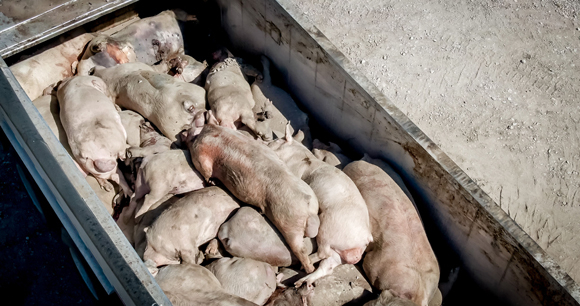
Washington, DC—COVID-19 has shut down, at least temporarily, dozens of pig, chicken, and turkey slaughter plants in the United States, leaving millions of farm animals with nowhere to go. Some producers have arranged to keep animals on the farm until plants reopen, while others have chosen to kill healthy animals and bury or compost their bodies.

The term euthanasia, which literally means “a good death,” has been inappropriately used to characterize the killing by inhumane methods of healthy farm animals due to slaughter and processing capacity problems. The American Veterinary Medical Association (AVMA) uses the term “depopulation” to describe the rapid destruction of a population of animals in response to urgent circumstances. One method that has been used to kill large numbers of farm animals is “ventilation shutdown,” which involves turning off the airflow in a barn and ratcheting up the heat to as high as 120 degrees, leaving trapped birds and pigs to die from a combination of heat stress and suffocation.

Dena Jones, director of the farm animal program at the Animal Welfare Institute (AWI), issued the following statement regarding the use of ventilation shutdown to kill farm animals due to limited slaughter capacity during the pandemic:

The ventilation shutdown process can take hours and likely results in severe animal suffering. Intentionally inflicting death in a manner that causes elevated and prolonged distress is unacceptable and does not qualify as “euthanasia.” It is particularly insupportable for the AVMA — a professional scientific body representing veterinarians sworn to protect animals — to allow its guidelines to be used in such an inappropriate manner.

When the AVMA proposed allowing the use of ventilation shutdown to kill animals “in constrained circumstances,” AWI warned that the AVMA guidelines might not prevent producers from using this extreme method in situations that instead call for euthanasia. In fact, that is exactly what is happening now; healthy animals posing no public health risk are being killed by a grossly inhumane method to aid the meatpacking industry.

Ventilation shutdown was last used in 2015 in response to an outbreak of highly pathogenic bird flu, which killed nearly 50 million chickens and turkeys in the United States. During the current pandemic, however, animals are not suffering from disease, nor are they at risk of transmitting disease to other animals or to humans. Instead, they are being destroyed because meat companies have failed to properly protect their slaughterhouse workers.

The modern animal agriculture industry in the United States routinely puts profits over the well-being of both animals and workers. It runs slaughter lines as fast as possible, provides animals the lowest level of care required, and offers minimal health and safety protections to its workers. There is no margin for error in this intensive, high-production system. As a result, the wave of plant closures has left millions of animals in limbo. Nevertheless, the current situation does not justify subjecting any animal to a cruel death.

###Media Contact

Margie Fishman, (202) 446-2128, margie@awionline.org

WVDNR announces cancellation of 2020 National Hunting and Fishing Days event

Exposing the Big Game's avatarCommittee to Abolish Sport Hunting Blog

Photo courtesy of the West Virginia Department of Commerce

SOUTH CHARLESTON, W.VA. — Due to the ongoing COVID-19 pandemic, the West Virginia Division of Natural Resources and West Virginia Wildlife Federation are cancelling the state’s 2020 National Hunting and Fishing Days celebration.

This year’s event was originally scheduled for Sept. 19-20. Registered vendors will be contacted and issued a refund.

“We are extremely saddened to cancel this event, but we are prioritizing the health and safety of our visitors, staff and volunteers,” said Kayla Donathan, the DNR’s event coordinator. “While we won’t be able to celebrate in person this year, like we’re used to, we want to encourage West Virginians to spend that weekend honoring our state’s outdoor heritage by participating in an outdoor activity or visiting a state park.”

West Virginia’s National Hunting and Fishing Days is the state’s largest hunting and…

View original post 44 more words

Fried Chicken Brand Opens Vegan Restaurant After Massive Success Of Plant-Based Menu

‘This isn’t vegan food just for vegans, it’s vegan food for everyone’MARIA CHIORANDOJUL 1, 2020

https://www.plantbasednews.org/lifestyle/fried-chicken-brand-vegan-fast-food-outlet

The new outlet will offer vegan fried chicken sandwiches among other options (Photo: Instagram/Coqfighter)

A London-based fried chicken brand is opening a vegan fast-food eatery, after its plant-based menu proved extremely popular beyond the team’s ‘wildest dreams’.

Coqfighter will open its plant-based outlet – Mercy Burger – on July 4 in Boxpark, Shoreditch.

According to an Instagram post announcing the opening, the team revealed that Mercy Burger’s menu will feature fried chick’n sandwiches, burgers, sides, and milkshakes.https://www.instagram.com/p/CB5qSYuJ4Nh/embed/captioned/?cr=1&v=12&wp=658&rd=https%3A%2F%2Fwww.plantbasednews.org&rp=%2Flifestyle%2Ffried-chicken-brand-vegan-fast-food-outlet#%7B%22ci%22%3A0%2C%22os%22%3A3222109.675%7D

‘Beyond our wildest dreams’

Coqfighter co-founder Deacon Rose told BigHospitality that the team is opening Mercy Burger following the success of Coqfighter’s vegan menu in early 2019, saying ‘its popularity has gone beyond our wildest dreams’.

“This isn’t vegan food just for vegans, it’s vegan food for everyone. We set out to prove that fast food staples can taste just as good and be just as indulgent when they are plant-based,” he added.

“Whether someone is vegan, looking to reduce their meat consumption, or just curious, we want Mercy Burger to be their guilt-free burger restaurant of choice.”

Global warming will cause ecosystems to produce more methane than first predicted

Exposing the Big Game's avatarThe Extinction Chronicles

Date:
June 29, 2020
Source:
Queen Mary University of London
https://www.sciencedaily.com/releases/2020/06/200629120210.htm

New research suggests that as the Earth warms natural ecosystems such as freshwaters will release more methane than expected from predictions based on temperature increases alone.

The study, published today in Nature Climate Change, attributes this difference to changes in the balance of microbial communities within ecosystems that regulate methane emissions.

The production and removal of methane from ecosystems is regulated by two types of microorganisms, methanogens — which naturally produce methane — and methanotrophs that remove methane by converting it into carbon dioxide. Previous research has suggested that these two natural processes show different sensitivities to temperature and could therefore be affected differently by global warming.

Research led by Queen Mary University of London and the University of Warwick studied the impact of global warming on freshwater microbial communities and methane emissions by observing the effect of…

View original post 359 more words

He posted his regrets over attending a party in California. The next day, he died of coronavirus

Exposing the Big Game's avatarThe Extinction Chronicles

(CNN)A Southern California man who tested positive for coronavirus after attending a party expressed his fear and regret a day before he died.

Thomas Macias, 51, went to a barbecue last month near his community in Lake Elsinore, about 70 miles from Los Angeles.
Shortly after the party, he started feeling sick. On June 20, he posted a poignant message on Facebook to warn his loved ones about the risks of the virus, his family said.
“I went out a couple of weeks ago … because of my stupidity I put my mom and sisters and my family’s health in jeopardy,” he wrote. “This has been a very painful experience. This is no joke. If you have to go out, wear a mask, and practice social distancing. … Hopefully with God’s help, I’ll…

View original post 422 more words

100.4 degree Arctic temperature record confirmed as study suggests Earth is warmest in at least 12,000 years

Exposing the Big Game's avatarThe Extinction Chronicles

Less than two weeks ago, the small Siberian town of Verkhoyansk soared to 100.4 degrees Fahrenheit, appearing to break an all-time record for the Arctic and alarming meteorologists worldwide. Now that temperature record has been verified by Russia’s state weather authority.

The confirmation came the same day a comprehensive new study was released suggesting that present-day global temperatures are the warmest they have been in at least 12,000 years, and possibly far longer. The study used a variety of geological clues and statistical analysis methods to reconstruct ancient temperature estimates.

In a press conference Tuesday, the head of science at Russia’s Hydrometeorological Centre confirmed that the town of Verkhoyansk did indeed reach 100.4° F on June 20th. The official confirmation was requested by the World Meteorological Organization.

Writing on Twitter, the Russian state weather authority said: “In Verkhoyansk from June…

View original post 1,505 more words