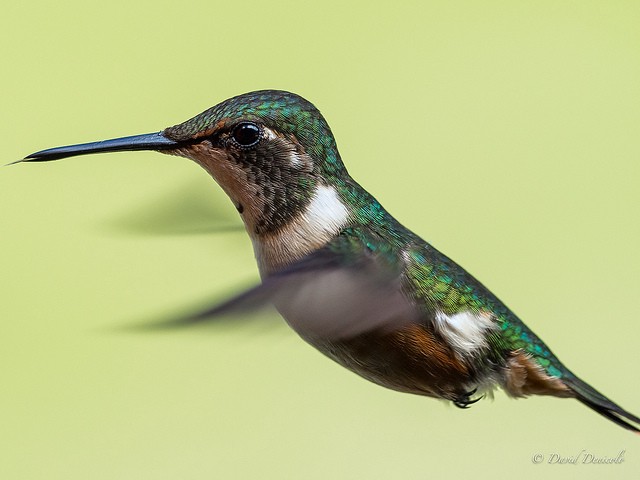
Bees aren’t the only important pollinators in peril. Found only in the Western Hemisphere, hummingbirds are vital pollinators and new research is beginning to uncover the serious danger these birds face from pesticides. A new study from a Canadian researcher published this summer found that the same pesticide contributing to bee declines is likely contributing to hummingbird declines too.
Population Decline; Pesticide Use a Key Culprit
Research indicates that hummingbird populations have been declining for decades. One species, the Rufous hummingbird, lost 62 percent of its population from 1966–2014. Habitat loss, climate change and fragmentation of breeding grounds are all factors contributing to the loss of these vital pollinators.
However, this summer, new research from Canada indicates that neonicotinoid insecticides…
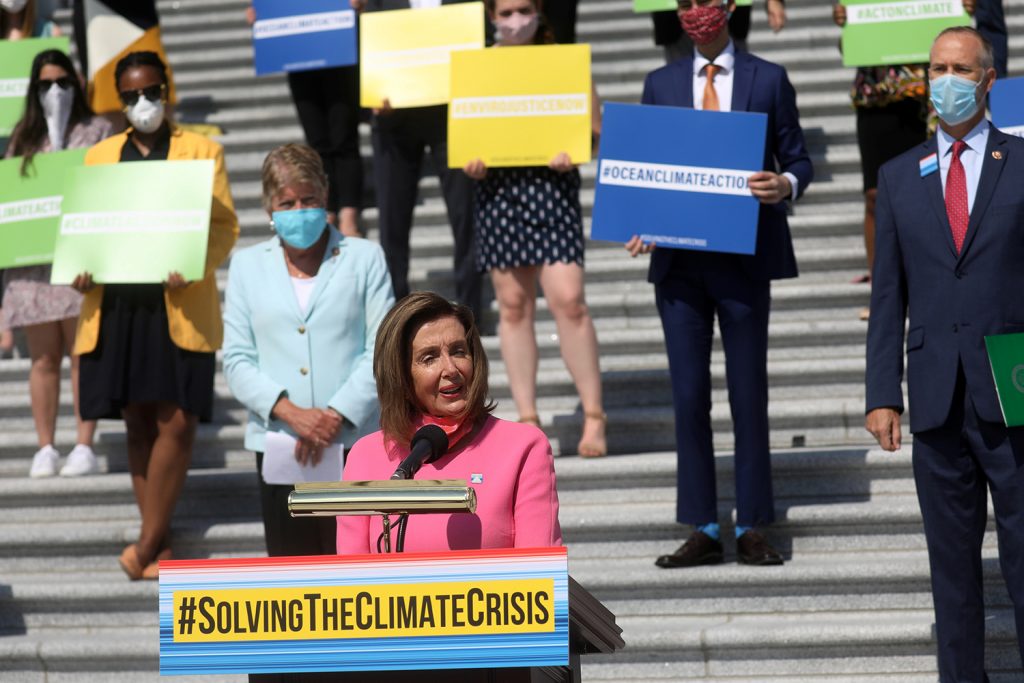
US Speaker of the House Nancy Pelosi holds a news conference with House Democrats to unveil a plan to cut nearly 90% of greenhouse gas emissions by 2050 on the steps of the US Capitol Building, June 30, 2020 in Washington, US REUTERS/Leah Millis
Against the backdrop of the COVID-19 pandemic, an economic downturn, and a renewed movement for racial justice, the report sets out a vision to reach net zero greenhouse gas (GHG) emissions by 2050 with recommendations on issues from infrastructure to incentivizing new technologies and creating jobs in the…
Board of Supervisors to vote on Controversial USDA “Wildlife Services” program
Ukiah, CA – The Mendocino Non-lethal Wildlife Alliance (MNWA) and Project Coyote urge Mendocino County residents to virtually attend the July 14th County Board of Supervisors meeting via the tele-meeting option and express their strong opposition to the County’s likely renewal of their $170,000 contract with USDA Wildlife Services. Those who are unable to attend the meeting on the 14th are encouraged to urge their Supervisor to oppose the renewal of the contract. Residents are also encouraged to sign a related petition urging the Board to end their contract with Wildlife Services at this link: https://www.thepetitionsite.com/842/567/041/stop-the-killing-now/#published
“The Public Trust Doctrine holds that wildlife is to be managed for the benefit of the public, and yet Mendocino County continues to spend tax dollars to contract with Wildlife Services to trap, shoot, and kill hundreds of bears…
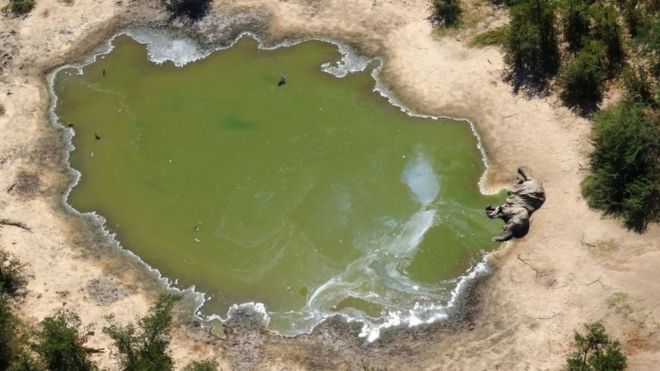
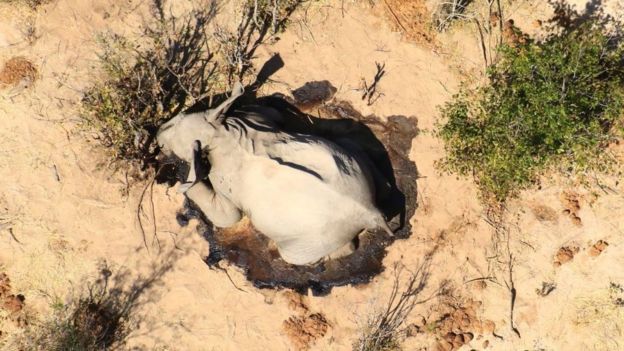
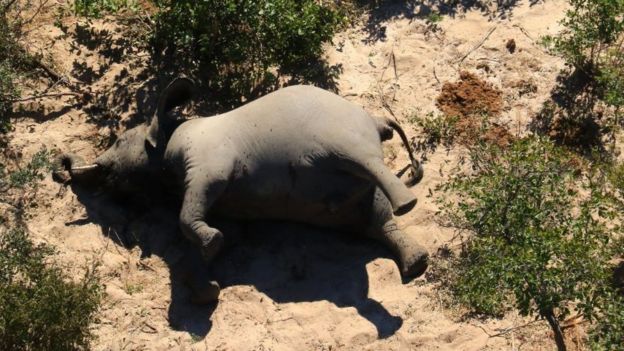
Dr Niall McCann said colleagues in the southern African country had spotted more than 350 elephant carcasses in the Okavango Delta since the start of May.
No one knows why the animals are dying, with lab results on samples still weeks away, according to the government.
Botswana is home to a third of Africa’s declining elephant population.
Warning: Some people may find the following images upsetting
Dr McCann, of the UK-based charity National Park Rescue, told the BBC local conservationists first alerted the government in early May, after they undertook a flight over the delta.
“They spotted 169 in a three-hour flight,” he said. “To be able to see and count that many in a three-hour flight was extraordinary.
“A month later, further investigations identified many more carcasses, bringing the total to over 350.”
“This is totally unprecedented in terms of numbers of elephants dying in a single event unrelated to drought,” he added.
Back in May, Botswana’s government ruled out poaching as a reason – noting the tusks had not been removed, according to Phys.org.
There are other things which point to something other than poaching.
“It is only elephants that are dying and nothing else,” Dr McCann said. “If it was cyanide used by poachers, you would expect to see other deaths.”
Dr McCann has also tentatively ruled out natural anthrax poisoning, which killed at least 100 elephants in Bostwana last year.
But they have been unable to rule out either poisoning or disease. The way the animals appear to be dying – many dropping on their faces – and sightings of other elephants walking in circles points to something potentially attacking their neurological systems, Dr McCann said.
Either way, without knowing the source, it is impossible to rule out the possibility of a disease crossing into the human population – especially if the cause is in either the water sources or the soil. Dr McCann points to the Covid-19 pandemic, which is believed to have started in animals.
“Yes, it is a conservation disaster – but it also has the potential to be a public health crisis,” he said.
Image captionDavid Yeung is one of the new wave of environmentally concerned entrepreneurs
“Ma po tofu has to be a favourite,” says David Yeung, a smile evident in his voice. “It’s very spicy, a little bit numbing, and usually sprinkled with minced pork.”
Hong Kong-based Mr Yeung is the founder of OmniPork, part of the environmentally focused venture Green Monday. OmniPork is a plant-based meat alternative that is now on the menu in many of Hong Kong’s trendiest restaurants, hotels and bars.
A vegetarian of two decades, he’s explaining how substitute meat is not just a market for the North American brands like Impossible Foods, and Beyond Meat, which have become well known for their burgers. He says the Asian market is hungry for home grown meat alternatives.
“Almost everywhere in Asia – Japan, Korea, Vietnam, Thailand, Singapore, especially mainland China – the number one meat is pork. The only exceptions are Muslim countries.”
Image captionMeat-free spicy ma po tofu: “Very spicy, a little bit numbing,” says David Yeung
Indeed, China loves pork. The country of almost 1.4 billion consumes more pork per capita than any other nation.
This has thrown a sharp focus on meat supply chains and production, something the coronavirus pandemic has intensified.
Localised outbreaks of coronavirus have been appearing across the globe in meat-processing companies, even where infection rates in the general population are low. It’s not entirely clear as to why.
Covid-19, environmental issues and growing health concerns in a nation with increasingly high rates of obesity, have all encouraged a new wave of plant protein firms to develop new products.
For example, Beijing-based Zhenmeat is looking at 3D printing elements of its products to mimic bone or muscle.
Image captionZhenmeat is betting on hot pot
“We eat a lot of different parts of the pig. The Chinese consumer loves different parts for different dishes but we are focusing in on Szechuan hot pot,” says chief executive Vincent Lu.
Zhenmeat is throwing its marketing behind one product in particular, created with the Institute of Alternative Protein in Beijing, a meat-free alternative to pork tenderloin, which is popular in hot pot.
It is a very specific cut of pork and style of cooking. But Mr Lu says it’s all part of the firm’s strategy. “If you look at the US market, consumers love burgers. So what kind of product do consumers love in the Chinese market? Hot pot is the most loved dish.”
But none of this innovation comes cheaply.
Matilda Ho is the founder of Bits x Bites, China’s first food technology venture capital group. She has backed four different protein companies, from plant-based to cell-based.
Image caption”Taste will always be the driver for consumers to convert their behaviour,” says entrepreneur Matilda Ho
“We are just at the beginning,” she says. “But will the one-off purchase for the novelty value translate into repeat purchase and product loyalty? That’s the big question. In cities like Shanghai, Beijing and Chengdu, consumers are known to be eager experimenters when it comes to new food trends. But only a few will turn into behaviour change.”
Ms Ho also says it is easy to overstate climate worries as a reason for Chinese consumers to switch from animal protein.
“Taste will always be the driver for consumers to convert their behaviour. It won’t be environmental concerns.”
Shaun Rein, managing director of the China Market Research Group in Shanghai, says the market is still small but there is potential, given the open-minded nature of Chinese cookery and a willingness of shoppers to experiment.
“Chinese consumers are indeed always looking for alternative sources of protein. We think the market for plant-based meat is about $910m (£730m) and will grow about 20-25% annually. There’s a lot of excitement about these ‘fake’ meats, but the market is fairly small.”
Image captionStarbucks has just launched plant-based meat menus in China
But price is a big driver when it comes to long-term change, he adds. “When we interviewed blue-collar workers one of their main concerns was the price. The big winner could be ‘fake’ meat, or it could be seafood.”
Bruce Friedrich is the co-founder of the Good Food Institute, which researches and promotes meat alternatives. He is convinced the price issue will be solved. “While the plant-based meat costs a little bit more than regular meat it will be for people who are interested in looking at the way industrial animal meat is produced.
“But if you can make crops which mimic the way meat tastes and smells and looks, and scale that up, it will become cheaper than animal meat. Then it becomes not just for vegetarians and ‘flexitarians’ (those who cut meat consumption by going meat-free on certain days) but for everybody.”
Maria Lettini is executive director of FAIRR, a global network of investors concerned with issues surrounding intensive animal agriculture. She says with Covid-19, we are likely to have to pay more for our meat in the future.
“How are we going to make this system [of meat production] safe, how are we going to make it more resilient – without that coming at some kind of cost or investment?
“I don’t think meat at our grocery stores is being correctly valued. We probably need to be spending more to be able to consume it as much as we are.”
Image captionMeat-free alternatives are not just about consumer choice but the sustainability of the planet, argues David Yeung
David Yeung of OmniPork says that his product is comparable on price. It now appears on UK brand Pizza Express’s products in Hong Kong, and Taco Bell branches in Asia. These are big names, but will this new breed of protein pretenders become mainstream any time soon?
Mr Yeung doesn’t expect everyone to become vegan, but insists “we are on a ramp-up for the whole industry” and that Asia is leading this change.
“This isn’t just about consumer trends, it’s about climate change, the pandemic, swine fever. Governments will have to look at this, not just as consumer choice or a trend – but about sustainability of the planet.”
We are boycotting all Hain Celestial products in order to put pressure on the company to keep the promise they made to the community and the prairie dogs in 1999. We have tried multiple times in different ways to contact Hain Celestial both in Boulder and New York to discuss this land and have a community conversation about the prairie dogs; they have yet to respond. We have asked kindly, we have been patient for their responses, but still nothing. Hain Celestial Group Inc, you leave us no choice except to draw national and international attention to this issue and the broken commitment you made to your employees, the Boulder/Gunbarrel community, and your loyal consumers.
We want answers:
What about the promise and community letter Celestial Seasonings made to the community, animal activists and the prairie dogs?
What happened to prairie park signs that explained this park for the last 20 years? Why are they no longer up?
Why will you not answer the numerous letters and community response to these questions and concerns?
Why are some of the articles about the 1999 Celestial Seasonings poisoning event and community letter and agreement disappearing from the web and online archives?
Many of your brands claim to be cruelty free, however killing prairie dogs or relocating them from their home does not seem to fit with that. Stop killing prairie dogs and honor the commitment you made to protect them!
A 12-year-old asked, after his mother told him animals don’t have feelings.
Posted Jun 24, 2020
Names and labels used for “food animals” are psychological ploys to distance people from their meals and reduce cognitive dissonance.
A few weeks ago I received an email from a 12-year-old boy (Erwin) who was concerned and confused about the names and labels that are used to refer to so-called “food animals.” He asked, “Why are cows meat, pigs pork, turkeys turkey, and tunas tuna?” The COVID-19 pandemic is calling attention to the lives and plight of a wide variety of nonhuman animals. He had read about the horrific conditions at pork-producing meatpacking plants and, while he knew that what we call pork had previously been a sentient pig, he hadn’t really thought much about it.1 I reminded him that the meat and pork industries are more appropriately called the cow and pig industries, that a bacon, lettuce, and tomato sandwich is really a pig, lettuce, and tomato sandwich, and that the real question at hand is “Who’s for dinner?” rather than “What’s for dinner”? A few other email exchanges showed me he clearly understood what I was writing.
Erwin also mentioned that when he asked his mother this same question, she casually told him that animals don’t really have emotions or feelings, and “These words are used are for marketing and people don’t want to come to terms with the fact they are eating a cow or a pig.” Erwin wondered, rightfully, why birds, fish, and invertebrates who are eaten usually called by name, for who they are—chicken, turkey, goose, tuna, halibut, lobster—and wanted to know more about the names and labels that are used to refer to nonhumans who are regular features on countless humans’ meal plans. He also wondered why lamb chops are a popular food item, and I couldn’t say much about it given that it’s well known that sheep are fully sentient beings just like cows, pigs, and other mammalian “food animals,” but I was pleased he asked. I once asked a hunter why deer meat is called venison, but people freely talk about elk steaks. He said something like, “Many people don’t want to face the fact they’re eating a cute deer like Bambi.”
Why are cows meat, pigs pork, sausage or bacon, chimpanzees bushmeat, turkeys turkey, chickens chicken, tunas tuna, and lobsters lobster?
Of course, there are many other examples of misleading speciesist names and labels used to refer to “food animals.” Indeed, they have become global memes. In my emails to Erwin I mentioned a few things that are easy to summarize. I began by writing that his mother was right on the mark—most people don’t want to know they’re eating cows or pigs, but don’t really think about who they’re eating when birds, fish, or some invertebrates are on the menu. Numerous people think that animals whose species’ identities aren’t hidden or disguised aren’t really sentient or emotional and they’re all the same. This couldn’t be further from the truth, given what solid science has shown us about birds, fish, and numerous invertebrates.2,3 We also know that mammals, birds, and fish don’t like being caged and brutally abused in ways that defy any compassion or empathy at all, that birds and fish don’t necessarily suffer less than mammals, and that they have unique personalities. Animal sentience isn’t science fiction and animal suffering isn’t an enigma.
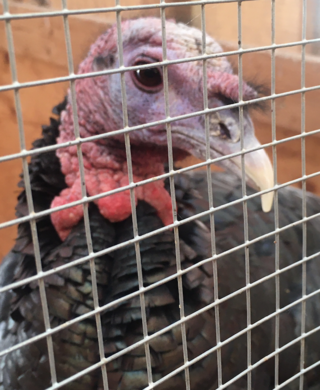
Walter, a rescued turkey, at Luvin’ Arms Animal SanctuarySource: Tito White, with permission
I also mentioned that the words and labels that are used are very effective psychological ploys that distance people from their meals and reduce cognitive dissonance for those who fully know—or should know—who they’re consuming, but want to forget about it. He fully understood what I meant. Also, some people know the animals suffer and still can’t stop themselves from eating them—eating misery—and can’t resolve the “meat paradox” by not doing what they well know causes pain, suffering, and death.
The 3 Ds that influence meal plans: How denying and distancing work to reduce dissonance.
I went on to tell Erwin that his mother was incorrect in saying that nonhumans don’t have emotions or feelings. I wondered if she really meant this or if it was her way of denying and distancing herself from who she was eating. As incredible as it sounds, there still are people who deny that nonhumans are sentient and emotional beings. They’re clearly stuck in the darkest of dark ages and maintain that we don’t really know if other animals have emotions. These denialists go on to falsely and inanely claim that there’s no science to support the idea that other animals are sentient and emotional beings, so therefore they’re not. I won’t belabor the crude logic here, but it really does exist. For example, recently, The Ontario Federation of Agriculture made this absurd claim, despite clear scientific evidence that numerous nonhumans have rich and deep emotional lives.4 I told Erwin that the real question at hand is why emotions have evolved, not if they have evolved, and that they matter very much to the individuals experiencing them. article continues after advertisement
I also explained to Erwin that the vast majority of “food animals” produced by massive industries are numbered, rather than named. This is another way for people to distance themselves from who the animals—each and every individual—truly are. Animals on sanctuaries, such as turkey Walter (above), are invariably named, and this helps to establish close and enduring relationships and recognize every single one as the unique individual they are. Of course, unnamed animals aren’t less sentient than named individuals. All should be referred to as “who,” rather than “it,” “which,” or “that.”
Finally, I mentioned to Erwin that many people who choose to unmind “food animals” and falsely rob them of their emotional lives don’t hesitate to attribute rich and active minds and a wide variety of emotions to companion animals with whom they share their homes. Uminding is a ruse by which some people claim certain animals such as cows, pigs, sheep, and others who wind up on humans’ plates are dumb and don’t have feelings, and this ploy allows them to eat and otherwise use and abuse them without a care in the world. While many people don’t like to admit it, in terms of harms, pain, suffering, and death, dogs and cats don’t really suffer more than individuals who find themselves on humans’ meal plans. When people ask me how can I work in China helping to rescue moon bears from the bear bile industry knowing that people there eat dogs and cats, I usually respond by politely saying something like, “Well, I live in the United States where people eat cows, pigs, sheep, and other fully sentient animals, and I dislike both practices. What’s the difference?”
While it may sound strange or heartless, there really isn’t a difference between eating traditional “food animals” and companion animals, because they’re all sentient and deeply suffer on the long and pain-filled journey on their way to peoples’ plates.5 Along these lines, in her book Why We Love Dogs, Eat Pigs, and Wear Cows: An Introduction to Carnism, Melanie Joy “explores the many ways we numb ourselves and disconnect from our natural empathy for farmed animals.” She came up with the term carnism “to describe the belief system that has conditioned us to eat certain animals and not others.”
Youngsters offer hope and we must listen carefully to them.
I’m pleased that Erwin wrote to me. He raised a lot of issues, many of which he was unaware were so salient, current, and on the minds of numerous people. I’m also happy that he understood what I wrote to him, or came to understand it after a few exchanges. Along the way, his mother thanked me and said she was revising her ways of thinking about animal sentience and animal emotions. I was pleased that she and Erwin could have further conversations about who we eat, how they’re labeled, and why. I thanked her and noted it was a win-win for all.article continues after advertisementhttps://4a194d60cc7be2e2f602ef76b092b970.safeframe.googlesyndication.com/safeframe/1-0-37/html/container.html
I’ve written a number of other essays motivated by great questions from curious youngsters.6 These discussions give me hope. We really need to listen carefully to what they’re are saying and asking. We must do the very best we can to leave future generations a more compassionate and friendlier world in which humane education and peaceful coexistence are high on the agenda.
BANFF, Alberta––Many of the estimated 8,000 human residents of the City of Banff and 25,000 Canada Day visitors to Banff National Park may have awakened the next day, July 2, 2018, with headsplitting hangovers.
Unaccustomed outdoor exercise, a hot late night, a high pollen count, and too much beer took their toll among the guests and residents, as always.
But Grizzly Bear #126, the laid-back, almost friendly unofficial Banff National Park greeter, probably turned in early, slept well, and was up again at dawn without a headache for possibly the first post-Canada Day morning in his dozen-year life.
(Beth Clifton collage)
No more big bangs over Banff
This was because, explained Jack Hauen of the Toronto Globe & Mail, “The town switched to a pyrotechnics display, like you might see at a rock concert, over…
White House coronavirus advisor Dr. Anthony Fauci said U.S. health officials are keeping an eye on a new strain of flu carried by pigs in China that has characteristics of the 2009 H1N1 virus and 1918 pandemic flu.
The virus, which scientists are calling “G4 EA H1N1,” has not yet been shown to infect humans but it is exhibiting “reassortment capabilities,” Fauci told the Senate Health, Education, Labor and Pensions Committee during a hearing Tuesday.
The H1N1 swine flu emerged in Mexico in April 2009, infecting 60.8 million people in the U.S. and at least 700 million worldwide. An estimated 151,700 to 575,400 people died from the virus across the globe, according to the CDC.
WATCH NOWVIDEO01:23Fauci: New virus in China has traits of 2009 swine flu and 1918 pandemic flu
White House coronavirus advisor Dr. Anthony Fauci said Tuesday that U.S. health officials are keeping an eye on a new strain of flu carried by pigs in China that has characteristics of the 2009 H1N1 virus and 1918 pandemic flu.
“In other words, when you get a brand new virus that turns out to be a pandemic virus it’s either due to mutations and/or the reassortment or exchanges of genes,” he told lawmakers. “And they’re seeing virus in swine, in pigs now, that have characteristics of the 2009 H1N1, of the original 1918, which many of our flu viruses have remnants of that in it, as well as segments from other hosts, like swine.”
The H1N1 swine flu and 1918 pandemic flu were both considered horrific viruses that spread across the globe.
The H1N1 swine flu emerged in Mexico in April 2009, infecting 60.8 million people in the United States alone and at least 700 million worldwide. An estimated 151,700 to 575,400 people died from the virus across the globe, according to the Centers for Disease Control and Prevention. It is now seen as one of a variety of seasonal flu viruses.
The 1918 flu, which Fauci has often compared to Covid-19, is estimated to have killed between 30 million and 50 million people, according to the CDC. More than 20 million people died in World War I, by comparison.
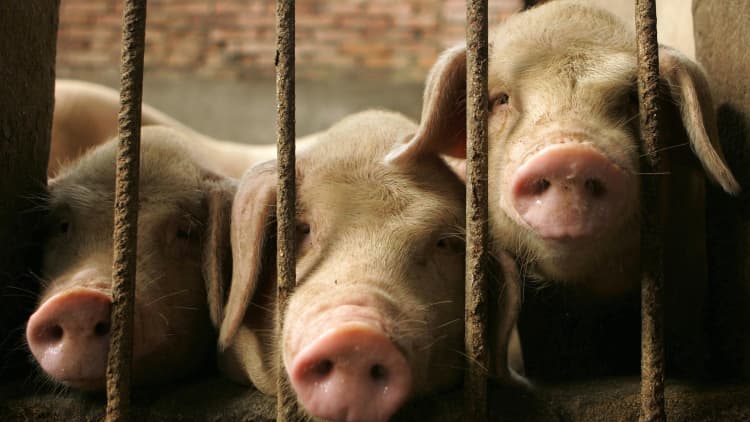
The new strain that is spreading in pig farms in China has been identified as having “all the essential hallmarks of a candidate pandemic virus,” scientists say.
WATCH NOWVIDEO01:33Scientists find potential new strain of ‘pandemic’ swine flu in China
Fauci said Tuesday there’s always “the possibility that you might have another swine flu-type outbreak as we had in 2009.”
“It’s something that still is in the stage of examination,” he said. It’s not “an immediate threat where you’re seeing infections, but it’s something we need to keep our eye on, just the way we did in 2009 with the emergence of the swine flu.”
Public health officials and physicians have criticized the Trump administration’s lack of coordinated response to the virus. In recent weeks, President Donald Trump has downplayed the virus, saying the U.S. is nearing the end of the pandemic, contrary to experts in his own administration.
Earlier this month, Fauci said Covid-19 turned out to be his “worst nightmare” come to life as the coronavirus continues to rapidly spread across the globe.
He said the virus is “very different” from other outbreaks such as Ebola and HIV. The virus jumped from an animal host and has a high degree of transmissibility and mortality, he said. It is historically one of the worst pandemics the world has ever experienced, he said, adding people have compared it to the 1918 flu.
First detected in Wuhan, China, about six months ago, the new coronavirus has already infected more than 10.4 million people across the globe, killing more than 500,000.
On Tuesday, Fauci told lawmakers that he is concerned about the rise in new cases in places such as Texas and Florida.
He said reopening schools in the fall season will depend on the dynamics of the outbreak and the particular location of the school in question.
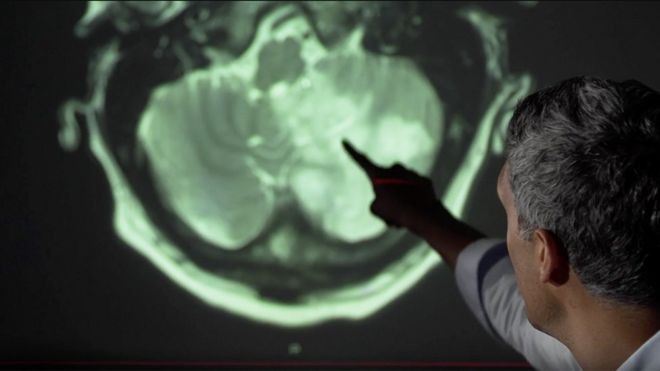
Image captionConsultant neurologist Arvind Chandratheva points out brain damage on a scan
Stroke, delirium, anxiety, confusion, fatigue – the list goes on. If you think Covid-19 is just a respiratory disease, think again.
As each week passes, it is becoming increasingly clear that coronavirus can trigger a huge range of neurological problems.
Several people who’ve contacted me after comparatively mild illness have spoken of the lingering cognitive impact of the disease – problems with their memory, tiredness, staying focused.
But it’s at the more severe end that there is most concern.
Chatting to Paul Mylrea, it’s hard to imagine that he had two massive strokes, both caused by coronavirus infection.
The 64-year-old, who is director of communications at Cambridge University, is eloquent and, despite some lingering weakness on his right side, able-bodied.














 Exposing the Big Game