Exposing the Big Game

Forget Hunters' Feeble Rationalizations and Trust Your Gut Feelings: Making Sport of Killing Is Not Healthy Human Behavior

Exposing the Big Game

Mick Barry TD questions Agriculture Minister about upcoming fur farming legislation

PETITION UPDATE

Irish Council Against Blood Sports ICABSIreland, Ireland

https://www.change.org/p/ban-fur-farming-in-ireland/u/27393155?cs_tk=AiK39gzH5vAXAP8FI18AAXicyyvNyQEABF8BvHTQ1tEdghkRs-ltTsquPMo%3D&utm_campaign=c102a16d7de74500986e50879657e2e1&utm_content=initial_v0_4_0&utm_medium=email&utm_source=petition_update&utm_term=csJUL 27, 2020 — 

Thanks to Mick Barry TD (Cork North Central, Solidarity) for asking Agriculture Minister Dara Calleary about “the progress on legislation regarding the prohibition of fur farming”.

Responding, Minister Calleary said that the Department of Agriculture “is in the process of preparing a Bill to provide for the phased introduction of a ban on fur farming which will include a prohibition on mink farming”.

ACTION ALERT

Contact Minister Calleary and tell him that you want fur farms shut down now (instead of being phased out). Remind him that an 80 per cent majority want fur farming banned.

Email: dara.calleary@oireachtas.ie
Tel: (096) 776 13 OR (01) 618 3331
Facebook: http://www.facebook.com/daracalleary
Twitter: http://www.twitter.com/daracalleary

Dail Question, 21 July 2020

Mick Barry (Cork North Central, Solidarity): To ask the Minister for Agriculture, Food and the Marine his views on prohibiting fur farming; the progress on legislation regarding the prohibition of fur farming; and if he will make a statement on the matter. [17062/20]

Dara Calleary (Mayo, Fianna Fail): My Department is in the process of preparing a Bill to provide for the phased introduction of a ban on fur farming which will include a prohibition on mink farming.

Along with animal welfare considerations, social and economic aspects in relation to the industry need to be taken into account. The Bill will make it illegal for any new fur farms to be established and will put in place phase-out arrangements for the small number of current operators. This will allow for an orderly wind down of the sector and allow time for employees to find alternative opportunities.

The Programme for Government 2020 contains a clear commitment regarding the prohibition of fur farming and Department officials are currently preparing the appropriate draft heads of a Bill to facilitate the achievement of this objective with a view to seeking Government authority at an early date.

https://www.kildarestreet.com/wrans/?id=2020-07-21a.1401


  • Share

Latest climate study predicts disaster for oceans, coastlines and life as we know it

Exposing the Big Game's avatarThe Extinction Chronicles

Latest climate study predicts disaster for oceans, coastlines and life as we know it
© istock

A disturbing new climate change study predicts global temperature increases of up to 8 degrees Fahrenheit as atmospheric carbon concentrations double. Humanity, it’s clear, is close to missing the chance to avoid the worst ravages of fossil fuel pollution.

That level of warming would spell disaster for our oceans and coastal communities. Coral reefs would die; marine biodiversity would plummet. Flooding and extreme storms would pummel coastal residents. And ocean acidification and hypoxia would change the basic building blocks of marine life in dangerous, unpredictable ways.

This study is just the latest alarm going off to demand climate action now. We can’t wait any longer to stop drilling and mining for fossil fuels in our public lands and waters. Such…

View original post 482 more words

This fall could be a busy hunting season due to coronavirus

Exposing the Big Game's avatarCommittee to Abolish Sport Hunting Blog

It could be a big fall for hunters

It could be a big fall for hunters.

placeholder

With many businesses and industries still being impacted by the coronavirus and the resulting shutdowns, it seems more people are turning to the outdoors to stay busy. This has led some to believe that this fall will be a busy hunting season.

With people still living under lockdowns and restrictions, it appears that many are turning to outdoor activities.

With people still living under lockdowns and restrictions, it appears that many are turning to outdoor activities. (iStock)

Various states across the country saw a significant increase in the number of fishing licenses sold. The New Mexico Department of Game and Fish, for example, has already sold 6,000 more licenses this year than last, KRQE reports. Illinois also saw a surge in fishing licenses sold, according to The Southern Illinoisan.

MAJORITY OF AMERICANS SAY ‘SPONTANEOUS ADVENTURES’ ARE THE BEST PART OF SUMMER, STUDY…

View original post 178 more words

Huge black bear spotted relaxing in a pool is one big summer mood

Exposing the Big Game's avatarExposing the Big Game

By Lauren M. Johnson, CNN

https://www.cnn.com/2020/07/25/us/huge-black-bear-in-pool-trnd/index.html

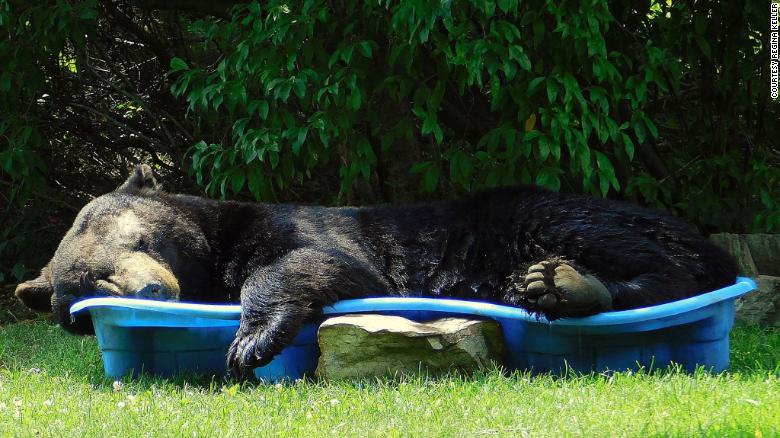
Updated 2:10 PM ET, Sat July 25, 2020A large black bear wandered into Regina Keller's yard and decided to stay awhile. A large black bear wandered into Regina Keller’s yard and decided to stay awhile.

(CNN)A woman in Virginia was delighted when a large black bear decided to take a nap in a kiddie pool she had in her backyard.Regina Keller, no stranger to bears, has been taking pictures of the wildlife in her backyard for 12 years.Her home is remote and backs up to the George Washington National Forest in Fort Valley, Virginia, so she is used to a variety of furry visitors including deer, bears, foxes, and squirrels.On July 19, she was watering her flowers when a large male bear wandered into her yard.

View original post

Huge black bear spotted relaxing in a pool is one big summer mood

By Lauren M. Johnson, CNN

https://www.cnn.com/2020/07/25/us/huge-black-bear-in-pool-trnd/index.html

Updated 2:10 PM ET, Sat July 25, 2020A large black bear wandered into Regina Keller's yard and decided to stay awhile. A large black bear wandered into Regina Keller’s yard and decided to stay awhile.

(CNN)A woman in Virginia was delighted when a large black bear decided to take a nap in a kiddie pool she had in her backyard.Regina Keller, no stranger to bears, has been taking pictures of the wildlife in her backyard for 12 years.Her home is remote and backs up to the George Washington National Forest in Fort Valley, Virginia, so she is used to a variety of furry visitors including deer, bears, foxes, and squirrels.On July 19, she was watering her flowers when a large male bear wandered into her yard.

At least 45 arrested in Seattle protests that police declared a riot

Exposing the Big Game's avatarThe Extinction Chronicles

(CNN)Seattle police declared a riot on Saturday night and arrested at least 45 people in demonstrations against police violence and the presence of federal law enforcement in cities like Portland, Oregon.

Seattle police said protesters threw large rocks, bottles, fireworks and other explosives at officers during demonstrations. Others set fire to a portable trailer and a construction site, police said in a series of tweets.
At least 45 people were arrested on charges of assaulting officers, obstruction and failure to disperse, police said.
Twenty-one officers have been injured from having projectiles thrown at them, according to police. Most officers were able to return to duty, the department’s Twitter said. One officer was hospitalized with a leg injury caused by an explosive.
Content by CNN Underscored
Everything you need to make ice cream…

View original post 253 more words

“Man Attacks Grizzly” and Other Leading Bleeding Stories

https://www.grizzlytimes.org/single-post/2020/07/26/%E2%80%9CMan-Attacks-Grizzly%E2%80%9D-and-Other-Leading-Bleeding-Stories

July 26, 2020

|David Mattson

My Google Alerts inbox has been flooded during the last week by an article making the rounds among national and regional media outlets with a title that virtually screams “Official: 7 Grizzly Bear Attacks This Year.” More matter-of-factly, the article leads off with the observation that “Wildlife officials have documented seven grizzly bear encounters resulting in injuries so far this year in the three-state greater Yellowstone region…” The article was authored by Mike Koshmrl, a journalist from Jackson, Wyoming, and subsequently circulated by the Associated Press.

I’m not altogether sure what motivated this article other than the perhaps obvious fact that 7 human injuries prior to the end of July is indeed a record for the greater Yellowstone area. Even so, the article comports with the tired truism that “if it bleeds, it leads,” in the somewhat dubious tradition of a seemingly endless series of books with titles such as “Bear Attacks” (times three), “Bear Attacks of the Century,” “Mark of the Grizzly,” “Bear Attacks: The Deadly Truth,” “True Stories of Bear Attacks,” ad nauseam. Sensationalized stories about grizzly bears “attacking” people never seem to exhaust the interest of either journalists or the public.

The central problem with this genre of journalism is that, while it may indeed be “news,” readers are rarely provided with a useful and realistic orientation to both grizzly bears and the risks of recreating and living among them. As such, the question inevitably arises whether this sort of semi-torrid journalism serves the public interest—the standard by which the Fourth Estate is putatively judged—or whether it is simply about making money.

Leaving this troubling question aside for the moment, Mike Koshmrl’s recent article on “bear attacks” exhibits three seminal and persistent problems typical of its genre. For one, the reported incidents are not put in context of actual risk. For another, details relevant to understanding the reactions of involved bears are rarely provided, much less usefully interpreted. And, finally, the semantics are universally troubling and inflammatory. So taking each of these issues in turn…

You Are Safer In Grizzly Bear Habitat Than You Are Crossing the Street

I recently waded through all of the data I could find (some of which I collected myself) pertaining to risks incurred by people on foot while recreating or living among grizzly bears, including risks of having a close encounter with a grizzly, experiencing an aggressive reaction, and, worst of all, being injured as a result. I reported what I came up with in a recent publication entitled “Effects of Pedestrians on Grizzly Bears.”

Without being exhaustive, these are the key results:

The odds of someone on foot being charged during a close encounter with a grizzly bear are small, even under conditions where bears are likely to be more reactive. In more open habitats with lower grizzly bear population densities typical of interior North America, 6% of documented close encounters resulted in some form of aggression by the involved bear, although much of this result was driven by a single study area where food-conditioned bears were implicated. Without this study, the percent of close encounters typified by aggression dropped to 4.5%.

Under all other circumstances, odds of people experiencing an overtly aggressive response from a grizzly were essentially nil, notably in Scandinavia, and so small as to not warrant direct study in most coastal areas of North America where people are concentrated in predictable locations at predictable times. As an example, Larry Aumiller reported only 8 “intense charges” during 21 years of close interactions with grizzly bears concentrated at McNeil River Falls in Alaska.

The odds that someone on foot will be mauled during a close encounter with a free-ranging grizzly bear are likewise so small as to almost defy calculation. For example, in Scandinavia where researchers directly approached brown bears (the same species as our grizzly) on literally hundreds of occasions, overt aggression was never documented, much less an attack. The same more-or-less holds true for coastal study areas in North America centered on areas of concentrated human activity along or near salmon spawning streams.

The best estimates for odds of injury during a close encounter with a grizzly bear in interior regions of North America come from Glacier National Park and from amalgamating results from multiple studies elsewhere. In Glacier, only 6 of 1000 encounters resulted in human injury. Everywhere else, only 3 in 1000 did. Kerry Gunther estimated an even lower 1 in 200,000 chance of injury for backcountry campers in Yellowstone National Park, although he calculated these odds based on total number of registered overnight users rather than on a per encounter basis.

Even so, managers and backcountry users are often interested in knowing the odds that an aggressive reaction by a grizzly bear—rather than just simply a close encounter—will result in human injury, realizing that odds of an aggressive reaction are small in the first place. With that proviso, roughly 6-8% of aggressions resulted in injury to a person on foot in interior regions of North America outside of Glacier National Park. In Glacier Park that figure was around 6-14%, depending on how aggression was defined by investigators.

Otherwise, as with aggressive reactions in general, encountering a grizzly bear in areas used less intensively by people is more hazardous for those involved, presumably because these encounters are more often registered by the involved bears as unpredictable threatening events. For example, given a confrontation, injuries were nearly 10-times more likely off-trail and 4-times more likely on low-use trail compared to on high-use trails in Glacier National Park.

Or, putting all of this another way, as a person on foot you are more likely to experience aggression, be attacked, and be injured upon encountering a strange dog—or even a car on a street—than you are wandering around among grizzly bears.

Surprise Encounters Lead to Defensive Reactions

So, what about the particulars relevant to understanding motivations of aggression from a grizzly bear? Adequate coverage of this topic would clearly fill a book—for example Steve Herrero’s seminal analysis of bear attacks in his book entitled…”Bear Attacks.” I also cover many of these particulars in the report I referenced earlier.

As a basic premise, though, there are three near-universal features of close encounters with grizzly bears that lead to aggression: (1) the bear is surprised at close quarters; (2) the bear is a female protecting her young; (3) the bear is guarding or perhaps appropriating food that it considers to be its own. The instances involving predation or maliciousness are a vanishing small minority of the total. None of this should surprise someone who has spent much time around grizzly bears, or animals of any sort for that matter—including parrots.

With these basics in mind, what about the grizzly bear-human encounters that resulted in injury this year—not just in the Yellowstone, but throughout the Northern Rockies? There have, in fact, been nine so far: 7 in Yellowstone and 2 in the Northern Continental Divide. And the pattern is strikingly consistent and clear.

In all cases the injuries resulted from close encounters that surprised the involved bear. No anomaly there. In fact, two of the incidents were triggered by the involved person almost literally colliding with the surprised bear—once involving a mountain biker and once involving a trail runner. Perhaps even more egregiously from the bear’s perspective, in two instances the involved person startled a bear that was bedded down—tantamount to entering someone’s bedroom unannounced. Four of the incidents involved females defending their young. No anomaly there. Six of the 9 incidents involved people who were alone. No anomaly there either. And finally, four of the incidents involved people who were off trail. Not surprising at all.

In other words, all of the human injuries this year were the result of a bear defending itself against a perceived attack or proximal threat. What’s truly surprising is that all the involved people managed to escape alive and, with the notable exception of the mountain biker, sustaining only minor injuries. This is, as always, perhaps the most remarkable feature of incidents where a grizzly bear attacks a person. Grizzlies are powerful. I’ve seen a number of instances where a grizzly bear took down and killed full-grown moose and elk. Grizzlies are almost never out to kill a person. They are almost always defending themselves, their space, their offspring, or a prized food. And they almost always show remarkable restraint in the process.

Some Reflections on Personal History

I haven’t kept a tally of my own close encounters with grizzlies, including instances where most people would have said they were “attacked.” Several of these encounters arose from unintentionally surprising bears in daybeds. Several involved females with offspring. Shear good luck or benevolence on the part of the bear prevented me from being included at some point on the list of people injured by a grizzly.

But I’ve never carried a gun, nor have I wanted to. I’ve concluded that being safe around grizzly bears is, if anything, contingent on being emotionally grounded, aware of my surroundings, attuned to unfolding situations and–as always–carrying pepper spray for last ditch self-defense. But there are no guarantees, just as there are no guarantees when I get behind the wheel of a car and head out on the highway.

To be honest, I’ve known bears that ended up killing people. But each of these bears had a back story. Thanks to human negligence, one had become used to eating food from campgrounds and off of people’s back porches. Another had routinely obtained food from backcountry campsites. Yet another had been pushed beyond the limits of endurance by a photographer—at the end of an acutely stressful year that involved the loss of two cubs.

My main point is straight-forward. In all of my immediate personal experience, grizzly bears have been aggressive only to the extent they were trying to defend themselves against a perceived threat or, on very rare occasions, perhaps out of rage at being trapped, immobilized, anesthetized, man-handled, tattooed, collared, and released, minus a tooth, in a semi-somnolent and acutely vulnerable state. In other instances, bears have pushed boundaries, sometimes tragically, to see if there might be a food reward, often because of past experiences where food had been obtained.

None of these bears was malicious or aberrant. And in every instance, human choices and behaviors were major factors in determining whether interactions were benign…or not.                       

Humans Are Attacking Grizzly Bears

Returning to this year’s human injuries, what we seem to have had is a series of incidents where the involved people were, by all reasonable standards, actually attacking the involved bear. The victims were out minding their own business trying to make a living, trying to take a nap, or trying to insure their offspring survived cub-hood, only to be attacked out of the blue by a human. “Bear Defends Itself Against Attacking Human.” Or, at least, that’s how the incidents would have been reported in a media outlet run by grizzly bears serving a grizzly bear audience.

Without belaboring the point, language matters. Narratives matter, especially when tacitly constructing culpability and blame. And we humans seem to take full advantage of our ability to broadcast narratives of victimhood as suits the purpose, especially in our relations with animals that lack our capacity for language.

In fact, “attack” bespeaks motivation and even criminality. Media articles that report on crimes frame events in terms of attacks by perpetrators intent on harming victims. An “attack” by a grizzly bear—whatever the circumstance or motivation—thus becomes a criminal act regardless of whether the journalist intends it to be read as such.

The upshot of articles such as the recent one making its rounds in the media is that people end up with an increasingly distorted view of grizzly bears and of the risks of living with them. …

It Sure Looks Like Russia Sent Military Dolphins to Syria

Here’s what the marine mammals were likely guarding.

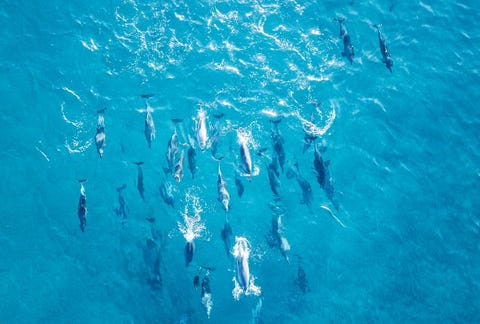
BY KYLE MIZOKAMIJUL 20, 2020aerial view of a large pod of dolphins swimming in blue waterVICKI SMITHGETTY IMAGES

https://www.popularmechanics.com/military/weapons/a33369056/russia-military-dolphins-syria-satellite-photos/

  • Satellite imagery of the Russian naval base at Tartus in Syria shows pens used to keep marine mammals.
  • The marine mammals are likely military dolphins sent by Russia to guard its fleet in Syria.
  • Russia’s marine mammal arsenal includes beluga whales, one of which was sighted hanging around Norway last year.

Satellite photos of a Russian naval base in Syria depict pens typically used to hold trained marine mammals. The pens, which made a brief appearance at the Tartus naval base from September to December 2018, likely contained military dolphins. Both the U.S. and Russia use trained dolphins to detect mines and enemy saboteurs—and Iran might, too.READ THISDoes Iran Have Secret Armed Dolphin Assassins?

The pens, according to naval analyst H.I. Sutton, appeared in the same part of Tartus reserved for Russian submarines visiting Syria. Russian subs have repeatedly launched cruise missile strikes against opponents of the Russian-backed Syrian regime. Sutton believes the pens likely held dolphins trained to defend ships against enemy saboteurs.This content is imported from Twitter. You may be able to find the same content in another format, or you may be able to find more information, at their web site.https://platform.twitter.com/embed/index.html?dnt=false&embedId=twitter-widget-0&frame=false&hideCard=false&hideThread=false&id=1284819163874119680&lang=en&origin=https%3A%2F%2Fwww.popularmechanics.com%2Fmilitary%2Fweapons%2Fa33369056%2Frussia-military-dolphins-syria-satellite-photos%2F&siteScreenName=PopMech&theme=light&widgetsVersion=9066bb2%3A1593540614199&width=550px

Russian military intervention in Syria is opposed by a number of sides in the conflict. Enemies of the Assad regime have launched several attacks against Moscow’s military forces, including a January 2018 mass drone strike against Tartus and Russia’s Hmeimim air base. Russia was likely concerned that enemy divers might attack warships in port and deployed dolphins as a response.

🐬 Dive deeper. Click here to read more stories like this, solve life’s mind-blowing mysteries, and get unlimited access to Popular Mechanics.

The pens only appear in imagery taken in the fall and winter of 2018. It’s not clear why the deployment was so short-lived, but Sutton speculates it may have been a test.

Will Killing the Geese Stop?– A Reason for Cautious Optimism

https://upc-online.org/ducks/200726_will_killing_the_geese_stop-a_reason_for_cautious_optimism.html

As of today, Denver Parks & Recreation (DPR) have said there will be no more killing of the Canada geese in 2020 and that killing will be unnecessary in 2021. — Marc Bekoff, PhD

Read Marc Bekoff’s latest coverage:
Why Geese Matter, July 24, 2020.

See our latest Action Alert:
Protect Denver’s Canada Geese: Take Action! July 23, 2020.

Two geese with goslings

This family of Canada geese lived peacefully together until they were captured and killed by government agents.
(Photo: Karen Trenchard; Garland Park, Denver, Colorado, June 2020)

More From UPC


UPC Summer 2020 Poultry Press – Volume 30, Number 1


Will Killing the Geese Stop? – A Reason for Cautious Optimism


SHARK Undercover Investigation: Kentucky Cockfights Exposed!


MISERY IS NOT A HEALTH FOOD

Alliance to End
Chickens As Kaparos

EndChickensAsKaporos.com


Vegan Starter Kit
Great Recipes & More
Order Printed Copies!

United Poultry Concerns

www.upc-online.org

Vietnam bans imports of wild animals to reduce risk of future pandemics


Country cracking down on illegal wildlife trade after coronavirus originated in Chinese wet market Vietnamese officials sort seized pangolin scales at a port in southern Vietnam in 2019.
Vietnamese officials sort seized pangolin scales at a port in southern Vietnam in 2019. Photograph: Vietnam News Agency/AFP/Getty Images Rebecca Ratcliffe Published on Fri 24 Jul 2020 14.10 BST
 
8
 
Vietnam has banned all imports of wild animals, dead or alive, and announced a crackdown on illegal wildlife markets as part of efforts to reduce the risk of future pandemics such as Covid-19.
 
A directive issued by the country’s prime minister, Nguyen Xuan Phuc, halts the trading of wild species, as well as animal products such as eggs, organs or body parts. It also calls for tougher action against people involved in illegal hunting, killing or advertising of wild animals.
 
The announcement has been welcomed by conservation groups, who have accused the government of failing to stop the flourishing trade in endangered species. Vietnam is one of Asia’s biggest consumers of wildlife products, and the country’s trade in wildlife – both illegal and “legal” – is thought to be a billion-dollar industry.
What is a wet market?
Read more
 
Among the most frequently smuggled animal goods are tiger parts, rhino horn and pangolins, used in traditional medicine. Animals are also purchased as pets or status symbols.
 
In February, 14 conservation organisations in Vietnam sent a joint letter warning the government that “new viruses will continue to move from wildlife to people while illegal wildlife trade and wildlife consumption continue”.
 
On top of the sale of animals in markets, there is a booming online wildlife trade, where images of species are posted on Facebook and YouTube. Conservationists have also raised serious concerns over poorly regulated commercial animal farms, where snakes, bears or tigers are reared in tiny cages.
 
The announcement has been welcomed by campaigners, though some warn the ban does not go far enough.
 
Nguyen Van Thai, director of Save Vietnam’s Wildlife, told Reuters the directive “is insufficient as some uses of wildlife such as medicinal use or wild animals being kept as pets are not covered”.
 
Others point out that enforcement across the country’s borders may also prove a challenge.
 
The global wildlife trade has come under greater scrutiny following the coronavirus pandemic, which has been linked to a market in the Chinese city of Wuhan, where animals including snakes, beavers and badgers were sold.
 
The United Nations’ biodiversity chief, Elizabeth Maruma Mrema, has called for countries to ban wildlife markets, which are seen by many to be a driver of zoonotic diseases. The Chinese government has introduced a temporary ban on such markets, where animals are sold in often cramped and unhygienic conditions.
 
https://www.theguardian.com/world/2020/jul/24/vietnam-bans-imports-of-wild-animals-to-reduce-risk-of-future-pandemics-coronavirus