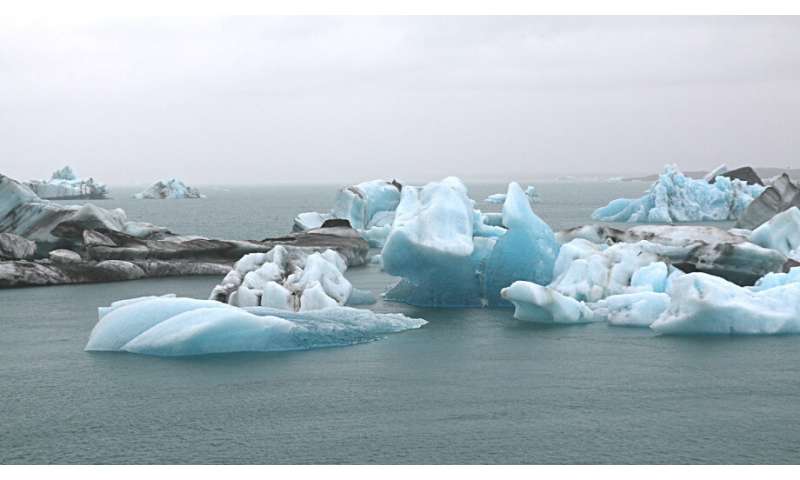
A new study led by researchers at The Australian National University (ANU) provides a clearer snapshot of conditions during the last ice age—when global ice sheets were at their peak—and could even lead to better models for future climate projections.
The study demonstrates a new way of recreating ocean conditions in the Atlantic during the Last Glacial Maximum (LGM)—around 20,000 years ago.
Lead author Dr. Jimin Yu says scientists have been trying to reconstruct ocean circulation for this time period for decades, because of the clues it offers about past CO2 levels and changes in climate.
“The LGM was a time of much lower CO2 levels, lower global temperature and lower sea levels,” Dr. Yu said.
The researchers say old ocean models cannot explain recently published data on the LGM, meaning a change in thinking was needed.
NASA’s Hubble Space Telescope captured a new, exceptionally crisp picture of the ringed gas giant in early July, and the space agency posted the image of the planet on Thursday.
“Hubble’s sharp view resolves the finely etched concentric ring structure,” wrote NASA, noting the rings are composed of chunks of ice ” ranging from tiny grains to giant boulders.”
Hubble orbits about 340 miles above Earth, and the telescope captured this detailed view of Saturn while the planet orbited 839 million miles from Earth.
Saturn
Sharp images of the gas giant allow planetary scientists to observe the planet’s changing atmosphere. For example, NASA researchers spotted a “slight reddish haze” over Saturn’s north polar region, possibly indicating a changing atmosphere or heating by the sun.
“It’s amazing that even over a few years, we’re seeing seasonal changes on Saturn,” Amy Simon, a planetary scientist at NASA’s Goddard Space Flight Center, said in a statement.
Amid the stark black background of space, Hubble also captured two of Saturn’s 53 confirmed moons: the ice-spraying Enceladus below, and the Death Star-like Mimas on the right.
It’s no surprise that first prize, or the blue ribbon, for exceeding 2°C above baseline goes to the Arctic with permafrost that covers 25% of the Northern Hemisphere. Recognition is long overdue, as it’s been totally neglected far too long by the Intergovernmental Panel on Climate Change (IPCC).
This crucial nugget of knowledge comes by way of a recent virtual science session (1:27 in length) sponsored by the National Academy of Sciences.
The webcast is entitled: Thawing Arctic Permafrost: Regional and Global Impacts, hosted by John P. Holdren, Teresa & John Heinz Professor of Environmental Policy, John F. Kennedy School of Government, Harvard University.
The timing couldn’t be better. The Arctic Circle has been very newsworthy. As such, people must be wondering what to make of the disturbing news that’s unsettling, to…
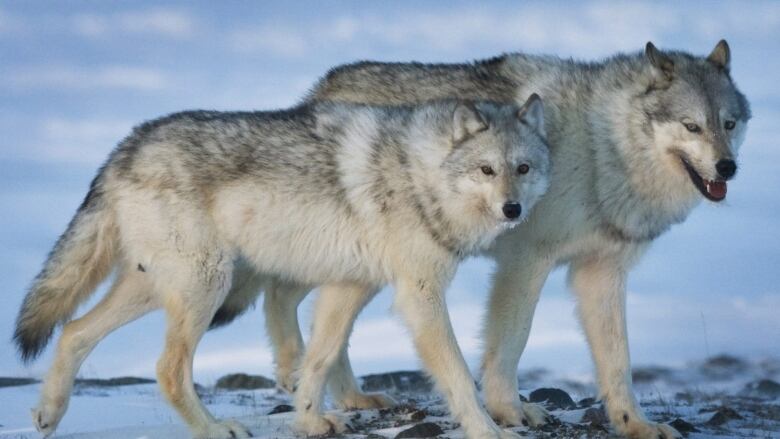
Research published in the international journal Biodiversity and Conservation found that addressing potential threats from wolves did not slow the loss of mountain caribou in B.C. and Alberta. (The Canadian Press)
6
comments
A British Columbia environmental group has launched a legal petition, alleging the provincial government’s wolf kill to save caribou is breaking federal and provincial laws.
Pacific Wild Alliance wants the B.C. Supreme Court to declare that the province doesn’t have the authority to use a helicopter to hunt wolves under the Wildlife Act and Canadian Aviation Security Regulations.
The petition to the court, filed early this month, says it wants a judge to quash any permits issued for the wolf cull.
None of the claims have been tested in court, and no one from the B.C…
ByAmy Judd Global NewsPosted July 21, 2020 7:51 pm Updated July 21, 2020 8:01 pmNews: Rare white grizzly bear spotted in B.C.’s Yoho National Parkclose videohttps://globalnews.ca/video/embed/7203132/#autoplay&stickyiframe=miniplayer_7203132_5f1c762cbfa5b&muteMore video has surfaced of a rare white grizzly bear that’s been spotted in B.C’s Yoho National Park.
A rare white grizzly bear has been sighted by the side of the road in a B.C. park.
Oly Talens was driving through Yoho National Park in the Canadian Rockies on their way to Takakkaw Falls when a flash of white through the trees forced them to pull over and pull out a video camera.
Turns out, the animal, named Nakoda by locals, has been seen before in Yoho and Banff national parks, but not very often.
Parks Canada has previously said the bear is not albino, but actually a natural colour phase variation that makes it white.
The animal, believed to be about three and a half years old, can be seen in the video with its brown sibling.STORY CONTINUES BELOW ADVERTISEMENThttps://cf4ca2a280f1728229d4553c11701b81.safeframe.googlesyndication.com/safeframe/1-0-37/html/container.html
“They said seeing a grizzly up close in the wild is lucky, but two at the same time — and the (second) one is a rare white bear — is like winning a lotto ticket,” Talens said.
Parks Canada had to put out a statement following other sightings of the unusual bear, reminding the public to consider not stopping if they see wildlife as they travel through the parks, or, if safe to stop, to always stay in their vehicles and give the animal space.
“Bears and other wildlife that become comfortable around people and roadsides are at greater risk of being struck by a vehicle,” the agency said.0:38Rare white ‘spirit’ bear spotted with cub in B.C.Rare white ‘spirit’ bear spotted with cub in B.C.
Vietnam is a key transit and destination country for elephant ivory, rhino horn and pangolin scales. Photo by Volodymyr Burdiak/Alamy Stock Photo
Vietnam’s prime minister has issued a directive that will ban most wildlife imports into the country and crack down on the illegal wildlife trade there.
The directive from Prime Minister Nguyen Xuan Phuc, which will go into effect immediately, comes in response to concerns about the reported close link between pandemic diseases, like COVID-19, and the wildlife trade. It also directs government agencies to step up their efforts to stop the illegal hunting, consuming, buying and selling of wild animals, including online sales.
The ban, however, does not prohibit the domestic trade in wildlife, nor does it shut down legal wildlife markets, particularly those selling mammal and bird species that are known to contract coronaviruses. If Vietnam is to…
A Santa Rosa Beach resident was charged with three misdemeanors last month after he was found setting traps on a piece of land near U.S. Highway 90 to catch gopher tortoises, a threatened species. [CONTRIBUTED PHOTO]
WAlTON COUNTY — A 55-year-old man was charged with three misdemeanors last month after he was found setting traps on a piece of land near U.S. Highway 90 to catch gopher tortoises, a threatened species.
The Santa Rosa Beach man told the Florida Fish and Wildlife Conservation Commission officers that he was buying the property where the turtles were located, and before the construction could begin he must remove the tortoises.




 0:38Rare white ‘spirit’ bear spotted with cub in B.C.Rare white ‘spirit’ bear spotted with cub in B.C.


 Exposing the Big Game