The new owners of an Oklahoma zoo featured in the hit Netflix documentary Tiger King have been ordered to surrender all tiger cubs and their mothers to the federal government.
The case was filed against Jeff and Lauren Lowe, owners of the Greater Wynnewood Exotic Animal Park.
They are accused of violating the Endangered Species Act and the Animal Welfare Act.
Mr Lowe is the former business partner of Joe Exotic, star of the hit show.
Exotic, real name Joseph Maldonado-Passage, is currently serving a 22-year sentence for his involvement in a contract killing plot and animal abuse.
“The Lowes have showed a shocking disregard for both the health and welfare of their animals, as well as the law,” said the acting assistant attorney general Jonathan D Brightbill of the Justice Department’s environment and natural resources division.
Both Jeff and Lauren Lowe appeared in Tiger King.
The court found that the pair’s “failure to provide safe conditions, proper nutrition, and timely veterinary care resulted in harm to a number of animals, including the death of two tiger cubs less than a week apart”.
The court rejected claims by the Lowes that they were not “exhibitors” under the Animal Welfare Act as the zoo was still under construction.
Joe Exotic has formally requested a pardon from US President Donald Trump, who is expected to pardon dozens of people in his final hours in office.
Mounting evidence suggests that replacing animal proteins with plant-based proteins can benefit your health in numerous ways.
Afraid of eating chicken due to bird flu? Try these five vegetarian foods high in protein for a balanced diet | Photo Credit: iStock Images
KEY HIGHLIGHTS
Vegetables and fruits are an essential part of a healthy, balanced diet
Research has shown that replacing animal-based foods with plant-based foods lowers the risk of many diseases
Here are some of the best vegetarian foods loaded with protein, fibre and other essential nutrients you can add to your diet for a healthier, fitter you
New Delhi: We all know the fact that protein is an essential part of a healthy, balanced diet. Research has proven that a high-protein diet can increase muscle mass and strength, boost metabolism and aid weight loss. But who says one needs to eat poultry, beef, or fish to create a delicious and fulfilling meal? Mounting evidence suggests that replacing animal proteins with plant-based proteins can benefit your health in numerous ways, including lowering the risk of death from cancer and heart disease.
So, whether you’re trying to avoid consumption of chicken and eggs due to bird flu scare or simply want to improve your diet, swapping meats in dishes for those nutrient-dense, fresh veggies could be one of the simplest and healthiest ways to improve health and well-being. And here’s a list of vegetarian foods that are packed full of protein.
Vegetarian foods high in protein
Lentils: Lentils, like beans, are chock full of protein, fibre, vitamins and minerals. One-half cup of cooked lentils contains about 1 grams of protein, which is more than the amount in a hamburger. Lentils make for an excellent replacement for meat in your diet. They are also an excellent source of B vitamins, iron, magnesium, potassium and zinc.
Black beans: A diet rich in plant-based foods such as beans has been linked to a reduced risk of several serious medical conditions, including heart disease, diabetes and cancer. It can also help your body process calories more effectively. High in protein, fibre, antioxidants and other essential nutrients, black beans are another healthy vegetable swap for meat in your diet. What’s more, they are low in fat and have no cholesterol. One serving of cooked black beans (1/2 cup) can give you about 8 grams of protein.
Chickpeas: Chickpeas are another legume packed full of nutrients. Apart from protein, they are high in fibre and several vitamins and minerals with a moderate amount of calories. Their health benefits range from aiding weight management to supporting blood sugar control and protecting against certain cancers. One cup of cooked chickpeas contains about 15 grams of protein.
Soya beans: A complete protein, comparable in quality with animal proteins, soya beans or soybeans are high in dietary fibre and other essential nutrients like iron. They are low in fat and free of cholesterol. In fact, soy is one of the few known plant foods that have all the essential amino acids – like those found in meats. One cup of soyabeans contains about 31 grams of protein.
Tofu and tempeh: Both originate from soybeans, tofu and tempeh are a complete source of protein. They also contain high amounts of several other nutrients and antioxidants that can improve health in a number of ways. They can be used in a variety of recipes such as burgers, soups, etc. Both tofu can tempeh come with about 10-19 grams of protein per 100 grams.
The bottom line is, all vegetables come with healthful vitamins, minerals and antioxidants that can help prevent or reduce your risk of disease and promote overall health. Try to add a range of veggies daily to your diet to reap as many health benefits as possible.
Shawn Massey, 38, of Gibbsboro, was charged with murder in the slaying ofJoseph Bottinoand was at-large, Acting Camden County Prosecutor Jill S. Mayer and Pine Hill Police Chief Christopher Winters said in a statement.
CHRIS Packham has raged that the Royal Family need to ‘grow up’ for supporting trophy hunting in a new nature documentary.
The 59-year-old presenter- who will be back on our screens hosting Winterwatch this week – is an avid animal rights campaigner.
Chris Packham has called for the Royal Family to ‘grow up’ and stop supporting trophy huntingCredit: ITV
Chris is reigniting his campaign to ban the importing of hunting trophies in the UK, and has called on the Royals to get behind it.
This is despite the fact that in 2016, Prince William admitted he was in favour of trophy hunting under the right circumstances, explaining: “there is a place for commercial hunting in Africa as there is around the world”.
When asked about the Royal Family and their position on the matter, Chris said:…
Updated 11:00 AM ET, Tue January 19, 2021This Psittacosaurus fossil, in the collection of the Senckenberg Museum of Natural History in Frankfurt, Germany, preserves the only known dinosaur cloacal vent.
(CNN)We know a lot about dinosaurs — what they looked like,what they ate and what killed them off — but no fossils have definitively preserved two dinosaurs in the act of mating.However, a fossil from China of a Psittacosaurus is so well preserved that the opening the Labrador-size dinosaur used to pee, poop and reproduce is visible, allowing paleontologists to study it for the first time.While it doesn’t offer any concrete answers on how dinosaurs may have procreated, it does give some hints.”We don’t have any dinosaur fossils where you can be confident they’ve been caught in the act,” said Jakob Vinther, a paleontologist and senior lecturer at the University of Bristol’s School of Earth Sciences.What we know is “based on natural history where we compare it to living groups of animals.”While most mammals have separate holes for bodily functions, many other animals — including birds and reptiles — have just one and it’s known as the cloaca.close dialog
Receive Fareed Zakaria’s Global Analysisincluding insights and must-reads of world newsActivate Fareed’s BriefingBy subscribing you agree to ourprivacy policy.The fossilized cloaca confirms that dinosaurs had one but it doesn’t look like that of any other living animals.A reconstruction of Psittacosaurus illustrating how the cloacal vent may have been used for signaling during courtship.”It is very unique. Most cloacas form a kind of slit. Sometimes it’s a vertical split, sometimes it’s a smiley face, sometimes it’s a sour face. This thing has a V-shaped structure with a pair of nice flaring lips and there’s not a living groups of animals that have morphology like that,” Vinther said. “It is somewhat similar to crocodiles but still unique.”The study, which published in the journal Current Biology on Tuesday, said that large, pigmented lobes on either side of the opening could have harbored musky scent glands, as seen in living crocodiles and alligators.What’s more, the outer margins of the cloaca are highly pigmented with melanin. While they don’t know for sure what color it was, it likely would have contrasted with the dinosaur’s pale underbelly, Vinther said.
Inside a dinosaur egg, this baby wasn’t what researchers expectedThis distinctive pigmentation could mean the vent was used to display and signal, similar to living baboons andsome breeding salamanders.The fossil is displayed at the Senckenberg Museum of Natural History in Frankfurt, Germany, but was found in a fossil-rich area of Liaoning in northern China.Vinther had worked on the fossil before in 2016, reconstructing the dinosaur’s color patterns, and it was only at the end of that study that he realized that the cloaca was really well preserved, he said.In animals with cloacal vents, the genitals are tucked inside the body and haven’t been preserved so it’s not known whether this particular dinosaur was male or female.Most birds, the only living relative of dinosaurs, mate by “cloacal kissing” — by pressing together their openings. Some paleontologists think dinosaurs may have mated like this.Vinther, however, believes that this dinosaur would have had a penis — the fossilized opening is more similar to a crocodile’s, which do, and there are some birds, like ostriches and ducks, which also have penises.”From what we can see, this cloaca would not have been suitable for cloacal kissing,” Vinther said. “It looks like it would have been penetrative sex.”
President Joe Biden—and those who follow him—will navigate a new political landscape, reshaped by four years of Donald Trump.11:17 AM ETJack GoldsmithProfessor of law at Harvard Law SchoolSamuel MoynProfessor of law at Yale Law School
GETTY / THE ATLANTIC
After years of Donald Trump’s boorish defiance of presidential norms, his incitement of the violence at the Capitol closed his term with a demented rave that shamed American democracy. Tomorrow Joe Biden will return the presidency to a more decorous and honorable choreography. But in important respects, Biden cannot restore normalcy. Trump’s most profound and least recognized contributions to the office he abused are a reorientation of some of the presidency’s important powers and responsibilities. Once-fringe understandings about the role of the president approached acceptance under Trump in ways that Biden cannot dismiss, and they could transform how the great office functions for years to come.
Your guide to life on a warming planet
Discover Atlantic Planet, a new section devoted to climate change and the ways it will reshape our worldExplore
True, Biden’s time in office will witness reversals by conservatives and progressives on some of the uses and limits of presidential power. The Harvard law professor Adrian Vermeule predicted at the dawn of the Trump administration that the sides would reverse their positions about aggressive uses of presidential administration. He compared the pattern to two lines of dancers in a Jane Austen novel who move to opposite sides of the ballroom and then continue dancing as before. “The structure of the dance at the group level is preserved; none of the rules of the dance change; but the participants end up facing in opposite directions.”
In many instances, Vermeule’s prediction was right. Political actors and commentators supportive of Barack Obama’s “pen and phone” strategy—his aggressive use of executive orders, law-stretching interpretations of delegated power, and broad conception of his discretion to enforce (or not) the law—quickly switched their view when the Trump administration started making similar arguments in support of their quite different policies (related to immigration restrictions, environmental protection, and the like). And many conservative politicians and commentators flipped or shaded their views in the other direction as well.
This dynamic is one of the under-appreciated reasons why real executive authority has increased over decades, in spite of a rhetoric of constraint coming from whichever party has been out of power. On this score, in many ways, the Trump era was business as usual that will likely continue under Biden.
But, at the same time, under Trump new dynamics emerged that are not consonant with the standard pattern, and once-marginal understandings of the proper role of executive power approached the mainstream. This was not a merely partisan switching of sides only to continue the same dance, but a whole new song, perhaps even a new party—what Austen called in Sense and Sensibility “an unpremeditated dance.”
Sometimes Trumpian horrors provoked rage that has reshaped the presidency. At other times, he intended the reorientation. Occasionally, he was uninvolved, and the task fell to those around him. In the end, executive war making has emerged on the other side of the Trump years with both new constraints and new powers, while in the realms of economics and trade the presidency has seen once-marginal positions move to the center, leaving room for new possibilities.
The shift on war making stems from a remarkable mainstreaming in recent years of rhetorical opposition to “endless wars.” Trump railed against such wars during his presidency and both presidential campaigns. In office he clashed with the national-security bureaucracy and the military—with some public support—about drawing down troops in Afghanistan and Syria. Trump lost or was outwitted in many of these battles. But by the end of his presidency he could claim with some justification that “unlike previous administrations I have kept America out of new wars, and our troops are coming home.” There are fewer troops in Afghanistan and Iraq today than at any time since 2001.
Trump by no means supported a shift in executive power toward Congress, and he called for more military spending even as he questioned excessive foreign intervention. But during his tenure, from right and left alike, calls for reform of war powers dwarfed prior right-left opposition to American wars, in a remarkable mainstreaming of positions marginalized for many decades. The rhetoric of opposition to ending endless war took on a life of its own not just among activists but also among members of Congress, in an unprecedented reactivation of the defunct War Powers Resolution (in the case of the Yemen proxy war, supported by both Bernie Sanders and the conservative Mike Lee). Trump vetoed it, but a new consensus became visible.https://f4b94d01a6a448c08ef10605e85954c4.safeframe.googlesyndication.com/safeframe/1-0-37/html/container.html
Biden underscored the new reality with remarkable antiwar campaign pledges. He vowed to “end the forever wars in Afghanistan and the Middle East,” and to “end U.S. support for the disastrous Saudi-led war in Yemen.” A great deal of energy, from conservatives and progressives, will go into holding him to these promises. Just as significant, mainstream foreign-policy experts—including manyformerObama national-security officials—now agree that something went dreadfully wrong in executive war making and American militarism generally. These sentiments have an even greater urgency as the coronavirus pandemic requires a rethinking of American national-security priorities. Biden’s national-security team has been dubbed “Generation Forever War.” But even if we assume that they are not chastened by past mistakes, they and the president they serve will have a tougher time asserting the same powers as before.
Ironically, Trump also contributed to this rethinking when he rattled America’s saber. His scary, impulsive threats to use his “bigger and more powerful” nuclear button against North Korea sparked serious congressional attention to plenary presidential control over nuclear weapons for the first time in four decades. We are a long way from any reform of this presidential power, but several officials testified about how informal constraints would check truly irrational presidential action in this area.
While the beginnings of a reset on war powers generally are discernible, a different and countervailing military reset—concerning America’s use of its cyberpowers—crystallized over the course of the Trump presidency. During the Obama administration, the United States suffered unprecedented cyber intrusions from foreign powers—notably the Russian interference in the 2016 election and the massive Chinese hack of the Office of Personnel Management databases. A consensus developed in the intelligence community that the United States had been too risk-averse in responding to these threats. The result was three important changes during the Trump era.
First, the Trump administration changed Obama-era rules in order to give Cyber Command greater latitude to engage in operations without White House sign-off. Second, Cyber Command developed and implemented a new strategy, called “Defend Forward,” under which it has a persistent presence in adversary networks so it can discover and check threats before they materialize. And third, Congress—on the quiet in National Defense Authorization Acts—gave the executive branch much more leeway to use offensive cyber tools abroad. The centerpiece of this bipartisan congressional scheme is a barely noticed express congressional authorization for Cyber Command to “take appropriate and proportional action in foreign cyberspace” in order “to disrupt, defeat, and deter” ongoing adversarial activity in the cyber domain if there is “an active, systematic, and ongoing campaign of attacks” against the United States by “Russia, China, North Korea, or Iran.”https://f4b94d01a6a448c08ef10605e85954c4.safeframe.googlesyndication.com/safeframe/1-0-37/html/container.html
Trump deserves little if any credit for these moves, which emerged out of a consensus between intelligence lifers like the Cyber Command leader Paul M. Nakasone, interested members of Congress, and sympathetic Trump national-security advisers. But the broad congressional support for these moves reveals a new consensus that the U.S. needs to take more forceful steps to protect its digital networks, and makes it unlikely that there will be a pullback under Biden.
A related mainstreaming under Trump of once-marginal criticisms of the executive pertains to domestic surveillance in the name of national security. Trump’s attacks on the FBI’s surveillance powers, and a damning inspector general report about the use of those powers in the FBI investigation of the Trump campaign’s connections with Russia, led to a drop in Republican support for the FBI and an unusual split in the party on the appropriateness of domestic national-security surveillance. (At the same time, Democratic support on these matters rose.) One consequential impact of these changes was Congress’s historic failure in 2020 to renew three important sunsetted provisions of the Foreign Intelligence Surveillance Act. A renewal bill passed the House in March 2020 with more Democratic than Republican support, and then it failed in the Republican-controlled Senate a few months later. Trump’s attacks and the inspector general report were the catalysts, but the shift in Republican views has been happening slowly for more than a decade. It is too early to tell how sticky this change will be, but ascendant Republican concerns about presidential surveillance authorities may combine with still-prevalent Democratic concerns to place longer-term restrictive pressure on domestic surveillance.
Trump also succeeded in bringing a politics of economic “freedom” into question, both in domestic politics and as a foreign-policy goal. This is clearest in the realm of trade policy. Trump rode to victory by railing on NAFTA—once the darling of the New Democrats’ global economic agenda—as a bad deal for American workers. He similarly bashed the World Trade Organization and decimated its core judicial body, often to the applause of many Democrats.
As with war, Trump’s rhetoric, and the perception of its electoral success, had incalculable effects in bringing once-unfashionable beliefs from America’s extremes to its center. The Democratic platform for 2020 features a more nationalist call for industrial policy—blaming Trump tax cuts for accelerating offshoring—than seen in any presidential campaign from either side since Pat Buchanan’s and Ross Perot’s proto-Trumpian attack in 1992 on what we now call “neoliberalism.” And incoming National Security Adviser Jake Sullivan proclaimed that the Biden administration would embrace a “foreign policy for the middle class” that measured success “against a simple metric” of making “the lives of working people better, safer, easier.”https://f4b94d01a6a448c08ef10605e85954c4.safeframe.googlesyndication.com/safeframe/1-0-37/html/container.htmlSponsored VideoWatch to learn moreSPONSORED BY ADVERTISING PARTNERSee More
Trump’s rhetorical opposition to neoliberal globalization also intersected with presidential power in revealing ways. Congress narrowly passed NAFTA in 1993 (as a so-called congressional-executive agreement that does not constitutionally require a two-thirds vote), while the WTO emerged the following year when Congress approved comparable fast-track authority that effectively transferred trade policy to the president. In the intervening two decades, the executive, under Republican and Democratic control, has advanced neoliberal ideas of economic freedom until Trump. U.S. accession to the Trans-Pacific Partnership, the centerpiece of Obama’s pivot to Asia, went on life support after Hillary Clinton was forced to oppose it under pressure in her campaign against Trump.
Not that Trump attempted to return any trade authority to Congress, any more than he supported war-powers reform while selectively opposing wars. But, ironically, the NAFTA reform that would never have occurred without him, and that barely rose above symbolism in real terms, garnered more support from Congress than any comparable trade deal, passing the House 385–41 and the Senate 89–10.
Trump’s record of using executive power to resist neoliberalism was uneven and should not be exaggerated. U.S. Trade Representative Robert Lighthizer, the mastermind of Trump’s trade policy, never stopped attacking multilateral rules and organizations as bad for American workers, and he convinced Trump to use unilateral presidential weapons aggressively against trading partners. But these moves aimed not to establish autarky but, rather, to embed free-trade principles in bilateral arrangements that Lighthizer believes better protect America’s economic interests. The Trump administration wanted “to get to the position where the U.S. is competing with countries on a bilateral basis and on a no-barrier basis, and then let the United States, let pure economics make the decision,” Lighthizer explained in 2018.
Despite this qualification, Lighthizer established a trans-partisan reset on trade that was unthinkable before Trump, albeit with an unclear sequel. “Lighthizer has changed a lot of thinking in dramatic ways, which is terrific,” Lori Wallach of the liberal outfit Public Citizen told ProPublica, adding that “he has not been able to reverse decades of boneheaded, job-killing trade policies, such that we still see a trade deficit today that’s bigger than when Trump took office, and ongoing outsourcing of jobs, despite good efforts to try and turn around a mess.”
To meet these threats, Trump has used delegated power from Congress to impose extensive and unprecedented import restrictions and tariffs on Chinese goods. He has also used statutory emergency powers (for example, the International Emergency Economic Powers Act) in unprecedented ways to punish globally the use of products of certain Chinese information intermediaries (such as, most notably, Huawei) and to impose broad sanctions on the use of certain Chinese platforms in the United States (like TikTok). And much more than his predecessors, Trump has reconceptualized economic competition with China as a national-security issue.
While many of Trump’s exercises of delegated powers (such as his emergency wall declaration) drew broad criticism, the basic thrust of these policies, and these unprecedented uses of delegated power, gathered muted criticism from some but support from many, including many Democrats. (There were, to be sure, loud complaints about the domestic impact of responses to some of Trump’s unilateral trade sanctions.) Biden will surely examine all of these measures, and probably adjust many of them, especially the tariff restrictions. But the conventional wisdom is that Trump was largely right about the threat and the need for an aggressive response, and the policies in the round will likely continue under Biden. “We expect to be taking a stronger position on China than has been the case in past Democratic administrations,” an unnamed senior adviser to the Biden transition told The Washington Post.
Trump was calamitous for the institution of the American presidency, but through a strange combination of attack, innovation, and neglect, he reoriented it for his successors. “Fine dancing,” Austen wrote in Emma, “like virtue, must be its own reward.” The same is hardly true of executive power, especially given Trump’s vice and macabre closing number. But he changed the music, and has forced his successor to take his first steps on a very different stage.
(CNN)For four years, President Donald Trump has careened from one crisis to the next, many of his own making.Still, through the Mueller investigation, two impeachments, the deadliest pandemic in a century, and even a failed and dangerous attempt to overturn his own election defeat, Trump and his administration remained steadfast in at least one quest: to weaken many of the country’s bedrock climate and environmental guardrails.Considered in the course of humanity — or the 4.5-billion-year history of this planet — a single presidential term is barely a blink of an eye.TRUMP WHITE HOUSE
But in just four years, Trump has cemented a legacy — particularly on climate change — that will be felt by generations to come.”It’s pretty much been an unequivocal disaster,” said Christine Todd Whitman, the former Republican governor of New Jersey who was EPA administrator under President George W. Bush. “To just roll back [regulations] whole cloth because they came from a previous administration has made no sense, and really what’s happening is that they’re putting the health of Americans and the health of our environment in jeopardy.”The mission [of the EPA] is to protect human health and the environment — pretty simple and pretty straightforward,” Todd Whitman added. “It seems to me they’ve totally ignored the mission.”Then-Republican presidential nominee Donald Trump holds a sign supporting coal during a rally in Pennsylvania on October 10, 2016. President Trump’s moves to gut greenhouse gas regulations were applauded by many in the fossil fuel industry, but coal jobs continued to decline on his watch.Much of the environmental protections that Trump dismantled can be rebuilt by the incoming Biden administration, experts say.close dialog
Sign up for CNN What Matters NewsletterEvery day we summarize What Matters and deliver it straight to your inbox.Sign Me UpNo ThanksBy subscribing you agree to ourprivacy policy.However, doing so will take time. And in the case of global warming, the hour has grown late to stop the worst effects.The most lasting part of Trump’s climate legacy — and one that cannot be undone — may be the time the administration wasted in the face of a worsening climate crisis, some scientists and experts say.”I’m kind of hopeful that many of the worst and most damaging climate policies are capable of being reversed,” said Kim Cobb, a professor and climate scientist at Georgia Tech’s School of Earth and Atmospheric Sciences. “But the lost years in terms of progress on emissions reductions we can’t ever take back, and that is something that will have a finite impact on coming climate change impacts.”
In the face of a mounting climate crisis, Trump doubled down on fossil fuels
Trump’s deregulatory crusade began with his first EPA administrator, Scott Pruitt, a former Oklahoma attorney general who had sued the agency a dozen times over environmental protections before being tabbed to lead it.After he resigned in the face of multiple ethics scandals, Trump picked a former coal lobbyist, Andrew Wheeler, to take his place.Pruitt and Wheeler — in parallel with the Interior Department and the Department of Energy — have worked to complete dozens of industry rollbacks, gutting regulations on everything from greenhouse gas emissions from power plants to showerhead water efficiency.EPA Administrator Andrew Wheeler testifies at a Senate hearing on May 20, 2020. Wheeler and former EPA administrator Scott Pruitt executed a massive rollback of climate and environmental regulations during Trump’s four years in office.Along the way, fossil fuel interests have applauded Trump’s moves, even if he didn’t revive America’s coal industry as he had promised.”They took industry’s wish lists and translated them into agency orders or regulations,” said Michael Gerrard, the director of the Sabin Center for Climate Change Law at Columbia Law School. “They were only partially successful because they were so sloppy in following the necessary procedures that they were often slapped down by the courts.”In an interview this week with the Washington Post, Wheeler defended his legacy, saying that on his watch the EPA has “proven that you can reduce pollution and have cost-effective regulations.”
2020 was tied for the hottest year ever recorded — but the disasters fueled by climate change set it apartBut critics see a willful and costly ignorance of science, one that has colored the administration’s response to the world’s biggest crises, from the Covid-19 pandemic to climate change.”I think their [policies] are dangerous. That’s the bottom line,” Cobb said. “I think it’s even worse than anti-science.”The Trump administration’s pullbacks on climate regulations came at a time when the science has never been clearer on the urgent need for the planet’s biggest polluters to make big cuts to their greenhouse gas emissions.Preliminary estimates by the private data analytics firm the Rhodium Group show US emissions did plummet by 10% last year, the largest drop since World War II. But experts attribute most of the reduction to the pandemic, which kept many Americans out of their cars and off planes, and expect emissions to rebound as the effects of Covid-19 wane.Before the pandemic, US emissions rose in 2018 and then fell by a slim 2.1% in 2019.In 2019, the UN warned that to hold global warming below the 1.5 degree Celsius threshold, global emissions would need to fall by 7.6% each year from 2020 to 2030.Trump’s moves also coincided with a seemingly unending rash of extreme weather events, which brought the destruction fueled by global warming to the doorsteps of millions of Americans.The Glass Fire burns in Calistoga, California on September 28, 2020. An unprecedented fire season in the American West in 2020 was just one of an onslaught of climate-related disasters that have swept the country in recent years.In Trump’s first year in office in 2017, he announced that he planned to pull the US out of the Paris Agreement on climate. That same year, Hurricanes Maria, Harvey and Irma left behind a wake of death and destruction from Puerto Rico to Texas, a year that saw all disasters in the US cause a record $321 billion in damages.In 2020, a record-breaking 22 separate billion-dollar weather and climate disasters — including unprecedented wildfires in the American West — caused a total of $95 billion in damages across the country.Many of those disasters bore the fingerprints of climate change.
Why the Trump presidency could influence global warming for years
During Trump’s presidency, global average temperatures have also continued to climb. The last six years have been the hottest six years ever recorded, with 2020 tying 2016 as the hottest year.Atmospheric carbon dioxide concentrations also climbed to a new high in 2020, reaching levels unseen in millions of years.And because of how long greenhouse gases stay in the atmosphere, the Trump presidency could influence global warming for years to come.Global temperature data shows that 2020 was tied for the hottest year on record, according to the Copernicus Climate Service and other monitors.When humans burn fossil fuels, it sends heat-trapping carbon dioxide into the air, where it accumulates in the atmosphere like a blanket, and can stay to heat the Earth for hundreds of years.Some studies have tried to quantify how much of a contribution Trump’s regulatory rollbacks will make over time to accelerating global warming.One estimate published last year by the Rhodium Group found that the administration’s moves to weaken greenhouse gas regulations could add the equivalent of 1.8 gigatons of CO2 to the atmosphere by 2035, equaling nearly one-third of all US emissions in 2019.However, there was a bit of good news hidden in the massive Covid-19 relief package that passed last December and which Trump signed.Buried in the $900 billion stimulus package were some significant climate legislation which calls for phasing out the use of hydrofluorocarbons — a class of super heat-trapping gases used in refrigerators and air conditioners — and an extension of a carbon capture technology tax credit for industry.
How Trump’s most consequential policies have changed AmericaOver time, analysts say those line items could go a long way toward negating the emissions impact of Trump’s rollbacks.”We estimate that this is one of the single biggest climate actions the U.S. has taken in at least in a decade,” said Kate Larsen, the director of the Rhodium Group’s international energy and climate research team. “When you look at the remaining policy rollbacks that Trump implemented and that will remain standing, these are largely equivalent to making up the damage that the Trump administration has done in terms of regulatory rollbacks.”
Repairing America’s credibility on climate will take time … and more than just words
Still, the long-term impact of Trump’s other major climate moves is harder to quantify.Chief among those is the US’ exit from the Paris Agreement on climate, which was completed last November.Leaving Paris marked the second time the US has bailed on an international climate agreement after it led the negotiations. The first exit was from the Kyoto Protocol, a previous climate pact which the US signed during the Clinton administration, only to drop out during George W. Bush’s presidency.President-elect Joe Biden has pledged to rejoin the Paris Agreement on Day One of his presidency, but experts say repairing the damage to the country’s international standing that was done by Trump abandoning the accord will not be easy.President Trump announced his decision to pull the US out of the Paris Climate Agreement on June 1, 2017, but the exit was not finalized until November 2020.”In one sense, it’s easy for President Biden to announce on the first day he’s in office that the US will rejoin,” said Jody Freeman, a Harvard law professor who served as counselor for energy and climate change in the White House under President Barack Obama. “The hard part is to put together an ambitious, credible pledge for what the US is prepared to do to meet their Paris Agreement commitments.”Trump’s interior department also cleared the way for new fossil fuel extraction on federal lands, including in Alaska’s Arctic National Wildlife Refuge (ANWR), one of the country’s largest remaining pristine wildlife areas.Though there was ultimately little interest in the rights to drill in ANWR from bidders, experts say it could be difficult for the Biden administration and environmental groups to challenge those leases.”Once the lease has been sold, it creates a property right,” Gerrard said. “There will be litigation about whether the leases were validly issued, but if any of them are upheld in court, it becomes more difficult to revoke them.”
Biden faces a bumpy road to erasing Trump’s climate legacy
Throughout the campaign and the transition period, Biden has made it clear that he intends to try and make a complete 180-degree turn on federal climate policy.He appointed former Secretary of State John Kerry to a new Cabinet-level position as special climate envoy, where he will have a seat on the National Security Council, and has tapped other Obama administration alums to join his climate team.During the presidential campaign, he unveiled a $2 trillion climate plan that calls for the US to reach 100% clean electricity generation by 2035, and make huge investments in green infrastructure, from expanding wind and solar to power generation to building a nationwide electric car-charging network.Experts say there is plenty of opportunity for his administration to push through parts of his plan to reduce US greenhouse gas emissions and to inspire action internationally.”Trump took a wrecking ball to the nation’s environmental regulations,” Gerrard said. “Fortunately, it’s not Humpty Dumpty, and most of it can be put back together again.”President-elect Joe Biden speaks during an event to introduce key members of his climate team in Wilmington, Delaware on December 19, 2020. Biden’s climate plan calls for the US to generate 100% of its electricity from clean energy sources by 2035.But the need to reverse moves finalized by his predecessor and the political realities of a razor-thin Democratic Senate majority could hamper Biden’s more ambitious climate proposals.Some of Trump’s rollbacks can be undone with the stroke of a pen or overturned by a simple majority in both houses of Congress through the Congressional Review Act, Gerrard said.Others like reinstating or tightening the Obama-era standards on car and truck emissions can be accomplished through EPA rulemaking, but the process takes time — anywhere from a few months to a year, Gerrard said.
US carbon emissions fell 10% in 2020, because of the pandemic. Biden’s policies will determine what happens nextYouth-led climate action organizations like the Sunrise Movement have indicated that they intend to hold the new administration accountable for delivering on Biden’s climate promises.And a newly-minted Democratic Senate majority will open the door to some legislative opportunities that wouldn’t have been possible in a chamber controlled by Senate Majority Leader Mitch McConnell.Still, climate policy experts say that the narrow Senate majority will force Biden to find measures that can garner bipartisan support — like spending on green infrastructure — in the vein of the climate legislation that passed in the end-of-year Covid-19 stimulus package.”When the Senate is sort of evenly split, the type of progress we’re going to make on climate is not going to look like comprehensive climate legislation,” Larsen said. “It’s going to be these targeted wins on things that can largely get bipartisan support.”But whatever progress Biden’s administration is able to make on halting climate change over the next four years, some say the lost time of the last four years will still loom large.”The primary effect is that the new administration will be occupied for its first couple of years with reversing all the damage rather than continuing to make progress,” said Ted Lamm, a senior research fellow at the Center for Law, Energy and the Environment at the University of California-Berkeley. “Particularly in the case of climate change, where we are facing a ticking clock, that lost time is potentially disastrous and harmful.”
Seattle-based Trident Seafoods reports that four workers at the company’s Akutan, Alaska, seafood plant have tested positive for coronavirus, including one who had difficulty breathing and had to be evacuated by air to a hospital in Anchorage.
The Akutan plant in the Aleutian Islands is a processing hub for Bering Sea harvests of pollock, crab and cod, with a workforce of 700 employees that will swell in the weeks ahead to 1,400 people.
The four employees who tested positive were all roommates. They had all undergone a full 14-day quarantine and tested negative for the virus before flying to their jobs in Akutan, where the plant is operated as a closed campus with no contact allowed with other island residents, according to Joe Bundrant, Trident’s chief executive officer.
Female orcas are most thrown off from foraging when boats and vessels intrude closer than 400 yards, according to new research — troubling findings for the endangered population of southern resident orcas that desperately needs every mother and calf to survive.
The research, gathered by attaching suction-cup electronic tags to the whales, is a clear wake-up call to the protection endangered mother orcas need, researchers and experts say.
“Anything that takes food away from a mom trying to support a calf, that is something we should carefully consider,” said Marla Holt, lead author on the study, and a research wildlife biologist at the National Oceanic and Atmospheric Administration’s Northwest Fisheries Science Center in Seattle. “We need females to produce calves if we want to move toward population recovery.”https://players.brightcove.net/1509317113/H1GHOkCo_default/index.html?videoId=6222300570001NOAA scientists affix a DTAG to Southern Resident killer whales in Puget Sound. Research conducted under NMFS-authorized ESA/MMPA permit #16163
NOAA declared the southern resident orcas in 2015 a Species in the Spotlight, an initiative to bring more attention to the most endangered marine species in the U.S. These latest findings, published Tuesday in Frontiers in Marine Science, are expected to help the agency align its guidelines for whale watching with rules already in place in British Columbia and the state of Washington to be more protective of southern resident mother orcas and their calves.
The Washington Fish and Wildlife Commission recently adopted new rules that forbid commercial whale watching of a southern resident calf up to 1 year old, among other restrictions.
But NOAA has yet to update its own regulations, which are less protective than either the state or Canada. Boaters meanwhile are encountering a confusing three-way regulatory regime of a critically vulnerable species that goes back and forth across the border. Enforcement on the water is also crucial to the effectiveness of the rules.
What the new research shows
The new findings on vessel disturbance build on earlier field work that used temporary tags attached to southern resident orcas with suction cups.
The tags record the whales’ movements and allow scientists to observe the orcas’ lives underwater, as they dive, swim and pursue prey. It is those findings that revealed that male and female orcas alike change their behavior when vessels come close — females more than males.
Females will either stop foraging if they are, or not initiate foraging dives.
Female orcas also share their prey, usually at the surface. Noise by vessels or the presence of even kayaks at the surface where the orcas need to come up to breathe and to share prey all can hinder crucial prey capture and sharing. The effect is most concerning in pregnant and nursing mother orcas, whose nutritional needs are greatest.
Lactation takes more calories than any other activity, and orca moms typically nurse their baby for at least a year. The baby will depend on her for food as long as three years as it learns to hunt. Adult male offspring also often are partly provisioned by their mothers, so the females’ hunting success is crucial to the entire family.
Jennifer Tennessen, a research scientist at NOAA’s Northwest Science Center and another author on the paper, said as a mother with a 10-month-old herself, it is not hard to understand a mother orca’s challenge in feeding her calf.
“There is the potential for mothers to be more vulnerable to disturbance due to this need to be with the calves, they need more prime opportunities to forage,” Tennessen said. “If vessels are close, it may be that it is not worth it, you just wait until conditions are better.”
Holt, also a mom, likened the mother orcas’ dilemma to trying to ski with her young son while nearby skiers are bombing down the mountain.
It’s specifically close approaches that are the problem, Tennessen said. “These results don’t show whales can’t coexist with vessels, it just shows there is an effect when they are closer.”
The orcas are challenged not only by vessel noise, but also pollution and scarce chinook, their preferred prey. A new Washington state report shows Puget Sound chinook are in crisis, as their numbers continue to dwindle, making the orcas work harder than ever to get enough to eat.
There are only 74 southern residents left in a population unique in the world in its culture and affinity for the waters of Puget Sound. They need salmon to survive – and quiet water in which to hunt them.
Time is running out for the salmon orcas need and the southern residents that hunt them.
Scientist Alexander Morton was overjoyed the descendants of the northern resident orca families she used to see daily have returned to Fife Sound after a 20-year absence. She took this photo of members of the A5… (Alexander Morton) More
Whales return to previously hostile waters
But recent good news from up north also shows when conditions improve, orcas take notice.
Scientists were thrilled earlier this month when members of some of the northern resident families they had not seen in decades were documented in waters the families had fled, when a local fish farm turned on electronic pingers to scare away seals.
“I saw them traveling with their heads out of the water,” Alexander Morton, an independent biologist based in the Broughton Archipelago, said of the northern residents.
The pingers were turned off long ago, after the B.C. government banned their use. The fish farm was dismantled last year. Then, this winter, the orca families so long absent from Fife Sound, came back. They brought a newborn with them.
Morton said she had thought perhaps, in their long absence, the matriarchs that knew the way to the waters of Fife Sound, home to fat-rich king salmon, had died, and their mastery of the sound’s key fishing spots was lost along with them. “I was worried the knowledge of how they used this area was trapped in a human brain, mine, with no way of getting that back to them,” Morton said of the next generation of northern residents.
But apparently, the younger orcas were paying better attention to their elders than she thought.
UPC President Karen Davis’s Letter to the Editor appears Jan. 15, 2021, in Voices of Monterey Bay, a nonprofit online news source serving California’s Central Coast. The letter is a response to “Quieting the rooster chorus,” by Royal Calkins, Jan. 10, 2021 regarding the response of Monterey County officials to the campaign by SHARK & HFA to crush illegal cockfighting in the county.
To the Editor:
Thank you for covering this important milestone in the effort to eliminate illegal cockfighting in Monterey County (and elsewhere). Contrary to the claims of cockfighters, roosters bred for cockfighting are not born surrogates for their trainers. Roosters rescued from cockfighters can usually be rehabilitated to live like normal chickens with their hens in a place where they lose their fear of abuse and enjoy foraging in the soil, sunbathing, dustbathing, perching in trees, and socializing as Nature intended. We currently have four roosters rescued from cockfighting operations in our predator-proof outdoor aviary in Virginia. Over the years we’ve adopted roosters from raids in Mississippi, Alabama, and Virginia.
I hope this new task force will effectively curb staged cockfights in Monterey County. Studies of feral chickens, such as the McBride study of flocks off the coast of Queensland, Australia in the 1960s, report that roosters are busy foraging, raising their families, and keeping an eye out for predators: “No serious fights were observed,” the McBride researchers wrote. (McBride, G., et al. 1969. “The Social Organization and Behaviour of the Feral Domestic Fowl,” Animal Behaviour Monograph, pp. 127-181.)


 Afraid of eating chicken due to bird flu? Try these five vegetarian foods high in protein for a balanced diet | Photo Credit: iStock Images


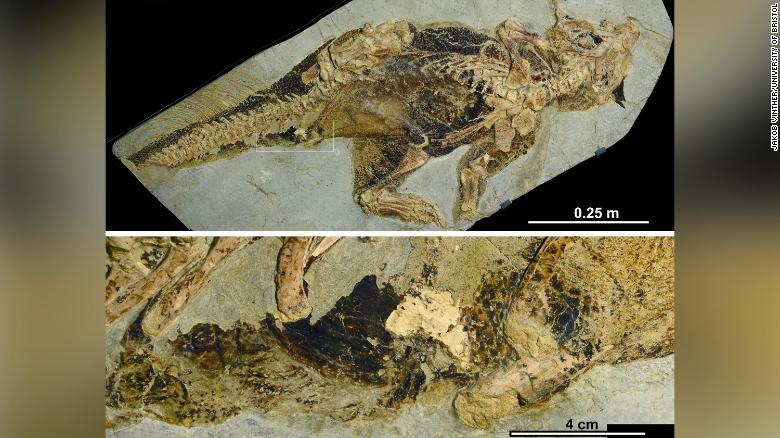 This Psittacosaurus fossil, in the collection of the Senckenberg Museum of Natural History in Frankfurt, Germany, preserves the only known dinosaur cloacal vent.
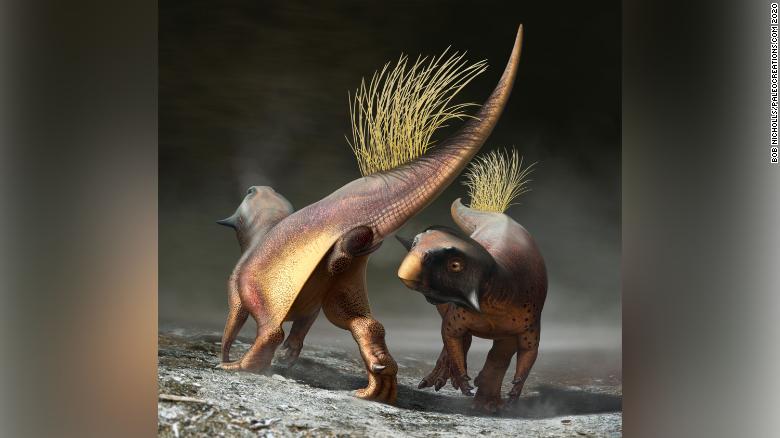 A reconstruction of Psittacosaurus illustrating how the cloacal vent may have been used for signaling during courtship.”It is very unique. Most cloacas form a kind of slit. Sometimes it’s a vertical split, sometimes it’s a smiley face, sometimes it’s a sour face. This thing has a V-shaped structure with a pair of nice flaring lips and there’s not a living groups of animals that have morphology like that,” Vinther said. “It is somewhat similar to crocodiles but still unique.”The study, which published in the journal Current Biology on Tuesday, said that large, pigmented lobes on either side of the opening could have harbored musky scent glands, as seen in living crocodiles and alligators.What’s more, the outer margins of the cloaca are highly pigmented with melanin. While they don’t know for sure what color it was, it likely would have contrasted with the dinosaur’s pale underbelly, Vinther said.

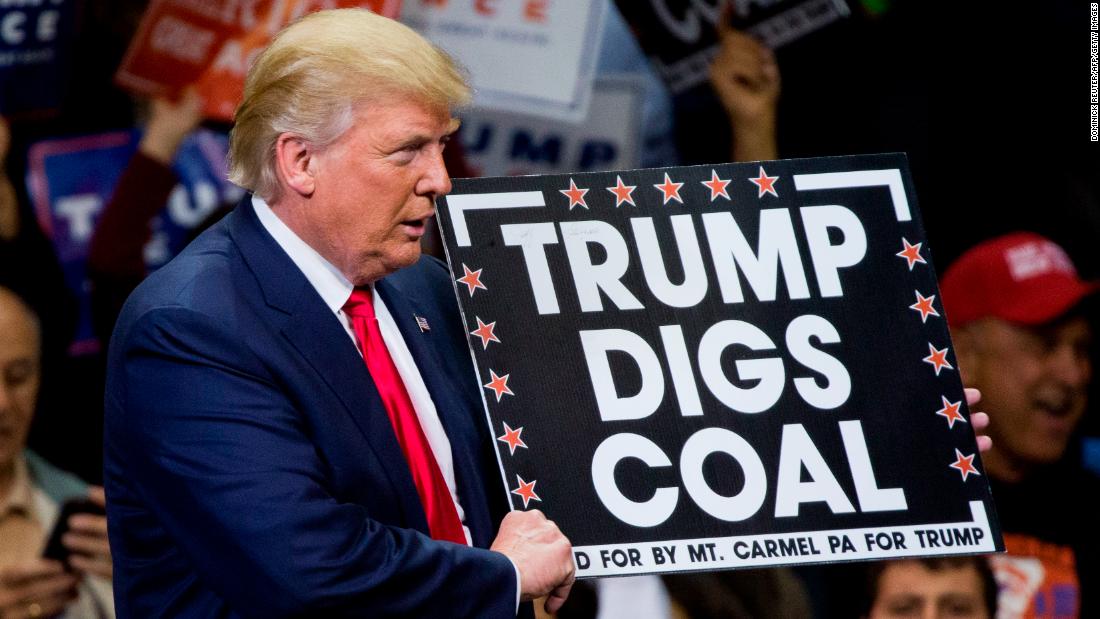 Then-Republican presidential nominee Donald Trump holds a sign supporting coal during a rally in Pennsylvania on October 10, 2016. President Trump’s moves to gut greenhouse gas regulations were applauded by many in the fossil fuel industry, but coal jobs continued to decline on his watch.Much of the environmental protections that Trump dismantled can be rebuilt by the incoming Biden administration, experts say.
 EPA Administrator Andrew Wheeler testifies at a Senate hearing on May 20, 2020. Wheeler and former EPA administrator Scott Pruitt executed a massive rollback of climate and environmental regulations during Trump’s four years in office.Along the way, fossil fuel interests have applauded Trump’s moves, even if he
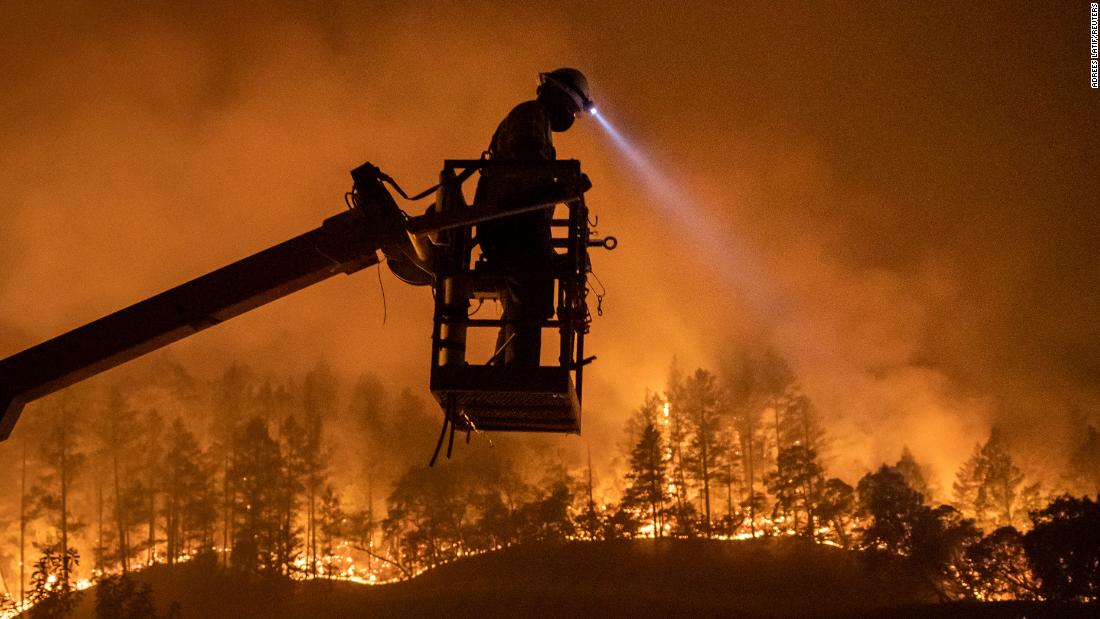 The Glass Fire burns in Calistoga, California on September 28, 2020. An unprecedented fire season in the American West in 2020 was just one of an onslaught of climate-related disasters that have swept the country in recent years.In Trump’s first year in office in 2017, he announced that he planned to pull the US out of the Paris Agreement on climate. That same year, Hurricanes Maria, Harvey and Irma left behind a wake of death and destruction from Puerto Rico to Texas, a year that saw all disasters in the US
 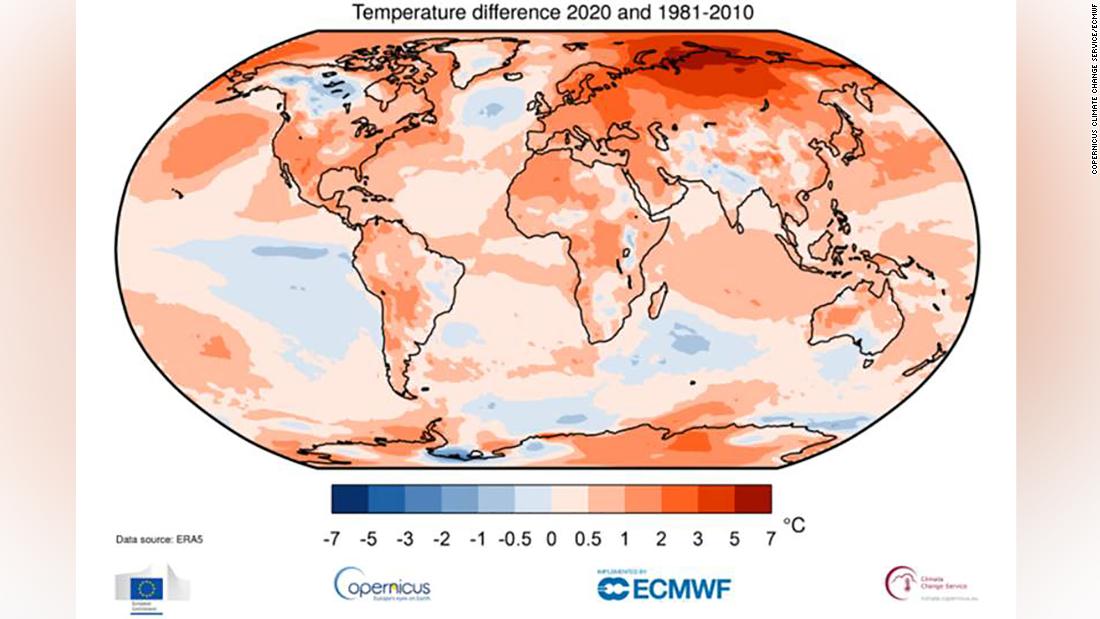 Global temperature data shows that 2020 was tied for the hottest year on record, according to the Copernicus Climate Service and other monitors.When humans burn fossil fuels, it sends heat-trapping carbon dioxide into the air, where it accumulates in the atmosphere like a blanket, and can stay to heat the Earth for hundreds of years.Some studies have tried to quantify how much of a contribution Trump’s regulatory rollbacks will make over time to accelerating global warming.One estimate published last year by the Rhodium Group found that the administration’s moves to weaken greenhouse gas regulations
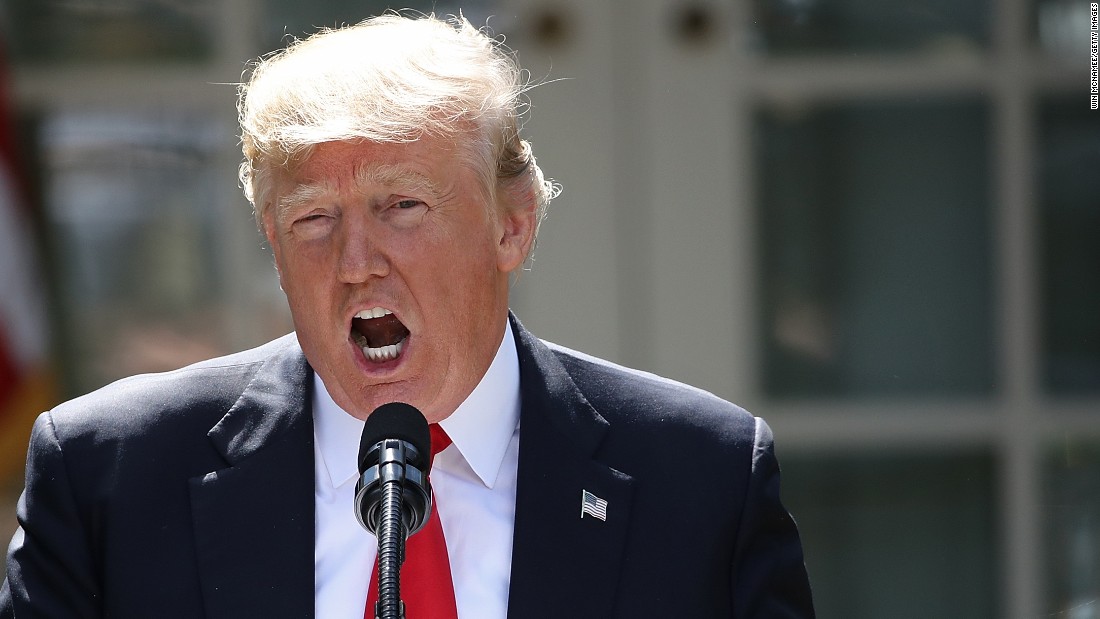 President Trump announced his decision to pull the US out of the Paris Climate Agreement on June 1, 2017, but the exit was not finalized until November 2020.”In one sense, it’s easy for President Biden to announce on the first day he’s in office that the US will rejoin,” said Jody Freeman, a Harvard law professor who served as counselor for energy and climate change in the White House under President Barack Obama. “The hard part is to put together an ambitious, credible pledge for what the US is prepared to do to meet their Paris Agreement commitments.”Trump’s interior department also cleared the way for new fossil fuel extraction on federal lands, including in Alaska’s Arctic National Wildlife Refuge (ANWR),
 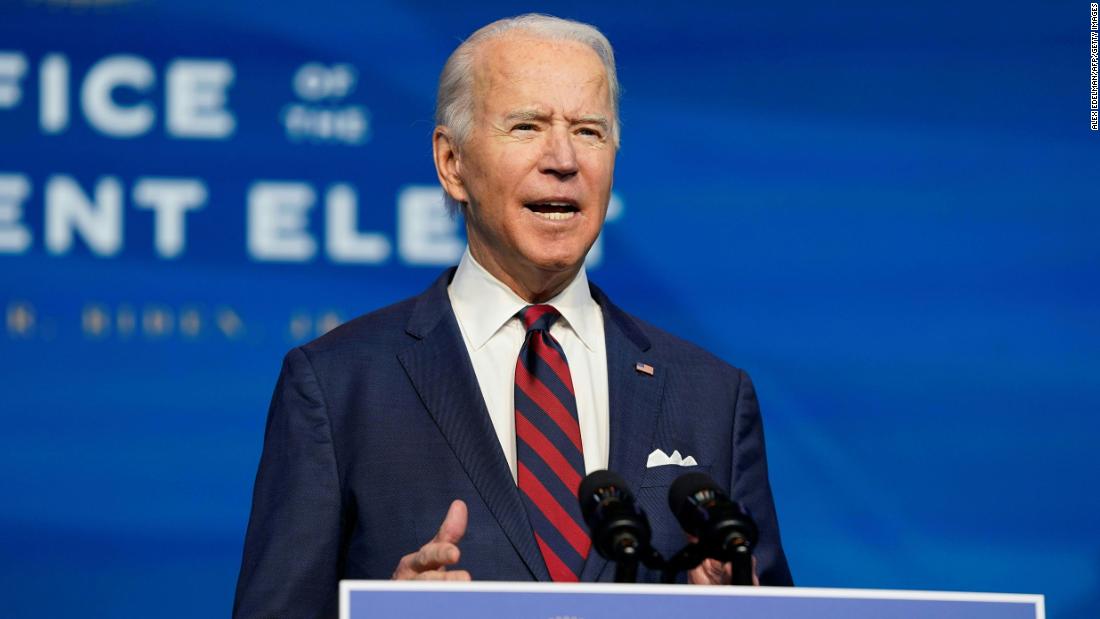 President-elect Joe Biden speaks during an event to introduce key members of his climate team in Wilmington, Delaware on December 19, 2020. Biden’s climate plan calls for the US to generate 100% of its electricity from clean energy sources by 2035.But the need to reverse moves finalized by his predecessor and the political realities of a razor-thin Democratic Senate majority could hamper Biden’s more ambitious climate proposals.Some of Trump’s rollbacks can be undone with the stroke of a pen or overturned by a simple majority in both houses of Congress through the Congressional Review Act, Gerrard said.Others like reinstating or tightening the Obama-era standards on car and truck emissions can be accomplished through EPA rulemaking, but the process takes time — anywhere from a few months to a year, Gerrard said.


 Exposing the Big Game