Lancaster County Sheriff’s deputies were called to an area at 176th and Havelock around 6 p.m. on Thursday, January 14th to investigate a hunting accident.
Deputies learned that an 18 year old man was hunting with a 41 year old man. The 41 year old was putting a high powered deer rifle away in the vehicle when it went off. The bullet went through the seat and struck the 18 year old in the leg. The teen was rushed to a hospital in critical condition. He is now listed as stable but further treatment is needed. Officials say there is a possibility he could lose part of the leg.
President-elect Joe Biden at the Delaware Human Society on Nov. 17, 2018, the day he officially adopted his dog, Major.Stephanie Gomez Carter/Delaware Humane Association
President-elect Joe Biden is set to restore a bipartisan norm upon moving into the White House: presidential dogs. The Bidens have two German shepherds, Champ and Major.
Major, in particular, has a “wags to riches” tail.
He’ll soon be the first dog to go from a shelter to the White House. That shelter, the Delaware Humane Association, plans to “indogurate” Major on Sunday in a virtual ceremony. (People and pets alike are invited to attend.)
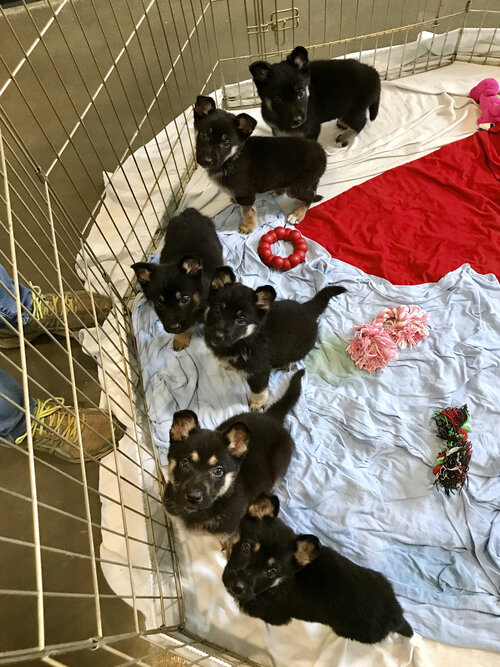
In early 2018, the shelter received a litter of six German shepherd puppies, including the future first dog. The puppies were in a medical crisis.
“They were very sick,” said Patrick Carroll, executive director of the Delaware Humane Association. “They had gotten into a toxic substance. We’re not sure what.
“The dogs were lethargic, vomiting and hospitalized for a few days,” Carroll says.
President-elect Joe Biden began fostering Major, top, shortly after the dog arrived at the Delaware Humane Association in March 2018.Stephanie Gomez Carter/Delaware Humane Association
The pups bounced back. They recovered with fluids and medication. The shelter posted to Facebook in March 2018 in search of foster homes. According to Carroll, Ashley Biden sent the post to her father, knowing he was looking for a companion for the aging Champ.
Joe Biden showed up.
“He just dropped in on Easter Sunday of all days,” Carroll said, “and wanted to meet the puppies.”
Soon, Major was in foster with the Bidens. Within months, the news broke that he had found his forever (fur-ever?) home. Biden returned to the shelter with a grown Major to officially adopt him in November 2018.Article continues after sponsor message
Sunday’s “indoguration,” co-hosted by Pumpkin Pet Insurance, touts Jill Martin of NBC’s Today show along with “notable rescue dogs and their parents.” Proceeds support the Delaware Humane Association.
“This is a monumental moment for shelter dogs,” said Cory Topel, the shelter’s marketing manager.
Yuki, President Lyndon Johnson’s dog, is held out the window of the car driven by LBJ as the first family starts a ride around the Texas ranch in Stonewall, Texas, in September 1967.AP
Though Major is digging up new ground as the first shelter pup in the White House, he follows in the pawprints of Yuki, another rescue to reside with the first family.
“He is the friendliest, and the smartest, and the most constant in his attentions of all the dogs that I’ve known,” said Yuki’s owner (and President) Lyndon B. Johnson.
President Trump is the first president in more than a century not to have a dog. William McKinley had only cats and birds, including a parrot named Washington Post.
Biden even targeted dog lovers with a campaign message shortly before Election Day.
“Let’s put dogs back in the White House!” he tweeted.
Carroll, executive director of the Delaware shelter, says Major’s story does more than encourage pet adoption.
“This is shining a light on all of the resources animal shelters bring to a community,” he said. “If you need pet food because you’re struggling, or you need low cost vaccinations to keep your pet healthy, all the things people need, they should see their shelter as a resource.”
A manatee is seen in Three Sisters Springs on Crystal River in Citrus County, Florida. Keith Ramos / USFWS
A manatee found in a Florida river on Sunday had the word “Trump” written in algae on its back.
The incident, first reported by the Citrus County Chronicle on Monday, prompted a U.S. Fish and Wildlife Service (USFWS) investigation and outrage from conservationists and animal lovers. The Center for Biological Diversity (CBD) is even offering a $5,000 reward for information leading to a conviction.
The Florida manatee is a subspecies of the West Indian manatee, which was classified as an endangered species in 1973, according to The Washington Post, although their status has since been lowered to threatened. Currently, manatees are protected federally under the Endangered Species Act and the Marine Mammal Protection Act, and on the state level under the Florida Manatee Sanctuary Act of 1978, The New York Times reported. Harassing a manatee carries a federal penalty of up to $50,000 and a year in jail, and a state penalty of up to $500 and 60 days in jail.
The affected manatee was first discovered in the Homosassa River in Citrus County by Hailey Warrington, a family boat charter operator, the Sarasota Herald-Tribune reported. Warrington said she saw the manatee while on a boat tour and took photos and a video to report the incident.
“This is just disturbing. One hundred percent disturbing,” Warrington told the Sarasota Herald-Tribune. “It’s something we don’t see very often. When we do see it, it hurts our heart.”
The USFWS said that the letters appear to have been etched in algae and that the animal was not seriously harmed. Warrington claimed that while the etching reached the skin, it did not appear to leave a wound. The animal seemed healthy, but stressed.Report Advertisement
Elizabeth Fleming, senior Florida representative for the Defenders of Wildlife, told The Washington Post that the perpetrator either had to restrain the manatee to write the message, or the manatee was so used to humans that it allowed the action.
There are more than 6,300 West Indian manatees living in Florida, according to the USFWS. While that number has increased significantly in the last 25 years, the animals still face threats from habitat loss and boat collisions. About 100 manatees die every year from boat strikes, according to The Washington Post, accounting for 20 percent of total manatee deaths.
For Elizabeth Neville, Defenders of Wildlife senior Gulf Coast representative, the harassment of this particular manatee is a striking example of politics impacting wildlife.
“The content of this manatee’s mutilation, however, highlights a broader and darker truth: that wildlife, despite having no ability to vote or otherwise participate in our political systems, exist and suffer profoundly at the mercy of human politics,” she said in a statement.
“Based on the choice of the word carved in the manatee’s flesh, one can only assume that this act of mutilation was politically motivated. But, this is far from the only scar borne by manatees due to politicians’ destructive choices. Other scars include policies that favor unsustainable development and polluting industries, hamper communities’ abilities to address plastic trash in our waters and impede progress on fighting climate change.”
Anyone with information about the incident should contact the Florida Fish and Wildlife Conservation Commission at 888-404-3922, the Citrus County Chronicle shared.
“It’s sad that we have to get to that point, but you know our expectation is that someone may try to kill us,” Meijer, R-Mich., said Thursday in an interview on MSNBC.
Meijer said the body armor is a reimbursable purchase.
“We don’t know what’s going to happen next. We weren’t expecting for the Capitol to get overrun for the first time in 200 years,” he said. “And so in this unprecedented environment with an unprecedented degree of fear of divisiveness and hatred, we have to account for every scenario.”
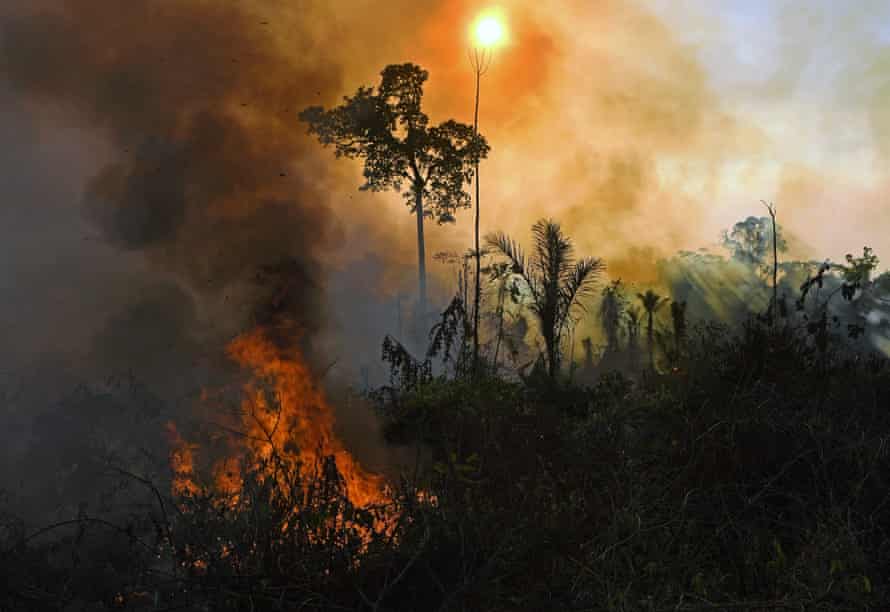
Smoke and flames rise from an illegal fire in the Amazon rainforest reserve, south of Novo Progresso in Para state, Brazil. Photograph: Carl de Souza/AFP/GettyThe age of extinction is supported by
The planet is facing a “ghastly future of mass extinction, declining health and climate-disruption upheavals” that threaten human survival because of ignorance and inaction, according to an international group of scientists, who warn people still haven’t grasped the urgency of the biodiversity and climate crises.
The 17 experts, including Prof Paul Ehrlich from Stanford University, author of The Population Bomb, and scientists from Mexico, Australia and the US, say the planet is in a much worse state than most people – even scientists – understood.
“The scale of the threats to the biosphere and all its lifeforms – including humanity – is in fact so great that it is difficult to grasp for even well-informed experts,” they write in a report in Frontiers in Conservation Science which references more than 150 studies detailing the world’s major environmental challenges.Advertisementhttps://7552e34cf58bb69b7407b7a56eee25ae.safeframe.googlesyndication.com/safeframe/1-0-37/html/container.html
The delay between destruction of the natural world and the impacts of these actions means people do not recognise how vast the problem is, the paper argues. “[The] mainstream is having difficulty grasping the magnitude of this loss, despite the steady erosion of the fabric of human civilisation.”
The report warns that climate-induced mass migrations, more pandemics and conflicts over resources will be inevitable unless urgent action is taken.
“Ours is not a call to surrender – we aim to provide leaders with a realistic ‘cold shower’ of the state of the planet that is essential for planning to avoid a ghastly future,” it adds.
Dealing with the enormity of the problem requires far-reaching changes to global capitalism, education and equality, the paper says. These include abolishing the idea of perpetual economic growth, properly pricing environmental externalities, stopping the use of fossil fuels, reining in corporate lobbying, and empowering women, the researchers argue.
The report comes months after the world failed to meet a single UN Aichi biodiversity target, created to stem the destruction of the natural world, the second consecutive time governments have failed to meet their 10-year biodiversity goals. This week a coalition of more than 50 countries pledged to protect almost a third of the planet by 2030.
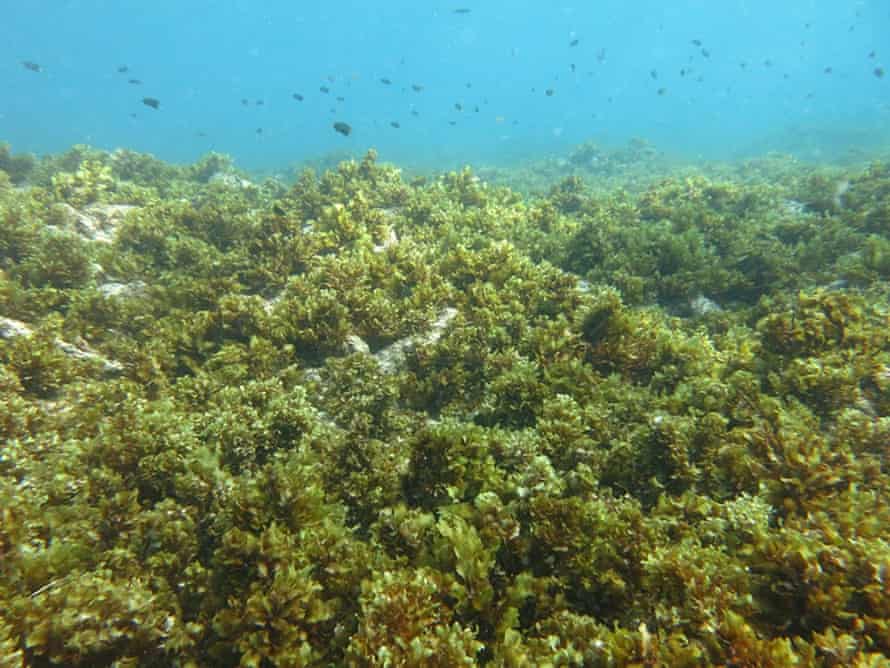
A coral reef dominated by algae in Seychelles … the climate crisis is changing the composition of ecosystems. Photograph: Nick Graham/Lancaster University/PA
An estimated one million species are at risk of extinction, many within decades, according to a recent UN report.
“Environmental deterioration is infinitely more threatening to civilisation than Trumpism or Covid-19,” Ehrlich told the Guardian.
In The Population Bomb, published in 1968, Ehrlich warned of imminent population explosion and hundreds of millions of people starving to death. Although he has acknowledged some timings were wrong, he has said he stands by its fundamental message that population growth and high levels of consumption by wealthy nations is driving destruction.
He told the Guardian: “Growthmania is the fatal disease of civilisation – it must be replaced by campaigns that make equity and well-being society’s goals – not consuming more junk.”
Large populations and their continued growth drive soil degradation and biodiversity loss, the new paper warns. “More people means that more synthetic compounds and dangerous throwaway plastics are manufactured, many of which add to the growing toxification of the Earth. It also increases the chances of pandemics that fuel ever-more desperate hunts for scarce resources.”Mass die-off of birds in south-western US ’caused by starvation’Read more
The effects of the climate emergency are more evident than biodiversity loss, but still, society is failing to cut emissions, the paper argues. If people understood the magnitude of the crises, changes in politics and policies could match the gravity of the threat.
“Our main point is that once you realise the scale and imminence of the problem, it becomes clear that we need much more than individual actions like using less plastic, eating less meat, or flying less. Our point is that we need big systematic changes and fast,” Professor Daniel Blumstein from the University of California Los Angeles, who helped write the paper, told the Guardian.
The paper cites a number of key reports published in the past few years including:
The World Economic Forum report in 2020, which named biodiversity loss as one of the top threats to the global economy.
The 2020 WWF Living Planet report, which warned the average population size of vertebrates had declined by 68% in the past five years.
A 2018 Intergovernmental Panel on Climate Change report which said that humanity had already exceeded global warming of 1C above pre-industrial levels and is set to reach 1.5C warming between 2030 and 2052.
Australia saw a devastating bushfire season in 2020. Photograph: Tracey Nearmy/Reuters
Advertisement
The report follows years of stark warnings about the state of the planet from the world’s leading scientists, including a statement by 11,000 scientists in 2019 that people will face “untold suffering due to the climate crisis” unless major changes are made. In 2016, more than 150 of Australia’s climate scientists wrote an open letter to the then prime minister, Malcolm Turnbull, demanding immediate action on reducing emissions. In the same year, 375 scientists – including 30 Nobel prize winners – wrote an open letter to the world about their frustrations over political inaction on climate change.
Prof Tom Oliver, an ecologist at the University of Reading, who was not involved in the report, said it was a frightening but credible summary of the grave threats society faces under a “business as usual” scenario. “Scientists now need to go beyond simply documenting environmental decline, and instead find the most effective ways to catalyse action,” he said.
Prof Rob Brooker, head of ecological sciences at the James Hutton Institute, who was not involved in the study, said it clearly emphasised the pressing nature of the challenges.
“We certainly should not be in any doubt about the huge scale of the challenges we are facing and the changes we will need to make to deal with them,” he said.
Just days after the Dec. 8, 2020 Joint Travel, Recreation, Wildlife and Cultural Resources committee meeting, Sen. Ogden Driskill (R. Devils Tower) posted the following note on Facebook. “I have been recently attacked by the “Leash-free” anti-trapping crowd in Wyoming about my stance opposing dogs off leashes in our wild areas on public lands,” he wrote in the Dec. 11 post.
Sen. Driskill included the words “Leash-free.” We wonder why. Wyoming citizens working for trap reform have never used those words. We have never proposed a “leash-free” state. We have never suggested, or asked for, a ban on trapping. If citizens’ voice opinions about trapping that differ from his, is that an attack? It seems likely that Driskill’s suggested persecution, the words “leash-free” and the misrepresentation of trap reform as anti-trapping has been directly influenced by the opinions of his friend, Wyoming Game and Fish Commissioner Mike Schmid.
Commissioner Schmid publicly broadcasts similar statements against trapping reform at other public platforms. At the April 2020 Commission meeting, Schmid said, “One group is regulated and that is trappers — limited by seasons, have to buy a license. Whatever they do on their public land, at least they enjoy it. We sell 2,500 licenses and that represents a lot of happy times, family times. I will not support more regulations on the trappers.”
Apparently, in his view, buying a license and adhering to a season is enough regulation. His actions also suggest there is no room for conversation that would create trap-free zones on public land for the 99.5% of Wyoming’s population that does not trap. Why should a trapper’s “family time” be at the expense of others’ family time on our public land?
This is not action that would be taken against trappers, but rather action taken for the sake of public safety on public land. Implementing trap-free zones is progress on an issue that requires leadership and action.
Game and Fish has shown it is listening and concerned about Wyoming citizens. Department leadership and staff have collaborated with Wyoming citizens and organizations, working long hours addressing trap reform and public safety.
At the November Game and Fish commission meeting, the commission voted 4-1 in favor of trap reform, specifically mandatory trapper education and trap set-backs.
Why then at the TRW committee meeting was Schmid, the lone commissioner to vote against trap reform, given unlimited time, granted by Driskill, to derail the topic and shift the conversation away from the Game and Fish Department trap reform recommendations brought to the committee?
For those watching the TRW committee meeting, it had been a long day. Topics ranged from amending gaming commission bylaws to requests that roadkill be used for pet food. Public testimony was welcomed throughout the day and heard in its entirety without a time limit.
Senators and representatives in attendance appeared engaged, asked good questions, worked through issues, improved the wording of amendments, and made progress.
The Game and Fish Department’s draft reforms were near the last agenda item. Sen. Driskill instructed speakers on trapping reform they had a three-minute limit. Many senators and representatives on the committee acted disinterested in testimony given by concerned constituents. With some exceptions, it appeared that most on the committee had made up their mind in advance about the recommendations. Schmid’s obstructionist tactics apparently worked because not one TRW legislator would stand up and take action for trap reform. These same apathetic legislators are our designated public leaders for Travel, Recreation, and Wildlife.
Does the TRW committee believe it is in the best interest of the public to ignore recommendations from Game and Fish professionals that would clearly make Wyoming’s public lands safer? Documentation on the department website reports that mandatory hunter education reduced hunting accidents by “well over 50%.”
Why is the TRW committee taking “no action” on mandatory trapper education? Wouldn’t the benefits of a 50% reduction in non-target trapping incidents, including family pets, big game and other wildlife, be a positive for the public? The same is true for the possibility of a 50% decrease in conflicts between trappers and recreationists.
And why are these legislators ignoring a public safety recommendation regarding trap setbacks in picnic areas and campgrounds? The public has a right to picnic, camp, launch a boat or hike a trail with their family and pets, and view wildlife on public lands with some reasonable expectation of safety. It remains a right, even though the TRW denies the public access to that right.
The TRW committee has a responsibility to the people they market to — visitors that contribute to Wyoming’s economy — to provide trap-free opportunities for recreation and enjoyment.
Urho Kekkonen National Park, file photo.Image: Maiju Saijets / Yle
Police in Finnish Lapland have closed a preliminary investigation into the accidental fatal shooting of a mountain biker at the Urho Kekkonen National Parkin October.
Police said the hunter was hunting for birds and did not see the biker as the rifle was discharged, due to snow on the trees obscuring the hunter’s view.
A single bullet struck the cyclist in the upper body, fatally injuring him, according to the Lapland police department’s investigation directorMarko Ijäs.
“The hunter did not see the cyclist. If that had been the case, this would not have happened,” Ijäs said.
“The hunter said he did not intend to shoot a person and is very sorry about what happened,” he explained.
Humans are driving species to extinction 1,000 times faster than what is considered natural. Now, new research underscores the extent of the planet’s impoverishment.
Extinctions don’t just rob the planet of species but also of functional and phylogenetic diversity, the authors of a paper published in the Proceedings of the National Academy of Sciences argue. “They are much newer ideas than species richness, so not as much exploration has been done about patterns of decline in these two metrics, particularly globally,” said Jedediah Brodie, first author of the study and conservation biologist at the University of Montana.
For example, rhinos loom large in public imagination but are, in fact, marching into oblivion. The Bornean rhinoceros (Dicerorhinus sumatrensis harrissoni), a subspecies of the Sumatran rhinoceros, has gone extinct in Malaysia. “It is such a tragedy because it’s an iconic and culturally important species,” Brodie said, “but also because they are super important both functionally and phylogenetically.”
Rhino populations plummeted in the second half of the 20th century; they are heavily poached for their horns, and their ranges have shrunk dramatically over the decades. Of the five existing rhino species, three are critically endangered.
The study focused on terrestrial mammals, one of the most extensively studied groups. They used the IUCN Red List, the most widely cited and comprehensive compilation of endangered species and the threats they face.
By removing animals from their habitats, humans also remove them from ecosystems in which they evolved and play critical roles. To gauge the consequences is not a simple calculus.
“Say there are twenty species of grazing animals and only two species of seed-eating animals. If two species of the grazers go extinct, that doesn’t have that much impact on the functional diversity because there are still eighteen grazers left,” Brodie said. “But if the two species of seed-eating animals go extinct, it has a huge impact on functional diversity because all of a sudden you’ve lost this entire ecological function.”
In both cases, Brodie said, the species richness would decrease by two, but the effects would be very different.
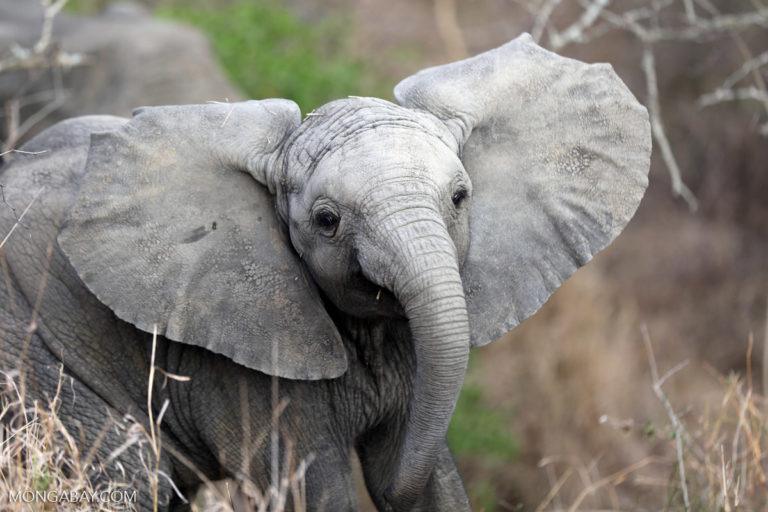
Despite their fearsome reputation and bulk, rhinos, some of which can weigh as much as two cars, are herbivores. Bornean rhinos are one of the few large-bodied frugivores and herbivores on Borneo, an island shared between Malaysia, Indonesia and Brunei. It is also home to another herbivore, the island’s famous pygmy elephants. However, rhinos eat different plants than the elephants, so losing them would alter plant seed dispersal and plant evolution.
The research shows that extinctions driven by human activities lead to a more significant decline in functional diversity than if species were randomly going extinct.
“Some species groups are very vulnerable. Be an antelope, and people want to eat you. Be a parrot, and people want you as a pet. Live only on Cuba — as a subfamily of mammals does — and you’re in trouble,” said Stuart Leonard Pimm, an ecologist and leading authority on the extinction crisis, who was not involved in the recent study. “This leads to a disproportionate loss of ecological function as human actions drive species to extinction.”
The disappearance of species doesn’t just wipe away entire ecological functions. It also leads to the irredeemable loss of evolutionary history. Millions of years of evolution are encoded into species that coexist with humans today; to lose them is to lose that biological heritage.
The disappearance of the remaining five rhino species would sever an entire evolutionary lineage, the Rhinocerotidae family that arose about 40 million years ago, from the tree of life.
“They are the last remnants of what was a hugely diverse and amazing family found all across the world in the not too distant past,” Brodie said of Rhinocerotidae, which counts more than 40 extinct species.
But conservationists warn that it is not just wholesale extinctions that we should be worried about, but also disappearing populations — what Brodie and his co-authors call “biotic annihilation.” Only one in every 10 dramatic declines in populations results in extinctions, but those losses have repercussions for ecosystems which experience them.
“Species extinction is an endpoint, and it’s a really, really, bad endpoint. Before that happens, species will start to go extinct in individual countries first,” Brodie said. “The focus on population decline is really important because it’s in some ways a better illustrator of the magnitude of the extinction crisis.”
Their research maps out the relationship between species richness and functional and phylogenetic loss for individual countries to aid national-level policymaking.
The work shows that habitat destruction results in more functional diversity loss in Indonesia, Argentina and Venezuela. “This suggests that instead of focusing on harvest management and human diets, conservation actions in these areas might be better directed toward protected areas and land use policy to best conserve this component of biodiversity,” the researchers write.
The study also found that climate change is emerging as a major driver of biodiversity loss. What remains to be seen is how these relationships pan out for other animal groups, like reptiles, amphibians and birds.
Citation:
Brodie, J. F., Williams, S., & Garner, B. (2021). The decline of mammal functional and evolutionary diversity worldwide. Proceedings of the National Academy of Sciences, 118(3). doi:10.1073/pnas.1921849118
This article by Malavika Vyawahare was first published on Mongabay.com on 5 January 2021. Lead Image of a baby Sumatran rhino by Rhett A. Butler for Mongabay.
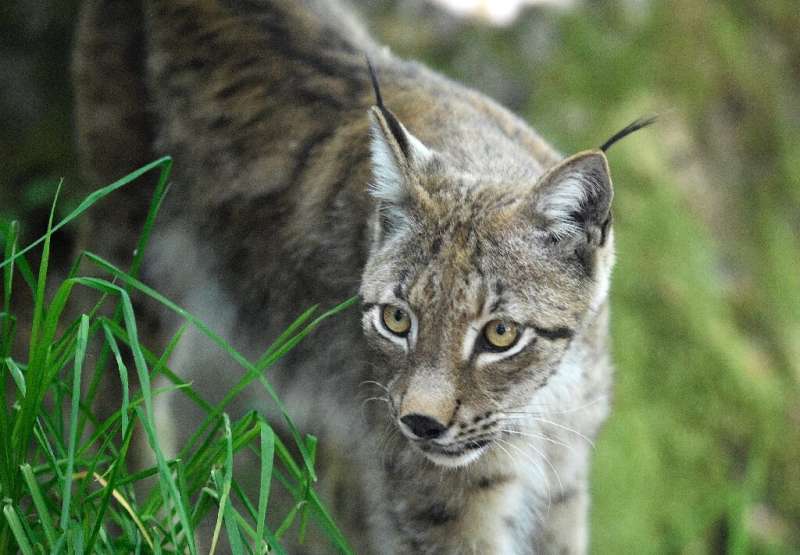
Alynx, one of Europe’s rarest mammals, has been found shot dead in easternFrancein a suspectedkillingbypoachers, local officials said Tuesday.
The only big cat species to live in the wild in France, the lynx carcass was found on December 31 in the Jura mountains and an autopsy showed it was shot, the localenvironmental protection agencysaid in a statement.
The killing of one of the estimated 150 lynx believed to live in France is a “serious blow for the population” coming after two lynx were also killed at the start of 2020.




.png)



 Exposing the Big Game