If you think the kind of senseless violence we saw at the capitol on Wednesday (Jan. 6) does not happen here in Vermont, you are wrong. It does happen here. It’s just that the victims of this violence have hardly any advocates on their behalf.
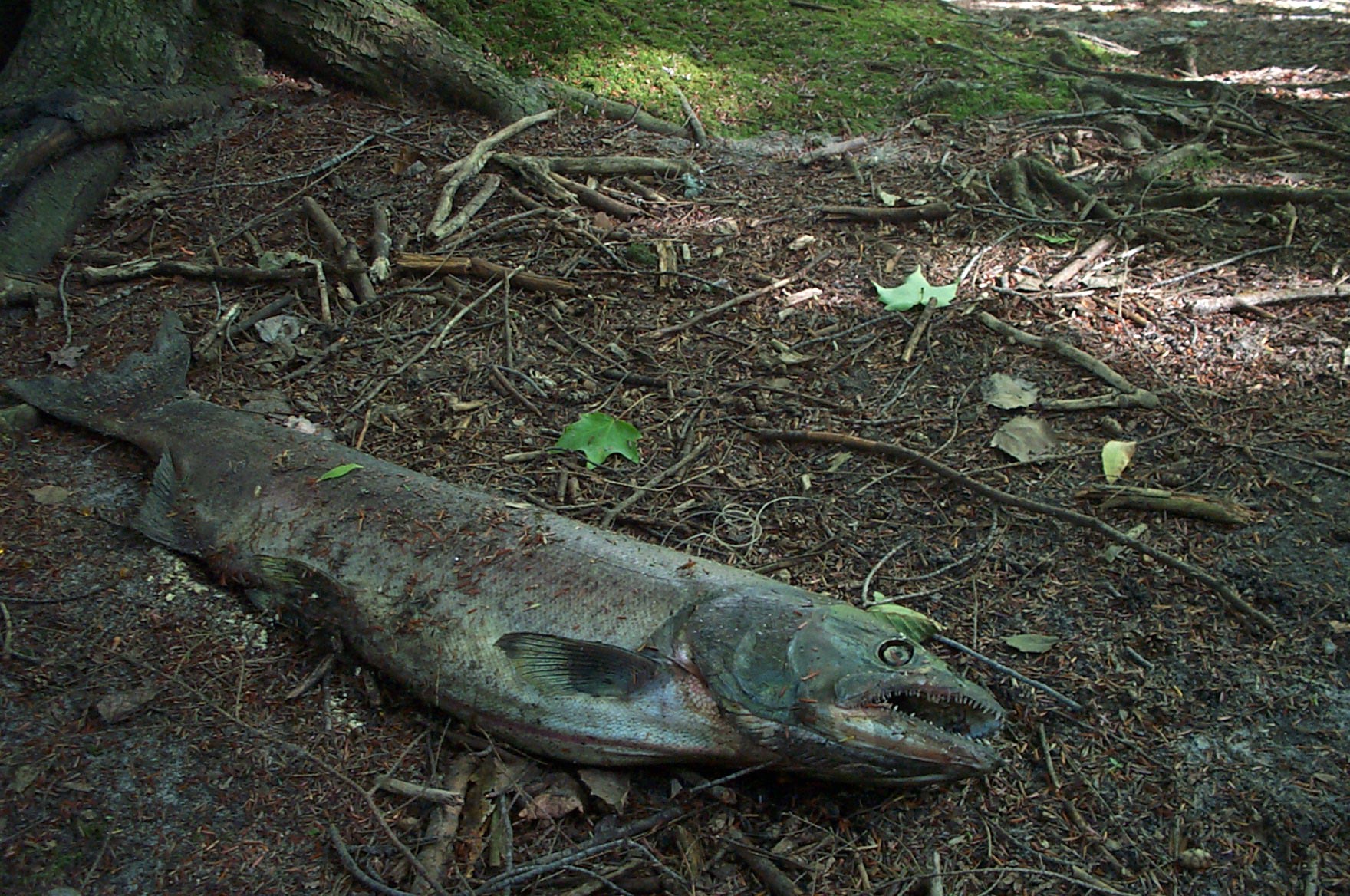
Trapping of wild animals is legal in Vermont and licensed by the Fish and Wildlife Department. Trapping is completely different from hunting. While Vermont hunters traditionally hunt by the rules of clean kills and fair chase, trapping does neither. Leg-hold traps are not designed to kill, but forcefully and painfully immobilize their victims for hours or even days until a trapper shows up to dispatch the animal, usually by clubbing it to death. Underwater traps, such as are used for beaver and muskrat, kill animals by drowning them — which take at least 20 minutes to accomplish…
Receive daily coronavirus & public health news straight to your inbox.SUBMITPrivacy NoticeSAN DIEGO —
Several gorillas at the San Diego Zoo Safari Park have tested positive for the coronavirus in what is believed to be the first known cases among such primates in the United States and possibly the world.
It appears the infection came from a member of the park’s wildlife care team who also tested positive for the virus but has been asymptomatic and wore a mask at…
JANUARY 12, 2021 / 2:35 PM / CBS NEWShttps://www.cbsnews.com/embed/video/?v=9cc6ac54c66860977746ca3a5e98c3c3#vVb7b9s2EP5XBP04hDZJUS8Dw%2BA0BVasa4OmAbZFg0GRlMxGL5CS7aDI%2F76jJNtpVqwD%2BkBghCLvxe%2FuvuNHnw9921X8wV%2F1ZlAX%2Fk5L1fqrj77uVW391d1Hv3%2FolL%2Fyd630L3wtYYklpZLKEIWYpogpFaGERQxRQUUQxyJhIQbZuju8U8Urp3H1bvf25cub9Z%2BqyN9eGi7r2w9XN%2FvNjv716up6%2FQdI22ooQTJCHTf3yPCmVMaie11VSiLdIGmQaJuyRXU7ND2HnbI1cMqR5Y3oB24ewEqv%2B8pFG3mzBW%2By4OnGOyp6s6J3VFwsFqAq1T0owqIYqupsx4VzMma3be%2FxRv4fqy4cwZu20YJX77%2BNvV7Xyva87vwViQhmYZDQAGMM0Q%2BG97pt%2FBVj5Pz5mueqcimLV5SAgWr6buCKkMyal8q6bFuXpG3fd3aVLbOlyG2j9pYuYKHBX6%2FFQrR1ttwOebbU2dJkS4opyZYYfoRmyyBkCQmhJJKUC8TihCGehwmiXCRFEQgmCUj226HOG66rbBkxfAgiDJpJxITgucRQTUlMgjQNsUiTQnIS8YBN0aBisHAdZPXhKwoEnQJAEQ0JC9AcxuJDVwI628%2FCEHxHGAhN8CGmgAPPaSpVHuGgSFmURypleajSmAeUFbGKfhwOjxd%2BZ9ROq%2F2tqT4BxHaVFmrB66pc6BZi7gCEHdx7pI1s%2BaU2z5az4Wzpn7jmif3OtHIBRDOeLGb4J8jnD3AFoG8r%2Bxx5krCA4jROwzBOoLzctchmFKy57ZVZ1MGQHL3SH%2B62aE3Ne3DLOwfi2JzZ8oDqTpW3716DxPAM7P1%2B%2F2ksM8hfw5Aj7tq%2BqrvWBeevCl5ZoH0YAlqMtO86II0ITwMSIRVxjhhOI6jiyK1ixaDCWVqwM2PzGolKd9b1j1aGG7GFcXLnu9g9XsM2r71J4m%2BoLG5U0793%2Ft7w2lHii8ubN97696fqlw%2FT2d2Tw%2FXv3ovJCNSn6rRtJUgA1VnFreM93%2FGbVWUN9qeDoYNys%2FZ0S15VayFg57Jqxf2JBe2tVeZmyK0wOlfyJG67trGtOcpt1WF9pQo%2BVC6N%2BAL%2B%2FHH38rwbpBcsvAhTR9WGi3vdlA5VSJ8VrVHjGmoPKDvESQTzgc0AzEl2IyOCrZ%2BcS%2Fho7Mb2m9LB5Opg2uHdhrv7vsmWa%2F8R0KiHw7VpO2X6h98UYO9TFivJwyggsSQhS1lKaBDwIPIfIQW16vlI%2BhBir8oHt4a9bSun8lSNHM3O%2BS0U7wcDJSbcTFHuFTA%2FCSBggMjBfR68Lt2dhsWpXg9baB3RQpWKqehPatnyue1s%2BYu2m6otSyU3uvkZOzJ6iqS2LxueVy5L04OFG2DlSq0HiN%2B4t8adD7fFQlGJgjwJECEqQIkMC4RZLOOchHlKlSvFT1SPBQcU3BoOU7oHkM5C4yuGkjCISZSjlIgcQeMrBH2PUSFJXIQyjwNC%2FZPK9ZBfwZ2cHlAGwgQR6pF0FYSrkJ3F3v%2FHiyWDcHZ8nDxNmfmeC0rce23jjY3%2B2SfC0ewxRU0PSG%2Fm3fGZswMOn4%2BlsvfQ%2ByMpXKmdi9V3PVoeBVzVbdxb0PUW%2FP9VO9a48%2FetqaTDx23eTJkF8Wl72p0tQAe6PtI75e1V7s9cM%2BIZ4TgsGE5QHCbSJYqiVBKKMCZJoRKOcY6PCjNZHB1UutbQcOx035t2MGK8cW69uVdyQFReV7x35Dt6nPl04%2BLbnC%2FvPmcHs4Rzq3ilh9pVHQyIQldPjp0CiKjGQebGh6vT02Pv%2Bdj8F5NPIyV6zuFTemcS%2Fzx310pqft2CfwB8RrhSXM5Z%2B46enfkZo68xM5LCF8P8NqPu8fEf
It was a routine patrol around 7:30 a.m. on Sunday when six rangers working at Virunga National Park in the eastern Democratic Republic of Congo were ambushed by a local militia group. The attack is the latest in the part of eastern Congo home to some of the world’s last mountain gorillas.
“It’s devastating,” Parks Director Emmanuel De Merode told CBS News as he was leaving the funeral for one of his six rangers. “The families of these men have lost breadwinners and have no safety net.”
Virunga National Park rangers with Park Director Emmanuel De Merode, who salutes as he attends the burial of Burhani Abdou Surumwe, a ranger killed in an ambush in Virunga National Park, a sanctuary for endangered mountain gorillas, in Goma, eastern Democratic Republic of Congo on January 11, 2021.STRINGER / REUTERS
The attack is the deadliest since April of last year when 17 people — 12 of them rangers — were killed in the worst episode of violence in the park’s history. De Merode himself survived an assassination attempt after being shot several times in the chest and abdomen in 2014.
The Congolese Institute for Nature Conservation, the agency that manages protected areas in the country, says the latest attack occurred while rangers were patrolling the central sector of the park, near a newly constructed electric fence meant to prevent intrusions into the protected area. Rangers have been extremely successful with it — it’s kept the militia out of the area — but that success has put a target on their heads.
The armed fighters were not poachers, but militiamen battling for control over natural resources and land. \Park rangers are frequently attacked as part of the ongoing war for power in the eastern part of Congo. Dozens of armed groups operate in the region, many remnants of militias that fought in the civil wars over the past three decades that have resulted in millions of deaths from conflict, hunger and disease.
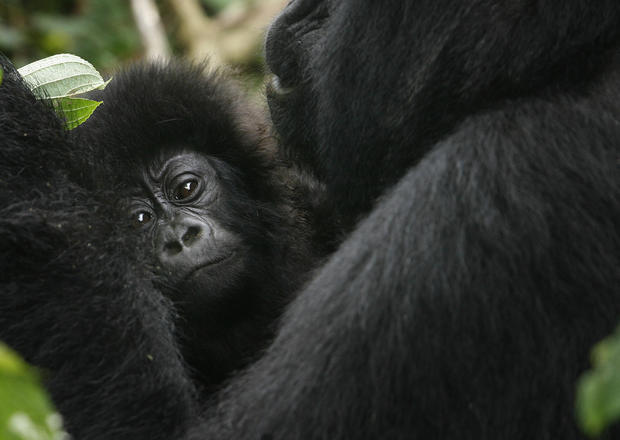
In this November 25, 2008 file photo, a baby gorilla is held by an adult in the Virunga National Park, near the Uganda border in eastern Congo. JEROME DELAY / AP
“The park is very rich in resources and we lose about $170 million a year with these illegal activities,” he said. “That’s what draws the militia to the park. Our job is to protect the park but that also means cutting them off from large sums of money and brings them into frequent conflict with rangers whose job it is to protect the reserve and its flagship species, the mountain gorillas.”
The attack has been blamed on the Mai-Mai, an umbrella term that refers to the numerous militias waging armed conflict in the region. They fund their activities with the illegal plundering of resources and are small but well armed.
The Virunga Game Reserve is one of the Africa’s oldest parks, home to stunning landscapes, incredible biodiversity and, of course, the majestic mountain gorilla. The park provides a rare opportunity to see these creatures up close.
Before the global coronavirus pandemic, the park was well on its way to becoming an economic asset. In a bid to reduce the violence, authorities have created about 12,000 jobs, and at least 11% of these new employees are former militiamen. Authorities hope that if they can give fighters a sustainable job, it can put an end to the conflict.
But the parks have suffered a series of devastating blows in the past few years: a recent Ebola outbreak, the coronavirus pandemic and now another brutal attack. The lack of tourism from this deadly cocktail of events has decimated the industry. De Merode said he doesn’t know how much longer they can hold on financially.
“It could be weeks,” he said. “At best, a few months.”
But don’t start stocking soup for a blizzard yet; although a distorted vortex has been linked to blizzards and cold snaps before, atmospheric scientists say that it’s too…
Major metropolitan areas are housing many of the very same live animal markets found predominantly in Asia and heavily criticized for their role in the spread of COVID-19. In fact, one of the epicenters of the COVID-19 pandemic, New York City, is home to over 80 live animal markets. View the map here.
Live markets in America slaughter traditionally farmed animals such as chickens, ducks, turkeys, quails, pigeons, rabbits, goats, lambs, and calves as opposed to wild or exotic animals. However, the conditions and procedures in many U.S. live animal markets reflect those practiced in places that do slaughter and sell wild animals.
COMPARING LIVE ANIMAL MARKETS
Live markets in the U.S. foster many of the same animal welfare, worker safety, and public health threats as those in other countries, like Wuhan, China—where experts believe COVID-19 may have originated.Animal Welfare: In Chinese live markets, animals are often kept in tight quarters, cramped into wire cages and stacked on top of each other, awaiting slaughter. The scene is comparable to American live markets, with animals kept in similar crates and cages.
As you can see in this image from Slaughter Free NYC, “Animals are crowded in crates left outside for extended periods of time; crates are stacked on top of each other, which facilitates the spread of urine and fecal matter on and around birds; birds are left without sustenance for extended periods of time; crates are dragged to their final destination, causing additional, unnecessary injury to the birds (whose feet are broken and/or they get stuck in between crates); birds were clearly in respiratory distress, and not given veterinary care.” Worker Safety: Those working within Chinese and American live animal markets and slaughterhouses are at a heightened risk of contracting COVID-19 due to strict attendance policies and unsanitary working conditions. They are also exposed to blood and excrement and have a high risk of injuries and mental health issues.
In Asian wet markets, butchers kill animals on-site to ensure freshness, and vendors douse their stalls in water to wash off the blood. “Meat cleavers rhythmically pound through impossibly large chunks of flesh, flicking bits and juice with each repeated chop,” Investigative photojournalist Jo-Anne McArthur and filmmaker Kelly Guerin traveled to some of Asia’s busiest wet markets to document the epicenter of the country’s bustling wildlife trade.
“Workers stand shoulder to shoulder, wielding knives. It’s loud, it’s slippery, it’s wet, and there’s blood everywhere…” This is a union leader’s description of the daily routine inside a typical North American slaughterhouse, bearing a stark resemblance to descriptions of Chinese wet markets. Public Health: Inside Asia’s wet markets, even the most basic health codes are nonexistent. Blood, feces, and animal parts cover the stalls. Much like factory farms, wet markets operate on efficiency with no legal protections for the animals they bind, cage, and slaughter.
In the United States, investigative footage shows deceased and sickly animals held in close proximity to live animals. Investigators also found animals confined and covered in each other’s urine and feces, and employees were seen working without gloves or face coverings. Outside live markets, the city streets were found covered in blood and waste.
A Bronx resident recently noticed a live market opening next to a playground in her neighborhood. “It has the potential to spread disease if people happen to walk past the slaughterhouse and get feces on their shoes, then bring that into the park,” she said.
According to an NYS Department of Agriculture & Markets inspection conducted in 2018, one of the chickens in a Bronx live market called One-Stop Live Market tested positive for H2N2, also known as avian influenza.
“These lab results are disturbing, but not surprising,” said James Desmond, DVM, MS, an American veterinarian and infectious disease researcher.
“Wet markets that sell live animals house different species in close proximity to each other and to humans. If different strains of influenza in any of these species combine to create a new flu strain, then a more lethal outbreak could occur, similar to the H2N2 pandemic of 1957.”
Americans today are more aware than ever before about the horrors that big cats endure in captivity at the hands of exhibitors and roadside zoo owners. Photo by the HSUS236SHARES
A bill that would prohibit public contact with big cats like tigers, lions and leopards and ban the possession of these animals as pets was swiftly reintroduced in the U.S. House today, suggesting that the measure is poised for early action in Congress.
The Big Cat Public Safety Act had already passed the House in the last Congress with nearly two-thirds of members supporting it but the session ended before it could be taken up by the Senate. It was reintroduced today by Reps. Michael Quigley, D-Ill., and Brian Fitzpatrick, R-Penn, the original sponsors of the bill, and we will be working with all of our might to ensure it becomes law.
Americans today are more aware than ever before about the horrors that big cats endure in captivity at the hands of exhibitors and roadside zoo owners like Joe Exotic, Tim Stark, Kevin “Doc” Antle and Jeff Lowe. Cub-petting activities offered by these ramshackle operations provide baby tigers, lions and other big cats for the public to pet, feed, play with and be photographed with. Some exhibitors haul big cat cubs to fairs, festivals, shopping malls and other random venues and charge people to interact with the babies.
As Humane Society of the United States undercover investigations have revealed, these practices inflict cruelty and suffering on so many levels. Tigers are bred continually in order to provide a steady supply of infants. The cubs are torn from their mothers at birth. They are fed irregularly, constantly woken from their sleep, and physically abused when they resist being endlessly handled. When the cubs reach three to four months of age and are too big for public contact, they are typically warehoused at roadside zoos or pseudo sanctuaries, or sold as pets to make way for more infant cubs. This constant cycle of breeding and dumping big cats is why we have such a large surplus of captive big cats in the United States.
Conservationists have also long feared that tigers discarded from the cub petting industry may be feeding the illegal market for animal parts used in traditional Asian medicine.
The pandemic has provided yet another reason to ban cub petting. The coronavirus has been found in tigers, lions and snow leopards in captivity, leading the U.S. Department of Agriculture to issue a rare advisory to big cat exhibitors to discontinue hands-on encounters with wild cats in the interests of public safety and animal welfare.
There is neither doubt nor debate among a majority of Americans that we need the Big Cat Public Safety Act to become law. This is commonsense legislation and it is long overdue. No one needs a pet tiger or lion in their backyard or garage, and no one needs to take a selfie with one, especially at such tremendous cost to the animals and at such risk to human and animal safety. Please join us in urging your U.S. Representative to cosponsor and push for the passage of this bill without delay.
Sara Amundson is president of the Humane Society Legislative Fund.
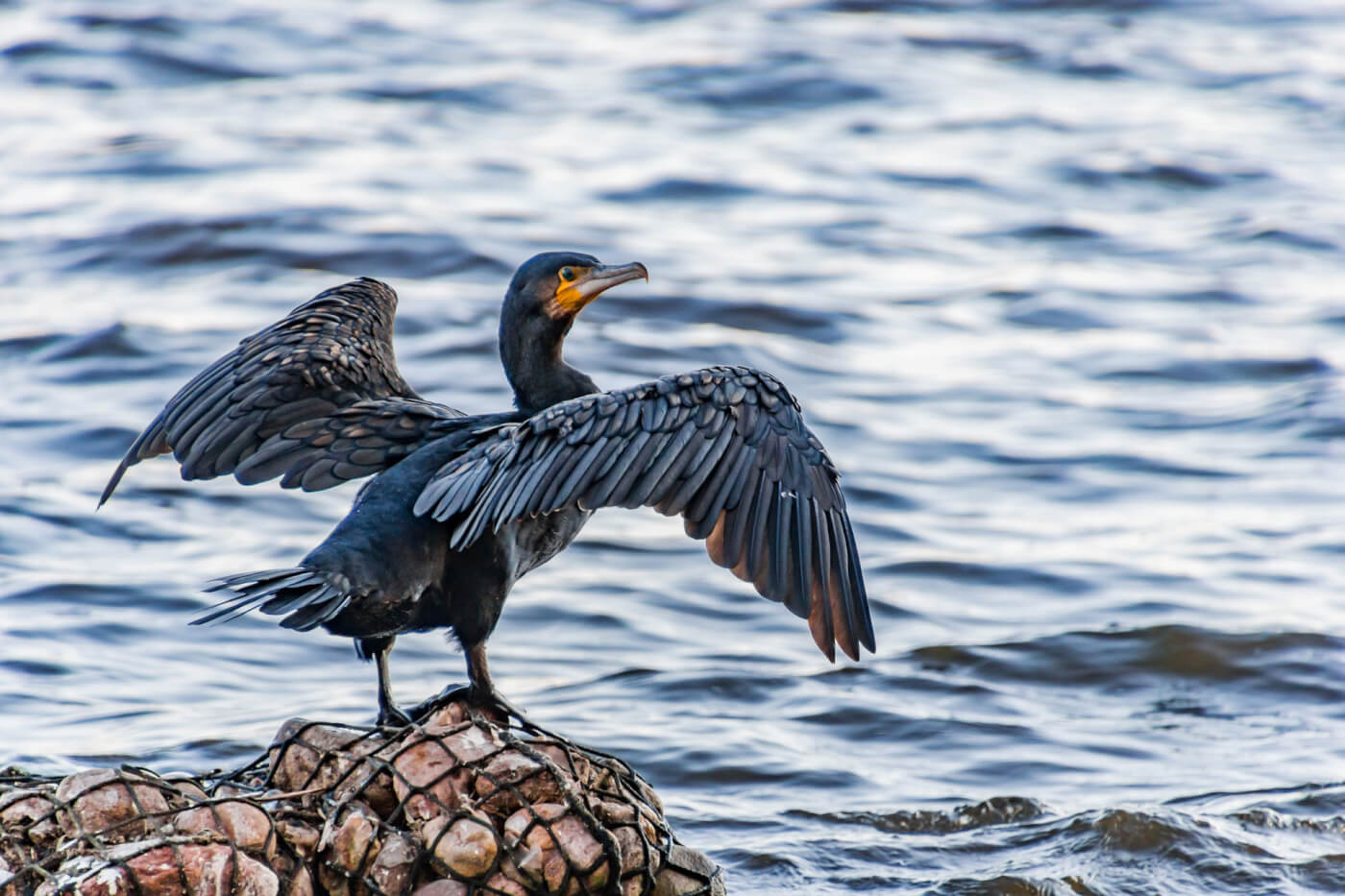
Double-crested cormorants—once killed so frequently that only 250 birds remained in the Great Lakes area—are again in danger of mass killings, despite federal protections.
The U.S. Department of Agriculture’s Animal and Plant Health Inspection Service (APHIS) is considering a new rule that would authorize lethal control of these majestic and federally protected birds in Ohio. Under this proposal, birds could be shot, their necks could be wrung, or they could be shoved into gas chambers—dark boxes in which severely crowded animals often slowly suffocate while convulsing and desperately trying to escape. Furthermore, lethal control has proved to be ineffective at “managing” wild populations, as more animals simply move in to replace those who were killed.
Click here to urge APHIS to oppose the proposal to allow lethal control and urge it to seek humane alternatives to human-animal conflicts. Comments on this proposed rule will be accepted until Friday, January 15, so please act promptly!
A tipping point is a moment when a small change triggers a large, often irreversible, response.
Professor Tim Lenton, Director of the Global Systems Institute (GSI) at the University of Exeter, has previously warned the world is “dangerously close” to several tipping points that could accelerate climate change.
But in a new paper in the journalClimate Policy, Professor Lenton and Simon Sharpe, a Deputy Director in the UK Cabinet Office COP 26 unit, identify tipping points in human societies that could rapidly cutcarbon emissions.
They highlight examples of such tipping points that have contributed to the world’s fastest low-carbon transitions inroad transportand power generation—and say “small coalitions of countries” could trigger “upward-scaling tipping cascades” to achieve more.
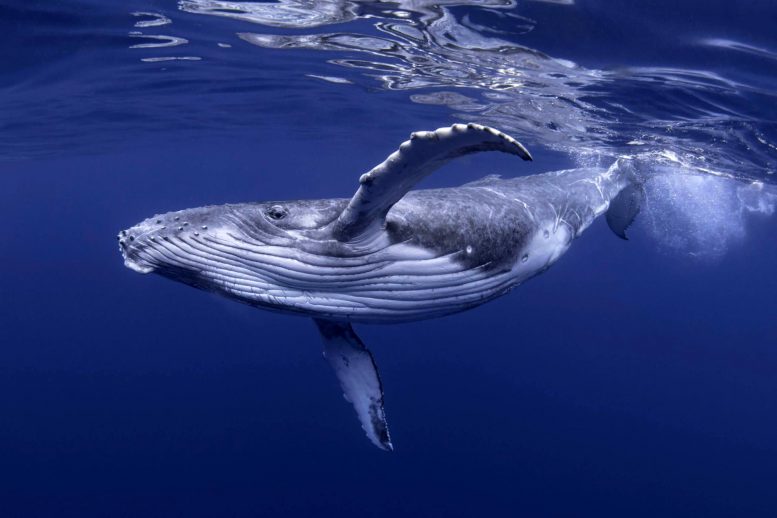
The nutrients produced by whales when they poo has been found to fertilize the interior of forests around the world.
Big animals have the power to change the face of our planet: they sculpt woodlands, power ecosystems and can even help to fertilize the interior of rainforests.
Conservation is working to prevent the largest animals on Earth from sliding into extinction — and saving them could be more important than we ever realized.
Humans have been altering the environment for tens of thousands of years. One of the starkest consequences of this is the loss of many large animals, known collectively as megafauna, from much of the planet.
When people spread out of Africa and first arrived in places like the Americas, Australia, New Zealand and Europe, the land was dominated by some truly huge animals.
Giant ground sloths and armored glyptodons roamed across the savannas of South America, huge mammoths and cave bears were trampling around the chilly landscapes of Europe, while truly enormous wombat-like diprotodons and moas were to be found across much of Australia and New Zealand.
These species had a significant impact on the habitats in which they lived, and when they were driven to extinction, they left an ecological hole. But this wave of extinction is not over.
Those large animals that did survive the first round are now facing a similar threat. Elephants, rhinos, and some species of whales are all balancing on the edge of extinction.
It is only relatively recently, however, that we have begun to understand just how wide reaching the influence of these animals is on the natural world. Once we know more, it could change the way we go about protecting them.
Big animals are influencing environments such as the Amazon not only on national or international scales, but even global ones. Credit: Neil Palmer/CIAT/CIFOR
Ken Norris, Head of Life Sciences at the Museum, has published a piece with colleagues that raises the question of how conservationists could think more globally.
“These big animals are iconic in a conservation sense and we are not arguing that we shouldn’t conserve them in their own right,” explains Ken. “But there are also a lot of fundamental things these animals do ecologically, and we are only just beginning to understand the really massive scales on which they operate.
“Currently we are not conserving those systems at scales large enough to protect and restore these key ecological roles. That is the point.”
Large animals, such as elephants and whales, are often referred to as ecosystem engineers. This is because as they go about their day-to-day business, these huge animals alter their environment in such dramatic ways that they help to create and maintain entirely new habitats.
Elephants, for example, are so big that they will regularly push down trees to get to food from the upper branches, and as a result open up woodlands that allow understory plants to thrive in the sunshine. They are also known to help sustain entire rainforests as they spread the large seeds of fruit trees over vast distances before depositing them in little piles of natural fertilizer.
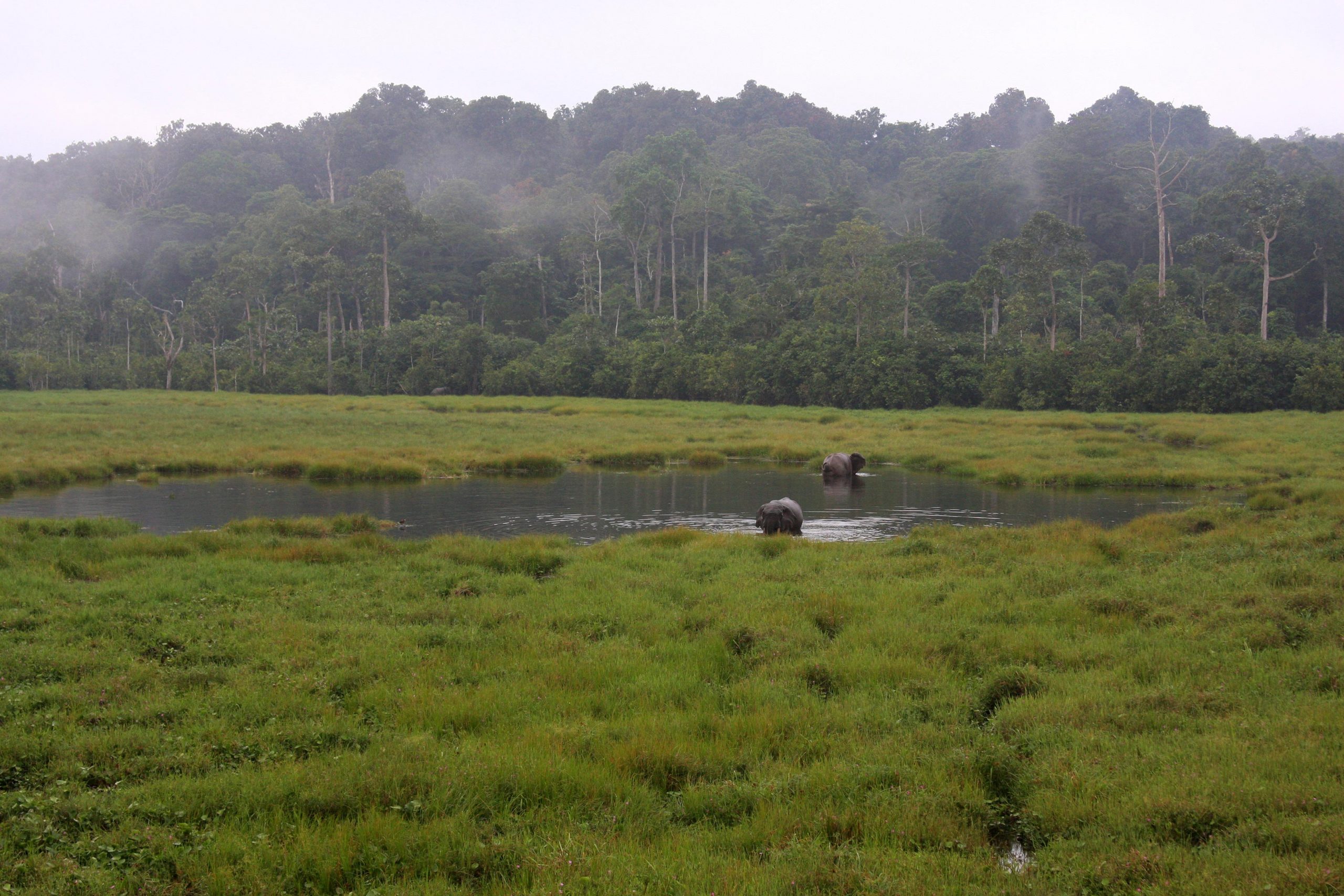
In the depths of the African rainforest, elephants create and maintain huge forest openings known as bais, which are then used by an array of other species from bongo antelopes to gorillas. Credit: Michelle Gadd/U.S. Fish and Wildlife Service
But these big animals have an impact on a much larger scale even than this.
“We didn’t realise until a few years ago just how important large animals are to large scale earth system processes,” explains Ken. These are the systems in which nutrients are cycled through the environment on a global scale.
“For example, there is research we cite which shows how important nutrients from the oceans are for massive biomes like the Amazon. You wouldn’t realize it, but there is a nutrient pump that exists which comes from the ocean up the rivers and onto the land.”
Animals such as whales and fish poop nutrients into the water. These nutrients help to fuel the plankton, which make their way into smaller fish. The fish are then either eaten by seabirds which in turn deposit their own poop on land, or feed larger migratory fish.
These fish then travel up the river systems and deep inland through the vast network of waterways. They will then be eaten by predators such as birds of prey and big cats, or simply die in the rivers, and as a result spread these nutrients that originated in the oceans over the land and deep within the forests.
“In recent years, some people have estimated how degraded those nutrient systems are because of the loss of large animals, and the impact has been massive,” explains Ken. “They estimate that certain nutrient pumps may have declined by over 80%, in part because of the removal of large animals such as whales.”
Migratory fish that originated in the oceans can be found spread across the forest floors, distributing nutrients far inland and feeding the forest. Credit: anttler (CC BY-NC-ND 2.0)
Global cooperation
When it comes to protecting nature, conservation movements have tended to focus on saving specific species in particular locations.
Recently, scientists have been thinking more broadly. For example, transboundary conservation initiatives have been created which straddle multiple countries. But Ken and his colleagues argue that, while this is undoubtedly moving in the right direction, if we want to take into account the scale at which these nutrient cycles operate, we need to think bigger still.
“There are some examples of this emerging, but we are still not up at the necessary levels of scale,” says Ken. “For example there is one of these transboundary conservation initiatives in the north west US and the west of Canada called Y2Y, where they have reintroduced wolves but conservation at these scales may still not be large enough.
“We need to be looking at ecosystems such as the Amazon which are millions of square kilometers.”
This might seem like an impossible challenge, but environmental initiatives of this scale have been achieved before, such as when the world’s governments came together to agree to fix the hole in the ozone layer or the international ban on whaling.
“It is an enormous challenge to reinstate these systems, but the impacts of not doing anything about it could be really severe,” says Ken. “We simply don’t know enough about this.
“We know that losing big animals is ecologically problematic at these massive scales, but we don’t know the exact impacts of losing them. How long have we got to sort out those issues, and what could be done about them?
“This is really a call to get people thinking about these problems and issues.”
President Donald Trump’s supporters descended on the nation’s capital on Jan. 5-6 to cheer his baseless claims of election fraud….MORE(Anna Moneymaker/The New York Times)
WASHINGTON — Under battle flags bearing Donald Trump’s name, the Capitol’s attackers pinned a bloodied police officer in a doorway, his twisted face and screams captured on video. They mortally wounded another officer with a blunt weapon and body-slammed a third over a railing into the crowd.
“Hang Mike Pence!” the insurrectionists chanted as they pressed inside, beating police with pipes. They demanded House Speaker Nancy Pelosi’s whereabouts, too. They hunted any and all lawmakers: “Where are they?” Outside, makeshift gallows stood, complete with sturdy wooden steps and the noose. Guns and pipe bombs had been stashed in the vicinity.AdvertisementSkip Ad
Only days later is the extent of the danger from one of the darkest episodes in American democracy coming into focus. The sinister nature of the assault has become evident, betraying the crowd as a force determined to occupy the inner sanctums of Congress and run down leaders — Trump’s vice president and the Democratic House speaker among them.
This was not just a collection of Trump supporters with MAGA bling caught up in a wave.
That revelation came in real time to Rep. Jim McGovern, D-Mass., who briefly took over proceedings in the House chamber as the mob closed in Wednesday and the speaker, Rep. Nancy Pelosi, was spirited to safer quarters moments before everything went haywire.
“I saw this crowd of people banging on that glass screaming,” McGovern told The Associated Press on Sunday. “Looking at their faces, it occurred to me, these aren’t protesters. These are people who want to do harm.”AdvertisementSkip Ad
“What I saw in front of me,” he said, “was basically home-grown fascism, out of control.”
Pelosi said Sunday “the evidence is that it was a well-planned, organized group with leadership and guidance and direction. And the direction was to go get people.” She did not elaborate on that point in a “60 Minutes” interview on CBS.
The scenes of rage, violence and agony are so vast that the whole of it may still be beyond comprehension. But with countless smartphone videos emerging from the scene, much of it from gloating insurrectionists themselves, and more lawmakers recounting the chaos that was around them, contours of the uprising are increasingly coming into relief.
Trump supporters try to break through a police barrier on Jan. 6, 2021, at the Capitol in Washington. (Julio Cortez/AP)
The staging
The mob got explicit marching orders from Trump and still more encouragement from the president’s men.
“Fight like hell,” Trump exhorted his partisans at the staging rally. “Let’s have trial by combat,” implored his lawyer, Rudy Giuliani, whose attempt to throw out election results in trial by courtroom failed. It’s time to “start taking down names and kicking ass,” said Republican Rep. Mo Brooks of Alabama.
Criminals pardoned by Trump, among them Roger Stone and Michael Flynn, came forward at rallies on the eve of the attack to tell the crowds they were fighting a battle between good and evil and they were on the side of good. On Capitol Hill, Republican Sen. Josh Hawley of Missouri gave a clenched-fist salute to the hordes outside the Capitol as he pulled up to press his challenge of the election results.
The crowd was pumped. Until a little after 2 p.m., Senate Majority Leader Mitch McConnell was at the helm for the final minutes of decorum in partnership with Pence, who was serving his ceremonial role presiding over the process.
Both men had backed Trump’s agenda and excused or ignored his provocations for four years, but now had no mechanism or will to subvert the election won by Biden. That placed them high among the insurrectionists’ targets, no different in the minds of the mob than the “socialists.”
“If this election were overturned by mere allegations from the losing side, our democracy would enter a death spiral,” McConnell told his chamber, not long before things spiraled out of control in what lawmakers call the “People’s House.”
The assault
Thousands had swarmed the Capitol. They charged into police and metal barricades outside the building, shoving and hitting officers in their way. The assault quickly pushed through the vastly outnumbered police line; officers ran down one man and pummeled him.
In the melee outside, near the structure built for Joe Biden’s inauguration on Jan. 20, a man threw a red fire extinguisher at the helmeted head of a police officer. Then he picked up a bullhorn and threw it at officers, too.
The identity of the officer could not immediately be confirmed. But Capitol Police officer Brian Sicknick, who was wounded in the chaos, died the next night; officials say he had been hit in the head with a fire extinguisher.
Shortly after 2 p.m., Capitol Police sent an alert telling workers in a House office building to head to underground transportation tunnels that criss-cross the complex. Minutes later, Pence was taken from the Senate chamber to a secret location and police announced the lockdown of the Capitol. “You may move throughout the building(s) but stay away from exterior windows and doors,” said the email blast. “If you are outside, seek cover.”
At 2:15 p.m., the Senate recessed its Electoral College debate and a voice was heard over the chamber’s audio system: “The protesters are in the building.” The doors of the House chamber were barricaded and lawmakers inside it were told they may need to duck under their chairs or relocate to cloakrooms off the House floor because the mob has breached the Capitol Rotunda.
Even before the mob reached sealed doors of the House chamber, Capitol Police pulled Pelosi away from the podium, she told “60 Minutes.”
“I said, ‘No, I want to be here,’”she said. “And they said, ‘Well, no, you have to leave.’ I said, ‘No, I’m not leaving.’ They said, ‘No, you must leave.’” So she did.
At 2:44 p.m., as lawmakers inside the House chamber prepared to be evacuated, a gunshot was heard from right outside, in the Speaker’s Lobby on the other side of the barricaded doors. That’s when Ashli Babbit, wearing a Trump flag like a cape, was shot to death on camera as insurrectionists railed, her blood pooling on the white marble floor.
The Air Force veteran from California had climbed through a broken window into the Speaker’s Lobby before a police officer’s gunshot felled her.
Back in the House chamber, a woman in the balcony was seen and heard screaming. Why she was doing that only became clear later when video circulated. She was screaming a prayer.
Within about 10 minutes of the shooting, House lawmakers and staff members who had been cowering during the onslaught, terror etched into their faces, had been taken from the chamber and gallery to a secure room. The mob broke into Pelosi’s offices while members of her staff hid in one of the rooms of her suite.
“The staff went under the table barricaded the door, turned out the lights, and were silent in the dark,” she said. “Under the table for two and a half hours.”
On the Senate side, Capitol Police had circled the chamber and ordered all staff and reporters and any nearby senators into the chamber and locked it down. At one point about 200 people were inside; an officer armed with what appeared to be a semi-automatic weapon stood between McConnell and the Democratic leader, Sen. Chuck Schumer.
Authorities then ordered an evacuation and rushed everyone inside to a secure location, the Senate parliamentary staff scooping up the boxes holding the Electoral Collage certificates.
Although the Capitol’s attackers had been sent with Trump’s exhortation to fight, they appeared in some cases to be surprised that they had actually made it in.
When they breached the abandoned Senate chamber, they milled around, rummaged through papers, sat at desks and took videos and pictures. One of them climbed to the dais and yelled, “Trump won that election!” Two others were photographed carrying flex cuffs typically used for mass arrests.
But outside the chamber, the mob’s hunt was still on for lawmakers. “Where are they?” people could be heard yelling.
That question could have also applied to reinforcements — where were they?
At about 5:30 p.m., once the National Guard had arrived to supplement the overwhelmed Capitol Police force, a full-on effort began to get the attackers out.
Heavily armed officers brought in as reinforcements started using tear gas in a coordinated fashion to get people moving toward the door, then combed the halls for stragglers. As darkness fell, they pushed the mob farther out onto the plaza and lawn, using officers in riot gear in full shields and clouds of tear gas, flash-bangs and percussion grenades.
At 7:23 p.m., officials announced that people hunkered down in two nearby congressional office buildings could leave “if anyone must.”
Within the hour, the Senate had resumed its work and the House followed, returning the People’s House to the control of the people’s representatives. Lawmakers affirmed Biden’s election victory early the next morning, shell-shocked by the catastrophic failure of security.
Rep. Maxine Waters, D-Ca., told AP on Sunday it was as if Capitol Police “were naked” against the attackers. “It turns out it was the worst kind of non-security anybody could ever imagine.”
Said McGovern: “I was in such disbelief this could possibly happen. These domestic terrorists were in the People’s House, desecrating the People’s House, destroying the People’s House.”
Associated Press writers Dustin Weaver in Washington and Michael Casey in Concord, New Hampshire, contributed to this report. Reeves reported from Birmingham, Alabama.


 Updated: 5:18 PM PST Jan 11, 2021Infinite Scroll Enabled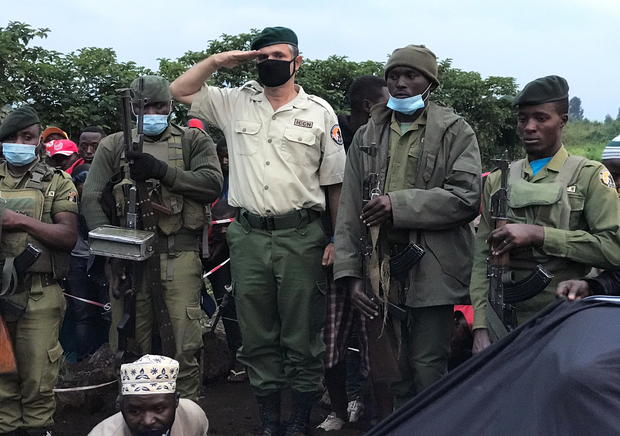

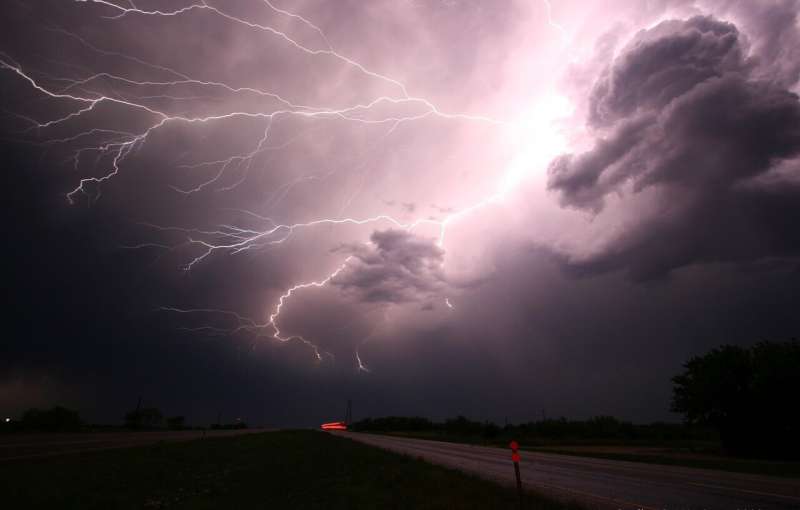
 © Provided by Popular ScienceThe polar vortex might mean cold weather—but it’s not clear how much snow or ice that might mean.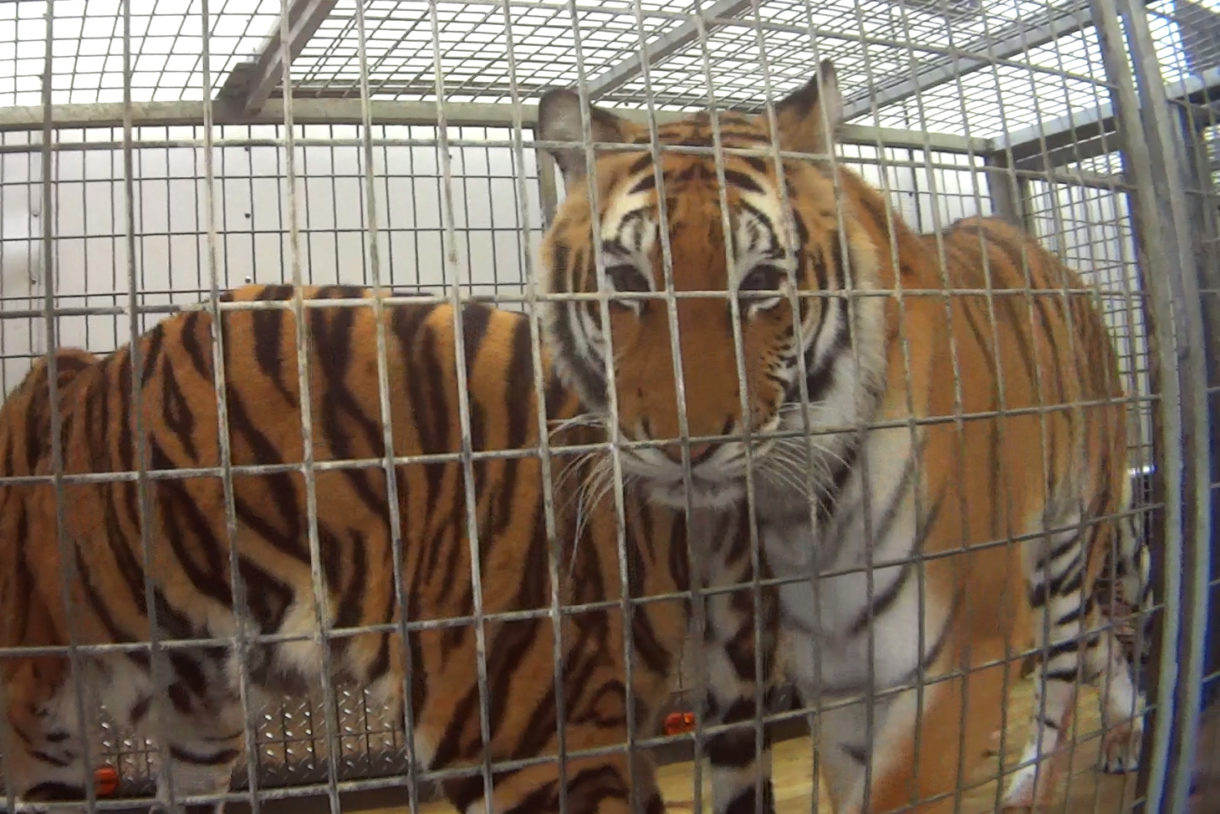
/cloudfront-us-east-1.images.arcpublishing.com/tronc/3BNCZGHWLBD27F62EEAH3O4FYY.jpg)




 Exposing the Big Game