The moon controls the release of methane in Arctic Ocean

https://www.sciencedaily.com/releases/2020/12/201214104716.htm

Date:December 14, 2020Source:UiT The Arctic University of NorwaySummary:The moon controls one of the most formidable forces in nature – the tides that shape our coastlines. Tides, in turn, significantly affect the intensity of methane emissions from the Arctic Ocean seafloor. High tides may even counter the potential threat of submarine methane release from the warming Arctic.Share:    FULL STORY


It may not be very well known, but the Arctic Ocean leaks enormous amounts of the potent greenhouse gas methane. These leaks have been ongoing for thousands of years but could be intensified by a future warmer ocean. The potential for this gas to escape the ocean, and contribute to the greenhouse gas budget in the atmosphere, is an important mystery that scientists are trying to solve.

The total amount of methane in the atmosphere has increased immensely over the past decades, and while some of the increase can be ascribed to human activity, other sources are not very well constrained.

A recent paper in Nature Communications even implies that the moon has a role to play.

Small pressure changes affect methane release

The moon controls one of the most formidable forces in nature — the tides that shape our coastlines. Tides, in turn, significantly affect the intensity of methane emissions from the Arctic Ocean seafloor.

“We noticed that gas accumulations, which are in the sediments within a meter from the seafloor, are vulnerable to even slight pressure changes in the water column. Low tide means less of such hydrostatic pressure and higher intensity of methane release. High tide equals high pressure and lower intensity of the release” says co-author of the paper Andreia Plaza Faverola.

“It is the first time that this observation has been made in the Arctic Ocean. It means that slight pressure changes can release significant amounts of methane. This is a game-changer and the highest impact of the study.” Says another co-author, Jochen Knies.

New methods reveal unknown release sites

Plaza Faverola points out that the observations were made by placing a tool called a piezometer in the sediments and leaving it there for four days.

It measured the pressure and temperature of the water inside the pores of the sediment. Hourly changes in the measured pressure and temperature revealed the presence of gas close to the seafloor that ascends and descends as the tides change. The measurements were made in an area of the Arctic Ocean where no methane release has previously been observed but where massive gas hydrate concentrations have been sampled.

“This tells us that gas release from the seafloor is more widespread than we can see using traditional sonar surveys. We saw no bubbles or columns of gas in the water. Gas burps that have a periodicity of several hours won’t be identified unless there is a permanent monitoring tool in place, such as the piezometer.” Says Plaza Faverola

These observations imply that the quantification of present-day gas emissions in the Arctic may be underestimated. High tides, however, seem to influence gas emissions by reducing their height and volume.

“What we found was unexpected and the implications are big. This is a deep-water site. Small changes in pressure can increase the gas emissions but the methane will still stay in the ocean due to the water depth. But what happens in shallower sites? This approach needs to be done in shallow Arctic waters as well, over a longer period. In shallow water, the possibility that methane will reach the atmosphere is greater.” Says Knies.

May counteract the temperature effects

High sea-level seems thus to influence gas emissions by potentially reducing their height and volume. The question remains whether sea-level rise due to global warming might partially counterbalance the effect of temperature on submarine methane emissions.

“Earth systems are interconnected in ways that we are still deciphering, and our study reveals one of such interconnections in the Arctic: The moon causes tidal forces, the tides generate pressure changes, and bottom currents that in turn shape the seafloor and impact submarine methane emissions. Fascinating!” says Andreia Plaza Faverola

The paper is the result of a collaboration between CAGE, Centre for Arctic Gas Hydrate, Environment and Climate at UiT The Arctic University of Norway, and Ifremer under the project SEAMSTRESS — Tectonic Stress Effects on Arctic Methane Seepage


John Smith retells hunting accident

Exposing the Big Game's avatarCommittee to Abolish Sport Hunting Blog

  • Adam Engel, Staff Reporter, @AdamEngel9
  • Jan 5, 2021Updated22 hrs ago
John Smith
Courtesy of Ethan Kyle

John Smith walked into the dimly lit, orange filled Oklahoma State wrestling room.

It’s a simple routine Smith has completed thousands of times, but that day was different.

Smith’s forehead and eyes were wrapped in gauze. The wrestlers present at this Sunday afternoon workout begin to freeze and turn their attention to their leader.

“I fell off a deer stand,” Smith said.

The group erupted in laughter.

Former Cowboy Ethan Kyle, who said he thinks the year was 2004, and his teammates immediately sensed a feeling of surprise.

“I just knew that this guy, who was basically Superman, went out and fell off a deer stand,” Kyle said. “Life is nuts, man. Anything can happen.”

The hunting scare occurred the day before — a Saturday before an OSU football game.

Smith, accompanied by his father…

View original post 202 more words

IS A NEW HUMAN SPECIES EMERGING FROM AN UNDERGROUND CAVE?

Exposing the Big Game's avatarThe Extinction Chronicles

Homo Naledi

More infoi

Contributed by

Elizabeth Rayne@quothravenrayneJan 5, 2021, 8:45 PM EST (Updated)283Shared

Tag:ScienceTag:NewsTag:ArchaeologyTag:EvolutionTag:Early Man

Most of us know by now that if anyone ever thinks “Neanderthal” is an insult, it’s probably true on both ends, becauseHomo sapiensinterbred with Neanderthals. But is another human species hiding somewhere in our past?

Deep in the caves of Johannesburg, South Africa, manyancient human remainshave been found.Lee Berger and his research teamfrom the University of the Witwatersrand have found human bones that have survived thousands and thousands of years. They previously unearthed two new hominid species, and might have just stumbled on anotherone. Some of the many bone fragments scattered in Cave UW 105 stood out. These remains are unlike any from known hominids or modern humans —possibly an altogether different species.

MORE ARCHAEOLOGY

pyramid 3

Rare Great Pyramid artifacts lost for…

View original post 563 more words

Scientists Warn of an ‘Imminent’ Stratospheric Warming Event Around The North Pole

Exposing the Big Game's avatarThe Extinction Chronicles

main article image

(Simon Berger/Unsplash)ENVIRONMENT

https://www.sciencealert.com/scientists-warn-imminent-stratospheric-warming-about-to-blast-the-uk-with-cold

MIKE MCRAE6 JANUARY 2021

Every winter in the Northern Hemisphere, a cold wind circles the North Pole like water around a drain. It’s an annual weather pattern meteorologists keep an anxious eye on – any significant changes could suggest Europe is in for a serious cold snap.Right now, that wind is ripping in two.https://cb24d9547dd945f51d9a064cfa0148ca.safeframe.googlesyndication.com/safeframe/1-0-37/html/container.html

Researchers from the Universities of Bristol, Exeter, and Bath have come up with a new way to predict the knock-on effects of various changes to this major air current high up in thestratosphere, 10 to 50 kilometres (6 to 30 miles) overhead.

Ironically, the cause of this chill is a sudden burst of heat seeping into the whirling currents over a window of just 24 to 48 hours.

With its temperature surging by as much as 40 degrees Celsius, the vortex undergoes some rapid changes, changing course or dramatically…

View original post 590 more words

Hunting coyotes at night cruel, inhumane

Exposing the Big Game's avatarCommittee to Abolish Sport Hunting Blog

https://www.cjonline.com/story/opinion/2021/01/03/hunting-coyotes-night-cruel-inhumane/4121540001/

Topeka Capital-Journal

The Kansas Wildlife, Parks and Tourism Commission on Thursday approved a proposal to allow the use of lighting and thermal imaging/night vision equipment to hunt coyotes at night during its monthly meeting via Zoom.

Were you aw re that the Kansas Department of Wildlife, Parks and Tourism has approved the hunting of coyotes at night using lights and thermal imaging equipment? Not only does this take any element of fair sport out of hunting; it is cruel, inhumane and totally unnecessary.

Responsible livestock and pet owners devise methods to keep their animals safe, so that predation, if it occurs at all, is minimal.However,the agency states that damage control was not a major basis for allowing the huntingand that another “benefit” included a “recreational harvest opportunity.”In other words, the sadistic killing of innocent animals for fun.

Please contact the Kansas Department of Wildlife, Parks and Tourism, the governor, and your elected state representatives to voice your opposition.

Margaret Kramar, Lecompton

View original post

Hiker says hunting dogs along popular trail attacked his family and their dog

Exposing the Big Game's avatarCommittee to Abolish Sport Hunting Blog

DefaultMono SansMono SerifSansSerifComicFancySmall CapsDefaultX-SmallSmallMediumLargeX-LargeXX-LargeDefaultOutline DarkOutline LightOutline Dark BoldOutline Light BoldShadow DarkShadow LightShadow Dark BoldShadow Light BoldDefaultBlackSilverGrayWhiteMaroonRedPurpleFuchsiaGreenLimeOliveYellowNavyBlueTealAquaOrangeDefault100%75%50%25%0%DefaultBlackSilverGrayWhiteMaroonRedPurpleFuchsiaGreenLimeOliveYellowNavyBlueTealAquaOrangeDefault100%75%50%25%0%Hiker says hunting dogs along popular trail attacked his family and their dogByRick Daysog|January 3, 2021 at 5:47 PM HST – Updated January 3 at 10:42 PM

HONOLULU, Hawaii (HawaiiNewsNow) – A Hawaii Kai man said a pack of hunting dogs attacked his wife and dog on Saturday morning, causing serious injuries to both.

The man said he, his wife, his twin daughters and their dog — a year-old golden doodle — were finishing their hike along the Aina Haina Valley trail when a hunting dog came out of the bushes and surprised them.

“There was as dog as large as my dog had pinned it down and was attacking it,” said the man, who only wanted to be identified by his first name “Scott.”

Scott said he and his wife tried…

View original post 255 more words

3 Florida men in custody after attacking, running over FWC officer with ATV, sheriff says

Exposing the Big Game's avatarCommittee to Abolish Sport Hunting Blog

5 hours ago

Officer was recovering at home with his family, officials say

ByStephen Sorace| Fox News

https://static.foxnews.com/static/orion/html/video/iframe/vod.html?v=20210105191623#uid=fnc-embed-1

Fox News Flash top headlines for January 5

Fox News Flash top headlines are here. Check out what’s clicking on Foxnews.com.

Three menaccused ofattackingaFloridawildlifeofficerand leaving him for dead at a desolate hunting ground over the weekend have been taken into custody, authorities said Monday.

Lazaro Milian, 50, Michel Amalfi, 45, and Rodrigo La Rosa, 27, facemultiple charges, including attempted murder of a law enforcement officer and resisting arrest.

SHOOTING AT MIAMI PARK INJURES AT LEAST 8, POLICE SAY

The incident happened Saturday night on the grounds of the River Ranch Hunt Club, located next to the Avon Park Bombing Range, Polk County Sheriff Grady Juddtold reporters at a press conference Sunday. The two properties make up…

View original post 347 more words

Trump auctions Arctic refuge to oil drillers in last strike against US wilderness

Sales of drilling rights are the climax to one of the nation’s highest-profile environmental battles
Supported byAbout this content

Emily Holden in Washington

Tue 5 Jan 2021 05.37 ESTLast modified on Tue 5 Jan 2021 11.21 EST

https://www.theguardian.com/environment/2021/jan/05/trump-arctic-national-wildlife-refuge-lease-sales

Shares1,883

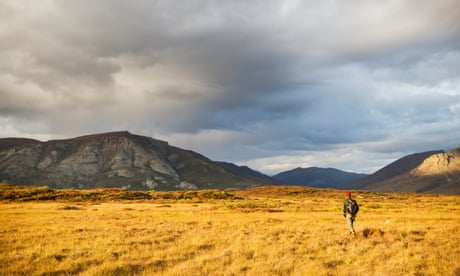
Rivers run through the lush tundra valleys of Alaska’s Arctic National Wildlife Refuge.
 Rivers run through the lush tundra valleys of Alaska’s Arctic national wildlife refuge. Photograph: Acacia Johnson

In one of its last strikes against the American wilderness, Donald Trump’s administration will on Wednesday auction off portions of the Arctic national wildlife refuge to oil drillers.

The lease sales are the climax to one of the nation’s highest-profile environmental battles. The lands on the northern coastal plain of Alaska are home to denning polar bears and migrating herds of Porcupine caribou that indigenous communities depend on and consider sacred. But the oil industry has long suspected that the ground beneath the plain holds billions of barrels of petroleum.https://www.theguardian.com/email/form/plaintone/4199Sign up for monthly updates on America’s public lands

Once the leases in the refuge, known as ANWR, are sold to energy companies, they would be difficult to claw back. The incoming president, Joe Biden, could, however, discourage development in the refuge by putting regulatory hurdles in the way of drillers.

The refuge has become central to America’s debate over how quickly to stop drilling for and burning fossil fuels as the climate crisis accelerates. Climate experts say there should be no new oil and gas extraction, as the world is already more than 1C hotter than pre-industrial times. Even if humans stopped using fossil fuels today, the planet would continue to heat.

Oil from drilling west of the refuge, at Prudhoe Bay, has fueled the economic development the state has depended on to fill its coffers and write annual revenue checks to residents. That extraction also led to the most damaging oil spill in history, when the Exxon Valdez tanker spewed millions of barrels off Alaska’s southern coast in 1989.

Prudhoe Bay“was the largest oil field ever discovered in North America. Since then we have had more than 1,500 sq miles of oil and gas development in the Alaskan Arctic … but [ANWR] has been off limits,” said Adam Kolton, executive director of the Alaska Wilderness League.https://interactive.guim.co.uk/uploader/embed/2021/01/archive-zip/giv-3902Nn8p95KgWUMC

“For us, it symbolizes just what’s at stake here. If you can’t draw a line at the tundra and keep this one area of the Arctic off limits, then the question is, where can you draw the line and what protected part or wildlife refuge in the United States will remain off limits?”

President Dwight Eisenhower designated the Arctic refuge in 1960, and in the ensuing decades, the industry and Republicans pushed for drilling there, while the US was trying to reduce its reliance on suppliers in the Middle East. That push continues even though oil is now plentiful, and a fracking boom has made the US a net exporter rather than importer.

Republicans in the US Congress and in Alaska achieved their goal in 2017, when they inserted a provision authorizing drilling into Trump’s landmark tax bill.

 America’s last wilderness is about to go to the highest bidder for oil drilling

Kim Heacox Read more

Trump and congressional Republicans argued that the government’s earnings from drilling in the refuge could help pay for the proposed tax cuts, which favored corporations and wealthier Americans. They said development would generate $900m, although an analysis by the non-partisan watchdog group Taxpayers for Common Sense, based on historical bid data, found that it would bring in just a fraction of that amount – no more than $27.6m. That would be split between the federal government and the state of Alaska.Advertisement

“The fact that this was being offered as an offset was definitely insincere at best, and we thought that was just kind of a joke,” said Autumn Hanna, vice-president of the group.

Taxpayers for Common Sense has argued the government should not be leasing any public land to oil and gas drilling now, while prices for the commodities are low and supplies are high worldwide. During the pandemic, oil demand has plunged as businesses have been shut down and people have driven less.

“We’re not opposed to oil and gas drilling, but we’re opposed to short-changing taxpayers,” Hanna said.

Industry interest in developing new oilfields is so low that some have suggested there might not be any bids for some tracts of land on the coastal plain. The former governors Frank Murkowski and Bill Walker have encouraged the state to bid on any unwanted tracts itself, and last week a state-owned economic development corporation voted to authorize bidding up to $20m.

Sign up for This Land is Your Land, our monthly email on public lands

 Read more

“If there are no bidders on the lease sales at all, Alaska will likely never be able to develop our oil and gas potential from ANWR,” Murkowski said in an opinion piece in the Anchorage Daily News, where he also noted the oil and gas industry had historically contributed 70% of the state’s revenue.

On Monday, the Trump administration also dramatically expanded the area where the government can lease public land for oil drilling to the west of ANWR.

The plan would allow drilling in 82% of the National Petroleum Reserve-Alaska, an area bigger than the state of West Virginia, according to environmental groups, though the Biden administration could reverse that decision more easily than it could hold off drilling in ANWR.

Anaktuvuk Pass, Alaska, a Native Alaskan community of around 300 people, near Alaska’s Arctic National Wildlife Refuge.
 Anaktuvuk Pass, Alaska, a Native Alaskan community of around 300 people, near Alaska’s Arctic national wildlife refuge. Photograph: Acacia Johnson

Advertisement

Native groups in Alaska have fought ANWR drilling proposals with lawsuits. For the Gwich’in, indigenous Alaskans who have migrated alongside the caribou and relied upon them as a food source, the fight is personal. They formed the Gwich’in Steering Committee in 1988 to oppose drilling in the coastal plain, which they call the Sacred Place Where Life Begins.

“We come from some of the strongest people that ever walked this earth. They survived some of the coldest, harshest winters so that we can be here,” Bernadette Demientieff, executive director of the committee, said during an AM radio segment last week. “I feel like this is my responsibility as a Gwich’in, to protect the caribou.”

Polar bear advocates say the habitat is also critical to a population in dire straits from development and rising temperatures that are melting sea ice. The Arctic is heating at a much faster pace than the rest of the world. Polar bear numbers in Alaska and western Canada declined 40% from 2001 to 2010, said Steven Amstrup, chief scientist for Polar Bears International.https://interactive.guim.co.uk/uploader/embed/2021/01/archive-zip/giv-3902hQ5VtsPfnFJZ

“If we want to have the best chance possible of maintaining that population until the time that we stabilize greenhouse gas emissions, we need to protect them on the ground as best we can,” Amstrup said.

Ken Whitten, a former caribou biologist for the state of Alaska, said drilling was likely to displace wildlife. “It’s the core of the Porcupine caribou herd calving area. It’s the major onshore denning place for polar bears in the Beaufort Sea, which is becoming more and more important as the sea ice disappears.”

The plain is a narrow band of land between mountains and the coast, so animals do not have many options when they are forced to relocate, he said. Much of the surrounding area is already being drilled.

“We are a wealthy nation,” Whitten said. “We can afford to leave some areas alone.”

Iran seizes tanker, ramps up uranium enrichment in new escalation with West

Exposing the Big Game's avatarThe Extinction Chronicles

Tensions between the United States and Iran have been simmering in the last days of President Donald Trump’s administration.

https://www.nbcnews.com/news/world/iran-resumes-20-percent-uranium-enrichment-nuclear-facility-state-news-n1252708

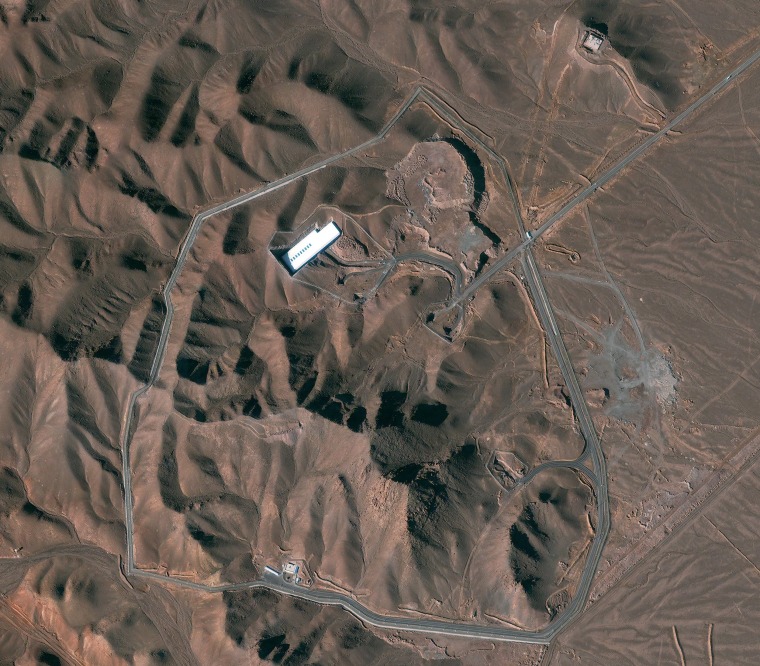
Image: Fordo facility in Iran

A satellite image of the Fordo facility in Iran in 2013.DigitalGlobe / Getty Images fileJan. 4, 2021, 5:42 AM PST/UpdatedJan. 4, 2021, 8:25 AM PSTByAli ArouziandSaphora Smith

TEHRAN, Iran — Iran has resumed enriching uraniumup to 20 percentin the country’s biggest breach yet of its landmark nuclear deal with world powers, a government spokesperson told state-run Mehr News on Monday.

Also Monday, Iran’s Revolutionary Guard seized a South Korean-flagged ship carrying thousands of tons of ethanol in the Persian Gulf, according to the state-linked news agencies IRIB and FARS News.

The U.S. State Department said it was tracking reports that the Iranian regime has detained a Republic of Korea-flagged tanker. “The regime continues to threaten navigational rights and freedoms in the Persian Gulf as part of a clear…

View original post 673 more words