Deer season in Georgia may end this weekend, but Cpl. Chad Cox with the Department of Natural Resources hopes local hunters will continue to obey state laws and regulations.
Cox arrested three men in the early morning hours of Christmas Day for not following those rules, bringing the total number of hunters arrested in Polk County this deer season to seven.
In each instance, the people were charged with hunting deer at night, hunting upon or discharging weapons across a public road, and hunting from a vehicle.
Cox said while he couldn’t respond to the specific cases as they are pending in court, he did say that there are strict laws against shining bright lights — including vehicle headlights — into fields along roadways at night to try and draw out deer.
UK Prime Minister Boris Johnson said Sunday that COVID-19 lockdown measures there are “probably going to get tougher” since the country needs to be “realistic” about the alarming spread of a new,more contagious strainof coronavirus.
Johnson said that there are “obviously a range of tougher measures that we would have to consider” as each region remains under a different tier of lockdown.
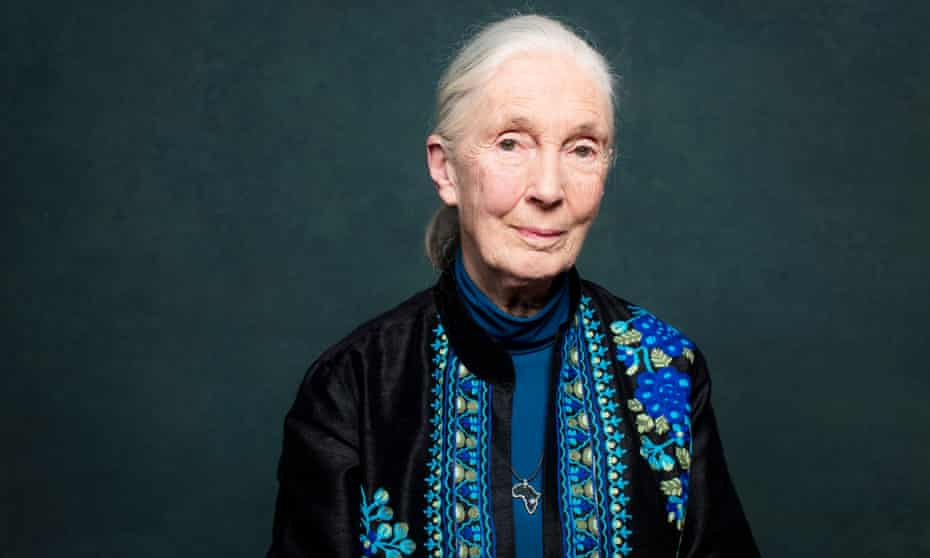
Jane Goodall: ‘Our disrespect for animals creates conditions for the emergence of zoonotic diseases.’ Photograph: David Levene/The Guardian
The primatologist and ecological activist on why population isn’t the cause of climate change, and why she’s encouraging optimism@jonathanwattsSun 3 Jan 2021 04.00 EST
895
Jane Goodall is a primatologist who is regarded as one of the world’s leading authorities on chimpanzees. She has spent 60 years studying the chimps that live in the Gombe Stream national park and she is a prominent advocate, via several foundations, of protecting the great apes and their habitats. She has been presented with awards by the UN and various governments for her conservation and environmental work. She appears in the Netflix documentary The Beginning of Life 2.
You warned last June that humanity will be finished if we don’t make drastic changes in response to the coronavirus pandemic and the climate crisis. Have you seen any indication of that drastic change? The window is closing. Business as usual – using up natural resources faster and faster – can’t carry on. In some cases, we are already using resources faster than they can be replenished. And we can see the consequences. Look at climate change. It is not something that might happen in the future; we are already seeing terrible hurricanes and floods and fires. It is building up into an inferno. When you think globally like that, it is very, very depressing.Advertisementhttps://c015c01652c1d4c024600cef2ce37a0c.safeframe.googlesyndication.com/safeframe/1-0-37/html/container.html
Do you feel that the pandemic has shifted perceptions, or created more of a sense of urgency? Maybe Covid has given a push that will make a difference. The most important lesson from this pandemic is that we need a new relationship with nature and animals. Our disrespect for animals creates conditions for the emergence of zoonotic diseases. You can see that same disrespect in factory farms, bushmeat and wildlife markets and the illegal wildlife trade. About 75% of all newly emerged diseases in humans are zoonotic.
What more needs to be done? We need to move to a more sustainable relationship with the natural world. We need a greener economy. If countries move away from fossil fuels and subsidise clean, green energy that will create a lot of jobs. If you plant trees in a city it has enormous benefits – it cools the temperature, cleans the air, stabilises the soil against flooding and improves psychological and physical health, to mention only a few. We also need to cut down on waste. I grew up in the war, when food was rationed and you did not throw anything out. We need to value food more – as aboriginal people do.
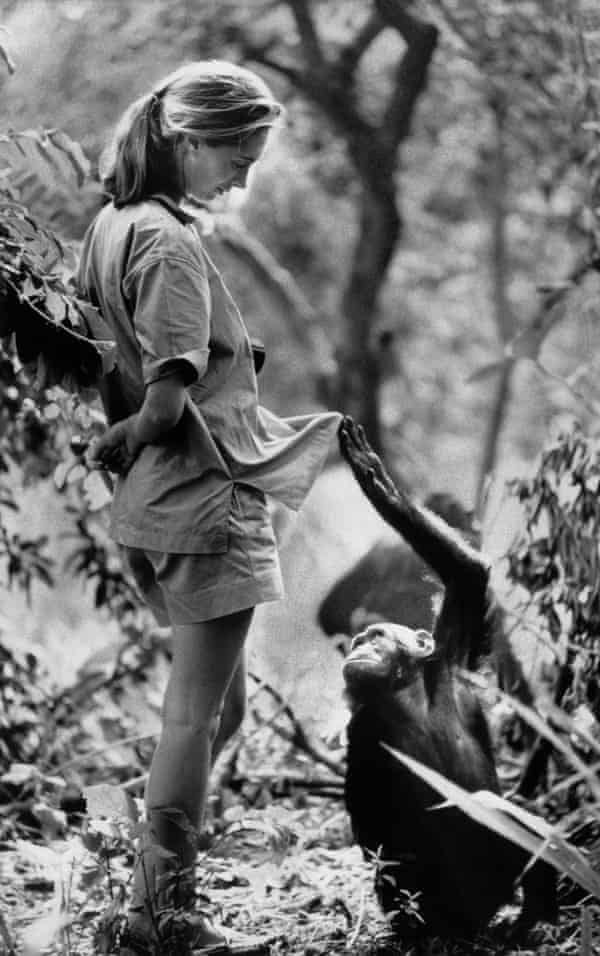
Jane Goodall and inquisitive friend, Gombe Stream Research Centre, Tanzania, January 1972. Photograph: Corbis
Do you think politicians and the public are focused enough on this challenge? As damage is coming to a peak, awareness is coming to a peak. But it does not help to focus exclusively on the problems. Yes, the media must point out the harm we are inflicting. But they should give more space to all the amazing restoration programmes happening around the world – that gives people hope and they are more likely to do their bit. If you lose hope, why bother?Advertisementhttps://c015c01652c1d4c024600cef2ce37a0c.safeframe.googlesyndication.com/safeframe/1-0-37/html/container.html
Where do you find cause for hope? Change is happening. Millions are switching to wind and solar energy, clearing up streams or picking up rubbish. Consumers are influencing the way business does its work. I am always meeting amazing people doing great projects to allow biodiversity to creep back. A lot of it in China. There are many different ways to start moving in the right way.
How about at the national and international level? The Global Biodiversity Outlook 5 report found the international community did not fully achieve any of the 20 Aichi biodiversity targets agreed in Japan in 2010 to slow the loss of the natural world. Can we expect anything better at the next big UN biodiversity meeting in Kunming, China, next year? All I have seen, to be honest, is more decision makers talking about change and making plans, but not doing enough to make it happen. At these big meetings, there is so much talk and so little follow-up action. But now we are seeing more action among the youth. Children are standing up and influencing their parents, business leaders and politicians. Voting, in democracies, can make a big difference.
You and David Attenborough both appear to be more active than ever. But has your approach changed? You have tended to focus on individual responsibility in the past. Is it now time for something more radical, for system change? I think we need many different approaches. There are instances when violent tactics are necessary to make people aware – like the anti-slavery movement. But violence can be counterproductive. I think people must change from within. If children point at dominant males and say “you are bad and we demand that you change”, the response may well be “I won’t be lectured by a young person”. My way is to tell stories, trying to reach the heart. Too often people give lip service to change but carry on with business as usual.
Our organisation, Roots & Shoots, works at the grassroots level with youth. The movement is growing very fast – all over North and South America, Africa, Europe and Asia, including over 1,000 groups in China. There are also new groups in the Middle East. Turkey and Israel, and I want to spread it further. We are linking youth from different countries together and finding partner organisations. It is really important to grow as the programme is giving young people hope. This is needed badly as we have caused so much environmental damage since we began in 1991. And without hope youth falls into apathy and does nothing. Many of of the early Roots & Shoots members are now in leadership positions.
We’re seeing the consequences of the idea that there can be unlimited economic development with finite natural resources
But this is not just a matter of changing individual behaviour. Aren’t there are deeper causes in the way the global economy is organised? We are seeing the consequences of the crazy idea that there can be unlimited economic development on a planet with finite natural resources and a growing population. Decisions are made for short-term gain at the expense of protecting the environment for the future. Now, the world’s population is estimated at over 7 billion people and it is expected to be closer to 10 billion by 2050. If we carry on with business as usual what is going to happen? To be clear, the main problem is not population growth. I have never said that, although George Monbiot claims that I did, which is disappointing because I have always admired him. It is one of three main problems – the other two are our greedy lifestyle, our reckless burning of fossil fuels, the demand for meat, poverty – and, of course, we must also tackle corruption.
To what extent do you feel that traditional conservation needs to change? We have to eliminate poverty. Because if people are really poor, they will destroy the environment because they have to feed themselves and their families. In 1990, I flew over Gombe national park [in Tanzania] and I was shocked to see the change. During the 1960s, it had been part of a vast equatorial forest. By 1990, Gombe was just a little island of trees, surrounded by land that had been stripped bare. It was then that I realised unless we could help people make a living without destroying their environment we couldn’t save chimps or forests. So we helped in many ways including providing scholarships for girls and offering microcredit opportunities, especially to women. It’s worked. If you fly over Gombe today, you don’t see those bare hills; the forest has come back. As women’s education improves, family sizes tend to drop. Women want to educate children. They don’t want to be birth machines.
In the Netflix documentary The Beginning of Life 2, you and many other biologists, conservationists and psychologists stress the mental health and social benefits that can come from a close connection to the natural world, and warn of the dangers that this is being lost among a younger, more urban generation. When I was growing up, we did not even have television, so we immersed ourselves in books and nature. Children today have less time for that because they are fascinated by iPhones, laptops and video games. Also many more children grow up in cities, surrounded by concrete. The important thing is to get them into nature – the younger the better. In the documentary, you see the expression of wonder on a child’s face – a three-year-old boy watching a snail glide along. He suddenly picked it up, ran and put it on a window pane to watch it from the other side. This kind of experience is very, very important. It is only when you care for nature that you protect it. The film is very inspiring.Advertisementhttps://c015c01652c1d4c024600cef2ce37a0c.safeframe.googlesyndication.com/safeframe/1-0-37/html/container.html
How has lockdown affected people’s relationship with nature? In some cases, it has meant closer contact, but that depends on whether people have a garden or live near parks or green areas where they can walk. So many poor people were confined to the concrete jungle.
And how has it affected you? I miss the contact with people, my friends. But I have adapted. I used to be travelling 300 days a year and meeting people face to face. Since I have been in lockdown, I do everything virtually and have reached millions more people in many more countries. So there is a silver lining. I try to find the silver lining in everything. We mustn’t lose hope.
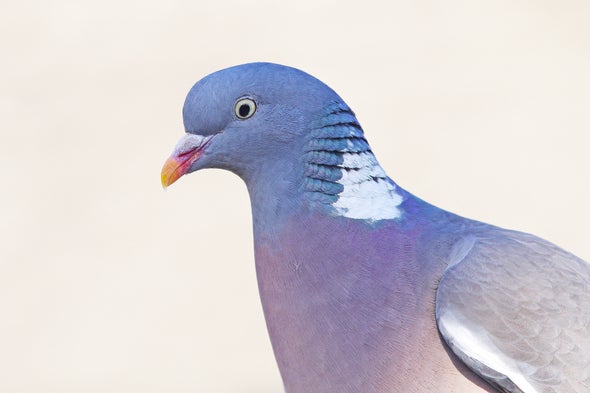
With enough training, pigeons can distinguish between the works of Picasso and Monet. Ravens can identify themselves in a mirror. And on a university campus in Japan, crows are known to intentionally leave walnuts in a crosswalk and let passing traffic do their nut cracking. Many bird species are incredibly smart. Yet among intelligent animals, the “bird brain” often doesn’t get much respect.10 Sec
Two papers published today in Science find birds actually have a brain that is much more similar to our complex primate organ than previously thought. For years it was assumed that the avian brain was limited in function because it lacked a neocortex. In mammals, the neocortex is the hulking, evolutionarily modern outer layer of the brain that allows for complex cognition and creativity and that makes up most of what, in vertebrates as a whole, is called the pallium. The new findings show that birds’ do, in fact, have a brain structure that is comparable to the neocortex despite taking a different shape. It turns out that at a cellular level, the brain region is laid out much like the mammal cortex,explaining why many birds exhibit advanced behaviors and abilities that have long befuddled scientists. The new work even suggests that certain birds demonstrate some degree of consciousness.
The mammalian cortex is organized into six layers containing vertical columns of neurons that communicate with one another both horizontally and vertically. The avian brain, on the other hand, was thought to be arranged into discrete collections of neurons called nuclei, including a region called the dorsal ventricular ridge, or DVR, and a single nucleus named the wulst.https://237a45e067e8a3c1a268e2ca88227257.safeframe.googlesyndication.com/safeframe/1-0-37/html/container.htmlADVERTISEMENT
In one of the new papers, senior author Onur Güntürkün, a neuroscientist at Ruhr University Bochum in Germany, and his colleagues analyzed regions of the DVR and wulst involved in sound and vision processing. To do so, they used a technology called three-dimensional polarized light imaging, or 3D-PLI—a light-based microscopytechnique that can be employed to visualize nerve fibers in brain samples. The researchers found that in both pigeons and barn owls, these brain regions are constructed much like our neocortex, with both layerlike and columnar organization—and with both horizontal and vertical circuitry. They confirmed the 3D-PLI findings using biocytin tracing, a technique for staining nerve cells.
“We can now claim that this layered, corticallike organization is indeed a feature of the whole sensory forebrain in most, if not all, birds,” says Martin Stacho, co-lead author of the study and Güntürkün’s colleague at Ruhr University Bochum.
“It’s not that the DVR is the neocortex,” says Vanderbilt University neuroscientist Suzana Herculano-Houzel, who wrote a commentary accompanying the two new papers and was not involved in either of them, “but rather that the whole of the pallium in mammals and in birds has similar developmental origins and connectivity, and therefore [the pallia of both classes] should be considered equivalent structures. Stacho shows that settling for what the naked eye sees can be misleading.”
The idea that the DVR was somehow related to the neocortex was proposed in the 1960s by neuroscientist Harvey Karten. Yet it didn’t stick. Others subsequently claimed the DVR actually corresponded with other mammalian brain regions, including the amygdala, which, among other tasks, carries out the processing of emotion. “The theory about a DVR [correlation] has been possibly one of the biggest disputes in the field of comparative neurobiology,” Stacho says. But his new work lends credibility to Karten’s original hypothesis.https://237a45e067e8a3c1a268e2ca88227257.safeframe.googlesyndication.com/safeframe/1-0-37/html/container.htmlADVERTISEMENT
Stacho and his colleagues think the findings also represent a glimpse into ancient animal brain evolution. The last common ancestor of birds and mammals was a reptile that roamed the earth around 320 million years ago. And its brain, the team believes, was probably a precursor to that of the two lineages that diverged through evolution. “Nobody knows how exactly the brain of the last common ancestor looked like,” Stacho says. “Most likely, it wasn’t like the neocortex or the DVR. It was probably something in between that, in mammals, developed to a six-layered neocortex and, in birds, to the wulst and DVR.”
The other new paper, by a group at the University of Tübingen in Germany, lends still more insight into the avian brain, suggesting that birds have some ability for sensory consciousness—subjective experiences in which they recall sensory experiences. Consciousness has long been thought to be localized in the cerebral cortex of smart primates—namely, chimps, bonobos and us humans. Yet crows appear to have at least a rudimentary form of sensory consciousness.
In the Tübingen group’s experiment, two carrion crows were trained to recall a previous experience to guide their behavior. When their training was completed, they went through a testing phase in which a gray square might appear followed by either a red or blue square 2.5 seconds later. In this exercise, the crows were trained to move their head if they saw a gray square and then a red one. And they learned to keep their head still if they saw a gray square and then a blue one. When the birds saw no stimulus followed by the appearance of a colored square,the sequence was reversed: blue signaled them to move their head, and red told them not to. So to correctly respond to the colored squares, the crows had to recall whether or not they had seen a gray one first—equating to a past subjective experience.
It was crucial to the experiment to present the gray square in six different intensities, including at the threshold of the birds’ perception. This way, lead author and neurobiologist Andreas Nieder and his colleagues could confirm that the crows were not simply carrying out conditioned responses to stimuli but instead drawing on a subjective experience.
Further, by implanting electrodes in an avian brain region called the nidopallium caudolaterale (NCL), the researchers were able to monitor activity of individual neurons in response to the stimuli. When the crows viewed a dim gray square at their perceptual threshold, NCL neurons became active in the period between that stimulus and the presentation of a colored square—but only if the crows reported seeing the gray one. If they could not detect that square, the neurons remained silent. This result suggests a unique subjective experience was being manifested through neuronal activity.ADVERTISEMENT
Nieder does not claim crows have the self-conscious existence and self-awareness of apes but simply that the birds can partake in a unique, multipart sensory experience in response to a stimulus. “I am generally not a big fan of ascribing complex humanlike cognitive states to animals and prefer to maintain a conservative attitude,” he says. “Humans easily start to project their own mental states to other living (or even nonliving) beings. But in terms of sensory consciousness in other species, it is probably fair to assume that advanced vertebrates, such as mammals and birds, possess it.”
Nieder’s team’s findings suggest that the neural underpinnings of sensory consciousness either were in place before mammals evolved or developed independently in both lineages—with the avian line showing that being conscious does not necessarily depend on a bulky cerebral cortex.
Work by Herculano-Houzel demonstrates that the brains of corvids—members of a family of so-called “smart birds” such as crows, ravens and magpies—are very densely populated with interconnected neurons. Her studies jibe with the new Science papers. “With Güntürkün’s findings that pallium connectivity is indeed very similar between birds and mammals…, it all comes together very nicely,” she says, pointing out that the corvid pallium holds about as many neurons as you’d find in primates with a much larger brain.
This latest research also undercuts primate exceptionalism. “I hope that more people will be tempted to drop the notion that there is something very unique and exclusive about the human brain,” Herculano-Houzel says.
When the first sign of intelligent life first visits us from space, it won’t be a giant saucer hovering over New York. More likely, it will be an alien civilization’s trash.
Avi Loeb, the chair of Harvard’s Department of Astronomy, believes he’s already found some of that garbage.
In his upcoming book, “Extraterrestrial: The First Sign of Intelligent Life Beyond Earth” (Houghton Mifflin Harcourt), out Jan. 26, the professor lays out a compelling case for why an object that recently wandered into our solar system was not just another rock…
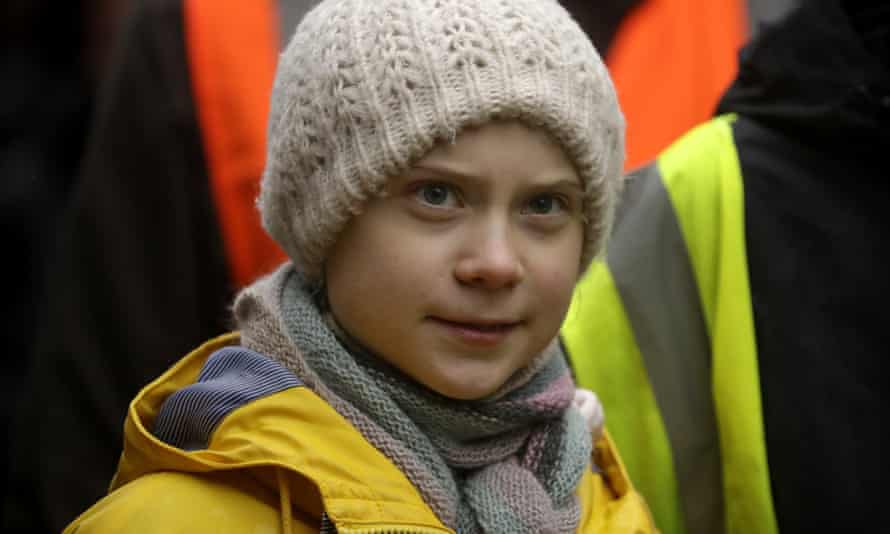
Greta Thunberg says she has stopped buying new clothes but does not sit in judgment on others whose lifestyle choices are less environmentally friendly than her own, in an interview to mark her 18th birthday.
Thunberg, whose solo school strike in 2018 snowballed into a global youth movement, stopped flying several years ago, travelling instead by boat. She is vegan and said she had stopped consuming “things” .
Asked what she thought of celebrities who talk about the climate emergency while flying around the world, the teenager declined to criticise them, although warned that others might.
“I don’t care,” she told the Sunday Times magazine. “I’m not telling anyone else what to do, but there is a risk when you are vocal about these things and don’t practise as you preach, then you will become criticised for that and what you are saying won’t be taken seriously.”Advertisementhttps://cdb82b77503bc2e6b5e24d7b8059365a.safeframe.googlesyndication.com/safeframe/1-0-37/html/container.html
Avoiding long flights is one of the most effective ways individuals can reduce their carbon emissions but the biggest impact is from not having children, according to studies. Nevertheless Thunberg was not about to tell people not to procreate. “I don’t think it’s selfish to have children,” she said. “It is not the people who are the problem, it is our behaviour.”
While her lifestyle is far removed from that of most western teenagers, Thunberg says she does not feel she is missing out.
On clothes, she said: “The worst-case scenario I guess I’ll buy second-hand, but I don’t need new clothes. I know people who have clothes, so I would ask them if I could borrow them or if they have something they don’t need any more. I don’t need to fly to Thailand to be happy. I don’t need to buy clothes I don’t need, so I don’t see it as a sacrifice.”
Thunberg was famously told to “chill” by Donald Trump but she said her passion and concern about the environment did not get her down. “I don’t sit and speculate about how the future might turn out, I see no use in doing that,” she said. “As long as you are doing everything you can now, you can’t let yourself become depressed or anxious.”
She named her ideal birthday present as a “promise from everyone that they will do everything they can” for the planet. However, when pressed on a more tangible gift, she opted for replacement headlights for her bike, explaining: “In Sweden, it gets very dark in the winter.”
2021 will be a big year for predator hunters inWisconsin. The state just announced its first wolf season since 2014, which will take place in November 2021. The decision comes after federal protections were lifted by the U.S. Fish and Wildlife Service andgray wolveswere removed from the endangered species list last October,Fox Newsreports.
“It is tremendously important to us to have a good, robust, strong population of wolves and we know we can do that,” saidKeith Warnke, Administrator of Fish, Wildlife, and Parks Division for the Wisconsin Department of Natural Resources (WDNR). “We’ve managed hunting seasons in the past and we’ve maintained a good, strong population of wolves.”
While the state still needs to figure out a quota for the season, the new framework will include “public input and…
Bird flu was confirmed as the cause of death of nearly 50 crows in Jhalawar a couple of days ago and now, nearly 300 crow deaths have been reported from different parts of the state including Kota, Baran, Jodhpur and other districts.
Further, deaths of 100 birds including 50 peacocks have been reported…
Thu., December 31, 2020, 12:12 p.m. PST·1 min read
A former Shelburne resident and retired Canadian Armed Forces veteran was shot in a hunting incident in Alberta last week, family members report to the Free Press.
58 year-old Chris Rusk, a now resident of Okotoks Alb., was seriously injured on Dec. 15 while duck hunting at the banks of the Bow River, a remote area. Family members say he was shot in the face allegedly by another hunter, suffering serious injuries and was airlifted via STARS to Foothills Hospital in Calgary.
Rusk underwent a seven hour long surgery for his eyes and is experiencing paralysis on his right side, which his family told the Free Press has been improving. While he is recovering, making better than expected progress, his family adds that he is not out of the woods yet. He is expected to spend several months in hospital…
(Dec. 30, 2020) A Mashpee man deer-hunting off Eel Point Road was shot in the hand by another hunter Monday, Nantucket police Lt. Angus MacVicar said.
Aron Antone told police he was accidentally shot by another member of his hunting party, Patrick Keegan of Falmouth.
Antone was taken to Nantucket Cottage Hospital for treatment, and later transferred to another facility, hospital spokesman Jason Graziadei said. He would not say where Antone was transferred, or the condition of his injury.
“At this time, no foul play is suspected and no criminal charges have been filed. The case remains under investigation by the Nantucket Police Department detective unit and Massachusetts Environmental Police,” Macvicar said.
Click hereto sign up for “Above the Fold,” The Inquirer and Mirror’s twice-weekly newsletter, bringing you both the news and a slice of island life, curated with…








 Exposing the Big Game