Outdoors Published at 1:12 pm, February 25, 2021 | Updated at 5:12 pm, February 25, 2021 SHARE THIS
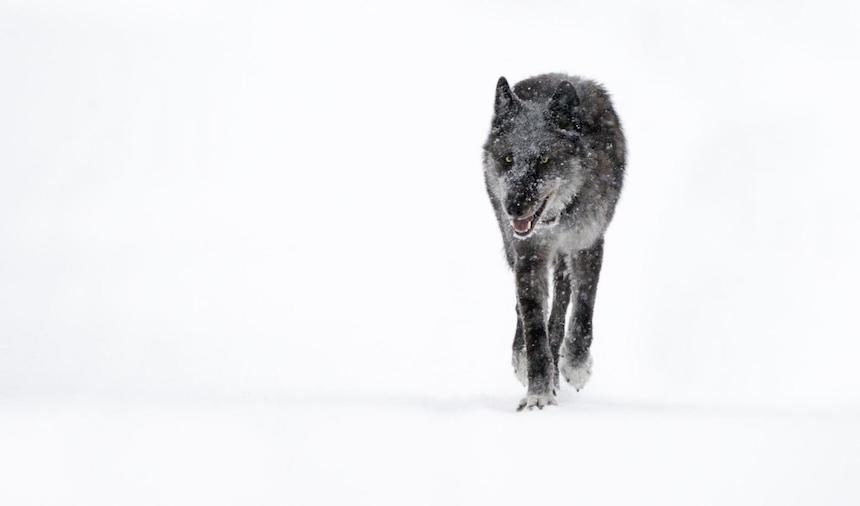
Stock photo DRIGGS — The Idaho Department of Fish and Game wants to increase the public’s ability to trap gray wolves in the Upper Snake Region, specifically with snares on private and public land. The Fish and Game proposal would also open trapping up year-round. The proposal cites the need to better control wolf depredations in the area that stretches from north of Idaho Highway 33 in Teton Valley through Island Park and into the upper northern reaches of the Idaho/Montana border. Much of the proposal was pitched by two pro-trapping organizations, the Idaho Trappers Association and the Foundation for Wildlife Management. “We need more tools to manage wolves in Idaho,” said Rusty Kramer, the president of the Idaho Trappers Association and board member for the Foundation for Wildlife Management. “Those tools are year-round trapping and trapping on private ground where depredation is occurring. People can then protect their own property. There is so much rugged Idaho, I don’t feel like we’ll ever get a handle on the wolf population. Idaho will be a breeding ground forever, and the wolf will never be endangered.”
But Derek Goldman with the Endangered Species Coalition believes these proposals go beyond addressing wolf depredation. “This proposal is not driven by ag producers, but these sportsman groups,” Goldman said. “This idea of the big bad wolf is a deep-seated cultural animosity toward this animal. This is about trappers wanting to kill more wolves.”
If the snaring portions of the proposal move forward, there will be more public snaring opportunities over a wide geographic area, including public and private lands north of Teton Valley into the Island Park and Henrys Lake areas and onto public lands that border Yellowstone National Park. The snares would be allowed from Nov. 15 through March 31. The proposals also increase the use of foot-hold traps from April 1 to Nov. 14 on private lands in the same area and opens up foot-hold trapping year-round in the Mud Lake area, zones 63 and 63A. The different types of traps used are important in understanding this issue. Curtis Hendricks, a Fish and Game wildlife biologist said that in the winter, snare traps, which sit on top of the snow, are used more than foot-hold traps. But snares are also more controversial because they are lethal traps, where a foot-hold trap just holds an animal in place. He also said there is a need for more wolf trapping because, during four of the last five years, Fish and Game have received reports of high levels of livestock killed by wolves in the Upper Snake Region.
“There is consideration to denning and birthing,” said Hendricks of the year-round trapping that would impact pups and nursing wolves. “The department does recognize the optics of (trapping during the birthing season). We are willing to see how it goes.” According to the Fish and Game’s second annual wolf population inventory, the population was stable from 2019 to 2020. The 2020 estimate peaked with 1,556 wolves in Idaho, 10 fewer than the 2019 estimate of 1,566. Idaho is required to maintain at least 150 wolves. Last year 583 wolves were killed through hunting and trapping. That was a 53 percent increase over 2019. Goldman doesn’t believe trapping actually helps alleviate the burdens on ranchers who also contend with other predators killing livestock. He also has concerns about how indiscriminate snares are. “Trapping is indiscriminate,” Goldman said. “It kills anything that steps on the trap. It will catch non-target species of wildlife, including endangered animals and dogs. Some people will argue that it’s not a fair chase. With all that public land in that region, there really is potential to endanger the Yellowstone wolves,” he said adding that increased trapping also elevates the likelihood of recreational users coming in contact with a snare. “It becomes a public safety issue as well.” Kramer recognizes there is some danger to people recreating, but it’s small, he said, adding that trapping is a legal way to control wolf populations and protect livestock. Hendricks said the emotional arguments around wolves may never change. “If nobody’s happy, we’re doing it right,” he said. According to a press release issued Feb. 1, Fish and Game will be setting new seasons for upcoming deer, elk, pronghorn, black bear, mountain lion, and wolf hunts in March. Hunters can now see proposed seasons and changes and provide comments. The comment period deadline is Feb. 25. The easiest way for hunters to review proposals and weigh-in will be by visiting the big game proposals webpage at https://idfg.idaho.gov/big-game. The proposals are posted by region and separated by species within each region.
by:Ariana TourangeauPosted:Feb 26, 2021 / 10:52 AM EST/Updated:Feb 26, 2021 / 10:53 AM EST
(Photo: Massachusetts Environmental Police)
FAIRHAVEN, Mass. (WWLP) – The Massachusetts Environmental Police had to put down a coyote in a neighborhood in Fairhaven Sunday after they found it with a leghold trap attached to its leg.
According to Environmental Police, the trapping of coyotes is legal during the open trapping season in Massachusetts but the use of leghold traps is strictly prohibited.
Officers tracked the animal and located it several miles from where it was originally reported. Due to the animal’s significant injuries sustained from the leghold trap, the coyote was put down.Hunters set records for black bear, wild turkeys in 2020
If you have information regarding this incident, please contact Massachusetts Environmental Police Dispatch at 1-800-632-8075 oronline. You can remain anonymous.
TheFairhaven Police Departmentassisted with the search.
ByJASON NARK, THE PHILADELPHIA INQUIRERASSOCIATED PRESS|FEB 27, 2021AT6:14 AM
A dead Eastern coyote hung upside down above a bucket of dried blood in a rural Pennsylvania fire hall, its lips locked in a perpetual snarl.
Some men crouched beside it, while other adults twirled spaghetti with a fork, looking on from aluminum chairs. Children held canned sodas and stared.
“Thirty-eight pounds even,” the men said when the needle on the scale settled.
On this sunny February afternoon last year, 38 pounds wouldn’t take the crown at the 17th annual Sullivan County Coyote Hunt in Laporte. The weekend-long contest saw 27 coyotes killed, the prize winner coming in at 44 pounds.
Organizers tag one of the coyotes brought into the firehouse during the 17th annual Sullivan County Coyote Hunt in Laporte on Feb. 23, 2020.(DAVID MAIALETTI / TNS)
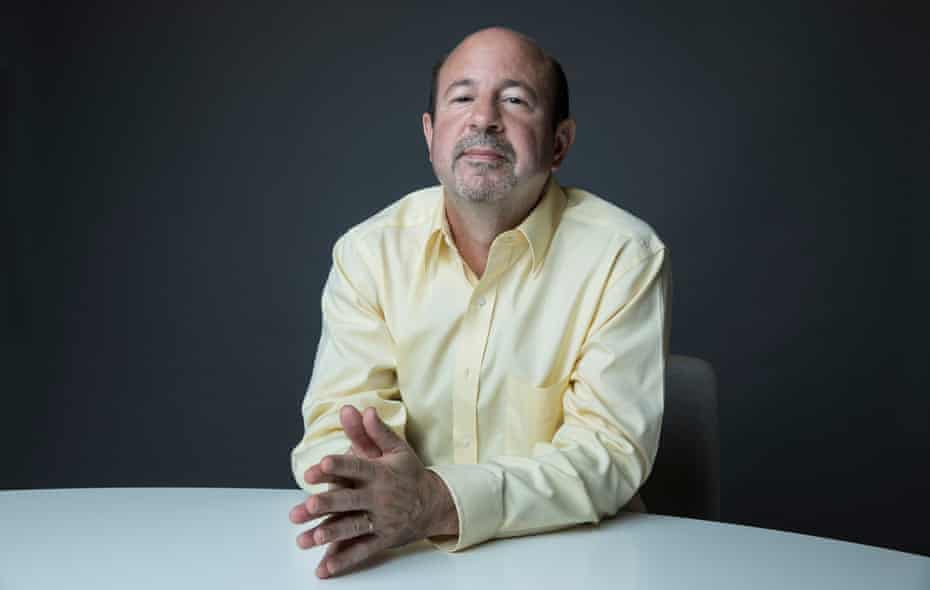
Michael E Mann: ‘It’s no longer credible to deny climate change because people can see it playing out in real time.’ Photograph: Jessica Hromas/The Guardian
The author and eminent climate scientist on the deniers’ new tactics and why positive change feels closer than it has done in 20 years@jonathanwattsSat 27 Feb 2021 11.00 EST
Michael E Mann is one of the world’s most influential climate scientists. He rose to prominence in 1999 as the co-author of the “hockey-stick graph”, which showed the sharp rise in global temperatures since the industrial age. This was the clearest evidence anyone had provided of the link between human emissions and global warming. This made him a target. He and other scientists have been subject to “climategate” email hacking, personal abuse and online trolling. In his new book, The New Climate War, he argues the tide may finally be turning in a hopeful direction.Advertisementhttps://f1b04e536d1427e725fce8377eb78bbf.safeframe.googlesyndication.com/safeframe/1-0-37/html/container.html
You are a battle-scarred veteran of many climate campaigns. What’s new about the climate war? For more than two decades I was in the crosshairs of climate change deniers, fossil fuel industry groups and those advocating for them – conservative politicians and media outlets. This was part of a larger effort to discredit the science of climate change that is arguably the most well-funded, most organised PR campaign in history. Now we finally have reached the point where it is not credible to deny climate change because people can see it playing out in real time in front of their eyes.
But the “inactivists”, as I call them, haven’t given up; they have simply shifted from hard denial to a new array of tactics that I describe in the book as the new climate war.
Who is the enemy in the new climate war? It is fossil fuel interests, climate change deniers, conservative media tycoons, working together with petrostate actors like Saudi Arabia and Russia. I call this the coalition of the unwilling.
If you had to find a single face that represents both the old and new climate war it would be Rupert Murdoch. Climate change is an issue the Murdoch press has disassembled on for years. The disinformation was obvious last year, when they blamed arsonists for the devastating Australian bushfires. This was a horrible attempt to divert attention from the real cause, which was climate change. Murdoch was taken to task by his own son because of the immorality of his practices.Advertisementhttps://f1b04e536d1427e725fce8377eb78bbf.safeframe.googlesyndication.com/safeframe/1-0-37/html/container.html
We also have to recognise the increasing roles of petrostate actors. Saudi Arabia has played an obstructionist role. Russia has perfected cyber warfare and used it to interfere in other countries and disrupt action on climate change. MSNBC’s Rachel Maddow has made a credible case about Russia’s efforts to hijack the 2016 presidential election and get Trump elected. Russia wanted to end US sanctions that stood in the way of a half-trillion-dollar deal between Rosneft and ExxonMobil. It worked. Who did Trump appoint as his first secretary of state? Rex Tillerson, the former CEO of ExxonMobil.
Today Russia uses cyberware – bot armies and trolls – to get climate activists to fight one another and to seed arguments on social media. Russian trolls have attempted to undermine carbon pricing in Canada and Australia, and Russian fingerprints have been detected in the yellow-vest protests in France.
And WikiLeaks? Your book suggests they were involved? I’m not an expert but there has been a lot of investigative journalism about the role they played in the 2016 election. Julian Assange and WikiLeaks helped Donald Trump get elected, and in doing that they did the bidding of Putin. Their fingerprints are also all over the climategate affair 10 years ago. UK investigators have evidence of Russian involvement in that too.
It’s an unlikely alliance. Yes, it’s a remarkable irony. Who would think you would see a US republican president, a Russian president and Rupert Murdoch working together as part of the coalition of the unwilling, doing everything in their power to prevent action on the defining crisis of our time: climate change.
What is in it for Murdoch? The Saudi royal family has been the second-highest shareholder in News Corporation [Murdoch’s company]. And apparently Murdoch and the Saudi family are close friends, so that is a potential motive.
It’s frustrating to see scientists being blamed. We’ve been fighting the most well-funded PR campaign in human history
You say the deniers are on the back foot and there are reasons to be hopeful. But we have seen false dawns in the past. Why is it different now? Without doubt, this is the best chance in the 20 years since I have been in the climate arena. We have seen false complacency in the past. In 2007, after the IPCC shared the Nobel peace prize with Al Gore, there seemed to be this awakening in the media. that felt to many like a tipping point, though at the time I was very apprehensive. I knew the enemy wouldn’t give up and I expected a resurgence of the climate war. That’s exactly what we saw with the climategate campaign [the leaking of emails to try to tarnish scientists]. This is different. It feels different, it looks different, it smells different.Advertisementhttps://f1b04e536d1427e725fce8377eb78bbf.safeframe.googlesyndication.com/safeframe/1-0-37/html/container.html
I am optimistic about a favourable shift in the political wind. The youth climate movement has galvanised attention and re-centred the debate on intergenerational ethics. We are seeing a tipping point in public consciousness. That bodes well. There is still a viable way forward to avoid climate catastrophe.
You can see from the talking points of inactivists that they are really in retreat. Republican pollsters like Frank Luntz have advised clients in the fossil fuel industry and the politicians who carry water for them that you can’t get away with denying climate change any more. It doesn’t pass the sniff test with the public. Instead they are looking at other things they can do.
Let’s dig into deniers’ tactics. One that you mention is deflection. What are the telltale signs? Any time you are told a problem is your fault because you are not behaving responsibly, there is a good chance that you are being deflected from systemic solutions and policies. Blaming the individual is a tried and trusted playbook that we have seen in the past with other industries. In the 1970s, Coca Cola and the beverage industry did this very effectively to convince us we don’t need regulations on waste disposal. Because of that we now have a global plastic crisis. The same tactics are evident in the gun lobby’s motto, “guns don’t kill people, people kill people”, which is classic deflection. For a UK example look at BP, which gave us the world’s first individual carbon footprint calculator. Why did they do that? Because BP wanted us looking at our carbon footprint not theirs.
This leads to the second tactic – division. You argue people need to focus strategically on system change, but online bots are stirring up arguments over individual lifestyle choices. That said, you suggest there is too much emphasis on reducing meat, which is a relatively minor source of emissions compared with fossil fuels. Isn’t that likely to be divisive among vegetarians and vegans? Of course lifestyle changes are necessary but they alone won’t get us where we need to be. They make us more healthy, save money and set a good example for others. But we can’t allow the forces of inaction to convince us these actions alone are the solution and that we don’t need systemic changes. If they can get us arguing with one another, and finger pointing and carbon shaming about lifestyle choices, that is extremely divisive and the community will no longer be effective in challenging vested interest and polluters.
I don’t eat meat. We get power from renewable energy. I have a plug-in hybrid vehicle. I do those things and encourage others to do them. but I don’t think it is helpful to shame people who are not as far along as you. Instead, let’s help everybody to move in that direction. That is what policy and system change is about: creating incentives so even those who don’t think about their environmental footprint are still led in that direction.
Another new front in the new climate war is what you call “doomism”. What do you mean by that? Doom-mongering has overtaken denial as a threat and as a tactic. Inactivists know that if people believe there is nothing you can do, they are led down a path of disengagement. They unwittingly do the bidding of fossil fuel interests by giving up.
What is so pernicious about this is that it seeks to weaponise environmental progressives who would otherwise be on the frontline demanding change. These are folk of good intentions and good will, but they become disillusioned or depressed and they fall into despair. But “too late” narratives are invariably based on a misunderstanding of science. Many of the prominent doomist narratives – [Jonathan] Franzen, David Wallace-Wells, the Deep Adaptation movement – can be traced back to a false notion that an Arctic methane bomb will cause runaway warming and extinguish all life on earth within 10 years. This is completely wrong. There is no science to support that.
Even without Arctic methane, there are plenty of solid reasons to be worried about the climate. Can’t a sense of doom also radicalise people and act as an antidote to complacency? Isn’t it a stage in understanding? True. It is a natural emotional reaction. Good people fall victim to doomism. I do too sometimes. It can be enabling and empowering as long as you don’t get stuck there. It is up to others to help ensure that experience can be cathartic.
You also suggest that Greta Thunberg has sometimes been led astray. I am very supportive of Greta. At one point in the book, I point out that even she has at times been a victim of some of this bad framing. But in terms of what she does, I am hugely supportive. Those I call out really are those who should know better. In particular, I tried to document mis-statements about the science. If the science objectively demonstrated it was too late to limit warming below catastrophic levels, that would be one thing and we scientists would be faithful to that. But science doesn’t say that.Advertisement
Ten years ago, you and other climate scientists were accused of exaggerating the risks and now you are accused of underplaying the dangers. Sometimes it must seem that you cannot win. It is frustrating to see scientists blamed. We also are told that we didn’t do a good enough job communicating the risks. People forget we were fighting the most well-funded, well-organised PR campaign in the history of human civilisation.
Another development in the “climate war” is the entry of new participants. Bill Gates is perhaps the most prominent. His new book, How to Prevent a Climate Disaster, offers a systems analyst approach to the problem, a kind of operating system upgrade for the planet. What do you make of his take? I want to thank him for using his platform to raise awareness of the climate crisis. That said, I disagree with him quite sharply on the prescription. His view is overly technocratic and premised on an underestimate of the role that renewable energy can play in decarbonising our civilisation. If you understate that potential, you are forced to make other risky choices, such as geoengineering and carbon capture and sequestration. Investment in those unproven options would crowd out investment in better solutions.
Gates writes that he doesn’t know the political solution to climate change. But the politics are the problem buddy. If you don’t have a prescription of how to solve that, then you don’t have a solution and perhaps your solution might be taking us down the wrong path.
What are the prospects for political change with Joe Biden in the White House? Breathtaking. Biden has surprised even the most ardent climate hawks in the boldness of his first 100 day agenda, which goes well beyond any previous president, including Obama when it comes to use of executive actions. He has incorporated climate policy into every single government agency and we have seen massive investments in renewable energy infrastructure, cuts in subsidies for fossil fuels, and the cancellation of the Keystone XL pipeline. On the international front, the appointment of John Kerry, who helped negotiate the Paris Accord, has telegraphed to the rest of the world that the US is back and ready to lead again. That is huge and puts pressure on intransigent state actors like [Australian prime minister] Scott Morrison, who has been a friend of the fossil fuel industry in Australia. Morrison has changed his rhetoric dramatically since Biden became president. I think that creates an opportunity like no other.How to Avoid a Climate Disaster by Bill Gates; The New Climate War by Michael E Mann – reviewRead moreAdvertisement
The book provides a long list of other reasons to be hopeful – rapid take-up of renewable energy, technology advances, financial sector action and more. Even so, the US, like other countries, is still far short of the second world war-level of mobilisation that you and others say is necessary to keep global heating to 1.5C. Have the prospects for that been helped or hindered by Covid? I see a perfect storm of climate opportunity. Terrible as the pandemic has been, this tragedy can also provide lessons, particularly on the importance of listening to the word of science when facing risks. That could be from medical scientists advising us on the need for social distancing to reduce the chances of contagion, or it could be from climate scientists recommending we cut carbon emissions to reduce the risk of climate catastrophe. There is also awareness of the deadliness of anti-science, which can be measured in hundreds of thousands of lives in the US that were unnecessarily lost because a president refused to implement policies based on what health scientists were saying. Out of this crisis can come a collective reconsideration of our priorities. How to live sustainably on a finite planet with finite space, food and water. A year from now, memories and impacts of coronavirus will still feel painful, but the crisis itself will be in the rear-view mirror thanks to vaccines. What will loom larger will be the greater crisis we face – the climate crisis.
• The New Climate War by Michael E Mann is published by Scribe (£16.99). To order a copy go to guardianbookshop.com. Delivery charges may apply
By:KATC NewsPosted at4:09 PM, Feb 25, 2021and last updated3:37 PM, Feb 25, 2021
12 people have been cited and two arrested for alleged illegal deer hunting activity in St. Landry Parish during the months of January and February.
According to the Louisiana Department of Wildlife and Fisheries, On. January 12, agents received a complaint about someone hunting from a vehicle off of I-49. Agents investigated the complaint and found an SUV with a freshly killed antlerless deer and two hogs with three people inside.
Agents identifed the three as 28-year-old Bannon Buller, 22-year-old Toni LeBleu and 25-year-old Logan Morrison of Ville Platte. After questioning, Buller admitted to shooting a deer and two hogs. LeBleau admitted to driving the vehicle and using the headlights to illuminate the deer while Buller shot from the passenger side.
As the United States this week mourned the devastating milestone of 500,000 lives lost to the coronavirus, a report out Wednesday shows that the nation’s billionaires have seen their collective wealth grow by $1.3 trillion since the deadly pandemic began last year.
According to the new analysis by the Institute for Policy Studies (IPS) and Americans for Tax Fairness (ATF), America’s 664 billionaires now have a combined net worth of $4.2 trillion — a figure that stands in staggering contrast to the economic pain being felt by countless families across the U.S. as joblessness, uninsurance, and hunger remain sky-high.
“It is unseemly that billionaires have experienced such gains as we mark a half a million lives lost and millions more who have lost their health, wealth and jobs,” Chuck Collins, director of the Program on Inequality at IPS, said in a statement. “Taxing those who have experienced windfall wealth gains to pay for Covid relief and recovery is a matter of equity and justice.”
Don’t miss a beat
Get the latest news and thought-provoking analysis from Truthout.
Email
Amazon CEO Jeff Bezos — the richest man in the world — and SpaceX founder Elon Musk saw their wealth grow by $76.3 billion and $158 billion respectively between March 18, 2020 and February 19, 2021 — bigger gains than any other U.S. billionaire. Mark Zuckerberg, the CEO of Facebook, saw his net worth jump by $41 billion during that period.
“Even as congressional Republicans try to nickel-and-dime suffering Americans by opposing President Biden’s American Rescue Plan, including its $1,400 relief checks, American billionaires have reaped $1.3 trillion in pandemic profits,” said ATF executive director Frank Clemente. “The need for the kind of fair-share tax program Biden ran and won on becomes clearer every day, as billionaire wealth balloons while working-family hopes deflate.”https://platform.twitter.com/embed/Tweet.html?dnt=true&embedId=twitter-widget-0&frame=false&hideCard=false&hideThread=false&id=1364582878181527553&lang=en&origin=https%3A%2F%2Ftruthout.org%2Farticles%2Fas-us-mourns-500000-lives-billionaires-gained-1-3-trillion-during-pandemic%2F&siteScreenName=truthout&theme=light&widgetsVersion=889aa01%3A1612811843556&width=500px
The U.S., which has the highest coronavirus death toll in the world, reached 500,000 lives lost to Covid-19 on Monday. “About one in 670 Americans has died of Covid-19, which has become a leading cause of death in the country, along with heart disease and cancer, and has driven down life expectancy more sharply than in decades,” the New York Timesnoted.
While declining cases and an improving vaccine rollout have prompted some optimism, the grim milestone and still-rising death toll served as urgent reminders of how much work remains to be done to bring the catastrophic pandemic under control.
“We are still at about 100,000 cases a day. We are still at around 1,500 to 3,500 deaths per day. The cases are more than two-and-a-half-fold times what we saw over the summer,” Dr. Rochelle Walensky, director of the Centers for Disease Control and Prevention, toldNBC earlier this month. “It’s encouraging to see these trends coming down, but they’re coming down from an extraordinarily high place.”
Slowing the pace of climate change and getting “tough” on China, especially over its human-rights abuses and unfair trade practices, are among the top priorities President Biden has announced for his new administration. Evidently, he believes that he can tame a rising China with harsh pressure tactics, while still gaining its cooperation in areas of concern to Washington.As hewroteinForeign Affairsduring the presidential election campaign, “The most effective way to meet that challenge is to build a united front of U.S. allies and partners to confront China’s abusive behaviors and human rights…
WICHITA, Kan. (AP) — A judge banned four Mississippi men from hunting anywhere in the world and fined them a total of $48,000 for violating wildlife laws in Kansas.
Federal prosecutors said Wednesday the men pleaded guilty to conspiring to kill wild turkeys in excess of the legal limit and taking the birds across state lines. The men are accused of bagging at least 26 wild turkeys during an eight-day trip in 2018.
Kansas limits hunters to two wild turkey kills per hunter per season.
The hunters also took frequent hunting trips to Kansas, Missouri and Nebraska but did not have the required hunting licenses.
The animals were rejected by several countries over fears they had bovine bluetongue virus which, although it does not affect humans, causes lameness and haemorrhaging among cattle.
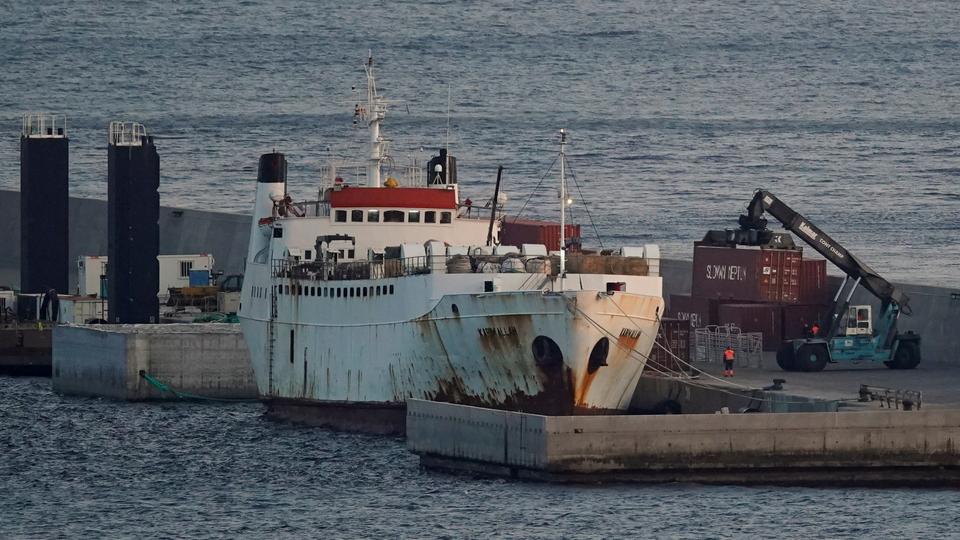
Livestock ship “Karim Allah” carrying nearly a thousand Spanish cattle is docked at Escombreras port in Cartagena, Spain, February, 26, 2021. (Reuters)
A confidential report by Spanish government veterinarians has said that more than 850 cows that spent months aboard a ship wandering across the Mediterranean are not fit for transport anymore and should be killed.
The cows were kept in what an animal rights activist called “hellish” conditions on a vessel named Karim Allah, which docked in the southeastern Spanish port of Cartagena on Thursday after struggling to find a buyer for the cattle during the past two months.
The beasts were rejected by several countries over fears they had bovine bluetongue virus. The insect-borne virus causes lameness and haemorrhaging among cattle. Bluetongue does not affect humans.
The veterinarians’ report concluded that the animals had suffered from the lengthy journey. Some of them were unwell and not fit for transport outside of the European Union, nor should they be allowed in the EU. Euthanasia would be the best solution for their health and welfare, it said.
The report did not say if the cattle had bluetongue disease.
“It is not even mentioned, which is very surprising,” said Miquel Masramon, a lawyer representing the ship owner Talia Shipping Line. The ship is registered in Lebanon, according to VesselFinder.
“My impression is that they will definitely go ahead with the slaughter and destruction of the animals and it’ll be difficult for us to prevent it,” he said.
Masramon said he would push for the return of blood samples taken from the animals and impounded by authorities on Thursday to be released and tested “to prove if there is any bluetongue.”
The Agriculture Ministry did not immediately respond to a request for comment.
The vessel originally left Cartagena to deliver the cattle to Turkey. But authorities there blocked the shipment and suspended live animal imports from Spain, fearing bluetongue infection.
That rejection turned the ship into an international pariah. Several countries refused it entry even to replenish animal feed, forcing the cows to go several days with just water.
The cows likely have severe health problems after their “hellish” crossing, said animal rights activist Silvia Barquero, director of the Igualdad Animal NGO.
“What has happened to the waste produced by all these animals for two months? We are sure they are in unacceptable sanitary conditions,” Barquero told.
The Agriculture Ministry’s experts counted 864 animals alive on board. Twenty-two cows died at sea, with two corpses still aboard. The remains of the others that died were chopped up and thrown overboard during the journey, the report said.
Ownership of the cattle is unclear.
The exporter, World Trade, said it is not responsible because it sold the animals, Masramon said. Reuters has been unable to reach World Trade for comment.
A second ship, the ElBeik, also set sail from Spain in December with a cargo of nearly 1,800 cows. It is currently moored off the Turkish Cypriot port of Famagusta.
Shortly after the Trump administration removed gray wolves from the federal endangered species list, 2,380Wisconsin hunters were allowed to buy licensesto kill 119 wolves over seven days.
In Shirley Jackson’s classic short story “The Lottery,” the villagers of a small town randomly choose one of their own to stone to death for no ostensible purpose other than the cathartic thrill of the kill.
A similarly macabre lottery recently was conducted by our neighbors in Wisconsin. Following the Trump administration’s controversial removal of the gray wolf from the federal endangered species list, just days before Donald Trump left office, 2,380 Wisconsin hunters chosen by lottery from…



![items.[0].image.alt](https://ewscripps.brightspotcdn.com/dims4/default/710b109/2147483647/strip/true/crop/786x442+0+0/resize/1280x720!/quality/90/?url=https%3A%2F%2Fmediaassets.katc.com%2Fcordillera-network%2Fwp-content%2Fuploads%2Fsites%2F3%2F2018%2F08%2F15134243%2FWildlife-and-Fisheries-Logo.jpg)



/cdn.vox-cdn.com/uploads/chorus_image/image/68875057/Wolf_Hunt.0.jpg)
 Exposing the Big Game