Huge Fish, Once Believed Extinct, Isn’t the ‘Living Fossil’ Scientists Thought

George DvorskyYesterday 4:00PM293

https://gizmodo.com/huge-fish-once-believed-extinct-isn-t-the-living-fos-1846230762

A rare sighting of a live coelacanth, captured off the coast of South Africa in 2019.
A rare sighting of a live coelacanth, captured off the coast of South Africa in 2019.

An analysis of coelacanth DNA suggests its genome has experienced some significant changes in recent evolutionary history, potentially dispelling the popular image of these iconic fish as being “living fossils.”

The discovery of a live coelacanth (pronounced “see-lah-kanth”) off the coast of South Africa in 1938 was quite the shock, as these animals were believed to be extinct. The large fish were thereafter referred to as “living fossils” owing to their uncanny resemblance to near-identical species spotted in the fossil record.

New research published in Molecular Biology and Evolution presents evidence showing that at least one species of coelacanth, formally known as Latimeria chalumnae, is not the living fossil it’s presumed to be, having acquired dozens of new genes in the past 23 million years—a surprising finding, and a far cry from the idea that the species has barely changed since its ancestors emerged over 300 million years ago. What’s more, the finding is further evidence that the living fossil concept is outdated and somewhat of a misnomer.

Not much is known about coelacanths, but they’re not particularly aggressive, and they’re actually somewhat social, Isaac Yellan, the first author of the new study, explained in an email. L. chalumnae lives in the Indian Ocean and the waters off the coast of southeast Africa, and, though not extinct, the fish is elusive and critically endangered, said Yellan, a graduate student with the Department of Molecular Genetics at the University of Toronto.

Scientists and sailors pose with a 120-pound coelacanth caught off the coast of Madagascar in 1953.

Yellan and his colleagues made the discovery while doing research into proteins that bind DNA, with a focus on a protein called CGG Binding Protein 1 (CGGBP1). Other researchers have studied the function of this protein in humans, but its role in evolutionary history is poorly understood, as is its apparent similarity to a specific family of transposons—DNA sequences capable of shifting positions within a genome. This led the team to study binding proteins in other species, in a journey that eventually led them to the idiosyncratic fish.

“The African coelacanth came into the picture when we started looking for CGGBPs [DNA binding proteins) in published genomes, and found out that it has 62 CGGBP genes—way more than any other vertebrate,” explained Yellan. “We then started to look into where this large gene family might have come from.”

As noted, the 62 genes are transposons, which are often referred to as “jumping genes,” because they “jump” around the genome, but they can also make copies of themselves. Transposons are considered parasitic genes, with the sole focus of self-replication, but some transposons can influence function. So, with 62 of these genes found in coelacanths, these jumping genes are probably playing an important role.

Indeed, the new paper is highlighting the dramatic influence transposons can have on a species’ overall genome and its ongoing evolution.

A preserved specimen on display at a museum in Austria.

Transposons are “often parasitic and can be very harmful if they disrupt genes, but they sometimes do form cooperative relationships with their hosts,” said Yellan. “There are many different ways this can occur,” he said, and a limited amount of replication can increase the host’s genetic diversity. Sometimes, however, transposons lose their ability to replicate, “which their host can then take advantage of, as is the case with CGGBP1.”

This all sounds very freaky, but basically, the host species is sometimes able to leverage the situation, in which immobile transposons are retained due to their beneficial qualities. Think of it as another mechanism for evolution, an alternate form of mutation and selection. Such appears to be the case here, with the coelacanth’s unprecedented batch of 62 transposons, which are bona fide genes derived from immobile transposons, explained Yellan.

“I’d also want to point out the transposons we studied are no longer able to jump around in the coelacanth genome,” he added. “What remain are dead ‘fossils’ of their own, and the CGGBP genes.”

The researchers aren’t entirely sure what these 62 transposons are doing, but they’re probably playing a role in gene regulation, according to the paper.

Yellan and his colleagues, including molecular geneticist Tim Hughes, also from the University of Toronto, found related genes in the genomes of other animals, but the distribution of these genes pointed to an origin outside of common ancestors.

Indeed, some but not all transposons are acquired through interactions with other species, including distantly related species, in a process known as horizontal gene transfer. The authors can’t pinpoint the exact origin of the transposons documented in L. chalumnae, but they have some ideas.

“One way that transposons can be picked up and carried between species is through a parasitic intermediary host, such as a lamprey, which feeds on the blood of fish,” said Yellan. “This is supported by the fact that we found one of these transposons in a lamprey species, although we don’t know if coelacanths received it from the lamprey, or vice-versa.”

As the new paper also points out, these genes appeared at various points during the past 22.3 million years, a figure reached through a comparative analysis of the African fish with Latimeria menadoensis, its Indonesian counterpart (the only other extant species of coelacanth), as these two species of coelacanth diverged at that time.

Which leads us to the concept of living fossils—species whose genomes have barely changed over long periods of time. Other examples include the lungfish and tuatara (an animal that resembles the ancestor of both snakes and lizards), but, as Yellan explained, the genomes of these animals, like the coelacanth, aren’t static.

“Previous research has found that while coelacanth genes have evolved slowly compared to other fish, reptiles, and mammals, its genome as a whole has not evolved abnormally slowly and is hardly inert,” said Yellan.

To which he added: “I think that as more and more genomes are being published, the ‘living fossil’ concept is becoming increasingly something of a misconception, and I think many scientists would probably hesitate to assign it to any species.”

I always liked the concept of living fossils, but I’m sufficiently persuaded that it’s a bogus concept. Sure, animals can superficially resemble their distant ancestors, but it’s the parts beneath the hood that tell the whole story.

Anti-vaxxers jeopardize plans to protect U.S. against Covid

Exposing the Big Game's avatarThe Extinction Chronicles

PUBLISHED WED, FEB 10 20216:30 AM ESTBerkeley Lovelace Jr.@BERKELEYJRSHAREShare Article via FacebookShare Article via TwitterShare Article via LinkedInShare Article via EmailKEY POINTS

https://www.cnbc.com/2021/02/10/biden-covid-vaccine-anti-vaxxers-us.html

  • Just under half of adults in the U.S. said in December they were very likely to get vaccinated, according to a new CDC study.
  • That’s up from 39.4% of adults surveyed in September but still below the 70% to 85% scientists say is needed to suppress the virus.
  • That could potentially jeopardize U.S. vaccination efforts to control the pandemic, which has overwhelmed hospitals and taken more than 466,000 American lives in about a year.
Demonstrator holding an anti-vaccine placard in east London on in central December 5, 2020.

Demonstrator holding an anti-vaccine placard in east London on in central December 5, 2020.JUSTIN TALLIS | AFP | Getty Images

Wendy Borger tested positive forCovid-19at an urgent care center in Palmerton, Pennsylvania, on Dec. 28. She said she was fatigued, short of breath, and had a headache, heart…

View original post 593 more words

Can super-Earth interior dynamics set the table for habitability?

Exposing the Big Game's avatarThe Extinction Chronicles

FEBRUARY 9, 2021

byCarnegie Institution for Science

Can super-Earth interior dynamics set the table for habitability?
An illustration showing how a combination of static high-pressure synthesis techniques and dynamic methods enabled the researchers to probe the magnesium silicate bridgmanite, believed to be predominate in the mantles of rocky planets, under extreme conditions mimicking the interior of a super-Earth. Credit: Yingwei Fei. Sandia Z Machine photograph by Randy Montoya, Sandia National Laboratories.

New research led by Carnegie’s Yingwei Fei provides a framework for understanding the interiors of super-Earths—rocky exoplanets between 1.5 and 2 times the size of our home planet—which is a prerequisite to assess their potential for habitability. Planets of this size are among the most abundant in exoplanetary systems. The paper is published inNature Communications.https://349c2ad06770b85713828b8b09374a4f.safeframe.googlesyndication.com/safeframe/1-0-37/html/container.html

“Although observations of an exoplanet’s atmospheric composition will be the first way to search for signatures of life beyond Earth, many aspects of a planet’s surface habitability are influenced by…

View original post 524 more words

Polar vortex to unleash frigid Arctic blast

Exposing the Big Game's avatarThe Extinction Chronicles

https://www.cbsnews.com/news/polar-vortex-weather-news-cold-arctic-blast/

BY JEFF BERARDELLI

FEBRUARY 10, 2021 / 6:53 AM/ CBS NEWShttps://www.cbsnews.com/embed/video/?v=f5a61ed4a77aed583185989dcd67890a#vVZtb9s2EP4rgj4OoUVRb5SBYUjaYevWFUGTAAOiwqBIymZCiYIoOXaL%2FPcdJdlx0gIF1pcEQSjy3vjc3XP85LOhN61me3%2FZd4M887dKSOMvP%2Fmql7X1l7ef%2FH7fSn%2Fpb43wz3wlYElJVeE4SRGTkUBxHpaozOIERQmlVQgncRiBbN3u3svqjdOozz%2Fe5XfdH%2FvzVf7RvFmt0jd%2F0X9fVXe7K7V7dbEHaauHNUi2RrMObU3Xyx3iZtAClZ1q1qjq1FoJBGG1smP90EmLmEUVSFsz9Bv3ATrMgq1e9drFfOmMeZMxbzRjPcX3HlOd1xuvZV1vPVN5N4urBagJeQ9KsKgGrb9oYwxosuRNAXmnAXnMehCQNwbkPq7ngDhrTKM409ff02qvaml7Vrf%2BMkxDkid5lGP4gZsMoKtMAwcke%2Fp8y0qpwTsmS5yBAT19N3BdSG3N1tK63FuXsk3ft3ZZBEXAS9vIBxstYKHAX6%2F4gpu6CDZDWQSqCLoiIJiERYBJEYS4CFgVsSxkOYpFyVFcpRWiEU5RlkWUi5JRQaIi6DdDXTZM6SJIY7yLUtAsU5pHVcYJ5ZwxgitOJcMkLVlKaR6KKRpUDRaug769WNAxCJTGUUwjNIeyuGvXgNDmi1CQHwhFSCjeZcSpxpTiikUkhz8hSUklyUVIKibyjMbRz8Xi8cxvO7lV8uGm089Asa1WXC5YrdcLZSDuFoDYwv1HMimCrzV%2FEcyGi8A%2FMtCJ%2FbYzYgH0M54s5hRMsM8f4AqA32j7Ev2QJpREeZIkaUZdmcG1wtUoWDPby25RRwM9eCU%2F3W1lupr14Ja1DsSxSYtghyBV65v3b0FieAH2w8PD81hmkL89%2FSP6yr6pW%2BNC9JcV0xZGAgwIxceR4HohTnGcJoSiLKEChaEkyNUkwjiklaQM4xI%2FsTlEClWlLKpN10A0rqMUhNHxDYycW3fuuXPvcP4Bqox1sumvndd3rHZk%2Beriyrt2Uv98buViPwndfi71AUpWtsoaAechxCSZdZTohy5Aua7BzXQwtFCB1h6vzLQ%2B5xx2LrTh90eCtDdWdldDaXmnSimO4rY1jTXdQW4jd%2BevZcUG7TKLz%2BDXH3cvnnaj%2FCxOzpLcsXjH%2BL2LFyCGjFpuOjmuoRwjjBNMUxgg8YTDuznvbqaksPWLcwkfjV3ZfrV2aLnSmHZYu2Luvu%2BK4Nx%2FBDTqYXfZGaiDfv%2B3hAT4JM6kYEkahZkIkziHWU6iiEWp%2FwiZqGXPxnkAIfZyvXdr2NsYMVWsbMRodk52JcfyEoi7cSPdc2F%2BO0DAAJGD%2B2k2wxKIAhbHEt5toJu40VryqQ%2BOakXw0nYR%2FKbsSpv1WoqVan7Fjp9OkVT294aV2mVpetnArFdcy3MoedO5R8mtT4iIGKYJ4jILUUwkRzmRMZI8jHOBI8EpcRX5TPVQbneyqrzSVaGQWqsTufHFI5Mqy0IMZkuZoTghGDGKYyRCnOVhGJcVdwDNKpdD%2BRqu5TICRIIwQSH2cLwkyTJJn8QOr4f29PUAD5mh0VDbm8PjARoDxL1SA9ecKB9y0fQA6WreHZ89W%2BDv%2BVhIew8dP1LBa7l1EfmuJ9cHAVdeK%2Fc6dE0E%2F%2F9Ujitu%2FcE6CNzO1ZQ%2FkB3sLDTrQpO5VlFb6T3I0p%2B5ZcSryrCQNIKXJJHVxCssqjBAAWjROKTZ1CwntDBa16pW0FDx8ZpXZui4nLjHm3uh7FgjLjXrHd%2BO7mYKXbngVk93dp%2Bz9VnC%2BZRMq6F2VQUzoVL65NgpgIhsHFJuYrg6PL72Xk7Kz8h7miLPuPsBKn0jO%2BSOgMiBx6d0ojGdI0nXUih2acA3wDxDCwUg5kT9IK%2FO9IzN%2FzUxNvpXw%2FueE%2B3x8T8%3D

The polar vortex has become synonymous with winter’s most brutal cold. For days, the weather system has been sitting and spinning right along the U.S.-Canada border, with temperatures as low as 43 degrees below zero in northern Minnesota.

But now, there are signs it is about to surge south, bringing with it record-shattering cold air from the far reaches of Alaska and Northern Canada. By the weekend, temperatures in Kansas City and St. Louis will be below what’s normal for Fairbanks, Alaska.

Ahead of this Arctic blast, there will be a series of winter storms along the collision zone of cold and warm air, bringing ice from Texas to Tennessee and significant snow to Washington, D.C. https://www.cbsnews.com/newsletters/widget/e879?v=f5a61ed4a77aed583185989dcd67890a&view=compact#tVLBjtsgEP0Vi3PYALFrx7ettlJ7qVba9tRUEYZxQhcbC3Dc1Sr%2F3sFxdqMeK%2FUGb94bZt7jlbghGtcHUr8SUE4DqQlU5ZasyMnAhDflukGqiMDggklkBO9DgJh9dPqFnFckeqmeTX9ITUz41MvGgiZ19COsiPTRKAv3Yzw6%2FwXhH0QIvZGsKqiCktNcgKJbATkFxfOtZhutKkF%2B%2FiX9KjtI4l%2FQtlkDXnoN1pobXmpOoGjLkjNs20BJ80IwKiuWU81ZueU8b1qlyZvkcWweZExLCyY4ZYJylrG8FkVdfHinfTPRJtLgrPTZyfkIv7PosrG3IMMxa705GJ1Jr5CeNVaGeCN%2BGWD2sY%2FQx%2F2CYl3DyahrWUN4jm5A2IQHOKWJkuXycCX0MIW9idAhjDnAZwM%2B%2BTGGZEFCnkAt8SB2gRathzBgyOYE2QQN1vAlo2a%2F2pJpqDYNbQS0lHMQVG5ahlagW1XOq7LYXgWXCC7dxwB%2B6S57fHRFrOlMJHX%2BtviTG72aV29ClsZHUuNlrx%2BtjK3z3TwAFufV0rj7dxfSdXlvYaQpQFozdumfDd61xt6UkwAp0CfvsKrTz1RpNqOk%2Fe4twscYh1Dv1rv1NE13i%2FAOf%2FhunU679RwwvQRMJ5DxCJ6mElXOanoJmM4B79ZLPv%2Bx9WLAv7U4n%2F8A

The polar vortex is a sprawling area of cold upper-level low pressure that typically resides in the Arctic. But every so…

View original post 617 more words

Delhi zoo samples positive for bird flu

Exposing the Big Game's avatarThe Extinction Chronicles

Authorities had collected seven samples from four different locations in the zoo, which were sent to the National Institute of High Security Animal Diseases (NIHSAD) on February 3, Pandey said.

By:Express News Service| New Delhi |February 10, 2021 4:40:42 amavian influenza, Delhi Zoo, Bird flu, Delhi news, Indian express newshttps://creatives.contextads.live/2020/India/Dec20/CT_Impulse_Dec20/Web/index.html?impTrk=bm90QWxsb3dlZA%3D%3D&isTp=dHJ1ZQ%3D%3D&clkSt=aHR0cHM6Ly9jdXJseXRhbGVzLmNvbS8%2FdXRtX3NvdXJjZT1JRSZ1dG1fbWVkaXVtPUltcHVsc2UmdXRtX2NhbXBhaWduPUJyYW5kaW5n&clkEx=aHR0cHM6Ly9jdXJseXRhbGVzLmNvbS8%2FdXRtX3NvdXJjZT1JRSZ1dG1fbWVkaXVtPUltcHVsc2UmdXRtX2NhbXBhaWduPUJyYW5kaW5n&zoneid=919&bannerid=930&type=NAE&CN=CT_Impulse_Dec20&clickTrack=true“The samples have been found positive for avian influenza virus… All safety measures and protocols are strictly being adhered to and constant monitoring is being done by field staff and a team of veterinarians,” he added.

Samples taken of bird droppings in the Delhi Zoo have been found positive for avian influenza virus, director of the zoo Ramesh Pandey said Tuesday.

Authorities had collected seven samples from four different locations in the zoo, which were sent to the National Institute of High Security Animal Diseases (NIHSAD) on February 3, Pandey said.

“The samples have been found positive for avian influenza virus… All safety measures and protocols…

View original post 21 more words

Algeria declares state of emergency over bird flu

OIE detected bird flu hotspot in Ain Fakroun town Tuesday

Abdurrazzak Abdullah   |10.02.2021Algeria declares state of emergency over bird fluFILE PHOTO

ALGIERS, Algeria

Algeria declared a state of emergency after World Organization for Animal Health (OIE)’s announcement of H5N8 bird flu outbreak in the country’s east, said Minister of Agriculture Abdelhamid Hamdani Tuesday. 

In a press conference, Hamdani said: “The source of this virus is migratory birds and we [Algeria] have put all regions on alert in anticipation of any emergency.”

He stressed that “the epidemic was contained in Ain Fakroun town which appeared in there.”

On Tuesday, OIE detected a bird flu hotspot in Ain Fakroun town of Oum El Bouaghi city.

Laboratory analyses revealed the spread of bird flu in the town, which infected 51,200 chickens before isolating the town.

The risk of humans potentially contracting the highly pathogenic H5N8 bird flu virus cannot be excluded, although the likelihood is low, according to the World Health Organization.

*Bassel Barakat contributed to this report from Ankara

https://www.aa.com.tr/en/africa/algeria-declares-state-of-emergency-over-bird-flu/2139509

Animal rights activists lambaste Costco supplier over its rotisserie chickens

20 hours ago

The poultry supplier is accused of having ‘large piles of dead, rotting animals’

By Daniella GenoveseFOXBusinesshttps://static.foxnews.com/static/orion/html/video/iframe/vod.html?v=20210209231724#uid=fnc-embed-1

Fox Business Flash top headlines for February 9

Fox Business Flash top headlines are here. Check out what’s clicking on FoxBusiness.com.

Costco-owned slaughterhouse is being accused of engaging in “cruel” animal practices including cramming chickens into “filthy sheds” and breeding them to grow to an unnatural weight.

An undercover investigation allegedly revealed how Lincoln Premium Poultry’s practices directly contrast “Costco’s claim that animal welfare is a critical component” of its chicken supply chain, according to Animal rights group Mercy for Animals “Revealing the hidden price of Costco chicken” investigation.

Representatives for Lincoln Premium Poultry did not immediately return FOX Business’ request for comment.

In 2019, farmers began raising chickens for the Nebraska slaughterhouse which supplies the wholesale club with many of the tens of millions of rotisserie chickens it sells each year, Mercy said.

Dios Ruiz, a service deli worker for Costco Wholesale Corp., places cooked rotisserie chickens in containers at a store in San Francisco, California, U.S., on Tuesday, Dec. 6, 2011. Costco Wholesale Corp., a wholesale membership warehouse company, is (David Paul Morris/Bloomberg via Getty Images)https://www.credible.com/partners-widgets/credit-card/rich-cta/?variation=interactive&theme=fox&credclid=abd3fbe6-22c0-4d39-90ec-3a324f3fc376&pageUrl=https%3A%2F%2Fwww.foxbusiness.com%2Flifestyle%2Fcostco-rotisserie-chicken-animal-rights

One year later, the animal’s rights group said it discovered “large piles of dead, rotting animals” on the facility’s grounds outside the barns which housed live chickens.

“Costco members deserve to know the truth about where their chickens come from and how Costco is failing to live up to the animal welfare standards members expect and the company claims to support,” the group said.

Additionally, an undercover investigator captured animals being forced to live for weeks in their own waste while being raised to “grow so large so fast that they often cannot support their weight.” The animals allegedly struggle to walk and “many die from organ failure,” the group said.

COSTCO DROPS COCONUT MILK BRAND FOLLOWING ALLEGATIONS OF FORCED MONKEY LABOR, PETA SAYS

Aside from the terrible living conditions, the investigator allegedly witnessed “countless birds with open wounds, ammonia burns, broken bones, and twisted necks and beaks,” the group said.

Costco told FOX Business that “independent audits are regularly performed to ensure all parties are consistently in compliance” and that Costco and Lincoln will “use the results of our audits as well as other sources of information, including this video” to further improve its animal welfare processes.

“Costco is committed to maintaining the highest standards of animal welfare, humane processes and ethical conduct throughout the supply chain,” the company said in a statement. “Lincoln Premium Poultry (LPP) shares our commitment, as do the independent growers selected for the program who have been carefully chosen based on our mutual business philosophies.”

Mercy for Animals says Costco has the “power to implement meaningful animal welfare requirements for these farms” and is urging the company to take action.

GET FOX BUSINESS ON THE GO BY CLICKING HERE

According to Mercy for Animals, over 200 companies have already adopted Better Chicken Commitment standards which “ban the worst cruelty from their operations” and so far, “Costco has failed to do the same.”

Public Input Sought on Migratory Game Bird Hunting Seasons

Exposing the Big Game's avatarCommittee to Abolish Sport Hunting Blog

February 8, 2021

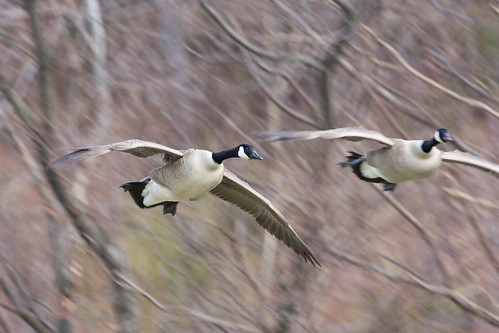
DNR Soliciting Comment Now through Feb. 26Photo of Canada geese in flight

Photo by Larry Hindman/Maryland DNR

The Maryland Department of Natural Resources has posted theproposed 2021-2022 Migratory Game Bird Seasonsfor public review and comment through Feb. 26.

The department’s website also features a short presentation detailing the remaining steps in the regulatory process, data updates, and the status of the Atlantic Population (migratory) Canada goose population. Citizens canprovide input online, by phone at 410-260-8540, by fax at 410-260-8596, or in writing to: Maryland Department of Natural Resources Wildlife and Heritage Service, 580 Taylor Avenue, E-1, Annapolis, Maryland,21401.

Thepublic commentperiod will close atnoonFebruary 26.

Licenses, stamps, and permits may be purchasedonlineby phone at 855-855-3906, at aNatural Resources Service Centeror at any one of the more than250 Sport License Agentsstatewide.

View original post

Animal rights activists calling for halt of bird flu poultry culling

Posted : 2021-02-08 13:34Updated : 2021-02-09 09:04

1

Animal rights activists stage a protest at Gwanghwamun, Seoul, in this Jan. 25 photo, calling for a halt to the culling of poultry as a method to prevent the spread of avian influenza, saying there are other options. Yonhap

https://www.koreatimes.co.kr/www/nation/2021/02/119_303745.html

By Bahk Eun-ji

While the government has been bolstering measures to prevent the spread of avian influenza, animal welfare organizations and veterinarians are criticizing the measures ― culling poultry regardless of whether or not they have been infected.

They say culling is nothing more than animal slaughter, and vaccines for the highly pathogenic H5N8 avian flu should be introduced as a preventive measure.

According to the Ministry of Agriculture, Food and Rural Affairs, the number of chickens and ducks culled here, since last Nov. 26 when the first H5N8 case broke out, topped 25.3 million as of Feb. 3. There were 75 cases of infections nationwide.

In Gyeonggi Province alone, more than 6.8 million chicken and ducks in 83 poultry and egg farms were culled during the same period. Of these, 4.24 million at 65 farms, or 61 percent, were culled as a preventive measure although they were not infected with the virus.

The government has been culling all poultry within a three-kilometer radius of infected farms since 2018.

However, animal welfare organizations and veterinary associations are questioning whether the government’s policy is the only viable solution.

Members of 45 organizations, including the Korea Association for Animal Protection (KAAP), held a press conference in Gwanghwamun in Seoul last month, saying more than 100 million poultry have been buried underground since the very first outbreak of avian influenza here in 2003.

“Based on scientific and elaborate analysis, culling should be carried out mainly on the farms infected with the virus. As a fundamental measure to solve the problem, a vaccine for H5N8 should be introduced, just like vaccines turned out to be the fundamental solution to end the ongoing COVID-19 pandemic,” said Lee Won-bok, head of the KAAP.

“Although the country can minimize culling by using vaccines, the government sticks to culling and it seems to only be because of administrative convenience.”

Lee Sung-sik, head of the Gyeonggi Veterinary Medical Association, also said even though there is a simple test kit that can detect the virus within three hours, the government adheres to culling the animals without convincing reasons.

“It seems the authorities are hesitant out of fear of losing the country’s status as a bird flu clean zone if they use vaccines for avian influenza, but now we have to begin vaccination as the virus breaks out every year,” he said.

According to him, losing its status as a “bird flu clean zone” could result in restrictions on the export of domestic poultry and related products, and increase the possibility of allowing imports of poultry products from China, which have been banned as the country is not designated as a clean zone.

In August 2008, Korea declared itself a bird flu clean zone in accordance with guidelines set by the World Health Organization.

He also noted the biggest reason for the government’s hesitation to implement a vaccination program is fear of a virus mutation that could be deadly to humans.

Animal rights activists stage a protest at Gwanghwamun, Seoul, in this Jan. 25 photo, calling for a halt to the culling of poultry as a method to prevent the spread of avian influenza, saying there are other options. Yonhap
Culled chickens are buried near a poultry farm in Yongin, Gyeonggi Province, Jan. 21, after an outbreak of avian influenza was confirmed there. Yonhap

Virus variants can develop when vaccines are used; the H5N8 strain of avian influenza does not pose a great threat to human health, but there is a chance for a variant to develop that is lethal to humans, he explained.

“The virus is powerful enough to infect a million birds with just 1 gram,” an official of the agriculture ministry said, adding no one can predict what mutations could occur or how these mutations might affect humans.

“Despite the large number of culled birds, it should be understood as a measure to prevent greater damage,” he added.

Some other experts argued that the government’s position is understandable given that some types of avian influenza can infect both animals and humans, but claimed the government still needs to consider other options.

“We should not blindly block the introduction of a vaccine, but examine the possibility of a variant in a scientific and rational manner,” said Song Chang-sun, a professor of veterinary medicine at Konkuk University.

Officials warn of bird flu rise worldwide

Exposing the Big Game's avatarThe Extinction Chronicles

February 8, 2021 2:29 pm

chickens
Associated Press

OLYMPIA, Wash. — If you raise chickens, turkeys or any other poultry, the Department of Agriculture wants to talk to you.

The WSDA is offering a free webinar to help poultry owners protect their birds from avian influenza as cases continue to rise worldwide.

The World Organisation for Animal health reports ongoing outbreaks of bird flu in 26 countries across Asia, Europe, and the Middle East.

The disease can spread rapidly and kill entire flocks.

View original post