PARIS (Reuters) – Canaries, parakeets and zebra finches will no longer chirp from small cages in the shadow of Notre Dame cathedral, after Paris voted to close its 19th-century bird market, deeming it inappropriate for this day and age.
“The market had become the epicentre of bird trafficking in the Paris region, including of endangered birds,” Paris deputy mayor Christophe Najdovksi told Reuters.https://www.dianomi.com/smartads.epl?id=3533
“A second reason for closing it is that the conditions in which the birds are presented are no longer acceptable,” he said.
Dating from 1808, the bird market is expected to close when the city completes renovation of the flower market hall, with historical cast-iron awnings, on the same spot in 2023-25.
Until then, bird lovers can still buy a parakeet for 10 euros ($12) or canaries and other songbirds for 25 euros.
The city said 13 people have a licence to sell birds at the market but only seven use it and most of them also sell other things like pet supplies.
“In coming months, we will help the bird sellers transition towards a new business model,” Najdowski said.
Albert Badalamenti, who has been selling birds on the market for 38 years, acknowledged that some sellers were not respecting the rules but said it was up to police to enforce those.
“They said they would recycle us, find us another job. What I fear is bankruptcy. What are we going to do with all this stock?” he said, pointing at outdoor aviaries holding hundreds of birds at his breeding station north of Paris.
Animal rights activist Amandine Sanvisens of Paris Animaux Zoopolis said the bird market closure is long over due.
“Animals are not merchandise. They should not be sold like shoes or handbags.”
($1 = 0.8175 euros)
(Reporting by Michaela Cabrera, additional reporting by Clotaire Achi; writing by Geert De Clercq, editing by Alexandra Hudson)
And it’s not just the redwoods — giant sequoias and Joshua trees are also in trouble. These majestic trees are unique to the West Coast and are an integral part of the fabric of California’s storied landscape. But the experts who know and love these trees are genuinely worried about their future.
By Richard Gray30th November 2020On a remote peninsular in the Arctic circle, enormous wounds are appearing in the permafrost – as something that is worrying scientists bursts out from underground.I
It appeared suddenly and explosively, leaving a ragged pockmark on the landscape.
Around the crater’s edge, the earth is a torn, grey jumble of ice and clods of permafrost. The roots of plants – newly exposed around the rim – show signs of scorching. It gives some idea of just how violently this hole in the middle of the Siberian Arctic materialised.
From the air, the freshly exposed dirt stands out against the green tundra and dark lakes around it. The layers of earth and rock exposed further inside the cylindrical hole are almost black and a pool of water is already forming at…
New York legislators are considering a bill that would prohibit shipping live animals within the state.A new bill proposes banning mail order chicks in New York.Photography by Stephanie Frey via Shutterstock773SHARES
There are a lot of ways to look forward to a long winter’s end. For some people, it’s the arrival of tulips and daffodils. For others, it’s the song of nesting birds. But for many, there’s only one kind of spring fever they know—baby chick season. The United States Postal Service has been shipping chicks through the mail since 1918 and, until last summer, there’s only ever been a small contingent of people speaking out against it. Generally speaking, people either don’t know that hundreds of thousands of chicks are shipped every year to farms and individuals through the USPS or they’re the ones ordering them.
That changed when an article from the Portland Press Herald went viral in August 2020 and detailed how at least 4,800 chicks had died on the way to farms in Maine. Service cuts and delays at the USPS were largely blamed, but the issue of whether live animals should be shipped at all started attracting the attention of lawmakers. Earlier this month, Linda Rosenthal, a New York State assembly member from Manhattan, introduced a bill that would end the shipment of any live animals by mail into or within her state. In addition to day-old poultry, the bill would also impact the reptile trade, which frequently relies on the mail to move animals.
In the current version of the bill, each animal shipped would be counted as a separate offense—each punishable by a civil penalty of up to $1,000. That bill was referred to the agriculture committee where it seems unlikely to make much progress as written. This is because the USPS is a federal agency regulated by the constitution and, therefore, state bans can’t override federal law, says Kimberly Frum, a postal service spokesperson.
Since news of the bill started spreading through farming, hatchery and backyard chicken committees, lawmakers have heard from many businesses and individuals who are concerned about how a ban on shipping chicks could affect them. Catherine Raleigh-Boylan, a co-owner of Raleigh’s Poultry Farm in Kings Park, New York, says not having access to day-old chicks would affect her business drastically.
“It wouldn’t be cost effective at all,” she tells Modern Farmer. Raleigh-Boylan says that, even in 2020, she’s never had an issue with shipments from the post office to her farm—which was started by her parents and has been ordering chicks by mail for 60 years. “You might lose one or two out of two-hundred. The rest are always healthy,” she says.
While large, vertically integrated companies such as Tyson Foods have their own hatcheries and truck chicks between them and the farms that raise poultry for meat, most small farmers rely on getting multiple shipments of chicks in the mail throughout the year. Many individuals who raise chickens choose to buy them from local farm stores rather than through the mail, but the vast majority of those farm stores also get their chicks in large shipments through the USPS. Of course, those who don’t live close enough to a hatchery to pick up chicks in person could always order fertilized hatching eggs through the mail, but this would require buying an incubator and—if the owner wanted to vaccinate their chicks—doing it themselves despite the fact that most vaccines are only sold in batches between 500 and 10,000 doses.
Many farmers have a similar story to that of Raleigh-Boylan. John Metzer, the owner of Metzer Farms, a California hatchery, says he thinks the post office does a good job overall. “But, sometimes, somebody makes a mistake and puts the chicks on the wrong truck or forgets to take it off. It’s a human error thing,” says Metzer, who is also a board member of a group of hatchery owners called the Bird Shippers of America. Industry wisdom dictates that chicks are okay as long as they arrive at their final destination within 72 hours of their hatch date. Chicks absorb the yolk in their egg before hatching, which gives them enough nutrition that, in nature, they won’t starve to death while the rest of the hen’s clutch of eggs hatch; some always take longer than others. This is the basic principle that allows the mail order chick business to exist. Metzer says that 90 percent of his chicks get where they’re going within two days and the rest in three.
“The fact that they can not starve to death and die of dehydration in a 72-hour period does not make it humane,” says Karen Davis, founder of United Poultry Concerns, an animal rights organization that focuses on poultry. She raises the point that because hatchery chicks are incubated en masse—and do hatch at different times—a chick that’s part of the “Monday” group didn’t necessarily hatch on Monday morning. “Seventy-two hours from when? When they’re put in shipping boxes or when they’re taken to a truck?” she says. If they have to be shipped at all, Davis would like to see chicks reach their final destination within 24 hours of hatching, although she doesn’t see an easy way to enforce it. There doesn’t seem to be any scientific research on how far apart chicks actually hatch on average under a hen and, therefore, how long chicks usually go without food or water after hatching in nature.
It’s clear that many farmers and backyard chicken keepers want the shipment of day-old chicks to continue. And, other than this summer, it’s not an issue that’s gotten a lot of attention even among the animal welfare community. “There’s so much to attend to as far as farmed animals are concerned,” Davis says. “You can go into a [factory farm] and videotape and document what’s going on there and show it on the internet, but you can’t really do that when the birds are in a cargo area of an airplane.” And other than dying on the way to their destinations, chicks don’t have a lot of ways to communicate how they feel about the experience of being shipped in the mail in a cardboard box. The wisdom thus far has seemed to be: As long as they arrive alive, the system is working.
But even within the industry, not everyone agrees that shipping day-old chicks should continue as is. “I think it’s ridiculous I can buy light bulbs and get them overnighted from China, but I put a baby chick on a plane and then get told it will be two to three days and no guarantee on that,” says Tom Watkins, vice president of Murray McMurray hatchery in Iowa. He thinks there’s a real need for kind and compassionate animal transportation. “I care very much about the chicks. Things are not ideal. While even [in] the best of circumstances not every chick will make it, we need to give them a fighting chance,” he says.
The chick shipping season generally goes from February through October, months that—especially lately—are full of winter snowstorms or heat waves, both of which can be deadly to chicks. Either the chicks can die from overheating or freezing or because of postal delays that take the chicks far beyond the 72-hour period. In mid-February 2021, winter storms were so severe that the USPS actually suspended the shipment of all live animals from February 12 through February 16. Because of the dates, it may not have had much of an effect on chicks (they usually ship on Monday or Tuesday), but, generally speaking, if the post office isn’t shipping chicks, it doesn’t mean the chicks aren’t hatching. Commercial hatcheries may be able to slightly delay hatching with advanced notice, but they certainly don’t have the resources to care for all the surprise chicks. (Hatcheries also can’t hold on to them and ship them a week later since the USPS only accepts day-old and adult birds.) MyPetChicken, a hatchery popular with backyard keepers, announced it was suspending chick shipments for the week of February 15 and “would use as many as possible” as six-week-old birds or perhaps put them back into their breeding program.
The 4,800 chicks that died in Maine got a lot of press thanks to the way they fit into the narrative about USPS delays over the summer. Regular—and some might say predictable—losses from the weather or chicks that are too weak after a long delay between hatching and getting into a heated brooder easily cause more deaths every year.
A farm store employee in the Pacific Northwest tells Modern Farmer that her store had an order of a few hundred chicks, hatched Tuesday, February 9 and set to arrive by Friday—before the USPS restriction on live animal shipment went into effect. Modern Farmer is not identifying the employee as she was not authorized to speak to the press about her job. The chicks got stuck on the way there because of the winter storm in the region. Between the delay and the long weekend, there’s no way that the chicks would make it to their final destination alive. “Other stores had non-arrival and delay notices, too,” she says. The number of chicks that don’t make it in time can add up quickly when multiplied across farm stores and personal orders throughout a weather-affected region.
She adds that February cold snaps are common and are why she never orders chicks this early. She also avoids even incubating them at home due to the risk of the power going out and the chicks’ heat source with it. “I’d prefer to see them start shipping in March when the temperatures don’t seem to be quite as extreme,” she says, adding that she wished more hatcheries had a policy of not shipping during weeks with a federal holiday. “Unfortunately, consumer demand drives us to purchase and ship them this early.” And since the pandemic started, that demand has skyrocketed.
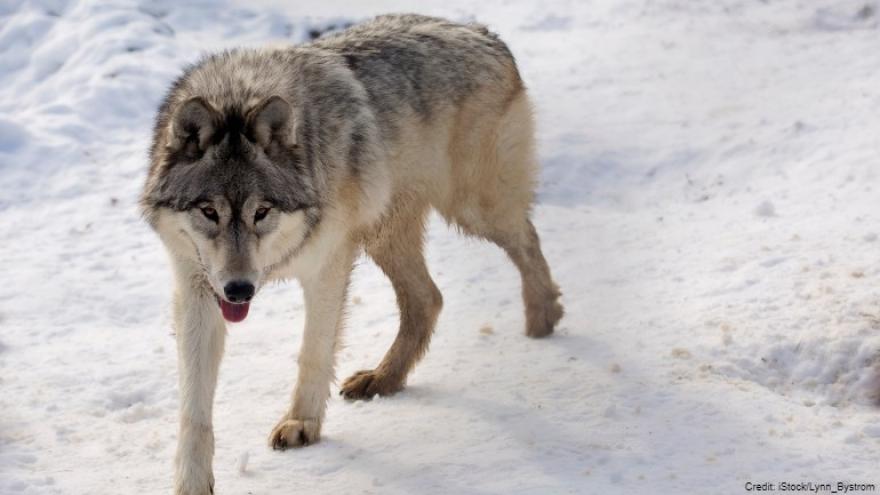
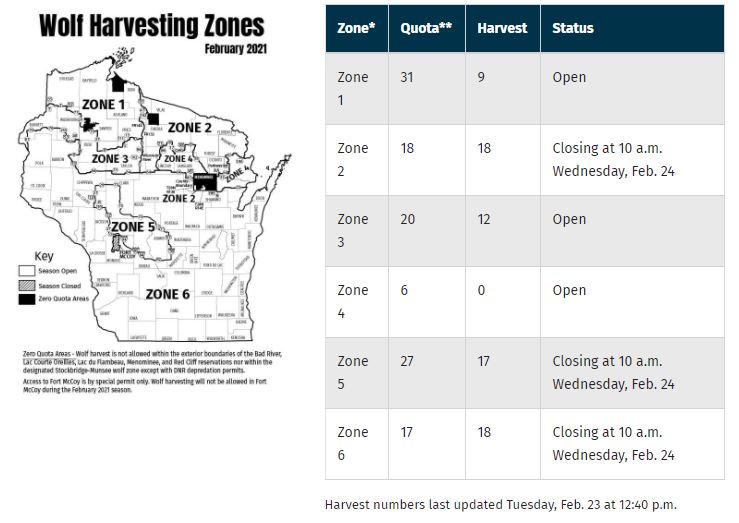
MILWAUKEE (CBS 58) — The Wisconsin Department of Natural Resources (DNR) says a total of 82 wolves have been harvested on the first day-and-a-half of the hunt.
During glacial periods, the sea level falls, because vast quantities of water are stored in the massive inland glaciers. To date, however, computer models have been unable to reconcile sea-level height with the thickness of the glaciers. Using innovative new calculations, a team of climate researchers led by the Alfred Wegener Institute has now managed to explain this discrepancy. The study, which was recently published in the journalNature Communications, could significantly advance research into our planet’s climate history.https://24c9ab203f42b4736dbd7ca7659f2f08.safeframe.googlesyndication.com/safeframe/1-0-37/html/container.html
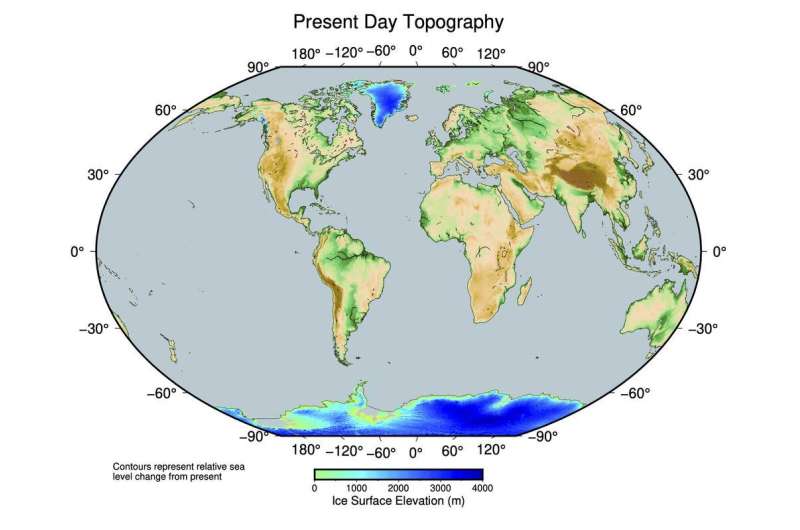
During transitions from glacials to interglacials, theglacierson Greenland and in North America and Europe wax and wane over tens of thousands of years. The more water that is stored in the mighty glaciers, the less there is in the oceans—and the lower thesea levelis. Climate researchers are…
During glacial periods, the sea level falls, because vast quantities of water are stored in the massive inland glaciers. To date, however, computer models have been unable to reconcile sea-level height with the thickness of the glaciers. Using innovative new calculations, a team of climate researchers led by the Alfred Wegener Institute has now managed to explain this discrepancy. The study, which was recently published in the journal Nature Communications, could significantly advance research into our planet’s climate history.https://24c9ab203f42b4736dbd7ca7659f2f08.safeframe.googlesyndication.com/safeframe/1-0-37/html/container.html
During transitions from glacials to interglacials, the glaciers on Greenland and in North America and Europe wax and wane over tens of thousands of years. The more water that is stored in the mighty glaciers, the less there is in the oceans—and the lower the sea level is. Climate researchers are now investigating to what extent the glaciers could melt in the coming centuries due to anthropogenic climate change, and how much the sea level would rise as a result. To do so, they’re look back into the past. If they can understand the ice growth and melting during past glacials and interglacials, they’ll be able to draw valuable conclusions about the future.
The ‘missing ice problem’
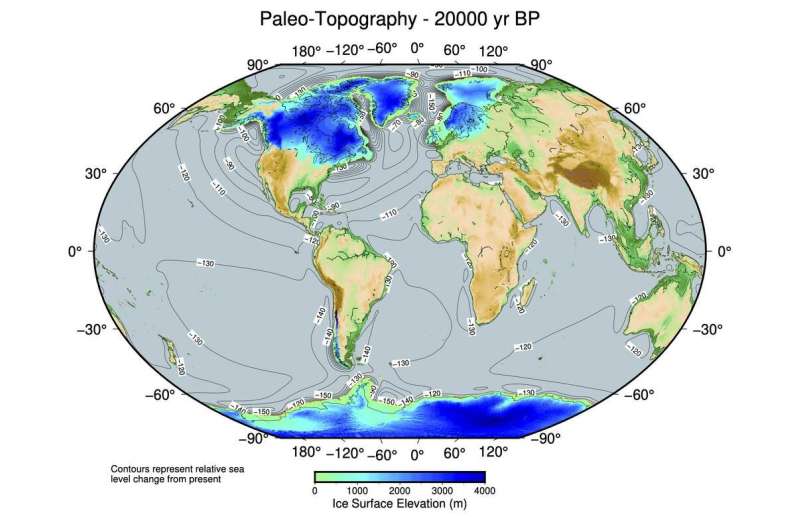
However, reconstructing the distant past is no mean feat, because the glaciers’ thickness and sea level can’t be measured directly. Accordingly, climate researchers have to painstakingly gather evidence that they can then use to form a picture of the past. The problem: different pictures emerge, depending on the types of evidence collected. We can’t say with absolute certainty what the situation was actually like ten thousand years ago. This ‘missing ice problem’ remained unsolved for many years. It describes the incongruity of two different scientific approaches that sought to reconcile sea-level height and glacier thickness at the peak of the last glacial, ca. 20,000 years ago. A team of climate experts led by Evan Gowan from the Alfred Wegener Institute, Helmholtz Centre for Polar and Marine Research (AWI) in Bremerhaven has now solved the problem using a new method. “It looks like we’ve found a new way to reconstruct the past as far back as 80,000 years,” says Dr. Gowan, who has been investigating the problem for roughly a decade. These findings have now been published in the journal Nature Communications.
With his new method, Gowan has now reconciled sea level and glacier mass: according to his calculations, the sea level at the time was ca. 116 meters lower than it is today. Based on his approach, there is no discrepancy in terms of glacier mass. Unlike the previous global model, Gowan closely examined the geological conditions in the glaciated regions: how steep was the ice surface? Where did glaciers flow? How much did the rocks and sediment at the base of the ice resist ice flow? His model considers all of these aspects. It also takes into account to what extent the ice sheet pressed down on the Earth’s crust in the respective areas. “That depends on how viscous the underlying mantle was,” Gowan explains. “We base our calculations on different mantle viscosities, and therefore arrive at different ice masses.” The resulting ice masses can now be reconciled with the sea level without any discrepancy.
The established model is flawed
The recent article by Gowan and his team critically re-examines the long-established scientific method used to estimate glacier masses: the oxygen isotope method. Isotopes are atoms of the same element that have different numbers of neutrons and therefore different masses. Oxygen, for example, has a lighter 16O isotope, and a heavier 18O isotope. According to conventional theory, the lighter 16O evaporates from the oceans, while the heavier 18O remains in the water. Accordingly, during glacials, when large inland glaciers form and the volume of water in the oceans decreases, the 18O concentration in the oceans should increase. However, as has been shown, this established model produces discrepancies when it comes to reconciling sea-level height and glacier masses for the period 20,000 years ago and earlier. “For many years, the isotope model has been frequently used to determine the ice volume of glaciers up to several million years ago. Our study calls into question the reliability of this method,” says Gowan. His aim is to now use his new method to improve the traditional oxygen isotope method.
MADISON, Wis. (AP)— Wisconsin wildlife officials plan to end the state’s wolf season after just three days after hunters and trappers killed nearly 70% of the state’s quota in less than 48 hours.
The DNR launched the hunt Monday morning. It had been scheduled to run through Sunday.
The department announced Tuesday morning that it would close three of its six management zones at 10 a.m. Wednesday morning after registration data showed hunters and trappers had already taken about half of the state’s 119-wolf limit.
By Tuesday afternoon the kill numbers had climbed to 82 animals, or 69% of the state quota. The…


 © Carolyn Cole / Los Angeles Times via Getty ImagesBig Basin Redwoods State Park, San Jose, California, wildfire.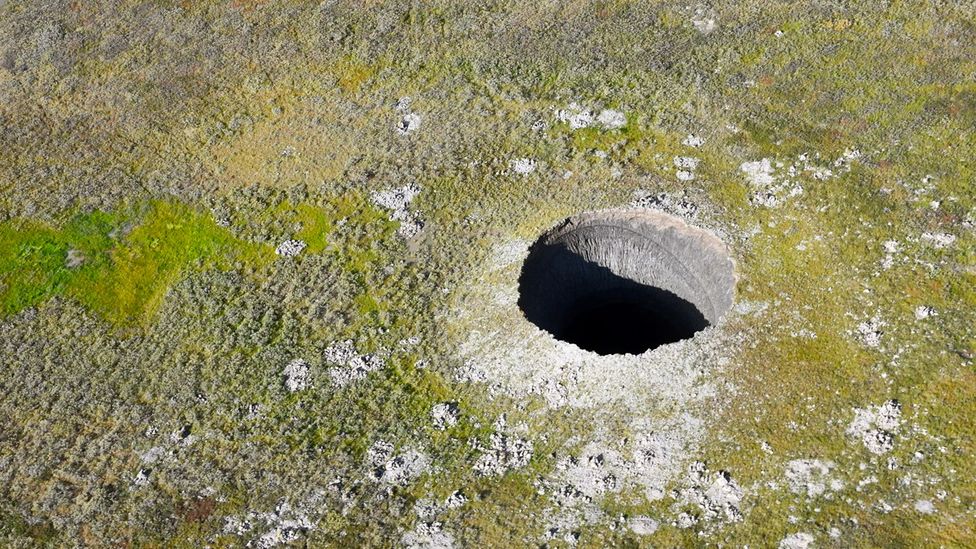
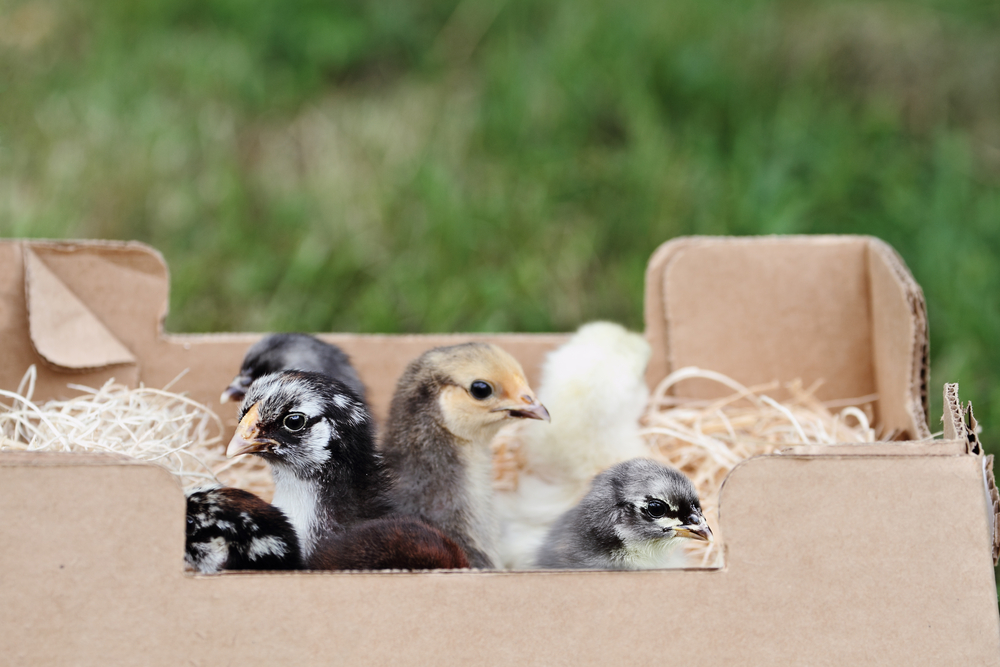 A new bill proposes banning mail order chicks in New York.Photography by Stephanie Frey via Shutterstock



 Exposing the Big Game