
May 23, 2021 at 7:00 am Updated May 25, 2021 at 12:34 am


1 of 23 | Washington Department of Fish and Wildlife biologist Ben Maletzke identifies tracks in the territory of the Teanaway pack. (Steve Ringman / The Seattle Times)Skip Adhttps://d248578cd520d7046a872147e8b7a8d8.safeframe.googlesyndication.com/safeframe/1-0-38/html/container.htmlBy Lynda V. MapesSeattle Times environment reporter
THEY WALKED IN on their own: the first wolves in more than 100 years known to call Washington state home, after this native species was nearly wiped out by hunting, trapping and government extermination campaigns.
Today, the Washington Department of Fish and Wildlife kills wolves only when they have repeatedly killed cattle, a relatively rare event, with about 80% of Washington wolf packs typically staying out of trouble with people.
Which brings us to the wolf that Ben Maletzke, statewide wolf specialist in the wildlife program for WDFW, likes to call The Old Guy.
RELATED
- Putting the wolf at the center of its own life story and powerful return to the state
- All about wolves: Where they come from, how long they live and more
WOLF 32M LIVED some 12 years as the patriarch of the Teanaway pack, kicking off the recovery of wolves in Washington despite living in cattle country, amid ranchettes, in a region that sees heavy recreational use year-round. He lost a mate to poachers, and the pack’s territory was roasted by wildfire in 2014. But still, wolf 32M and his family persisted, bringing the call of the wild back to the Central Cascades for the first time in a century, just two hours from Seattle.
One of the fundamental tasks in recovering an endangered species is to know its population. So, on a recent winter day, Maletzke was out in the Teanaway pack’s territory, looking for wolf tracks and checking wildlife cameras.ADVERTISINGSkip Adhttps://d248578cd520d7046a872147e8b7a8d8.safeframe.googlesyndication.com/safeframe/1-0-38/html/container.htmlSkip Adhttps://d248578cd520d7046a872147e8b7a8d8.safeframe.googlesyndication.com/safeframe/1-0-38/html/container.htmlSkip Adhttps://d248578cd520d7046a872147e8b7a8d8.safeframe.googlesyndication.com/safeframe/1-0-38/html/container.htmlhttps://www.youtube.com/embed/V9q2txY_FNY
Maletzke glided through powder on his snowmobile, a fresh snowfall providing perfect conditions for tracking work. Here, the winter ecology of the pack’s core territory was written in tracks. The soft sweep of grouse wings, the trot of a turkey, the hooves of mule deer and elk: all on the menu for a hungry wolf. But there was no sign of wolves that day. Maletzke was not surprised: “There are a lot of zeros when you are a wildlife biologist,” he said, changing out a data card in a motion-triggered wildlife camera.
Farther on the trail, he unpacked a chain saw to cut a tree fallen across the path, all in a day’s work for a backcountry biologist. “My mother says I got a Ph.D. in recess,” he said, gunning the snowmobile up into the mountains, into the core of the Teanaway pack’s home ground.
These wolves are what he calls steppingstones in recovery, the animals that could help lead the way to new territory, such as the vast sweep of country south of I-90 not yet recolonized by wolves. Recovery is still in early stages in Washington, with fewer than 200 wolves documented, and no statewide presence yet established.
Wolves disperse to new territory to find mates and begin packs of their own. Packs won’t overlap; the map Maletzke shows of known packs, with their movements tracked by radio collar, presents territories so strictly observed you would think they were fenced.
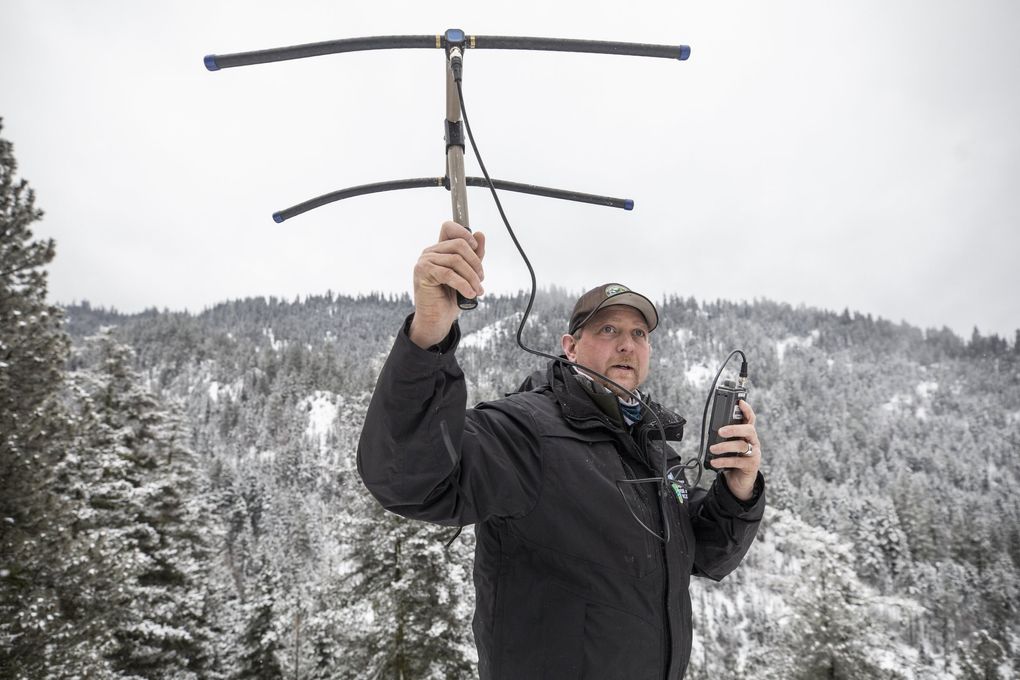
1 of 2 | Department of Fish and Wildlife biologist Ben Maletzke listens for the beeps from radio collars attached to wolves in the Teanaway pack. (Steve Ringman / The Seattle Times)
Wolves have few predators, but they can be killed by other wolves defending a territory or a kill. It is this pack dynamic that wildlife biologists are counting on, in time, to urge wolves into areas where they do not presently live. “We just need a couple to pick up and go,” Maletzke says. “It will happen.” For there are few animals more resilient or wily than the wolf.
WOLVES ARE THE most widely distributed of all land mammals, and one of the most adaptable.
More:
 Exposing the Big Game
Reblogged this on Committee to Abolish Sport Hunting Blog.