The accused were fined Rs 6,000 as per the Wildlife Act.
Our Correspondent Gurugram, May 31
The wildlife team nabbed two bird hunters from the DLF Phase-3 area. The Wildlife Department imposed a fine of Rs 6,000 on the hunters and released them after giving a warning.
The department seized the carcass of owls and pigeons and buried them at a safe place. Wildlife Department Inspector Rajesh Chahal said on Sunday evening, he was informed by Bhaichara group president Bhola Gujjar that two youth had hunted owls and pigeons in the F block of DLF Phase-3. As soon as the information was received, a special team was sent to the spot to investigate the matter. The team caught both the youths who were from Jharkhand. The youths during interrogation confessed hunting of birds and said they had…
ByTerry Otto, for The ColumbianPublished:June 1, 2021, 6:03amShare:
A bear helps itself to a birdfeeder in a backyard. Washington Department of Fish and Wildlife Officer Tom Moats contends that if you are feeding birds in bear country during the spring, you are bound to draw bears. Birds have plenty of wild food available in the spring. (Contributed by Washington Department of Fish and Wildlife)Photo Gallery
This the time of year when humans encounter wildlife. Deer and other animals are having babies, and bears are emerging from their winter dens hungry. The bears are desperately seeking sources of food, and are drawn to bird feeders, trash cans and pet food near homes. Also, deer are having fawns, sometimes in close proximity to people who think they need to swoop in to help when they shouldn’t.
According to Washington Department of Fish and Wildlife Officer Tom Moats, people discover fawns…
Your article that glorified the hunting of a bear in Alaska (“Graphic reminder of nature’s power,” May 23) is a reminder of how little man has stepped forward as we step out of the humanitarian crisis from the past year.
The picture of a hunter, from the perfect smile to the latest camo and weapon, as a beautiful bear lies dying in the snow, only to be “pelted and packed out” a few hours later, is abhorrent. The smug pride on the hunter’s face contrasted with the lifeless eyes of the bear is emblematic of the little chance human hunters give their prey.
Furthermore, it is is the hunter’s own words that should give pause to such an act, when faced with the will of the bear to live, to give defense in the only way it knows how … the hunter’s words: ” We…
Published On01 June,202101:26 pmChina confirms first human case of bird flu strain
BEIJING (AFP) – China reported the world’s first human infection of the H10N3 bird flu strain on Tuesday but said the risk of it spreading widely among people was low.
A 41-year-old man was admitted to hospital with fever symptoms in the eastern city of Zhenjiang on April 28 and was diagnosed with H10N3 a month later, China’s National Health Commission (NHC) said in an online statement.
“The risk of large-scale spread is extremely low,” the NHC said, adding that the man was in a stable condition and his close contacts had reported no “abnormalities.”
It described H10N3 as low pathogenic — less likely to cause death or severe illness — in birds.
The NHC said there had been no human cases of H10N3 previously reported in the world.
Ashley LezSome historical events seem too crazy to be real, yet we’ve been told all of our lives that it’s 100 percent fact. However, the ones that seem entirely plausible are, surprisingly, the events that never happened. From Paul Revere’s infamous night ride to Marie Antoinette’s famously and cruelly saying, “let them eat cake,” we are exposing these historical myths and diving into how they become so popular. Get ready to be amazed at how so much of what you were sure happened throughout history is nothing but fun stories.
1. Paul Revere Never Had A Midnight Ride
“The British are coming. The British are coming!” The story of Paul Revere riding through Massachusetts warning American colonials that the British were coming got its origin from an 1860 poem by Henry Wadsworth Longfellow.Advertisement
Atmosphere-cooling aerosols were much more prevalent years ago than previously thought, protecting the planet’s surface from harmful greenhouse gas effects.
A column of volcanic smoke rises from the crater on the Shinmoedake volcano after its eruption in Kirishima, southern Japan in 2018. (Kyodo News via AP)
(CN) — A recent discovery of soot and smoke particles within the ice cores from Antarctica has yielded new clues about what the atmosphere of the preindustrial Southern Hemisphere was like, which could have important implications for our future.
image captionMany people on Chinese social media have criticised the policy as too little, too late
China’s decision to allow couples to have up to three children continued to dominate discussion online as people debated if it had come too late.
The announcement came as census data showed a steep decline in birth rates.
Many – mostly millennials – wondered how the announcement sat with plans to delay retirement ages in the country which were also announced on Monday.
Others called for compensation for the trauma their families suffered for wanting more children in the past.
Under China’s strict one-child policy which was introduced in 1979, families caught flouting the rules faced fines, loss of employment and sometimes forced abortions.
A number of descriptions of what it was like for families during that time have now emerged online in response to the new policy.
‘Everyone has become data’
One person on China’s microblogging service Weibo claimed his mother was forced to get an IUD after giving birth to him as he was a second child, adding that to this day she still gets infections from it.
“The policy is just a cold notice – it doesn’t look at the kind of distress it has caused people. Everyone has become reduced to data, rather than people who deserve to be respected and seen,” he wrote on Weibo under the pseudonym Chillsyrup.
Many also recalled the story of Feng Jiamei who was made to undergo a forced abortion in the seventh month of her pregnancy as she could not pay the fine for having a second child.
Another person known as Jia Shuai wrote that as an illegal child growing up in the countryside, he remembered having to jump into ponds to hide from family planning officials.
“If you could not pay the fines, some officials would clear your house and take your animals away. What a bizarre memory,” he wrote.
Yet another user claimed her younger sister was still alive only because a compassionate doctor had let their mother escape from the hospital, after she was called in to have an abortion while eight months pregnant.
Meanwhile celebrated filmmaker Zhang Yimou and his wife – who were fined a hefty $1.2m (£842,850) in 2014 for violating the country’s one-child policy – also commented on the new announcement.
image captionChinese film-maker Zhang Yimou, who has three children, was fined $1.2m in 2014 for violating the country’s one-child policy
“Finished the task ahead of time,” the couple wrote on Weibo, along with the flexing arm emoji.
Human rights organisation Amnesty International said the policy, like its predecessors, was still a violation of sexual and reproductive rights.
“Governments have no business regulating how many children people have. Rather than ‘optimising’ its birth policy, China should instead respect people’s life choices and end any invasive and punitive controls over people’s family planning decisions,” said the group’s China team head, Joshua Rosenzweig.
‘The awkward generation’
But much of the criticism on the new policy came from Chinese millennials, who complained they were the “awkward” generation caught in the middle.
“For those born after the 1980s and 1990s – we can’t catch a break. The government is pressuring us to have more babies, but at the same time, they want us to keep working for longer. What kind of life is this?” one person asked.
For more than four decades, China’s retirement age has remained unchanged at 60 for men and 55 for women. But on Monday China said it would phase in delays in retirement ages, though it did not provide details.
“I don’t even want one child, let alone three,” another commented.
Until more details are announced, many on social media are sceptical that the policy change will actually do much to boost birth rates.
When China scrapped its decades-old one-child policy in 2016 to replace it with a two-child limit, it failed to lead to a sustained upsurge in births.
“If relaxing the birth policy was effective, the current two-child policy should have proven to be effective too,” Hao Zhou, a senior economist at Commerzbank, told the Reuters news agency on Monday.https://emp.bbc.com/emp/SMPj/2.43.0/iframe.htmlmedia captionParents and children on the streets of Beijing disagreed on whether the new policy was a good idea
The UK has announced zero daily Covid deaths within 28 days of a positive test for the first time since March 2020.
Thelatest figuresalso reported another 3,165 new cases, compared with 3,383 on Monday and 2,493 one week ago.
It comes amid concern over a recent small rise in cases linked to the variant first identified in India.
Reports of daily deaths are often lower at weekends and at the start of the week.
This is because less counting takes place while statisticians are off – and adding in the bank holiday weekend will make this figure less certain still.
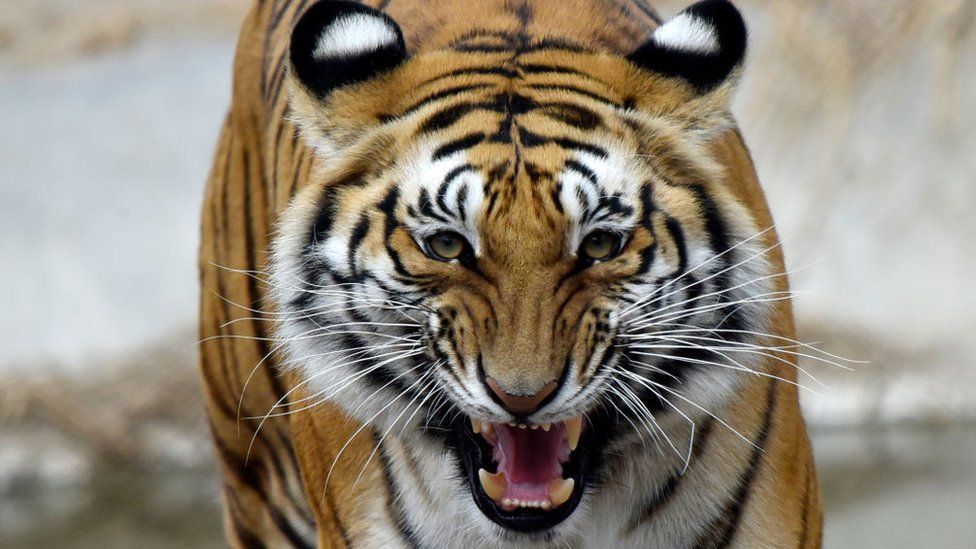
A man suspected of killing 70 endangered tigers has been arrested in Bangladesh after a 20-year search.
Habib Talukder – known as Tiger Habib – was finally caught following a tip off, after three previous arrest warrants had been issued for him, police said.
He has operated in the Sundarbans mangrove forest, on the border between India and Bangladesh.
The area is home to the world’s largest population of Bengal tigers. Only a few thousand remain in the wild.
Black market traders buy their pelts, bones and even flesh for sale around the globe.


 China confirms first human case of bird flu strain









 Exposing the Big Game