
BYJake Johnson, Common DreamsPUBLISHEDJuly 8, 2021SHAREShare via FacebookShare via TwitterShare via Email

READING LISTENVIRONMENT & HEALTHIn Win for Overdose Prevention, Rhode Island Approves Harm Reduction CentersHUMAN RIGHTSThe US Government Wants Palestine to Fade From View. Don’t Let It.POLITICS & ELECTIONSForeign Governments and NGOs Will Try to Exploit Moïse’s AssassinationPOLITICS & ELECTIONSNoam Chomsky: To Retain Power, Democrats Must Stop Abandoning the Working ClassPOLITICS & ELECTIONSMitch McConnell Says Bipartisanship Is “Over.” Believe Him.POLITICS & ELECTIONSCould Other Condos Collapse Like Surfside? Ron DeSantis Doesn’t Care to Know.
Arapid-response scientific analysis of the Pacific Northwest heatwave that has killed hundreds of people — and more than a billion intertidal animals — indicates that the extreme temperature event “would have been virtually impossible” in the absence of the human-caused climate crisis.
“Our results provide a strong warning: our rapidly warming climate is bringing us into uncharted territory that has significant consequences for health, well-being, and livelihoods,” reads the analysis, which was conducted by a team of more than two dozen scientists as part of the World Weather Attribution initiative.
The group’s aim is to examine and quickly publicize connections between extreme weather events and the climate crisis to undercut denialists’ claims that the two are unrelated.
Get our free emails
While the latest study has not yet been peer-reviewed, the researchers utilized peer-reviewed methods that have helped produce a growing body of research in a relatively new scientific field known as “extreme event attribution.”
The new analysis estimates that the heatwave that ravaged southwest Canada and the northwestern U.S. — particularly Oregon and Washington state — was “about a 1 in 1000 year event in today’s climate” and would “have been at least 150 times rarer without human-induced climate change.”
“An event such as the Pacific Northwest 2021 heatwave is still rare or extremely rare in today’s climate, yet would be virtually impossible without human-caused climate change. As warming continues, it will become a lot less rare,” the scientists wrote Wednesday. “The future will be characterized by more frequent, more severe, and longer heatwaves, highlighting the importance of significantly reducing our greenhouse gas emissions to reduce the amount of additional warming.”
“The latest heat-related death numbers are alarming,” the researchers added, “yet they are likely a severe undercount and the real toll will only become clear after mortality statistics are reviewed for the role of heat in exacerbating underlying conditions.”
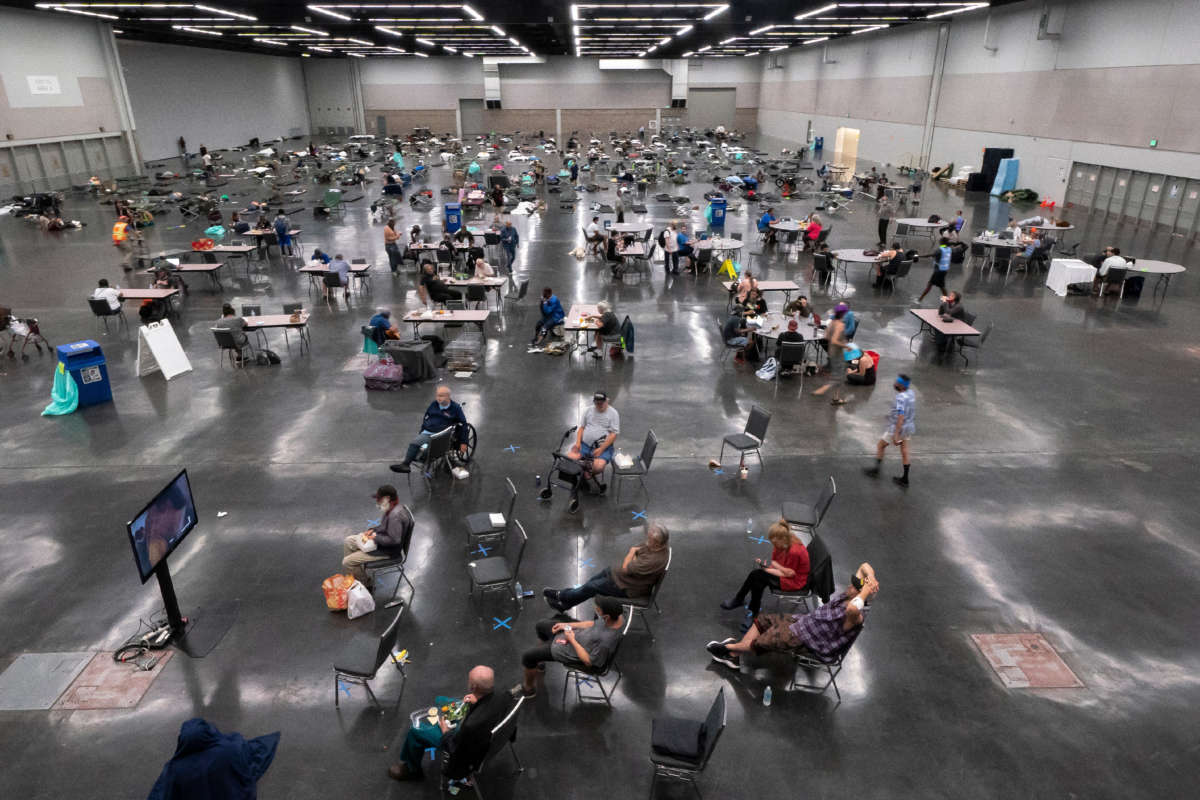
Since its start in late last month — which has been deemed North America’s hottest June on record — has been linked to more than 100 deaths in Oregon, around 30 in Washington state, and nearly 500 in western Canada.
Kristie Ebi, a professor at the Center for Health and the Global Environment at the University of Washington and a co-author of the new analysis, told the Associated Press that “this study is telling us climate change is killing people.”
“Heat is the No. 1 weather-related killer of Americans,” said Ebi.
The Pacific Northwest is still experiencing intense heat, and — as the Washington Post reported Wednesday — is “bracing for another bout of exceptional heat amid a pattern that could once again place records in jeopardy.”
“Temperatures up to 25 degrees above average could dominate most of the West this weekend into next week, with little relief in sight for quite some time,” the Post noted. “Odds favor anomalously hot and dry conditions to prevail into the fall.”
_______________________________________________________________________
Northwest Heat Wave Is a Symptom of Terrifying Runaway Climate Feedback Loops
BYWilliam Rivers Pitt, TruthoutPUBLISHEDJune 29, 2021SHAREShare via FacebookShare via TwitterShare via Email
READING LISTENVIRONMENT & HEALTHIn Win for Overdose Prevention, Rhode Island Approves Harm Reduction CentersHUMAN RIGHTSThe US Government Wants Palestine to Fade From View. Don’t Let It.POLITICS & ELECTIONSForeign Governments and NGOs Will Try to Exploit Moïse’s AssassinationPOLITICS & ELECTIONSNoam Chomsky: To Retain Power, Democrats Must Stop Abandoning the Working ClassPOLITICS & ELECTIONSMitch McConnell Says Bipartisanship Is “Over.” Believe Him.POLITICS & ELECTIONSCould Other Condos Collapse Like Surfside? Ron DeSantis Doesn’t Care to Know.
The village of Lytton, British Columbia, just northeast of Vancouver, saw temperatures on Sunday top 116 degrees. The roads are buckling in Portland, Oregon, under the onslaught of the heat, and the power cables on their streetcars are melting. The historic temperature spike is being caused by a “heat dome” above the affected region, meteorologists say, a confluence of events so rare they only come together every 1,000 years or so. Thanks to anthropogenic climate disruption — a fancy way of saying “humans did this” — these thousand-year events are becoming annual calamities.
“One of the primary reasons I moved to the Pacific Northwest was because of what I knew was coming in the climate crisis,” Dahr Jamail, who reported on climate for many years for Truthout, told me on Tuesday. Jamail lives in a small town in Washington State. “I’d done my research. I knew the projections for potable water availability, temperature spikes, arable land availability and where the climate impacts would be the mildest. For all of those, and more, the Pacific Northwest was one of the best places to live in the contiguous 48 states.”
However, Jamail noted, even since moving to Washington several years ago, he’s seen marked climate shifts.
Uncompromised, uncompromising news
Get reliable, independent news and commentary delivered to your inbox every day.
“Where I live on the north coast of the Olympic Peninsula, it was 97 yesterday,” continued Jamail. “The day before it was almost as hot. The concrete slab upon which my home stands was the only cool spot. By the early afternoon, I was lying on it face down for respite. Across the water in Seattle, the Emerald City had never seen 100 degrees. Yesterday was the third time in the last three days it saw triple digits, and it was still 90 degrees at 8pm. All this, when less than a year ago, this region had the worst air quality in the world for days on end as we were engulfed in wildfire smoke blowing in from California.”
This is it. This is here. This is now. Even the safest places provide no safety. The theoretical has become actual; we have crossed the threshold into the unmistakable consequences of our horrid stewardship of this ridiculously precious planet and its ecosystems.
The western U.S. appears to be caught in a positive climate feedback loop, though there is little objectively positive about it. A “feedback loop” from the perspective of climate change “is the equivalent of a vicious or virtuous circle — something that accelerates or decelerates a warming trend,” according to a BBC climate report from earlier this year. “A positive feedback accelerates a temperature rise, whereas a negative feedback decelerates it.”
One example of a current and ongoing positive feedback loop is taking place in the Siberian tundra. Human-caused warming has led to the melting of the Siberian permafrost, which in turn has led to the release of billions of tons of methane out of the ground and into the atmosphere. Methane is a warming accelerant, one of the most dangerous kinds we are dealing with. When it gets dumped into the air in such quantities, warming is accelerated, more permafrost melts, more methane is released, warming is further accelerated, etc.
The feedback loop out west — human-caused warming leading to a massive drought which exacerbates warming, etc. — has come to include the current heat dome phenomenon. Put bluntly, the dome is making every other climate-related impact worse, and the potential consequences go far beyond the dangers posed by high heat to human health.
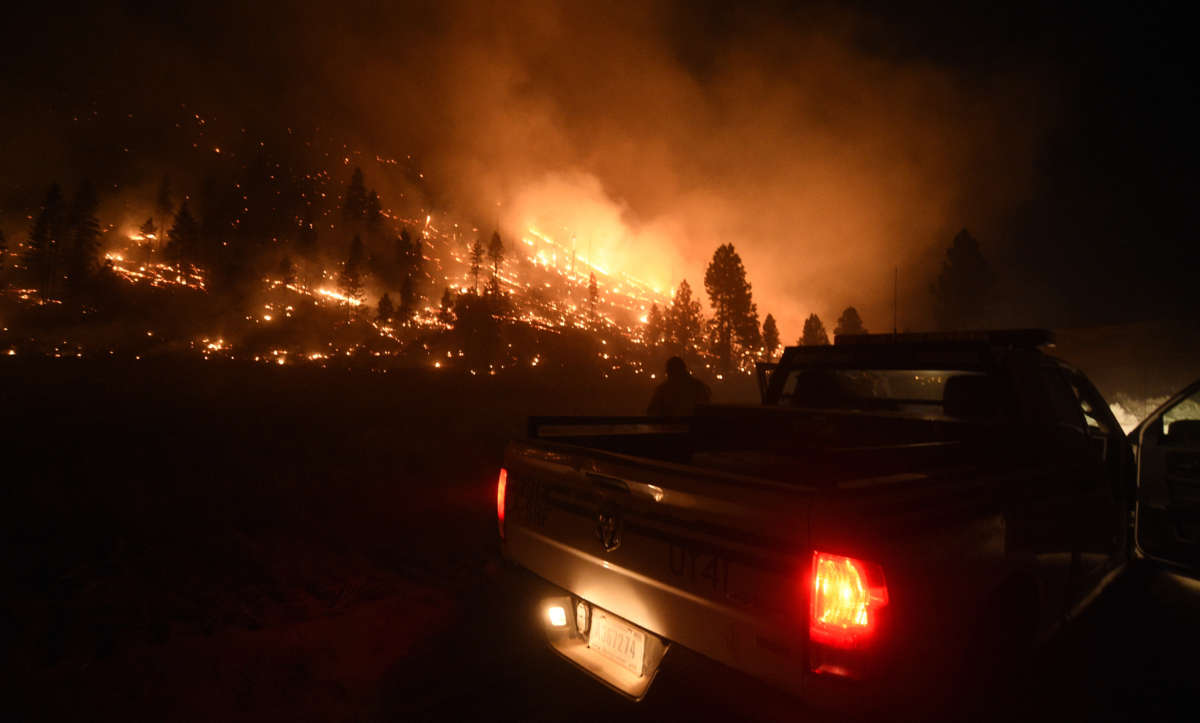
People out west are sitting in deep dread of the looming fire season, which could be worse than any we have seen. The drought has worsened, and the snow pack in the mountains — a vital feeder to the water table — is all but gone. With the arrival of the heat dome, much of the region is a bomb waiting to go off.
If the fire season this year is as bad or worse than expected, the next domino to fall in the effects of climate disruption will be potable water, which makes all this nothing less than an existential national emergency. From The New York Times:
When wildfires blaze across the West, as they have with increasing ferocity as the region has warmed, the focus is often on the immediate devastation — forests destroyed, infrastructure damaged, homes burned, lives lost. But about two-thirds of drinking water in the United States originates in forests. And when wildfires affect watersheds, cities can face a different kind of impact, long after the flames are out.
In Colorado’s Front Range, erosion from fire-damaged slopes during the summer rains could turn the flow of the Poudre and its tributaries dark with sediment, dissolved nutrients and heavy metals, as well as debris. This could clog intake pipes, reduce the capacity of reservoirs, cause algal blooms and cloud and contaminate the water, sharply raising maintenance and treatment costs. In the worst case, the water would be untreatable, forcing the cities to use alternate supplies for a time.
As climate change helps make wildfires burn hotter and longer, the risks to water supplies grow. But most people don’t think about the risks, said Kevin Bladon, a hydrologist at Oregon State University, even after a damaging fire. “Here we are in 2021,” he said. “We’re really removed from the 2020 wildfire season. Most people are thinking the problems are over.”
(Emphasis added.)
“The runaway feedback loops of the climate crisis are in full swing,” notes Jamail. “Most of the unraveling is occurring at a pace far more accelerated than the worst-case projections of our climate models. That wildfires are scorching millions of acres every year at a record pace should not come as a surprise. Nor should the impact of this on human water supplies. But what will likely come as a surprise to most will be the abrupt panic when the prices of food and potable water spike, or when the place where they live finally becomes unlivable for lack of water.”
The future is hot. The future is dry. The future is on fire. The future is now.
 Exposing the Big Game
Reblogged this on The Extinction Chronicles.