Conservation Groups & Scientists Support Nomination of Michael Phillips for Director of U.S. Fish and Wildlife Service 

Washington, D.C. — Today dozens of non-governmental organizations and scientists sent a letter to President Biden supporting the candidacy of Michael Phillips for Director of the U.S. Fish and Wildlife Service (USFWS).

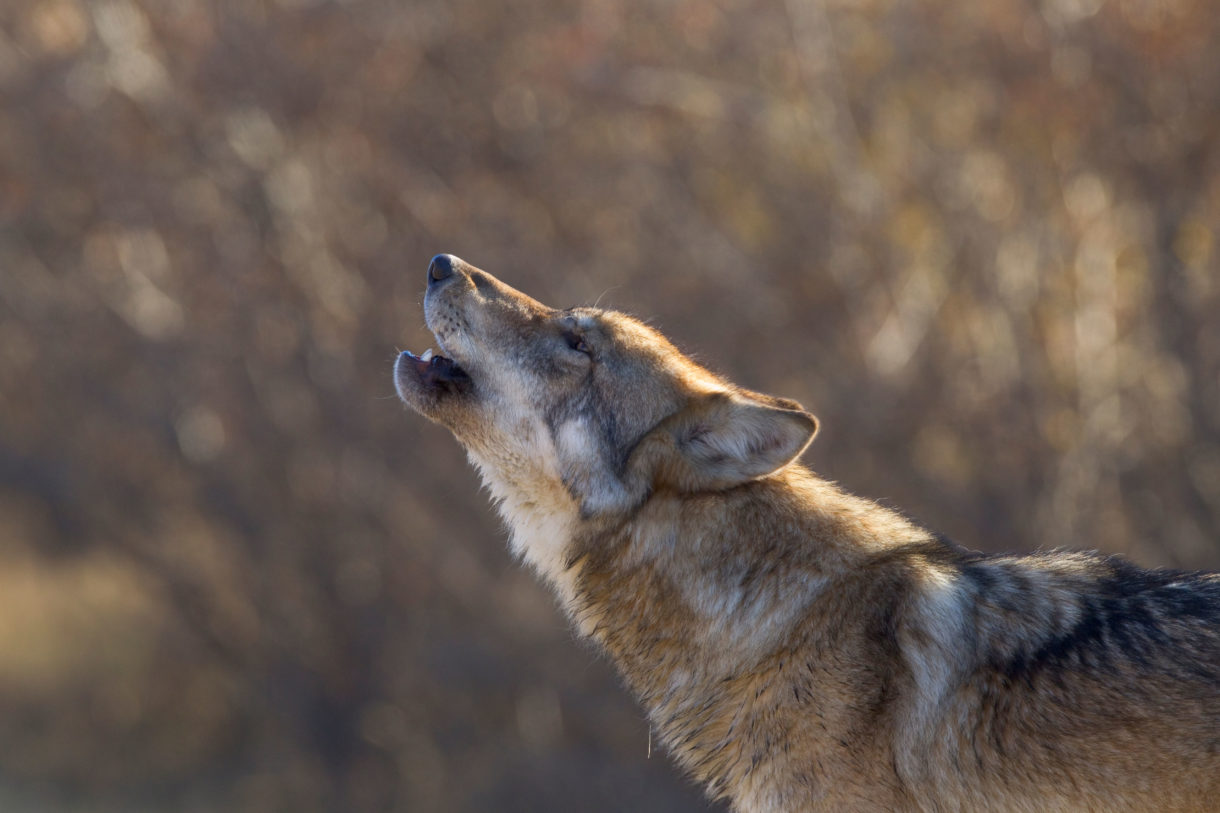
Conservation groups believe that Phillips is the ideal candidate for the position as a respected leader in biodiversity conservation with special expertise in endangered species management. “His vision has resulted in critical ecological restoration of vast landscapes across North America through his leadership of gray and red wolf reintroductions. His ability to direct conservation of some of the most controversial animals, from wolves and grizzly bears to bison and black-footed ferrets and his excellent track record as a Montana Senator and Representative have prepared him well for the challenges of directing the USFWS through unprecedented challenges of biodiversity and climate crises. His demonstrated leadership, ability to coalesce diverse interests toward a common goal and big picture vision with deep knowledge of strategic planning and implementation would serve him well in this position,” the letter states.

The Director of USFWS oversees a budget of over $1.5 billion to conserve, protect, and enhance native species of fish, wildlife, plants, and their respective habitats. “Phillips’ stellar credentials and strong science-based background should make him everyone’s top candidate for this critical role,” said Camilla Fox, Founder and Executive Director of Project Coyote. “Additionally, he served as an elected policymaker and knows the intricate functioning of state and federal governments, and the USFWS in particular,” said Fox. In addition to Phillips’ extensive experience with USFWS-jurisdictional issues, including serving on recovery teams for myriad iconic species, he also has expertise in international conservation, including through his involvement with IUCN specialist groups for bison, wolves, and other canids.

“The Biden-Harris Administration faces monumental wildlife conservation challenges in the coming years.  The sixth mass extinction of life on earth has begun and we humans are the cause.  The USFWS must provide enlightened, science-based leadership to stem the tide of extinction and protect our country’s diverse wildlife heritage for current and future generations,” said Dave Parsons, a career USFWS wildlife biologist who led the Mexican wolf recovery program from 1990-99. “Reversing existential threats to biological diversity and the health and critical functions of ecosystems will require bold new leadership at the US Fish and Wildlife Service,  With his decades of wildlife conservation experience in every region of the country, including Alaska, Mike is the right choice for the job.”

“From species reintroductions to the climate crisis, Mike Phillips has the knowledge needed to inform effective science-based decision-making,” said Dr. William Ripple, distinguished professor of ecology at Oregon State University. “Mike is the leader we need to navigate through complex and uncharted territory.” 

Phillips’ tireless efforts for wildlife and wildlands have been recognized by numerous entities over the years, including most recently by The Wildlife Society who awarded him the prestigious 2021 Aldo Leopold Memorial Award, in recognition of his distinguished service to wildlife conservation.

“Mr. Phillips has been an exceptional conservation leader for decades and an effective legislator for his diverse constituents,” said Nuna Teal, PhD, Program Director of One Earth. “No one is better equipped to lead USFWS through the biodiversity challenges we are facing today.”

Read the letter to President Biden here.

* * * * *
Shut pig farms to prevent Nipah epidemic: PETA to Kerala govt

PETA India’s request to Kerala on Tuesday comes within two months of the group installing a warning billboard in Delhi about the meat industry’s link to the spread of bird flu

IANS | Thiruvananthapuram | September 22, 2021 10:40 am

Photo: IANS

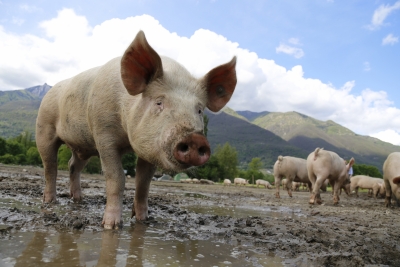
The death of a 12-year-old child in Kerala from the Nipah virus has prompted People for the Ethical Treatment of Animals (PETA) India to urge Kerala’s minister for animal husbandry and dairy development, J. Chinchrani, to close down pig farms in the state to prevent further spread of the infection and a potential epidemic.

PETA India’s request to Kerala on Tuesday comes within two months of the group installing a warning billboard in Delhi about the meat industry’s link to the spread of bird flu. In Delhi, an 11-year-old boy had succumbed to complications from H5N1 bird flu, an infection with a 60 percent mortality rate, in July.

“The crowded animal farms of the meat industry create hotspots for zoonotic diseases. These killer facilities need to be shut down immediately and permanently before they cost more lives,” said PETA India Vegan Foods and Nutrition Specialist Dr. Kiran Ahuja.

Something Enormous Just Slammed Into Jupiter

https://interestingengineering.com/something-enormous-just-slammed-into-jupiter

And the scar could be bigger than Earth.By  Brad BerganSep 22, 2021 (Updated: Sep 22, 2021 22:13 EDT)Something Enormous Just Slammed Into JupiterJupiter, with the shadow of its moon, Io.NASA / JPL-Caltech / SwRI / MSSS / Kevin M. Gill

Some planets take a lot of hits for us.

Jupiter, the largest gas giant in the solar system, was just slammed by an asteroid, according to an initial tweet from ESA Operations.

As the strongest gravitational force next to the sun, this isn’t that uncommon. But it serves to remind us that, while the Earth isn’t moving in a shooting gallery of apocalyptic asteroids, asteroid detection technology must continue to expand, lest one day we awake to learn it’s the last any of us will ever live before an extinction-level impact.

Jupiter gets punched in the face a lot

On September 13, 2021, at roughly 6:39 PM EDT, amateur astronomers monitored and recorded a colossally bright flash of what seemed to be an impact on Jupiter. Harald Paleske of Germany was recording the shadow of Jupiter’s moon, Io, as it passed in front of the planet. But other astronomers involved included José Luis of Brazil, Michel Jacquesson and Jean-Paul Arnould in France, Simone Gelelli of Italy, and Didier Walliang and Alexis Desmougin of the Société Lorraine d’Astronomie, also on France. Many also filmed the event, and suspect an impact on Jupiter.

US Air Force to Turn Cargo Planes into Bomber Aircraft
Oil Company Recycles CO2 by Curing Concrete with It
Musk's Boring Company Announces Not-a-Boring Competition Winner
Congress Is Secretly Plotting to Build a New UFO Office
COVID Has Officially Killed More Americans Than the Spanish Flu in 1918

https://imasdk.googleapis.com/js/core/bridge3.481.0_en.html#goog_229260979https://imasdk.googleapis.com/js/core/bridge3.481.0_en.html#goog_1520458150https://imasdk.googleapis.com/js/core/bridge3.481.0_en.html#goog_1385608350javascript:falsejavascript:falsejavascript:falsejavascript:false

While still unconfirmed, the putative event would mark only the eighth impact witnessed on Jupiter since the initial impact of Shoemaker-Levy 9 in 1994, which disintegrated into separate parts as Jupiter’s immense tidal forces ripped it open, transforming the singular asteroid into a rapid-fire event of glorious mayhem. Sadly, no one on Earth was able to see the explosions, since the impacts happened on Jupiter’s far side. But a 7.2-ft (2.2-m) Hawaii-based telescope photographed the heat signatures of each impact site as they swiveled into view. The Hubble Space Telescope also snapped grim pictures of the dark, bruise-colored smears strewn beneath the clouds, aptly named “scars.”

NASA is upgrading Earth’s planetary defense against NEOs

As of writing, scientists are unsure how often Jupiter is impacted by something so massive or high-velocity that it generates an impact flash we can see from Earth, but the consensus is it’s fairly often; between 20 and 60 times every year. If the Earth experienced significant impacts with the same frequency, its surface might look very different, and so would whatever survived. But luckily, Jupiter’s unconscionably strong gravitational field is gigantic, and accelerates incoming meteorites to unkind speeds, multiplying the kinetic energy of the incoming bodies by several orders of magnitude, which is proportional to the level of energy released upon impact (think of how baseballs hurt more if they slam into you with greater speed).

But Jupiter doesn’t take every cosmic hit headed Earth’s way. Some scientists suspect we’re overdue for another asteroid impact of a similar scale to the one that spelled doom for the dinosaurs. These happen once every 50 to 60 million years. Lucky for us, NASA gave the green light for a new space telescope, called the Near-Earth Object Surveyor (NEO Surveyor), in June. And it’s designed to upgrade Earth’s planetary defense network by detecting cosmic bodies with potentially dangerous orbital trajectories. “[W]e think there are about 25,000 NEOs large enough to wipe out an area like Southern California,” said NEO Survey Project Leader Amy Mainzer in a statement from the University of Arizona. “Once they get bigger than about 450 feet in diameter, they can cause severe regional damage. We want to find these, and as many smaller ones as possible.” This could take a few years to launch, and we have other means of detecting NEOs. But whenever a monumental impact flashes from the cloud tops of Jupiter, remember: That might have been us.

Juvenile hunter accused of killing man with arrow after attempted theft in Dittmer, Mo.

Exposing the Big Game's avatarCommittee to Abolish Sport Hunting Blog

https://www.kfvs12.com/2021/09/21/juvenile-hunter-accused-killing-man-with-arrow-after-attempted-theft-dittmer-mo/

Default Mono Sans Mono Serif Sans Serif Comic Fancy Small CapsDefault X-Small Small Medium Large X-Large XX-LargeDefault Outline Dark Outline Light Outline Dark Bold Outline Light Bold Shadow Dark Shadow Light Shadow Dark Bold Shadow Light BoldDefault Black Silver Gray White Maroon Red Purple Fuchsia Green Lime Olive Yellow Navy Blue Teal Aqua OrangeDefault 100% 75% 50% 25% 0%Default Black Silver Gray White Maroon Red Purple Fuchsia Green Lime Olive Yellow Navy Blue Teal Aqua OrangeDefault 100% 75% 50% 25% 0%By Amber RuchPublished: Sep. 21, 2021 at 1:00 PM PDT|Updated: 20 hours ago

JEFFERSON COUNTY, Mo. (KFVS) – A young hunter is accused of killing a man with an arrow during an attempted theft.

According to Jefferson County Sheriff Dave Marshak in a news release, deputies were dispatched to a property in the 100 block of Valley Springs Road around 4:12 p.m. on Friday, September 17 for a report of an assault with a deadly weapon.

When they arrived, they found the body of 40-year-old Michael J. Stotts, of Dittmer. He was pronounced dead at the scene by EMS personnel.

According to statements given at the scene by the family’s attorney, a juvenile was walking to a tree stand on the property to deer hunt. He was carrying a bow and arrows.

While…

View original post 103 more words

16 people cited for illegal squirrel hunting around Current River Conservation Area

Default Mono Sans Mono Serif Sans Serif Comic Fancy Small CapsDefault X-Small Small Medium Large X-Large XX-LargeDefault Outline Dark Outline Light Outline Dark Bold Outline Light Bold Shadow Dark Shadow Light Shadow Dark Bold Shadow Light BoldDefault Black Silver Gray White Maroon Red Purple Fuchsia Green Lime Olive Yellow Navy Blue Teal Aqua OrangeDefault 100% 75% 50% 25% 0%Default Black Silver Gray White Maroon Red Purple Fuchsia Green Lime Olive Yellow Navy Blue Teal Aqua OrangeDefault 100% 75% 50% 25% 0%By Amber RuchPublished: Sep. 21, 2021 at 12:19 PM PDT|Updated: 20 hours ago

VAN BUREN, Mo. (KFVS) – Sixteen people were cited for illegal squirrel hunting in and around the Current River Conservation Area.

According to the Missouri Department of Conservation, out-of-state hunters harvested 471 squirrels over a two-day period.

Missouri regulations only allow each hunter to kill 20 squirrels in 48 hours.

Agents say the group harvested 151 squirrels over the limit.ADVERTISEMENThttps://574fd7877dd800c28bb3d884c95343a6.safeframe.googlesyndication.com/safeframe/1-0-38/html/container.html

They said they learned about the incident after a tip from a concern

https://www.kfvs12.com/2021/09/21/16-people-cited-illegal-squirrel-hunting-around-current-river-conservation-area/

Fires in the Amazon have already impacted 90% of plant and animal species

Exposing the Big Game's avatarThe Extinction Chronicles

https://news.mongabay.com/2021/09/fires-in-the-amazon-have-already-impacted-more-than-90-of-animal-and-plant-species-in-the-biome/

bySuzana Camargoon 21 September 2021 | Translated byRoberto Cataldo

  • New study addresses the effects of fires on biodiversity loss in the world’s largest forest during the last two decades.
  • Researchers measured the impacts on the habitats of 14,000 species of plants and animals, finding that 93 to 95% suffered some consequence of the fires.
  • Primates were the most affected, as they depend on trees for movement, food and shelter. Rare and endemic species with restricted habitats suffered the strongest impacts.
  • The study assessed two decades of fires between 2001 and 2019 and confirmed the impact of environmental policies on deforestation cycles in the Amazon; law enforcement was concluded to have direct impact on the extent and volume of fires.

Since 2019, deforestation and fires have caused the Brazilian Amazon to lose about 10,000 square kilometers of forest cover per year – a high and alarming increase…

View original post 1,259 more words

Wolves in the Northern Rockies move closer to getting protections they desperately need

By Kitty Block and Sara Amundson

September 22, 2021 0 Comments

Wolves in the Northern Rockies move closer to getting protections they desperately need

Wolves in Idaho and Montana have been subjected to increasingly aggressive killing since they lost their federal protections in 2011. Alamy Stock Photo424SHARES

Wolves in the Northern Rockies may warrant federal protection under the Endangered Species Act, the U.S. Fish and Wildlife Service announced last week, largely because of extreme wolf-killing laws recently passed in Idaho and Montana. The agency’s decision comes in response to a legal petition the Humane Society of the United States and the Humane Society Legislative Fund filed, in coalition with other conservation organizations, in May.

This promising progress gives us some hope that much-needed protections are on their way for these imperiled animals. The FWS will now begin a formal review process—collecting scientific and other information about the threats these wolves face—to determine whether to extend endangered species protections to wolves in western states. The no-holds-barred wolf slaughter sanctioned by Idaho and Montana make clear that this federal protection is essential to gray wolves’ survival in the region.

Wolves in these states have been subjected to increasingly aggressive killing since they lost their federal protections in 2011. In May, Idaho’s legislature passed a law that allows the state to hire private contractors to kill up to 90% of the state’s wolf population. The law also allows individual trophy hunters and trappers to kill as many wolves as they want using the most egregious methods, running them down with all-terrain vehicles and snowmobiles and hunting them using bait and hounds. Wolf trapping is also now permitted year-round on private lands. And outside of the extreme suffering this causes ensnared wolves, such indiscriminate methods also put pets and other wild animals at risk of getting maimed or killed by traps.

Recent changes in Montana’s laws mean that about 85% of the state’s wolves are now in danger of being killed. New laws there allow the use of strangulation snares and the use of bait to hunt and trap wolves, as well as permitting night hunting. Another law brings back what is essentially a wolf bounty system that incentivizes hunters to kill wolves by reimbursing them for their costs. And while the state previously set strict quotas in areas bordering Yellowstone National Park and Glacier National Park to limit the killing of the wolves who live in and around these iconic natural landmarks, these quotas have now been eliminated. In short, Idaho and Montana have now joined Wyoming in allowing what amounts to unlimited and unregulated killing of wolves.

While the FWS’s determination that these destructive new laws may require federal intervention is an important step, it’s not fast enough. Wolves in Idaho and Montana are under attack right now. Idaho’s new law took effect on July 1, and Montana’s general wolf hunting season began on September 15. Wolves simply cannot afford to suffer through months of wanton slaughter while the FWS completes its review. That’s why our petition asked the agency to immediately restore endangered species protections to wolves in the region on an emergency basis.

We’re not alone in our view that emergency protection is necessary to ensure gray wolves’ survival. Dozens of American Indian tribes asked the Biden administration to restore protections on an emergency basis in the face of these virulently anti-wolf policies. Similarly, more than 50 conservation organizations sent a letter in support of our petition, urging the FWS to immediately protect wolves. And even Dan Ashe—who originally supported delisting wolves from endangered species protections back when he was President Obama’s FWS director—said Idaho and Montana’s laws amount to “ecocide.” He too is calling on the agency he once led to restore endangered species protections on an emergency basis.

Disappointingly, the FWS hasn’t yet heeded these calls. But we won’t give up in our fight for these iconic animals. We’ll continue to push the agency to immediately protect these wolves before it’s too late.

You can take action for gray wolves in the Northern Rockies by asking Department of the Interior Secretary Deb Haaland to immediately extend Endangered Species Act protections to these animals.

Sara Amundson is president of the Humane Society Legislative Fund.424SHARES

Exposing the Big Game's avatarThe Extinction Chronicles

Could ‘ropeless’ lobster traps help save right whales from extinction?

https://www.thedenverchannel.com/news/national/could-ropeless-lobster-traps-help-save-right-whales-from-extinction?fbclid=IwAR39n3rEFqAaVt_h3I1guP9xsDNCvqdT6g_IjGU5xiAVn2_q3d9uyDX6GBg

ropeless nets

By:Chris ContePosted at9:31 AM, Sep 21, 2021and last updated8:39 AM, Sep 21, 2021

The skyline of Boston is still in view when Colin Greeley catches his first glimpse of water rising off the horizon of the Atlantic Ocean. A family of whales is about to breach the surface to take a breath before diving back into the sea.

Greeley is leading a whale-watching expedition for City Cruises into Stellwagen Bank National Marine Sanctuary, a feeding ground famous for its sightings of whales and dolphins from up and down the East Coast.

On this day, Greeley was hoping to spot the elusive and endangered North Atlantic right whale.

WATCH MORE

“We get to see thousands of people every summer, so we have a chance to educate people about why it’s important to protect as many species as possible,”…

View original post 550 more words

Scientists investigate hundreds of seabird deaths on Yorkshire coastline

Exposing the Big Game's avatarThe Extinction Chronicles


Scientists say they’re seeing “unprecedented numbers” of seabirds dying for this time of year as they work to investigate the cause.

The issue was initially discovered in Scotland, but now dead birds have been spotted at Bempton on the East Yorkshire coast near Bridlington.

The UK Centre for Ecology and Hydrology (CEH), which is investigating the cause of the deaths, said the majority of the birds were guillemots.

While the cause has not been confirmed, some scientists say it could be related to a lack of food, as the many of the dead birds are half their usual weight.

Guillemots
Guillemots

Dr. Francis Daunt, seabird ecologist at CEH said: “We are seeing unprecedented numbers of guillemots dying for the time of year, over a huge area of the Eastern UK coast from Norfolk to Orkney.

“We are…

View original post 156 more words