The hidden biases that drive anti-vegan hatredShare using EmailShare on TwitterShare on FacebookShare on Linkedin(Image credit: Getty Images)

Woman eating roasted peppers (Credit: Getty Images)

https://www.bbc.com/future/article/20200203-the-hidden-biases-that-drive-anti-vegan-hatred

By Zaria Gorvett3rd February 2020People love to moan that vegans are annoying: research has shown that only drug addicts inspire the same degree of loathing. Now psychologists are starting to understand why – and it’s becoming clear that the reasons aren’t entirely rational.

In July 2019, a bare-chested, pony-tailed man turned up at a vegan market in London, and began snacking on a raw squirrel. In video footage of the bizarre incident, the pro-meat protester can be seen clutching the animal’s limp, furry body – sans head – while a stunned crowd waits for him to be arrested. His mouth is encrusted with blood. At one point, a passing onlooker asks “Why are you doing this?”

This, it turns out, is a deceptively tricky question to answer.

As the popularity of vegan life continues to gather pace, a tide of vitriol has risen. To eat meat, or not to eat meat: the question has become a battleground, with passionate carnivores and vegan activists deploying some deliciously headline-grabbing tactics. There have been pig robberies. There have been defiant public carvings of deer legs. There have been nude protesters smothered with fake blood. There have been provocative sandwiches.

Though it’s natural for people to disagree, the passionate rage – and even mild irritation – that veganism stirs up seems to defy rational sense. Research has shown that only drug addicts face the same degree of stigma – and the least popular vegans of all are those who cite animal cruelty as their reason. Given that most of us would probably like to see less suffering in the world, why is there such resentment towards those who do something about it?

Read more from The Vegan Factor on BBC Good Food

If you dare to ask, veganophobes have plenty of reasonable (and not-so-reasonable) sounding explanations at the ready. First up there’s the hypocrisy argument – the idea that vegans have blood on their hands, too – in the form of plant massacres, the environmental cost of avocadoes, and all the field mice killed while harvesting crops.

But even when vegans are consistent, this also seems to fuel their bad publicity. In the UK, a campaigner recently caused a stir when he revealed that he won’t use public transport, in case it runs down any unfortunate insects.

Other popular arguments include the perception of vegans as over-smug – as the joke goes, “How do you recognise a vegan at a dinner party? Don’t worry! They’ll tell you!” – and over-zealous; a rapper recently cancelled a gig after the singer Morrissey insisted on an all-out meat ban at the venue. On forums, vegans face bizarre accusations like “only psychopaths like vegans enjoy tofu bacon”.

But are these really the reasons that people hate vegans? Not everyone is convinced. Some psychologists take another view – that far from being driven by factors within our conscious awareness, the widespread resentment we have for vegans is down to deep-seated psychological biases.Research has shown only drug addicts attract the same amount of stigma as vegans (Credit: Getty Images)
Research has shown only drug addicts attract the same amount of stigma as vegans (Credit: Getty Images)

Hank Rothgerber, a social psychologist at Bellarmine University, Kentucky, thinks it all comes down to answering the question: how do we continue to eat meat?

“So basically we live in an era today, at least in the Western world, where there’s more and more evidence, more and more arguments, and more and more books about how eating meat is bad,” says Rothgerber. “But still, our behaviour hasn’t changed significantly.” He points out that 2018 looks set to be – it takes a while for the annual statistics to be released – the year with the highest per capita meat consumption in the history of the United States.

“So what I’m looking at is, how do people rationalise that, and still feel like they’re a good person?” To continue to eat meat, Rothgerber suggests, requires some serious mental gymnastics. Luckily, our brains are extremely good at protecting us from realities we don’t want to face – and there are a number of psychological tricks at our disposal.

If you bring your cod and chips home to eat in front of your beloved goldfish, or tuck into a rabbit stew mere moments after cooing over various #rabbitsofinstagram, you’re likely to encounter “cognitive dissonance”, which occurs when a person holds two incompatible views, and acts on one of them. In this case, your affection for animals might just start to clash with the idea that it’s OK to eat them.

According to Rothgerber, people tend not to think of meat eating as an ideology

Some psychologists call this the “meat paradox”, though it’s also been couched in stronger terms – as “moral schizophrenia”.

The tension that results can make us feel stressed, irritated, and unhappy. But instead of resolving it by changing our beliefs or behaviour, it’s quite normal to blame these feelings on something else entirely – all without realising we’re doing it. For example, when stockbrokers make a loss on certain investments, they tend to blame their managers. This allows them to continue believing that they make excellent decisions, while facing the fact that they’ve achieved the exact opposite of what they’re paid to do, and actually lost money.

In the case of eating meat, Rothgerber suggests we have a number of strategies – around 15 – which allow us to avoid facing up to the meat paradox. These include pretending that meat has no link to animals, imagining that we eat less of it than we really do, wilful ignorance about how it’s produced – helped by the cartoons of happy farm animals that we’re exposed to from childhood – and only eating meat from animals which are “humanely” farmed. 

Unfortunately, most of these are derailed by the presence of vegans. 

According to Rothgerber, people tend not to think of meat eating as an ideology. The dominance of meat eating around the world helps the omnivores among us to avoid the idea that it’s a choice – it’s just what everyone else is doing. But when a vegan turns up at a dinner party, suddenly we’re bumped out of the comfortable “mainstream diet” category and into the unsettling “meat-eating” category. By their mere existence, vegans force people to confront their cognitive dissonance. And this makes people angry.Meat eaters show "cognitive dissonance" when they can balance their meat eating with a love for animals (Credit: Getty Images)
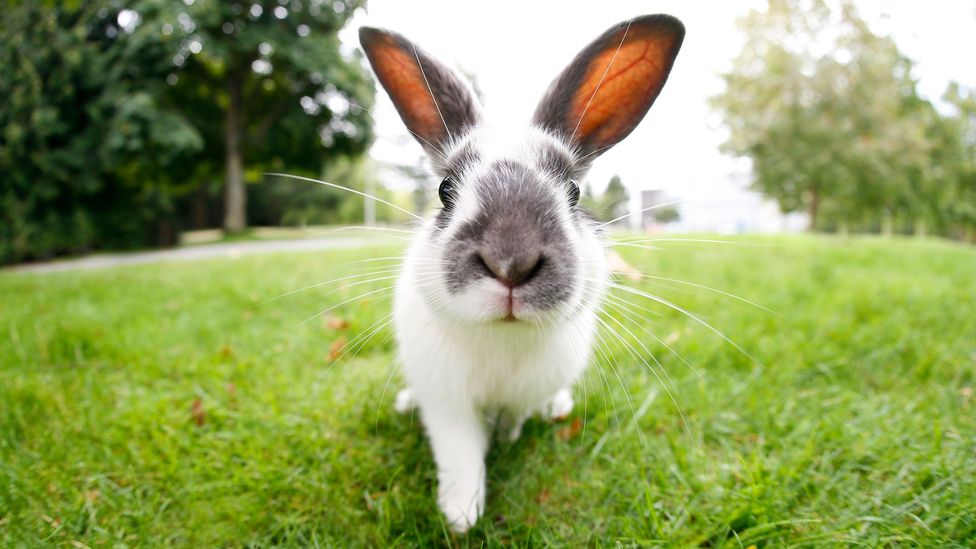
Meat eaters show “cognitive dissonance” when they can balance their meat eating with a love for animals (Credit: Getty Images)

One popular way to resolve cognitive dissonance is by reasoning our way out of it. 

Decades of psychological research have shown that, when making a decision, people tend to allow themselves to reach their preferred conclusion, as long as they can invent a rational-sounding justification. For example, one study found that when participants wanted to believe that they would be academically successful, they were more likely to recall their past successes than their failures, to creatively tack together an explanation that seemed to support this.

In the case of meat, this “motivated reasoning” might lead people to find explanations for why eating animals is the correct decision. And one of these is that vegans are bad. 

In a study led by Julia Minson, a psychologist from the University of Pennsylvania, participants were surveyed about their attitudes towards vegans and then asked to think of three words that they associated with them. Just under half the participants had something negative to say, and intriguingly, 45% included a word which referred to their social characteristics. For example, vegans were allied with the words “weird”, “arrogant”, “preachy”, “militant”, “uptight”, “stupid”, and – mysteriously – “sadistic”.

The reputation of vegans probably isn’t helped by the fact that non-meat eaters really do think they’re better than everyone else; vegetarians tend to rate the virtuosity of other vegetarians more highly than that of non-vegetarians. But it’s also true that most of us agree with them – and this is a major source of animosity.

It’s intriguing to me that we also reject members of groups who have made laudable choices on purpose – Benoit Monin

In line with this, the more righteous the study participants expected the vegetarians to be, the harsher the words they chose to describe them.

“There’s a lot of research on how we don’t like members of groups who are potentially morally inferior, or which society sees as wrong,” says Benoit Monin, a psychologist from Stanford University who was also involved in the study. “But it’s intriguing to me that we also reject members of groups who have made laudable choices on purpose.”

There’s mounting evidence that we’re particularly threatened by people who have similar morals to us, if they’re prepared to go further than we are in order to stick to them. In the end, our fear of being judged far outstrips any respect we might have for their superior integrity.

For a second study, the team asked some participants to think about how vegetarians would judge their morality, before rating the degree to which they’re likely to possess a series of personality traits. Others were asked to do the same thing, but the other way around. They found that those who had thought about being judged by vegetarians first, tended to associate vegetarians more strongly with negative words.Believing the cliche of happy farm animals is one such psychological trick meat eaters rely on to justify their habit, research suggests (Credit: Getty Images)
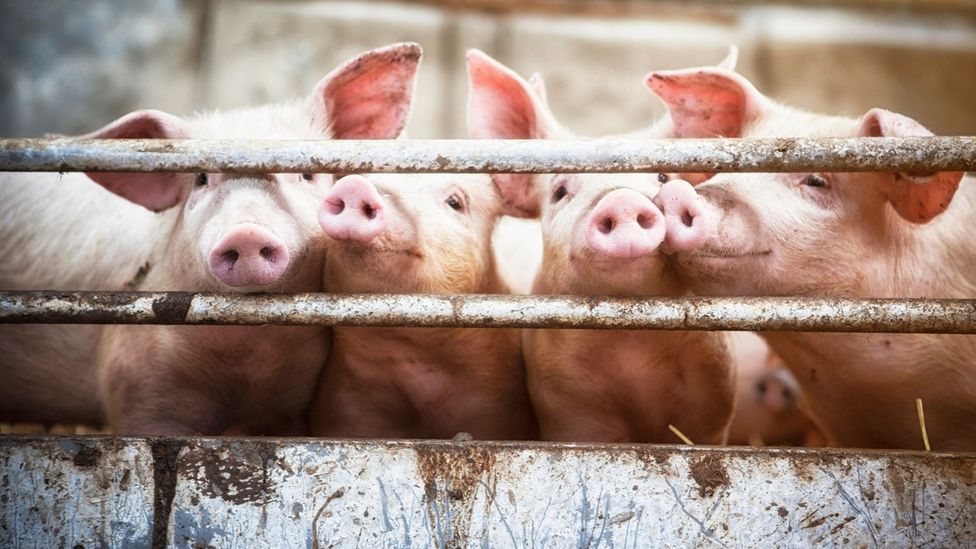
Believing the cliche of happy farm animals is one such psychological trick meat eaters rely on to justify their habit, research suggests (Credit: Getty Images)

In fact, Monin says this fear of reproach is so potent, vegetarians are likely to be more threatened by vegans than non-vegetarians are. “They agree that there is something wrong about raising animals for food, and now they’re faced with someone who’s putting their money where their mouth is, more than they do.”

They’re right to be afraid; research shows that vegans think vegetarians are hypocritical. According to Rothgerber, “do-gooder derogation” might be a way of shifting attention away from our own dubious decisions, to help to soothe the uncomfortable feelings that cognitive dissonance creates.

Pro-veganism adverts which focus on animal suffering could have the opposite of the intended effect

The finding also explains why ethical vegans and vegetarians are more irritating to omnivores than those who choose the lifestyle for health reasons.

“It’s really hard to say “I don’t think it’s cool to be complicit in a system of animal slaughter. But, you know, you should do what you want… I’m not judging you”,” says Monin. Instead, arguments which sidestep morality entirely are much less aggravating. For example, suggesting that you’re a vegan because of some idiosyncrasy, such as that you grew up on a farm, lets carnivores off the hook. It’s not your fault if you didn’t, and this experience would be impossible to replicate as an adult.

Ironically, the same psychological biases also mean that pro-veganism adverts which focus on animal suffering could have the opposite of the intended effect; while some people might react by eating less meat, those who choose not to change their behaviour are likely to deal with the discomfort they feel by trying harder than ever to justify their actions – leading them straight through the door of the next chicken shop.

So the next time a squirrel-eating activist hits the headlines, just think: deep, deep down, they might actually be an animal-lover, going to elaborate lengths to cover it up.

Join one million Future fans by liking us on Facebook, or follow us on Twitter or Instagram.

If you liked this story, sign up for the weekly bbc.com features newsletter, called “The Essential List”. A handpicked selection of stories from BBC Future, Culture, Worklife, and Travel, delivered to your inbox every Friday.

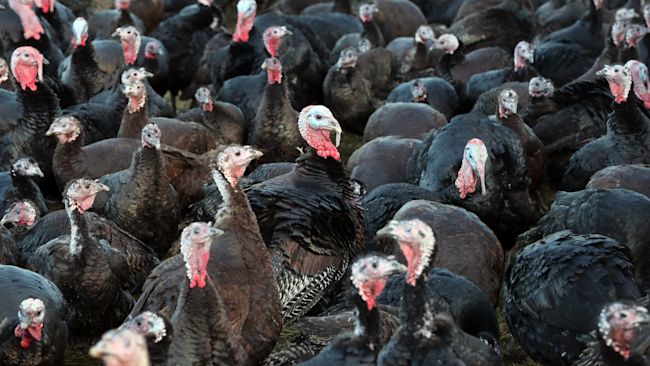
Bird flu: Lockdown set for birds as owners told to keep pets and poultry inside

Joel HillsBusiness and Economics Editor

Bird flu arrives in the UK every winter, it is brought here by migratory birds that then come into contact with domestic birds.

The chief vet has identified a strain of the disease – H5N1 – which is highly contagious and deadly for poultry and it is moving to contain it.Seventeen places in the UK already have confirmed outbreaks of bird flu. There are protection and surveillance zones in place around these sites.


ITV News Business and Economics Editor Joel Hills explains whether there is a cause for concern over the bird flu strain H5N1


Vets are testing poultry flocks, where cases are identified flocks are destroyed. There are also restrictions on exports.From Monday, all kept birds – chickens, turkeys, geese, ducks – will have to be brought indoors.

This will affect everyone in the UK, from farmers who produce free-range eggs to people who keep chickens in their back garden.I’ve spoken to two heads of the British Veterinary Association this evening – one past, one present.The advice is:DO NOT touch or pick-up any dead or sick birds.

DO report any dead or sick birds to the Department for Environment, Food and Rural Affairs, and keep eating eggs and poultry, as long as they are cooked properly, they are safe.


New rules brought in for UK bird keepers to contain avian flu outbreak


“The risk to human health is very low,” Professor Peter Jinman told ITV News.

“Those working with, and therefore in close contact, with birds are most at risk but any risk there is can be minimised by regular hand washing and wearing protective clothing that can be easily disinfected with approved disinfectants.”The main concern is protecting poultry and ensuring H5N1 doesn’t get into large poultry production plants in the run up to Christmas.

The main concern is ensuring H5N1 doesn’t get into large poultry production plants in the run up to Christmas.Credit: PA

Farmers are already grappling with labour shortages and supply chain disruption caused by the coronavirus pandemic and the end of free-movement, post Brexit. This will be source of additional anxiety.A UK-wide Housing Order was imposed last winter and proved effective. The hope is it will be again.


Bird flu prevention zone declared across Britain to stop spread of the disease

Can humans catch bird flu? See symptoms and NHS advice

By Rebecca Carey  becca_carey_SEO Journalist

New measures to be introduced to curb the spread of bird flu amongst birds and poultry in the UK. Credit: PA

New measures to be introduced to curb the spread of bird flu amongst birds and poultry in the UK. Credit: PA 0 comment

The government has announced new measures to curb the spread of bird flu but how big is the risk to humans?

All keepers will now be legally required to keep their birds and poultry housed or kept separate from wild birds.

The move comes after a number of confirmed bird flu cases in the UK in recent weeks.

Wild birds are currently migrating to the UK from mainland Europe as they do during the winter which has raised concerns over a possible rise in avian influenza.https://platform.twitter.com/embed/Tweet.html?dnt=false&embedId=twitter-widget-0&features=eyJ0ZndfZXhwZXJpbWVudHNfY29va2llX2V4cGlyYXRpb24iOnsiYnVja2V0IjoxMjA5NjAwLCJ2ZXJzaW9uIjpudWxsfSwidGZ3X2hvcml6b25fdHdlZXRfZW1iZWRfOTU1NSI6eyJidWNrZXQiOiJodGUiLCJ2ZXJzaW9uIjpudWxsfSwidGZ3X3NwYWNlX2NhcmQiOnsiYnVja2V0Ijoib2ZmIiwidmVyc2lvbiI6bnVsbH19&frame=false&hideCard=false&hideThread=false&id=1463536329606803458&lang=en&origin=https%3A%2F%2Fwww.thenorthernecho.co.uk%2Fnews%2Fnational%2Fuk-today%2F19740751.can-humans-catch-bird-flu%2F&sessionId=a60a7b2a97f5ca7a5fb7f729356ce4533dc1c4ab&theme=light&widgetsVersion=f001879%3A1634581029404&width=550pxhttps://f7bb1b2f6cb210dc534800fb8cfd43ee.safeframe.googlesyndication.com/safeframe/1-0-38/html/container.html

READ MORE: Bird flu 2021 outbreak: New rules in effect for all of UK

The UK’s four chief veterinary officers released a joint statement, writing: “We have taken swift action to limit the spread of the disease and are now planning to introduce a legal requirement for all poultry and captive bird keepers to keep their birds housed or otherwise separate from wild birds.

“Whether you keep just a few birds or thousands, from Monday, November  29 onwards you will be legally required to keep your birds indoors, or take appropriate steps to keep them separate from wild birds.

“We have not taken this decision lightly, taking this action now is the best way to protect your birds from this highly infectious disease.”

Can humans get bird flu?

The bird flu can affect humans but it depends on the strain of the virus, the NHS has said.

There is a very low risk to human health and food safety risk from avian influenza, according to public health advice.

Most strains aren’t actually harmful to people but there are four that have raised concerns in recent years:

  • H5N1 (since 1997)
  • H7N9 (since 2013)
  • H5N6 (since 2014)
  • H5N8 (since 2016)

Three degrees of global warming is quite plausible and truly disastrousRead moreTHE ECONOMIST | SPONSOREDIf You Have Nail Fungus, Do This Immediately (Genius!)FAST NAIL SOLUTION | SPONSORED

No humans have been infected with H5N1, H7N9, H5N6 or H5N8 bird flu in the UK which includes the type of H5N6 virus recently found in humans in China. 

The strains of bird flu that have been found in some poultry, other captive birds and wild birds in the UK are the H5N8 and H5N1 variants.

H5N6 has also been found in some wild birds in the UK but it is important to note that this is a different strain to that seen in China.

Bird flu is spread to humans by:

  • touching infected birds
  • touching droppings or bedding
  • killing or preparing infected poultry for cooking

You also can’t catch bird flu by eating fully cooked poultry or eggs, even if you’re within an outbreak area.

How to prevent yourself from catching bird flu

There are a few things that you can do to prevent yourself from catching bird flu and give you peace of mind:

  • wash your hands often with warm water and soap, especially before and after handling food, especially raw poultry
  • use different utensils for cooked and raw meat
  • make sure meat is cooked until steaming hot
  • avoid contact with live birds and poultry

Bird Flu Symptoms

The NHS has said that bird flu symptoms can appear fairly quickly, usually within 3 to 5 days after being infected.

The symptoms could include any of the following:

  • a very high temperature or feeling hot or shivery
  • aching muscles
  • headache
  • a cough or shortness of breath
  • Other early symptoms may include:
  • diarrhoea
  • sickness
  • stomach pain
  • chest pain
  • bleeding from the nose and gums
  • conjunctivitis

https://f7bb1b2f6cb210dc534800fb8cfd43ee.safeframe.googlesyndication.com/safeframe/1-0-38/html/container.html

The NHS says that it’s possible to develop more severe complications including pneumonia and acute respiratory distress syndrome.

To prevent complications and reduce the risk of developing severe illness, it recommends getting treatment quickly and using antiviral medicine.

For more information and NHS advice about bird flu, visit the NHS website.

You can keep up to date with the latest government guidance on Bird Flu via its website.

EDITORIAL: To catch criminals, trapping ban needs real follow-through

Exposing the Big Game's avatarCommittee to Abolish Sport Hunting Blog

Albuquerque Journal, N.M.Tue, November 23, 2021, 12:04 PM·2 min read

Nov. 23—Beginning in April, it will be illegal to use traps, snares and wildlife poison on public lands in New Mexico.

That’s one positive outcome from the tragic death of an Española dog name Roxy — but it’s hard to be optimistic about the new law’s ability to be effective.

Here’s why: The same agency that will investigate violations of the new anti-trapping law, dubbed “Roxy’s Law” — the New Mexico Department of Game and Fish — handled the investigation of Roxy’s death.- ADVERTISEMENT -https://s.yimg.com/rq/darla/4-6-0/html/r-sf-flx.html

In 2018, a neck snare strangled Roxy, a blue heeler mix, near a hiking trail at Santa Cruz Lake Recreation Area north of Española. Marty Cordova, of Chimayó, was charged with 34 counts of illegal trapping activities: 14 counts of unlawful possession of a protected species, 10 counts of failure to mark traps, and five…

View original post 185 more words

Falls from tree stands injure more Illinois hunters than firearm accidents

Exposing the Big Game's avatarCommittee to Abolish Sport Hunting Blog

  • By Andrew Hensel – Illinois Radio Network
  • Comments

deer hunting.jpeg

It’s hunting season in Illinois and state officials, as well as experts, are reminding hunters to put safety above all else.

The dangers of hunting are not what many may think, said Curt Sinclair, hunting safety instructor for Illinois 4-H.

“It’s not the discharge of a firearm in a dangerous way,” Sinclair said. “The No. 1 accident that happens in hunting in Illinois is falls. Falls are the primary way that people get hurt.”

Fourteen hunters died during hunting season in Illinois last year. Between 2015 and 2019, 90 percent of the hunting accidents were from falls, according to the Illinois Department of Natural Resources. Many of the falls involve homemade tree stands.

“The homemade deer stands are one of the primary problems,” Sinclair said.

Sinclair recommends buying a manufactured tree stand, rather than building…

View original post 371 more words

The Arctic Ocean began warming decades earlier than previously thought, new research shows

https://www.cnn.com/2021/11/24/us/arctic-ocean-early-warming-climate/index.html

By Rachel Ramirez, CNN

Updated 6:19 AM ET, Thu November 25, 2021

CNN)The Arctic Ocean has been warming since the onset of the 20th century, decades earlier than instrument observations would suggest, according to new research.The study, published Wednesday in the journal Science Advances, found that the expansion of warm Atlantic Ocean water flowing into the Arctic, a phenomenon known as “Atlantification,” has caused Arctic water temperature in the region studied to increase by around 2 degrees Celsius since 1900.Francesco Muschitiello, an author on the study and assistant professor of geography at the University of Cambridge, said the findings were worrisome because the early warming suggests there might be a flaw in the models scientists use to predict how the climate will change.

British people are more concerned than ever about climate, ahead of Covid and Brexit, poll shows

British people are more concerned than ever about climate, ahead of Covid and Brexit, poll shows“The Arctic Ocean has been warming up for much longer than we previously thought,” Muschitiello told CNN. “And this is something that’s a bit unsettling for many reasons, especially because the climate models that we use to cast projections of future climate change do not really simulate these type of changes.”

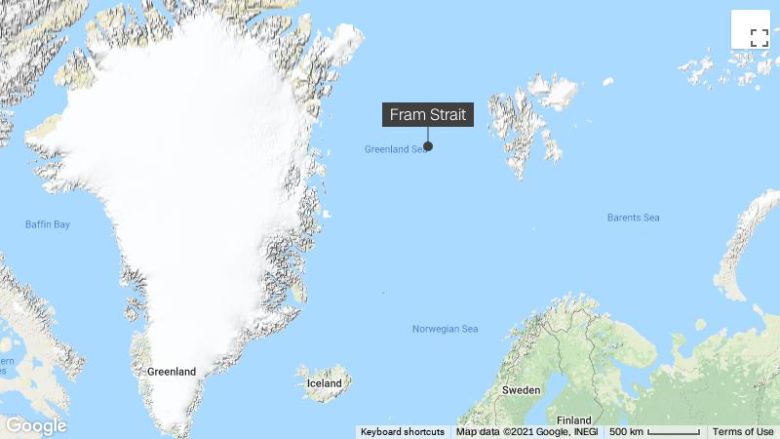
The researchers used marine sediments in the Fram Straight, where the Atlantic meets the Arctic east of Greenland, to reconstruct 800 years of data that paint a longer historical picture of how Atlantic water has flowed into the Arctic. The marine sediments are “natural archives,” the researchers wrote, which record data on past climate conditions.

Researchers found temperature and salinity, the saltiness of ocean water, remained fairly constant up until the 20th century — then they suddenly increased.Enter your email to subscribe to the CNN Five Things Newsletter.close dialog

CNN Five Things logo

We’ve got the day’s biggest headlines summarized for your busy schedule.Sign Me UpBy subscribing you agree to ourprivacy policy.“The reconstructions suggest a substantial increase in the Atlantic Ocean heat and salt transport into the Nordic Sea at the beginning of the 20th century, which is not well simulated by (climate models),” Rong Zhang, a senior scientist at NOAA’s Geophysical Fluid Dynamics Laboratory, who was not involved with the study, told CNN. “It’s important to understand the cause of this rapid Atlantification, as well as the discrepancies between the model simulations and the reconstructions.”

Muschitiello said it’s not clear how much of a role, if any, human-caused climate change played in the early Arctic warming, and more research is needed.”We’re talking about the early 1900s, and by then we’ve already been supercharging the atmosphere with carbon dioxide,” he said. “It is possible that the Arctic Ocean is more sensitive to greenhouse gases than previously thought. This will require more research, of course, because we don’t have a solid grip on the actual mechanisms behind this early Atlantification.”

La Niña to batter Australia with rain over the summer in a wet and windy holiday period

La Niña to batter Australia with rain over the summer in a wet and windy holiday periodThe study notes that changes in the Atlantic Meridional Overturning Circulation (AMOC) — a system of currents that moderates temperatures in the Northern Hemisphere — could have played a role in the Arctic warming. Notably, the AMOC weakened after a period of cooling ended in the mid-1800s in the North Atlantic region, which researchers suggest could have led to rapid Atlantification along the east Fram Strait.A recent study found that the AMOC, often described as a “conveyor belt” that transports warm water from the tropics and redistributes it northward, is now showing signs of further instability due to human-caused climate change. Scientists have warned that a collapse of the circulation could lead to an abrupt shift in weather patterns across the globe — colder winters in Europe, changes to monsoons and potentially permanent drought in West Africa.The rapidly warming temperatures in the Arctic have caused sea ice to melt, which in turn causes more warming — while bright white sea ice reflects the sun’s energy, dark ocean absorbs the energy as heat.James E. Overland, NOAA Arctic scientist based at NOAA Pacific Marine Environmental Lab in Seattle, said such long-term changes in the North Atlantic, coupled with recent loss of sea ice in the Arctic, threatens marine ecosystems.

A silent killer is choking India's capital. For millions, there's no choice but to breathe it in

A silent killer is choking India’s capital. For millions, there’s no choice but to breathe it in“Loss of sea ice and ocean currents has shifted the buffer region between the Atlantic and Arctic Ocean to something closer to an arm of the central Atlantic,” Overland, who was not involved with the study, told CNN. “Important fisheries and marine mammals are vulnerable to ecosystem reorganization from such Atlantification.”A recent UN state-of-the-science report on the climate crisis found the Arctic will continue to warm faster than the rest of the planet as long as humans continue to burn fossil fuels and release greenhouse gases into the atmosphere. On top of that, Muschitiello said the Arctic Ocean may experience further warming due to Atlantification.

“When I talk to my students I always try to make them aware that the Arctic is warming very, very quickly, and much faster than any other area on the planet,” Muschitiello said. “It’s very unsettling and very troubling, especially because we still don’t have a full understanding of feedbacks at play.””We’re still slowly getting to know how the whole system works,” he said. “And my fear is that by the time that we do crack the problem, it’s going to be too late.”

Glacier taking ‘wait and see’ approach to wolf trapping, hunts

Exposing the Big Game's avatarCommittee to Abolish Sport Hunting Blog

SharePr

A wolf pauses on a trail in Glacier National Park. (Chris Peterson photo)By CHRIS PETERSON
Hungry Horse News | November 24, 2021 1:00 AM

https://whitefishpilot.com/news/2021/nov/24/glacier-taking-wait-and-see-approach-wolf-trapping/

Glacier National Park has expressed concerns about wolf hunting and trapping in the North Fork of the Flathead, though Park biologist John Waller said the Park is taking a “wait and see” approach at this time.

There used to a be two wolf quota each season in the North Fork in what is Wolf Management Unit 110. That was removed by the state Legislature in the last session. The quota was in deference to Glacier Park, where the first wolves returned in the late 1970s to the Park and eventually established several packs.

But the Republicans passed several bills aimed at reducing the wolf population across the state.

“We are concerned about the elimination of the wolf quota in WMU110 and the liberalized harvest methods but…

View original post 299 more words

The Pacific Northwest Faces Second Damaging Atmospheric River in a Week

A week removed from heartbreaking flooding, another fire hose of precipitation is slated to hit British Columbia and Washington.

ByBrian KahnToday 10:24AMComments (9)Alerts

https://gizmodo.com/pacific-northwest-faces-second-damaging-atmospheric-riv-1848116544

The Pacific Northwest is still reeling from catastrophic flooding unleashed by heavy rains last week. But residents already need to prepare for the next round of calamity.

An atmospheric river is setting up to deliver another double-digit dose of rain, tapping moisture from deep in the tropics and sending it crashing ashore in British Columbia and Washington. The added rainfall could cause some locations to have their wettest November ever recorded—and cause suffering in areas that are still picking up the pieces from last week’s deluge.

The Atmospheric River Arrives Wednesday

A plume of moisture is lining up from Hawaii and headed toward the Northwest, making this a classic Pineapple Express atmospheric river. As the moisture nears the coast, it will shoot the gap between a high-pressure system to the south and a low-pressure system to the north. Those will act like a Jugs machine, essentially slingshotting the atmospheric river ashore in British Columbia on Wednesday evening.

The Pacific Northwest Is in the Midst of a ‘Cascading Hazard’Southern California May Spend Thanksgiving on Fire, in the DarkSurreal Deep Sea Discoveries Include Glitter Worms and Upside-Down Lakes

The first trickle of moisture will hit just in time for Thanksgiving travelers on the U.S. side of the border. That trickle will intensify, though, turning into a torrent on Thursday. The storm could deliver up to 6 inches (15 centimeters) of rainfall for areas along the coast and cause winds to gust up to 40 mph (64 kph). The National Weather Service and its Canadian counterpart, Environment Canada, have both issued various flood and wind warnings for this storm.The Future of Protection (Episode 2)Farmers on Jet Skis Racing to Save Cows Trapped by British Columbia FloodsA Quarter of U.S. Roads Could Be Regularly Flooded in 30 YearsNetflix’s Cowboy Bebop Finally Debuts Its Radical EdwardA zoomed out satellite view of total precipitable water, a measure of how wet the atmosphere is, showing a tongue of moisture heading to the Pacific Northwest from Hawaii.Gif: CIMSS

This Is the First of Multiple Atmospheric Rivers

The first blast of moisture will be followed by a series of others. After rain tapers off Friday, another system will cruise ashore on Saturday and last through Sunday. Then, rain could pick up again on Monday for what the NWS warns could be “a third, potentially longer-duration system” that keeps things soggy and underwater until Wednesday. When all is said and done, up to 20 inches (51 centimeters) of rain could fall when this event raps up.

A rating created by a group of scientists at the Center for Western Weather and Water Extremes and other institutions that mimics the Saffir Simpson hurricane scale shows that this series of storms could peak as a Category 4 atmospheric river along the British Columbia coast. The scale factors in intensity and duration, and Category 4 indicates this is a serious storm. Washington, meanwhile, will “only” have to deal with a Category 2 atmospheric river.

Flooding Is a Concern Again

British Columbia was hit particularly hard by last week’s atmospheric river. At one point, every road connecting Vancouver to the rest of Canada was closed as heavy rains unleashed mudslides. This week’s series of storms could bring a whole new wave of debris flows.

Even if the rainfall isn’t as intense as last week’s, there are three factors that could up the flood risk. First, soils are still saturated from last week’s storms. That means more runoff. Adding to the runoff issue are this summer’s wildfires. The monster blazes that ripped through British Columbia destroyed vegetation that holds soil in place and turned slopes into veritable Slip ‘N Slides. That led to monster debris flows last week, and it could do the same with this storm. The soggy, loose soil also means that winds could easily topple trees and standing dead timber, adding yet another hazard.

The third factor is that snowpack has increased in the mountains since the last storm. Yet, as Weather Network meteorologist Tyle Hamilton pointed out in a video, the freezing level is going to rise during the second atmospheric river, meaning that rain will likely fall on snow. That will add yet more water on the ground, and it’s why it’s vital to heed travel warnings, even if it means having to spend an extra day with your in-laws.

The Bigger Picture: La Niña and Climate Change

This is the West’s wet season. Even still, Jacob DeFlitch, a meteorologist at the NWS Seattle office told Capital Weather Gang that “it is fairly extraordinary to have seen this many” atmospheric rivers so early in the season.

A few factors could be contributing the roaring start. The first is La Niña, which formed last month. The natural climate phenomenon is marked by cooler-than-normal waters in the eastern tropical Pacific, which, in turn, impact weather patterns around the world. That includes the Pacific Northwest, where La Niña ups the odds of wetter conditions.

Then there’s climate change. For every 1.8 degrees Fahrenheit (1 degree Celsius) increase, the atmosphere can hold 7% more water. This simple relationship even has a formula to describe it, dubbed the Clausius Clapeyron Equation. (That’s a fun one to bust out at the Thanksgiving dinner table.) That means atmospheric rivers are even more moisture-laden than they used to be. A study published last month in Nature Climate Change, though, finds that industrial pollution has acted as a damper on atmospheric rivers and essentially led to a stalemate from 1920 to 2005.

That balance is beginning to shift, though, and will continue to in the coming decades as climate change exerts greater control and leads to more intense atmospheric rivers. With more intense wildfire seasons also on tap thanks to rising temperatures, that means that the heavier rainfall will have more slopes to dislodge into unstoppable disasters.

Drowned animals in B.C. are a further facet of a flawed farming system

JESSICA SCOTT-REIDSPECIAL TO THE GLOBE AND MAILPUBLISHED YESTERDAY

Rising flood waters surround buildings in Abbotsford, B.C., Nov. 16, 2021.JONATHAN HAYWARD/THE CANADIAN PRESS

197 COMMENTSSHAREBOOKMARK

https://www.theglobeandmail.com/opinion/article-drowned-animals-in-bc-are-a-further-facet-of-a-flawed-farming-system/?fbclid=IwAR2zqQxKv2FuOR8PVo-b3gVWiDBxkQJ7F1y4ApxiP80aznibQtpscgiuxuw

Jessica Scott-Reid is a Winnipeg-based writer and animal advocate. She is also a co-host of Paw & Order, a Canadian animal law podcast produced by Animal Justice.

Last week, Abbotsford Mayor Henry Braun described how the smell of decay, likely from dead farmed animals, had begun lingering around the flooded areas of British Columbia. He choked up as he spoke of how small calves, trapped in tiny hutches, had drowned. And he called the efforts of farmers in their attempts to remove animals from the disaster area “heroic.”

Quite immediately, reaction to these “rescue” stories and the heart-wrenching photos of animals trapped, terrified and dying in the frigid waters, was divided.

Animal advocates were quick to point out the hypocrisy of applauding farmers for saving animals that were destined for slaughter anyhow. And on the other side, a viral post on social media called out PETA and Animal Justice for not running to the scene to help, demanding that the advocates help fund extraction efforts.

Emotions undoubtedly run high when there are helpless animals being held in cages, hutches and warehouses, and the water is rushing in.

Pointing fingers at individual farmers or animal advocates is a natural reaction. But when the waters eventually recede, and the carcasses are all cleaned up, what will remain to be blamed is a massively flawed animal agriculture system.

Ethically, environmentally and financially, our current method of farming hundreds of millions of animals each year is set up to fail. The drowning of animals in B.C. is just further proof.

Heat, fires, floods: The world’s climate future hits British Columbia

According to the National Farm Animal Care Council code of practice, which is created and overseen largely by the agriculture industry itself, farmers are supposed to develop a plan for evacuating animals in the event of an emergency. That plan, according to the council’s website, “should include consideration of emergency housing, transportation and personnel.”

But because these codes are essentially voluntary, and because there are no actual laws in Canada governing the everyday treatment of animals on farms, there is no real need to have this evacuation plan in place ­­– as we have seen.

And let’s be real, removing hundreds of thousands of animals from one place to another when disaster strikes, and finding somewhere safe to rehouse them, is not realistic. It’s certainly not economical and that’s really what this is about. For many commercial farmers, these animals are products, investments and their loss is perhaps felt more in their owners’ pocketbooks than in their hearts.

STORY CONTINUES BELOW ADVERTISEMENT

We also cannot say that this disaster really took us by surprise. Extreme weather is no longer rare. Just look at the “heat dome” that affected B.C. this past summer, taking the lives of at least 651,000 farmed animals. We had been warned by environmental experts for years that this was coming.

We have even been told that climate change is caused, in part, by the very animal agriculture industry we are now supposed to be rallying behind. Globally, animal agriculture is responsible for nearly 15 per cent of all greenhouse gas emissions, according to the United Nations. It is a leading contributor to deforestation, fresh water pollution, ocean degradation and biodiversity loss.

A 2018 study published in the journal Nature called on Western countries, including Canada, to reduce beef and pork consumption by 90 per cent, poultry and milk by 60 per cent, and to replace that with four to six times more beans and pulses to help keep current food systems within environmental limits.

GoFundMe pages have been set up to help B.C. farmers in need. Federal and provincial governments have already pledged financial help. This is on top of the billions of dollars of public money already funnelled into animal farming in just the past two years. That includes a gift of more than $1.75-billion over eight years starting in 2019 from the federal government to dairy farmers, a $6-million investment to help promote pork exports, and $691-million for egg and chicken farmers. All the while, meat and dairy prices continue to soar.

So before we consider paying to rebuild those B.C. animal farms, let us think about what we are really funding: more climate chaos, more economic drain, more inadequate animal welfare policy, and more human and animal suffering.

Thankfully, there is a way to make animal farmers the real heroes of this story: by taking this disaster as a signal that it is time to change this falling system.

There are other options. Just last week, Canada became home to the largest pea protein plant in the world, with Manitoba being dubbed the potential Silicon Valley of plant-based protein. In the Abbotsford area, the land is lush for growing nuts, berries and even the most expensive spice in the world, saffron.

Ultimately, our planet does not need any more dairy or chicken farms. The more we keep propping up the animal agriculture sector in this country, the more Mother Nature is going to come for us.

Now that’s something to get choked up about.

Bird flu: What is avian influenza, how does it spread, which viruses infect humans and should we be worried?

ABC Science / By science reporter Belinda SmithPosted Mon 22 Nov 2021 at 10:00amMonday 22 Nov 2021 at 10:00am

https://www.abc.net.au/news/science/2021-11-23/bird-flu-avian-influenza-disease-chickens-poultry-animals-humans/100627498

A close-up of a brown chicken with a red comb
Avian influenza is often lethal to chickens and other poultry and is spread by their wild cousins.(Unsplash: Max Kleinen)

Help keep family & friends informed by sharing this articleabc.net.au/news/bird-flu-avian-influenza-disease-chickens-poultry-animals-humans/100627498COPY LINKSHARE

The COVID-19 pandemic may have crushed seasonal flu to historically low levels, but another type of flu — avian influenza or bird flu — has showed no signs of slowing.

In the past month, severe bird flu has popped up in poultry farms across Europe and Asia, with Japan confirming its third outbreak for the winter season so far.

The outbreaks follow Japan’s worst winter for bird flu yet. More than 3 million chickens were destroyed in 2020-21.

Closer to home, six Victorian farms, including an emu farm, culled hundreds of thousands of birds in 2020 and early 2021 after multiple outbreaks involving three different strains of the virus.

Coronacast: Don't be scared of bird flu headlines ... yet
Coronacast: Don’t be scared of bird flu headlines … yet

While bird flu viruses do generally stick to infecting birds, they occasionally make the potentially deadly leap to other animals, including humans.

In May, for instance, the first confirmed human case of a rare bird flu subtype was reported in China.

Ricardo Soares Magalhães, an infectious disease epidemiologist at the University of Queensland, says this recent spate of new bird flu strains that can hop to humans is unusual.

“Usually, you’d see these viruses just affecting the poultry population, and very few human cases, or none at all,” Dr Soares Magalhães said.

“But most of the different examples we’ve had in the last year-and-a-half have been viruses that had some human transmission.”

And despite the COVID-19 pandemic being driven by a coronavirus, epidemiologists are “very wary” when it comes to emerging flu strains, he added, with influenza still at the top of pandemic-potential diseases.

What is bird flu and where does it come from?

Bird flu is caused by a handful of influenza viruses, just like the seasonal flu that circulates each winter.

ABCs of Hs and Ns:

  • Influenza A viruses, which infect humans and animals, are classified into subtypes depending on two spike proteins that cover their surface:
    • haemagglutinin
    • neuraminidase
  • There are 18 different haemagglutinin (H1 to H18) and 11 neuraminidase (N1 to N11) proteins
  • Each virus has one type of H and one type of N (such as H1N1 and H3N2)

But while seasonal flu infections rise in cool weather, drop off in spring and spread easily in human populations, bird flu — with the odd exception — is transmitted only between animals or from animals to humans.

It mostly circulates in wild birds, and spreads when migratory waterfowl fly between their summer and winter homes.

Larger birds, such as ducks and geese, tend to ferry bird flu viruses around the world, said Frank Wong, a CSIRO Australian Animal Health Laboratory microbiologist and World Organisation for Animal Health reference expert for highly pathogenic and low pathogenic avian influenza.

(Generally, if smaller migratory birds such as shorebirds are infected with bird flu, they’re more likely to delay their migration, or not set out on their journey at all.)

And now, it’s peak autumn waterfowl migration time in the northern hemisphere, which is why European and Asian countries are seeing an uptick in bird flu outbreaks, Dr Wong added.

A black swan close up
Three black swans at Beijing’s Old Summer Palace were infected with H5N8 avian influenza at the start of the year.(Unsplash: Bruce Jastrow)

“When the birds congregate [to feed and breed] … mixing of birds also results in mixing of viruses, including influenza viruses. Then when the birds fly south or westwards for the winter, they carry those viruses with them.

“If those wild birds interact with domestic birds, the viruses they’re carrying might spill over and cause outbreaks in domestic poultry.”

Free-range farming may increase spillover odds too.https://www.youtube.com/embed/aPWJAozO4tY?feature=oembedYOUTUBEVictoria’s worst outbreak of bird flu is raising questions about free-range farming.

Most bird flu viruses out there are low pathogenic strains, causing little to no disease to the wild birds that carry them.

But the problem is they can quickly become highly pathogenic, incredibly contagious and lethal.

Once a highly pathogenic bird flu virus has made its way into a poultry farm, it can spread rapidly and devastate entire flocks.

What’s the bird flu situation in Australia?

Australia is in a pretty good place when it comes to bird flu.

There have been only eight outbreaks of the disease in Australia since the 1970s, with the biggest happening in Victoria last year.

Unlike Europe and Asia, Australia has no large waterfowl seasonal migrations from abroad, which bring in new viruses each year, Dr Wong said.

“Australian wild ducks are different species to migratory ducks and geese up in the northern hemisphere.

“Our endemic species of ducks are what we call nomadic. They don’t travel according to the seasons — they mainly stay within the Australo-Papuan region — and they move according to drought and rain cycles.”

Australia also has stringent controls around how poultry is shuttled into and around the country.

What are the symptoms of bird flu?

  • Sudden death
  • Difficulty breathing, such as coughing, sneezing, or rasping
  • Swelling and purple discolouration of the head, comb, wattles and neck
  • Rapid drop in eating, drinking and egg production
  • Ruffled feathers, dopiness, closed eyes
  • Diarrhoea

And the National Avian Influenza Wild Birds surveillance programme analyses bird poo and the like to keep tabs on the low-pathogenic H7 strains circulating in the wild, Dr Wong said.

Among other biosecurity measures, local regulations state that poultry farms cannot be located near lakes or other bodies of water, Dr Soares Magalhães said: “Just being a few kilometres away can be a risk factor.”

That’s because the virus doesn’t always need direct contact or faeces to spread between birds.

“Because it’s a respiratory virus, it can be aerosolised at very large distances. So having those water bodies nearby will attract wild birds, and that means you will have a greater chance of transmission through the air.”

Still, these measures aren’t completely watertight. And if bird flu is detected in an Australian poultry farm, the policy is clear.

People in white hazmat suits with large plastic bags
Because some bird flu subtypes have been known to infect humans, any culling or depopulation is conducted in full PPE.(Getty Images: The Asahi Shimbun)

“In Australia, we don’t want these viruses around, so regardless of if it’s a low pathogenic strain or a high pathogenic strain, depopulation is the way to go,” Dr Soares Magalhães said.

Depopulation — or culling — may seem an extreme measure, but the disease can quickly cause debilitation and death, especially if it’s a highly pathogenic strain.

“The best strategy from an animal welfare perspective is to depopulate the flock,” Dr Soares Magalhães said.

“That happens on a radius of 3 kilometres around the affected zone, and then we impose a surveillance zone out to another 7km.”

So that’s birds. What about humans?

For a human to get bird flu, they need direct contact with infected birds, or contaminated feathers or faeces. It can’t be passed on by eating eggs and cooked meat.

So far, there’s been very little human-to-human bird flu transmission, but that doesn’t mean new strains won’t gain that ability, Dr Soares Magalhães said.

“COVID [which probably originated in bats] is a good example of that.”

Pigs can be infected with more than one flu virus, and if that happens, they can act as a virus mixing vessel of sorts to produce new viruses.

Golden ring-shaped virus particles in larger green cells
Avian Influenza H5N1 virus particles (depicted in gold), grown in kidney cells (green), as seen using an electron microscope.(Supplied: CDC/Cynthia Goldsmith)

Influenza’s genetic code, which dictates qualities such as the animals it infects and its contagiousness, is stored as a strand of RNA. If two (or more) influenza viruses meet in a pig’s body, they can swap sections of that RNA strand.

Most of the time, these mutations die out. Occasionally, they might spawn a particularly pathogenic strain.

“The H5N1 virus is a good example of a virus that emerged through the interaction of a poultry virus with a swine virus, and has elements of a human virus,” Dr Soares Magalhães said.

“But there are some exceptions to that rule.

“H7N9 is a virus that did not need a pig at all. It came straight from chickens to human beings.”

Which are the viruses to watch?

Of the different bird flu viruses, H5 and H7 subtypes have the propensity to mutate from low to high pathogenic strains.

The H5N1 subtype, for instance, was first detected in a human in Hong Kong in the 1990s and, in 2003, kicked off a major bird flu outbreak, killing at least 280 people.

There have been more than 860 confirmed cases of H5N1 in humans to date, 456 of whom died.

“The current lineage of highly pathogenic H5 that’s causing outbreaks in the northern hemisphere has adapted to be more amenable for infection in many different wild bird species, including ducks and geese,” Dr Wong said.

“This has allowed it to have this rapid seasonal spread, when the conditions are right.”

Then there’s H7N9, which was first reported in humans in China in 2013. It has been reported in more than 1,500 people since and can cause severe disease.

People in full white hazmat suits throwing dead chickens in a bin
In January 2014, Hong Kong temporarily banned live chicken sales after a supplier tested positive for H7N9 bird flu.(Getty Images: Lam Yik Fei)

What makes this virus trickier to contain is that it doesn’t produce many symptoms in birds.

“That virus is actually a little more insidious,” Dr Wong said.

“When a low-pathogenic H7N9 circulates in chickens or ducks, it’s harder to spot because the chickens or ducks may not show signs of disease.

“And the right interplay of genes that virus carried [allowed] multiple spillovers into humans.”

Just recently, a third H type was found in humans. China reported that a H10N3 virus hospitalised a 41-year-old man.

When it was detected in birds, epidemiologists weren’t overly concerned about it spilling over into humans, because there’s no history of H10 viruses infecting us, Dr Soares Magalhães said.

“But then there was a human infection as a result of that virus, and the mechanism of transmission was similar to H7N9, whereby there was no indication of pig involvement.”

So how worried should we be about a bird flu pandemic?

The COVID-19 pandemic has seen more funding made available for surveillance programs for diseases such as bird flu.

But even before the pandemic, regions where most bird flu strains first popped up — such as China — really stepped up their poultry farm biosecurity strategies, Dr Soares Magalhães said.

“China will perhaps be the location where new viruses emerge, but they will stop it very quickly.”

So it’s very much a watch and wait scenario, but we might not have to wait too long.

Dr Soares Magalhães’s spatial epidemiology group is helping a World Health Organization program rank countries in South-East Asia according to their capabilities to control diseases that, like bird flu, can jump from animals to humans.

A man in a white coat and face mask vaccinating a baby chicken
Poultry can be vaccinated against bird flu,  but it’s expensive, and means the birds cannot be traded as they may be infected but asymptomatic.(Getty Images: China Photos)

But the part of the world he has an eye on is further afield.

“It’s very likely that new viruses will start to emerge; not in the traditional countries where that has happened, but in [what was known as] the Eastern Bloc,” Dr Soares Magalhães said.

Even though the biosecurity of farms in the region has been scaled up in the past couple of decades, it “still tends to be suboptimal”, he said.

Neighbouring Poland is currently grappling with multiple outbreaks of highly pathogenic H5N1 bird flu.

“Poland is the largest poultry producer in Europe, so they have the largest at-risk population.

“No wonder Poland is bearing the brunt of this.”

Climate change could encourage new strains of bird flu to emerge too. As the world warms, migratory birds may spend winter elsewhere, and mix with different bird populations — and viruses.

“Every single year, we will have wildlife-originated influenza viruses in the poultry population, and I’m sure there will be a time when a virus similar to H5N1 will pop up,” Dr Soares Magalhães said.

“There’s a lot of naive poultry populations out there, and this gives a lot of opportunities for these new emerging viruses to really be devastating.

“Everyone is expecting a big resurgence in the next few years.”