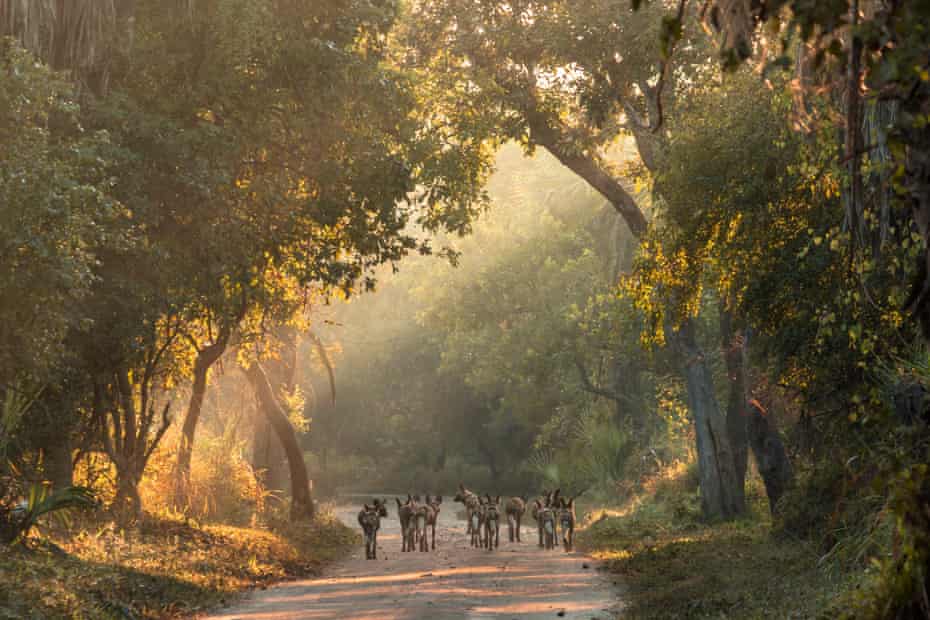
Mozambique’s civil war (1977-1992) and the poaching connected to it decimated wildlife inGorongosa national park. Since 2006, the Gorongosa restoration project has set out to bring back nature, starting with buffalo, wildebeest, eland, zebra and other animals being trucked in.
Many species have also recovered naturally under the renewed protection of the park’s 300 rangers. A recent aerial census counted more than 100,000 large animals, including about 200 lions. Three founder packs of African wild dogs and six leopards have also been brought in from SouthAfrica.
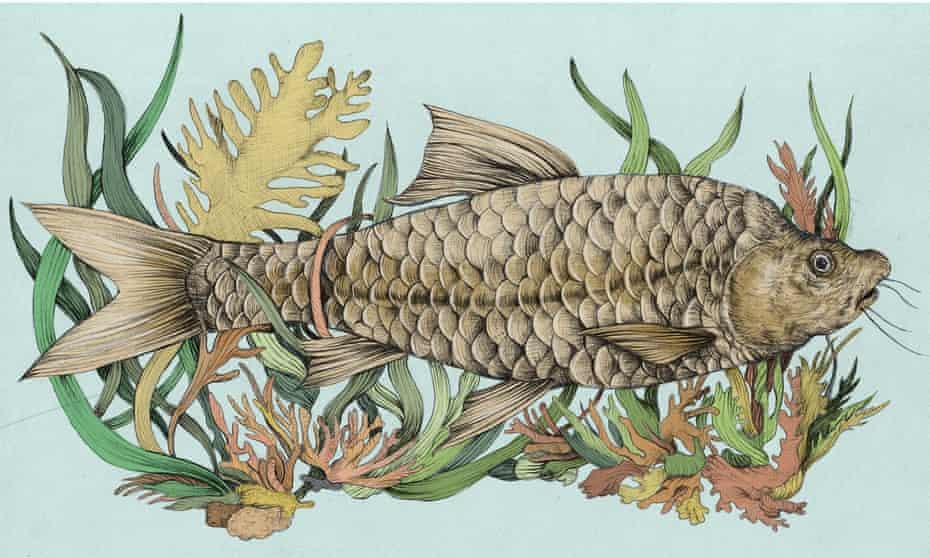
It’s unclear how the carp ended up in Lake Lanao, on the island of Mindanao, in the first place.Illustration: Ricardo Macia Lalinde/The Guardian
Just two species of the freshwater fish still exist in the ancient waters of Lake Lanao in the Philippines after predatory fish were accidentally introduced
It was a celebrated clan: a group of 17 carp species found nowhere else in the world except for an ancient freshwater lake in thePhilippines. One so fat it could be fried without oil, another sought after for its delectable egg-filled ovaries, a third known, oddly enough, for its endearing overbite.
Yet in recent years 15 of them have been declared extinct, victims of mismanaged fish farming efforts that accidentally introduced predatory fish into their home. In all likelihood, these invaders will continue…
Editor’s Note: The video above is from a previous report
MEDINA, Ohio (WJW) – A city council committee rejected a proposal issuing special permits to allow crossbow and longbow hunting of deer inside city limits.
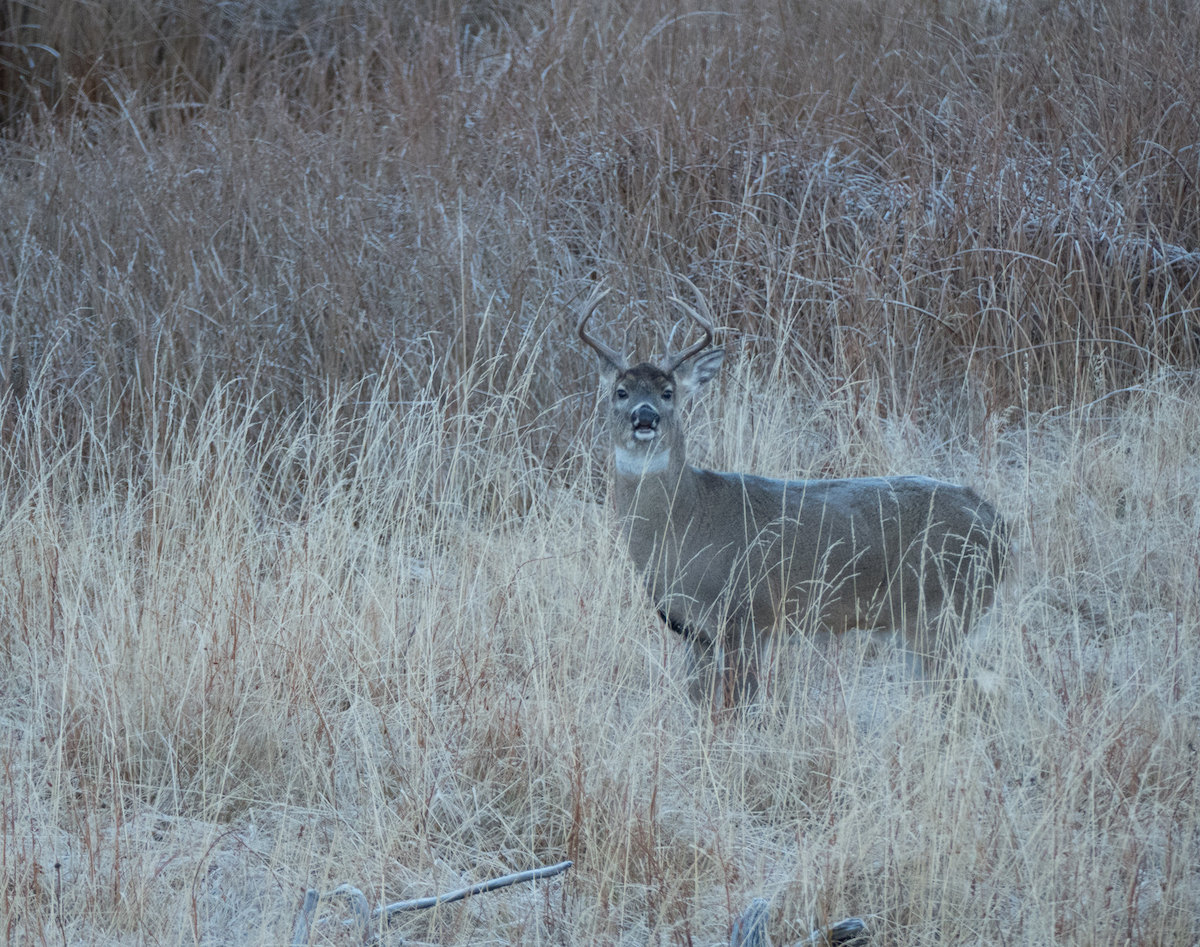
“We have 50 to 60 or 55 deer per square mile, which we have 12 square miles in the city so that’s a lot of deer,” saidMedina City CouncilPresident John Coyne III.
The hunting proposal had been under review as the deer population continues to grow.
City records state the white-tailed deer population reached an unmanageable number and is causing financial hardship for both public and private property owners due to the destruction of plants, flowers and trees.Ohio robocallers put on alert in enforcement unit crackdown
A solution under consideration was a nuisance abatement…
Instead of lowering the chances of war, the membership of the two Nordic countries increases the risk for the entire alliance.
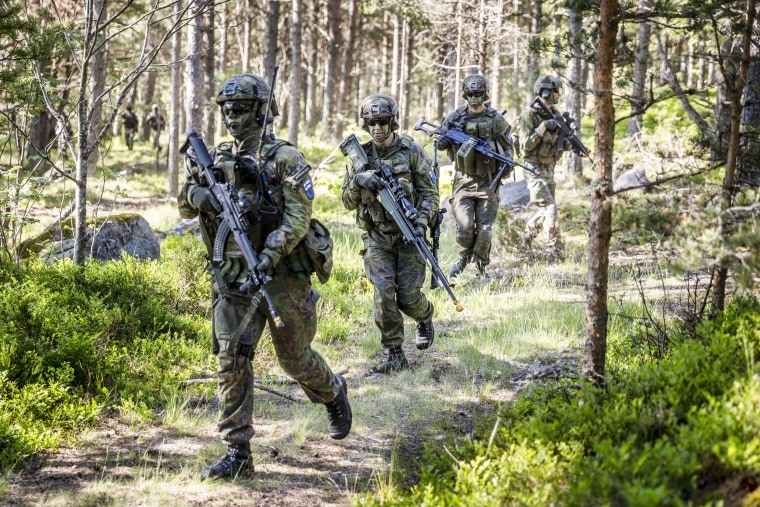
Swedish and Finnish soldiers perform war simulation exercises during the Baltic Operations NATO military drills in the Stockholm archipelago on June 11.Jonas Gratzer / Getty Images file
When NATO alliance members meet in Madrid this week, one of the featured agenda items is Finland and Sweden’s request to officially join the alliance. The NATO leadership has welcomed their ascension, with Secretary General Jens Stoltenberg saying the two countries’ “membership in NATO would increase our shared security.” Though member state Turkey originally signaled it objected to the idea, it lifted its opposition after a breakthrough on Tuesday that clears the way for the Nordic states.
While enlarging NATO might seem like a wise thing to do in light of Russia’s invasion of Ukraine, it doesn’t take much sober analysis to conclude that adding yet more NATO members is likely to have the opposite effect of what the secretary general hopes.
Instead of lowering the chances of war, the membership of Finland and Sweden would increase the risk of future conflict for the entire alliance; adding two more triggers for Article 5 — the provision in the NATO charter that stipulates that an attack on one is an attack on all — would add to the risk of war for the entire alliance. That would be an unwise course in any case, but it’s particularly ill-advised given that it would make Finland and Sweden more vulnerable, as well.
Russia poses no realistic threat to Sweden or Finland. Since World War II, Russia hasn’t exhibited the slightest interest in territorial acquisition in either country, and in fact, Finland and Russia were on friendly terms during the Cold War. In contrast, Russia was consistently and emphatically clear for 15 years that it regarded any NATO expansion along its border in either Ukraine or Georgia as an existential threat that it would use force to prevent — and in fact has done so twice (Georgia 2008 and Ukraine 2014). Thus Georgia and Ukraine had reason to fear a Russian attack. Finland and Sweden don’t.
Extending NATO membership to these two countries wouldn’t only burden the U.S., which would be expected to go to war on behalf of these two Nordic states if they are attacked. It would saddle Helsinki and Stockholm with troubles, as well. Up to now, if a war ever broke out between NATO and Russia, both Finland and Sweden would have been protected by their neutral status. If membership were extended to both, that protection would be gone.
If the two became NATO members and the alliance went to war with Russia in the future, both countries would be thrust almost immediately into an armed conflict whether they wanted to be or not — and even if their national interests weren’t otherwise threatened. Given their status as NATO members, the Kremlin would almost certainly attack airfields and ports in both countries to prevent other allies from using their facilities to stage attacks against Russia.
But there is an even more fundamental reason to oppose expanding the alliance at present: It isn’t needed. Russia has exposed itself as being shockingly weak in conventional military power, and it is now clear, beyond any question, that Russian ground forces don’t even possess the capacity to invade the NATO alliance. It isn’t entirely clear that Moscow will be able to capture the entirety of the Donbas region, in the single country of Ukraine, directly on its border. Russia is constrained in its ability to project power beyond its country by systemic flaws in its logistics system. It is very difficult to get supplies beyond more than 180 miles away and virtually impossible beyond that without dedicated rail links.
It is understandable that people who live near Russia would be afraid that one day Russia might invade them as it invaded Ukraine, and that, no doubt, led Sweden and Finland to make a sudden U-turn on their long-held preferences for neutrality. But an unemotional evaluation of their neighborhood shows their fears are misplaced. Sweden and Finland are at no clearer risk of an attack from Moscow than they have been for the past 70 years.
Though the U.S. has also recently shown itself eager to expand the alliance to these countries, the accession of Sweden and, especially, Finland could hardly be said to further the American national interest. Finland shares a roughly 800-mile border with Russia that NATO would be committed to defend, and this defense — or the stationing of NATO military infrastructure in Finland — would risk antagonizing Russia.
Washington should at least be clear that if Finland becomes a NATO member, it expects that the Europeans would be tasked with defending Finland’s border, as the U.S. itself is already doing too much for the defense of wealthy and capable European countries.
None of this is to say that Russia doesn’t pose a danger to Europe, however. It does. But the nature of the threat isn’t conventional military power; it’s the massive Russian nuclear arsenal that could nearly wipe out the U.S. and Europe in an Armageddon-type scenario.
Author Harry Kazianis participated in a 2019 U.S. government exercise in which NATO and Russia eventually came to nuclear blows during a Ukraine war scenario — and the study predicted that at least 1 billion people would be killed in the ensuing exchange (no matter who fired the first shot).
The conventional Russian military has now been exposed as too weak to significantly threaten NATO in its current composition, and Finland and Sweden are under no apparent threat from Moscow if they remain outside the alliance — while the risk of nuclear escalation if they join could destroy our country and theirs. The U.S. has a great incentive to resist the knee-jerk emotional desire to expand NATO at this time. The risk to our national security is great, while the benefit is nonexistent.
Authorities learned that the poacher has a history of shooting deer from his vehicle.Diane Renkin / NPS
SHARE
Aman in Kent County, Michigan, is facing multiple charges after he admitted to state wildlife officers that he shot, killed, and abandoned numerous deer in the area because it helped “relieve his frustration,” according to theMichigan Department of Natural Resources. Edward Trout, 29, of Cedar Springs, has also been charged with illegally spearing several snapping turtles out of season.
FILE – In this Aug. 18, 2021, file photo a cormorant flies in looking for an available piling on which to land, in Portland, Maine.
State officials say they’ve been getting daily reports of dead birds washing up across coastal Maine, which they attribute to an outbreak of avian influenza.
Brad Allen, a wildlife biologist with the Maine Department of Inland Fisheries and Wildlife, said while waterfowl can become infected with avian flu, they aren’t typically known to die from it. He suspects that many of the birds who’ve died recently have other risk factors.
“And I kind of liken it to a pre-existing condition in humans around COVID-19,” Allen said. “The virus itself might not kill you, but if you have other issues going on, they might put you over the…
The abnormal heat will continue to dry out the already baked ground, fueling more wildfires in what has already been a record fire season in the Last Frontier.
Wildfires have already burned over a million acres in Alaska even though it is still very early in the fire season.
Alaska, traditionally one of the coldest states in the country, is set to see an unusually warm start to July thanks to a heat dome parking itself over the region. Temperatures could rise up to 20 degrees F above normal in the northernmost state, with temperatures rising well into the 80s to near 90 F.
Aheat domeoccurs when there is a large poleward shift in thejet stream, which becomes wavy and…
SN 2012Z, seen in the galaxy NGC 1309 by the Hubble Space Telescope. The inset images show the progenitor system before the explosion, and the light of the failed supernova after the explosion.(Image credit: NASA/ESA/C. McCully and S. Jha (Rutgers University)/R. Foley (University of Illinois)/ Z. Levay (STScI))
Astronomers have spotted a white dwarf that miraculously survived its own thermonuclear detonation, raising questions over how and why these stars create supernovas.
Awhite dwarfis the evolutionary endpoint of asun-like star. After such a star swells to become ared giant, then runs out of the fuel required for nuclear fusion reactions, the star ejects its outer layers to form a






 Top ArticlesbyOutdoor Life



 Exposing the Big Game
