A camper scared off a bear — then the grizzly came back and killed her

Jonathan Edwards – 4h ago

React87 Comments|304

  • Share
  • Save

Early on July 6, 2021, Leah Lokan awoke to a 417-pound grizzly bear a few feet from her tent, so close that she heard when the bear “huffed” at her head.

© Interagency Grizzly Bear Committee/Interagency Grizzly Bear CommitteeA camper scared off a bear — then the grizzly came back and killed her

“Bear! Bear!” Lokan yelled, prompting Joe and Kim Cole — two other cyclists camping in the small town of Ovando as they trekked across Montana — to spring from their nearby tent, armed with bear spray and clamoring as much as possible, according to a 26-page report addressed by the Interagency Grizzly Bear Committee’s executive body earlier this month.

This Group Changes Retirement

AdSmart Asset

The bear fled.

After scaring it off, Lokan, a 65-year-old visiting from Chico, Calif., moved food out of her tent to a nearby building. She armed herself with a can of bear spray. She declined an offer to stay in a hotel for the night. Then, she and the Coles returned to their respective tents.

Lokan’s extra precautionary measures weren’t enough. The bear returned about an hour after the first encounter and mauled her to death.

A year later, wildlife officials said the bear that killed her had developed a “predatory instinct.” Although they couldn’t determine exactly how such an instinct evolved, food and toiletries inside and near Lokan’s tent, as well as the lingering smell of cooked food from July Fourth picnic celebrations, likely played a role.

“While foraging under the cover of darkness in Ovando, perhaps due to a simple movement made by the sleeping victim, or a certain sound made by the victim, the bear reacted,” the committee’s board of review wrote in their Jan. 4 report, which was discussed earlier this month during the executive body’s summer meeting. The 11-member review board included officials from Montana Fish, Wildlife and Parks; the U.S. Fish and Wildlife Service; and the U.S. Forest Service.

Such predatory behavior is rare, even though many of the black and grizzly bears living in the contiguous United States exhibit a certain degree of habituation, officials said in the report. To survive, bears have to be “non-reactive” to people if they want to take advantage of “the rich low elevation habitats that are dominated by humans.”

And most do, despite becoming “mildly food-conditioned” by occasional encounters with unnatural food sources such as garbage, grains and bird feeders, the report said.

Related video: A Wilder View: Why grizzly bears appear on hiking trails

that is normally designed for a horse to walk on and train the

Loaded: 79.79%Play

Current Time 1:20

/

Duration 3:00LQCaptionsFullscreen

A Wilder View: Why grizzly bears appear on hiking trailsUnmute

0

View on Watch 

By July 2021, the bear that killed Lokan had gone beyond “non-reactive.”Grizzly bear kills bicyclist in Montana after pulling her from tent

Lokan had been riding with her sister and their friend in the Tour Divide, an annual bike ride along the Great Divide Mountain Bike Route, a roughly 2,700-mile span that starts in Alberta, Canada, and ends at the U.S.-Mexico border in Antelope Wells, N.M.

Ovando, a town of fewer than 100 in the western part of the state, is a popular oasis along the ride, according to the report. Thousands of cyclists stop in town during the summer to eat, camp for the night or stay in a hotel.

While Lokan’s sister and friend chose to hole up in a hotel the night of July 5, Lokan opted to camp behind the Brand Bar Museum with the Coles, whom they’d met during their travels. She set up her tent around 7 p.m.

Around that time, the grizzly bear was about 4 miles to the west trying to break into a trailer, according to the committee’s report.

Eight hours later, the bear made its way into Lokan’s camp, huffing at her head and causing her to raise the alarm that would scare it back into the woods.

Lokan tried to make her camp more bear-safe, the report said. Although she moved her snacks and lentils out of the tent into a nearby building, the bags in which she kept her toiletries still smelled of the dried blueberries they’d once contained, investigators said. Moreover, she still had food — beef jerky, trail mix, granola bars, a baked potato — in the saddle bags draped over her bike, which was about 10 feet from her tent.

The makeshift campsite behind the Brand Bar Museum in Ovando, Mont., just hours after a 417-pound grizzly bear mauled 65-year-old camper and cyclist Leah Lokan to death.

Around 4:05 a.m., the Coles were awakened once again. But this time, it wasn’t Lokan’s shouting that roused them but the sound of the bear attacking her. Joe Cole unzipped their tent and roared in an effort to scare it off. His wife joined in by blowing a whistle. Emerging from the tent, the Coles saw the bear “pouncing up and down” on Lokan and her tent. Joe Cole advanced as he doused it with bear spray.

“The bear made eye contact with Joe, then averted its head as they approached closer, turned, and left,” the report states.

Although officials credited Cole’s “aggressive response and action” with once again scaring off the bear, the damage was done. Emergency workers found “no obvious signs of life” while treating Lokan. Officials would later determine that her death was “instantaneous” after the bear broke her neck and severed her spinal cord. The medical examiner noted that she also had severe cuts to her head, neck, shoulders and back.

The grizzly eluded wildlife authorities for days as reports came in of a bear pillaging chicken coops, raiding garbage cans and killing deer. But just after midnight on July 9, agents with the U.S. Department of Agriculture Wildlife Services shot the bear five times, killing it. Subsequent DNA tests confirmed it was the bear that had attacked Lokan.

In their report, officials issued several recommendations for campers in the wake of Lokan’s death. They encouraged people to keep food or anything with a scent, such as toothpaste or lotion, far away from tents; to pitch tents at least 100 feet from where food has been cooked; and not to return if a bear comes near an occupied tent.

Investigators found a nearly empty can of bear spray inside Lokan’s tent and evidence she’d used it during the attack. In the report, officials said Lokan’s family had suggested that manufacturers add whistles to bear-spray cans that would sound when someone pulls the trigger. The noise would serve two purposes: to alert others of danger and further harass the bear.

North Platte hunting guide’s client convicted of illegal transport of illegal game

Exposing the Big Game's avatarCommittee to Abolish Sport Hunting Blog

by: George Lauby – Jul. 15, 2022

A Georgia hunter was sentenced Friday in federal court for illegally transporting deer that were illegally taken near North Platte.

Daniel C. Morris, 40, of Monroe, Ga. was sentenced in Lincoln, to 7 years’ probation for violating the Lacey Act – unlawfully transporting wildlife in interstate commerce.He must also pay a $5,000 fine and pay $2,000 restitution, U.S. District Judge John Gerrard said.

In the fall of 2020, Morris traveled to Noble Outdoors with two hunting partners to hunt mule deer during the archery season,Acting U.S. Attorney Steven Russell said.

During the hunt, Morris shot a mule deer buck from the roadway with a Ruger All-American 6.5 Creedmoor rifle provided and directed by Dustin Noble, guide and owner of Noble Outdoors, operating in the North Platte area.

Shooting from the road and using a firearm to take deer during archery hunting season are…

View original post 208 more words

Tennessee Bear Dies after Getting Trapped in 140 Degree Car

BY JESSICA THOMSON ON 6/24/22 AT 7:54 AM EDT01:07

Crafty Bear Opens Car Door For Inspection

SHARE https://www.newsweek.com/black-bear-died-heat-trapped-car-searching-food-1718850

Share on FacebookShare on TwitterShare on LinkedInShare on RedditShare on FlipboardShare via EmailComments

TECH & SCIENCEBEARSTENNESSEEHEAT WAVEBLACK BEAR

https://trinitymedia.ai/player/trinity-player.php?pageURL=https%3A%2F%2Fwww.newsweek.com%2Fblack-bear-died-heat-trapped-car-searching-food-1718850&unitId=2601060880&userId=f094586e-da54-4c15-8d39-7b314927df76&isLegacyBrowser=false&version=20220715_7d281dbf51c44ce92232efb031450aeb04617914&useCFCDN=0&abTestAlias=Pauses+AB+test+v2&themeId=140

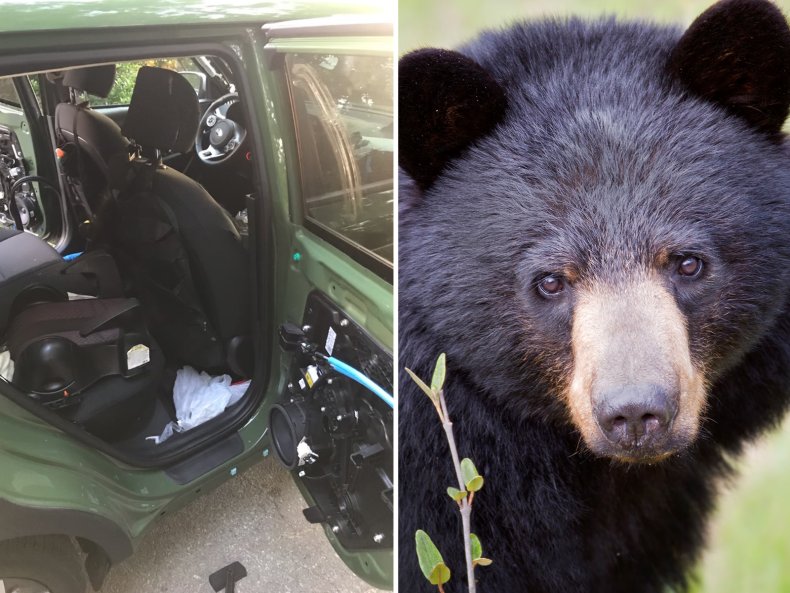
Ablack bear that got stuck in a hot car in Sevierville, Tennessee, has died from heatstroke, wildlife officials say.

The Tennessee Wildlife Resources Agency (TWRA) said the bear entered the parked car outside a rental cabin, using its teeth or paws to open the door. The door then shut behind it, leaving the bear stuck inside the vehicle.

With temperatures outside being nearly 95 degrees that day, the TWRA estimates that the vehicle’s interior could have reached over 140 degrees. The owner of the car came back at around 6:45 p.m. local time and discovered the bear had died.

Bear
Stock image of a black bear. Picture from the car shows that the bear attempted to claw its way out before succumbing to the heat.ISTOCK / GETTY IMAGES PLUS / TENNESSEE WILDLIFE RESOURCES AGENCY

NEWSWEEK NEWSLETTER SIGN-UP >

Tennessee is currently in the clutches of a heatwave. Temperatures in Sevierville are currently hovering around the 90 degree mark and are expected to climb over the next 10 days.

Bears and other furry mammals cannot sweat like humans do, so they are less able to regulate their body temperature when it gets too hot, eventually leading to organ failure and death.

Wildlife officials say that the bear was likely looking for food in the car when it got trapped.

“Notice the empty soda can and food package on the floorboard,” the TWRA wrote in a Facebook post. “Bears have noses seven times better than a bloodhound and can smell even the faintest odor of food inside a vehicle. Lock your doors, roll up your windows, and never leave food or anything that smells like food inside!”

NEWSWEEK SUBSCRIPTION OFFERS >

https://www.facebook.com/v2.6/plugins/post.php?app_id=&channel=https%3A%2F%2Fstaticxx.facebook.com%2Fx%2Fconnect%2Fxd_arbiter%2F%3Fversion%3D46%23cb%3Df28601fc2eea8fc%26domain%3Dwww.newsweek.com%26is_canvas%3Dfalse%26origin%3Dhttps%253A%252F%252Fwww.newsweek.com%252Ff2ba15ce3a3766c%26relation%3Dparent.parent&container_width=500&href=https%3A%2F%2Fwww.facebook.com%2Ftnwildlife%2Fposts%2Fpfbid02R7QKpw2GLeELobNvRHrtUgeU9zyJxFMrZxRNkFPWi3gAAPHCj3SsaNcGNvXLKJqXl%3Famp%3B__tn__%3D%2CO%2CP-R&locale=en_US&sdk=joey&show_text=false&width=500

Even things that you might not think would attract a bear can lead them to investigate.

“Empty food containers, candy wrappers, fast food bags, and even air fresheners can attract bears. Please be #BearWise and help us keep bears wild and alive,” the TWRA said.

Fires scorch Spain and France, where flames reach the beach

Exposing the Big Game's avatarThe Extinction Chronicles

By ANGELA CHARLTON and JOSEPH WILSON2 hours ago

https://apnews.com/article/wildfires-france-fires-evacuations-c6b6e5f2abe0611da6dd88790a23e94b

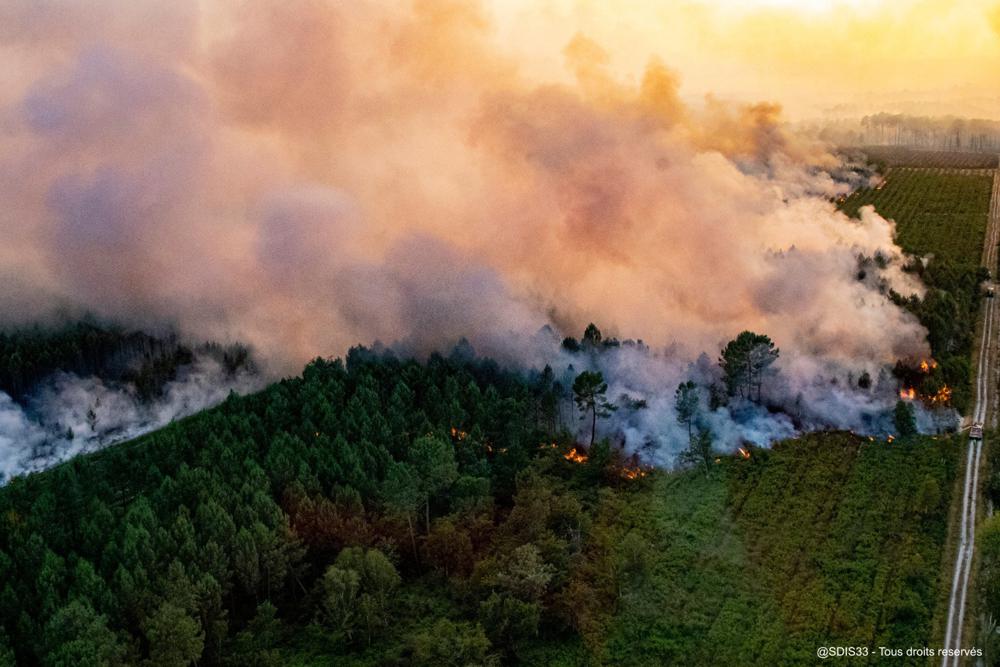
This photo provided by the fire brigade of the Gironde region (SDIS 33) shows a wildfire near Landiras, southwestern France, Saturday July 16, 2022. Firefighters are struggling to contain wildfires in France and Spain as Europe wilts under an unusually extreme heat wave that authorities link to a rise in excess mortality. (SDIS 33 via AP)

1 of 11

This photo provided by the fire brigade of the Gironde region (SDIS 33) shows a wildfire near Landiras, southwestern France, Saturday July 16, 2022. Firefighters are struggling to contain wildfires in France and Spain as Europe wilts under an unusually extreme heat wave that authorities link to a rise in excess mortality. (SDIS 33 via AP)

PARIS (AP) — Firefighters battled wildfires raging out of control in Spain and France, including one whose flames reached two popular Atlantic beaches on Sunday, as Europe wilted under anunusually extreme heat wave.

So far, there have been no fire-related deaths in France or Spain, but authorities in Madrid have blamed soaring temperatures for hundreds of deaths. And two huge blazes, which have consumed pine forests for six days in southwestern France, have forced the evacuation of some 16,200 people.

View original post 976 more words

Putin is already at war with Europe. There is only one way to stop him

Exposing the Big Game's avatarThe Extinction Chronicles

OpinionbySimon Tisdall-7h ago

React280 Comments|309

  • Share
  • Save

Time to wake up and smell the cordite. Like shockwaves from an exploding missile, Vladimir Putin’s war on Europe’s edge is rapidly rolling westwards, blasting its way through the front doors of homes, businesses and workplaces from Berlin to Birmingham. Its fallout seeds a toxic rain of instability, hardship and fear.

©Provided by The GuardianPhotograph: Thomas Peter/Reuters

Second Nature Home Air Filters – Free Delivery, Always

Adhttp://www.secondnature.com/Air-Filter/Subscription

The idea the Ukraine conflict could be confined to Ukraine – Nato’s politically convenient grand delusion – and that western sanctions and arms supplies would stop the Russians was always a nonsense. Now, enraged by Kyiv’s stubborn resistance and hell-bent on punishing his punishers, Putin’s aim is the immiseration of Europe.

Byweaponising energy, food, refugees and information, Russia’s leader spreads the economic and political pain, creating wartime conditions for…

View original post 894 more words

Leeds turkey hunter who shot woman won’t serve jail time

Exposing the Big Game's avatarCommittee to Abolish Sport Hunting Blog

by Judy HarrisonJuly 14, 2022

A turkey hunter from Leeds will serve no jail time but must speak about hunter safety, forfeit his shotgun and pay nearly $11,000 after a shooting last fall that injured a woman’s face and neck.

Timothy H. Jacobs, 62, was indicted by the Androscoggin County grand jury in January on one count each of aggravated assault with a firearm and reckless conduct with a firearm, both felonies, and a misdemeanor charge of assault while hunting.

In a plea agreement, Jacobs on Thursday pleaded guilty to reckless conduct with a…

View original post 539 more words

Bird flu outbreak, first of its kind in 7 years, creates challenges for Central Oregon farmer

https://www.opb.org/article/2022/07/15/bird-flu-central-oregon/

By Jamie Diep

July 15, 2022 9:33 a.m.

Farming is a family affair for Cameron Gunther. His parents were farmers, and he now runs a small poultry farm, Home Farm Foods, with his mother in Culver, Oregon. Their 4,000 chickens can produce up to 250 dozen eggs every day. That may sound big, but Gunther says that doesn’t translate into a big cushion for unexpected problems.

Several of the interns are vegetarian, but all still participate in monthly chicken "harvests."
Chicken’s graze at Rainshadow Organics farm in Sisters, Oregon in this file photo. Nearby, Bend poultry farms were put under quarantine for avian flu on July 11.Sage Van Wing / OPB

“We don’t have these huge savings accounts that these big farms have,” Gunther said. He made the tough choice to close access to his farm after a form of avian flu, that can be deadly for wild birds and poultry, was found in the nearby city of Bend.

“If we went positive for avian I think we would go under,” Gunther said.

For Gunther, it was voluntary. Farms within 10 kilometers of infected property fall within a quarantine zone, which covers most of Bend. Nearby poultry farmers outside of that area may also take preventative measures.

The challenges Gunther and other poultry owners now face come after the Oregon Department of Agriculture issued a regional quarantine for avian influenza for Deschutes County this week. It was the fifth confirmed case in the state this year. Dr. Ryan Scholz, state veterinarian for the Oregon Department of Agriculture, says the strain of avian influenza detected in Bend differs from a less-severe strain typically found in Oregon.

“What we’re dealing with right now is what we call a highly pathogenic strain of avian influenza where instead of just making birds a little bit sick, the highly pathogenic strains will kill the birds outright very, very quickly,” Scholz said.

These strains are uncommon in the U.S., Scholz said. “We’ve only had one other large outbreak of a strain of highly pathogenic avian influenza here in the U.S., and that was in 2015,” Scholz said.

But in the Pacific Northwest, the strain has been running rampant. Washington has already had 28 cases detected in domestic flocks.

The virus was found in a flock of roughly 70 birds in eastern Bend where owners sold eggs to the public. Because the virus quickly kills poultry, the Department of Agriculture issues regional quarantines after detection and euthanizes all birds exposed to the virus.

THANKS TO OUR SPONSOR:

Become a Sponsor

According to Scholz, during the quarantine, the department conducts two rounds of surveillance with 14 days in between.

“If we find any more cases within that control area, then that quarantine gets extended and we have to start over again.”

Gunther, whose farm is in Jefferson County some distance from the mandatory quarantines near Bend, restricted farm access at first because of cases in Washington. He fully closed his farm to visitors as a preventative measure following the quarantine announcement on Tuesday.

“Anybody that doesn’t work for us immediately no longer has access to the farm,” Gunther said. “We’ve completely shut it down.”

These quarantines burden poultry farmers, especially those like Gunther who rely on his birds having outdoor access. His facilities currently cannot handle a full quarantine – which requires isolating birds indoors.

“If all those birds were to go inside, and we have to lock all the vents, all the fans, all the doors…, the heat in there would just be too much,” Gunther said. “I would suggest or guess that we would probably lose 30-40% from heat stroke.”

These preventative measures also place a financial strain on farmers like Gunther, who said, “Even when you do test positive for avian, the help is a joke.” While the USDA will offer compensation for euthanized poultry, cleaning and equipment disposal, losses from business disruption cannot be covered. Already, Gunther has felt the impact of his self-quarantine. Deliveries, usually done two to three times a week, are only being done once. A full quarantine, he said, would be devastating to the farm and its staff.

“If we went on the full lockdown, we’d probably have to let go of three of our five guys,” He said.

To prevent avian flu from spreading, Scholz said, “The biggest thing is making sure that wild waterfowl do not come into contact with domestic birds.” Other preventative measures include cleaning equipment and clothing that comes in contact with other domestic and wild birds, as the virus spreads from bird to bird contact.

As summer progresses, the warmer weather should help mitigate the virus. However, Scholz still encourages flock owners to be mindful of avian influenza.

“I fully expect this virus to be back in the fall when the weather cools off and the birds start flying through again,” Scholz said. “So it’s going to be really important that poultry owners take a good look at their operations right now and figure out what they can implement to protect their own birds.”

If you suspect wild or domesticated birds to have avian influenza, contact the Oregon Department of Agriculture immediately. Symptoms include sudden death, swelling around the head, discoloration, coughing, sneezing, diarrhea, lack of energy and decreased appetite.

Why so many vehicle crashes involving deer?

[Could it be that there are too many people and not enough wolves or cougars?]

https://www.crescent-news.com/news/local_news/why-so-many-vehicle-crashes-involving-deer/article_58422488-0218-11ed-8f30-3ff69e0abb5a.html

1 of 2

Whitetail deer are common in NW Ohio

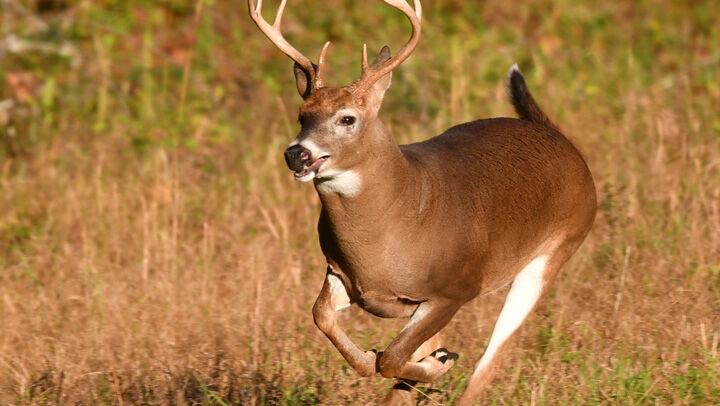
Increasingly whitetail deer, pictured here, are getting onto roadways and into crashes with motor vehicles.

  • ODNR file photo

Ohio's most common wild animal — whitetail deer

The number of motor vehicle crashes with deer has increased in the last year, raising questions about population and movement of deer in northwest Ohio. Here is a photo of a whitetail buck from the Ohio Department of Natural Resources.

  • ODNR File Photo

Dusk to dawn driving in the six-county area of northwest Ohio can be hazardous as seen by the number of accidents caused by an encounter with a deer or two.

Deer can be encountered alongside the road at any time during the day and in rural or urban areas, but prefer to move during dusk and dawn. According to Lt. Rustun Schack, commander at the Defiance Post of the Ohio State Highway Patrol, in the three counties of Williams, Defiance and Paulding alone, car-deer crashes are up.

“In Williams County from Jan. 1-July 12, 2021 compared to that same time this year, the number of crashes involving a deer went up from 148 to 188 in 2022,” said Schack. “For Defiance in that same time period, crashes went up from 160 to 193. Paulding County went up slightly from 95 to 99. One crash was a fatal — a man on a motorcycle in 2021 was on U.S. 24 when he struck a deer. He was then struck by another vehicle.”

A search on the Ohio Highway Patrol crash website revealed that Putnam, Fulton and Henry counties experienced a similar trend for that same time period with only Putnam County showing a decrease (2021 numbers in parentheses): Putnam, 63 (51); Fulton, 100 (90); Henry, 108 (90).

According to Clint McCoy of the Ohio Department of Natural Resources (ODNR) Wildlife Division, Columbus, the increase in the whitetail deer population in the past few years may be a factor.

“The deer population is growing in Ohio,” said McCoy. “In almost every part of the state it continues to grow. We actually have increased bag limits for 18 counties — most of them in the western part of the state where we have set buck harvest records — in the upcoming hunting season. Because hunters are allowed to harvest only one buck each season, that is our primary index of the deer population. A larger harvest equals a larger population.”

In the last hunting season (2021), five of the six counties in northwest Ohio set records or were near setting records: Henry, Paulding and Putnam counties set harvest records, with Fulton and Williams counties not far off record harvests. Though it set a record in 2020, Defiance was the only county a bit down for the season due to an outbreak of epizootic hemorrhagic disease (EHD) — an insect borne disease that affects whitetail deer,but usually dissipates with colder weather.

McCoy also said that Defiance and Williams counties have larger populations of deer than surrounding counties.

“Defiance and Williams probably have in terms of absolute numbers of deer larger populations,” McCoy pointed out. “The reason is that the two counties and parts of Fulton have a fair bit more forest cover than other counties. Habitat diversity is a staple for prime deer habitat and that gives a larger deer population.”

Hunting is the major way of controlling the deer population, according the McCoy.

“While setting harvest records, it’s taking fewer hunters to do so,” he said. “Statewide there has been a 20% drop of hunters in the past decade or so. For the most part there are no natural predators of deer so hunting is the major way of controlling the population. Coyotes will take fawns and, in rare instances, an adult deer and bobcats in the eastern side of the state will take a deer. Other than that (there are) no natural predators.”

Neither Schack nor McCoy were able to comment definitively about reasons for car-deer crashes.

“I don’t know how much of an issue the vicinity of farms to roadways is an issue for deer-car crashes,” stated McCoy. “I have been in conversation with ODOT and law enforcement and looked at maps. One of the things that comes to the surface is where the habitat meets the roadway. If a roadway is in a corridor that wildlife use frequently there will be encounters. Loss of habitat by increasing tillable acreage does impact wild animals, but deer fair better than other animals.”

McCoy further commented about farm land and deer stating that soybean fields are prime food for “nursing moms and bucks growing antlers” because of the high protein available.

Schack offered some advice for drivers who encounter deer alongside the roadway.

“Be cautious, especially at dusk and dawn, when deer are most active,” he advised. “Maintain the speed limit and be aware that if you see one deer, there may be more.”

He also said that the reports they receive are not all of the crashes as a result of deer.

“There are unreported deer-car accidents because some insurance companies do not require a report to be filed,” he noted. “The crashes increase when deer are on the move and movement increases during the rut and during hunting seasons in the fall.”

Schack said that when a driver strikes a deer sometimes the deer is not killed and attempts are made to track down the injured animal.

“When we get a call for a vehicle that has struck a deer, we search the accident site for safety reasons,” he said. “If the deer has run off before we arrive we make sure the area is secure. If the deer is still in the area we may have to dispatch the animal. If the driver wants to claim the deer they can do so, but they have to get a receipt from the enforcement authority at the crash site.”

He also said that an injured animal can be dangerous and should not be approached.

“If you strike a deer don’t approach it, they can injure you,” he cautioned. “Wait for the authorities to arrive and they will deal with it.”

What will it take to bring Brittney Griner home?

Exposing the Big Game's avatarThe Extinction Chronicles

Mike Bebernes

·Senior Editor

Fri, July 15, 2022 at 12:17 PM·6 min read

In this article:

    • Brittney GrinerBrittney Griner|C

    “The 360” shows you diverse perspectives on the day’s top stories and debates.

    0:10

    1:53

    Scroll back up to restore default view.

    What’s happening

    WNBA star Brittney Griner, who has spent the last several months in detention in Russia,appeared in court on Fridayat the latest hearing of her ongoing drug trial.

    Griner, who plays for a Russian team in the WNBA off-season, was arrested at a Moscow airport on Feb. 17 after authorities said they found vape charges containing about 0.7 grams of cannabis oil in her luggage. After several months in detention awaiting trial,she pleaded guilty last weekto a single drug charge that carries a potential sentence of up to 10 years.

    Despite Griner’s high profile, public discussion of her situation at home was initially…

    View original post 1,014 more words