(KVEO) — Researchers discovered an oak tree within Texas Big Bend National Park that was thought to have been extinct over 10 years ago.
A lone Quercus Tardifilia tree was discovered May 25 at the national park standing at 30 feet tall, according to a news release from The Morton Arboretum.
Though in poor condition, botanical researchers were thrilled to find the lone oak tree after the specimen was believed to have perished in 2011.
According to scientists, a drought or fire has the potential to end its life.
Scientists are now working with the National Park Service to reduce the immediate wildfire threat to the tree, and conservationists in this collaborative are moving quickly to return to search for acorns in an attempt to propagate.
(Montana Department of Fish, Wildlife and Parks press release)
BILLINGS – A Shepherd man lost his hunting privileges for 16 years and will pay fines and restitution exceeding $6,000 after pleading guilty to 16 state and federal charges of poaching mule deer and leaving some parts at a federal recreation area.
Brayden Reed, 19, pleaded guilty in Yellowstone County Justice Court to four counts of unlawful possession of deer, two counts of wasting game, three counts of hunting during a closed season, two counts of unlawful use of equipment, two counts of hunting without a license and one count of killing more than…
Parts of France and Germany likely to experience temperatures above 40C this week, while highs in Iberia could touch 47C
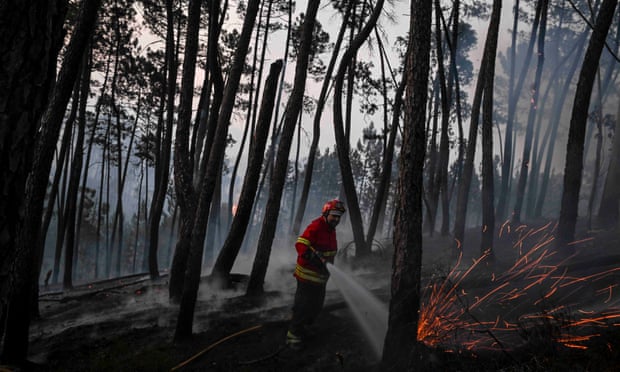
A firefighter extinguishes a wildfire in Alvaiázere, Portugal, on Sunday. The country has declared a state of alert over the risk of fires.Photograph: Patrícia de Melo Moreira/AFP/Getty Images
Europe is once again entering a period of significant heatwave conditions this week, with the possibility of some record-breaking temperatures.
Sweltering heat has already been affecting Iberia over the past few days, with temperatures 4-5C above the seasonal norm, leading to highs above 40C (104F). Through the rest of this week, the heat is likely to build even more intensely to about 7C above average, with maximum temperatures touching 46-47C in Seville, for instance.
As low pressure develops to the west of Europe, this intense heat across Iberia will surge northwards through France, potentially reaching…
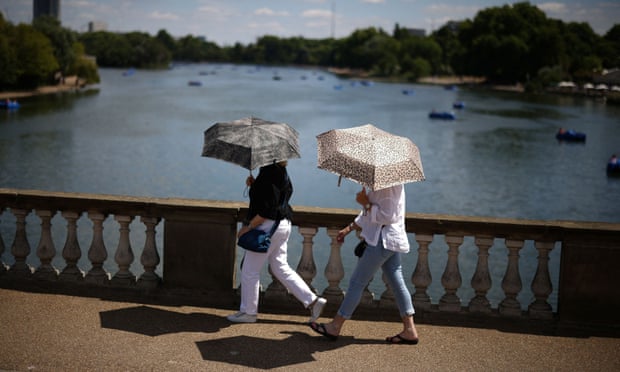
The UK and continental Europe are sweltering in a heatwave due to last until at least the weekend, and the climate crisis is playing a clear role in intensifying extreme temperatures.
Why is it so hot at the moment?
A high pressure system called the Azores High, which usually sits off Spain, has grown larger and pushed farther north, bringing high temperatures to the UK, France and the Iberian peninsula. The UK will cool a little in the middle of the week, says Annie Shuttleworth at the Met Office, as cooler air pushes down from the north, althoughsouthern Englandwill still have temperatures in the…
The world’s population is projected to reach 8 billion on 15 November 2022 and India is projected to surpass China as the world’s most populous country during 2023, the World Population Prospects 2022 released by the Unied Nations on Monday says.
The latest projections by the United Nations suggest that the global population could grow to around 8.5 billion in 2030, 9.7 billion in 2050 and 10.4 billion in 2100.PlayUnmute
Loaded:1.00%Fullscreen
Population growth is caused in part by declining levels of mortality, as reflected in increased levels of life expectancy at birth.
Globally, life expectancy reached 72.8 years in 2019…
Graffiti written on a red zone which reads “Abortion Is A Human Right” is seen as abortion rights activists march in protest from the First Street Federal Courthouse to City Hall in Los Angeles, California, on July 6, 2022.
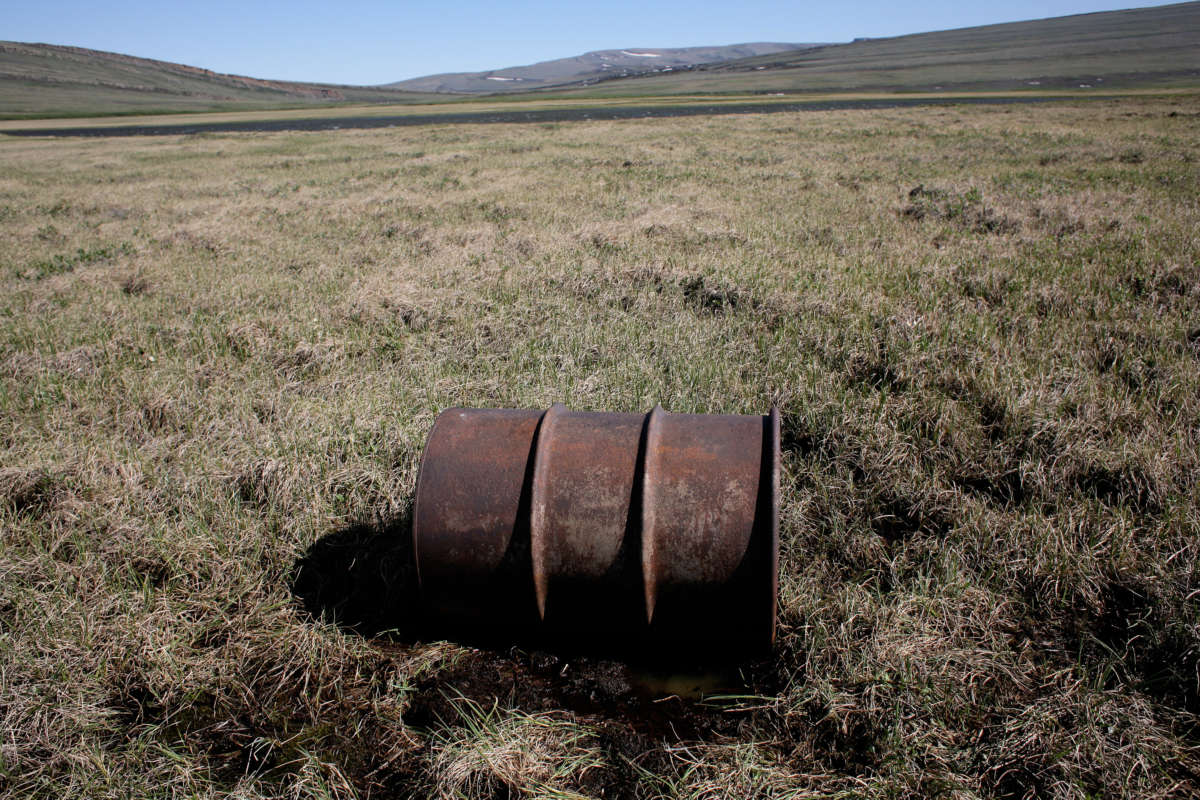
A lone oil barrell in the tundra, most likely used for helicopter refueling during the last major mineral survey of the region in 1950. The Kokalik River, in extreme north western Alaska, winds its way through the National Petroleum Reserve, 23 million acres of wilderness that was set aside by President Warren Harding in 1923 for future oil and mineral exploration.
Climate groups raised the alarm and put President Joe Biden on notice after the Bureau of Land Management opened the public comment period Friday for a proposed drilling project in the Alaskan Arctic that critics warn would unleash a dangerous “carbon bomb” and threaten pristine ecosystems if given approval by the federal government.
Oil giant ConocoPhillips has proposed the oil drilling and extraction Willow Project in Alaska’s National Petroleum Reserve, located in the Western Arctic coastal region in the far north of the state. Hundreds of state, local, and national environmental and Indigenous groups, however, have come out forcefully against the project and described the federal government’s assessment of its possible impacts as flawed.
“If approved the Willow project would be bigger than any other proposed oil and gas project on our nation’s public lands, and it poses an unparalleled climate and biodiversity threat that puts President Biden’s climate legacy at risk,” said Kristen Miller, conservation director of the Alaska Wilderness League, following BLM’s release on Friday of its Draft Supplemental Environmental Impact Statement (DSEIS).
Stay in the loop
Never miss the news and analysis you care about.
Email
The release of the DSEIS triggered a 45-day public comment period which by statute must precede final approval of the project. While groups have denounced ConocoPhillips initial 2020 proposal for the project as misleading and a plan that would lead to certain disaster for the region and the planet, opponents said Friday that Biden’s approval or rejection of the project would likely seal his legacy as a climate champion or a leader who caved to the interests of the fossil fuel lobby.
Allowing new drilling in “an area that is already being ravaged by climate change,” said Miller, “would put critical wildlife and subsistence resources in the crosshairs, and it would lock us into decades of carbon-intensive oil and gas extraction.”
“Willow is a legacy setting project that will test whether the Biden administration is righting America’s course from a dangerous climate path,” she added.
A federal court last year put the permits for the project on hold pending a more thorough federal review and Friday’s DSEIS is the result of that order. While the oil company has continued to lobby for the project’s approval, an analysis of Willow by the Center for American Progress in March showed that the emissions resulting from the project — estimated to produce 160,000 barrels of oil per day for 30 years — would “would dwarf the greenhouse gas emissions avoided by fulfilling [Biden’s] 2030 commitments on renewables on public lands and waters.”
Ellen Montgomery, public lands director for Environment America, said the approval simply cannot be justified in the context of the promises that Biden has made.
“Allowing the Willow Project to move forward will harm irreplaceable landscapes and further exacerbate the climate crisis in a region that is especially vulnerable to rising temperatures,” Montgomery said. “President Biden has set admirable ambitions for tackling the climate crisis but it could all be undermined if the Willow Project moves forward.”
The 250 million metric tons of emissions that would result from the project, she added, would be a “carbon bomb” that over its 30-year lifespan would be equivalent to annual emissions of nearly a third of all U.S. coal-fired power plants.
“Authorizing Willow would be a significant step backward in the global climate fight,” “We hope that Americans send in hundreds of thousands of public comments opposing this proposal.”
Speaking of local concerns, state director of Alaska Environment Dyani Chapman warned that the Willow project “poses an existential threat to the people and wildlife of the Western Arctic.”
“This is a proposal to literally re-freeze the tundra that is melting because of climate change to drill for more oil that will be burned and make climate change worse,” she said. “The proposed Willow Project is absurd and Alaska does not need any part of it.”
Faroe Islands to limit controversial dolphin hunt quota to 500
3h ago
React|15
Share
Save
The Faroe Islands said it would provisionally limit its controversial dolphin hunt to 500, following public outcry over the practice.
Each year images of the bloody dolphin hunt by fishermen on the self-governing islands located in the North Atlantic make headlines around the world and spark outrage among animal rights activists who consider the practice barbaric.
The new quota of 500 dolphins announced on Sunday follows the “unusually large catch” of 1,423 white-sided dolphins in September last year, the government of the Danish autonomous territory said in a statement.
At least 10 heat records were broken incities across the Southwest and central U.S. over the weekend, and more could fall this week amid continuedforecasts of searing heat.
Cities and towns in Colorado, Texas, Oklahoma and Arkansas all saw record highs on Friday and Saturday. Some broketemperature records set nearly a decade ago and others exceeded previous highs by up to six degrees. The high temperatures are largelythe result of a “heat dome”– a persistent region of high pressure trappingheat over the area.
While the daily records broken weren’t necessarily widespread,given July is already a hot time of year,the conditions created by the heat dome have still been conducive to approaching and meeting record numbers in many areas,Accuweather Meteorologist Joseph Bauer told USA TODAY.
“(The heat dome)hasbeen there from late last week intothis weekend, and it’s going to…












 Exposing the Big Game