MIT scientists think they’ve discovered how to fully reverse climate change

Exposing the Big Game's avatarThe Extinction Chronicles

Joshua Hawkins

https://www.yahoo.com/entertainment/mit-scientists-think-ve-discovered-180800050.html

Sat, July 9, 2022 at 11:08 AM·2 min read

If you purchase an independently reviewed product or service through a link on our website, BGR may receive an affiliate commission.

Scientists at MIT think they may have finally found a way to reverse climate change. Or, at the least, help ease it some.

The idea revolves heavily around the creation and deployment of several thin film-like silicon bubbles. The “space bubbles” as they refer to them, would be joined together like a raft. Once expanded in space it would be around the same size as Brazil. The bubbles would then provide an extra buffer against the harmful solar radiation that comes from the Sun.

Today’s Top Deals

View original post 371 more words

‘Extinct’ parrots make a flying comeback in Brazil

Exposing the Big Game's avatarThe Extinction Chronicles

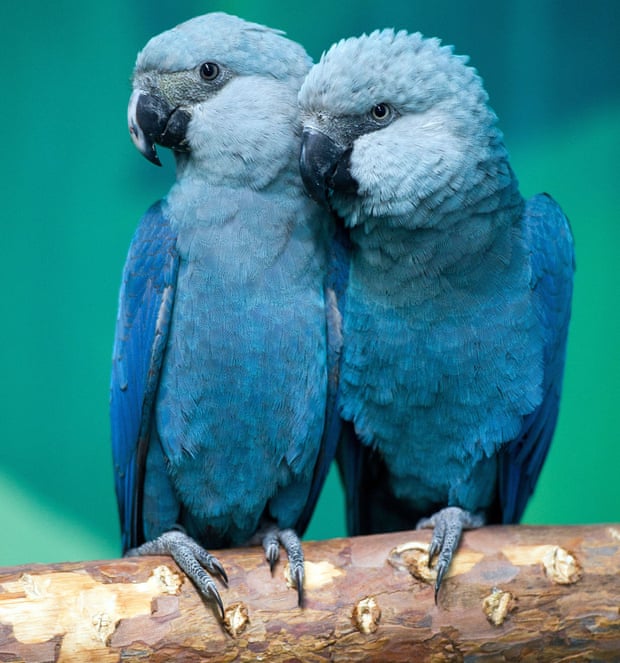
The Spix macaw, a bird that had once vanished in the wild, is now thriving in its South American homeland after a successful breeding programme

A pair of Spix's macaws
A pair of Spix’s macaws in an aviary in Schöeneiche, eastern Germany. The species disappeared from the wild more than 20 years ago.Photograph: DPA/AFP/Getty Images

Robin McKie

Sun 10 Jul 2022 05.00 EDT

https://www.theguardian.com/environment/2022/jul/10/extinct-parrots-make-a-flying-comeback-in-brazil

Twenty years ago, the future of theSpix’s macawcould not have looked bleaker. The last member of this distinctive parrot species disappeared from the wild, leaving only a few dozen birds in collectors’ cages across the globe. The prospects forCyanopsittaspixiiwere grim, to say the least.

But thanks to a remarkable international rescue project, Spix’s macaws – with their grey heads and vivid blue plumage – have made a stunning comeback. A flock now soars freely over its old homeland inBrazilafter being released there a month…

View original post 680 more words

US concerned at China’s ‘alignment’ with Russia, Blinken says

Exposing the Big Game's avatarThe Extinction Chronicles

Story by Reuters – Yesterday 10:15 PM

React|56

  • Share
  • Save

United States Secretary of State Antony Blinken said on Saturday he had discussed Russian aggression in Ukraine during more than five hours of talks with Chinese Foreign Minister Wang Yi, and raised concerns over Beijing’s alignment with Moscow.

Both diplomats described their first in-person talks since October as “candid”, with the meeting taking place a day after they attended a gathering of G20 foreign ministers on the Indonesian island of Bali.

Best Website Builder – Online Website Builder

Adkajabi.com/Build/Websites

“I shared again with the state councilor that we are concerned about thePRC’s alignment with Russia,” Blinken told a news conference after the talks, referring to the People’s Republic of China.

He said he did not thinkChinawas behaving in a neutral way as it had supported Russia in the United Nations and “amplified Russian propaganda”.

View original post 492 more words

High number of seal deaths linked to bird flu, feds say

Exposing the Big Game's avatarThe Extinction Chronicles

High number of seal deaths linked to bird flu, feds say
Buy NowA harbor seal pokes its head out of the water in Casco Bay, Thursday, July 30, 2020, off Portland, Maine. An usual number of seals have been getting stranded and dying off Maine this summer, and avian influenza is to blame, the federal government said Tuesday July 5, 2022.Robert F. Bukaty

PORTLAND, Maine (AP) — An unusual number of seals are becoming stranded and dying off Maine this summer, and avian influenza is to blame, the federal government said Tuesday.

The U.S. Department of Agriculture has confirmed that samples from four Maine seals tested positive for the virus. The animals all died or required euthanasia, the National Oceanic and Atmospheric Administration said.

Marine mammal rescuers started to notice an unusually high number of seal strandings in June…

View original post 538 more words

A Bird Flu Depopulation Method So Cruel, Veterinarians Yell Foul

BY MARTHA ROSENBERG

FacebookTwitterRedditEmail

A Bird Flu Depopulation Method So Cruel, Veterinarians Yell Foul

Image by Esperanza Doronila.

More than 77 million poultry birds have been killed in Europe, Asia, Africa and North America to contain the spread of bird flu, a pandemic that few are even aware of thanks to light news coverage. There are few photos of dumpsters and landfills brimming with dead birds nor is there mention of how the mass killing is often done. It is accomplished with “ventilation shutdown” (VSD) and “ventilation shutdown plus heat” (VSD+) in which steam heat and CO2 are added to the oxygen deprivation/suffocation to facilitate heatstroke.

Now veterinarians and the public are calling on the American Veterinary Medical Association (AVMA) to formally oppose VSD and VSD+ as a method of mass-exterminating chickens, turkeys, ducks, and other farmed animals to control bird flu. The shocking mass-kill method was also used to kill an estimated 10 million U.S. pigs in 2020 when pork operators could not send them to Covid-closed slaughterhouses observes veterinarian Daniela Castillo.

As the AVMA prepares for its annual meeting in Philadelphia, an “Our Honor,” campaign has launched to highlight the use of wide scale killing of birds through suffocation and heatstroke and how it contradicts the veterinarian oath to prevent and relieve of animal suffering.

Signed by veterinarians and AVMA members, the campaign states, “we are concerned that our reputation as caring advocates for animals is tarnished each time our profession is used to lend legitimacy to this brutal practice.” Killing healthy animals in this horrific way is unnecessary, says the campaign letter, “yet the corporation[s] could still cite the AVMA guidelines as their protocol for such a barbaric act.”

The suffering that VSD inflicts was witnessed in videos of experiments conducted by North Carolina State University (NCSU) researchers and viewed by the Intercept and Animal Outlook. “As the boxes get hotter and the air inside more stagnant, and as carbon dioxide is sometimes added, the chickens writhe, gasp, pant, stagger and even throw themselves against the walls of their confinement in a desperate attempt to escape,” wrote Animal Outlook. “Eventually the birds collapse and, finally, die from heat and suffocation.”

A VSD occurrence at Rembrandt Farms in Rembrandt, Iowa is particularly troubling says Direct Action Everywhere (DxE) who did the onsite investigation. “Owned by billionaire Glen Taylor, Rembrandt Farms was affected by avian influenza 7 years ago and received $11.3 million in taxpayer subsidies for depopulating their flock of 5.5 million birds. Positioned on the Mississippi flyway, with millions of migrating birds flying overhead, another avian influenza outbreak was to be expected yet the farm failed to change their housing structure or put a plan [for depopulation] in place” that was less cruel “before repopulating their facility.”

The website Tasting Table notes the Rembrandt Farms owned by Glen Taylor, the majority owner of the NBA’s Minnesota Timberwolves, has contracted avian flu three times and is responsible for five million of the ten million chicken deaths in Iowa since the most recent bird flu outbreak.

Increasingly, veterinarians, animal advocates and concerned citizens are saying the AVMA’s refusal to formally condemn ventilation shutdown and ventilation shutdown plus heat is a clear instance of the association putting corporations and economic interests over animals and a violation of the Veterinarian’s Oath itself. United Poultry Concerns, a coalition member of Our Honor, says the AVMA “should now step up for the animals instead of pandering repeatedly to their abusers.”

Some also suggest that news media slight coverage of the bird flu pandemic and massive bird kills is a nod to their “Big Food” advertisers; who wants to eat chicken during such a massive disease outbreak or see the dead bodies in landfills and wanton suffering? Scientists and public health officials also indict the Big Food’s million bird, industrial greed-sized operations for spreading bird flu in the first place!

Add you name to the “Our Honor,” campaign here.

Martha Rosenberg is an investigative health reporter. She is the author of  Born With A Junk Food Deficiency: How Flaks, Quacks and Hacks Pimp The Public Health (Prometheus).

Why are we accepting the mass slaughter of animals through heatstroke?

https://upc-online.org/avma/220706_why_are_we_accepting_the_mass_slaughter_of_animals_through_heatstroke.html

6 July 2022

Chickens in cages with their eggs carried away on a conveyor below the cages
Chickens stand in their cages at a farm near Stuart, Iowa, in 2009. (Charlie Neibergall/AP)

By Brian Collins and Lauri Torgerson-White
The Washington Post, July 6, 2022

Today’s Washington Post carries an informative opinion piece by two Farm Sanctuary scientists about the egregious cruelty of Ventilation Shutdown to exterminate factory-farmed birds and pigs and the failure of the AVMA to condemn this pitiless farming practice. I posted the first appreciative comment to the article this morning under my username karen08. Please join me in submitting a supportive comment following the article. Read it here and share:

Opinion: Why are we accepting the mass slaughter of animals through heatstroke?

karen08 comment:

Thank you for posting this excellent albeit sad and sickening account of how badly farmed animals are treated by their corporate owners and their misnamed corporate “protectors.” Having recently watched footage of chickens and pigs subjected to Ventilation Shutdown including air deprivation, extreme heat and carbon dioxide poisoning, I can say that cruelty to an animal does not get any worse. The AVMA needs to take a stand on behalf of the chickens, turkeys, pigs and other victims of agribusiness, in keeping with the association’s Oath to protect animals rather than abandoning them to merciless processes.

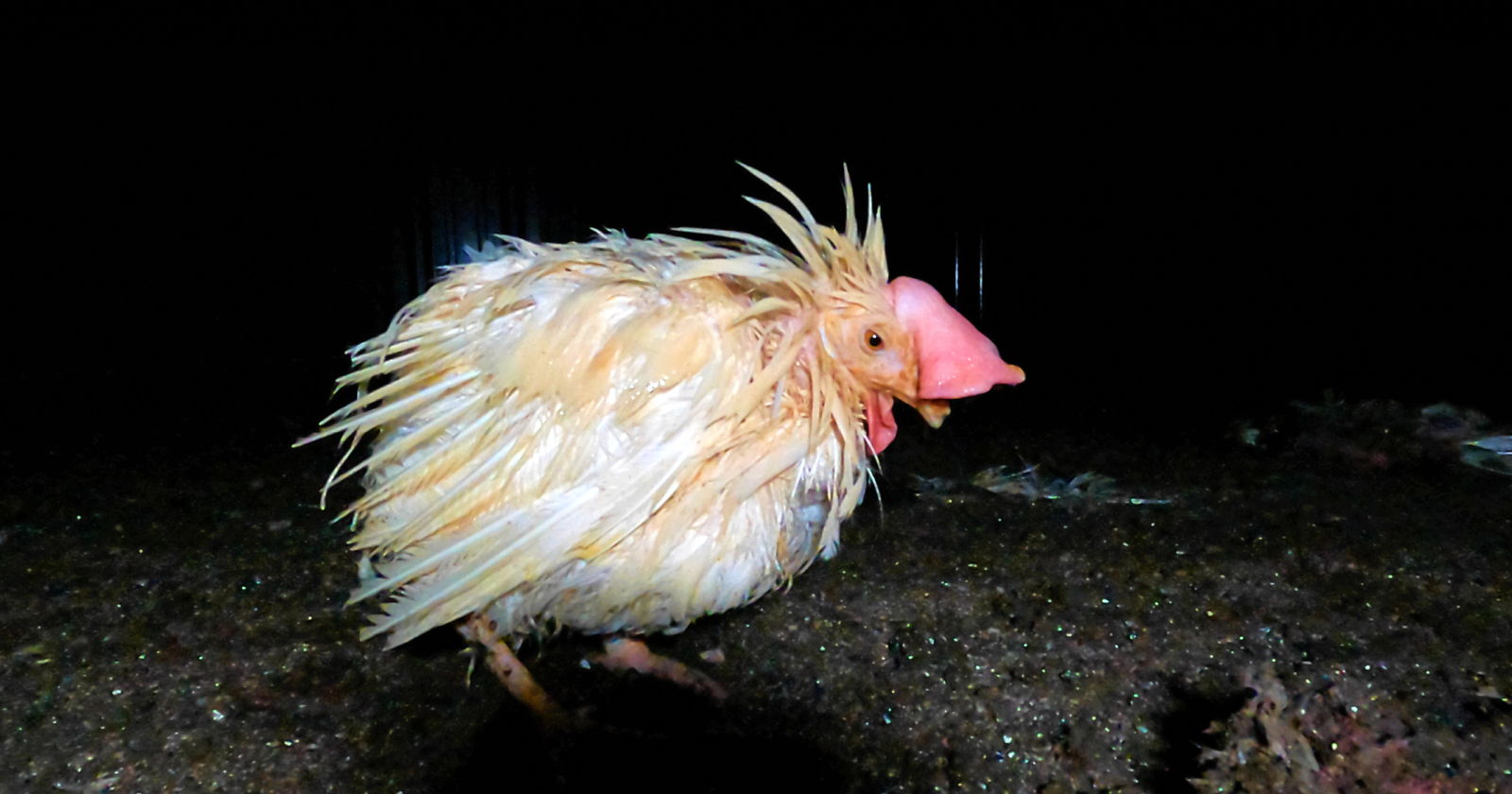
Weak hen with missing feathers standing in the darkness

Direct Action Everywhere (DxE) photo of a hen who survived VSD+ killings at Rembrandt Farms in Iowa in March 2022

Yanking a Dog’s Leash: A Welfare Concern for Dogs and Humans Marc Bekoff Ph.D.

https://www.psychologytoday.com/us/blog/animal-emotions/202207/yanking-dogs-leash-welfare-concern-dogs-and-humans

Animal Emotions

Research shows that dogs and humans suffer when a dog is pulled here and there.

Posted July 4, 2022 |  Reviewed by Lybi Ma

I have had a long-term interest in the behavior of dogs and the nature of dog-human relationships, and I’m always looking at what dogs are doing with other dogs and with their and other humans. It’s easy to observe leashed dogs on a walk so I keep track of what’s happening on both ends of the leash. It always surprises me that there are so few data reporting what dogs and humans are doing when tethered together; I collected information by watching 100 different people walking their dogs on the streets around Boulder, Colorado. Most dogs didn’t seem to be having a good time.1

I wasn’t all that surprised by what I learned and always thought that being pulled wasn’t good for a dog or their humans. A few days ago I read an open-access essay titled: “Lead pulling as a welfare concern in pet dogs: What can veterinary professionals learn from current research?2

Here are a few major findings. There are some important simple and practical messages that will improve both the dogs’ and humans’ well-being.

♦ For humans, excluding dog bites, being pulled over when walking a tethered dog is the second-most cause of non-fatal dog-related injuries in the UK.

♦ 24 percent of people reported that they wanted to stop their dog from leash pulling.

♦ 10 percent of people reported that their dogs get less exercise when they’re a problem, leading to weight gain and obesity.

♦ Leash yanking can negatively affect the strength of dog-human relationships, especially when it’s strongly negative and punitive. [Dogs don’t like being shocked, choked, or pronged.]

♦ Dogs who are yanked suffer from problems including frustration, anxietystress; elevated heart rate, blood pressure, corticosteroids; damage to the neck, thyroid and salivary glands, and possibly their eyes. Humans anecdotally report more coughing and hacking.

♦ When dogs freely move about, they sniff around 33 percent of the time. When shelter dogs are allowed to exercise their noses, they’re calmer. [There’s no reason to believe that this wouldn’t be true for tethered dogs who are allowed to smell and wander.]

Improving the lives of dogs and dog-human relationships

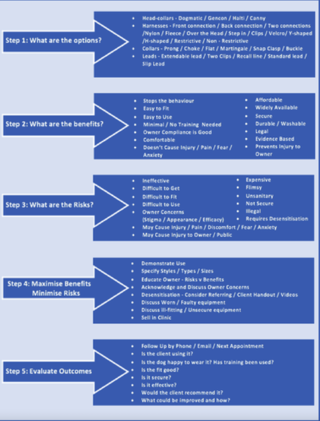
 What can veterinary professionals learn from current research?" open access.

A simple risk assessment tool for discussing dog-walking equipment with clients.

Source: “Lead pulling as a welfare concern in pet dogs: What can veterinary professionals learn from current research?” open access.

There also is an important practical message about humanely educating human guardians in “Lead pulling as a welfare concern in pet dogs.” (See their figure.) The authors stress that veterinary professionals can do a lot to educate their human clients about how to walk a tethered dog and what to look for when things are or aren’t working well for their dog or for both the dog and themselves. They write: “Fostering enjoyable, symbiotic walking experiences can increase enrichment and exercise, reducing stress and aversion for pet dogs, while improving owner attachment.”

Letting your dog be a dog when they’re out and about might also serve to slow you down and have you learn more about your dog as the individual they truly are and what they want and need when they’re supposed to be having fun. Pay attention to individual differences among dogs.

A dog’s walk and other exercise should be for them. It’s their time. Make it fun, enriching, and exciting, and let them exercise their bodies and senses as they wish. It’s also good for your and their psychological and physical health.

References

Wild species support half of world’s population, report finds

Exposing the Big Game's avatarCommittee to Abolish Sport Hunting Blog

Sustainability is key to survival of billions of people, says UN study, which notes income from wild species incentivises conservation

https://www.theguardian.com/environment/2022/jul/08/overexploitation-wild-species-sustainability-un-report-aoe

Patrick Vallance: ‘We need to change if we’re to survive’

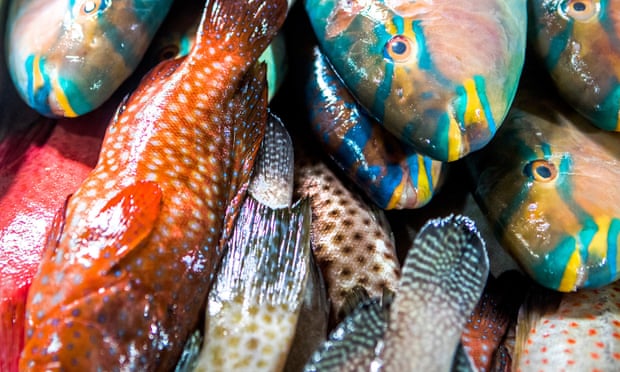
Reef fish for sale at a market in Jimbaran, Bali
Reef fish at a market in Jimbaran, Bali. Little is wasted in catches from small fisheries, while millions of tonnes a year are discarded in large-scale fishing.Photograph: Paul Hilton/Earth Tree

The age of extinction is supported by

theguardian.org

About this content

Patrick Greenfield

@pgreenfieldukFri 8 Jul 2022 08.56 EDT

Wild plants, animals, fungi and algae support half of the world’s population but their future use is threatened by overexploitation, according to a new assessment by leading scientists.

From the 10,000 known wild species that humans harvest for food to the firewood that one in three people need for cooking, nature is key to the livelihoods and survival of billions of people in developed and developing countries, says a new

View original post 824 more words

Hunting still an option in Michigan’s updated gray wolf plan if species de-listed again

Exposing the Big Game's avatarCommittee to Abolish Sport Hunting Blog

Updated: Jul. 07, 2022, 12:00 p.m. | Published: Jul. 07, 2022, 10:15 a.m.

https://www.mlive.com/public-interest/2022/07/hunting-still-an-option-in-michigans-updated-gray-wolf-plan-if-species-de-listed-again.html?fbclid=IwAR0BxfGnyTO6Pa-3nVD9p1MIvQcATFP5DsrVYz69L4bU9aEYnM-s8bmBdjs

Gray wolf
This is a close up image of a gray wolf in autumn. Michigan wildlife regulators kept wolf hunting and trapping in the updated state management plan for the species. (Dreamstime/TNS)TNS

facebook

twitter

447

shares

BySheri McWhirter | smcwhirter@mlive.com

Allowing hunters, trappers, and livestock owners to kill gray wolves remains a part of the play book for Michigan wildlife regulators, should the species ever lose its federal protections again.

Officials with the Michigan Department of Natural Resources this week released theirdraft wolf management plan, updated with the latest scientific research about the federally protected species. The guidelines spell out how state authorities would decide whether hunters ever get a shot to bag one of North America’s apex canine predators in the Upper Peninsula – that is, should wolves ever be de-listed again.

https://747f040932d1a6e4bf2740b444a96d78.safeframe.googlesyndication.com/safeframe/1-0-38/html/container.html

State officials said there…

View original post 908 more words