Russian forcestook a key region in eastern Ukraine over the weekend, thanks in part to Moscow stepping up its coordination and war planning, according to a British intelligence assessment released on Tuesday.
This change in Russian forces’ approach to fighting in Eastern Ukraine could be the early signs of a brand new—and worrying—phase inRussia’s devastating war in Ukraine.
ADVERTISEMENT
While Ukrainian officials first denied that they had lost Lysychansk, one of the last strongholds in Eastern Ukraine’s Luhansk, Ukrainian forces confirmed Sunday they withdrew from the area. Russian forces took over Sunday and Russian President Vladimir Putindeclared victoryon Monday.
UpdatedJul. 06, 202210:32AM ET/PublishedJul. 05, 20229:04PM ET
Listen to article13 minutes
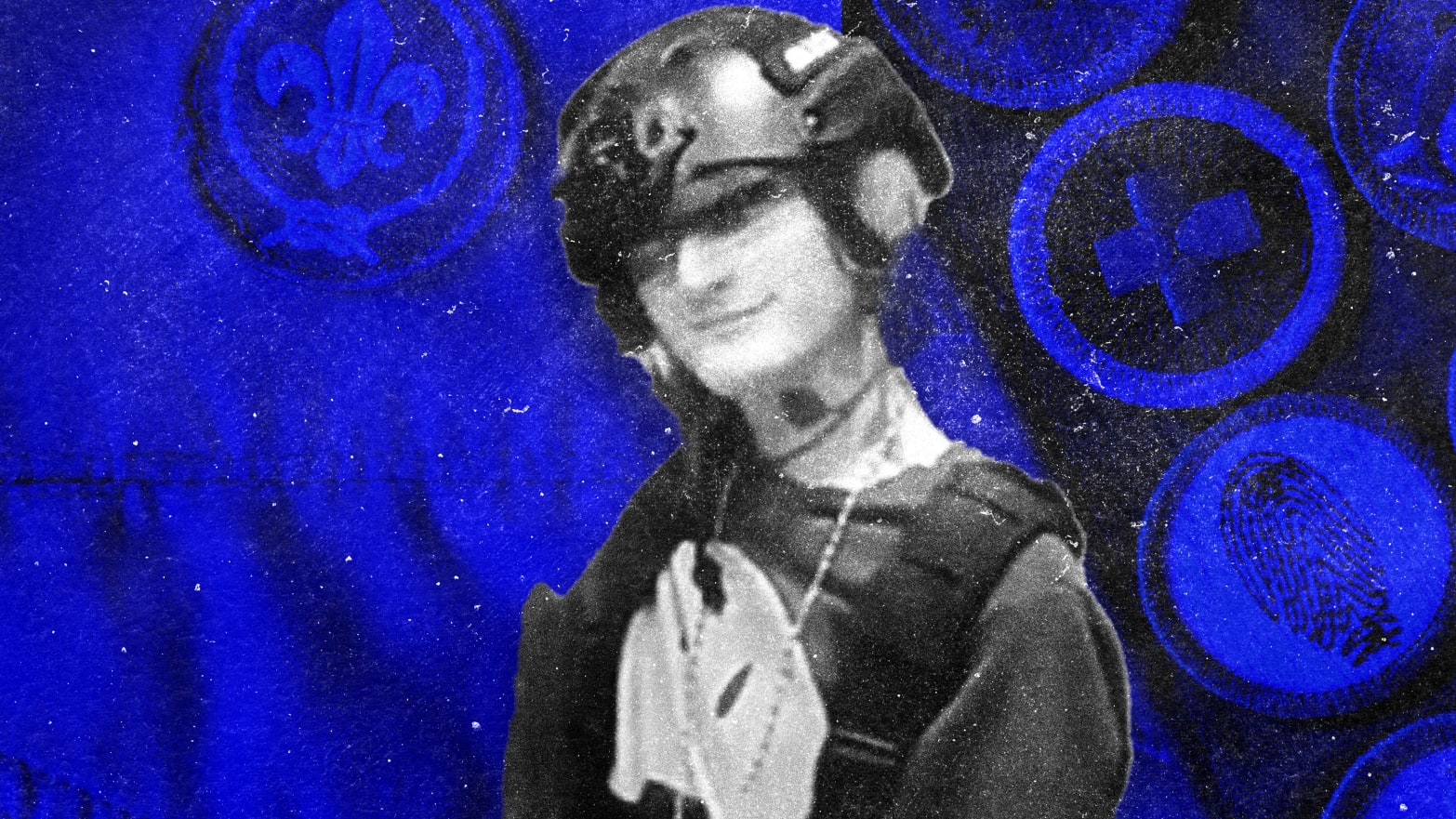
WhenHighland ParkMayor Nancy Rotering on Tuesday revealed that she knewRobert “Bobby” Crimo, the 21-year-old accused of indiscriminately raining gunfire on a peacefulJuly 4 paradein an attack that killed seven and injured dozens more, she expressed shock that a “little boy” from the cub scouts would somehow become a mass killer.
But some of the people who grew up with Crimo—a lanky aspiring YouTube rapper festooned with tattoos, his music riddled with violent imagery—said they saw disturbing warning signs.
ADVERTISEMENT
“There were lots of red flags with him,” one former Highland Park High School classmate told The Daily Beast. “I told my teacher I didn’t want…
FILE – In this February 2021, photo released by California Department of Fish and Wildlife, shows a gray wolf (OR-93), seen near Yosemite, Calif., shared by the state’s Department of Fish and Wildlife. A federal judge on July 5, 2022, threw out a host of actions by the Trump administration to roll back protections for endangered or threatened species, a year after the Biden administration said it was moving to strengthen those species protections. (California Department of Fish and Wildlife via AP, File)
WASHINGTON (AP) — A federal judge on Tuesday threw out a host of actions by the Trump administration to roll back protections for endangered or threatened species, a year after the Biden administration said it was moving to strengthen such species protections.
U.S. District Judge Jon Tigar in Northern California eliminated the Trump-era rules…
In the leafy Pine Barrens of southern New Jersey lies a very different kind of farm: the astonishing Funny Farm, a not-for-profit animal sanctuary open to the public two days a week, created by New Jersey’s own Doctor Doolittle, Laurie Zaleski.
Every animal here is a rescue – abused, abandoned, disabled – and Zaleski has healed and protected more than 600 animals over the last 20 years, from retired racehorses to raucous roosters. “We have 115 roosters,” she said. And it sounded like it!
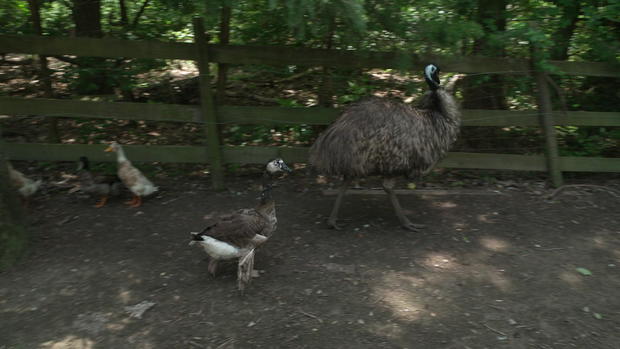
Emily the emu and Airplane the goose are inseparable. CBS NEWS
Correspondent Lesley Stahl asked, “For those people who have never been here, never even heard of the Funny Farm, how would you describe it?”
“I say Heaven on Earth, especially for animals,” Zaleski replied. “And for people, because when you walk through the gates, you can feel the inner peace and harmony, because they all get along here.
“My mother had the original Funny Farm, and she said it’s full of animals and fit for lunatics!” laughed Zaleski.
MACMILLAN
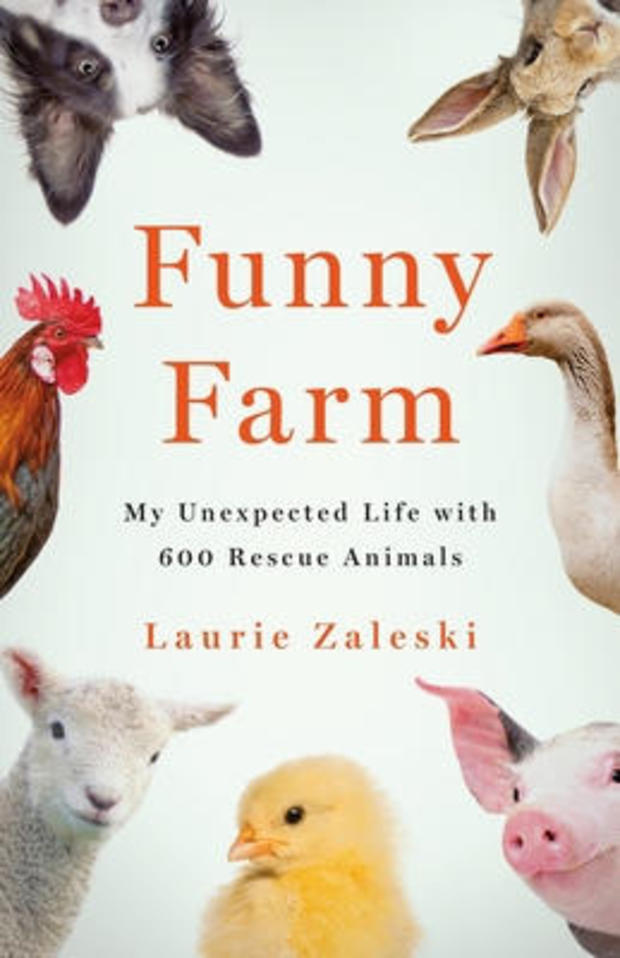
As she writes in her book, “Funny Farm: My Unexpected Life with 600 Rescue Animals” (Macmillan), there are lessons here for our polarized, at-each-others-throat society, because the creatures on the Funny Farm live in harmony, no matter how different they are. It’s not quite the Biblical tale of the lion lying down with the lamb, but as friendships go, this bond between Emily the emu and a goose named Airplane (because of her wounded wings) is pretty jaw-dropping. “That goose is just always wherever she is,” Zaleski said.
“Do you know why the goose loves the emu?” Stahl asked.
“Maybe he likes larger women? I don’t know!” Zaleski laughed. “I’m not really sure! So, it’s possible that she protected him at one point in there that we just don’t know about. And he thought, ‘You know, this is my protector and I’m gonna stay with her.'”
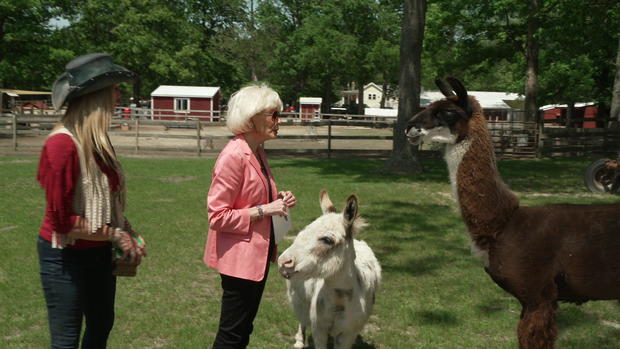
Zaleski introduced us to another cross-species couple: a donkey, Jethro, and a very kissable llama named Lorenzo. Jethro’s previous companion, a horse, passed away, and (according to Zaleski) Jethro went into mourning:
“This poor guy was suffering because he was so sad. Lorenzo came, and they bonded themselves. They just found each other. I mean, these two are such an odd couple.”
Laurie Zaleski introduces Lesley Stahl to bosom buddies Jethro the donkey and Lorenzo the llama. CBS NEWS
An even odder couple might be Yogi the steer and Cooper the alpaca. “Wherever Yogi goes, he goes,” Zaleski said.
They make an adorable pair today, but two years ago Yogi’s long horns ripped a hole in Cooper’s side by accident. Zaleski said. “When I tried to take Cooper to the hospital, Yogi was definitely freaking out. He cried! He went, ‘MOOOOO!’ It broke my heart! You know, ‘Where’s my friend? Where did you take him?'”
Stahl asked, “Are they really missing them? Are you attributing human emotions to your animals? You’re making it up?”
“I absolutely think that they miss each other,” she said.
“But was it grieving?”
“I think he was grieving. Sure. People say they don’t have emotions. They do have emotions.”
“But scientists complain …”
“Scientists, schmientists!” Zaleski laughed. “What do they know? What do they have in their backyard?”
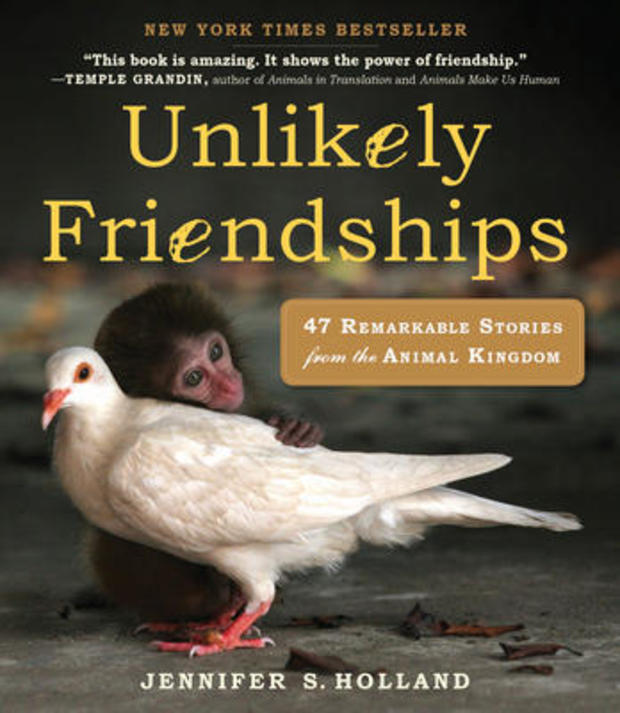
Jennifer Holland has collected dozens of stories of unexpected animal affection in “Unlikely Friendships” (Workman), one of a series of unlikely bestsellers. Her favorite coupling is of dogs and dolphins, who play in the water together.
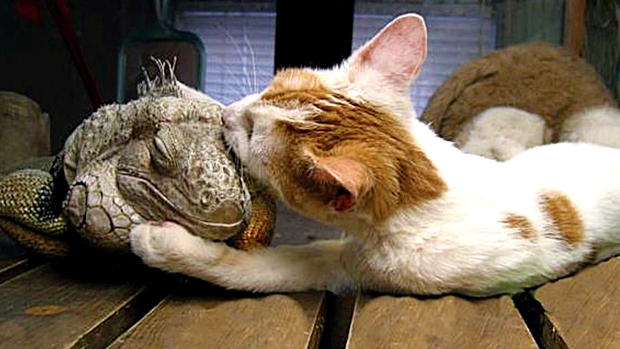
“One of my favorites is an iguana with a cat,” she said. “The fact that the iguana not only would cuddle with the cat, but would let it play with his tail, and lick him, and share his food. Those kind of stories just really make me smile.”
FROM “UNLIKELY FRIENDSHIPS: 47 REMARKABLE STORIES FROM THE ANIMAL KINGDOM” BY JENNIFER S. HOLLAND (WORKMAN)
In the course of writing her books, the former National Geographic staffer had some questions: “I wanted to know, was there science behind this? Do we understand why this happens? [I] started looking into it and realized we don’t really have one answer, because there’s so many different contexts, so many different animals. It would be very difficult to do a rigorous study and explain what’s happening.”
WORKMAN
But with some companions, might it be an instinct for a pet, like a human’s desire for a kitten? “Part of that may be a little bit of that parental instinct, that instinct to care for, wanting to mother,” Holland said.
Zookeepers often place orphaned babies with mothers of another species who are nursing. Stahl asked Holland if the need for protection might come into play, such as with the goose and her emu bodyguard? An example of animal altruism? “Even with an animal that’s blind, another animal may kind of turn into a seeing-eye dog and protect that animal, and show where the food is, and just be the bodyguard, be the helper,” Holland said.
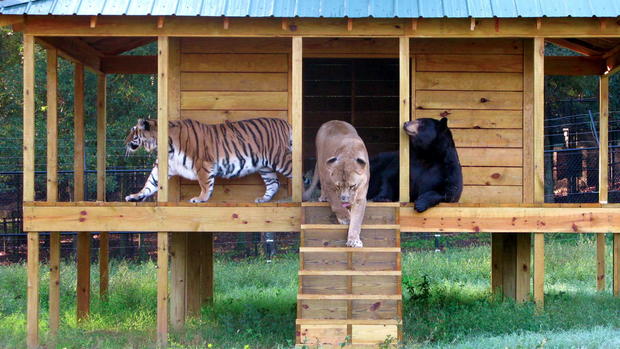
And when animals meet when they’re young, anything is possible. Holland told of an unusual friendship involving a lion, a tiger, and a bear, three predators-turned-pals that were found as babies in a drug dealer’s basement and brought to an animal sanctuary where they became lifelong buddies. “They were pals. These are three animals that would never meet in the wild. And it just happened that these three found something, again, positive in each other, and pal around together.
“I think you see this in captivity so often, because these animals are taken care of, they’re not competing for food, they’re not stressed. And so, they have this luxury of being able to be social with other animals.”
Lion and tiger and bear, oh my!FROM “UNLIKELY FRIENDSHIPS: 47 REMARKABLE STORIES FROM THE ANIMAL KINGDOM” BY JENNIFER S. HOLLAND (WORKMAN)
Laurie Zaleski takes that “If you feed them, they won’t fight” theory to a whole other level. She has 35 animals in my house, and they don’t eat each other. “I have 10 dogs, about 20 cats, a cockatoo who is louder than all of them put together, a chicken,” she said. “It’s like Noah’s Ark!”
This article is by Goodness Exchange, an online platform celebrating the wave of goodness and progress well underway all around the world. View the original article here
There are stories aplenty out there of human-animal connections that touch our hearts. But every once in a while, you stumble across one that is so spectacular… it’s almost unbelievable. Well, believe it folks, because we’re about to treat you with a story that is going to make you gasp, smile, and cry all at the same time!
Let’s meet a scientist, a whale, and a shark (yikes!), to learn how a selfless sea creature can inspire a wave of goodness that will motivate us to be our best selves each time we regale it.
Before we dive into the animal-element of our story, I’d like to introduce our human scientist, Nan Hauser, whose story about a humpback whale encounter is nothing short of amazing.
Nan Hauser has spent much of her adult life in Brunswick and in the South Pacific Cook Islands. As Founder and Director of the New England Dolphin Outreach Project, she has taught on a global level for the Dolphin Research Center, Whale Conservation Institute, and many other non-profit organizations, including the Gulf of Maine Research Institute. She is currently on the Board of Directors of the Ajubatus Foundation in South Africa and has been awarded the international title of “Earth Ambassador.” In addition to her accolades as a whale researcher, she is also a Registered Nurse, who teaches and practices medicine on the outer islands of the Cooks.
While many of the locals had heard of the charismatic nurse-turned-whale biologist who spent the better part of 30 years studying humpback whales in Rarotonga, it was a chance encounter in 2017 that would make her—and her work—known around the world.
That time a whale saved her life On a mid-September day in 2017, Nan jumped into the ocean to get some video footage with two of the humpback whales she was studying, when the most remarkable thing happened.
As she swam alongside the whales, the gentle giants began to display warning signs that danger was near. Suddenly, she spotted another whale aggressively swimming toward her at full speed. Just as panic began to set in, one of the whales used its fin to propel Nan onto its back and out of range of…not a whale…but a 15 foot tiger shark!
After the shark disappeared, in a sweet-hearted fashion the whale safely escorted Nan back to her boat. She climbed aboard and yelled “Thank you! I love you!” to the whale. After a few minutes, the whale disappeared into the depths, and Nan said goodbye, feeling grateful for this once in a lifetime encounter.
One year later…He came back! Almost a year later to the date, Nan received a call from a local fisherman saying that he spotted whales in the harbor. Could it be? Could her whale friend have returned? Because Humpback’s often return to their same migratory routes, hope swelled inside her.
She acted fast and jumped on a boat… and guess who swam right alongside the boat to greet her?! Nan instantly recognized her friend by the two distinct notches on his tail, and leapt into the water to swim with him.
Now, I love this story, but it’s really best told by Nan herself. Watch this delightful video by BBCEarth as Nan describes her life-changing experience with the whale that saved her life, and how he came back again to reconnect with her. Her heartfelt delivery of the tale is one that should not be missed.
Disclaimer: You may be tempted to swim with whales after watching this, but please don’t. Nan is a professional whale researcher and for your own safety, neither of us recommend giving it a go on your own. Thank you!
The most selfless act is to unconditionally care for others I wanted to touch back on the bit she mentioned about altruism in whales. Altruism is defined as a selfless act of kindness, such as protecting others, without expecting anything in return. This is a quality that isn’t usually displayed by animals, but some researchers are starting to recognize this characteristic in humpback whales.
Robert Pitman (the colleague Nan mentions in the video) is a marine ecologist with the US National Oceanic and Atmospheric Administration. He witnessed this behavior in Antarctica in 2009 when two Humpback whales saved a seal from a group of orcas by nudging the seal under their bellies with their fins until it could reach safety on a patch of ice.
“That incident convinced me on the spot,” says Pitman. “Those humpbacks were doing something that we couldn’t explain with what we knew at the time about humpbacks and killer whales.” There is still a lot of mystery surrounding whale intelligence. There’s so much we don’t know. However, there are some ways we can advocate for these majestic humpbacks.
After Nan’s encounter, she struggled with how best to thank the whale. After all, it’s tricky to hug something that is so much larger than you.
So what’s the most impactful way to thank a whale? It’s by caring, learning more about them, and protecting their habitat. We can offer our own altruistic displays of compassion for the humpback whales by supporting organizations that prioritize research and their wellbeing. We can help in small ways, for example, eliminating single-use plastics from our lives as much as possible will reduce ocean pollution, especially if you can get others to do it with you.
What about altruism in humans? Like humpback whales, humans are creatures of habit. So what if we made kindness a habit? What if we could be the whale in our own story? A pinch of compassion sprinkled into our daily lives can grow into a lifetime of good deeds to look back on.
We can’t speak directly to the whales (well, maybe you can if you are Ellen Degeneres), but if we could ask them for advice, what do you think they would say? Maybe their silence is the key, because it’s not actually what we say, but what we do that will show others that we care.
Greenhouse gas has undergone rapid acceleration and scientists say it may be due to atmospheric changes
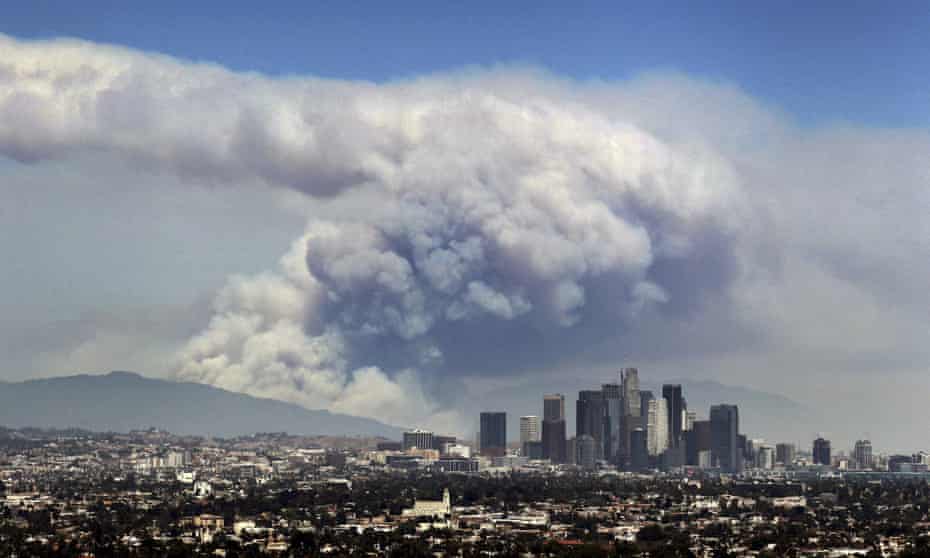
Wildfires behind Los Angeles in 2016. An increase in wildfires may have pumped more carbon monoxide into the atmosphere and altered the chemical balance.Photograph: Ringo HW Chiu/AP
Methane is four times more sensitive to global warming than previously thought, a new study shows. The result helps to explain the rapid growth in methane in recent years and suggests that, if left unchecked, methane related warming will escalate in the decades to come.
The growth of this greenhouse gas – which over a 20 year timespan is more than 80 times as potent than carbon dioxide – had been slowing since the turn of the millennium but since 2007 has undergone a rapid rise, withmeasurements from the US National Oceanic and Atmospheric Administrationrecording it…
Montreat’s growing bear population brought hunting dogsto town withhunters whose practices have been widely criticized. One of them decided to speak out.
“I’m one of the guys that had dogs up there,” said Matthew Austin, a bear hunter for the past 20 years.”There are some assumptions made from people talking who weren’t even there.”
Austin said he was involved in the incident that sparked the debate and push for changes to town laws regarding hunting dogs. According to Montreat commissioners, four instances of hunting dogs chasing bears through town were reported with at least one instance of children being put at risk.
“I had never heard of anybody thinking they were in any kind of danger,” Austin said. “The dogs are human friendly. They’re not going to come out and attack your kids.”
Law enforcement officers from multiple jurisdictions investigate the area in Highland Park, Illinois, on July 4, 2022, after a shooter fired on the Chicago suburb’s Fourth of July parade.
Fisherman Corey Hexter posted on social media a flyer for the event, which is due to occur on July 9, 2022. Participants are asked to pay $100 per boat, and will apparently receive cash prizes for the top three heaviest sharks caught. The tournament is being hosted by WarBird Tournaments LLC, according to a petition calling for its cancellation.
“Finally we can do something about this problem,” said Hexter in the caption of the post. “NOAA[National Oceanic and Atmospheric Administration] and other…









 Exposing the Big Game