A renowned professional hunter from Bulawayo was shot and killed by two intruders who broke into his home in Fortune’s Gate last Wednesday.
Although Bulawayo provincial deputy spokesperson Assistant Inspector Nomalanga Msebele could not comment on the matter, police sources said Paddy Curtis (58) was allegedly found near his still locked gun safe with a gunshot wound on the neck and additional injuries on his head and ear.
They said Curtis was attacked in the wee hours of the morning after the two intruders broke down a door to gain access to the house.
He reportedly cried out for help, but it came rather too late. Curtis, also known as Bloodnut due to his mass of red hair, is reported to have lost US$5 200 in the attack. Sources claimed the two intruders opened fire on the man after they forced…
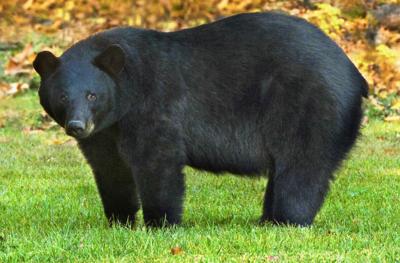
When the first South Arkansas bear season of modern times opens on December 10, bruins with radio collars won’t catch a break.
The Arkansas Game and Fish Commission decided last week to removal a regulation that prohibits shooting a radio-collared bear during open hunting seasons in Arkansas.
With the recently approved bear season in Bear Zones 3 and 4 and the subsequent crowdfunded black bear population research project taking place in south Arkansas, the regulation was lifted to give more accurate results of bear population dynamics when hunting seasons begin.
Director Austin Booth applauded the effort of AGFC biologists and staff who are currently undertaking to monitor the bear population and promote hunting as a viable tool to manage bear populations.
When the first South Arkansas bear season of modern times opens on December 10, bruins with radio collars won’t catch a break.
The Arkansas Game and Fish Commission decided last week to removal a regulation that prohibits shooting a radio-collared bear during open hunting seasons in Arkansas.
With the recently approved bear season in Bear Zones 3 and 4 and the subsequent crowdfunded black bear population research project taking place in south Arkansas, the regulation was lifted to give more accurate results of bear population dynamics when hunting seasons begin.
Director Austin Booth applauded the effort of AGFC biologists and staff who are currently undertaking to monitor the bear population and promote hunting as a viable tool to manage bear populations.
“AGFC Large Carnivore Program Coordinator Myron Means is with AGFC State Wildlife Veterinarian Dr. (Jenn) Ballard in south Arkansas trapping bears and outfitting them with new GPS collars to unlock a whole new level of research with black bears,” Booth said. “We’re excited about the acquisition of those collars because we did it with partners Robbie Kroger of Blood Origins and a crowdsourcing fundraising effort with matches from the Cabela’s Foundation and Legends Ranch.”
The commission approved in May a limited bear season with a small quota in Bear Zones 3 and 4. Columbia County is in Zone 4.
Bears were hunted to an extinction level in South Arkansas by the 1890s. The state started a slow process to reintroduce the bear to its native Arkansas range in the 1970s, eventually working into southeastern Arkansas. There have been occasional bear sightings in Columbia County in recent years.
Bear Zones 3 and 4 will have season dates of December 10-16. There will be quota of five bears in Zone 3 and 25 bears in Zone 4.
Zone 4 is that part of Arkansas east of Interstate 30, and west of U.S. 65. Zone 3 is west of Interstate 30, and south of a line in Southwest Arkansas along U.S. 70, U.S. 270, Arkansas 26 and Arkansas 51 in Clark County.
The Game and Fish Commission said the limited season will help prevent overharvest and enable the growing bear population to continue to thrive in this portion of Arkansas.
A fire that broke out earlier this week in a field led to thousands in material damages, early estimates indicate.
A number of machine items and irrigation tools as well as other items were lost in the blaze.
Malta has been plagued by bushfires since the temperature rose – with a number of reasons, including fireworks, leading to swathes of areas burning down.
Early in June, the central western area of Dwejra – near Rabat and Mġarr – was rocked after afireworks factoryin a rural area suffered a series of explosions that caused mass fires across fields and ridges in the area. Thankfully, the volunteers working there escaped with only slight injuries.
Washington – Today, PETA is exposing the waste and ineffectiveness of animal experiments with a full-page message to readers of The Washington Times promoting PETA scientists’ Research Modernization Deal (RMD), a strategy for replacing scientifically useless tests on animals with modern, human-relevant research methods.
says PETA neuroscientist Dr. Katherine Roe. “PETA is calling on President Joe Biden, Congress, and the National Institutes of Health to embrace the Research Modernization Deal and move us into the 21st century of science.”
Developed by PETA scientists, the RMD outlines the overwhelming failure of animal experiments to lead to treatments or vaccines for HIV, strokes, Alzheimer’s disease, Parkinson’s disease, and a host of other ailments. It provides a strategy for phasing out the use of animals and implementing high-tech, cutting-edge, animal-free methods that are more likely to yield results relevant to humans.
Late last year, after reviewing the RMD, members of the European Parliament voted in favor of developing an action plan and a timeline for phasing out animal experiments.
PETA—whose motto reads, in part, that “animals are not ours to experiment on”—opposes speciesism, a human-supremacist worldview. For more information, please visit PETA.org or follow the group on Twitter, Facebook, or Instagram.
Protesters attend a candlelight vigil in front of the U.S. Supreme Court to denounce the court’s decision to end federal abortion rights protections on June 26, 2022, in Washington, D.C.
President Joe Biden and top subordinates have refused to publicly acknowledge the danger of nuclear war — even though it is now higher than at any other time in at least 60 years. Their silence is insidious and powerful, and their policy of denial makes grassroots activism all the more vital for human survival.
In the aftermath of the 1962 Cuban missile crisis, President John F. Kennedy was more candid. Speaking at American University, he said: “A single nuclear weapon contains almost 10 times the explosive force delivered by all the allied air forces in the Second World War.” Kennedy also noted, “The deadly poisons produced by a nuclear exchange would be carried by wind and water and soil and seed to the far corners of the globe and to generations yet unborn.” Finally, he added, “All we have built, all we have worked for, would be destroyed in the first 24 hours.”
Kennedy was no dove. He affirmed willingness to use nuclear weapons. But his speech offered some essential honesty about nuclear war — and the need to seriously negotiate with the Kremlin in the interests of averting planetary incineration — an approach sorely lacking from the United States government today.
Uncompromised, uncompromising news
Get reliable, independent news and commentary delivered to your inbox every day.
Email
At the time of Kennedy’s presidency, nuclear war would have been indescribably catastrophic. Now — with large arsenals of hydrogen bombs and what scientists know about “nuclear winter” — experts have concluded that a nuclear war would virtually end agriculture and amount to omnicide (the destruction of human life on earth).
In an interview after publication of his book The Doomsday Machine, Pentagon Papers whistleblower Daniel Ellsberg summed up what he learned as an insider during the Kennedy administration:
What I discovered — to my horror, I have to say — is that the Joint Chiefs of Staff contemplated causing with our own first strike 600 million deaths, including 100 million in our own allies. Now, that was an underestimate even then because they weren’t including fire, which they found was too incalculable in its effects. And of course, fire is the greatest casualty-producing effect of thermonuclear weapons. So the real effect would’ve been over a billion — not 600 million — about a third of the Earth’s population then at that time.
Ellsberg added:
What turned out to be the case 20 years later in 1983 and confirmed in the last 10 years very thoroughly by climate scientists and environmental scientists is that that high ceiling of a billion or so was wrong. Firing weapons over the cities, even if you call them military targets, would cause firestorms in those cities like the one in Tokyo in March of 1945, which would loft into the stratosphere many millions of tons of soot and black smoke from the burning cities. It wouldn’t be rained out in the stratosphere. It would go around the globe very quickly and reduce sunlight by as much as 70 percent, causing temperatures like that of the Little Ice Age, killing harvests worldwide and starving to death nearly everyone on Earth. It probably wouldn’t cause extinction. We’re so adaptable. Maybe 1 percent of our current population of 7.4 billion could survive, but 98 or 99 percent would not.
Even before the Russian invasion of Ukraine four months ago, the risks of global nuclear annihilation were at a peak. In January, the Bulletin of the Atomic Scientists set its Doomsday Clock at a mere 100 seconds from apocalyptic Midnight, compared to six minutes a decade ago. As Russia’s horrific war on Ukraine has persisted and the U.S. government has bypassed diplomacy in favor of massive arms shipments, the hazards of a nuclear war between the world’s two nuclear superpowers have increased.
But the Biden administration has not only remained mum about current nuclear war dangers; it’s actively exacerbating them. Those at the helm of U.S. foreign policy now are ignoring the profound lessons that President Kennedy drew from the October 1962 confrontation with Russia over its nuclear missiles in Cuba. “Above all, while defending our own vital interests, nuclear powers must avert those confrontations which bring an adversary to a choice of either a humiliating retreat or a nuclear war,” Kennedy said. “To adopt that kind of course in the nuclear age would be evidence only of the bankruptcy of our policy — or of a collective death-wish for the world.”
In sync with the overwhelmingly hawkish U.S. media, members of Congress and “national security” establishment, Biden has moved into new Cold War overdrive. The priority aim is to make shrewd moves on the geopolitical chessboard — not to engage in diplomacy that could end the slaughter in Ukraine and prevent the war from causing widespread starvation in many countries.
As scholar Alfred McCoy just wrote, “With the specter of mass starvation looming for some 270 million people and, as the [United Nations] recently warned, political instability growing in those volatile regions, the West will, sooner or later, have to reach some understanding with Russia.” Only diplomacy can halt the carnage in Ukraine and save the lives of millions now at risk of starvation. And the dangers of nuclear war can be reduced by rejecting the fantasy of a military solution to the Ukraine conflict.Even before the Russian invasion of Ukraine four months ago, the risks of global nuclear annihilation were at a peak.
In recent months, the Russian government has made thinly veiled threats to use nuclear weapons. Meanwhile, the U.S. has been shipping huge quantities of weapons to Ukraine, while Washington has participated in escalating the dangerous rhetoric. President Biden doubled down on conveying that he seeks regime change in Moscow, and Defense Secretary Lloyd Austin has declared that the U.S. wants the Russian military “weakened” — an approach that is opposite from Kennedy’s warning against “confrontations which bring an adversary to a choice of either a humiliating retreat or a nuclear war.”
We’d be gravely mistaken to wait for Washington’s officialdom to level with us about nuclear war dangers, much less take steps to mitigate them. The power corridors along Pennsylvania Avenue won’t initiate the needed changes. The initiatives and the necessary political pressure must come from grassroots organizing.
A new “Defuse Nuclear War” coalition of about 90 national and regional organizations (which I’m helping to coordinate) launched in mid-June with a livestream video featuring an array of activists and other eloquent speakers, drawn together by the imperative of preventing nuclear war. (They included antiwar activists, organizers, scholars and writers Daniel Ellsberg, Mandy Carter, David Swanson, Medea Benjamin, Leslie Cagan, Pastor Michael McBride, Katrina vanden Heuvel, Hanieh Jodat Barnes, Judith Ehrlich, Khury Petersen-Smith, India Walton, Emma Claire Foley, retired Army Col. Ann Wright and former California Gov. Jerry Brown.)
The U.S. government’s willingness to boost the odds of nuclear war is essentially a political problem. It pits the interests of the people of the world — in desperate need of devoting adequate resources to human needs and protection of the environment — against the rapacious greed of military contractors intertwined with the unhinged priorities of top elected officials.
The Biden administration and the bipartisan leadership in Congress have made clear that their basic approach to the surging danger of nuclear war is to pretend that it doesn’t exist — and to encourage us to do the same. Such avoidance might seem like a good coping strategy for individuals. But for a government facing off against the world’s other nuclear superpower, the denial heightens the risk of exterminating almost all human life. There’s got to be a better way.
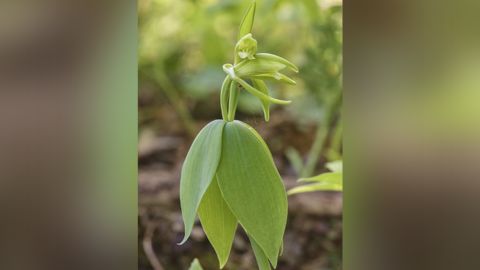
The small whorled pogonia, thought to be extinct in Vermont for 120 years, was rediscovered by an amateur naturalist.Vermont Fish & Wildlife DepartmentCNN —
The small whorled pogonia, a federally threatened species of orchid, has been rediscovered in Vermont – 120 years after the plant was last spotted in the state.
The plant was last documented in Vermont in 1902, Aaron Marcus, an assistant botanist at Vermont Fish and Wildlife Department, told CNN. Naturalists had searched extensively for the small whorled pogonia in Vermont but come up empty-handed.
The small whorled pogonia is “one of the rarest orchid species east of the Mississippi,” said Marcus. The rarity of the species may have to do with its dependence on fungi in the environment, a relationship that is still little understood by scientists.
“One thing that’s really cool about our orchid species is that most of them are really, really dependent on fungal species, species we can’t see underground, connected to our root system, which makes it so hard for us to understand orchids and what they need,” Marcus said.
The last known documentation of a small whorled pogonia in Vermont was a photograph of a plant that had been dug up and placed in a flower pot, Marcus said.
The discovery of an outcropping of the plant in Vermont is “a really great and exciting bright light,” said Marcus. The population is “perhaps the most northerly population in the whole range of small whorled pogonia,” which are found in southern Maine south to Georgia and west to southern Ontario, Michigan, and Tennessee.
The orchids are threatened by climate change, habitat loss, and collection or trampling by humans.
Marcus explained that the population of small whorled pogonias in Vermont was discovered by a retired greenhouse manager who posted pictures of the orchid to iNaturalist, an online platform for amateur naturalists to identify plants and animals around them. Then Marcus and Vermont Fish and Wildlife Department Botanist Bob Popp visited the site and confirmed it was indeed a small whorled pogonia on May 25. The department made the discovery public in a news release published on June 8th.
“It was very exciting” to discover the orchid, said Marcus.
The “most important thing is to protect the plants where they are,” Marcus added. “That’s really our first priority, for them to be able to thrive in place.” The plants are located on publicly protected lands in Winooski Valley Park District, and the department is keeping their exact location a secret to ward off would-be collectors.
For Marcus, the discovery is an “incredible and humbling” reminder of how much scientists have left to learn about the natural world. “There’s more to find out there,” Marcus said. “There’s so much right in our backyards that we just don’t know, or that we once knew and we need to relearn.”
Botanist Bob Popp shared Marcus’ excitement at the “amazing find.”
“Things like that don’t happen that often,” Popp told CNN. “I’ve been in my position for 32 years, and more often than not I’m documenting the decline of species,” he said. “Things going the other direction – it’s just phenomenal.”
Going forward, Popp said his team members hope to monitor the population. They found evidence of damage from slugs on some of the plants, and the orchids may also face threats from browsing by animals like deer.
Popp also emphasized the importance of naturalists “reporting what they see” in the outdoors. “There’s no substitute for eyes and ears in the woods,” he said.
The small whorled pogonia, thought to be extinct in Vermont for 120 years, was rediscovered by an amateur naturalist.Vermont Fish & Wildlife DepartmentCNN —
The small whorled pogonia, a federally threatened species of orchid, has been rediscovered in Vermont – 120 years after the plant was last spotted in the state.
The plant was last documented in Vermont in 1902, Aaron Marcus, an assistant botanist at Vermont Fish and Wildlife Department, told CNN. Naturalists had searched extensively for the small whorled pogonia in Vermont but come up empty-handed.
The small whorled pogonia is “one of the rarest orchid species east of the Mississippi,” said Marcus. The rarity of the species may have to do with its dependence on fungi in the environment, a relationship that is still little understood by scientists.
“One thing that’s really cool about our orchid species is that most of them are really, really dependent on fungal species, species we can’t see underground, connected to our root system, which makes it so hard for us to understand orchids and what they need,” Marcus said.
The last known documentation of a small whorled pogonia in Vermont was a photograph of a plant that had been dug up and placed in a flower pot, Marcus said.
The discovery of an outcropping of the plant in Vermont is “a really great and exciting bright light,” said Marcus. The population is “perhaps the most northerly population in the whole range of small whorled pogonia,” which are found in southern Maine south to Georgia and west to southern Ontario, Michigan, and Tennessee.
The orchids are threatened by climate change, habitat loss, and collection or trampling by humans.
Marcus explained that the population of small whorled pogonias in Vermont was discovered by a retired greenhouse manager who posted pictures of the orchid to iNaturalist, an online platform for amateur naturalists to identify plants and animals around them. Then Marcus and Vermont Fish and Wildlife Department Botanist Bob Popp visited the site and confirmed it was indeed a small whorled pogonia on May 25. The department made the discovery public in a news release published on June 8th.
“It was very exciting” to discover the orchid, said Marcus.
The “most important thing is to protect the plants where they are,” Marcus added. “That’s really our first priority, for them to be able to thrive in place.” The plants are located on publicly protected lands in Winooski Valley Park District, and the department is keeping their exact location a secret to ward off would-be collectors.
For Marcus, the discovery is an “incredible and humbling” reminder of how much scientists have left to learn about the natural world. “There’s more to find out there,” Marcus said. “There’s so much right in our backyards that we just don’t know, or that we once knew and we need to relearn.”
Botanist Bob Popp shared Marcus’ excitement at the “amazing find.”
“Things like that don’t happen that often,” Popp told CNN. “I’ve been in my position for 32 years, and more often than not I’m documenting the decline of species,” he said. “Things going the other direction – it’s just phenomenal.”
Going forward, Popp said his team members hope to monitor the population. They found evidence of damage from slugs on some of the plants, and the orchids may also face threats from browsing by animals like deer.
Popp also emphasized the importance of naturalists “reporting what they see” in the outdoors. “There’s no substitute for eyes and ears in the woods,” he said.
Rocky is a 4-year-old coyote who was surrendered to Animal Control in Tennessee four years ago when he was mistaken for a German Shepherd puppy. Once subsequently labeled “imprinted on humans” he was deemed unreleasable into the wild. He was saved from death, but then transferred to Cook County Forest Preserve’s River Trail Nature Center in Northbrook, Illinois, where unfortunately he has lived alone ever since in a small, dismal enclosure next to the parking lot and he is clearly not doing well. Urge officials in Cook County to release him to a wonderfully spacious and accredited sanctuary that is ready and willing to take him right now!
Rocky exhibits numerous signs of stress, such as pacing back and forth, biting and licking his paws, and scratching to alleviate itching, for which he is on antidepressant and anti-anxiety medications. His main source of seclusion is flawed as it is in a dog kennel in the middle of the cage with the opening facing visitors. Throughout the winter months, his water bowl was observed repeatedly frozen solid. After the staff was questioned, the bowl was moved out of view. Rocky’s environment violates the USDA blue book Forest Preserve policy manuals on housing wildlife and Illinois’ Humane Care for Animals Act, as well as the Forest Preserve’s own Mission Statement.
Rocky’s true needs are not being met. It is inhumane to keep him alone in a small cage for the rest of his life simply because he was mistaken for a dog, and ended up deposited there. He deserves to have plenty of space to roam, hide in underground tunnels, have the opportunity to integrate with his own species, and be taken off the drugs that are used to address his stress.
For his well-being and his long-term health, Rocky should be surrendered to The Wild Animal Sanctuary in Keenesburg, Colorado. He should be free to live in as natural an environment as possible, and living at the sanctuary will provide him with the life he deserves. Just because he interacted with humans instead of other coyotes at a young age, doesn’t mean he should be deprived of the opportunity to socialize with members of his own species. There are solutions for integration that the sanctuary has plenty of experience with. Even wild animals who have been domesticated have instincts to roam, run, dig tunnels, and interact with their own kind, and these things are denied to Rocky in his enclosure at the nature center. The Cook County Forest Preserve’s mission dates back 100 years and remains the same today:
“To acquire, restore and manage lands for the purpose of protecting and preserving public open space with its natural wonders, significant prairies, forests, wetlands, rivers, streams, and other landscapes with all of its associated wildlife, in a natural state for the education, pleasure and recreation of the public now and in the future.”
The mission is to preserve the landscape with all of its wildlife in a natural state, which is wonderful, not in a cage for display against the backdrop of the open landscape. The Forest Preserve’s logo includes the tagline “feel free.” Feeling free should extend to those whom the Preserve holds captive, but it especially should be the case in Rocky’s unique situation. We are calling on Cook County to act in Rocky’s best interests and thus agree to surrender him to The Wild Animal Sanctuary, where he will be able to thrive for the rest of his life.
1. Make Calls. Please call the Forest Preserve District of Cook County President and as many of the Board of Commissioners as you’re able to. Express your desire to have Rocky the coyote surrendered to The Wild Animal Sanctuary in Keenesburg, Colorado. When you speak to someone or leave a message please say the following or something similar:
I am calling regarding the coyote Rocky who is unnaturally stressed and isolated in a small, inappropriate enclosure at the River Trail Nature Center in Northbrook. Please surrender him to The Wild Animal Sanctuary in Colorado where he will have plenty of space to roam, hide in underground dens, and the opportunity to integrate with his own species. If you truly care about his well-being, allow him to be a coyote and grant him this freedom. Thank you for making the compassionate choice.
Phone numbers
Cook County Board President:
Toni Preckwinkle 312-603-6400
Cook County Commissioners:
Sean Morrison 312-603-4215 Kevin Morrison 312-603-6388 Brandon Johnson 312-603-4566 Bridget Gainer 312-603-4210 Bridget Degnen 312-603-6380 Michael Cabonargi 312-603-5560 Luis Arroyojr 312-603-8530 Dennis Deer 312-603-3019 Bill Lowry 312-603-6391 Stanley Moore 312-603-2065 Deborah Sims 312-603-6381 Donna Miller 312-603-4216 Alma Anaya 312-603-5443 John Daley 312- 603-4400 Larry Suffredin 312-603-6383 Frank Aguilar 312- 603-4735 Peter N. Silvestri 312-603-4393 Scott Britton 312-603-4932
2. Take Your Message To Social Media. Please contact the social media targets – the Cook County Forest Preserve pages and president Toni Preckwinkle – and ask them to surrender coyote Rocky to The Wild Animal Sanctuary in Colorado. If time permits, please also contact the county commissioners via their social media pages which are listed in a separate link below.
Please click on this link to access the individual social media contacts for the Cook County Commissioners and target as many as possible to help Rocky!
3. Write a Letter. Send our letter by submitting the form on this page to urge the River Trail Nature Center, the Forest Preserve, and the Forest Preserve District of Cook County President and its Board of Commissioners (who are all on the Forest Preserve Board) to have Rocky the coyote surrendered to The Wild Animal Sanctuary in Keenesburg, Colorado.
Sign our alert to immediately deliver your comments to:
River Trail Nature Center
The Forest Preserve, and the Forest Preserve District of Cook County President and its Board of Commissioners
In Defense of Animals fully expects and strongly urges all people involved in this campaign to act responsibly and lawfully and to respect the personal interests and privacy rights and concerns of any individuals who may be affected by, or become the subject of, your protests or related efforts.












 Exposing the Big Game